Top LLM Evaluators for Testing LLMs at Scale (2026)
Scaling LLM tests is three primitives: distributed runners, classifier cascade, per-route sampling. Six evaluators ranked by burst survival.
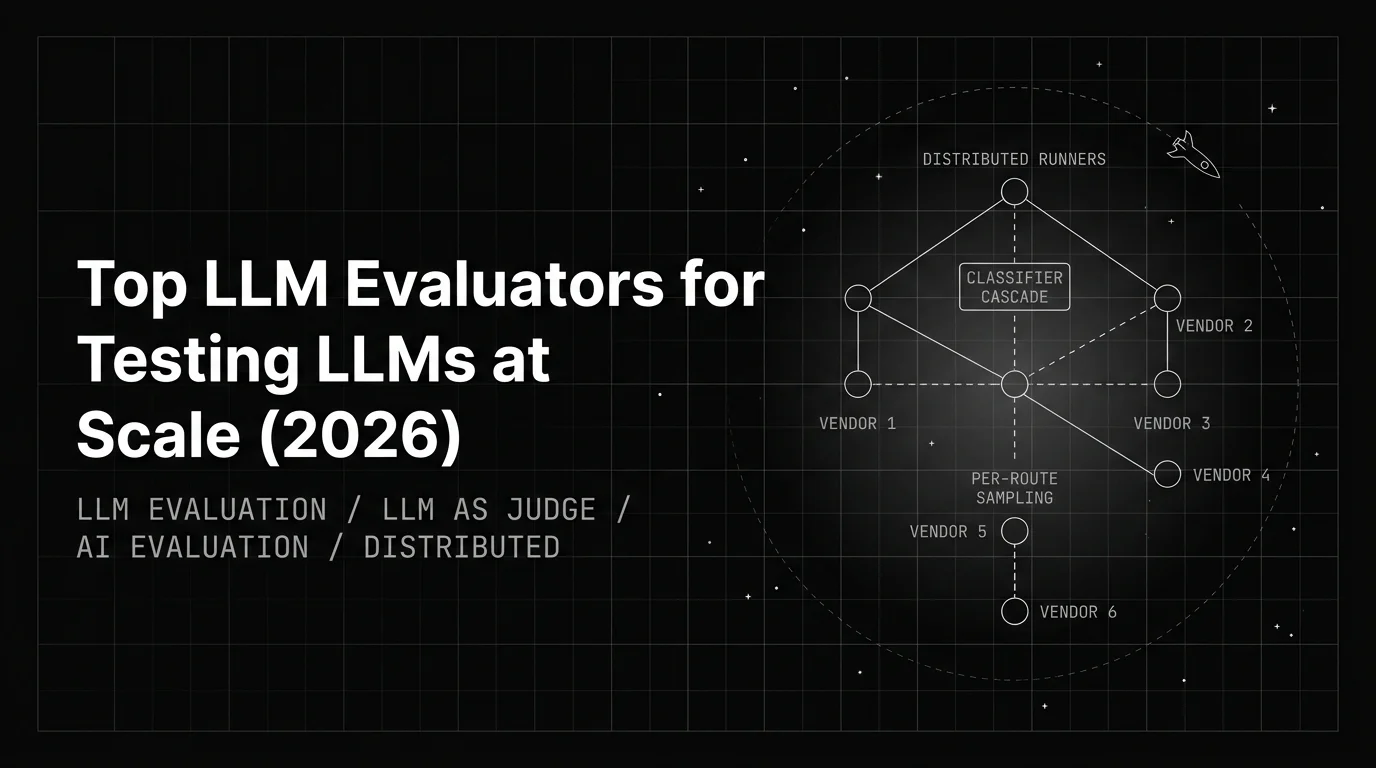
Table of Contents
You ship an agent. The CI suite runs 80 cases on every PR and the gate lights up green. Six weeks later the regression set is 4,200 cases, the judge bill is four figures a month, and somebody on the team has started running a “fast suite” on PR and a “real suite” once a day because the real one takes 90 minutes. Six months later the product hits 100K traces per day, the nightly suite runs 12 hours, the judge bill is five figures, and the failures that matter get lost in a uniform sample.
That arc is the eval-at-scale story compressed. The thesis is short: scale-grade eval is three primitives. Distributed runners that fan work across a cluster without you writing the orchestration. A classifier cascade that pays cents on the easy 80 percent and reserves frontier judges for borderline cases. Per-route sampling that stratifies by persona and oversamples failure tails. Platforms that ship single-threaded SDKs work in dev and fall over in production at 10K traces per day. Pick by what survives the burst. Last updated 2026-05-20.
TL;DR: ranking by what survives 10K+ traces per day
| # | Evaluator | Distributed runners | Classifier cascade | Per-route sampling | License |
|---|---|---|---|---|---|
| 1 | Future AGI | Four (Celery, Ray, Temporal, K8s) | augment=True | Stratified, failure-biased, adaptive | Apache 2.0 |
| 2 | Galileo Luna-2 | Managed plane (closed) | Internal | Platform-internal | Closed |
| 3 | Braintrust | Hosted scorer execution | Manual scorer chains | Manual | Closed |
| 4 | Arize Phoenix | Bring-your-own batch infra | Manual | Manual | ELv2 |
| 5 | Langfuse OSS | Bring-your-own batch infra | None first-class | Glue code | Mostly MIT |
| 6 | Custom Spark / Beam | Built in-house | Built in-house | Built in-house | Your code |
One-line summary. Future AGI when all three primitives need to be config rather than glue. Luna-2 when raw distilled-judge latency on a managed plane is the only lever. Braintrust when offline prompt iteration is dominant. Phoenix when OpenInference adherence matters and you operate batch infra. Langfuse when cheap OSS tracing is the gap. Spark or Beam when an internal data platform team will own it.
The three primitives that decide at scale
Most eval comparison content stops at metric coverage and judge price per million tokens. Both matter, but neither is what breaks first at production volume. Three primitives decide whether a suite stays upright past 10K traces a day.
Distributed runners. A 50K-row suite at 500 ms per case is roughly 7 hours on a single worker before the judge round-trip. At 1M traces a day with three judges per step on a 10-step trace, single-process eval is mathematically impossible. The platform either ships a real distributed runner (Celery on Redis or RabbitMQ, Ray, Temporal, Kubernetes Jobs) wrapped in retries and rate limits, or you wrap a thread pool in a custom job queue and operate it. See distributed eval runners for the engineering-deep walkthrough.
Classifier cascade. Frontier-judge calls cost roughly $5 per million input tokens and run 1 to 4 seconds. At 30M judge calls a day that is real money. A cascade collapses the bill by running the deterministic check first (regex, JSON schema, BLEU, ROUGE, NLI for faithfulness), the distilled classifier second (Turing Flash, Luna-2), the frontier judge only on borderline scores. Local heuristics fire at zero token cost on the 60 to 80 percent of spans that are deterministically pass-or-fail. The distilled tier handles another 15 to 30 percent. The frontier judge sees 1 to 5 percent. Net judge spend drops 90 to 99 percent without changing the rubric. See cost-efficient AI evaluation platforms for the broader picture.
Per-route sampling. Uniform random sampling at 1 percent misses the failures that matter and over-spends on hot routes. Three layers stacked: stratified by route, persona, or model variant; failure-biased oversampling on high-latency, error, or low-confidence spans; adaptive bumps when a new prompt version ships or overall scores trend down. A 1 percent baseline plus 100 percent on flagged traces catches 80 percent of failure modes at 5 percent of full-coverage cost.
A scale-grade evaluator covers all three. A dev-grade evaluator ships one (or none) and asks you to build the rest.
1. Future AGI: the only stack that ships all three primitives as config
Apache 2.0. Self-hostable. Hosted cloud option.
Quick take. Future AGI’s eval-stack package is the pick when all three primitives need to be config flags rather than custom Python. The ai-evaluation SDK ships four real distributed backends (Celery, Ray, Temporal, Kubernetes), a cascade primitive (augment=True) that routes local heuristic → distilled Turing classifier → frontier judge in one call, and per-route sampling as a stratified, failure-biased, adaptive configuration. Same Evaluator API across all four backends, runner chosen at deployment.
Distributed runners. Four backends under fi.evals.framework.backends: Celery (for stacks already on Redis or RabbitMQ), Ray (compute-heavy and multi-modal), Temporal (audit-grade replay and regulated workloads), Kubernetes (one Job per task in namespace="evaluations", no external broker). Wrap any backend in ResilientBackend and the runner picks up circuit breakers, retries, rate limits, and health checks — the difference between “we have a job queue” and “we have a job queue that does not collapse under burst.”
from fi.evals.framework import FrameworkEvaluator, ExecutionMode
from fi.evals.framework.backends import KubernetesBackend
from fi.evals.templates import Groundedness, ContextAdherence

backend = KubernetesBackend(namespace="evaluations", image="myorg/eval:1.0")
runner = FrameworkEvaluator(
    evaluations=[Groundedness(), ContextAdherence()],
    mode=ExecutionMode.NON_BLOCKING,
    backend=backend,
)
handle = runner.run(rows)            # 50K rows fan across the cluster
results = handle.wait()
Classifier cascade. The cascade is a single flag. evaluate("toxicity", output=..., augment=True) runs the local heuristic first, escalates to the distilled Turing classifier on uncertainty, falls back to the LLM judge with the prior layers’ reasoning attached as priors. Turing Flash lands at 50 to 70 ms p95 for guardrail screening; Turing Large handles audio and PDF templates. The 9 open-weight guardrail families (LlamaGuard, Qwen3Guard, Granite-Guardian, WildGuard, ShieldGemma) are also available local for teams that want zero data egress.
Per-route sampling. Stratified by route or persona, failure-biased on high-latency and low-confidence spans, adaptive on prompt-version change — all SamplingConfig parameters rather than glue code. The register(eval_tags=[EvalTag(...)]) API attaches the policy to specific span kinds so production observation enforces it consistently with the CI gate.
Honest limitations. More moving parts than a single-purpose pytest framework. ClickHouse, Postgres, Redis, and the gateway are real services on self-host; the hosted cloud removes that operational load. Turing Large at 1 to 5 seconds is higher latency than frontier judges on small prompts — use Flash where latency matters. SOC 2 Type II, HIPAA, GDPR, CCPA per futureagi.com/trust; ISO 27001 in active audit.
Verdict. Pick Future AGI when the workload is on track to cross 10K traces a day and the three scale primitives need to be platform features. Apache 2.0 keeps the SDK and traceAI portable; the Agent Command Center fronts the BYOK gateway when the judge plane needs to stay under your account. Future AGI vs Galileo AI and Future AGI vs Braintrust are the direct comparisons.
2. Galileo Luna-2: the managed distilled-judge plane
Closed SaaS. VPC and on-prem on Enterprise.
Quick take. Galileo Luna-2 is the strongest managed alternative when distilled-judge economics are the dominant lever and OSS control is not on the list. Published numbers are real: $0.02 per million input tokens, 152 ms average latency, 0.95 reported accuracy on Galileo’s own benchmarks. For trace-by-trace inline scoring on a managed plane, raw latency is hard to beat.
Distributed runners. Internal to the Galileo platform. You submit eval jobs to the hosted plane and Galileo handles the fan-out. Less code to write, less visibility into the runner, no path to migrate the workload onto your own Celery, Ray, Temporal, or Kubernetes cluster.
Classifier cascade. Luna-2 is the distilled tier. The cascade direction (heuristic-before-distilled, distilled-before-frontier) is not a first-class config; Galileo’s pitch is that Luna-2 is fast and cheap enough that you do not need the heuristic layer. That works for the 60 percent of rubrics where Luna-2 is calibrated. For the long tail — domain-specific faithfulness, schema checks, JSON correctness — heuristics still win on cost. No BYOK: the judge family is proprietary.
Per-route sampling. Platform-internal. Sample rates configured through the dashboard; limited visibility into the policy from outside.
Honest limitations. No OSS self-host outside Enterprise. No BYOK. No first-party local heuristic primitive comparable to Future AGI’s 20+ metrics. Per-eval cost is flat-rate competitive; Future AGI’s credit pricing on Turing lands lower on equivalent rubrics in the deployments we have benchmarked, and the SDK layer is Apache 2.0. See Galileo alternatives for the broader comparison.
Verdict. Pick Luna-2 when distilled-judge latency on a managed plane is the buying signal. Skip when distributed runners need to live under your control or BYOK matters.
3. Braintrust: best eval-diff UI, narrow scale footprint
Closed platform. Enterprise self-host with closed installer.
Quick take. Braintrust is the hosted eval-first developer tool with the cleanest eval-diff UI in the category. The side-by-side diff with per-case score deltas is genuinely sharper than any competitor on the offline iteration loop. Polished scorer UI. Sandboxed agent evals with tool execution. BYOK judge supported.
Distributed runners. Hosted scorer execution on Braintrust’s infrastructure. Parallel for offline runs, but the runner abstraction is not exposed in an open SDK and there is no path to fan a 50K-row suite onto your own Celery or Kubernetes cluster. Fine up to a few thousand cases. For 1M traces a day flowing through online scoring the model breaks down.
Classifier cascade. No first-class cascade config. Online scoring exists but the cost shape leans on scorer-per-trace processing rather than a layered cheap-first design. No local-heuristic primitive comparable to Future AGI’s 20+ metrics.
Per-route sampling. Manual. Configurable sample rates per project, but stratified-plus-failure-biased-plus-adaptive sampling is not a primitive — you build it in your trace ingestion code.
Honest limitations. Closed platform; Enterprise-only self-host. Pro at $249 per month is the highest entry tier on this list; overage at $1.50 per 1K scores adds up. Strength is offline iteration; weakness is industrial-throughput online scoring. See Braintrust alternatives for the broader picture.
Verdict. Pick Braintrust when offline prompt iteration is the daily loop and the team will pair it with another platform for high-volume online scoring. Skip when the scale primitives need to be first-class on a single stack.
4. Arize Phoenix: OSS observability, bring-your-own batch infra
Source-available (Elastic License 2.0). Self-hostable.
Quick take. Phoenix is the OSS pick when OpenInference adherence is the buying signal and the eval workflow centres on notebook DX. Self-hosts in a single container plus an OTel collector. Eval functions ship in phoenix-evals. ~30 Python openinference-instrumentation-* packages cover the standard agent surfaces.
Distributed runners. Bring-your-own batch infra. Phoenix gives you the trace tree, the eval framework, and a phoenix.experiments API, but the runner is whatever job queue you wrap around it. Teams running Phoenix at 10K+ traces a day typically bolt Ray or Celery on top.
Classifier cascade. Limited. Solid for ad-hoc and notebook workflows; the cascade is conditional logic you write per project. No augment=True analog. No first-party local-heuristic layer.
Per-route sampling. Manual. OpenInference spans carry route metadata; sampler is your code.
Honest limitations. ELv2 is source-available, not OSI open source — flag in security review. Not a gateway, not a guardrail product. Notebook DX is best-in-category for ad-hoc analysis; production CI gating needs more scaffolding than ships out of the box. No Java, no C#. See Arize alternatives and best Phoenix alternatives.
Verdict. Pick Phoenix when OpenInference adherence is the buying signal and the team has bandwidth to bolt the runner, cascade, and sampler on top. Skip when those three need to be platform features.
5. Langfuse OSS: cheapest tracing layer, eval is glue code
Mostly MIT. Self-hostable. Hosted cloud option.
Quick take. Langfuse is the cheapest self-hosted tracing layer when eval rigor is not yet the gap. Free hobby tier covers 50K units a month. Self-host runs on commodity infra. Trace explorer UI is the best raw experience in the category for browsing nested LLM calls. Evals work through SDK langfuse.score() calls and a hosted eval-runner; the metric library is thinner than purpose-built eval tools.
Distributed runners. Bring-your-own batch infra. Langfuse’s tracing pipeline ingests at scale, but eval is a per-rubric Python function and the runner is whatever you wrap around it.
Classifier cascade. None as a first-class feature. Eval is per-rubric Python; cascading is conditional logic you write. No first-party judge family with documented benchmarks.
Per-route sampling. Glue code. Trace metadata is exposed; you write the sampler upstream.
Honest limitations. Most of the repo is MIT; ee directories are commercial — flag in procurement. No first-party error localization. Trajectory metrics are manual scorers. Runtime guardrails not part of the platform. Hobby free, Core $29/mo, Pro $199/mo, Enterprise $2,499/mo. See Langfuse alternatives.
Verdict. Pick Langfuse when self-hosted observability is the requirement and the eval cascade is not yet the wall. Skip when distilled-judge economics, distributed runners, or per-route sampling are part of the decision.
6. Custom Spark / Beam: the DIY ceiling
Your code. Whatever license the rest of the data platform runs under.
Quick take. Spinning up eval on an existing Spark or Beam cluster makes sense in one scenario: an internal data-platform team already operates the cluster at petabyte scale, owns the orchestration plane (Airflow, Argo, Databricks Workflows), and treats LLM eval as one more batch job. The runner is free — you already paid for it — and the cascade and sampling are Spark UDFs and Beam transforms.
Distributed runners. Spark or Beam is the runner. Throughput is whatever your cluster delivers. The only option on the list that genuinely scales to billions of evals a day without further architecture work.
Classifier cascade and sampling. You write both. A deterministic UDF on every row; borderline rows get a distilled-classifier pass; a third pass calls the frontier judge. Spark and Beam have first-class window and partitioning primitives, so stratified, failure-biased, adaptive sampling is a few hundred lines of code. The rubric, the metric library, the judge integrations, the dashboards, the annotation queues — all on you.
Honest limitations. Build cost is six to twelve months of platform engineering for a team of two to four to reach parity on eval-specific surfaces. Ongoing maintenance is real. Wins: total control, no vendor in the data path, unlimited scale. Losses: time-to-value and ongoing staffing.
Verdict. Pick Spark or Beam when an internal data-platform team is already on board, the workload is genuinely petabyte-scale, and the org has bandwidth to staff an eval team long term. For most teams under 100 ML engineers, not the right trade.
Coverage matrix: which scale primitive does each platform actually ship?
| Capability | Future AGI | Galileo Luna-2 | Braintrust | Phoenix | Langfuse | Spark / Beam |
|---|---|---|---|---|---|---|
| Distributed runner as config | Full (4 backends) | Managed (closed) | Hosted only | BYO batch infra | BYO batch infra | You build |
| Classifier cascade as config | Full (augment=True) | Internal | Manual chains | Manual | None first-class | You build |
| Per-route sampling as config | Full (stratified + adaptive) | Internal | Manual | Manual | Glue code | You build |
| BYOK on frontier judge | Yes (Apache 2.0 gateway) | No | Yes | Yes | Yes | Yes (you wire it) |
| OSS self-host license | Apache 2.0 | Enterprise only | Enterprise only | ELv2 | Mostly MIT | Yours |
| Trace coverage | 4 languages, 50+ surfaces | Proprietary spans | Own SDK | OpenInference Python | Python + TS SDKs | You wire it |
| Time-to-value | Hours to days | Hours (hosted) | Hours | Days | Hours | Months |
Future AGI is the only platform that ships all three scale primitives as first-class config under one Apache 2.0 license. Luna-2 wins on raw managed-plane latency but locks the cascade and sampling inside the platform. The rest of the OSS field gives you the pieces and asks you to compose the runner and the cascade by hand. Spark or Beam is the right call if you already operate the data platform; for everyone else it is a six-to-twelve-month build.
Decision framework: choose X if
- Future AGI if the workload is on track for 10K+ traces a day and the three primitives need to be config rather than glue. Buying signal: the team has hit the wall on a thread-pool eval setup at least once.
- Galileo Luna-2 if distilled-judge latency on a managed plane is the constraint, OSS control and BYOK are not.
- Braintrust if offline prompt iteration is the daily loop and you accept pairing for high-volume online scoring.
- Arize Phoenix if OpenInference adherence is the buying signal and the team has bandwidth to bolt the runner and sampler on top.
- Langfuse OSS if cheap self-hosted tracing is dominant and the eval cascade can wait a quarter or two.
- Custom Spark / Beam if an internal data-platform team already operates the cluster and will own LLM eval as one more workload.
Common mistakes when picking for scale
- Confusing a thread pool with a distributed runner. Most eval SDKs ship a
ThreadPoolExecutorand call it parallel. That works to ~100 concurrent calls; past that, GIL contention, single-host memory ceilings, and judge-provider rate limits cap throughput well before the suite scales. - Skipping the cheap layer of the cascade. Switching from frontier to distilled judge cuts the bill 250x on spans that needed a judge at all. The local heuristic layer cuts another 60 to 80 percent on spans that did not. Teams that route every span to the distilled tier still pay 5 to 10x more.
- Uniform random sampling. A 1 percent uniform sample on a workload where 60 percent of traffic is one route catches the dominant route and misses the long tail. Stratified plus failure-biased plus adaptive catches more at the same cost.
- Building a distributed runner just for eval. Introducing Ray when the team has never run Ray, or Temporal when there is no Temporal cluster, is almost always wrong. Pick the runner that matches the infra you already operate.
- Treating the cascade as a script. A 200-line Python cascade in the eval repo will drift from the production observation layer within a quarter. One rubric definition in both CI and live observation, cascade as config. See evaluate RAG applications in CI/CD.
How to actually evaluate this for your stack
- Map the volume curve. Current trace count per day, 12-month projection. Under 1K, a pytest framework will do. 10K+, the three primitives are non-negotiable.
- Walk 200 real spans. For each: deterministic, distillable, or frontier-judge? If 60+ percent are deterministic, the cascade is the dominant cost lever.
- Stress-test the runner. Submit a 10K-row job in staging. Measure p99 worker latency and recovery when a worker dies. If the recovery story is “rerun the whole suite,” not scale-grade.
- Calibrate the cascade. Score 500 traces with the distilled tier and the frontier judge. Compute Cohen’s kappa per rubric. Above 0.6, usable. Under 0.4, calibrate with more labels or pick a different tier.
- Model the cost line. Multiply judges-per-step by steps-per-trajectory by traces-per-day by judge-token cost, subtract the local-layer spans, subtract the distilled-tier settles. If the post-cascade number is not under 5 percent of your inference bill, the cascade is misconfigured.
- Test the rollback path. Stage a known-bad rubric. Time detection-to-switchback. Reject candidates that take more than five minutes.
Where Future AGI fits
Teams chasing scale-grade eval typically end up running three or four tools: one for local heuristics, one for distilled judges, one for the runner, one for the trace store. Future AGI is the recommended pick because all four live on one Apache 2.0 plane — 20+ local heuristic metrics, the Turing distilled-judge family, four real distributed runners wrapped in ResilientBackend, traceAI across Python, TypeScript, Java, and C#, and the Agent Command Center gateway fronting BYOK to any frontier judge at zero platform fee.
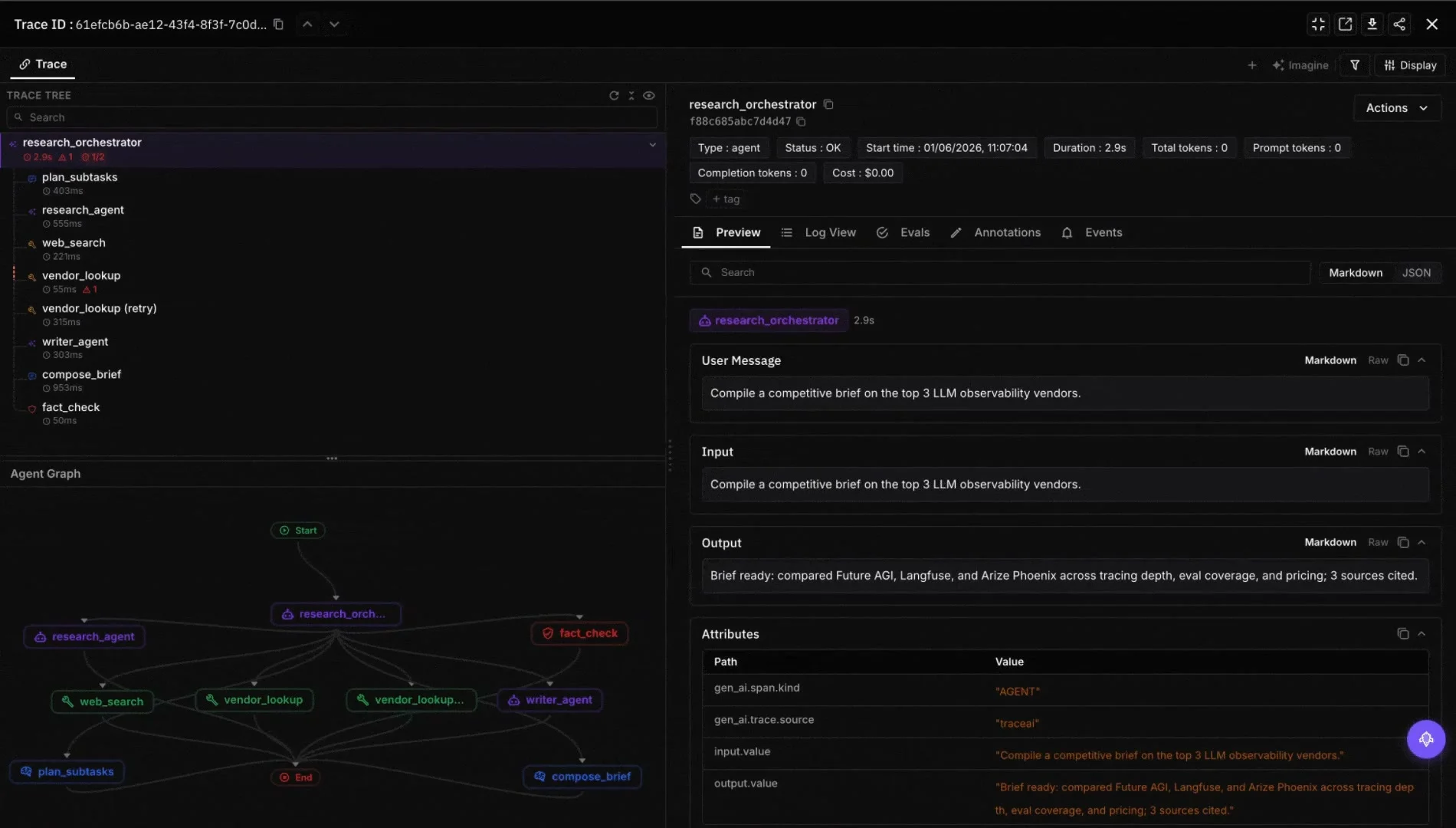
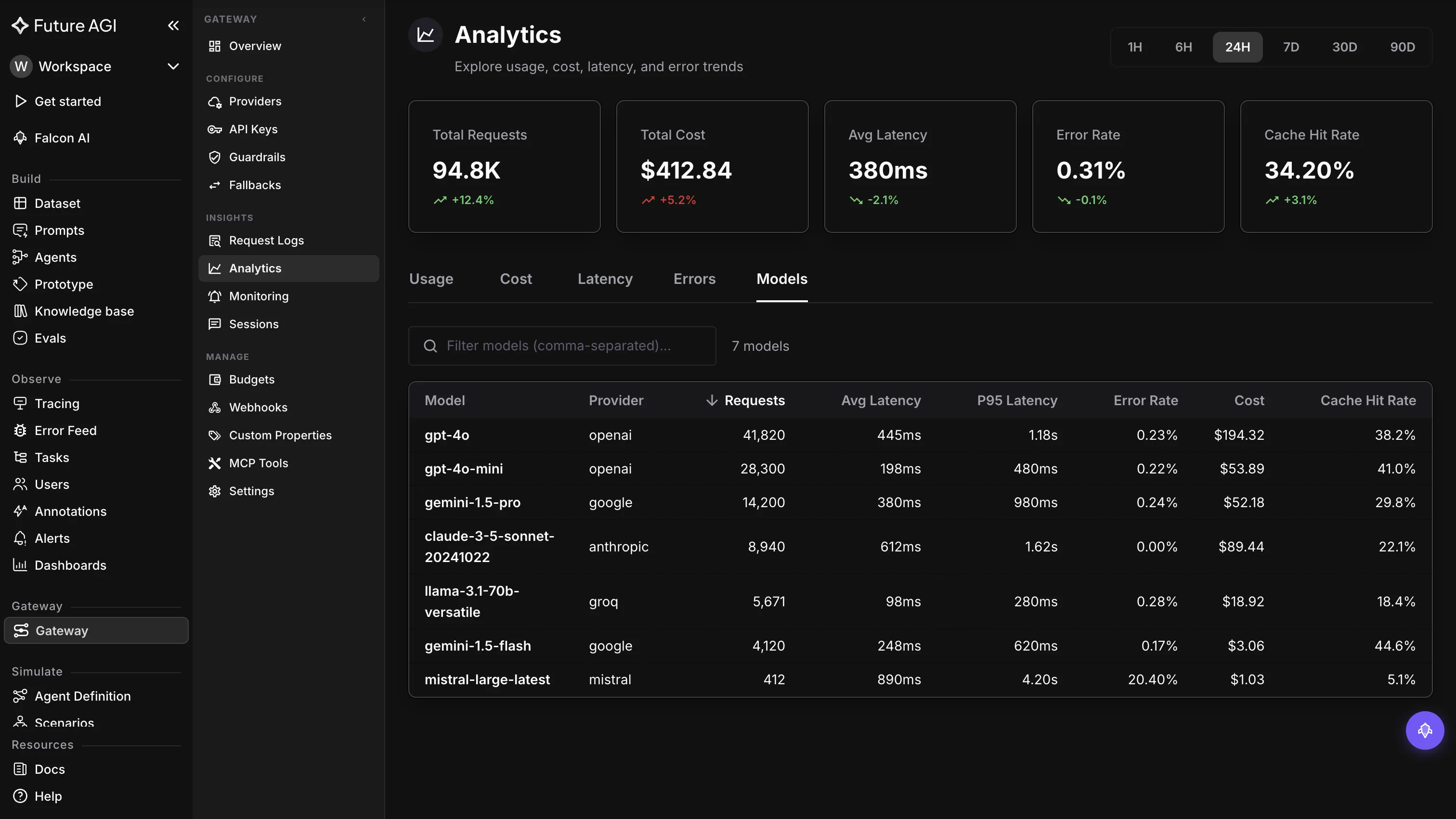
augment=True makes the cascade a config flag. SamplingConfig makes per-route stratification a parameter. KubernetesBackend(namespace="evaluations", image=...) makes the runner a deployment decision. Same Evaluator API across all four backends. SOC 2 Type II, HIPAA, GDPR, CCPA per futureagi.com/trust; ISO 27001 in active audit. Start on the free tier; move to paid usage when the trace count crosses the free ceiling.
Sources
Future AGI pricing · ai-evaluation · traceAI · Agent Command Center · Galileo Luna · Galileo pricing · Braintrust pricing · Phoenix · Arize pricing · Langfuse · Langfuse pricing · Apache Spark · Apache Beam
Related reading
Frequently Asked Questions
What does 'testing LLMs at scale' actually mean?
Why does single-threaded eval break at production volume?
What's the difference between a thread pool and a distributed runner?
What is the classifier cascade and why does it matter at scale?
Why does per-route sampling matter?
How do Future AGI's four distributed runners pick themselves at deployment?
Where do Phoenix, Langfuse, Braintrust, and custom Spark/Beam fit?
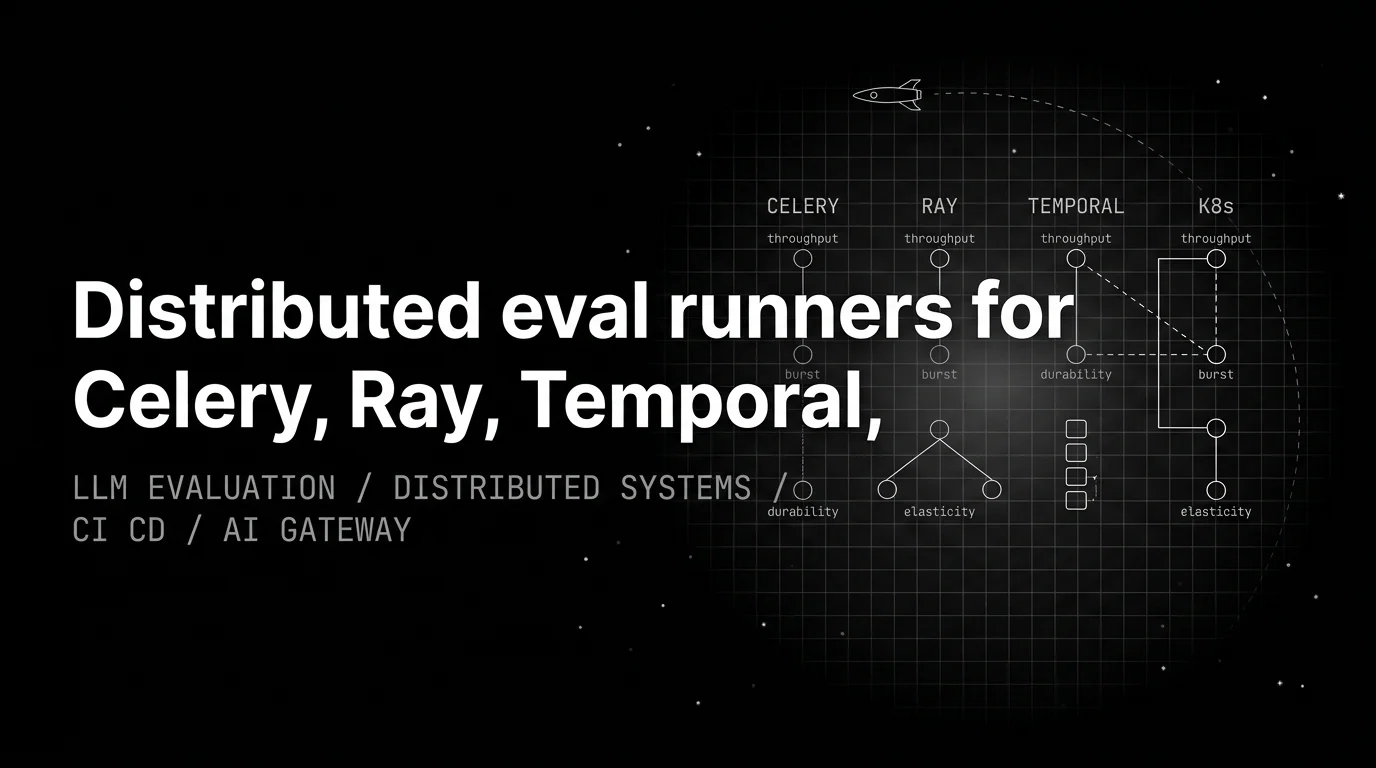
Celery, Ray, Temporal, and Kubernetes optimise for different things. Pick by your bottleneck, not by fashion. 2026 engineering decision guide.


Cost-efficient AI evaluation in 2026 is the cascade: classifiers, local heuristics, cheap judges. 7 platforms compared on per-eval cost.

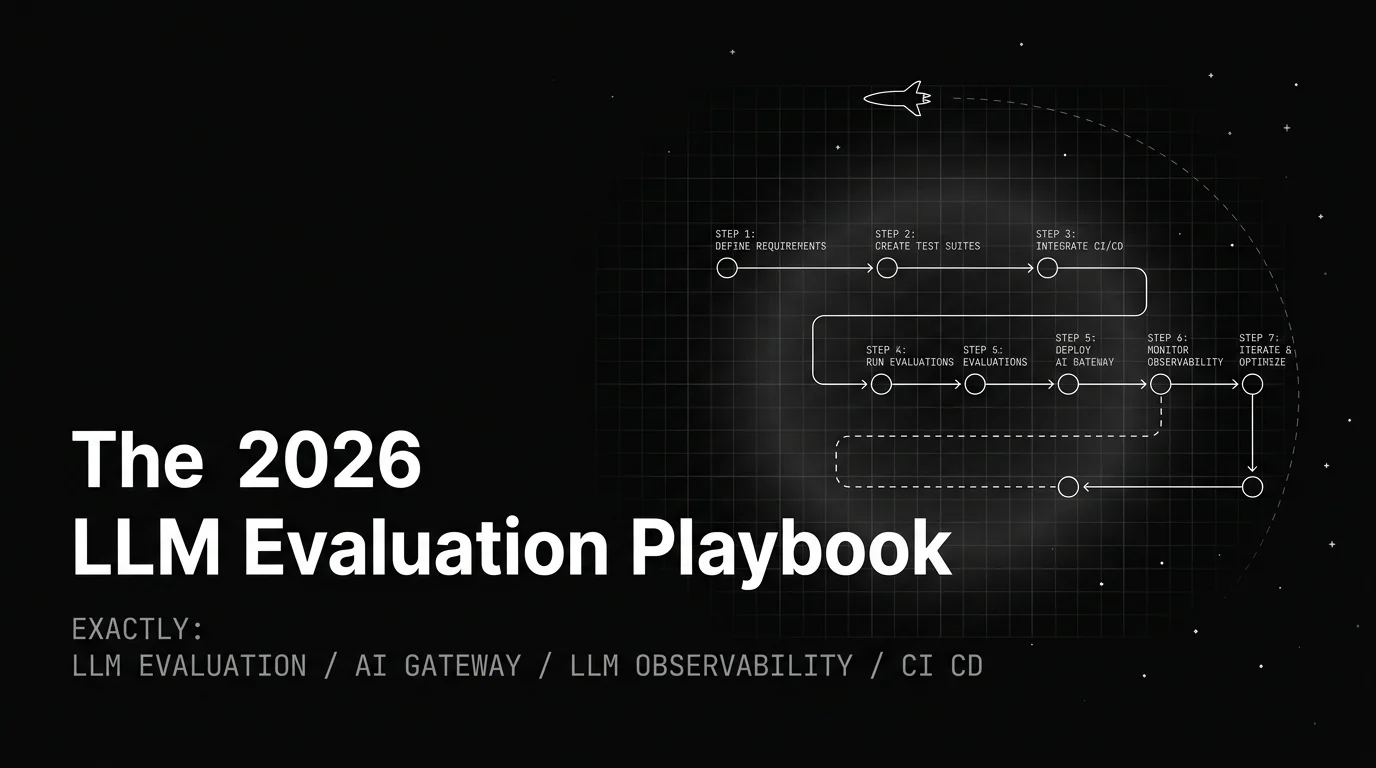
The pillar playbook for LLM evaluation in 2026: dataset, metrics, judge, CI gate, production observation, closed loop from failing trace to regression.
