RAG vs Fine-Tuning: A 2026 Decision Framework
RAG vs fine-tuning is the wrong question. RAG for facts that change, fine-tune for behavior that doesn't. Three axes, three patterns, the eval.
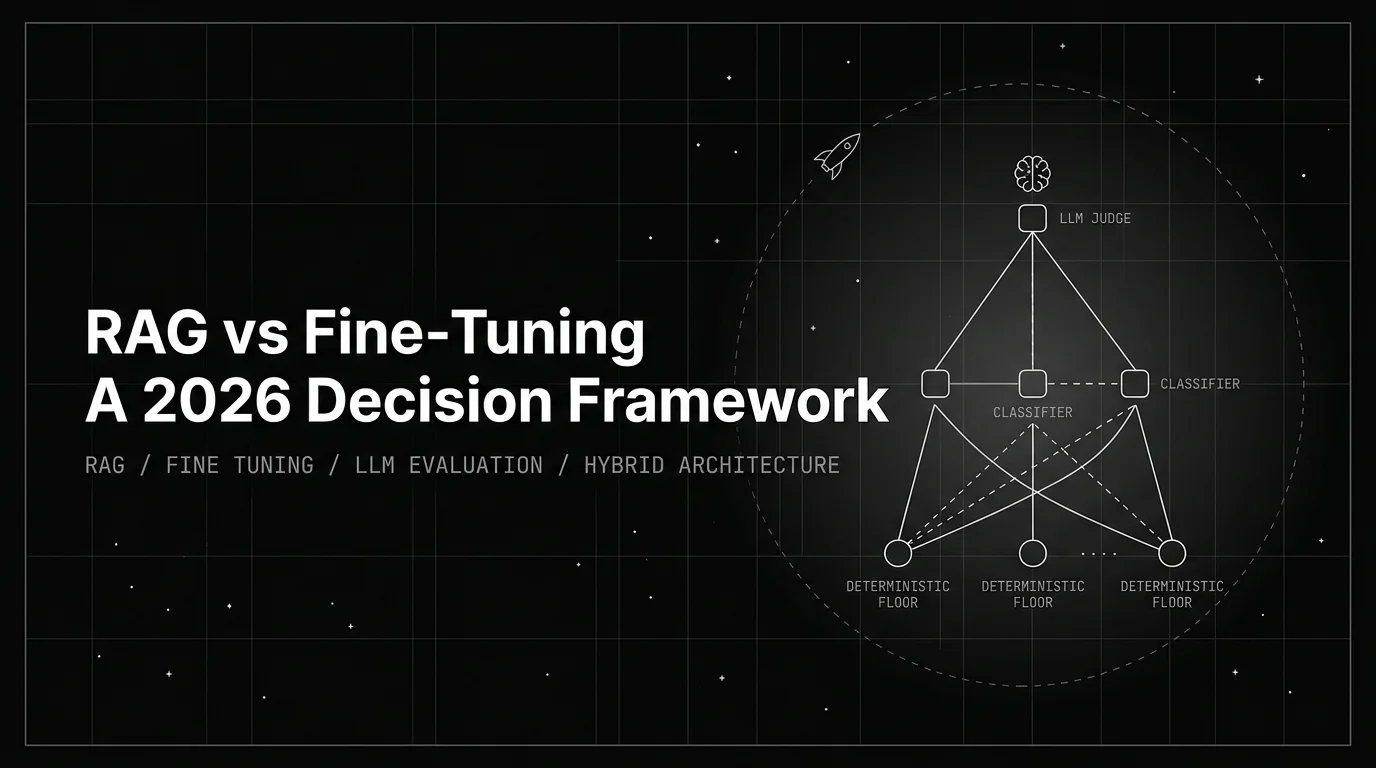
Table of Contents
Six weeks into the build, the team has a clean retrieval pipeline, a reranker that earned its place, and a chunking strategy that actually helps recall. The agent quotes the docs correctly most of the time. Then the product team wants brand voice, consistent refusals on out-of-scope questions, and structured JSON for downstream tools. RAG can do none of those things cleanly. The first fine-tuning conversation lands on the calendar that afternoon, and the doc says RAG vs fine-tuning.
That framing is the bug. Posed as a binary, the question forces a religious answer that ignores what the failure mode actually is. The opinion this post earns: RAG vs fine-tuning is the wrong question. The right framework is RAG for facts that change, fine-tune for behavior that doesn’t, and most production systems in 2026 need both. The decision is three axes (knowledge volatility, behavior specificity, cost-at-volume) and three patterns that fall out of them. The eval stack is the part that tells you which leg is doing the work.
TL;DR: the three axes, the three patterns
| Axis | RAG signal | Fine-tune signal |
|---|---|---|
| Knowledge volatility | Facts change weekly or faster | Static or quarterly cadence |
| Behavior specificity | Lookup-and-cite is enough | Tone, format, refusal style must be internalized |
| Cost at volume | Long-tail varied prompts | High-volume similar prompts, sub-200 ms latency |
| Pattern | When it wins | The failure it cannot avoid |
|---|---|---|
| RAG-only | High volatility, audit demands citations, multi-tenant data | Cannot enforce a brand tone or structured output cleanly |
| Fine-tune-only | Static domain, sub-200 ms latency, repeated prompts | Ships yesterday’s facts as confident answers |
| Hybrid | Production default for most teams | Contradiction between trained-in belief and retrieved doc |
If you only remember three things: pick on volatility first, layer the behavior fine-tune only when RAG hits a wall, and run the same rubric against both legs so you know which one solved which failure.
The framing problem
“RAG vs fine-tuning” treats two tools as substitutes when they solve different problems. Fine-tuning changes what the model knows and how it talks; RAG changes what the model is shown at query time. A model that quotes the right doc but reasons over it like a generalist still fails the product. A model that reasons brilliantly but hallucinates the doc citation still fails the regulator. Neither failure mode is a tooling argument. It’s a diagnostic one.
The question keeps coming back because the answer keeps moving. Small context windows in 2023 made fine-tuning the obvious teacher. 100K-plus context made RAG the default in 2024. By 2025 RAG saturated on freshness but stalled on tone, refusal calibration, and structured-output discipline. In 2026 cheap-tier fine-tuning (LoRA at small ranks, distilled bases like Gemma 3n and Llama 3.2) became a days-not-weeks process and the hybrid pattern proved out in production. The right question is not which one wins. It’s which axis is your failure mode on. Characterize the workload, pick the leg that solves the failure you actually have, and add the second leg only when the first one demonstrably runs out of road.
The three-axis decision
Axis 1: knowledge volatility
How often do the facts that drive correct answers change? This is the most load-bearing axis, and the one most teams underweight when fine-tuning sounds interesting.
If the facts change daily (product catalog, pricing, support docs, internal policy, regulatory bulletins), fine-tuning is the wrong primary architecture. Re-indexing a corpus is cheap (one embedding call per new document); re-running a training loop every time a doc changes is not. RAG keeps the index outside the model and refreshes by reindexing.
If the knowledge is static (a legal corpus that updates quarterly, a programming language reference, a fixed methodology), fine-tuning can internalize the patterns and skip the retrieval hop entirely. The pragmatic line: changes more than once a week, default RAG. Changes less than once a quarter, fine-tune is in the conversation. Anything between, score both and let the rubric pick. The retrieval-augmented generation explainer walks the pipeline cost; the continued pretraining post covers what a fresh checkpoint actually buys.
Axis 2: behavior specificity
How specific is the required behavior (tone, format, refusal style, reasoning rhythm), and can a prompt enforce it?
RAG is excellent at lookup-and-cite. The model finds the right chunks, grounds an answer in them, and emits citations. It is much weaker at internalizing a behavior that is itself the value. If the task is diagnose this clinical presentation the way an oncologist would or review this contract the way a litigator would, the reasoning rhythm is the product, and that rhythm is hard to spec in a system prompt without bloating the context window. Style and structured-output discipline drift over long sessions; a fine-tune anchors them in weights. Match the architecture to the failure shape. The fine-tuning pipeline post covers what the training surface buys when behavior is the gap.
Axis 3: cost at volume
The cost calculus depends on the volume-times-similarity of the prompt distribution. High-volume similar prompts (ticket triage, intent detection, structured extraction) amortize a fine-tune cheaply: train once, run a small fast model billions of times. A long-tail varied distribution (open-ended Q&A, multi-step planning) defeats that amortization because most prompts at inference time look unlike any prompt the fine-tune saw during training. RAG handles the long tail better.
The 2026 economics test: at projected volume, what does a fine-tuned 7B model on a cheap inference path cost per million calls versus a frontier model with RAG context, holding rubric scores equal? Half the cost with a calibrated eval-delta floor and the fine-tune earns the route. Otherwise stay on RAG. Latency lives inside this axis. A retrieval hop with a tuned reranker is rarely under 100 ms p95, and sub-200 ms voice or fraud-scoring paths often cannot afford it. The voice latency post covers the tail-budget arithmetic.
The three patterns that fall out of the axes
Pattern A: RAG-only
Signals: high volatility, audit wants citations, multi-tenant data, behavior specificity low enough that a clean prompt and a strong base model cover it. Most B2B SaaS document Q&A, internal knowledge assistants, and regulated-industry retrieval workloads sit here. Architecture: one model, per-tenant vector namespaces, hybrid retrieval (dense plus BM25) with a cross-encoder reranker, structured output with cited spans, citation validation before the response leaves the server.
Buys: knowledge that refreshes on a separate cadence from the model, citations a regulator can audit, per-tenant isolation without a fine-tune per customer. Cannot avoid: a brand tone that drifts under load, refusal calibration dependent on the system prompt holding under adversarial input, structured-output discipline that needs validators because the base model doesn’t internalize the schema. The RAG architecture post covers the pipeline shape.
Pattern B: fine-tune-only
Signals: static or quarterly knowledge, high behavior specificity, sub-200 ms latency, high-volume similar prompts. Voice agents on a fixed domain, real-time intent classifiers, structured extraction at scale, code-completion variants. Architecture: a LoRA-tuned small base on a cheap inference path, no retrieval, prompts shaped tightly against the training distribution, a CI gate that scores the candidate against the base on four eval sets every release.
Buys: latency that beats RAG by the retrieval hop, cost per call that beats a frontier model by an order of magnitude at scale, a behavior contract that holds because it lives in the weights. Cannot avoid: outdated facts as confident answers, because the model has no way to know it is wrong. A FineTuneFreshnessPenalty rubric against a fresh ground-truth set every release keeps this honest. The evaluating fine-tuned LLMs post covers the four-set gate.
Pattern C: hybrid
Signals: the workload sits in the middle of the axes. Knowledge is fresh enough that fine-tuning alone ships stale facts; behavior is specific enough that RAG-only ships off-brand answers. Most customer-facing agents, support assistants with branded refusal, B2B copilots over evolving documentation. Architecture: a fine-tuned base for tone, refusal calibration, and structured output, layered on top of RAG retrieval for facts and citations. The fine-tune doesn’t have to know the facts. It has to know how to talk about them.
Buys: a model that talks like the brand, grounds answers in actual content, costs less than a frontier model at scale, and outscores either single-architecture build on the rubrics that matter. Cannot avoid: contradiction between trained-in belief and retrieved doc. The fine-tuned base “knows” a value from training; the retrieval layer surfaces a doc that says the opposite. A CustomLLMJudge rubric scoring do the model’s claims contradict the cited content is the test that catches this. The agentic RAG systems post covers the composition pattern.
Hybrid is the 2026 production default for any workload in the middle of the axes. The discipline that earns the complexity: score each leg in isolation, then score the hybrid. If hybrid doesn’t beat the better of the two pure builds on the primary rubric by a meaningful margin, you are over-engineering; roll back.
The eval that catches each wrong call
The mistake teams make is scoring RAG with one rubric set and fine-tuning with another, then comparing numbers across rubric definitions. The numbers are not comparable. Score all three architectures with the same shared template suite against the same golden set, and add architecture-specific rubrics on top.
Shared core, as EvalTemplate classes from the ai-evaluation SDK: Groundedness, ContextAdherence, Completeness, FactualAccuracy, TaskCompletion. Architecture-specific add-ons: for RAG, ChunkAttribution and ContextRelevance plus a CustomLLMJudge RAGCitationIntegrity rubric that fires when the model paraphrases past the citation; for fine-tune, a FineTuneFreshnessPenalty rubric that penalizes claims about dynamic facts (prices, regulations, product specs) the model cannot verify against a fresh source; for hybrid, the union of both plus a contradiction rubric scoring whether the prose disagrees with the cited chunk.
A minimal run that scores all three with the shared core plus their specific add-ons:
from fi.evals import Evaluator
from fi.evals.templates import (
    Groundedness,
    ContextAdherence,
    Completeness,
    FactualAccuracy,
    TaskCompletion,
    ChunkAttribution,
    ContextRelevance,
)
from fi.evals.metrics.llm_as_judges.custom_judge.metric import CustomLLMJudge
from fi.evals.llm.providers.litellm import LiteLLMProvider
from fi.testcases import TestCase

evaluator = Evaluator()  # FI_API_KEY / FI_SECRET_KEY from env

shared = [
    Groundedness(),
    ContextAdherence(),
    Completeness(),
    FactualAccuracy(),
    TaskCompletion(),
]

rag_judge = CustomLLMJudge(
    provider=LiteLLMProvider(),
    config={
        "name": "rag_citation_integrity",
        "model": "claude-sonnet-4-5-20250929",
        "grading_criteria": (
            "Every factual claim must reference a chunk_id from the retrieved "
            "context and the cited chunk must support the claim. Score 1.0 if "
            "all claims are cited and grounded, 0.0 otherwise."
        ),
    },
)

freshness_judge = CustomLLMJudge(
    provider=LiteLLMProvider(),
    config={
        "name": "finetune_freshness_penalty",
        "model": "claude-sonnet-4-5-20250929",
        "grading_criteria": (
            "Penalize any claim about dynamic facts (prices, regulations, "
            "product specs, dates) that cannot be verified against the "
            "provided ground_truth_freshness_set. Score 1.0 if all dynamic "
            "claims are fresh, 0.0 if any are stale."
        ),
    },
)

rag_results = evaluator.evaluate(
    eval_templates=shared + [ChunkAttribution(), ContextRelevance()],
    inputs=[TestCase(...) for case in golden_set],
)
ft_results = evaluator.evaluate(
    eval_templates=shared,
    inputs=[TestCase(...) for case in golden_set],
)
hybrid_results = evaluator.evaluate(
    eval_templates=shared + [ChunkAttribution(), ContextRelevance()],
    inputs=[TestCase(...) for case in golden_set],
)
Four distributed runners (Celery, Ray, Temporal, Kubernetes) parallelize the comparison so the sweep across three architectures finishes in minutes. The RAG evaluation deep-dive and evaluating fine-tuned LLMs post walk the per-architecture rubric shapes; this post is the wrapper that compares them on one contract.
Each architecture has a characteristic wrong call. RAG fails on retrieval: the answer-bearing chunk is missing from the top-k, the model anchors on a more salient wrong chunk, or it paraphrases past the citation. ChunkAttribution, ChunkUtilization, and the citation-integrity judge surface these. Fine-tuning fails on freshness: the model confidently states a regulation, price, or product spec that was true at training time but is no longer current. FactualAccuracy against a fresh ground-truth set catches this. Hybrid fails on contradiction: the fine-tuned base knows something from training that the retrieved doc disagrees with. The contradiction judge is the test, and the rubric most teams skip until the first incident.
How Future AGI ships the comparison
The hard part is not picking one architecture. It’s running all three against the same contract in production conditions and reading the comparison honestly. The Agent Command Center gateway at https://gateway.futureagi.com/v1 is the apples-to-apples telemetry layer: an OpenAI-compatible interface for all three paths, with 100+ provider coverage (verified May 14 2026) so a hosted fine-tune lives behind the same endpoint as the RAG path. Per-call headers emit canonical telemetry: x-prism-cost for dollar cost, x-prism-latency-ms for total time, x-prism-model-used for what answered, x-prism-fallback-used for whether the primary route degraded.
import openai

client = openai.OpenAI(
    base_url="https://gateway.futureagi.com/v1",
    api_key="your-gateway-key",
)

# RAG-only: frontier model with retrieved context injected
rag = client.chat.completions.create(
    model="claude-sonnet-4-5",
    messages=[
        {"role": "system", "content": SYSTEM_WITH_RETRIEVED_CONTEXT},
        {"role": "user", "content": user_question},
    ],
    extra_headers={"x-prism-tag-architecture": "rag-only"},
)

# Fine-tune-only: hosted fine-tuned model, no retrieval
ft = client.chat.completions.create(
    model="acme-finetune-v3",
    messages=[{"role": "user", "content": user_question}],
    extra_headers={"x-prism-tag-architecture": "fine-tune-only"},
)

# Hybrid: hosted fine-tuned model with retrieved context
hybrid = client.chat.completions.create(
    model="acme-finetune-v3",
    messages=[
        {"role": "system", "content": SYSTEM_WITH_RETRIEVED_CONTEXT},
        {"role": "user", "content": user_question},
    ],
    extra_headers={"x-prism-tag-architecture": "hybrid"},
)
Tag each call with the architecture and you have a clean cost-per-call and latency-per-call dataset sliced by route, tenant, or prompt class. That’s the only honest way to answer is the fine-tune saving money in real production or is the RAG hop a tail-latency problem at p99. The agent cost optimization post covers the telemetry pattern.
Error Feed closes the loop. HDBSCAN soft-clustering groups live failures; a Sonnet 4.5 Judge writes an immediate_fix per cluster. Common clusters: RAG misses recent product spec because the vector index hasn’t been re-indexed (a Completeness drop); fine-tune states an outdated regulation (a FactualAccuracy drop against a fresh ground-truth set); hybrid serves a fine-tuned response that contradicts a retrieved doc (a Groundedness drop with the citation pointing at the contradicting chunk). Fixes feed the Platform’s self-improving evaluators so the rubric tightens against failures the system actually sees. Classifier-backed evals price below Galileo Luna-2 per call, which makes daily comparison runs affordable; the full stack is SOC 2 Type II, HIPAA, GDPR, and CCPA certified.
Anti-patterns that cost weeks
Starting with fine-tuning because it sounds rigorous. Fine-tuning is harder to roll back, harder to debug, and costlier to iterate on than RAG. Start with RAG. Fine-tune only on the specific routes where RAG hits a wall on one of the three axes, and verify the wall on the rubric, not in the standup.
RAG without citation enforcement. If you chose RAG partly for audit, ship a RAGCitationIntegrity rubric in CI. Without enforcement the model paraphrases past the citation and you lose the auditability that justified the architecture.
Fine-tuning without a freshness regression test. A fine-tuned model is a snapshot of facts as of training time. A FineTuneFreshnessPenalty rubric against a fresh ground-truth set has to run on every checkpoint. Without it the model states yesterday’s truth as today’s fact and the eval gate never noticed.
Hybrid without isolating the legs. A hybrid you cannot decompose is a hybrid you cannot optimize. Score RAG-only, fine-tune-only, and the hybrid on the same golden set. If you cannot answer which leg solved which failure mode, you are flying blind on the most expensive architecture you can ship.
What to do this week
If the RAG-vs-fine-tune question is open on the build:
- Write the three-axis memo. One sentence per axis on volatility, specificity, and cost-at-volume. Get team agreement before any code changes.
- Sample 200 to 500 traces from production (or generate them if production traffic isn’t there yet). The golden set is the most expensive and most useful artifact in the whole exercise.
- Score RAG-only against the golden set with the shared suite plus
ChunkAttribution,ContextRelevance, andRAGCitationIntegrity. - Score fine-tune-only with the shared templates plus
FineTuneFreshnessPenalty. - Score the hybrid with the union plus a contradiction rubric. Ship the simplest architecture that wins by a meaningful margin on the primary rubric; if hybrid doesn’t clear the better single build, ship the simpler one.
- Route production traffic through the gateway for cost-and-latency telemetry, instrument with traceAI’s OpenInference spans, and turn on Error Feed so live failures cluster into the rubric you tighten next.
The framework is one week of disciplined work. The cost of skipping it is months of building the wrong architecture and re-architecting after the failures surface. The eval stack scores both legs on one contract and lets you compare. That’s the part that turns a religious argument into an engineering one.
Related reading
- What is Retrieval Augmented Generation? (2026)
- Evaluating Fine-Tuned LLMs: A 2026 Playbook
- Fine-Tuning Pipeline Evaluation: A 2026 Deep Dive
- LLM Eval vs Fine-Tuning: When to Do What (2026)
- Evaluating RAG Faithfulness: A 2026 Deep Dive
- Agentic RAG Systems (2025)
- RAG Architecture for LLMs (2025)
- AI Agent Cost Optimization and Observability (2026)
Frequently Asked Questions
Is RAG vs fine-tuning really the wrong question?
When should I pick RAG-only?
When should I pick fine-tune-only?
Why is hybrid the production default in 2026?
How do I score RAG, fine-tune, and hybrid on the same contract?
What are the anti-patterns when picking between RAG and fine-tuning?
How does Future AGI close the loop on RAG-vs-fine-tune comparisons in production?
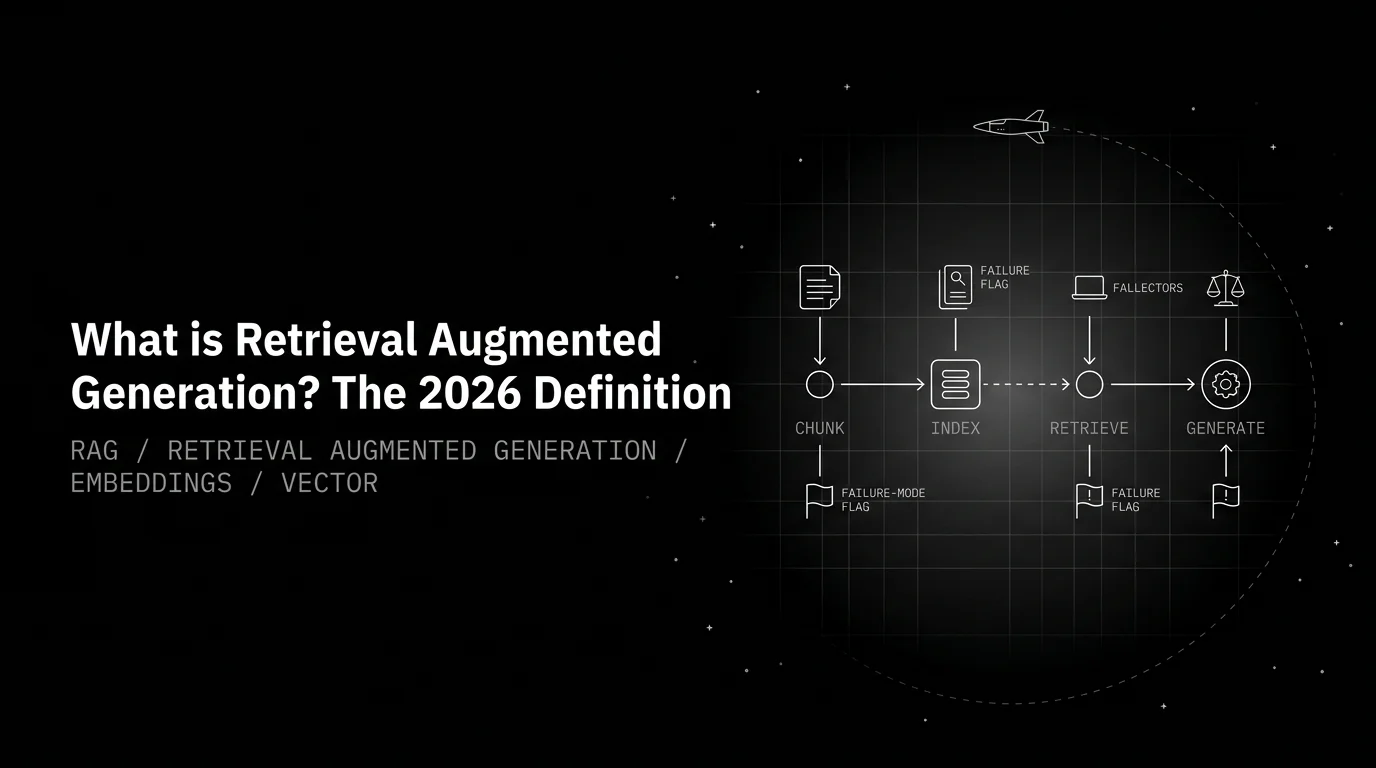
RAG is four pipeline stages and three failure modes per stage. A methodology reference for picking each stage and measuring what it broke.

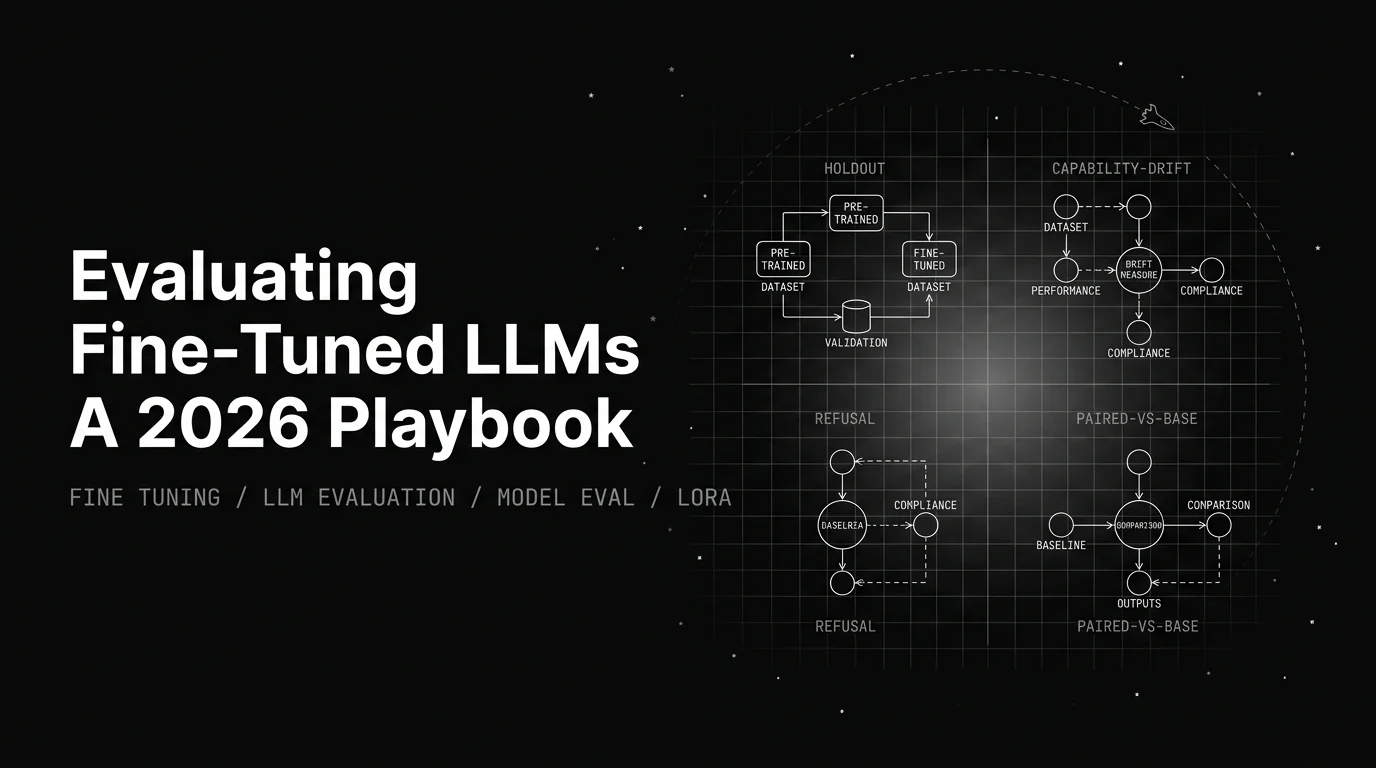
Fine-tune eval in 2026 without the theatre: four-set gap, paired arena against base, bootstrap CI math, CI gate in code, production canary on spans.

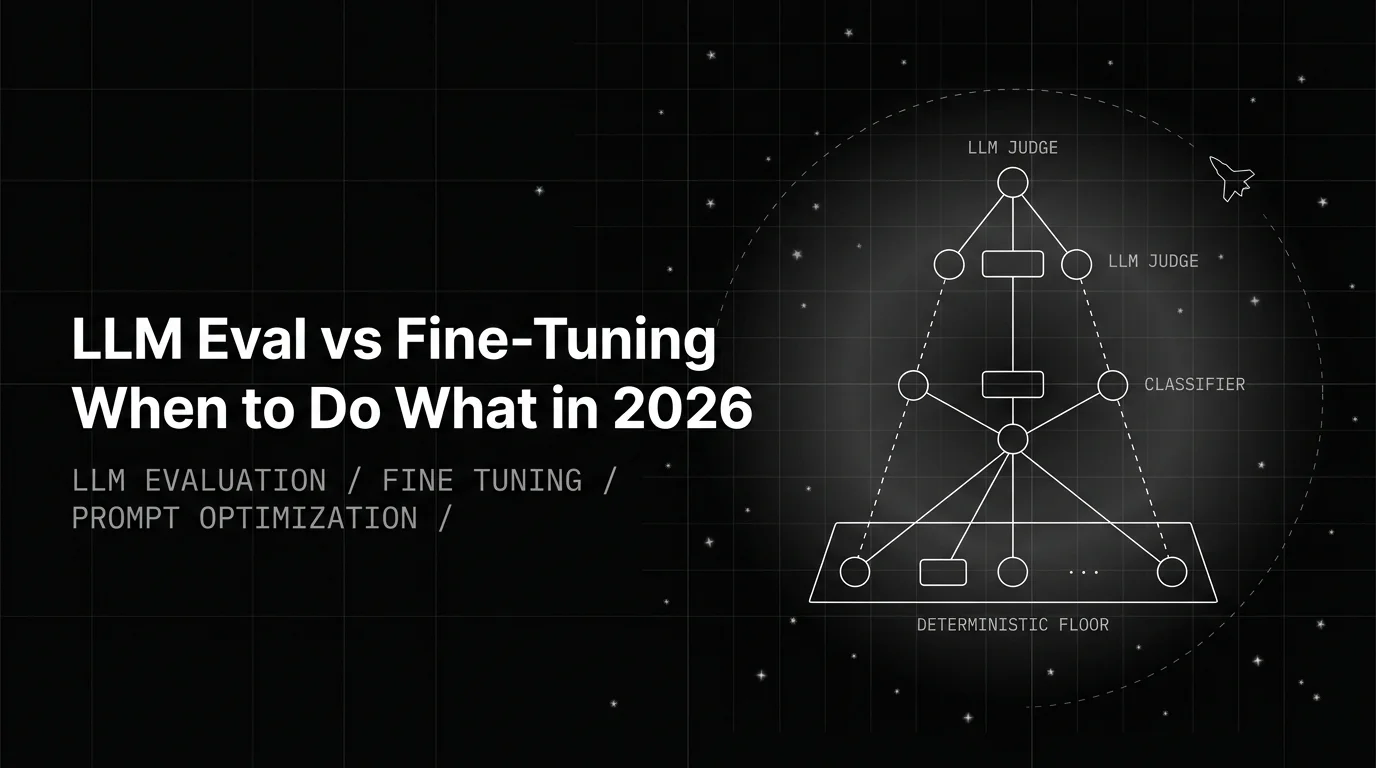
When eval-driven prompt optimization is enough vs fine-tuning, the seven decision axes, and the five-step path that ships most teams without retrain.