AI Agent Cost Optimization and Observability in 2026
Agent cost optimization is an observability problem: trace-attributed cost, per-resolved-outcome, routing policies, quality-bounded swaps.
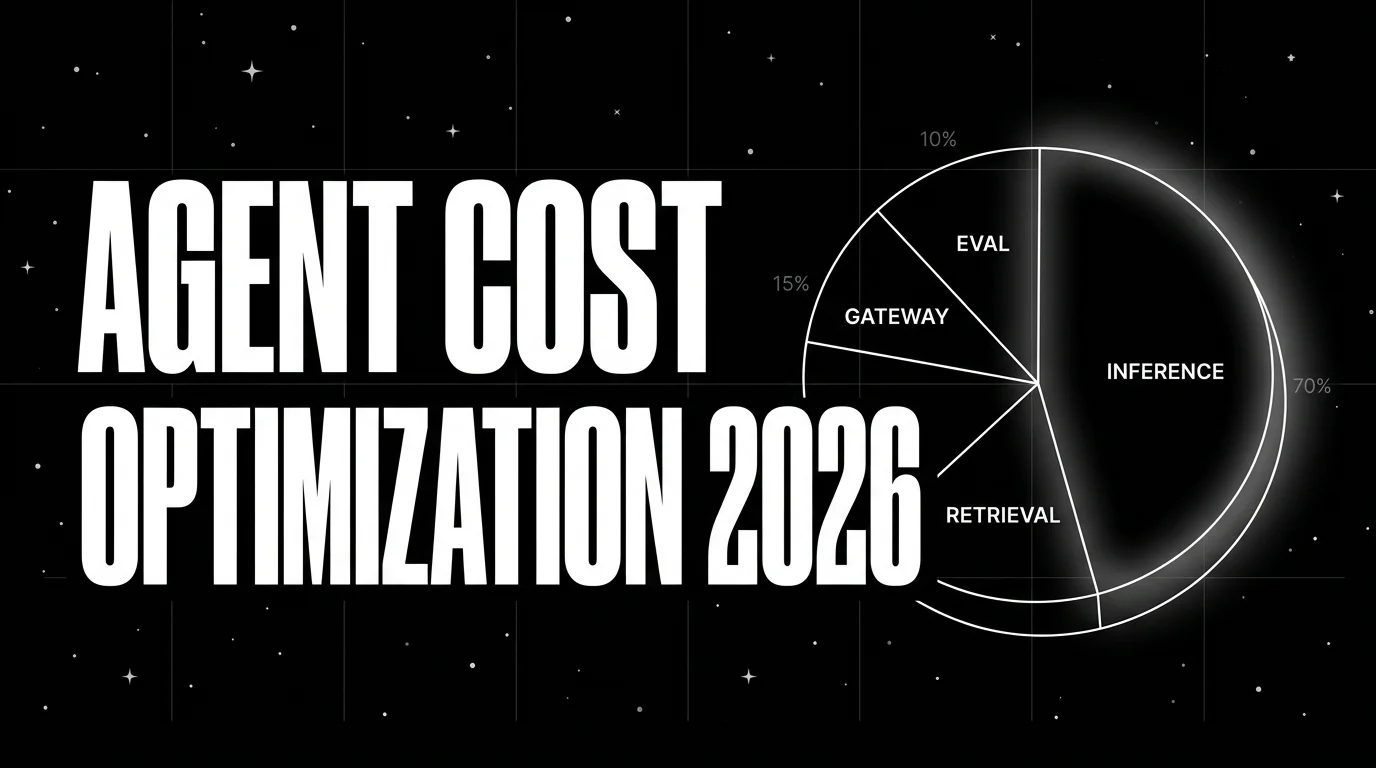
Table of Contents
You shipped a Cursor-powered SDK rewrite last quarter and the bill came in at twelve thousand dollars. Half was a single feature flag calling Claude Sonnet on every keystroke, two weeks before anyone noticed. The post-mortem reads the same way every time. Nobody capped the key. Nobody knew which route held the spend. Nobody could tell whether the 12K bought 800 accepted PRs or 80. By the time finance asked, the trail was cold.
This is the agent cost problem in 2026. It is not a token-pricing problem. It is an observability problem dressed up as one, and the usual fix (pick a smaller model, ship it everywhere) costs more in quality regressions than it saves in dollars. You can’t optimize agent cost without first measuring it per trace. Cost-per-resolved-outcome is the metric. Cost-per-token is a line item. Until cost lives on the same span as latency, the model name, and the eval score, every cost decision is guesswork with a confidence interval that includes “we made it worse.”
This guide is the playbook for engineers running production agents at scale: Cursor and Codex internal builds, Claude Code rollouts, Cline workflows, customer-support agents, coding copilots, the long tail of in-house tooling. Trace-attributed cost is step one. Cost-per-outcome is the metric. Routing policy, quality-bounded substitution, semantic caching, and per-virtual-key budgets are the levers. The Agent Command Center is the gateway-shaped place where they live together.
Why most agent cost reduction backfires
The default playbook teams reach for is some version of “swap GPT-4o for Haiku and watch the line go down.” It does go down. So do three things nobody attributed. The smaller model loops more on the planner step because it picks the wrong tool first. The smaller model retries on tool-call errors it would have parsed cleanly. The smaller model returns a less useful answer, the user re-asks, the next turn lights up the meter again. Each failure mode is a separate cost line. Without per-trace attribution, none of them show up on the dashboard.
The visible line is cost-per-call. The line that matters is cost-per-resolved-conversation, cost-per-accepted-PR, cost-per-booked-meeting — whatever your outcome event is. Token-price wins routinely show up as outcome-rate losses two weeks later, and nobody connects the two because the dashboard didn’t ask the right question. The fix isn’t a different model. The fix is a metric that ties the dollar to the outcome, and traces that let you walk back from a missed outcome to the step that broke.
Cost optimization without trace attribution is optimization blind. You can downsample a judge that was already four percent of the bill, you can cap tokens on a route the gateway was already caching for free, you can route the planner step to a smaller model that doubles the trajectory length. Each move is plausible in isolation. None of them survive a query against per-trace data.
Trace-attributed cost is the foundation
The first move is wiring cost as a first-class span attribute, the same way latency and the model name already are. Cost lives on the response, set by the gateway handler before the body returns. The trace processor stores it. Every dashboard, alert, and optimization decision starts from a query against that store.
The Agent Command Center sets four headers on every response: x-agentcc-cost (the dollar cost of the call), x-agentcc-latency-ms (the gateway-measured latency), x-agentcc-model-used (the resolved model after routing), and x-agentcc-cache (hit or miss). The Prometheus surface exposes agentcc_cost_total, agentcc_tokens_total, agentcc_cache_hits_total, and agentcc_requests_total, all labelled by provider and status. OTLP traces export to any OTel collector. The cost number shows up on the same span as the trajectory, the tool calls, and the eval score.
curl https://gateway.futureagi.com/v1/chat/completions \
  -H "Authorization: Bearer sk-agentcc-..." \
  -H "Content-Type: application/json" \
  -d '{"model":"anthropic/claude-3-5-sonnet","messages":[...]}'  \
  -D headers.txt

# Response headers:
# x-agentcc-model-used: anthropic/claude-3-5-sonnet
# x-agentcc-cost: 0.000075
# x-agentcc-latency-ms: 612
# x-agentcc-cache: miss
What you do with the number is the rest of the post. The point of this section: there is no version of agent cost optimization that works without it. If your runtime can’t tell you the cost of a single trace, in dollars, at the span level, you are working from aggregates and aggregates hide the problems.
Cost-per-outcome is the only honest denominator
Pick the outcome event that the business actually cares about. For a support agent, it’s resolved-conversation. For a coding agent, it’s accepted-pull-request or merged-commit. For a sales SDR, it’s booked-meeting. For Cursor- or Codex-style internal builds, it’s accepted-edit or completed-task. Whatever the event is, instrument it once, join cost spans to it, divide.
Cost-per-token tells you the agent got cheaper. It tells you nothing about whether each dollar still buys what it used to. Cost-per-outcome catches the failure mode where a 40 percent cost cut shows up as a 16-point resolution-rate drop on the same route. The token-price line went down. The outcome-price line went up. Only the second metric stops the rollout.
Two practical notes. The outcome event is a write to the trace, same as any other span attribute, a span labelled outcome.resolved=true or outcome.accepted=true. The cost denominator is a join, not a separate pipeline. And the metric is a leading indicator only if you can attribute the outcome to the trace within minutes. Daily rollups hide the bad day; minute-level joins surface it while the rollout is still reversible.
This is the pattern the agent-observability-vs-evaluation-vs-benchmarking split keeps coming back to. Observability is the system that lets you ask the question on production traffic. Cost is one more axis. Outcome is the denominator that makes the axis honest.
Routing policies that don’t break the trajectory
Once cost-per-outcome is live, routing is the largest single lever. The wrong move is “route everything cheaper.” The right move is route-by-step, with the gateway making the decision and the trace recording which model actually ran.
Four patterns earn their keep:
- Cheap-first cascade. Try the smaller model first. If the response fails a fast structural check (parses as the expected schema, hits a confidence threshold, passes a guardrail), keep it. If it fails, retry on the frontier model. Net savings depend on cascade hit rate; 50 to 70 percent of traffic settling on the cheap tier is typical on classification-heavy steps.
- Semantic routing. A lightweight classifier reads the request and routes by intent: simple lookups to a small model, planner steps to a frontier model, formatter steps to the smallest model that can produce valid output. Harder to debug than static rules, but flexible.
- Deterministic-first. Before any LLM call, check a rule table or a regex. The query that asks for the current date doesn’t need a model. The query that asks for a known constant doesn’t need a model. The query that matches a cached scaffold returns the scaffold. LLMs handle what’s left.
- Race for latency. Send the request to two providers, return the first response, cancel the loser. Costs more per call. Pays back in p99 latency for user-facing routes where slow responses cost worse than tokens. Use sparingly.
The Agent Command Center exposes these as routing strategies and execution modes — weighted, least-latency, cost-optimized, adaptive, and race. Routing rules are YAML, not redeploys, so swaps are config changes. Six native provider adapters (OpenAI, Anthropic, Gemini, Bedrock, Azure, Cohere) plus 100-plus more via OpenAI-compatible presets cover the surface.
The pattern that backfires is static routing with no shadow path. You pick a cheaper model for a step, ship it, and only learn later that the trajectory now loops twice as often. The fix is gating the rollout on the next section.
Quality-bounded substitution: only swap if the band holds
Every model swap is a hypothesis. The hypothesis is “the cheaper model’s quality on this specific step is within an acceptable band of the more expensive one.” The mistake teams make is shipping the swap and finding out later. The mistake is not the swap. The mistake is the missing experiment.
The pattern that works: define the band before the swap, run shadow or mirror traffic to the candidate, score both, ship only when the band holds.
- Pick the rubric. Per step, not per trajectory. The planner step’s rubric is “did it pick the right tool”; the formatter step’s rubric is “did it produce valid JSON”; the responder step’s rubric is faithfulness, helpfulness, refusal correctness. Same rubric scores both the current and candidate model.
- Pre-commit the band. “Candidate is allowed to ship if its rubric score stays within 0.03 of the incumbent on a 500-trace shadow set, and within 0.05 on a 95th-percentile slice of hard cases.”
- Run shadow or mirror. The gateway mirrors a percentage of live traffic to the candidate. The trace processor scores both. The dashboard shows the band continuously.
- Flip or roll back. When the band holds for the agreed window, promote. When it doesn’t, the swap dies on the bench and the line item never moved.
This is the difference between a model substitution that survives a quarter and one that gets reverted in a Tuesday standup after the support queue lights up. The agent-passes-evals-fails-production post is the longer version of why static eval sets aren’t enough for the rollout decision; this is the cost-side application.
# Per-step rubric scored on both incumbent and candidate
from fi.evals import Evaluator
from fi.evals.templates import EvaluateFunctionCalling

evaluator = Evaluator(fi_api_key="...", fi_secret_key="...")

result = evaluator.evaluate(
    eval_templates=[EvaluateFunctionCalling()],
    inputs=[{"input": planner_input, "output": planner_output}],
)
# Score per step. Join to gateway cost on the same trace.
# Promote candidate only when band holds.
The honest tradeoff: shadow traffic is real traffic, real tokens, real dollars. You’re paying for the experiment. The discipline is treating shadow cost as the price of not regressing CSAT — usually one to three weeks of mirror traffic at 10 to 25 percent of volume, then a decision. Cheap compared to the alternative.
Per-virtual-key budgets for developer and team spend
The Cursor bill, the Codex internal-tool bill, the Claude Code rollout bill: all share one structural property. A small number of developers, a shared provider account, no visibility, no caps. The bill is the alert. By the time finance asks, the trail is cold.
Per-virtual-key budgets fix it at the gateway. The pattern is one key per developer, team, feature, or environment. Each key carries a cap. The gateway tracks spend in a counter, the counter resets on the configured period (daily, weekly, monthly), and a request that would blow the cap returns a structured 429 with the level that blocked.
The Agent Command Center tracks budgets at five levels in the same hierarchy: org, team, user, key, tag. A single request inherits the lowest applicable ceiling. The mechanics:
- Org-level. The top of the funnel. One global cap so a runaway script can’t sink the quarter.
- Team-level. Map to your engineering teams. Platform team gets a different cap than the customer-success internal tool.
- User-level. Per-developer caps. The Cursor power user with a heavy autocomplete habit gets a higher cap than the occasional user, and both are surfaced before the bill arrives.
- Key-level. One key per feature or environment. CI gets a hard daily cap that returns 429 when blown. The Friday-afternoon prototype gets a soft cap that pages the owner at 80 percent.
- Tag-level. Free-form. Tag by route, by experiment, by tenant. Tag-level caps catch the experiment that ran a week longer than planned.
Each level supports warn_threshold (default 0.8) and a hard or soft mode. Hard returns 429. Soft logs, alerts, and lets the request through. The combination is what keeps a fifty-developer team predictable across a hundred provider keys, three environments, and twelve product surfaces.
budgets:
  enabled: true
  default_period: monthly
  warn_threshold: 0.8
  org:
    limit: 50000
    hard: false
  teams:
    platform:   { limit: 12000, hard: false }
    support-cx: { limit: 8000,  hard: true  }
  keys:
    ci-tests:   { limit: 200, hard: true, period: daily }
Semantic caching makes the bill survivable
A non-trivial fraction of agent traffic is the same query in different clothes. The same import-error explanation. The same lint fix. The same “write a test for this function” against the same function. Exact-match cache catches literal repeats. Semantic caching catches the paraphrased ones.
The Agent Command Center ships both as native layers. Exact-match L1 is in-memory or Redis. Semantic L2 is Qdrant, Weaviate, or in-memory vector store. Each cache hit returns in single-digit milliseconds with zero token cost. The trace records the hit as a span attribute, so the cost-per-outcome metric counts the cache hit as a free outcome instead of a missing one.
Hit rates depend on workload. Coding agents land 30 to 50 percent on shared codebases. RAG agents with stable corpora hit 30 to 60 percent on the embedding side. Customer-support agents hit hardest on policy questions and billing FAQs — bands above 50 percent are common. The only configuration the caller needs is per-request override headers (x-agentcc-cache-force-refresh, x-agentcc-cache-ttl, x-agentcc-cache-namespace) for the cases where the cached answer is the wrong answer.
The mistake to avoid: caching without invalidation on prompt or system-message changes. The system prompt changed; the cached answer is now wrong; the user gets stale output for a week. Tie cache namespace to the prompt version. When the prompt ships, the namespace flips, the cache repopulates.
What you’re actually trading
Three tradeoffs to name out loud:
- Span-attached cost adds operational surface. Cost as a span attribute means the gateway, the trace processor, and the dashboard all have to agree on the schema. Payoff: every cost decision is a query, not a guess. Teams that already run OpenTelemetry pay the smaller version of this cost.
- Cheap-first cascades raise variance. Sometimes the cheap tier returns a worse answer that passes the structural check. The fix is sampling the cascade for human review on a small slice and feeding disagreement back into the rubric. Cascade quality is a continuous calibration, not a one-time setup.
- Per-key budgets create friction. A hard cap that returns 429 will eventually block a developer mid-task. That’s the point. The alternative is the surprise twelve-thousand-dollar bill. Tune the warn-threshold to alert the owner before the block fires.
How Future AGI ships the trace-cost loop
Future AGI ships agent cost observability as part of one platform, not three. The pieces that matter for the loop in this post:
Agent Command Center is the gateway. OpenAI-compatible drop-in via base_url="https://gateway.futureagi.com/v1" — existing OpenAI SDK code keeps working. Six native provider adapters (OpenAI, Anthropic, Gemini, Bedrock, Azure, Cohere) plus 100-plus more through OpenAI-compatible presets. Routing strategies cover weighted, least-latency, cost-optimized, adaptive, and race. Mirror and shadow rules ship as first-class config for the quality-bounded substitution pattern. Response headers expose x-agentcc-cost, x-agentcc-latency-ms, x-agentcc-model-used, x-agentcc-provider, and x-agentcc-cache on every call. Prometheus on /-/metrics. OTLP traces to any collector. Single Go binary, Apache 2.0, self-host or hit the cloud endpoint at gateway.futureagi.com/v1.
Budgets are five-level (org, team, user, key, tag), with warn-threshold and hard/soft semantics. Caching is exact-match L1 plus semantic L2 against Qdrant, Weaviate, or in-memory. The benchmarked Go runtime hits roughly 29k req/s with P99 at 21 ms on a t3.xlarge with guardrails on.
traceAI carries the cost attribute through to your traces. Python, TypeScript, Java, and C#, 50-plus AI surfaces, OpenTelemetry-native. The cost-per-outcome join lives in your trace store, not in a separate billing pipeline.
ai-evaluation is the rubric layer for the quality-bounded substitution band. Code-defined evaluators, the same templates running in pytest against the shadow set and against live traces. When the band holds, the swap ships. When it doesn’t, the cost line stays where it was.
Ready to attribute your agent’s bill to specific traces? Point your OpenAI SDK at https://gateway.futureagi.com/v1, read x-agentcc-cost on the response, and instrument the outcome event. The rest of the playbook (routing, substitution, budgets, caching) runs on the same gateway. Start with the Agent Command Center quickstart and the traceAI integration guide.
Related reading
- Your Agent Passes Evals and Fails in Production. Here’s Why. (2026)
- Agent Observability vs Evaluation vs Benchmarking (2026)
- Best AI Agent Observability Tools (2026)
- Best LLM Gateways (2026)
- Best AI Gateway for Claude Code Cost Management (2026)
- Best AI Gateways for Codex CLI Token Spend (2026)
- LLM Cost Optimization: Product-Engineering Collaboration to Reduce AI Spend by 30%
Frequently Asked Questions
Why is agent cost optimization fundamentally an observability problem?
What is the right cost metric for an AI agent?
How do quality-bounded model substitutions work in practice?
What does a per-virtual-key budget actually enforce?
How does semantic caching change cost economics for coding agents?
Why does the 'smaller model everywhere' approach usually lose money?
How does Future AGI's Agent Command Center handle the trace-attributed cost loop?
Helicone, Langfuse, Datadog LLM cost, Braintrust, Phoenix, Portkey, FutureAGI compared on per-tenant, per-feature, per-agent token attribution.

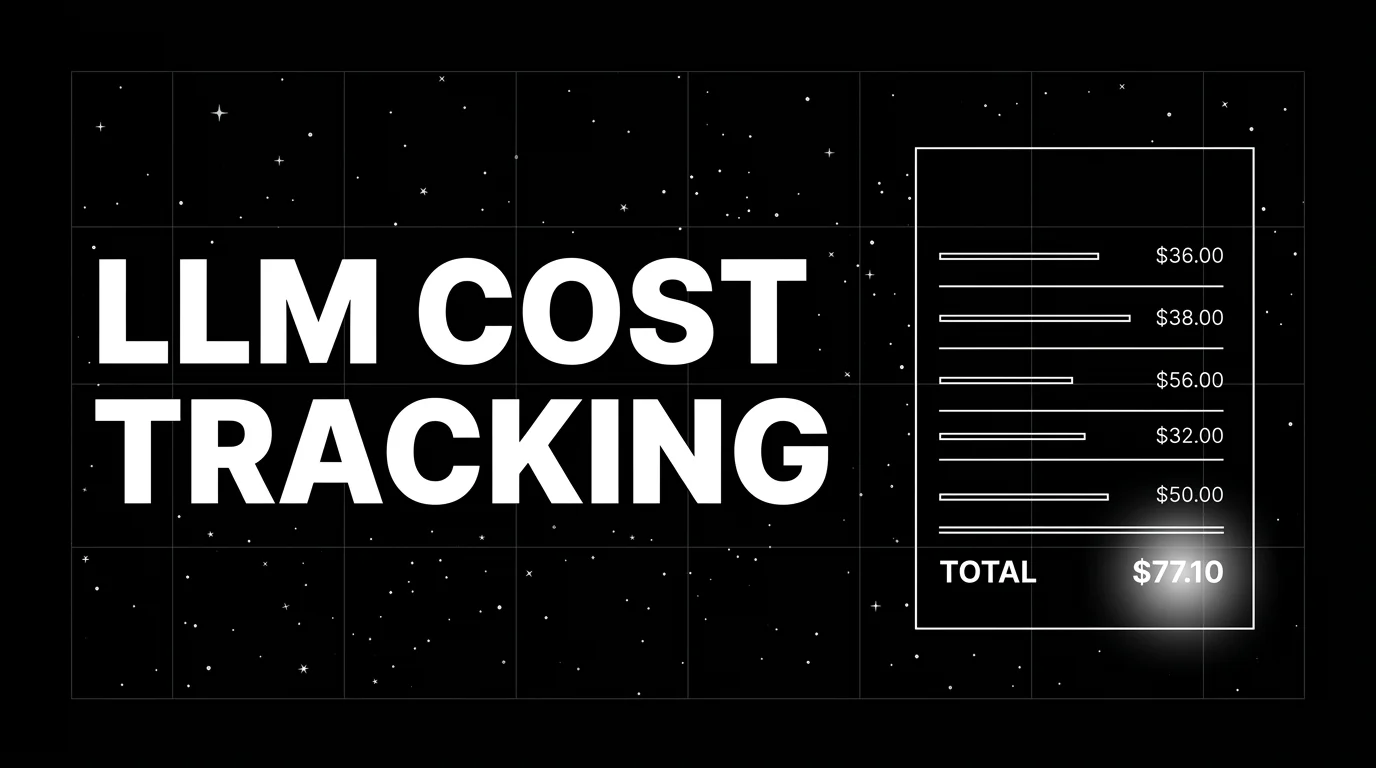
LLM cost tracking 2026: token-level attribution, per-user spend caps, reasoning vs cache, gateway aggregation, drift. Practices that actually scale.

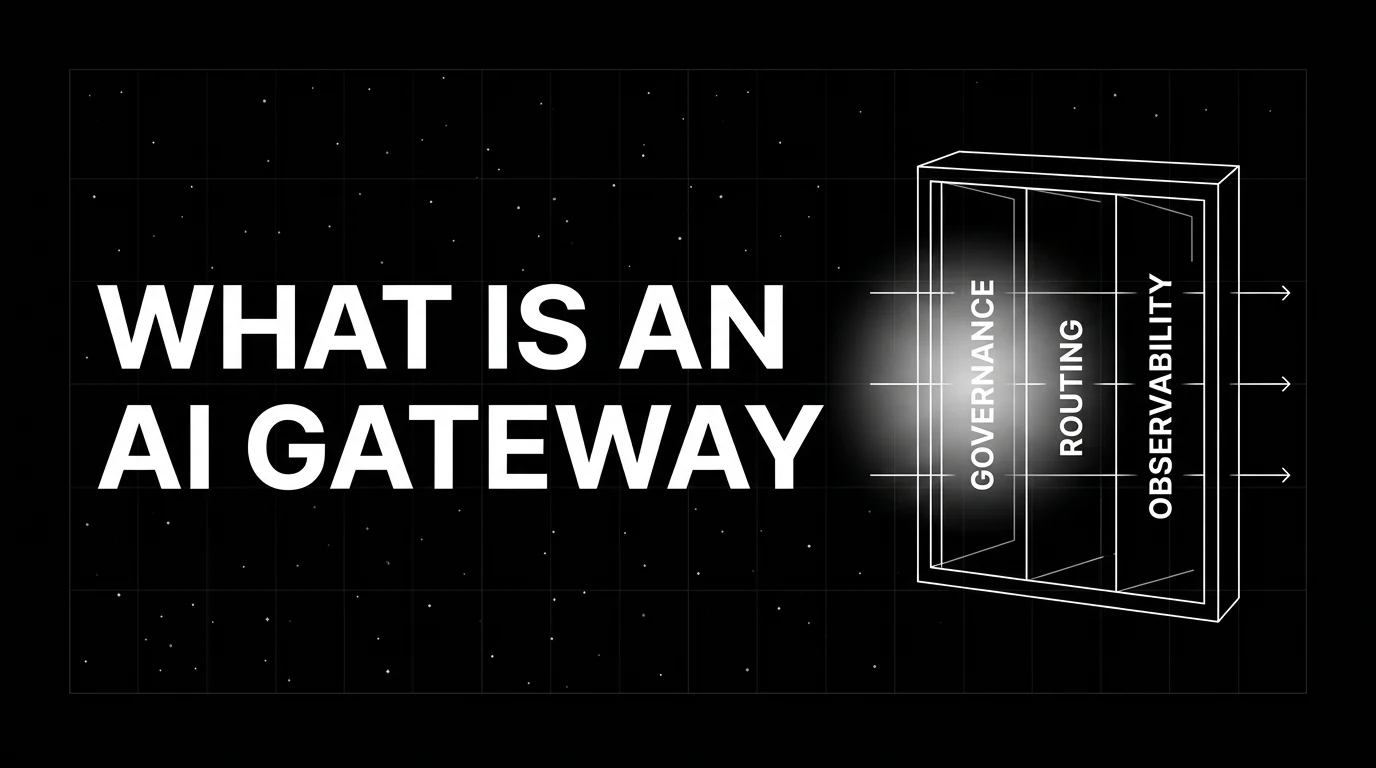
An AI gateway sits between apps and LLM providers for governance, routing, observability. What it is, how it differs from API gateways.