Evaluating Streaming LLM Responses in 2026: The Four-Metric Playbook
Streaming LLM evaluation is four metrics, not one. TTFT, inter-token p99, mid-stream consistency, premature termination. The honest 2026 playbook.
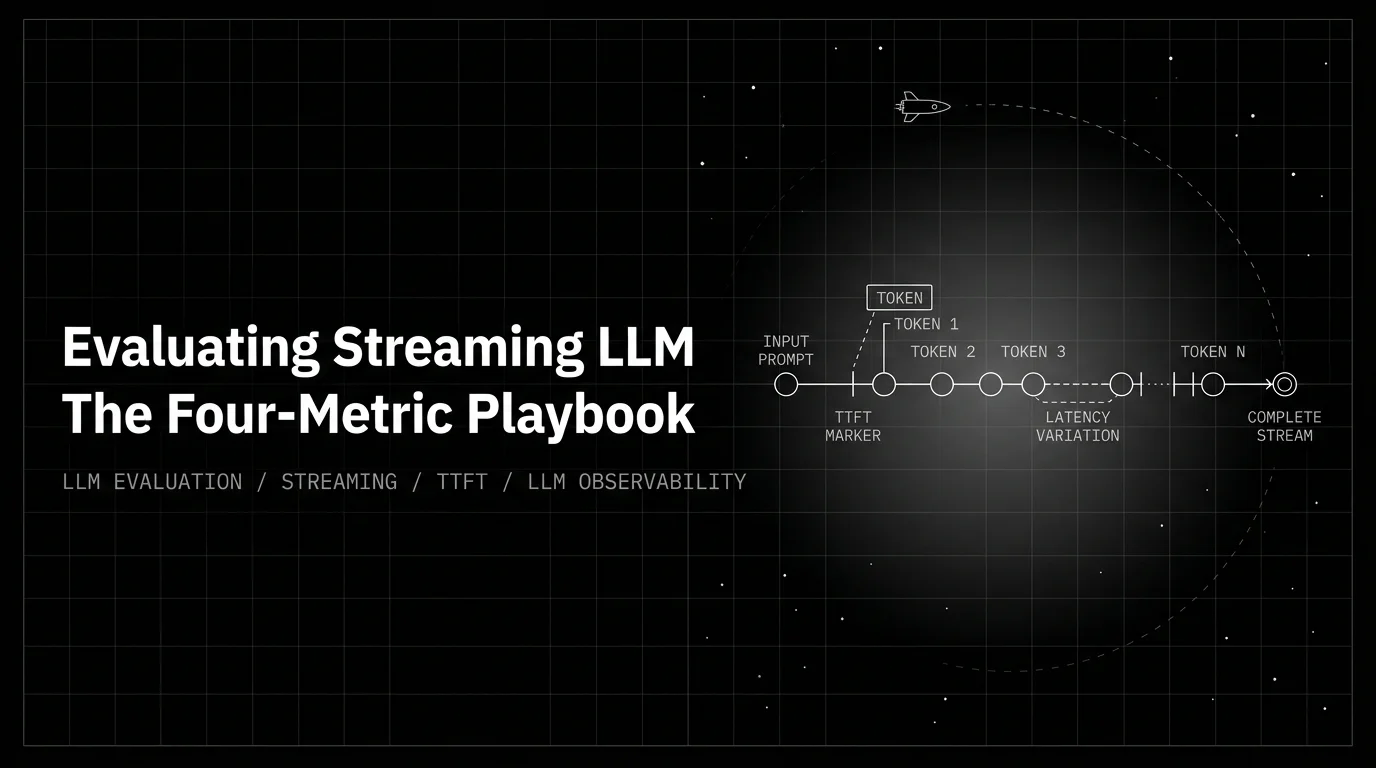
Table of Contents
Originally published May 19, 2026. Updated May 20, 2026.
Streaming LLM evaluation is four metrics, not one. TTFT is what users feel. Inter-token p99 and jitter is what kills long-context UX. Mid-stream consistency is what makes streamed answers look broken even when the final string is correct. Premature termination is the silent killer most teams never instrument. Most streaming eval suites in 2026 measure TTFT, ship, and quietly regress on the other three. This guide walks the four metrics, the instrumentation that makes each one extractable from your trace tree, and the FAGI surfaces (traceAI streaming attributes, gateway-side guardrail headers, Error Feed clustering) that wire it end to end.
TL;DR
Four metrics gate a streaming eval suite. TTFT p95 at 200-600 ms for frontier models, 80-250 ms for distilled; median doesn’t gate, p95 does. Inter-token p99/p50 ratio under 7x; anything higher is jitter the user notices. Mid-stream consistency scored with a chunk-by-chunk judge on the SSE deltas; flag when chunk N contradicts chunk N+1. Premature termination caught by joining finish_reason with a TaskCompletion score; the silent failure is stop plus zero completion. traceAI emits the OTel GenAI streaming attributes, Agent Command Center runs guardrails at the gateway hop, and Error Feed clusters failing traces into named issues.
Why TTFT alone isn’t streaming evaluation
Streaming changes three things at once. Output arrives token-by-token across hundreds of milliseconds. The user starts reading at first-token, so user-perceived latency is TTFT, not total duration. And the response keeps producing content after each chunk, which means a check on the final string only fires too late.
Most eval suites fall short here. The offline pipeline accumulates SSE deltas into a string, runs Groundedness, ContextAdherence, TaskCompletion, and reports pass-fail. That tells you what the user saw at the end. It tells you nothing about what the user saw during the stream.
Three production patterns make the gap concrete. A B2C copilot ships a new system prompt; TTFT drifts from 320 ms to 1.4 seconds and the dashboard reports green because completions still finish under three seconds. A code-completion agent flushes its provider buffer in 800 ms bursts past 4K tokens; p50 inter-token stays at 30 ms but p99 hits 1200 ms and the IDE feels frozen. A support agent silently truncates at token 60 because someone capped max_tokens for cost; the user reads “I’m sorry to hear about your,” refreshes, and churns. None of these fail a final-output rubric. All three fail in production.
A streaming-native suite treats the stream as a first-class object with timing attributes, per-chunk checkpoints, and a finish reason — then scores all four.
Metric 1: TTFT is what users feel
TTFT is the wall-clock duration from when the gateway accepts the request to when the first token reaches the client. For a chat UI, this is the only latency number the user perceives directly. Frontier models behind a tuned gateway run 200-600 ms; distilled models on Groq or Cerebras run 80-250 ms; an inline guardrail at the gateway adds 30-120 ms.
Gate on p95 per route, not the median. A 400 ms median with a 1.8 second p95 means one in twenty users is having a broken-feeling session. Set the regression gate at +20 percent over the prior week’s p95.
traceAI emits the OpenTelemetry GenAI convention gen_ai.server.time_to_first_token on the parent LLM span for every streaming completion. Auto-instrumentation wraps OpenAI, Anthropic, Gemini, LangChain, and Groq, so you don’t write the timer.
from fi_instrumentation import register
from fi_instrumentation.fi_types import ProjectType
from traceai_openai import OpenAIInstrumentor

trace_provider = register(
    project_type=ProjectType.OBSERVE,
    project_name="streaming-chat",
)
OpenAIInstrumentor().instrument(tracer_provider=trace_provider)
Every chat.completions.create(stream=True) call now emits a span with stream=true, the OTel TTFT and per-output-token attributes, total duration, tokens streamed, and the reconstructed output. The TTFT budget rubric is a deterministic check: pass if gen_ai.server.time_to_first_token is at most 120 percent of the route’s budget, fail otherwise. No LLM judge needed.
For where these spans plug into the wider observability stack, see agent observability vs evaluation vs benchmarking.
Metric 2: Inter-token p99 and jitter
The inter-token interval drives the “smooth typing” feel. A stream with a 30 ms p50 looks like a human typing. A 30 ms p50 with a 1200 ms p99 stutters visibly, and the user notices the freeze even though the average rate looks fine.
Gate on the ratio of p99 to p50 per stream, aggregated per route. Healthy chat sits around 5x. Past 7x, the route is jittery. The most common cause past 4K tokens is the provider’s internal buffer flushing in irregular bursts; the fix is usually a route swap to a smoother long-context provider.
The OTel convention gen_ai.server.time_per_output_token covers per-token timing; traceAI adds inter_token_ms_p50 and inter_token_ms_p99 as percentile rollups so the rubric doesn’t compute them from a stream of events.
The eval gate is deterministic; the work is in the clustering. When p99 rises across a slice of traffic, Error Feed groups failing streams by model, route, context_length_bucket, and provider, then writes an immediate_fix paragraph naming the bucket. “Inter-token p99 stutter past 4K tokens on gpt-4o via us-east” is a different ticket from “p99 stutter on claude-3-5-sonnet past 8K tokens”.
Metric 3: Mid-stream consistency
Mid-stream consistency is the silent UX killer in streaming. The model emits a confident claim at token 50, refines its reasoning between tokens 100 and 150, and contradicts the earlier claim at token 200. In a batch completion, the rephrase happens before render and the user only sees the final answer. In a stream, the user reads the first version, watches the contradiction land, and rates the answer broken — even when the final string is correct.
Score it with a chunk-by-chunk judge on the reconstructed deltas. Split the stream into roughly 80-token chunks. Run a CustomLLMJudge (or a deterministic check followed by a judge on the failures) that asks: does chunk N+1 materially contradict, retract, or invalidate any claim made in chunks 1 through N? Healthy chat sits below 2 percent flagged. Above 5 percent, the model or system prompt is producing visibly contradictory streams.
The rubric shape:
from fi.evals import CustomLLMJudge

mid_stream_consistency = CustomLLMJudge(
    provider=judge_provider,
    config={
        "name": "MidStreamConsistency",
        "grading_criteria": (
            "You are given an earlier portion of a streamed LLM "
            "response and a later portion. Return PASS if the later "
            "portion does not contradict, retract, or invalidate any "
            "claim the earlier portion has already shown to the user. "
            "Return FAIL otherwise. Include a one-line reason citing "
            "the specific contradiction."
        ),
    },
)
This metric only matters for streaming. Batch can rephrase freely; the user never sees the intermediate draft. The streaming suite catches what the batch suite was never built to see. For more on judge-based tradeoffs, see deterministic vs LLM judge evals.
Metric 4: Premature termination
Most teams never instrument this and it hurts the most. Streams cut off mid-sentence, finish_reason reports length, and nobody notices until the support queue fills up. Worse, the stream terminates with finish_reason=stop but the model never answered the question. Both look fine in a TTFT dashboard.
Instrument two attributes: finish_reason per stream (stop, length, content_filter, tool_calls, or error) and a TaskCompletion score on the reconstructed output. Healthy chat runs over 95 percent stop and under 2 percent length. The interesting cell is stop plus TaskCompletion=0: the stream finished cleanly without answering. That’s the silent failure.
| Pattern | What it means | Action |
|---|---|---|
length rate climbing | max_tokens cap too low for the route | Raise cap or route to a model with more headroom |
content_filter rate climbing | Guardrail tripping mid-stream | Audit the rail policy; tune or downgrade severity |
stop plus TaskCompletion=0 | Model gave up without answering | System prompt regression; ProTeGi or GEPA the prompt |
tool_calls plus orphan span | Streamed tool call never closed | Tracer-side; verify the instrumentor handles streaming tool deltas |
Gate on the length rate (regress on +2 points week over week) and on the stop plus zero-completion combination (regress on +1 point). Deterministic checks; the rubric work is small.
How traceAI captures streaming spans
traceAI is FAGI’s OpenTelemetry-compatible tracer; streaming attributes live on the parent LLM span. Auto-instrumentation wraps the streaming surface of every supported SDK, so you don’t write the timer or the chunk accumulator.
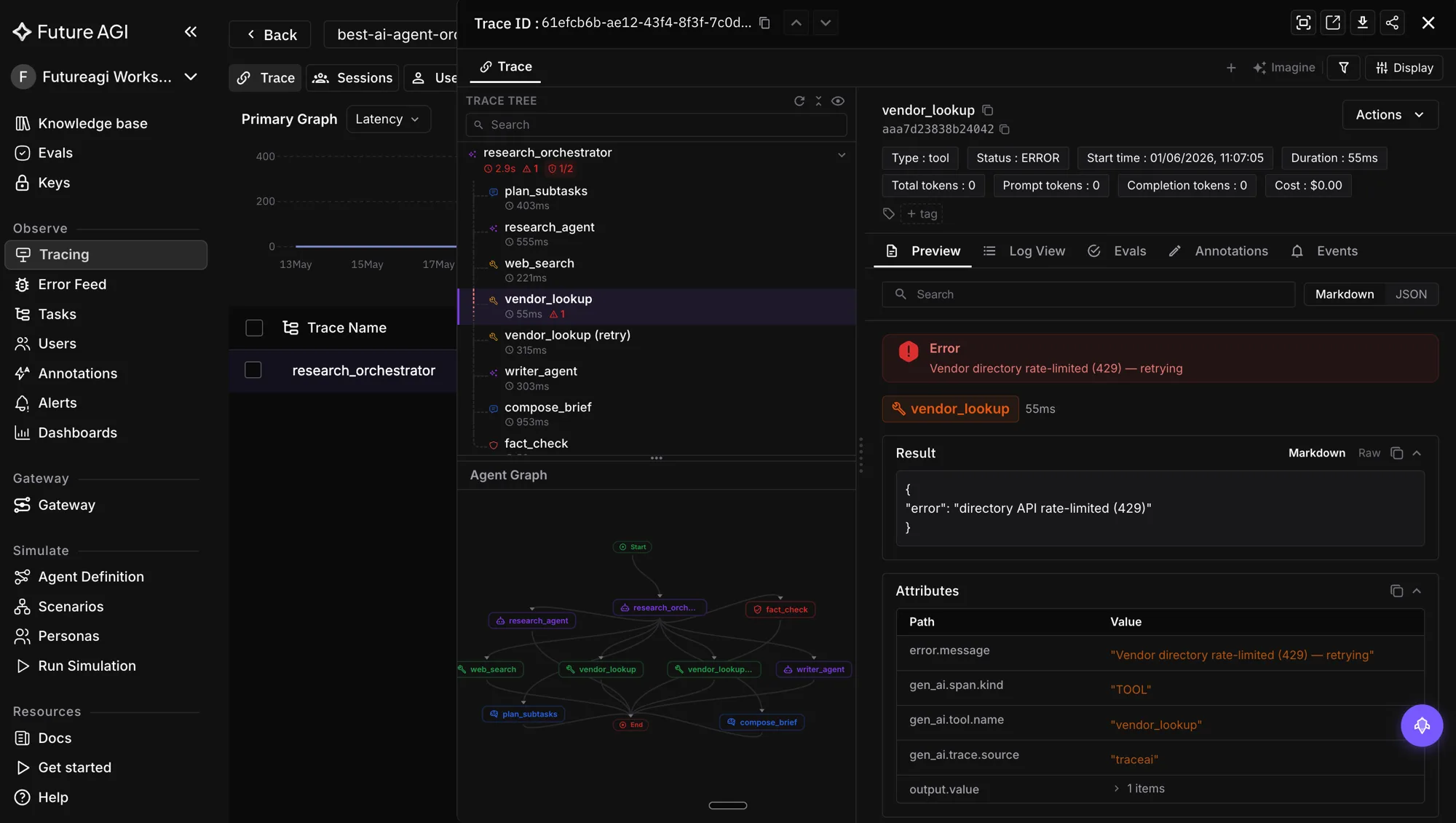
What the tracer captures on a streaming LLM span:
stream=true: marks the span as a streaming completiongen_ai.server.time_to_first_token: OTel-standard TTFT in secondsgen_ai.server.time_per_output_token: OTel-standard per-token timinginter_token_ms_p50andinter_token_ms_p99: percentile rollups for the jitter gatetotal_duration_msandtokens_streamed: cost and SLA accountingfinish_reason:stop,length,content_filter,tool_calls, orerrorllm.output: the reconstructed string accumulated from SSE deltas
The eval suite reads these directly. TTFT budget reads the first-token attribute and compares against the route. The jitter rubric reads the p99/p50 ratio. The premature-termination rubric reads finish_reason and joins against a TaskCompletion score on llm.output. The mid-stream consistency rubric reads chunk events on the span.
The same shape covers Anthropic via AnthropicInstrumentor, Gemini via GoogleGenAIInstrumentor, and the OpenAI-compatible streaming surface on every provider that ships SSE. traceAI covers 50+ AI surfaces across Python, TypeScript, and Java. For broader patterns, see instrument your AI agent with traceAI.
Streaming guardrails at the gateway hop
A guardrail that runs only on the final output fires too late. The user has already seen the first 800 tokens. The right place is the gateway hop, where bytes pass through anyway.
Agent Command Center runs as the OpenAI-compatible gateway in front of the model and ships inline classifiers that fire on the stream without buffering the assistant turn. Open-weight classifiers win on first-token latency: LLAMAGUARD_3_1B for sub-100 ms gates, SHIELDGEMMA_2B for low-overhead intermediate runs, QWEN3GUARD_0_6B when the budget is tightest. Deterministic scanners (JailbreakScanner, CodeInjectionScanner, SecretsScanner, plus the rest of the 18+ built-in set) run on every chunk without measurable cost.
The gateway exposes streaming-aware headers the eval suite reads:
x-prism-latency-msreflects TTFT at first-token, not total durationx-prism-guardrail-triggerednames the rail that fired and the chunk positionx-prism-model-used,x-prism-fallback-used,x-prism-routing-strategyreflect streaming state- Cache is bypassed on streaming responses by design
The rubric reads x-prism-guardrail-triggered and scores whether the rail fired before the chunk position where the violation appears. Apache 2.0; self-hostable as a single Go binary or use the hosted endpoint at gateway.futureagi.com/v1 as an OpenAI SDK drop-in. Benchmarked at ~29k req/s, P99 21 ms with guardrails on, on t3.xlarge. SOC 2 Type II, HIPAA, GDPR, CCPA per the trust page; ISO 27001 in active audit.
For more on streaming-aware gateways, see best AI gateways for streaming LLM responses and prompt injection defense for AI gateways.
Reconstructed-output scoring
The four streaming metrics extend the standard rubric suite; they don’t replace it. Once the stream completes, accumulate the SSE deltas into a string and run the same templates a batch completion would face.
from fi.evals import Evaluator, TestCase
from fi.evals.templates import (
    Groundedness, ContextAdherence, TaskCompletion,
    AnswerRefusal, FactualAccuracy, Toxicity,
)

evaluator = Evaluator(fi_api_key="...", fi_secret_key="...")
test_case = TestCase(
    query=user_input,
    response=reconstructed_output,
    context=retrieved_context,
)
results = evaluator.evaluate(
    eval_templates=[
        Groundedness(), ContextAdherence(), TaskCompletion(),
        AnswerRefusal(), FactualAccuracy(), Toxicity(),
    ],
    inputs=[test_case],
)
CI runs these against a versioned dataset on every PR; the production sampler runs them against sampled live traces. Same rubric, two places. For the broader template suite, see the LLM evaluation playbook.
Error Feed: clustering streaming failures at scale
Once the four-metric instrumentation lands, the volume of failing traces stops fitting in a dashboard. Error Feed is the part of the FAGI eval stack that clusters failures and writes the fix. HDBSCAN soft-clustering over the failing-trace embedding space surfaces clusters as named issues; a Sonnet 4.5 judge with a 30-turn budget reads each cluster’s representative traces and writes an immediate_fix paragraph that feeds back into the platform’s self-improving evaluators.
The clusters that show up most in streaming workloads:
- “TTFT p95 over 800 ms on cold cache”: model cold-start on a specific provider region;
immediate_fixis usually a route to a warm region or fallback model. - “Inter-token p99 stutter past 4K tokens”: provider buffer flushes irregularly on long contexts;
immediate_fixis a route swap for long-context streams. - “Mid-stream contradiction on multi-step reasoning”: the model walks back its first claim under streaming pressure;
immediate_fixis a system-prompt patch. - “
finish_reason=stopplusTaskCompletion=0”: the silent failure;immediate_fixis usually a prompt regression caught by ProTeGi or GEPA.
Linear OAuth is wired today; Slack, GitHub, Jira, and PagerDuty are roadmap. Same HDBSCAN-plus-Judge architecture described in the self-improving agent pipeline writeup.
A 5-step setup for a streaming eval suite
Step 1: Instrument with traceAI. Register ProjectType.OBSERVE, wire the per-framework instrumentor (OpenAIInstrumentor, AnthropicInstrumentor, GoogleGenAIInstrumentor), and verify gen_ai.server.time_to_first_token, inter_token_ms_p99, finish_reason, and reconstructed llm.output appear on the parent LLM span.
Step 2: Run guardrails at the gateway. Configure the rail policy in Agent Command Center (PII Detection, Prompt Injection, Content Moderation are table-stakes), pick the inline classifier per latency budget (LLAMAGUARD_3_1B for sub-100 ms, SHIELDGEMMA_2B for tighter budgets), and verify x-prism-guardrail-triggered lands with the chunk position when a rail fires.
Step 3: Build a streaming golden set. Three sub-sets. Happy-path streams (200-500 examples with expected reconstructed outputs). Adversarial mid-stream injections (50-100 examples that test whether the inline guardrail fires before harmful content reaches the client). Premature-termination scenarios (20-50 examples with known-bad max_tokens caps).
Step 4: Score the four metrics plus the standard suite. Run the EvalTemplate suite on the reconstructed output. Run the four streaming gates on the per-stream attributes: TTFT p95, inter-token p99/p50 ratio, mid-stream consistency, premature termination. Gate CI on per-metric thresholds; +20 percent over baseline fails the PR.
Step 5: Cluster failures with Error Feed and iterate. HDBSCAN plus the Sonnet 4.5 Judge cluster failing traces into named issues with immediate_fix paragraphs; the platform’s self-improving evaluators consume the fixes to tune the rubric over time. Promote failing production traces into the golden set weekly. The wider closed loop sits in automated optimization for agents.
Honest framing: today vs roadmap
A few calibrations. The traceAI streaming attributes, the OTel GenAI semantic conventions, and the gateway-side guardrail headers all ship today. Auto-instrumentation covers Python, TypeScript, and Java; the Java side is thinner, so a mostly-Java stack should plan for manual span work on streaming edge cases.
Error Feed runs HDBSCAN clustering and the Sonnet 4.5 Judge immediate_fix writer today; Linear OAuth is wired; Slack, GitHub, Jira, and PagerDuty are roadmap. The trace-to-optimizer connector (a failure cluster automatically becoming a ProTeGi or GEPA run) is in-progress. Today: cluster surfaces the failure → engineer reads the immediate_fix → engineer points one of the six agent-opt optimizers (PROTEGI, GEPA, MetaPrompt, BayesianSearch, RandomSearch, PromptWizard) at the prompt.
The ML-backed guardrail backends (TURING_FLASH, TURING_SAFETY, Protect Flash) require an ML hop to api.futureagi.com. The open-weight classifiers (LLAMAGUARD_3_1B, SHIELDGEMMA_2B, QWEN3GUARD_0_6B) run fully self-hosted.
Anti-patterns to avoid
Four patterns we see in nearly every streaming workload we audit.
Tracking only TTFT in the dashboard. The other three metrics regress silently. The system prompt change that drifts TTFT from 320 ms to 1.4 seconds is visible; the change that drifts length rate from 1 percent to 8 percent is not, unless you instrument it.
Scoring only the reconstructed final output. Catches correctness, misses every streaming-specific failure. The user saw 800 tokens of a contradiction before the model walked it back; the final-string rubric says the answer is fine.
No regression gate per metric. Eyeballing a chart in a weekly review is not a gate. CI has to fail the PR on +20 percent over the prior week’s p95.
Guardrails downstream of the gateway. App-code rails get bypassed by any orchestrator that calls the model directly. The only consistent place is the network hop in front of the model.
Closing
Streaming responses look like batch completions in the eval suite if you only score the reconstructed final output. They behave like a different system in production: TTFT is what the user feels, inter-token p99 is what kills long-context UX, mid-stream consistency is what makes streamed answers look broken, premature termination is the silent killer. traceAI streaming attributes, gateway-side guardrail headers, and Error Feed clustering wire the four metrics end to end. Start with TTFT p95 and premature termination — they catch most regressions that ship in week one — and add inter-token p99 and mid-stream consistency once the dashboard is honest.
Related reading
- LLM Evaluation Playbook 2026
- Agent Observability vs Evaluation vs Benchmarking
- Best AI Gateways for Streaming LLM Responses
- Deterministic vs LLM Judge Evals
- Audio Caching for Voice AI: 2026 Latency Reduction Guide
- Self-Improving AI Agent Pipeline
Sources and references
- OpenTelemetry GenAI semantic conventions (
gen_ai.server.time_to_first_token,gen_ai.server.time_per_output_token) - Future AGI trust and compliance: futureagi.com/trust
- Agent Command Center docs: docs.futureagi.com/docs/command-center
- traceAI repository: github.com/future-agi/traceAI
- ai-evaluation repository: github.com/future-agi/ai-evaluation
Frequently Asked Questions
What metrics matter for evaluating streaming LLM responses?
What is a realistic TTFT target for streaming chat in 2026?
How do you score inter-token latency without drowning in noise?
What is mid-stream consistency and why does it matter?
How do you detect premature termination in streaming responses?
How does Future AGI instrument streaming token telemetry?
Where should streaming guardrails fire — gateway or app code?
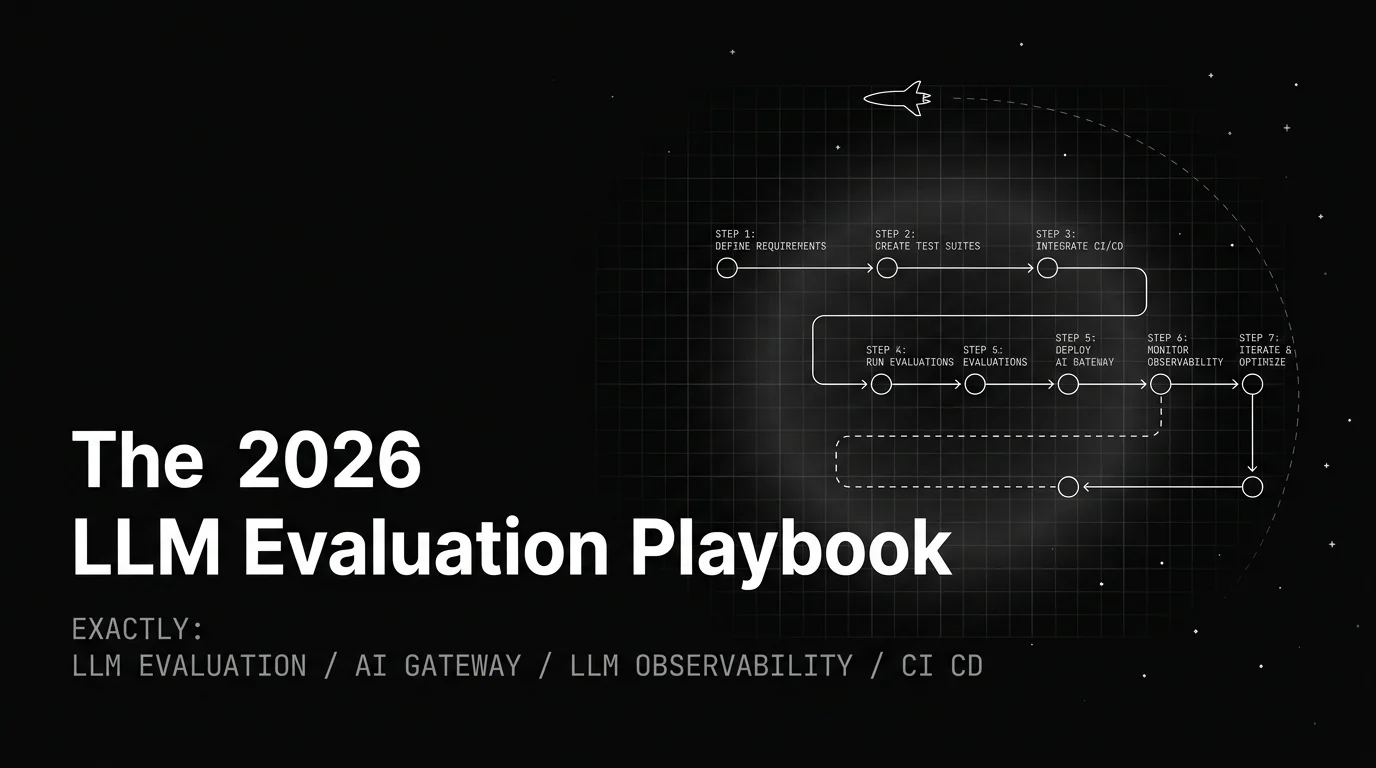
The pillar playbook for LLM evaluation in 2026: dataset, metrics, judge, CI gate, production observation, closed loop from failing trace to regression.

Five AI gateways for streaming LLM responses in 2026: SSE fidelity, WebSocket and gRPC, mid-stream failover, TTFT observability, CDN.

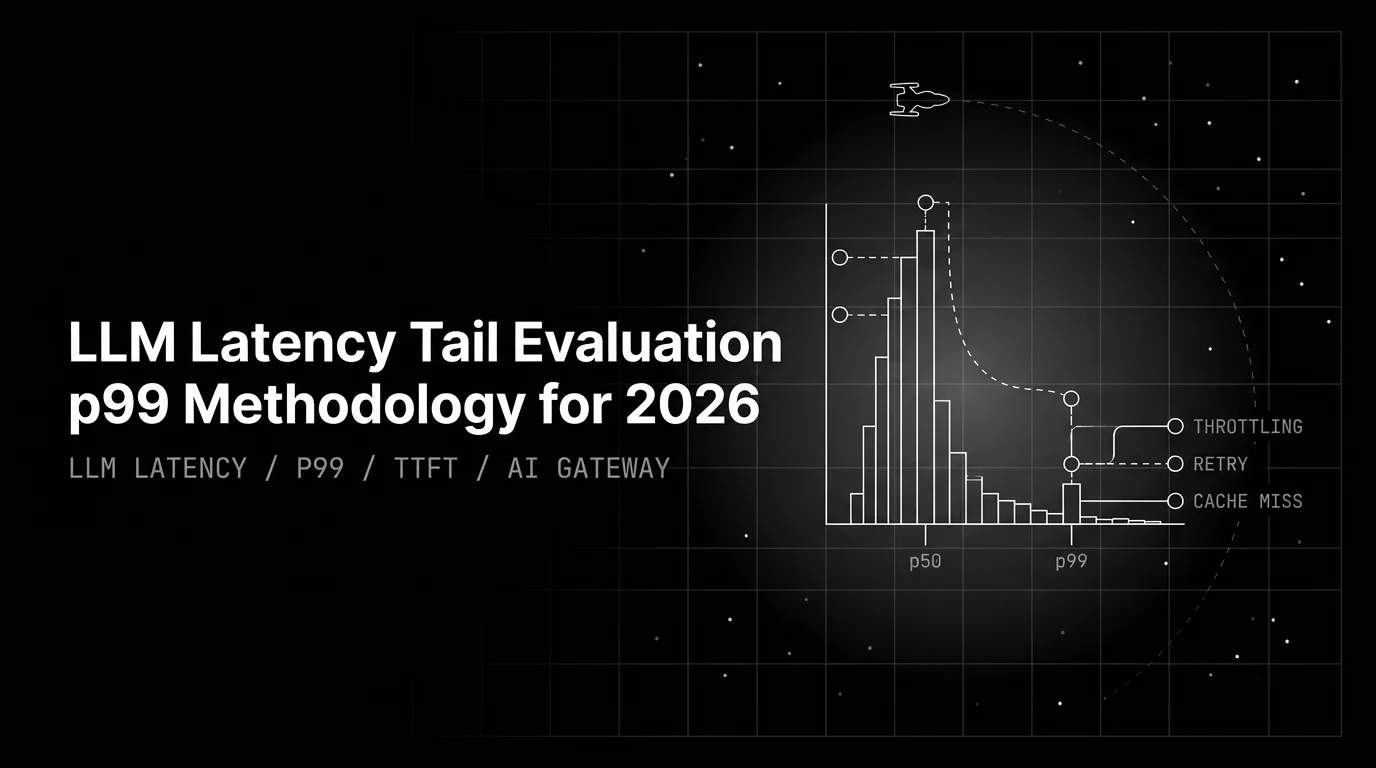
P50 lies, p99 tells truth. The 2026 method for measuring throttling, retries, and cache misses per component with traceAI and ACC.