Evaluating LiteLLM Multi-Provider Apps in 2026: The Cross-Provider Paired Comparison Pattern
How to evaluate LiteLLM-routed apps: paired comparison across providers on your data, tool-call parity, latency parity, and the gateway alternative.

Table of Contents
Evaluating LiteLLM multi-provider apps in 2026 is its own problem because the wrapper is a translation layer, and translation drops things. The product team swaps model="openai/gpt-4.1" for model="anthropic/claude-sonnet-4-5" in the LiteLLM config. One line. Deploy goes green. p50 latency holds. Two weeks later, the on-call thread reads: citations stopped rendering on the support agent, the second tool call in multi-step refund flows drops about 30% of the time, and one customer asked why the model now refuses queries it answered last month. Nothing in the eval suite caught it. The eval suite tests Claude. The bug is the wrapper.
This is the failure mode every team running LiteLLM in production hits at some point. The pitch is clean: one client, one call signature, swap the provider string, ship. The catch is the wrapper smooths provider differences for portability, and the smoothing silently drops things. A tool-call shape flattens. A citation field gets normalized away. A safety_settings argument gets ignored. The model is fine. The path to the model regressed.
The opinion this post earns: LiteLLM lets you swap providers with one config change and quietly ship a quality regression. The eval that matches LiteLLM is paired comparison across providers on YOUR production data, run continuously. Without it, provider rotation hides a quality cliff inside your p50 metrics. The single-provider eval suite that ranked your incumbent is the wrong artifact for a multi-provider deployment, even if the rubrics are perfect.
This is the working playbook. The methodology is code-defined against the ai-evaluation SDK, instrumented with the traceAI LiteLLMInstrumentor, and includes the gateway pattern for when governance starts spreading across services.
The four eval surfaces LiteLLM creates
LiteLLM is the most-used Python multi-provider abstraction in 2026. The portability is real and worth keeping. The eval problem is that the wrapper adds four failure surfaces that single-provider eval suites never test.
Cross-provider quality drift. The same prompt to Claude, GPT, and Gemini through LiteLLM produces outputs of unequal quality on your workload. Public benchmarks say the models are within two points of each other on aggregate. On your support-ticket distribution, one is consistently better and one is consistently worse. The leaderboard never told you which.
Output-shape normalization. Anthropic returns citations as a structured field on assistant messages. Gemini accepts safety_settings that change refusal calibration. OpenAI tool calls have a different schema than Anthropic tool_use. LiteLLM smooths these into a common interface so your code keeps working. Smoothing means citations can be silently dropped, safety_settings ignored, and a tool call that parsed end to end on the native SDK can come back in a shape your downstream parser does not expect.
Cost accounting drift. LiteLLM reports a cost number per call from its internal pricing table. The provider’s invoice comes from the actual price-list at request time. The two drift, especially around cached prompt tokens, tool-use tokens, image tokens, and price changes between releases. If you bill customers or budget on the wrapper’s number, the drift is a P1 hiding in a billing dashboard.
Fallback chains tested in production. LiteLLM’s router supports fallbacks: primary errors, retry on secondary, then tertiary. Most teams never test the rare path. The first time it fires is the first time you find out the fallback model received a different system prompt, or the tool schema arrived in a shape it cannot parse, or the fallback’s safety stack rejected a query the primary handled cleanly.
These four surfaces close the wrapper-shaped gap. The rest of the post is how to cover each one with a rubric that runs continuously, not once.
Why paired comparison is the right unit
The standard eval pattern, score each provider on a shared rubric and rank, breaks on multi-provider apps. Contamination in the public set, aggregation noise across mixed subjects, and shape mismatch between eval prompts and production traffic all bias the ranking. A paired comparison sends the same input to two providers at the same moment, captures both responses, hands the pair to an arena judge from a third model family with position randomized, and asks which is better. Aggregate winrate against the incumbent on 200-500 paired samples is the cleanest cross-provider signal: it cancels rubric drift, neutralizes input-distribution shifts, and matches how humans actually pick a winner. The arena-judge pattern is the workhorse.
Five details separate a working cross-provider gate from one that flatters.
- Sample from production, not from a public set. 200-500 inputs the model would actually see, stratified by intent, length, and capability slice (plain text, structured output, tool call, streaming, long context). Public eval sets carry distributions every candidate may have trained on.
- Randomize position per pair. Judges have a 10-15 point position bias on close calls. Flip the order on every comparison and the bias cancels.
- Judge from a different model family. Sonnet judging GPT against Llama is fine; Claude judging Claude against GPT is not. Same-family judging inflates self-preference by 5-8 points.
- Report wins, losses, and ties separately. 58/12/30 is not the same model as 58/40/2 at matched winrate. High tie rates mean the providers are indistinguishable on those inputs, which is the answer.
- Bound the verdict by sample size. The 95% CI on winrate
pwithnpairs is roughly±1.96 × sqrt(p × (1 - p) / n). Atp = 0.50andn = 200the interval is±6.9points, which crosses the substitution line and decides nothing. Atn = 500it narrows to±4.4. Run the power calculation before wiring the gate.
The arena gate as code, against the CustomLLMJudge primitive in ai-evaluation:
import random
import litellm
from fi.evals import Evaluator
from fi.evals.metrics.llm_as_judges.custom_judge.metric import CustomLLMJudge
from fi.evals.metrics.llm_as_judges.types import CustomInput
from fi.evals.llm.providers.litellm import LiteLLMProvider

arena_judge = CustomLLMJudge(
    provider=LiteLLMProvider(),
    config={
        "name": "cross_provider_arena",
        "model": "claude-sonnet-4-5-20250929",
        "grading_criteria": (
            "Compare two responses to the same prompt. "
            "Optimize for accuracy, tool-call correctness, citation presence, "
            "and adherence to the requested output shape. "
            "Do not prefer longer answers. "
            "Return 1.0 if ANSWER_A is better, 0.0 if ANSWER_B, 0.5 if tie."
        ),
    },
)

def call(model, sample):
    return litellm.completion(
        model=model,
        messages=[{"role": "user", "content": sample.input}],
        tools=sample.tools,
    ).choices[0].message

def paired_winrate(incumbent, candidate, samples, n=300):
    wins = losses = ties = 0
    for ex in random.sample(samples, min(n, len(samples))):
        inc, cand = call(incumbent, ex), call(candidate, ex)
        flip = random.choice([True, False])
        ans_a, ans_b = (cand, inc) if flip else (inc, cand)
        out = arena_judge.compute_one(CustomInput(
            question=ex.input, answer_a=str(ans_a), answer_b=str(ans_b),
        ))["output"]
        if out == 0.5:
            ties += 1
        elif (out == 1.0 and flip) or (out == 0.0 and not flip):
            wins += 1
        else:
            losses += 1
    return {"wins": wins, "losses": losses, "ties": ties}
Run this for every pair of providers in your routing table, not only one head-to-head. The resulting pairwise matrix tells you which providers are actually interchangeable for your workload and which carry a silent regression. A candidate at 0.48 winrate against the incumbent on 300+ pairs is worth routing to if the cost win is real; 0.52 is a clear go; 0.45 is a regression dressed as a tie. Decide the floor before the run, not after.
Tool-call parity: the most common silent break
Tool calls are the eval axis where LiteLLM normalization most often regresses without anyone noticing. Anthropic returns tool_use blocks inside the message content array. OpenAI returns tool_calls as a top-level field with stringified JSON arguments. Gemini returns functionCall with structured arguments. LiteLLM flattens all three into an OpenAI-shaped tool_calls field. Three failures follow.
Argument type drift. OpenAI returns tool arguments as a JSON string that you json.loads downstream. Anthropic returns them as a structured object. When LiteLLM smooths Anthropic into OpenAI shape, the object becomes a string, and downstream code that did tool_call.arguments["customer_id"] crashes silently on the next deploy.
Parallel tool-call ordering. OpenAI returns multiple parallel calls in a deterministic order; Anthropic returns them in emission order. LiteLLM does not promise to preserve order across the translation. Agents that depend on call-order (read the customer record before computing the refund) break on the wrapper, not on the model.
Streaming partial breaks. Tool-call streaming protocols differ across providers. LiteLLM’s litellm.completion(stream=True) smooths chunked output, but the smoothing has edges around partial argument deltas. A long argument that streams across 10 chunks can arrive concatenated incorrectly on one provider and cleanly on another.
Build a fixed tool-call probe of 50-100 multi-tool chains from production traces with expert-labeled correct sequences. Run it through LiteLLM against every provider in your routing table, then through the native provider SDK for the same model. Score with the EvaluateFunctionCalling template for argument validity and call-sequence correctness. Any provider scoring 3+ points below the native SDK on the same model is a wrapper parity regression, not a model regression. The evaluating tool-calling agents guide goes deeper on the composition failure shape.
from fi.evals import Evaluator, TestCase
from fi.evals.templates import EvaluateFunctionCalling, TaskCompletion

evaluator = Evaluator()  # FI_API_KEY / FI_SECRET_KEY from env

def parity_score(model_id, samples, call_fn):
    return evaluator.evaluate(
        eval_templates=[EvaluateFunctionCalling(), TaskCompletion()],
        inputs=[
            TestCase(
                input=ex.input,
                output=call_fn(model_id, ex),
                expected_output=ex.gold_tool_sequence,
            )
            for ex in samples
        ],
    ).eval_results
Latency parity: p50, p95, p99 across the wrapper
p50 is the dashboard number that lies. Wrapper overhead, retries, and the fallback chain only show up at the tail. Cheap-tier inference clusters often beat flagship on p50 and lose by 2-5x on p99 under burst load because of scheduling priority. LiteLLM adds 5-50ms of overhead per call depending on whether the request hits routing logic, the fallback chain, or a retry path.
Measure wall-clock latency through LiteLLM against the native provider SDK on the same call, under burst traffic, at p50, p95, and p99.
import asyncio
import time
from anthropic import AsyncAnthropic
import litellm

native = AsyncAnthropic()

async def latency_pair(prompt, n=500, concurrency=20):
    sem = asyncio.Semaphore(concurrency)

    async def via_litellm():
        async with sem:
            t0 = time.perf_counter()
            await litellm.acompletion(
                model="anthropic/claude-sonnet-4-5",
                messages=[{"role": "user", "content": prompt}],
            )
            return time.perf_counter() - t0

    async def via_native():
        async with sem:
            t0 = time.perf_counter()
            await native.messages.create(
                model="claude-sonnet-4-5-20250929",
                max_tokens=1024,
                messages=[{"role": "user", "content": prompt}],
            )
            return time.perf_counter() - t0

    via_w = sorted(await asyncio.gather(*[via_litellm() for _ in range(n)]))
    via_n = sorted(await asyncio.gather(*[via_native() for _ in range(n)]))
    return {
        "litellm_p50": via_w[n // 2], "native_p50": via_n[n // 2],
        "litellm_p95": via_w[int(n * 0.95)], "native_p95": via_n[int(n * 0.95)],
        "litellm_p99": via_w[int(n * 0.99)], "native_p99": via_n[int(n * 0.99)],
    }
A bounded p99 wrapper overhead (under 100ms above native) is acceptable. An unbounded p99 (250ms+ over native, or a heavy tail above 2x) is the wrapper-overhead signal. Pair the latency table with the per-provider winrate matrix from the arena gate. p50 alone is how SLAs die.
Instrumenting LiteLLM with traceAI
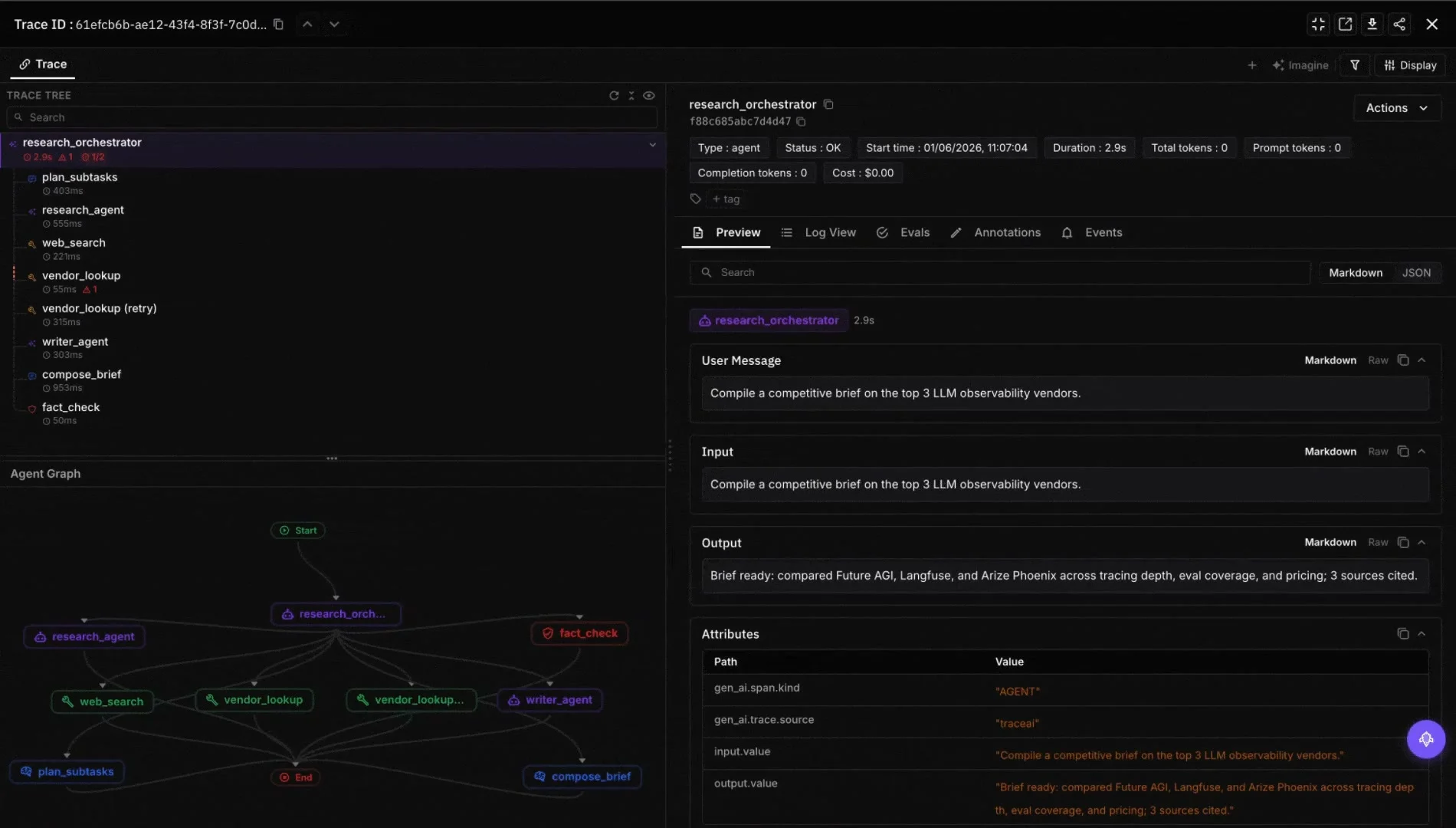
Production telemetry is one line with the traceAI instrumentor. Every litellm.completion and litellm.acompletion call produces a span with fi.span.kind=LLM, llm.model_name (the actual provider model, not the alias), llm.provider, llm.system, plus input/output messages, token counts, and tool calls.
from fi_instrumentation import register, ProjectType
from traceai_litellm import LiteLLMInstrumentor

trace_provider = register(
    project_type=ProjectType.OBSERVE,
    project_name="prod-multiagent-router",
)
LiteLLMInstrumentor().instrument(tracer_provider=trace_provider)
After this runs, every call is observable per-provider without code changes. Instrument the framework wrapping LiteLLM (LangChain, LlamaIndex, CrewAI, Pydantic AI, OpenAI Agents SDK) and you get nested spans with the right parent/child relationships, so the LiteLLM call correlates back to the agent step that issued it. The instrumentor covers 50+ AI surfaces across Python, TypeScript, and Java. The traceAI OpenTelemetry-based observability guide covers the full surface.
The production rollout pattern
Pass the four checks (cross-provider winrate, tool-call parity, latency parity, fallback chain) and the multi-provider routing is ready. The rollout is canary, not big-bang.
- Route 5-10% of production traffic to the candidate provider; the rest stays on the incumbent.
- Attach the offline rubrics as span-attached scorers on live traces via
traceAIandEvalTag. Scores live next to latency, model, and input on the OTel span. - Sample paired requests through shadow traffic and run the arena judge on the pairs. Accumulate winrate over a rolling 30-60 minute window.
- Alarm on a 2-point drop in any per-rubric rolling mean, a winrate drop below the floor, or a tool-call parity regression. Auto-rollback the canary cohort if the alarm sustains.
The shadow traffic and canary patterns guide covers the routing side. The moment the offline gate and the canary disagree, the dataset stopped being representative; promote the failing canary traces back into the offline set and rerun the four checks. That is the closed loop.
When to move from LiteLLM to a gateway
LiteLLM is a Python client library. Every service that calls a model holds the routing logic, the fallback list, the per-key budget, and the safety filter. That works for one repo. At production scale it duplicates governance and makes audit hard.
Agent Command Center is the production version of the same pattern. Routing, fallback, budgets, guardrails, and per-call telemetry move server-side. The client becomes a base URL change against the standard OpenAI SDK.
from openai import OpenAI

client = OpenAI(
    api_key="sk-agentcc-...",
    base_url="https://gateway.futureagi.com/v1",
)

response = client.chat.completions.create(
    model="anthropic/claude-sonnet-4-5",
    messages=[{"role": "user", "content": "summarize this doc"}],
)

# Per-call telemetry on the response headers
print(response.headers.get("x-agentcc-cost"))
print(response.headers.get("x-agentcc-latency-ms"))
print(response.headers.get("x-agentcc-model-used"))
print(response.headers.get("x-agentcc-fallback-used"))
The gateway ships as a single Go binary, Apache 2.0, with 100+ providers, 18+ built-in guardrail scanners plus 15 third-party adapters, exact and semantic caching, OTel/Prometheus observability, and MCP + A2A protocol support. The README benchmark is ~29k req/s, P99 21ms with guardrails on, on t3.xlarge.
Two things change for eval. The x-agentcc-cost header is computed from per-call provider pricing tables refreshed against vendor announcements, so the CostAccuracyDelta rubric becomes a reconciliation against the header rather than a wrapper-vs-invoice diff. And x-agentcc-fallback-used flags fallback events with the resolved model, so the fallback-chain rubric becomes “did the fallback maintain task quality?” rather than “did fallback fire and what got the prompt?”. For depth, see what is LLM routing in 2026 and what is an LLM fallback strategy in 2026. Many teams run both during migration.
Side-by-side: LiteLLM vs Agent Command Center
| Axis | LiteLLM (client library) | Agent Command Center (gateway) |
|---|---|---|
| Where routing lives | Application code | Server-side |
| Provider coverage | 100+ via wrapper | 100+ with native API preservation |
| Native shape preservation | Normalized to common schema | Preserved per provider |
| Per-call telemetry | Reported in wrapper | Response headers + OTel spans |
| Cost reporting | Internal pricing table | x-agentcc-cost header + reconciliation |
| Per-key budgets | DIY per service | 5-level budgets out of the box |
| Safety integration | DIY per provider | 18+ scanners + 15 vendor adapters |
| Compliance posture | Application-level | SOC 2 Type II, HIPAA, GDPR, CCPA |
| Audit log | What you log | Centralized per-call |
| Performance | Python overhead | ~29k req/s, P99 21ms on t3.xlarge |
The honest read: LiteLLM wins on long-tail provider breadth and client-side control. Agent Command Center wins on governance, telemetry consistency, native shape preservation, and compliance certification.
How Future AGI ships LiteLLM evaluation
The eval stack as a package. Start with the SDK and arena-judge primitive for code-defined gates. Graduate to the gateway when governance starts spreading across services.
-
ai-evaluationSDK (Apache 2.0). 60+EvalTemplateclasses (Groundedness,ContextAdherence,TaskCompletion,EvaluateFunctionCalling,AnswerRefusal,PromptInjection).CustomLLMJudgeis the arena-judge primitive for paired cross-provider comparison. Local heuristic metrics (regex, JSON schema, BLEU, ROUGE, semantic similarity) run offline at sub-second latency for high-volume parity checks. -
traceAI.LiteLLMInstrumentoremits OpenInference spans on every LiteLLM call across 50+ AI surfaces in Python, TypeScript, and Java. Every span carriesllm.model_name,llm.provider, and token counts, so per-provider quality and cost attribute back to the right model. -
agent-opt. Six optimizers (PROTEGI, GEPA, MetaPrompt, BayesianSearch, RandomSearch, PromptWizard) for closing the residual gap on a candidate provider before you route to it. If a candidate loses 3 points onEvaluateFunctionCalling, PROTEGI’s gradient pass often recovers 2 of them with a tuned prompt. -
Agent Command Center. Single Go binary, Apache 2.0, 100+ providers with native shape preservation, 18+ built-in guardrail scanners, exact and semantic caching, MCP and A2A protocol support. Per-call telemetry headers (
x-agentcc-cost,x-agentcc-latency-ms,x-agentcc-model-used,x-agentcc-fallback-used) collapse the cost-accuracy and fallback-correctness rubrics into a header read. Shadow, mirror, and race modes for canary rollout with eval-gated rollback. -
Future AGI Platform. Self-improving evaluators that retune from production feedback; in-product authoring agent that writes rubrics from natural-language descriptions; classifier-backed evals at lower per-eval cost than Galileo Luna-2. Error Feed clusters failing traces with HDBSCAN and a Sonnet 4.5 Judge writes the
immediate_fixper cluster (typical: “Anthropic citation field drops when routed via LiteLLM”, “Gemini tool-call arguments arrive as string after wrapper translation”, “Bedrock fallback fires to wrong model on quota error”). Theimmediate_fixtext feeds back into the routing policy.
Drop ai-evaluation and the arena judge into the cross-provider gate this afternoon. Add the LiteLLMInstrumentor when canary is ready. Move to the gateway when budgets, guardrails, and audit need one place to live.
Ready to evaluate your first multi-provider deployment? Run pip install ai-evaluation traceai-litellm, scaffold the four checks against a 300-sample golden set, instrument LiteLLM, and gate the rollout on paired winrate plus tool-call and latency parity. The wrapper that survives all four is worth shipping; the rest is a quality regression hiding behind a clean p50.
Related reading
- LLM Arena as a Judge: Pairwise Comparison Evals (2026)
- Evaluating Tool-Calling Agents (2026)
- LLM Eval Shadow Traffic and Canary Patterns (2026)
- What Is LLM Routing in 2026
- What Is an LLM Fallback Strategy in 2026
- Best LLM Routers and Load Balancers (2026)
- Evaluating LLM Routing Policies in 2026
- LLM Eval Cost Optimization (2026)
- Build an LLM Evaluation Framework from Scratch (2026)
- Evaluating Cheap Frontier Models in 2026
Frequently Asked Questions
Why does LiteLLM need its own evaluation methodology?
What is cross-provider paired comparison and how is it different from running each provider through a benchmark?
How do I check that tool calls survive the wrapper across providers?
Should I evaluate latency or only quality?
When should I move from LiteLLM to a gateway like Agent Command Center?
How big should the cross-provider golden set be?
What does Future AGI ship for LiteLLM evaluation today?
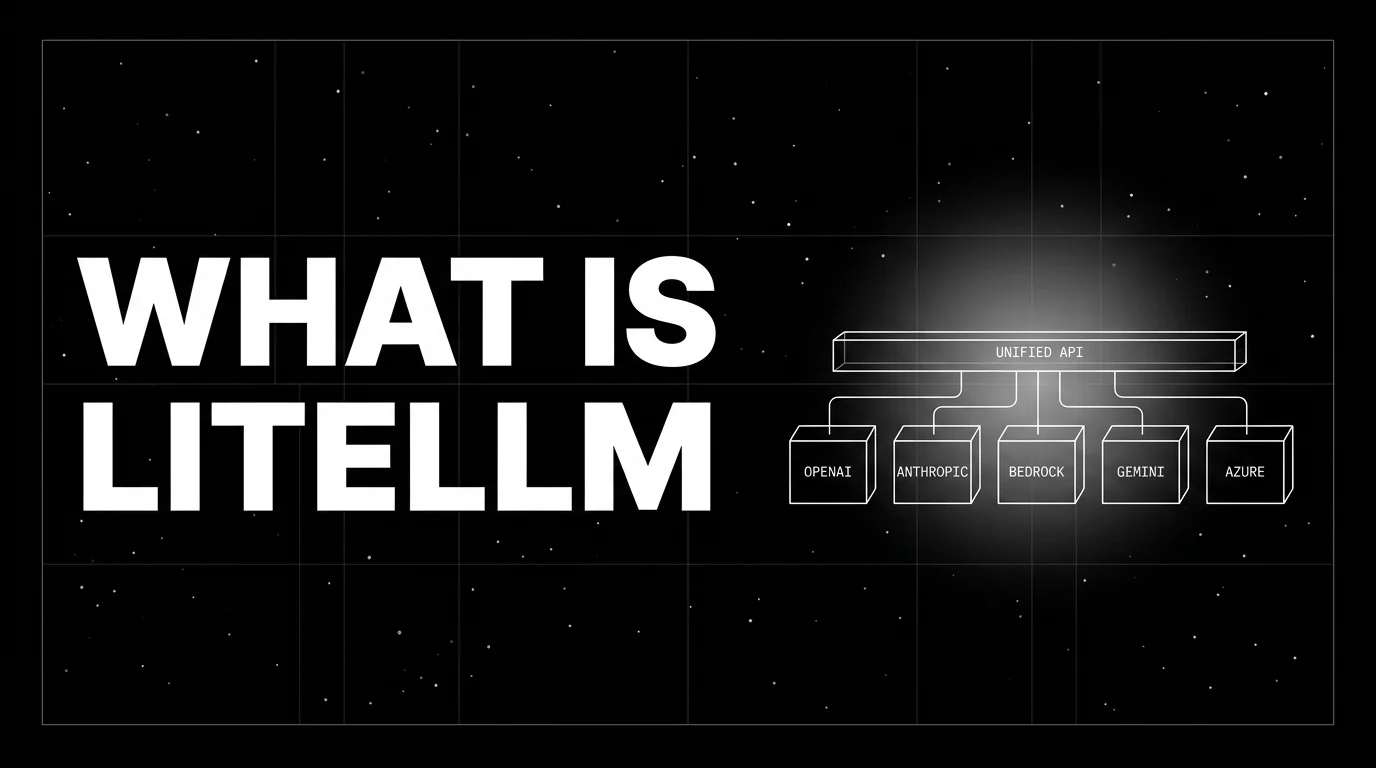
LiteLLM, the open-source SDK and proxy giving every LLM an OpenAI-compatible API. What it is, how SDK and proxy differ, how teams use it in 2026.

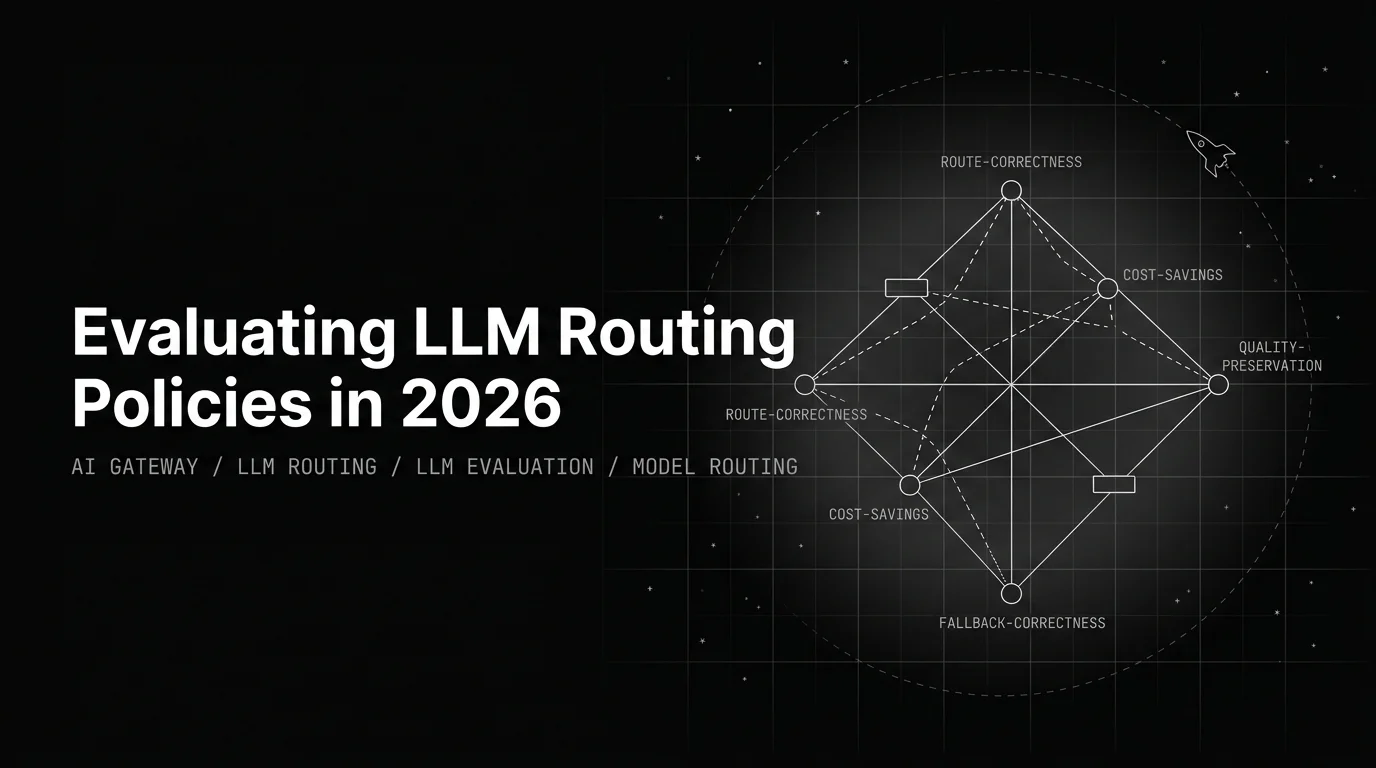
Routing-policy eval is not model eval. The 2026 playbook: route correctness, realized vs theoretical cost, quality under substitution, fallback checks.

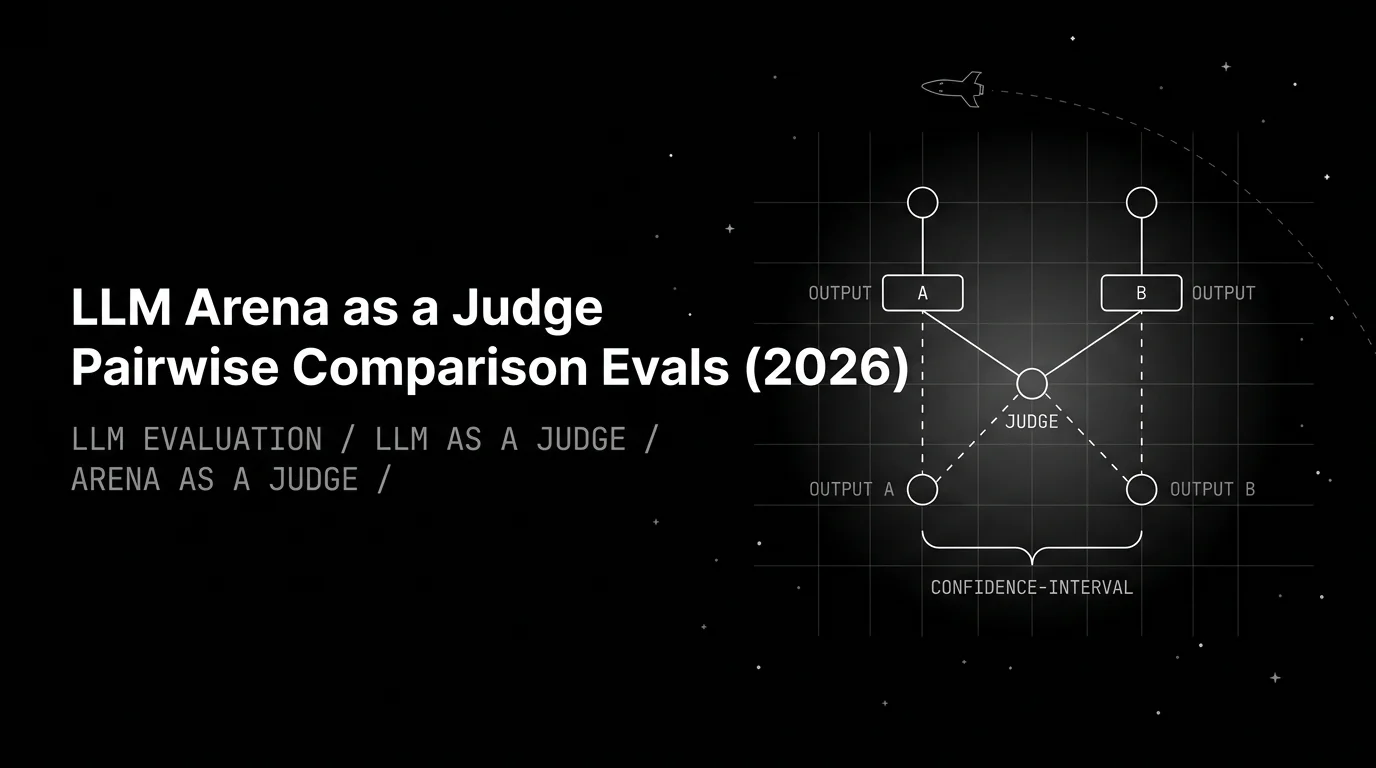
Arena-as-a-judge in 2026: when pairwise wins over rubric scoring, the four biases to control, the CI math, and the wiring back to production OTel traces.