Evaluating Cheap Frontier Models in 2026: Substitution Without a Quality Cliff
How to evaluate DeepSeek-V3, Qwen, Llama 3.3, Mistral, and Phi-4 as production substitutes for Claude and GPT-5 without a silent quality cliff.
Table of Contents
The product team wants to substitute DeepSeek-V3 for Claude Sonnet on the support agent because pricing is 8% of incumbent. The cheap model posts 86.0 on MMLU against Sonnet’s 88.7, 90.2 on HumanEval against 92.1, and 95.4 on GSM8K against 95.8. The leaderboards say substitution is safe. You ship to staging. Two weeks in, the on-call thread reads: refund tickets are clean, but multi-tool flows lose the second tool call about a quarter of the time, refusal calibration drifts toward over-refusal on medical-adjacent queries, and p99 latency under burst load is double the incumbent. The model that won three public benchmarks lost the workload that mattered.
This is the failure mode every team substituting to a cheap frontier model in 2026 hits. The leaderboard told you the model passed a public benchmark. It told you nothing about transfer to your application.
The opinion this post earns: cheap frontier models are not interchangeable with closed frontier. Public benchmarks lie about transfer to YOUR workload. The substitution decision that holds in production requires three things, all of them. A paired comparison on production data against the incumbent. Two or three capability-shape benchmarks aimed at the failure modes you cannot afford. A cost-and-latency floor that holds under load, not under a quiet weekend. Substitute only when paired comparison and capability-shape probes both pass and the effective cost number clears the sticker math.
This guide is the working playbook for evaluating DeepSeek-V3, Qwen2.5 and Qwen3, Llama 3.3, Mistral Large 2, and Phi-4 as production substitutes for Claude Sonnet 4.5 and GPT-5. The methodology is code-defined against the ai-evaluation SDK, wired through the Agent Command Center for shadow traffic, and shaped by the LLM arena-judge pattern on the comparison side.
TL;DR: the substitution scorecard
| Check | What it scores | Failure it catches | Ship rule |
|---|---|---|---|
| Paired comparison vs incumbent | Arena-judge winrate on production samples | Public-benchmark transfer failure | Winrate clears the noise floor on 200-500 pairs |
| Capability-shape probe (2-3) | Tool composition, long-context, domain accuracy | Cliff on the workload axis you depend on | Delta vs incumbent under your tolerance per axis |
| Cost-and-latency floor | Effective dollars per accepted output + p99 under load | Sticker-cost mirage and tail-latency drift | Effective cost under incumbent AND p99 inside SLA |
| Safety regression check | Refusal calibration + prompt injection vs incumbent | Quiet erosion of safety training | Parity or better against incumbent on both axes |
Substitute only when all four pass. Three out of four is a quality cliff dressed as a cost win.
Why public benchmarks mislead substitution decisions
Three reasons that compose, not one.
Contamination is the loudest. Public leaderboards report scores on benchmarks that were inside the training data for some candidates and not for others. DeepSeek-V3 and Qwen3 are trained on web-scale corpora that include leaked benchmark sets; closed-frontier providers report deliberate decontamination. When the headline number compares memorization against generalization, the headline is a fiction. The Berkeley RDI work on benchmark exploitability puts a name on this and the only fix is a benchmark the candidate has never seen, which is what your domain set is for.
Aggregation is the quieter one. MMLU averages 57 subjects. A cheap model that drops 20 points on the four subjects relevant to your application can still post an overall number two points off flagship. Same trick: HumanEval has 164 problems, BFCL has thousands of synthetic tool calls, ARC-AGI has hundreds of pattern puzzles. Any single headline aggregates over a distribution that does not match yours.
Shape mismatch closes the trap. Public benchmarks score short, well-formed prompts with single-turn answers in a clean format. Production traffic carries long prompts, tool calls, structured outputs, conversation history, retrieved context, and adversarial inputs. A model can be 92.1 on HumanEval and still produce code that fails to parse half the time inside your code-fence-then-explain prompt shape, because the leaderboard didn’t score the shape. The shape is what you ship; the leaderboard never measured it.
The fix is not better leaderboards. The fix is paired comparison on your data plus capability-shape probes targeted at the failure modes you cannot afford. Two pieces, plus the cost-and-latency floor, plus the safety check. Four checks total. The rest is decoration.
The paired comparison: arena-judge vs incumbent
A paired comparison sends the same input to incumbent and candidate simultaneously, captures both responses, hands the pair to a third-party arena judge with position randomized, and asks which is better. Aggregate winrate against the incumbent is the cleanest substitution signal because it cancels rubric drift, neutralizes input-distribution shifts, and matches the way humans actually pick a winner. The pattern is the workhorse of arena-style judging and the only fine-tune or substitution test that survives contact with production traffic.
Five details separate a working arena gate from one that flatters.
- Sample from production. 200 to 500 inputs the model would actually see, stratified by intent, length, and difficulty. Synthetic inputs and the public eval sets all carry distributions the candidate may have seen.
- Randomize position per pair. Judges have a 10-15 point position bias on close calls. Flip the order on every comparison and the bias cancels.
- Judge from a different model family. Sonnet judging GPT against Llama is fine; Claude judging itself is not. Same-family judging inflates self-preference by 5-8 points.
- Report wins, losses, and ties separately. 58/12/30 is not the same model as 58/40/2 at matched winrate. High tie rates mean the candidate is indistinguishable from the incumbent on those inputs, which is itself the answer.
- Bound the verdict by sample size. The 95% CI on a winrate
pwithnpairs is roughly±1.96 × sqrt(p × (1 - p) / n). Atp = 0.50andn = 200the interval is±6.9points, which crosses the substitution line and decides nothing. Atn = 500it narrows to±4.4. Run the power calculation before wiring the gate.
The arena gate as code, against the CustomLLMJudge primitive:
from fi.evals import Evaluator
from fi.evals.metrics.llm_as_judges.custom_judge.metric import CustomLLMJudge
from fi.evals.metrics.llm_as_judges.types import CustomInput
from fi.evals.llm.providers.litellm import LiteLLMProvider
import random

arena_judge = CustomLLMJudge(
    provider=LiteLLMProvider(),
    config={
        "name": "candidate_vs_incumbent",
        "model": "claude-sonnet-4-5-20250929",
        "grading_criteria": (
            "Compare two responses to the same input. "
            "Optimize for helpfulness, accuracy, tool-call correctness, "
            "and adherence to the requested format. Do not prefer longer answers. "
            "Return 1.0 if ANSWER_A is better, 0.0 if ANSWER_B, 0.5 if tie."
        ),
    },
)

def paired_winrate(samples, incumbent_fn, candidate_fn, n=300):
    wins = losses = ties = 0
    for ex in random.sample(samples, min(n, len(samples))):
        inc, cand = incumbent_fn(ex.input), candidate_fn(ex.input)
        flip = random.choice([True, False])
        ans_a, ans_b = (cand, inc) if flip else (inc, cand)
        out = arena_judge.compute_one(CustomInput(
            question=ex.input, answer_a=ans_a, answer_b=ans_b,
        ))["output"]
        if out == 0.5:
            ties += 1
        elif (out == 1.0 and flip) or (out == 0.0 and not flip):
            wins += 1
        else:
            losses += 1
    return {"wins": wins, "losses": losses, "ties": ties}
Substitution-ready winrate floor: 0.48 against the incumbent on 300+ pairs is a candidate worth substituting if the cost win is large; 0.52 is a clear go; 0.45 is a regression dressed as a tie. Decide the floor before the run, not after.
Capability-shape benchmarks: only the two or three that matter
Running thirteen public benchmarks is theatre. Pick two or three that map to the failure modes you cannot afford and skip the rest.
Tool composition (BFCL-style probe). Cheap models often match flagship on single-tool calls and drop 4-8 points on chains where the agent picks tool A, reads the result, and decides tool B with arguments derived from A’s output. If your application uses two or more tools per turn, this is the probe that decides ship. Build 50-100 multi-tool chains from production traces with expert-labeled correct sequences. Score with EvaluateFunctionCalling (LLMFunctionCalling is the alias) for argument validity and call-sequence correctness. The evaluating tool-calling agents guide goes deeper on the composition failure shape.
Capability-shape reasoning (BBHard subset or ARC-AGI subset). BIG-Bench Hard has 27 tasks; running all 27 is wasted budget. Pick the 4-5 that map to your task shape: logical deduction if your agent does planning, multi-step arithmetic if it computes, snarks if it parses ambiguous instructions, navigate if it tracks state. For agents that face novel patterns the training set did not cover, an ARC-AGI subset (50-100 puzzles) is a better signal than another BBHard run. Score the candidate and the incumbent on the same subset; the delta is the answer.
Domain accuracy (your data, expert-labeled). Build a 200-question probe sampled from production with expert-labeled correct answers. Score with Groundedness, ContextAdherence, FactualAccuracy for grounded tasks; TaskCompletion for agentic ones. This is the probe that catches the workload-specific cliff that no public benchmark will catch. The build-an-LLM-eval-framework guide covers the labeling discipline.
from fi.evals import Evaluator
from fi.evals.templates import (
    Groundedness, ContextAdherence, FactualAccuracy,
    TaskCompletion, EvaluateFunctionCalling,
)
from fi.testcases import TestCase

evaluator = Evaluator()  # FI_API_KEY / FI_SECRET_KEY from env

DOMAIN_RUBRICS = [Groundedness(), ContextAdherence(), TaskCompletion()]
TOOL_RUBRICS   = [EvaluateFunctionCalling()]

def shape_score(rubrics, samples, model_fn):
    results = evaluator.evaluate(
        eval_templates=rubrics,
        inputs=[
            TestCase(
                input=ex.input,
                output=model_fn(ex.input),
                context=getattr(ex, "context", ""),
                expected_output=getattr(ex, "gold", None),
            )
            for ex in samples
        ],
    )
    return results.eval_results
Run the probes against both the incumbent and the candidate on the same week, same hardware path. Report per-axis deltas. A candidate that loses 6 points on EvaluateFunctionCalling and ties on Groundedness is a candidate for chat workloads, not agent workloads. Skip the leaderboard sweep; the targeted delta is the decision.
Cost and latency: effective, not sticker
Sticker cost is dollars per million tokens on the provider’s pricing page. Effective cost is dollars per accepted output, after retries on parse failures, refusal misfires, schema violations, and fallback to incumbent on quality misses.
If a cheap model lists at 5% of incumbent and fails the quality gate 25% of the time:
effective_cost = cost(cheap) × 1.0 + cost(incumbent) × 0.25
              = 0.05 × incumbent + 0.25 × incumbent
              = 0.30 × incumbent
A 95% sticker discount became a 70% effective discount. Sometimes the math is worse: if fallback is triggered by a parse-error retry loop that runs the cheap model twice before escalating, the effective cost can exceed flagship-only. Plug your real failure and retry rates in, not the headline.
The same logic holds for latency. Cheap-tier inference clusters sometimes get worse p99 latency than flagship because of scheduling priority under load. A cheap model with a great p50 and a terrible p99 will violate the SLA on the same workload a flagship handles cleanly. Measure under burst, not under a quiet weekend.
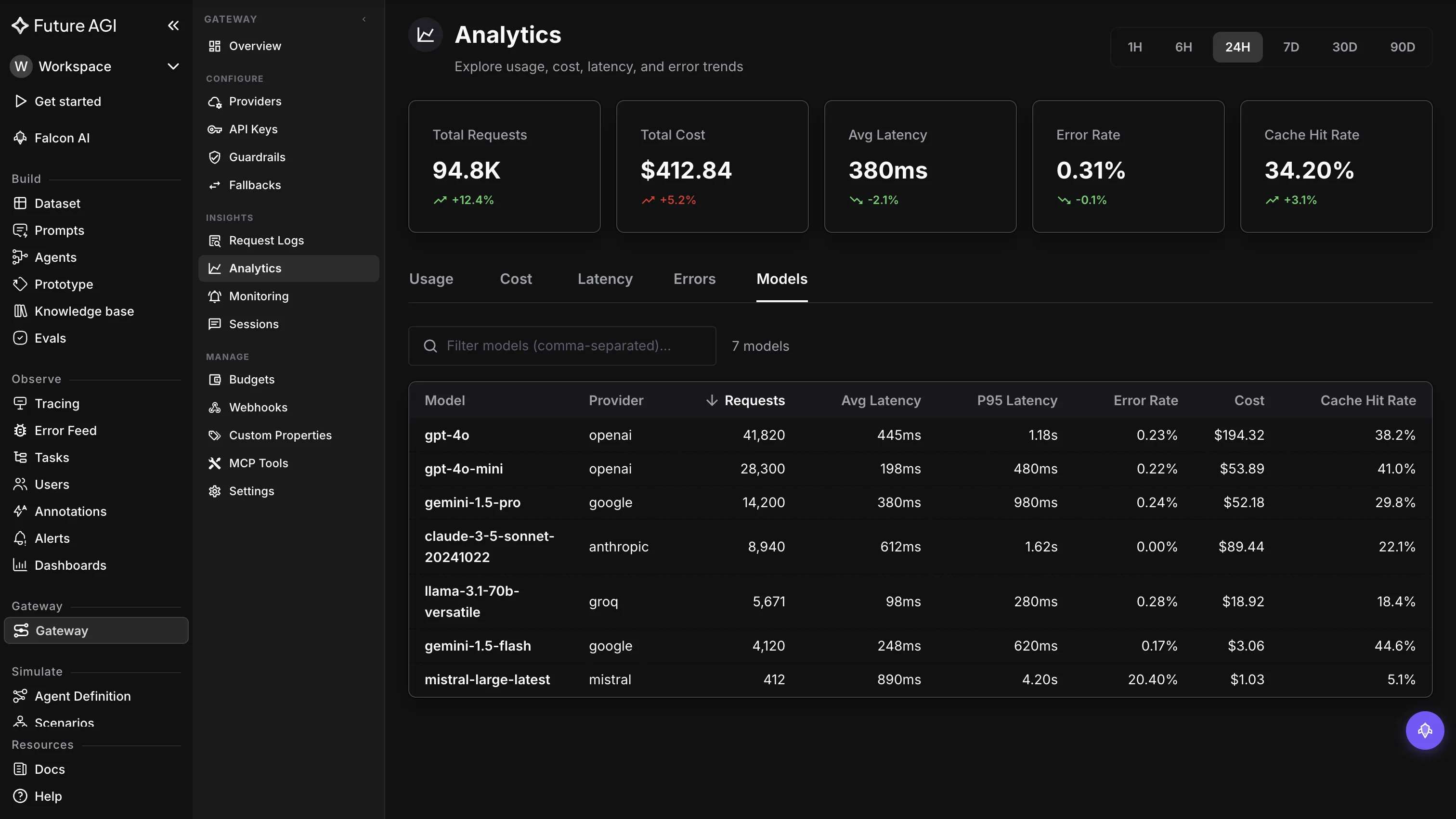
The Agent Command Center returns per-call cost and model attribution as response headers:
import requests

response = requests.post(
    "https://gateway.futureagi.com/v1/chat/completions",
    headers={"Authorization": f"Bearer {FAGI_KEY}"},
    json={"model": "deepseek-v3", "messages": messages},
)

cost = float(response.headers["x-agentcc-cost"])
latency_ms = float(response.headers["x-agentcc-latency-ms"])
model_used = response.headers["x-agentcc-model-used"]
fallback = response.headers.get("x-agentcc-fallback-used", "false")
Aggregate by query class. Pair with the per-class quality bucket from the capability-shape probes. That is the table you route from. The LLM eval cost optimization patterns and the best LLM routers and load balancers covers the routing logic once you have the table.
The safety regression check
A cheap or open-weight model can quietly undo the safety training the incumbent went through. Symptoms: jailbreaks succeed at a higher rate, prompt injection bypasses the system prompt, refusal calibration drifts toward over-refusal on legitimate medical or legal queries that the incumbent answers cleanly.
Run four checks against the incumbent and the candidate on the same payloads:
- Prompt injection (OWASP LLM01). Fixed payload set from Garak or PromptInject plus a domain-specific custom set. Score with the
PromptInjectiontemplate. A higher compliance rate on the candidate is a release blocker. - Jailbreak attempts. Fixed harmful-instruction suite. The red-teaming step-by-step guide covers the payload set worth running.
- Refusal calibration. A stratified set with ground-truth labels for
should_answervsshould_refuse. Score withAnswerRefusalplus aCustomLLMJudgerubric for over-refusal severity. Cheap models often drift toward over-refusal on medical-adjacent and legal-adjacent queries, which is the failure mode no accuracy benchmark catches. - System-prompt leakage. Probe the candidate to leak the system prompt verbatim; compare leakage rate to the incumbent.
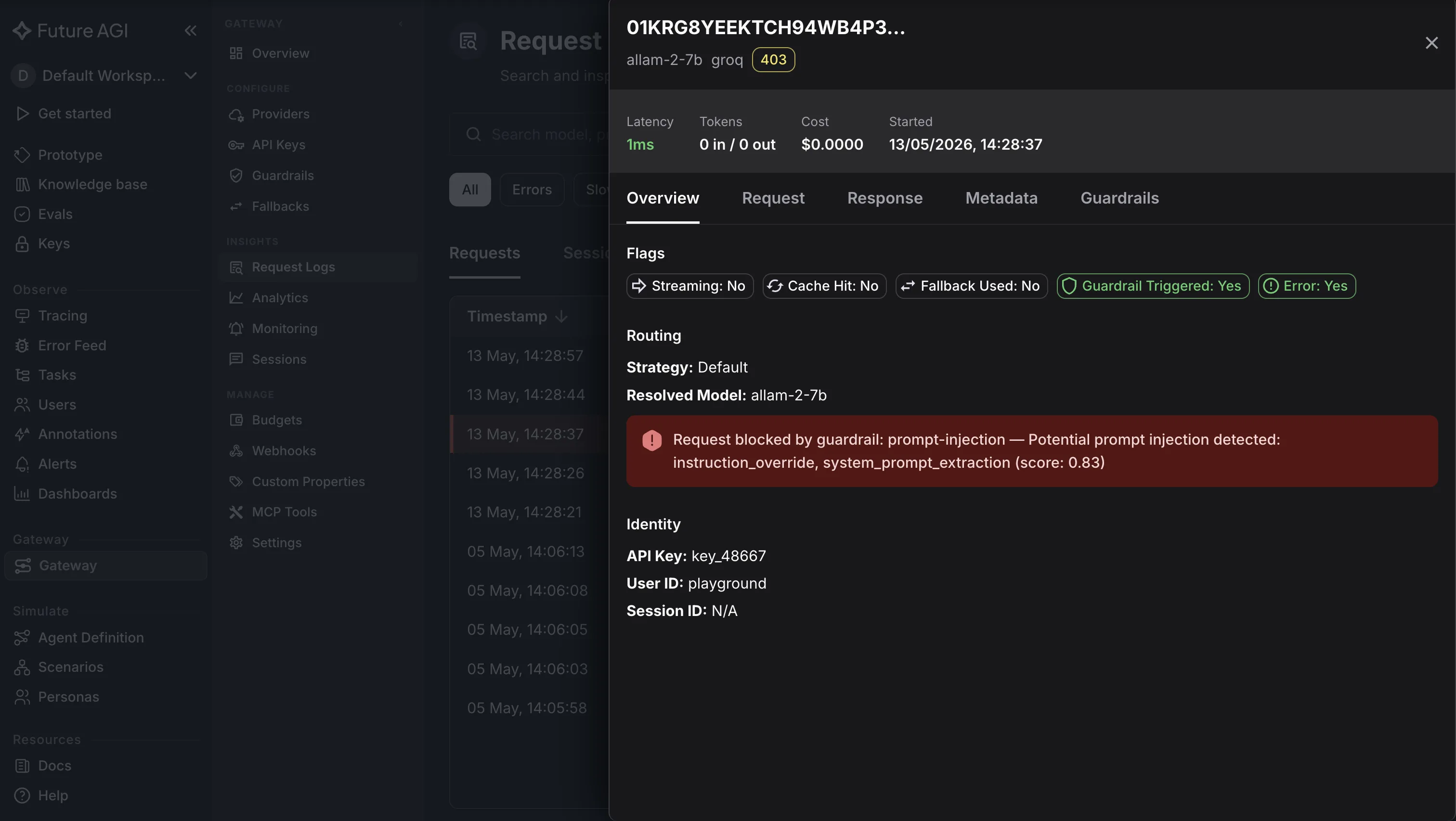
The release rule is sharp. Any regression on the refusal or injection axes is a blocker, not a tradeoff. Parity or better, or the candidate does not ship. Future AGI Protect runs the same checks inline at 65 ms median time-to-label per the Protect paper; the offline rubric and the online guardrail use the same Gemma 3n LoRA adapters so the regression test and the production policy stay in sync.
The production rollout pattern
Pass all four checks and the substitution is ready. The rollout is canary, not big-bang.
- Route 5-10% of production traffic to the candidate through the gateway; the rest stays on the incumbent.
- Attach the same rubrics that ran in offline gates as span-attached scorers on live traces via
traceAIandEvalTag. Scores live next to latency, model, and input on the OTel span. - Sample paired requests through gateway shadow mode and run the arena judge on the pairs. Accumulate winrate over a rolling 30-60 minute window.
- Alarm on a 2-point drop in any per-rubric rolling mean or a winrate drop below the agreed floor. Auto-rollback the canary cohort if the alarm sustains.
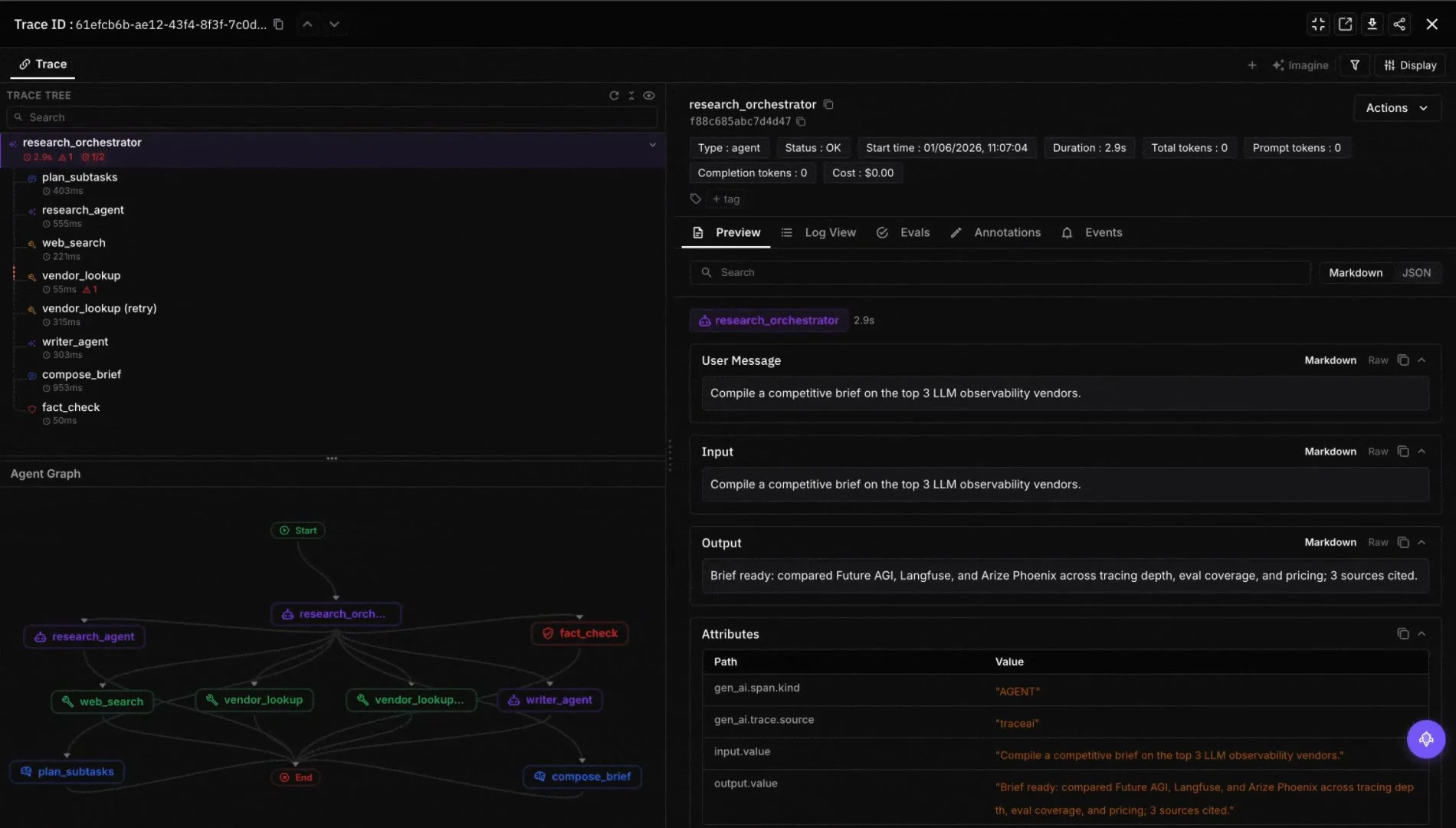
The Agent Command Center handles the canary split with eval-gated rollback across 100+ providers. Shadow, mirror, and race modes are configured by header; none require app-code changes once the gateway base URL is set. The shadow traffic and canary patterns post goes deeper on the rollout side.
Keep the rubric pinned. The moment the CI gate and the canary disagree, the dataset stopped being representative; promote the failing canary traces back into the offline set and rerun the four checks. That is the closed loop.
How Future AGI ships cheap-model substitution
Future AGI ships the eval stack as a package. Start with the SDK and the arena-judge primitive for code-defined gates. Graduate to the Platform when you want self-improving rubrics and per-cluster failure routing.
ai-evaluationSDK (Apache 2.0). 60+EvalTemplateclasses covering the four checks (Groundedness,ContextAdherence,FactualAccuracy,TaskCompletion,EvaluateFunctionCalling,AnswerRefusal,PromptInjection,DataPrivacyCompliance).CustomLLMJudgeis the arena-judge primitive for paired comparison. Local heuristic metrics (regex, JSON schema, BLEU, ROUGE, semantic similarity) run offline at sub-second latency.traceAI. 50+ AI surfaces across Python, TypeScript, Java, and C#. Every span carriesllm.model_nameand token counts, so per-model cost and per-model quality attribute back to the right model without instrumentation work.agent-opt. Six optimizers (PROTEGI, GEPA, MetaPrompt, BayesianSearch, RandomSearch, PromptWizard) for closing the residual quality gap on the candidate with prompt tuning. If the candidate loses 3 points onEvaluateFunctionCalling, PROTEGI’s gradient pass often recovers 2 of them on the same model before you escalate.- Agent Command Center. Single Go binary, Apache 2.0, 100+ providers. Shadow, mirror, and race modes for paired traffic. Eval-gated canary rollback as the default rollout pattern. Returns
x-agentcc-cost,x-agentcc-latency-ms,x-agentcc-model-used,x-agentcc-fallback-usedon every call. - Future AGI Platform. Self-improving evaluators that retune from production feedback; in-product authoring agent that writes rubrics from natural-language descriptions; classifier-backed evals at lower per-eval cost than Galileo Luna-2. Error Feed clusters failing traces with HDBSCAN and a Sonnet 4.5 Judge writes the
immediate_fixper cluster (typical clusters: “DeepSeek-V3 drops 4 points on 3+ tool composition — fix: route 3-tool composition to incumbent”), which feeds back into the routing policy.
Drop ai-evaluation and the arena-judge primitive into the substitution gate this afternoon. Add traceAI and the gateway shadow mode when the candidate is ready for a canary. Turn the Platform and Error Feed on when per-cluster routing becomes the bottleneck.
Ready to evaluate your first cheap-frontier substitution? Run pip install ai-evaluation, scaffold the four checks against your golden set, point the gateway at https://gateway.futureagi.com/v1 for shadow traffic, and gate the rollout on paired winrate plus the capability-shape deltas. The cheap model that survives all four checks is the one worth substituting; everything else is a quality cliff that the leaderboard didn’t show you.
Related reading
- LLM Arena as a Judge: Pairwise Comparison Evals (2026)
- LLM Benchmarks vs Production Evals in 2026
- Evaluating Tool-Calling Agents (2026)
- Evaluating DeepSeek Models in 2026
- Build an LLM Evaluation Framework from Scratch (2026)
- LLM Eval Shadow Traffic and Canary Patterns (2026)
- Evaluating LLM Routing Policies in 2026
- Red Teaming LLMs: A Step-by-Step Guide (2026)
- LLM Eval Cost Optimization (2026)
- The State of LLM Benchmarking (2026)
Frequently Asked Questions
Are cheap frontier models like DeepSeek-V3 and Qwen really substitutable for Claude or GPT-5?
Why do public benchmarks mislead substitution decisions?
What is a paired comparison and how is it different from an A/B test?
Which capability-shape benchmarks are worth running for cheap-model substitution?
How do I compute the real cost of a cheap model after retries and fallbacks?
Does substituting to a cheap frontier model regress safety even if accuracy holds?
What does Future AGI ship for cheap-model substitution evaluation?
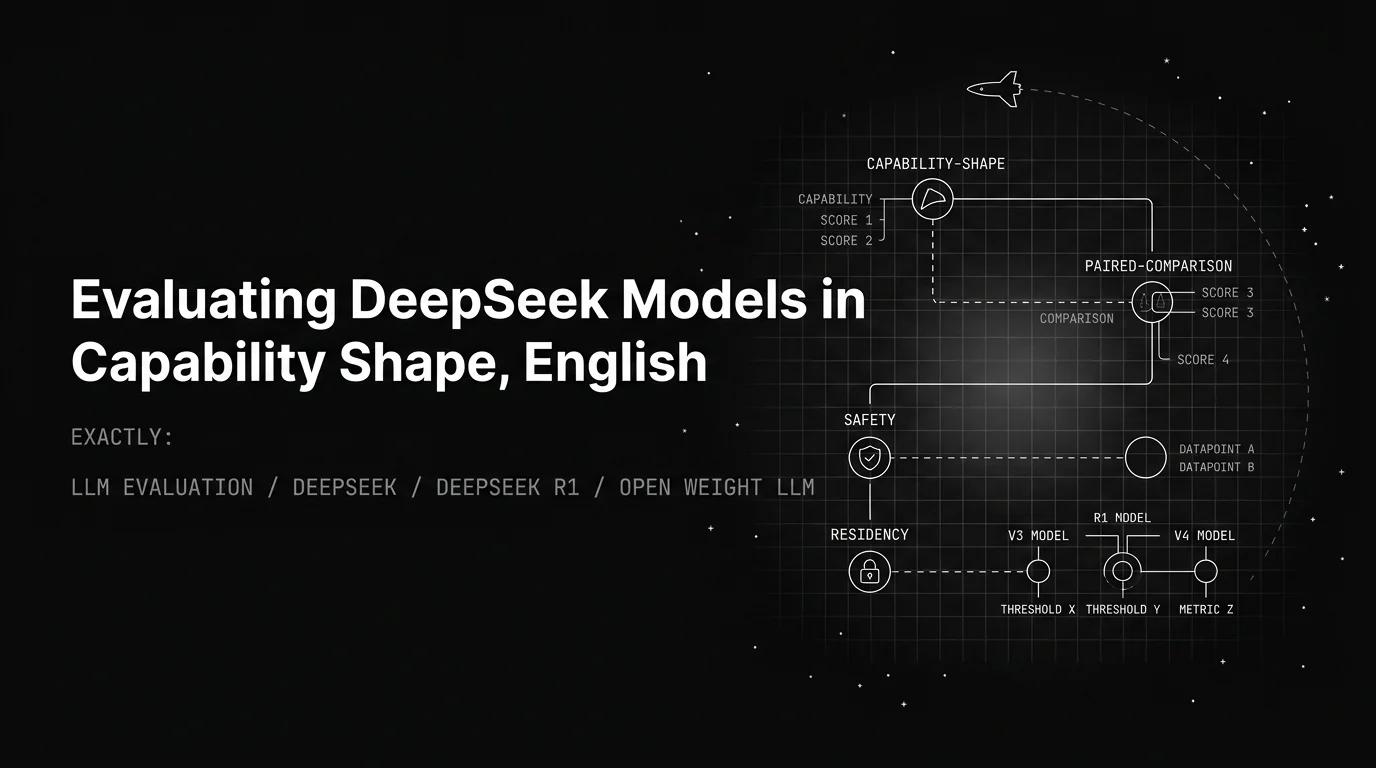
Evaluate DeepSeek V3, R1, and V4 for production: capability-shape benchmarks, paired comparison on YOUR English data, safety regression, residency gate.

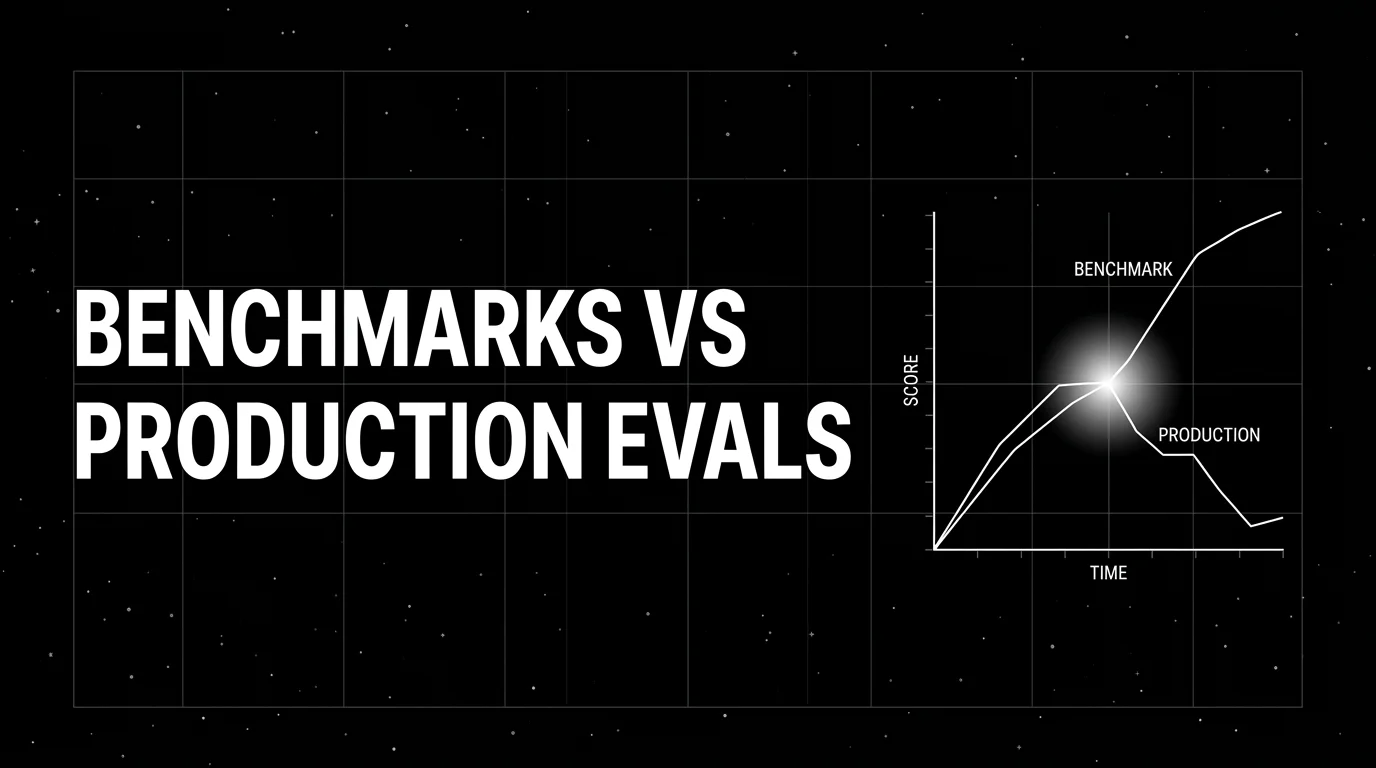
Public LLM benchmarks (MMLU, HumanEval, GSM8K) are contaminated and not predictive of production. Build domain reproductions that actually work in 2026.
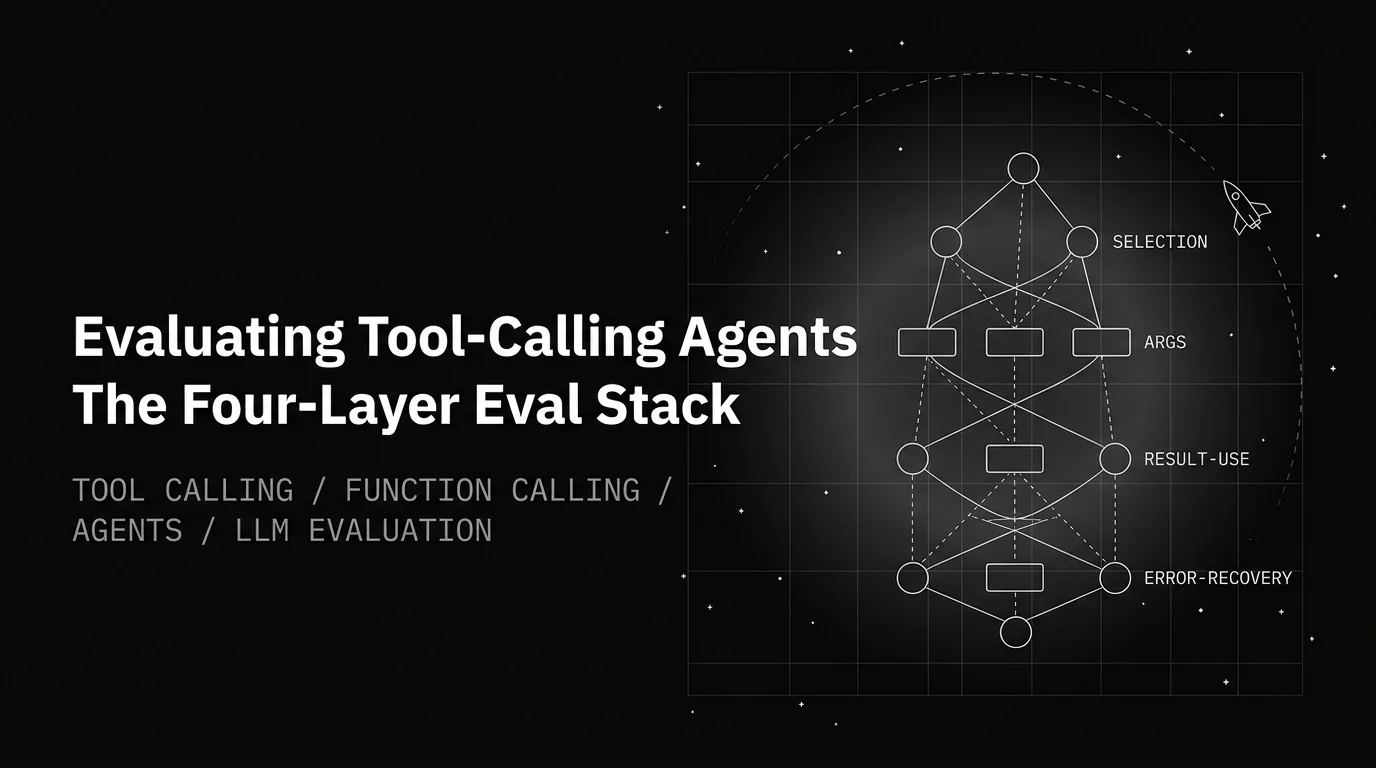
Tool-calling eval is four problems stacked: tool selection, argument extraction, result utilization, error recovery. Most posts grade only the first.