Multi-Agent AI Systems in 2026: Frameworks, Patterns, and Production Observability
Multi-agent AI systems in 2026: LangGraph, CrewAI, AutoGen, OpenAI Agents SDK compared, plus patterns, voice hand-offs, evals, and traceAI observability.
Table of Contents
TL;DR: Multi-Agent AI Frameworks in 2026
A multi-agent AI system runs two or more LLM agents that hand off, supervise, or work in parallel to finish a job a single agent cannot, and in 2026 the framework you pick is separate from the observability layer you pair with it. The five most teams shortlist:
| Framework | Best for | License | OTel-compatible tracing | Durable state |
|---|---|---|---|---|
| LangGraph | Graph-based orchestration with checkpoints | MIT | Yes (via instrumentor) | Yes (checkpointer) |
| CrewAI | Role-based crews with hierarchical process | MIT | Yes (via instrumentor) | Partial (flows) |
| OpenAI Agents SDK | OpenAI-native runtime, handoffs, guardrails | MIT | Yes (native + instrumentor) | App-managed |
| Microsoft Agent Framework | .NET and Python, Azure-native, AutoGen successor | MIT | Yes (via instrumentor) | Yes (runtime) |
| AutoGen v0.4+ (legacy) | Async conversation programming, Studio UI; still in use, Microsoft Agent Framework is the active successor | CC-BY-4.0 + MIT | Yes (via instrumentor) | Yes |
Companion layer (not a framework): Future AGI traceAI plus Agent Command Center is the observability, evaluation, guardrails, and gateway layer that pairs with any of the frameworks above. traceAI is Apache 2.0 OTel-native; the platform adds eval templates, simulation, and a BYOK gateway around the same span data.
What changed since 2025: OpenAI moved production agent work toward the Agents SDK after the earlier Swarm experimental repository (Swarm itself is now superseded and no longer maintained, at github.com/openai/swarm). Microsoft is aligning AutoGen and Semantic Kernel patterns under the new Agent Framework, see github.com/microsoft/agent-framework. OpenTelemetry-compatible tracing has become the standard integration target across these runtimes, which made vendor-neutral observability the table-stakes pattern instead of a custom integration project.
What a Multi-Agent AI System Actually Is in 2026
A multi-agent AI system is a runtime in which two or more LLM-driven agents collaborate, hand off, or compete to complete a user goal. Each agent has its own system prompt, tool set, memory window, and sometimes its own model. The agents coordinate through one of three structures: a graph with explicit edges (LangGraph), a role hierarchy with a supervisor (CrewAI), or an open conversation channel (AutoGen, OpenAI Agents SDK group chat).
By 2026 the distinction between “agent” and “agentic workflow” has settled. An agent is the unit, a multi-agent system is the runtime. The runtime cares about three primitives:
- Spans. One LLM call, one tool call, one retrieval, or one handoff. The smallest observable unit.
- Traces. The tree of spans for a single user request, across every agent it touches.
- Evaluations. Scores attached to spans or traces, for example tool-use correctness at the span level and task completion at the trace level.
Any production stack that misses one of these three primitives will silently break under multi-agent workloads. The reason: a multi-agent system commonly produces dozens to a few hundred spans for a single user request, and reading the raw logs is no longer viable.
The Five Frameworks Most Teams Shortlist in 2026
The 2025 stack was CrewAI, LangGraph, AutoGen, and OpenAI Swarm. In 2026 the lineup is:
LangGraph
LangGraph is the graph-based orchestrator from LangChain. You define nodes (agents, tools, conditional routers) and edges (state transitions), and the runtime executes the graph with explicit state and durable checkpoints. The checkpointer lets you resume a long-running run after a crash and is the foundation for human-in-the-loop breakpoints.
- Repo: github.com/langchain-ai/langgraph
- License: MIT
- Why teams pick it: explicit state, branching, retries, time-travel debugging.
- Why teams skip it: more boilerplate than crew-style frameworks for simple linear flows.
CrewAI
CrewAI builds on the “crew” metaphor. You define roles (researcher, writer, reviewer), give each role a goal and a backstory, and let the framework orchestrate delegation. The newer flows primitive adds deterministic control for cases where you want a fixed sequence rather than emergent delegation.
- Repo: github.com/crewAIInc/crewAI
- License: MIT
- Why teams pick it: fastest path from idea to a working role-based crew.
- Why teams skip it: less explicit state machine than LangGraph for complex branching.
OpenAI Agents SDK
The OpenAI Agents SDK is the production successor to the Swarm experimental library, which OpenAI has superseded and no longer maintains. It ships in Python and TypeScript, offers handoffs between agents, guardrails as first-class objects, and tracing that exports to any OTLP backend.
- Repo: github.com/openai/openai-agents-python
- License: MIT
- Why teams pick it: lightest weight runtime if you are already on the OpenAI Responses API.
- Why teams skip it: tightest coupling to OpenAI semantics, less ergonomic with non-OpenAI providers.
Microsoft Agent Framework
Microsoft unified Semantic Kernel and AutoGen into one stack called Microsoft Agent Framework. It ships .NET and Python SDKs, integrates with Azure AI Foundry, and uses the Microsoft Agent Runtime for durable orchestration. AutoGen v0.4 patterns continue to work, they are now part of the same product.
- Repo: github.com/microsoft/agent-framework
- License: MIT
- Why teams pick it: enterprise-grade durable runtime, .NET coverage, Azure-native deployment.
- Why teams skip it: heavier learning curve, Azure-first defaults.
AutoGen v0.4+ (legacy, included for the standalone installed base)
AutoGen v0.4+ is still consumable as a standalone library and powers a large installed base. New work from Microsoft is happening inside the Agent Framework, so AutoGen is listed here separately only for teams running the standalone package and API surface. The v0.4 rewrite introduced an async-first conversation programming model with code-execution agents, group chat, and the AutoGen Studio UI for visual flow building.
- Repo: github.com/microsoft/autogen
- License: AutoGen Studio is CC-BY-4.0; the core library is MIT.
- Why teams pick it: most expressive multi-agent conversation patterns, code execution out of the box.
- Why teams skip it: ongoing API churn as the framework consolidates with Microsoft Agent Framework; for new projects, the Agent Framework is the recommended path.
Future AGI traceAI plus Agent Command Center: The Layer That Pairs With Any Framework
Future AGI does not compete with these frameworks. It pairs with them as the observability, evaluation, guardrail, and gateway layer.
- traceAI, an Apache 2.0 OTel-native instrumentation library. Auto-instrumentors exist for LangGraph, CrewAI, AutoGen, OpenAI Agents SDK, LlamaIndex, raw OpenAI, Anthropic, Vertex, Bedrock, and more, in Python and TypeScript. Source: github.com/future-agi/traceAI.
- Custom evals: write your own grading rule, pick an LLM judge or a deterministic check, set a pass or fail threshold, and run it as a CI gate. Built-in templates cover task completion, faithfulness, tool-use correctness, context relevance, toxicity, PII, and brand-tone. Templates run server-side on
turing_flash(~1-2s),turing_small(~2-3s), orturing_large(~3-5s). Source: docs.futureagi.com/docs/sdk/evals/cloud-evals. - 18 plus guardrail scanners: PII redaction, prompt-injection screening, toxicity, jailbreak, custom regex, brand-tone, secret detection. See the Protect SDK.
- BYOK gateway with 100 plus providers; see futureagi.com/pricing for current gateway and judge-call pricing.
- Simulation for persona-driven multi-turn testing of multi-agent flows.
Why this matters for multi-agent specifically
A single LLM call generates one span. A multi-agent run generates dozens. Without a span-aware eval layer, you can only score the final output, which means you cannot tell which sub-agent caused a regression. traceAI emits spans with consistent attributes (agent.name, agent.role, tool.name, handoff.from, handoff.to), which lets you attach evals at any layer and answer questions like “did the reviewer agent ever override a correct writer output?”
Quick start: instrument LangGraph and attach evals
import os
from fi_instrumentation import register
from traceai_langchain import LangChainInstrumentor
from fi.evals import evaluate

os.environ["FI_API_KEY"] = "..."
os.environ["FI_SECRET_KEY"] = "..."

# 1. Register the project and auto-instrument LangGraph + underlying LangChain LLM calls.
trace_provider = register(project_name="research-crew-prod")
LangChainInstrumentor().instrument(tracer_provider=trace_provider)

# 2. Build and run your LangGraph multi-agent app as normal. Spans flow to Future AGI automatically.
# from my_app import build_graph
# graph = build_graph()
# result = graph.invoke({"question": "What changed in the EU AI Act in Q1 2026?"})

# 3. Score the final answer against a faithfulness rubric.
score = evaluate(
    "task_completion",
    input="What changed in the EU AI Act in Q1 2026?",
    output="...",  # the final agent answer
    expected_output="A mention of the August 2026 Code of Practice milestone.",
)
print(score)
The same pattern works for CrewAI (from traceai_crewai import CrewAIInstrumentor), AutoGen (from traceai_autogen import AutogenInstrumentor), and the OpenAI Agents SDK via its dedicated instrumentor package. Replace the import with the matching auto-instrumentor.
Architectural Patterns: Five Shapes That Cover Most Production Workloads
Each of these maps to one of the named agent architecture patterns covered in more depth elsewhere.
Planner-Executor
A planner agent decomposes the user goal into a list of steps. An executor agent runs each step with its tools. This is the classic ReAct generalisation to two agents. It is the right pattern when the planner can be a more capable model and the executor a cheaper one.
Hierarchical Supervisor
A supervisor agent routes work to a pool of specialist workers. The supervisor never executes itself, it only decides which worker should act next. Used heavily in CrewAI hierarchical processes and in OpenAI Agents SDK handoffs.
Maker-Checker
An actor produces output, a verifier scores or rewrites it. The verifier can be a different model or the same model with a different prompt. Most effective at cutting hallucinations in high-stakes domains like legal and medical summarisation.
Pipeline
Agents are arranged in a fixed sequence. Each one transforms the output of the previous one. Pipelines are deterministic, which makes them the easiest to test, but they cannot recover from upstream errors without a feedback loop.
Network or Swarm
Peer agents share a scratchpad and talk freely until they agree. Used in research-style flows where the structure of the answer is unknown in advance. Strong with AutoGen group chat and LangGraph subgraphs. Hard to observe without strong span semantics.
Communication Protocols and Memory: What Actually Matters in Production
Communication
The 2026 dividing line is structured handoffs versus open chat. Structured handoffs (agent.handoff_to(name="researcher", reason="...")) produce one span per handoff, attach typed metadata, and are easy to score. Open chat group rooms are more expressive but harder to attribute. Most production teams in 2026 default to structured handoffs and use group chat only for exploratory phases.
Memory
Three layers cover most needs:
- Working memory. The current conversation context, capped by model context window. Always cleared per turn.
- Episodic memory. Persistent records of past task runs. Stored in a vector store or a structured table, retrieved by query similarity or rule.
- Procedural memory. Tool-use heuristics that the agent has learned. Often baked into the system prompt or a small fine-tune.
Memory tools like Mem0, Letta, and Zep occupy this layer and pair cleanly with Future AGI traceAI for span-level grading. Each memory.retrieve call becomes a span, and you can attach a grounding evaluator to check that the retrieved memory was actually relevant.
Tool Use, Routing, and Error Handling
Tool calls are the highest-failure spans in a multi-agent run. Three rules cover most defects:
- Type and validate every tool argument before the call leaves the agent. Pydantic models, JSON schemas, or framework-native typed tools.
- Return structured errors, not raw exception traces. The agent will try to parse the error message and recover; a clean error code helps.
- Score
tool.callspans with a tool-use correctness eval. Future AGI ships this template by default.
For routing across providers (mix OpenAI and Anthropic and a local model in one run), pair the framework with a gateway. The BYOK gateway inside Agent Command Center supports 100 plus providers, BYOK on every judge call, and a fallback policy when a primary provider returns a 5xx.
Evaluation: Span, Trace, Persona
Multi-agent evaluation has three layers, and skipping any one creates a blind spot.
| Layer | What you score | When it runs | Template |
|---|---|---|---|
| Span | One LLM call: faithfulness, tool-use correctness, grounding | Streaming during the run | fi.evals.evaluate("faithfulness", ...), fi.evals.evaluate("tool_use_correctness", ...) |
| Trace | The full run: task completion, plan adherence, cost budget | After the trace closes | fi.evals.evaluate("task_completion", ...), custom rubric via CustomLLMJudge |
| Persona | A user persona walks through the system | Pre-merge or scheduled | Future AGI Simulation driving persona conversations against your agent |
A typical production setup runs span-level evals on every request, trace-level evals on a sample plus all failures, and persona-driven simulations in CI before any prompt or model change ships. The TL;DR: do not score only the final answer.
Multi-Agent Voice Systems: Hand-offs, State, and the Eval Boundary
Real-time voice is where a multi-agent system gets its hardest test. A multi-agent voice system splits one call across specialized agents: a triage agent identifies intent in a turn or two, then hands off to a billing, technical, or retention specialist that owns the resolution. The OpenAI Agents SDK ships a first-class handoffs primitive and the managed Vapi platform ships squad transfers; LiveKit Agents and Pipecat give you the building blocks, a tool that returns the next agent while the framework preserves conversation context. Three constraints hold across every runtime.
State has to survive the hand-off. Three layers travel with the caller: the full transcript, structured slot state (customer_id, account_type, issue_category, urgency, prior eval scores), and a short hand-off note that says why the transfer happened and what was promised. Drop any layer and the caller repeats themselves, the single most reliable predictor of a failed call.
Eval moves to two boundaries. Score each agent on its own job with task_completion (did triage classify intent, did the specialist resolve), then score the whole call with conversation_resolution and conversation_coherence on the full multi-turn trace. Per-agent scoring tells you which stage dropped the ball; end-to-end scoring tells you whether the caller’s goal was actually met.
from fi.testcases import ConversationalTestCase, LLMTestCase
from fi.evals import Evaluator, ConversationCoherence, ConversationResolution

conv = ConversationalTestCase(messages=[
    LLMTestCase(query="I was charged twice", response="Got it, transferring to billing."),
    LLMTestCase(query="(billing) Let me pull up your account", response="I see the duplicate charge, refunding now."),
])
ev = Evaluator(fi_api_key=..., fi_secret_key=...)
result = ev.evaluate(eval_templates=[ConversationCoherence(), ConversationResolution()], inputs=[conv])
Latency is a budget you split across stages. A one-second per-turn target on a transfer flow might give 200ms to triage, 600ms to the specialist’s first response, and 150ms to the close; parallel sub-agents like transcription, sentiment, and summarization share one clock and the slowest wins. traceAI captures per-agent span attributes, so when conversation_resolution drops you walk the per-agent scores back to the first stage that failed, which is usually the transition turn itself.
For the deeper voice treatment see three-layer voice testing and voice agent conversation monitoring.
Guardrails at the API Boundary
Eval is observation. Guardrails are enforcement. In a multi-agent system you want both at the boundary, not after the fact.
The 18 plus guardrails inside Agent Command Center include:
- PII redaction across the conversation surface.
- Prompt-injection screening before any user input reaches a sub-agent.
- Jailbreak detection on every system or user message.
- Toxicity, bias, and brand-tone enforcement on every agent output.
- Custom regex and secret detection for code-execution agents.
Each guardrail emits a span, fires synchronously on turing_flash (~1-2s for full templates), and can either redact, block, or alert. Multi-agent failures often start at one sub-agent and propagate; the guardrail fires at the offending span and stops the cascade.
Deployment Patterns in 2026
The four deployment shapes most teams converge on:
- Agent as a stateless HTTP endpoint. One process per request, all state in the trace and an external store. Easiest to scale, hardest to make long-running.
- Agent runtime on a queue. A worker pool consumes tasks from a queue, with checkpointing to a state store. The native model for LangGraph and Microsoft Agent Runtime.
- Agent on a serverless platform. Each agent step is a function invocation, with state in a managed store. Good for spiky workloads, costs more for long traces.
- Self-hosted on Kubernetes. Full control, full operational cost. Common in regulated industries.
In every case, traceAI emits OTLP spans regardless of host, so the observability layer follows the workload.
Failure Modes and How to Catch Them
Four failure modes account for most production incidents in multi-agent systems:
- Coordination loops. Two agents keep handing the task back and forth. Catch with a per-trace max-handoff guardrail.
- Context blow-up. Planner pastes the entire conversation into the executor prompt and exceeds context window. Catch with a token-budget guardrail at the trace level.
- Tool misuse. Agent calls the wrong function with malformed arguments. Catch with a tool-use correctness eval on every
tool.callspan. - Drift. Sub-agent slowly deviates from the original goal. Catch with a goal-adherence eval at the trace level.
Built-in templates and guardrails can catch many instances of these patterns; application-specific risks usually still need a custom policy or two on top.
Security, Governance, and Compliance
A multi-agent system has more attack surface than a single agent, because every tool, every handoff, and every memory write is a new vector. The minimum policy set in 2026:
- Zero-trust between agents. Every handoff is signed and audited.
- Encryption at rest and in transit, including the trace store.
- Audit logs of who, what, when, and why for every tool call. traceAI spans serve as the audit record.
- Role-based access on the orchestration UI.
- Data-residency controls if you operate under GDPR, HIPAA, or the EU AI Act. The Future AGI traceAI library is Apache 2.0 at github.com/future-agi/traceAI, which lets you keep span generation in your own infrastructure even when the backend is managed. For the latest on cloud regions and deployment modes, see the Future AGI documentation.
For deeper coverage of governance and risk see the AI Agent Compliance and Governance in 2026 post.
Wrapping Up
Multi-agent AI systems in 2026 are no longer research demos. Teams ship them into customer-facing products, regulated industries, and back-office automation. The framework choice is now genuinely orthogonal to the observability choice: pick any of LangGraph, CrewAI, OpenAI Agents SDK, Microsoft Agent Framework, or AutoGen, and pair it with a span-aware eval and guardrail layer. Future AGI offers that layer end to end, with Apache 2.0 traceAI for instrumentation, custom evals, 18 plus guardrails, the BYOK gateway, and simulation for persona-driven testing, all under one stack at futureagi.com.
For deeper reads see Build a multi-agent system with Future AGI, Tools for monitoring multi-agent systems in 2026, and Trace and debug multi-agent systems.
Frequently Asked Questions
What is a multi-agent AI system in 2026?
What are the best multi-agent frameworks to use in 2026?
How is a multi-agent system different from a single LLM agent?
What design patterns make multi-agent systems reliable in production?
Do I need OpenTelemetry to observe a multi-agent system?
How do I evaluate a multi-agent system end to end?
What goes wrong most often in multi-agent systems?
Should I self-host my multi-agent observability stack?
What is a multi-agent voice system?
How do you evaluate a multi-agent voice call?
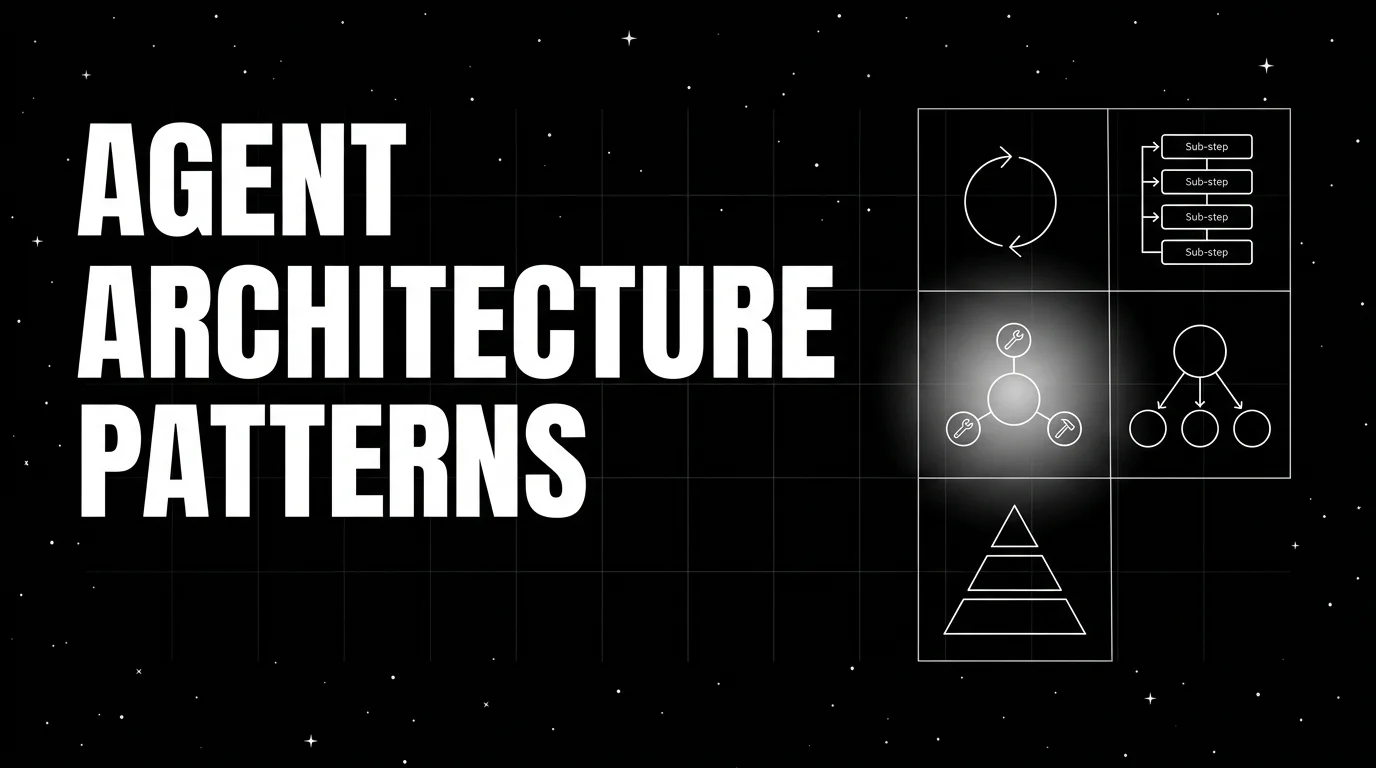
Five agent architecture patterns in 2026: ReAct, plan-then-execute, supervisor and workers, graph, event-driven. Four-axis tradeoff per pattern.

LangGraph, CrewAI, Microsoft Agent Framework, AutoGen, Mastra, OpenAI Agents SDK, and Google ADK ranked for 2026 by debug, eval, and production readiness.

Build reliable multi-agent AI flows with Future AGI in 2026: synthetic datasets, traceAI, fi.evals, fi.simulate, Agent Command Center.