LLM Benchmarks 2026: Compare GPT-5, Claude Opus 4.7, Gemini 2.5 Pro, and Grok 4 for Reasoning, Coding, and Cost
Compare GPT-5, Claude Opus 4.7, Gemini 2.5 Pro, and Grok 4 on GPQA, SWE-bench, AIME, context, $/1M tokens, and latency. May 2026 leaderboard scores.
Table of Contents
TL;DR: How to Pick an LLM in May 2026
| If you need | Pick | Why |
|---|---|---|
| Best overall reasoning | GPT-5 or Grok 4 | Both clear 83 percent on GPQA Diamond; Grok 4 leads AIME 2025 |
| Best coding agent | Claude Opus 4.7 | Leads SWE-bench Verified on most internal harnesses; clean tool calls |
| Largest context | Gemini 2.5 Pro | 1M default, 2M enterprise; strong long-document recall |
| Cheapest frontier | GPT-5 or Gemini 2.5 Pro | Both at $1.25 in / $10 out per million tokens |
| Open weights | Llama 4.x or DeepSeek R2 | License varies by model (Llama community license, DeepSeek MIT, Mistral Apache for some variants); self-hostable |
| Production eval + routing | Future AGI | One platform for evals, traceAI tracing, Agent Command Center routing across all of the above |
Static benchmark scores tell you a model’s ceiling. They do not predict how it behaves in your own codebase. Wire the model you pick into a real regression set, observe it with traceAI, and gate releases with custom judge metrics before betting on a number from a vendor blog.
Why LLM Benchmarks in 2026 Matter Less, and Custom Evals Matter More
In late 2024, picking an LLM was mostly a benchmark exercise. You read the leaderboards, picked the model with the highest GPQA score, and shipped. By May 2026, that loop is broken. Frontier models are close enough on public benchmarks that scores alone rarely separate them for procurement, vendors retest under custom scaffolds that no one else can reproduce, and the real failure modes in production are tool-calling drift, long-horizon recovery, and prompt injection, none of which show up on MMLU.
Public benchmarks still have a job. They give you a ceiling. If a model lands below 70 percent on GPQA Diamond in 2026, it is not a reasoning-tier candidate. But for any model above that bar, the right next step is to run your own regression set on your own prompts, not to keep refreshing the leaderboard. The deeper split between public benchmarks and production evals is worth understanding before any procurement decision.
This post covers what the May 2026 leaderboard actually says, what each major model is good at, and how to set up the custom eval that decides what you ship. Where vendor scores conflict across harnesses, the post calls out the conflict instead of cherry picking the highest number.
The Four Frontier Models in May 2026: GPT-5, Claude Opus 4.7, Gemini 2.5 Pro, Grok 4
OpenAI GPT-5 (gpt-5-2025-08-07)
GPT-5 shipped in August 2025 and remains OpenAI’s flagship through May 2026. The model unifies the o-series reasoning track with the GPT-4 generalist track in a single architecture, exposed as a thinking-budget parameter in the API. Strengths: broad usability, the largest tool ecosystem in production, the simplest mental model for new teams, and competitive pricing at one dollar twenty-five cents input and ten dollars output per million tokens. Weak spots: GPT-5 does not lead any single benchmark, it is consistently second or third behind specialists like Grok 4 (reasoning) and Claude Opus 4.7 (coding).
Variants and pricing for context:
- GPT-5 standard: 400k context, $1.25 input / $10 output per 1M tokens.
- GPT-5 mini: $0.25 / $2.00 per 1M tokens for routine work.
- GPT-5 nano: $0.05 / $0.40 per 1M tokens for classification and routing.
Verified from OpenAI’s GPT-5 launch page and API pricing.
Anthropic Claude Opus 4.7
Claude Opus 4.7 is Anthropic’s frontier model and a default pick for coding agents in 2026. Vendor-reported SWE-bench Verified scores sit in the 70 to 80 percent band, depending on the harness. Tool-calling is clean without spurious re-tries, and reasoning traces survive code review better than competing models. The one million token context window matches Gemini for long-document workflows. Pricing sits at three dollars input and fifteen dollars output per million tokens for normal context, with premium tiers above two hundred thousand tokens.
Anthropic’s Claude 4 announcement covers the family; the one million token context feature shipped separately.
Google Gemini 2.5 Pro
Gemini 2.5 Pro is the long-context and multimodal leader. Default context window is one million tokens, with two million available on select enterprise tiers. Native handling of text, code, images, audio, and video lets you build a single API call where most competitors need multiple model invocations. Pricing matches GPT-5 at one dollar twenty-five cents input and ten dollars output per million tokens. Deep Think mode and configurable thinking budgets let you trade latency for accuracy.
Sources: Google DeepMind Gemini 2.5 page and the March 2025 thinking updates.
xAI Grok 4
Grok 4 leads on reasoning benchmarks, including a published 100 percent on AIME 2025 (Heavy variant) and 87 to 88 percent on GPQA Diamond. The model exposes a multi-agent collaboration mode where independent reasoners propose and critique solutions. Context window is 256 thousand tokens. Pricing runs three dollars input and fifteen dollars output per million tokens, with doubled rates above 128 thousand tokens. Live X data access is unique and useful for time-sensitive analysis.
Reference: xAI’s Grok 4 launch.
May 2026 Leaderboard: GPQA Diamond, SWE-bench Verified, AIME, and Cost
The table below summarizes the four frontier models on the metrics that matter for production decisions. Numbers reflect published scores as of May 2026. Where vendors report different scores on different harnesses, this post takes the conservative version.
| Model | GPQA Diamond | SWE-bench Verified | AIME 2025 | Context | $/1M in | $/1M out |
|---|---|---|---|---|---|---|
| GPT-5 | ~83 to 85% | ~75% | ~95% | 400k | $1.25 | $10 |
| Claude Opus 4.7 | ~75 to 80% | ~70 to 75% (vendor reported) | not standard benchmark | 1M | $3 | $15 |
| Gemini 2.5 Pro | ~86% | ~64 to 67% | ~87% | 1M to 2M | $1.25 | $10 |
| Grok 4 | ~87 to 88% | ~75% | ~100% (Heavy) | 256k | $3 | $15 |
| Llama 4.x (open) | ~70 to 75% | ~55 to 65% | varies | 128k to 1M | self-host | self-host |
| DeepSeek R2 (open) | ~70 to 78% | ~50 to 60% | strong | 128k | self-host or BYOK | self-host or BYOK |
Source notes: GPT-5 scores from OpenAI’s launch. Claude scores from Anthropic’s Claude 4 page. Gemini scores from DeepMind Gemini 2.5. Grok scores from xAI Grok 4 launch. Open source comparisons aggregated from Artificial Analysis.
What the table does not tell you
The table is a useful first filter. It does not capture three things that decide production fit:
- Tool calling reliability. Models with identical SWE-bench scores can have a five to ten times difference in spurious tool retries in a real agent loop.
- Latency under load. Frontier models slow down 2x to 3x under burst traffic with reasoning enabled. Vendor-reported tokens per second is the best case.
- Cost predictability. Reasoning models bill on internal thinking tokens you cannot see, which can blow up budgets on hard prompts.
This is why the next section moves from leaderboard reading to custom eval design.
How to Run a Real Eval in 2026: Custom Regression Sets, LLM Judges, and Tracing
If you ship LLMs in production, the workflow that actually works in May 2026 is:
- Pull 50 to 200 real prompts from your logs (or, before launch, write them).
- Hand-label the gold answer for each.
- Run every candidate model against the set.
- Score with a custom LLM judge that knows your domain rubric.
- Trace each call with traceAI to capture reasoning latency, token counts, and tool calls.
- Gate the release on accuracy plus latency plus cost. Lock the model version.
- Rerun the same regression on every new vendor model release.
Future AGI Evaluate gives you a hosted version of this loop with fifty plus built-in metrics, a custom LLM judge builder, and dataset versioning. The eval API is plain Python:
# pip install futureagi
from fi.evals import Evaluator
from fi.evals.metrics import CustomLLMJudge
from fi.evals.llm import LiteLLMProvider

# 1. Pick the judge model (BYOK)
judge = LiteLLMProvider(
    model="gpt-5-2025-08-07",
    api_key="sk-...",
)

# 2. Define the rubric for your domain
metric = CustomLLMJudge(
    name="answer_quality",
    rubric="Return 1.0 if the answer is factually correct, "
           "cites a real source, and is under 200 words. "
           "Return 0.0 otherwise.",
    provider=judge,
)

# 3. Run the eval on a candidate model
evaluator = Evaluator(metrics=[metric])
result = evaluator.evaluate(
    inputs={"question": "What is the GPQA Diamond score for GPT-5?"},
    outputs={"response": "GPT-5 scores around 83 to 85 percent on GPQA Diamond..."},
)
print(result.scores["answer_quality"])  # 0.0 or 1.0
The same eval runs against every candidate model. Anchor your release decision on the accuracy spread across the set, not on the public benchmark gap.
For tracing the full call path including tool use, drop in traceAI, an Apache 2.0 OpenTelemetry-compatible instrumentor:
# pip install traceai-openai
from fi_instrumentation import register
from traceai_openai import OpenAIInstrumentor

tracer_provider = register(
    project_name="llm-benchmark-eval-2026",
)
OpenAIInstrumentor().instrument(tracer_provider=tracer_provider)

# Every OpenAI call from here on is traced. Use the corresponding
# traceAI instrumentor (traceai-anthropic, traceai-google-genai, etc.)
# to add Anthropic, Gemini, and other supported providers.
traceAI ships SDKs for Python, TypeScript, Java, and C-sharp, all Apache 2.0 licensed at github.com/future-agi/traceAI.
Use Case Picks for May 2026
The leaderboard is the same for everyone. The right pick depends on what you ship. The recommendations below cluster the four frontier models plus the open-source picks by use case.
Long context document analysis, contracts, codebases
Pick: Gemini 2.5 Pro or Claude Opus 4.7. Both ship one million tokens of context with strong recall. Gemini wins on cost per million tokens, Claude wins on instruction following over very long inputs. Test on your own corpus, since recall above two hundred thousand tokens still varies by content type.
Autonomous coding agents and IDE assistants
Pick: Claude Opus 4.7, then Grok 4 or GPT-5. Claude’s competitive SWE-bench Verified score combined with strong tool-calling behavior tends to translate to fewer spurious retries in long-running coding agents. Pair with Future AGI Simulation to run agent regressions against persona-driven user flows before each release.
Cost-sensitive high volume classification and routing
Pick: GPT-5 nano, Gemini 2.5 Flash, or self-hosted Llama 4.x. Per-million-token cost matters more than benchmark score for these workloads. Route via Future AGI Agent Command Center to A/B a cheap and a frontier model on every call.
Math, reasoning, and research
Pick: Grok 4 or GPT-5 with reasoning enabled. Grok 4 leads AIME 2025 and is competitive on GPQA. GPT-5 with extended thinking trades latency for higher accuracy on multi-step proofs.
Multimodal: image, video, audio
Pick: Gemini 2.5 Pro. Native multimodal handling across text, code, image, audio, and video remains the cleanest API surface in 2026. Claude Opus 4.7 is competitive on image inputs but does not handle native audio output the way Gemini does.
Self-hosted, open weights, on-prem
Pick: Llama 4.x, DeepSeek R2, or Mistral Large 3. Open weights closed most of the reasoning gap with closed models through 2025. Pick based on license fit (Llama community license, DeepSeek MIT, Mistral Apache for some variants) and hardware budget.
Multi-Model Routing Is the New Default
In May 2026, multi-model routing is increasingly common in production stacks. The pattern that works: cheap model handles classification and routing, frontier model reserves for hard reasoning, all behind a router that falls back automatically on rate limits or 5xx errors.
Future AGI Agent Command Center provides this layer with BYOK across one hundred plus providers, automatic failover, per-route cost ceilings, and the eighteen plus guardrails on each call (PII, prompt injection, brand safety, custom regex). The router exposes a single OpenAI-compatible endpoint, so you can swap models behind it without changing application code.
This pairing, evals plus router, is what turns benchmark reading into a shipping decision. The benchmark says which models are candidates. The eval says which one passes your bar. The router lets you keep more than one in play and switch when prices or scores move.
How to Pick Your Model in 2026: A Three Step Process
- Filter on the leaderboard. Cut anything below 70 percent on GPQA Diamond if reasoning matters; below 60 percent on SWE-bench Verified if coding matters; below 80 percent on MMMU if multimodal matters.
- Run a 50 to 200 prompt regression on your data. Score with a custom LLM judge through Future AGI Evaluate. Pin the model version that clears your accuracy plus latency plus cost bar.
- Wire the choice into Agent Command Center with a fallback model. Trace every call with traceAI. Rerun the regression on every vendor model release. Swap the primary if a cheaper or faster model clears your bar.
That is the procurement loop that works in 2026, and the loop that future-proofs against the next round of frontier releases.
Frequently Asked Questions
Which LLM has the highest score on GPQA Diamond in 2026?
Which LLM is the best coding model in 2026 by SWE-bench Verified?
What is the cheapest frontier LLM per million tokens in 2026?
Which LLM has the largest context window in 2026?
How should I run LLM evals for my own production app in 2026?
Which LLM is best for autonomous agents and long horizon tasks in 2026?
What is the fastest LLM in 2026 by tokens per second?
Should I pick one LLM or run a multi-model router in 2026?
Best LLMs May 2026: compare GPT-5.5, Claude Opus 4.7, Gemini 3.1 Pro, and DeepSeek V4 across coding, agents, multimodal, cost, and open weights.

State of LLMs 2026: frontier models, inference architecture, agents, evals, and distribution at the app layer, with production picks for teams.

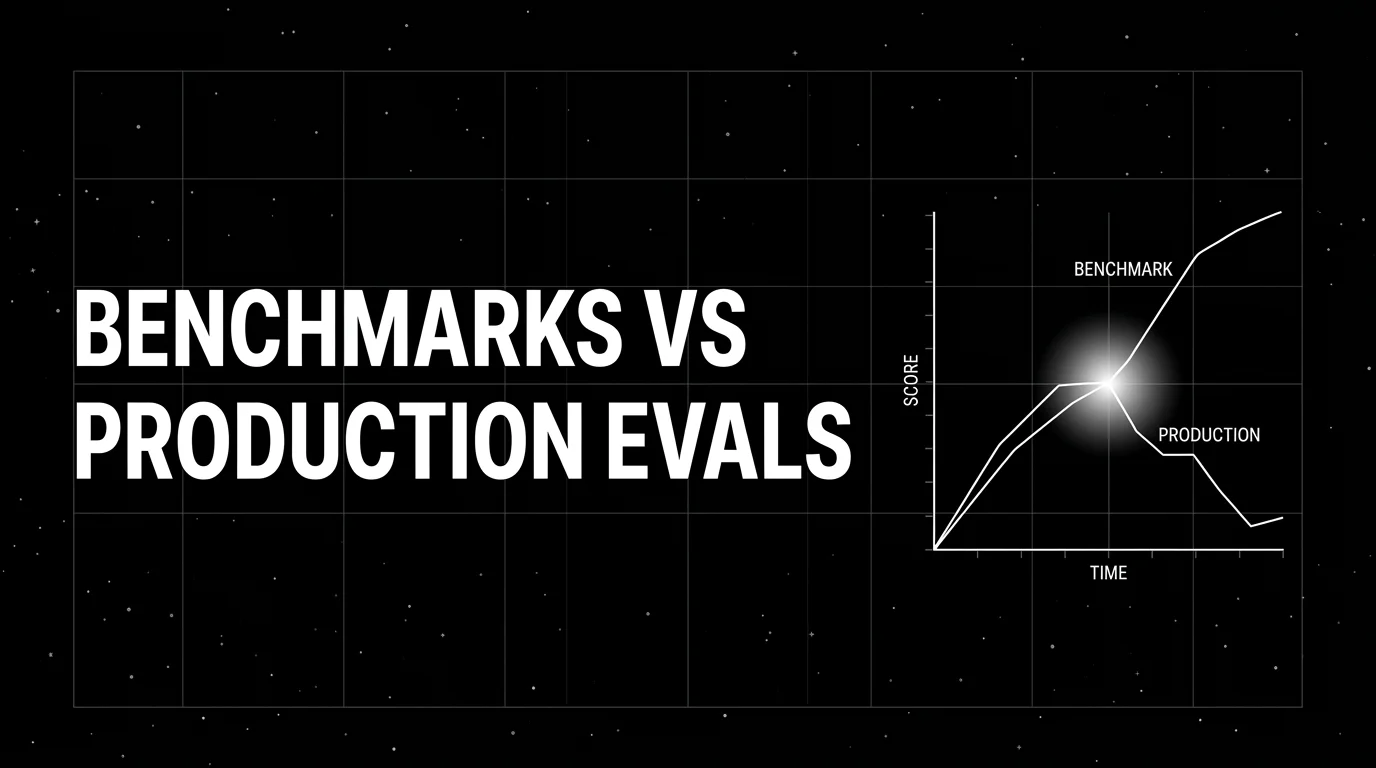
Public LLM benchmarks (MMLU, HumanEval, GSM8K) are contaminated and not predictive of production. Build domain reproductions that actually work in 2026.
