Best 5 AI Guardrails for CX AI Applications in 2026
Five AI guardrails for customer support, chatbots, voice IVR, outbound, agent-assist, KB RAG. TCPA, FCC AI-voice, Moffatt, Lingo, FTC Op AI Comply.
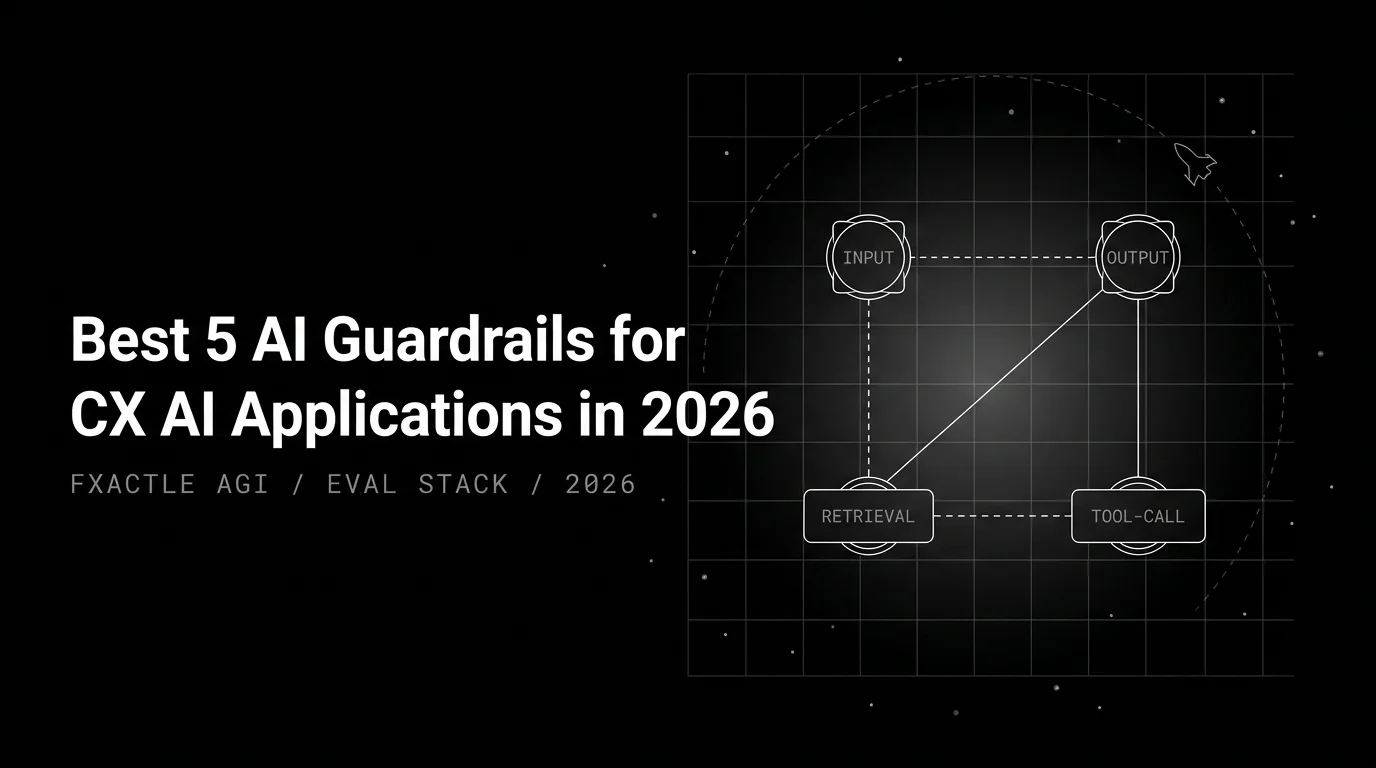
Table of Contents
Updated May 2026. A support chatbot at a mid-market SaaS company was prompt-injected for eleven days. The bot quoted a 60-day cancellation refund the company has never offered. CSAT dropped two points before InfoSec tied the spike back to the template the model was completing. Across the same window, an outbound voice agent placed 4,200 AI-voice appointment-reminder calls into California without prior-express-written-consent under the FCC’s February 2024 declaratory ruling that AI-generated voice is “artificial voice” under TCPA. Two months later, the first signal anyone got was a parent demand letter and a state-AG inquiry. This post compares the five AI guardrails platforms CX teams should consider in 2026.
The pattern is the same across the support chatbot, the returns-flow agent, the voice IVR, the outbound voice agent, the knowledge-base RAG copilot, and the agent-assist suggestor: single-vendor LLM-security platforms catch one class of attack, CCaaS-stack content filters catch one class of pattern, and a write-side multi-modal guardrail wired to the gateway catches the policy decision and refuses the bad output before it ships. The five platforms below are ranked by what production teams ship to a CX review, an InfoSec review, and an FCC inquiry, not by vendor marketing.
What Are the Five Best AI Guardrails for CX in 2026?
| # | Platform | Best for | Pricing model |
|---|---|---|---|
| 1 | Future AGI | Multi-modal text + audio guardrails with write-side refusal, ~67ms p50 inline, per-tenant policy, per-customer attribution | Cloud + OSS self-host; Free + Pay-as-you-go; Boost/Scale/Enterprise add-ons |
| 2 | Lakera Guard | Single-axis prompt-injection / jailbreak defense; the named-vendor pick for LLM security on text-only chatbots | Cloud SaaS + enterprise |
| 3 | NVIDIA NeMo Guardrails | Open-source policy-as-code in Colang for engineering-led CX platforms | Open source |
| 4 | AWS Bedrock Guardrails | Contact centers whose model fleet is on Bedrock and CCaaS is Amazon Connect-adjacent | Per-policy / usage-based |
| 5 | Protect AI | Security teams treating ML supply chain as the binding control alongside runtime policy | Open source + enterprise |
TL;DR
- Future AGI ships the only multi-modal guardrail in the top five, with 5 safety-rule adapters (Toxicity, Tone, Sexism, Prompt Injection, Data Privacy) running text and audio at ~67ms p50 inline per arXiv 2510.13351, with write-side refusal before delivery, per-tenant policy from the Agent Command Center, and per-customer attribution on every span.
- Lakera Guard for the named-vendor LLM-security pick when prompt-injection rate against gandalf-bench is the binding constraint and the surface is text-only chat.
- NVIDIA NeMo Guardrails for open-source Colang policy-as-code in CX engineering teams that own the guardrail surface end-to-end.
- AWS Bedrock Guardrails for the AWS-stack default, managed content filters and PII redaction inside Bedrock with Amazon Connect adjacency.
- Protect AI (Guardian + LLM Guard) for security-led CX deployments where model-supply-chain integrity is the binding control alongside runtime policy enforcement.
Why Are AI Guardrails Different for CX Than for Generic LLM Apps?
CX-AI failure modes are TCPA-class-action, FCC-enforcement, and tribunal-precedent shaped, none of which a generic LLM-security pitch catches. A support chatbot prompt-injected into quoting a refund window the company has never offered is a CSAT hit and, as the British Columbia Civil Resolution Tribunal held in Moffatt v. Air Canada (2024), a tribunal-grade liability exposure when the chatbot’s stated policy is treated as the company’s representation. An outbound voice agent placing AI-voice calls without prior-express-written-consent runs into the FCC Declaratory Ruling of February 8, 2024 classifying AI-generated voice as “artificial voice” under TCPA, and the FCC’s $1M Lingo Telecom settlement (August 2024) over the Biden voice deepfake set the named-enforcement precedent. A knowledge-base RAG copilot jailbroken into reciting competitor pricing mid-session is trade-secret leakage. None of these are caught by a content-filter feature inside a CCaaS platform, and none are caught by a single-axis prompt-injection vendor.
Generic LLM guardrails, block jailbreak prompts, redact PII, log it, move on, fall short on three CX-specific axes. First, the audience for a guardrail decision is multi-headed: the Head of CX reading why the bot was blocked from quoting a policy, the BPO operations director auditing TCPA prior-express-written-consent on every outbound dialer batch, and the InfoSec lead reviewing PCI-DSS v4.0 scope on payment-touching chat surfaces. Second, the failure modes are silent at the user level, brand-voice drift, fabricated-policy hallucination, jailbroken competitor mentions, biased escalation patterns, and only visible at the policy-decision and span level. Third, the surface is multi-modal: chat is text, IVR is audio, SMS is short-form, and outbound voice is synthesized speech, each with its own regulatory anchor (FCC AI-voice ruling on voice; GDPR Art 22 on automated decisions across all channels; state two-party recording-consent in CA, IL, MD, PA, WA, FL on voice transcripts; CCPA / UCPA on chat retention).
Most listicles in 2026 either pitch CX a single-vendor LLM-security platform (catches text-only prompt injection, misses voice and write-side refusal) or treat guardrails as a content-filter checkbox inside a CCaaS suite (catches PII patterns, misses brand-voice and policy-rule misapplication). Future AGI Protect is the entrant that closes that gap, a model family with 5 safety-rule adapters (Toxicity, Tone, Sexism, Prompt Injection, Data Privacy) built on Gemma 3n, running text and audio at ~67ms p50 inline per arXiv 2510.13351, with a write-side refusal that runs before a response is delivered and per-tenant policy attached at the request boundary. We rank it #1 below.
The 2026 CX Regulatory Pressure Stack
| Anchor | Surface | Named enforcement / precedent |
|---|---|---|
| TCPA, 47 USC §227 + 47 C.F.R. §64.1200 | Outbound voice + SMS consent records | $500–$1,500 per call statutory; class-action standard |
| FCC Declaratory Ruling (Feb 8, 2024) | AI-generated voice = artificial voice under TCPA | FCC Lingo Telecom $1M settlement (Aug 14, 2024) — Biden voice deepfake |
| FCC do-not-call registry | Outbound dialer suppression | FTC + state-AG joint enforcement actions throughout 2024–25 |
| FCRA + Reg F (12 CFR Part 1006) | Third-party debt-collection chat / voice | CFPB enforcement on illegal collection practices |
| State two-party recording-consent | CA Penal Code §632; IL 720 ILCS 5/14-2; MD §10-402; PA 18 Pa.C.S. §5704; WA RCW 9.73.030; FL §934.03 | State-AG actions on undisclosed call recording |
| FTC §5 / UDAAP + FTC Operation AI Comply (Sept 25, 2024) | Deceptive AI claims, AI-generated marketing | FTC Operation AI Comply five-case sweep, Sept 2024 |
| Moffatt v. Air Canada (BC CRT 2024) | Chatbot misrepresentation as company representation | Tribunal precedent; cited in pending US small-claims filings |
| GDPR Art 22 + Art 6 | Automated decisions + voice processing in EU | DPA fines on EU-resident CX deployments |
| EU AI Act Art 50 transparency | AI-disclosure on bot-customer interactions | Enforcement begins August 2, 2026 |
| PCI-DSS v4.0 | Take-payments chat / voice | Full enforcement March 31, 2025 |
| HIPAA voice (healthcare-adjacent CX) | PHI on voice transcripts | HHS OCR enforcement; BAA required |
Every anchor in this stack maps to a runtime control on the guardrail layer, TCPA consent-state checks on dialer requests, AI-voice classification on outbound, PCI tokenization on payment chat, GDPR Art 22 refusal on auto-decisions, Moffatt-pattern groundedness refusal on policy claims. The guardrail platform is where the controls execute; the operator is where they are configured and audited.
The Future AGI CX Scorecard
The Future AGI CX Guardrails Scorecard is a five-dimension rubric for assessing whether an AI guardrails platform meets CX / contact-center production requirements.
- Multi-modal coverage. Text and audio inline at the same policy boundary. Voice IVR, outbound voice, and chat have to be enforced under one policy, not three separate vendors. Future AGI Protect runs Gemma 3n with fine-tuned adapters across both modalities.
- Inline latency budget. CCaaS hot paths run sub-800ms p95 for agent-assist and sub-300ms voice tail. A guardrail layer that adds a full LLM call’s worth of latency is unusable on real-time surfaces, pre-completion adapter at ~67ms p50 is the bar.
- Per-channel policy maintainability. Chat, voice, SMS, and email each carry different banned terms, disclosure requirements, and brand-voice templates. The platform has to let a CX or brand lead version policy per channel without filing a vendor ticket.
- Per-tenant + per-customer attribution. BPOs run dozens of brands on one model fleet; CCaaS vendors run thousands of customer tenants. Per-tenant policy isolation and per-customer span attribution let QA pull every blocked response for one end-customer without filtering across tenants.
- Write-side refusal before delivery. Most failure modes on a Moffatt-pattern incident are output-shaped, the model confidently asserts a refund window the company doesn’t offer. A pre-completion content filter doesn’t catch this. A write-side refusal that scores the response against a structured policy document does.
Comparison Matrix: 5 Platforms, 6 Capabilities
| Capability | Future AGI | Lakera Guard | NeMo Guardrails | AWS Bedrock Guardrails | Protect AI |
|---|---|---|---|---|---|
| Multi-modal text + audio inline | ✓ (Protect adapters, ~67ms p50) | ✗ (text-only) | ◐ (Colang text; audio BYO) | ◐ (text managed; audio limited) | ◐ (LLM Guard text; audio BYO) |
| Write-side refusal before delivery | ✓ (refusal model + policy) | ◐ (input-side flag) | ◐ (Colang flow) | ◐ (denied topics) | ◐ (output filter) |
| Per-tenant policy + per-customer attribution | ✓ (Agent Command Center) | ◐ (API ruleset) | ◐ (BYO Colang) | ✗ (Bedrock-tenant only) | ◐ (BYO) |
| Prompt-injection / jailbreak detection | ✓ (Prompt Injection rule) | ✓ (gandalf-bench anchored) | ✓ (Colang policy) | ✓ (managed filter) | ✓ (LLM Guard) |
| PII / payment redaction | ✓ (Data Privacy rule, span-layer) | ◐ (limited) | ◐ (BYO Colang) | ✓ (managed PII) | ✓ (LLM Guard) |
| Deployment shape | Hybrid cloud + BYOC self-host | Managed cloud | Open-source self-host | Managed AWS | Open source + enterprise |
How We Ranked These 5 Platforms
The ranking sits on top of the scorecard. We weighted, in order:
- Multi-modal text + audio coverage under one policy, voice and chat in the same enforcement layer.
- Inline latency on the CCaaS hot path, sub-300ms voice tail, sub-800ms agent-assist.
- Write-side refusal before a fabricated policy claim reaches the customer.
- Per-tenant policy + per-customer attribution for BPO and CCaaS multi-brand operating shapes.
- Calibrated honest limitations, every platform names what it isn’t best at.
Where things get thin in this category: no guardrail platform ships TCPA-cleared, FCC-pre-approved, PCI-DSS-certified, and gandalf-bench-leading all at once. Each platform fits a specific buyer profile. We rank Future AGI #1 because multi-modal + write-side refusal + per-tenant policy is the combination that catches the failure modes the other four miss; Lakera #2 because gandalf-bench is the cleanest single-axis named-vendor pick when the surface is text-only chat.
Future AGI: Best for Multi-Modal CX Guardrails With Write-Side Refusal
What it does. Future AGI Protect is a model family, Gemma 3n base with fine-tuned adapters across 5 safety rules (Toxicity, Tone, Sexism, Prompt Injection, Data Privacy), that runs inline at ~67ms p50 on text per arXiv 2510.13351. Audio adapters extend the same policy enforcement to voice IVR transcripts, outbound voice agents, and synthesized-speech surfaces. The guardrail decision attaches to the trace span via traceAI; per-tenant policies are configured from the Agent Command Center and execute at the request boundary. Write-side refusal scores an outbound response against a structured policy document, refund schedule, cancellation rules, brand-voice template, and refuses delivery if the score falls below threshold, which is the control that closes the Moffatt v. Air Canada pattern.
For the closed-loop pattern, every Protect decision lands as a span attribute next to the ai-evaluation score that would have explained it. A blocked support-chatbot response and the Tone or Groundedness score that flagged it are linkable in the same trace, queryable next to AHT, FCR, CSAT, and TCPA-consent adherence in the contact-center BI surface. The Error Feed auto-clusters chatbot failures into named issues with auto-written root cause and quick-fix recommendations.
Where it shines. The only platform in the top five that runs text and audio under one policy at sub-100ms p50 inline. Multi-modal write-side refusal is the differentiator. Per-tenant policy + per-customer span attribution is the operating shape for BPOs and CCaaS vendors. SOC 2 Type II, HIPAA, GDPR, and CCPA all certified per the trust page; HIPAA BAA available on the Scale add-on for healthcare-adjacent CX. 35+ traceAI integrations, 60+ built-in evaluators across 11 categories, and an in-product agent that authors custom evaluators against live trace data.
Pricing. Free to get started; usage-based as you grow. Compliance and enterprise add-ons (SOC 2 Type II, HIPAA BAA, SAML SSO + SCIM, dedicated CSM) layer on when procurement asks. Pricing.
Pair this with the red-teaming conversational AI voice agents guide, the voice cloning safety and brand voice guardrails deep dive, and the HIPAA-compliant voice AI build-test-deploy reference.
For deeper context, pair this with the production monitoring for voice agents guide, the custom voice evaluator authoring deep dive, and the Future AGI vs Bluejay reference.
Lakera Guard: Best for Single-Axis Prompt-Injection Defense
What it does. Vertical-anchored on LLM security; the named-vendor leader for prompt-injection and jailbreak detection, with gandalf-bench as the cleanest published eval-set in the space. Drop-in proxy mode for teams that don’t want to wire SDK calls; mature InfoSec-procurement story.
Where it shines. Single-axis prompt-injection and jailbreak detection rate on text chatbots. The clearest named-vendor pick when the InfoSec lead’s binding constraint is text-only prompt injection on a customer-facing chatbot.
Where it falls short. Text-only, audio and voice IVR are not the headline. No write-side refusal that scores response groundedness against a policy document; the Moffatt-pattern failure mode is uncovered. Brand-voice and per-channel policy maintainability are not the pitch. No native multi-provider gateway; the proxy is single-provider-flavored. Closed-source; extending detection rules with vertical-specific banned-claim lists is a vendor request.
Pricing. Cloud SaaS + enterprise. Custom pricing.
NVIDIA NeMo Guardrails: Best for Open-Source Policy-as-Code Teams
What it does. Open-source Colang DSL for policy-as-code; the strongest open-source guardrail story in the category. Self-hostable; vendor-neutral; works with any LLM provider.
Where it shines. Engineering-led CX platforms that want policy logic in code, in their own infra, with NVIDIA backing on the maintenance signal. CX engineering teams that author banned-term lists, brand-voice rules, and refund-policy validators in the same repo as the agent code.
Where it falls short. Engineering lift is real; Colang is a learning curve for CX or brand leads who want to author policy without filing a PR. No managed PII / payment redaction out of the box. No closed loop with a managed eval stack; teams wire trace + eval-score linkage themselves. Built-in detection models are lighter than Lakera’s named benchmarks. Audio is BYO.
Pricing. Open source (self-host).
AWS Bedrock Guardrails: Best for AWS-Stack Contact Centers
What it does. Managed, cloud-native; content filters, PII redaction, denied topics, and contextual grounding configured from the AWS console. Integrates natively with Bedrock model catalog, AWS IAM, and Amazon Connect.
Where it shines. Contact centers whose model fleet is on Bedrock and whose CCaaS is Amazon Connect-adjacent. The AWS-stack default, no separate procurement, integrates with CloudWatch out of the box. Managed PII redaction for PCI-DSS scope reduction on Bedrock-routed traffic.
Where it falls short. Bedrock-only; no multi-provider routing for contact centers spanning OpenAI, Anthropic, Groq, or Gemini. Brand-voice is limited to denied-topics framing; richer brand-voice rules are not the headline. Vendor lock-in to AWS; teams moving guardrail policy to a different cloud re-author. No write-side refusal scored against a policy document.
Pricing. Per-policy / usage-based; managed AWS.
Protect AI: Best for ML-Supply-Chain-Aware Security Teams
What it does. Guardian (commercial ML-artifact scanning + model-vulnerability detection) plus LLM Guard (open-source runtime filter for prompt injection, PII redaction, content filtering).
Where it shines. Security-led CX deployments treating model provenance and ML-supply-chain integrity as binding controls alongside runtime policy. The strongest story for CX vendors that ship fine-tuned models or third-party adapters. Active research and disclosure pipeline on LLM-supply-chain CVEs.
Where it falls short. Not CX-vertical-anchored; the supply-chain pitch is the headline rather than brand-voice or multi-channel policy. Less complete on multi-provider gateway routing and token-budgeting workflows CX engineering teams operate. Closed-loop integration with an eval/observability stack is BYO. Audio is BYO.
Pricing. Open source (LLM Guard) + enterprise (Guardian).
Decision Matrix: Which Platform Fits Which CX Buyer Profile
| If you’re a… | Pick |
|---|---|
| Tier-1 contact center running outbound voice + chat + IVR on a multi-provider fleet | Future AGI |
| BPO operator with multi-brand per-tenant policy isolation and per-customer attribution requirements | Future AGI |
| CCaaS vendor (Five9 / Genesys / Talkdesk adjacent) embedding guardrails into the platform | Future AGI |
| Mid-market SaaS support team with text-only chatbot and a single-axis prompt-injection InfoSec brief | Lakera Guard |
| DTC brand with engineering capacity, wanting Colang policy-as-code in their own repo | NVIDIA NeMo Guardrails |
| Contact center running entirely on Bedrock + Amazon Connect | AWS Bedrock Guardrails |
| Security-led CX vendor with fine-tuned models and ML-supply-chain audit obligations | Protect AI |
Where Does Each Platform Earn Its Slot?
The five platforms above split the CX-AI-guardrails problem along different axes, multi-modal write-side refusal with per-tenant policy (Future AGI), single-axis prompt-injection defense on text chat (Lakera), open-source policy-as-code (NeMo), AWS-stack default (Bedrock), and ML-supply-chain integrity (Protect AI). For most contact centers in 2026, the binding constraint is the multi-channel surface, chat, voice IVR, outbound voice, SMS, agent-assist, each carrying its own regulatory anchor and each demanding policy enforcement at the same boundary, not four separate vendors stitched together.
If a multi-modal guardrail layer with write-side refusal, per-tenant policy from one control plane, and per-customer attribution on every span is the constraint that bites hardest, explore Future AGI Protect and the Agent Command Center. The workflow is purpose-built for the post-Moffatt, post-FCC-AI-voice-ruling, post-Operation-AI-Comply CX risk surface every Head of CX, BPO operations director, and InfoSec lead is underwriting in 2026.
Frequently Asked Questions
What's the difference between an AI gateway, an AI guardrails layer, and a CCaaS content filter for customer support?
Does an AI guardrail platform make my outbound voice agent TCPA-compliant under the FCC's February 2024 ruling?
How do I keep a support chatbot PCI-compliant when it takes payments?
Can an AI guardrail platform handle voice IVR cross-modal injection (DTMF + voice + transcript)?
How much latency does the guardrail layer add to a CCaaS session?
How do I block fabricated refund or cancellation policies before they reach a customer (Moffatt v. Air Canada pattern)?
Can a single guardrail platform run per-tenant policies for a multi-brand BPO or CCaaS vendor?
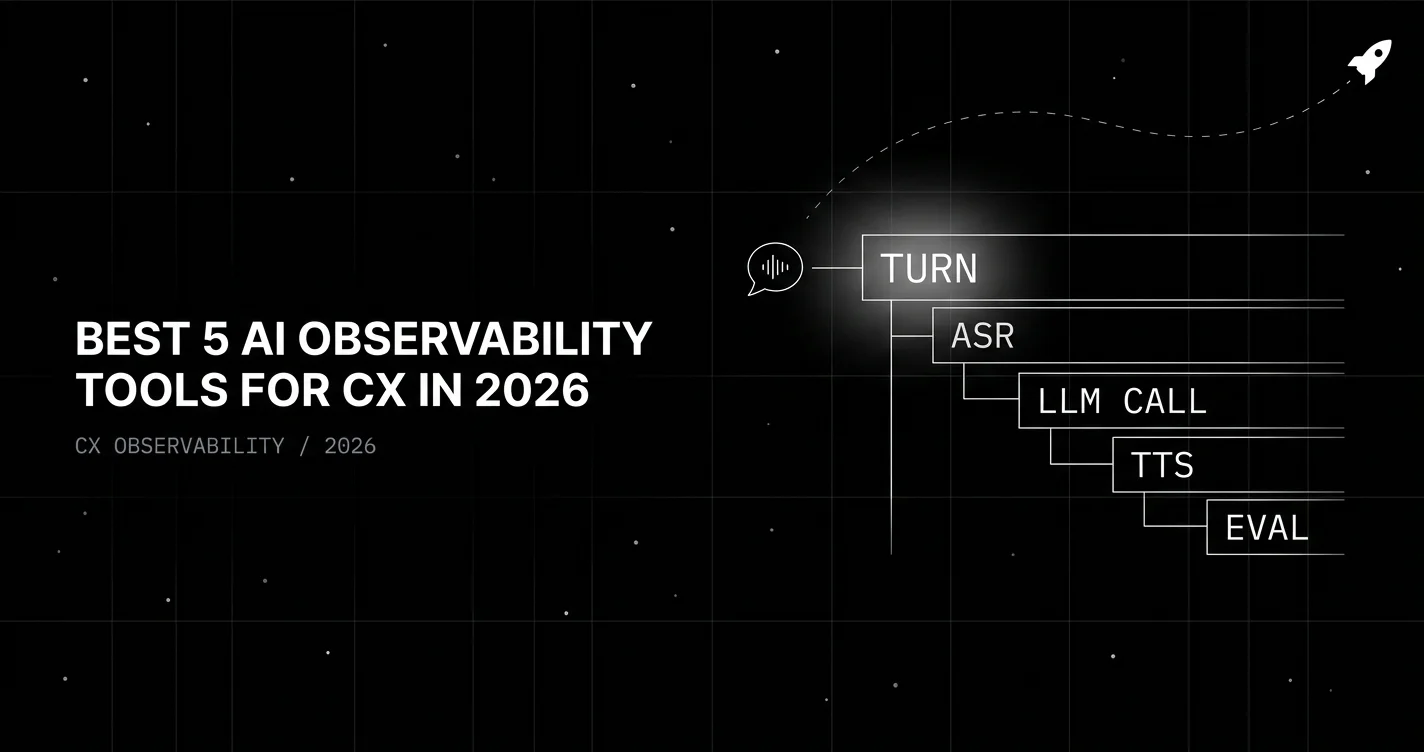
Five CX AI observability platforms scored on conversation-trace inspection, escalation-event capture, and CSAT/NPS join to Zendesk and Intercom ticket IDs.

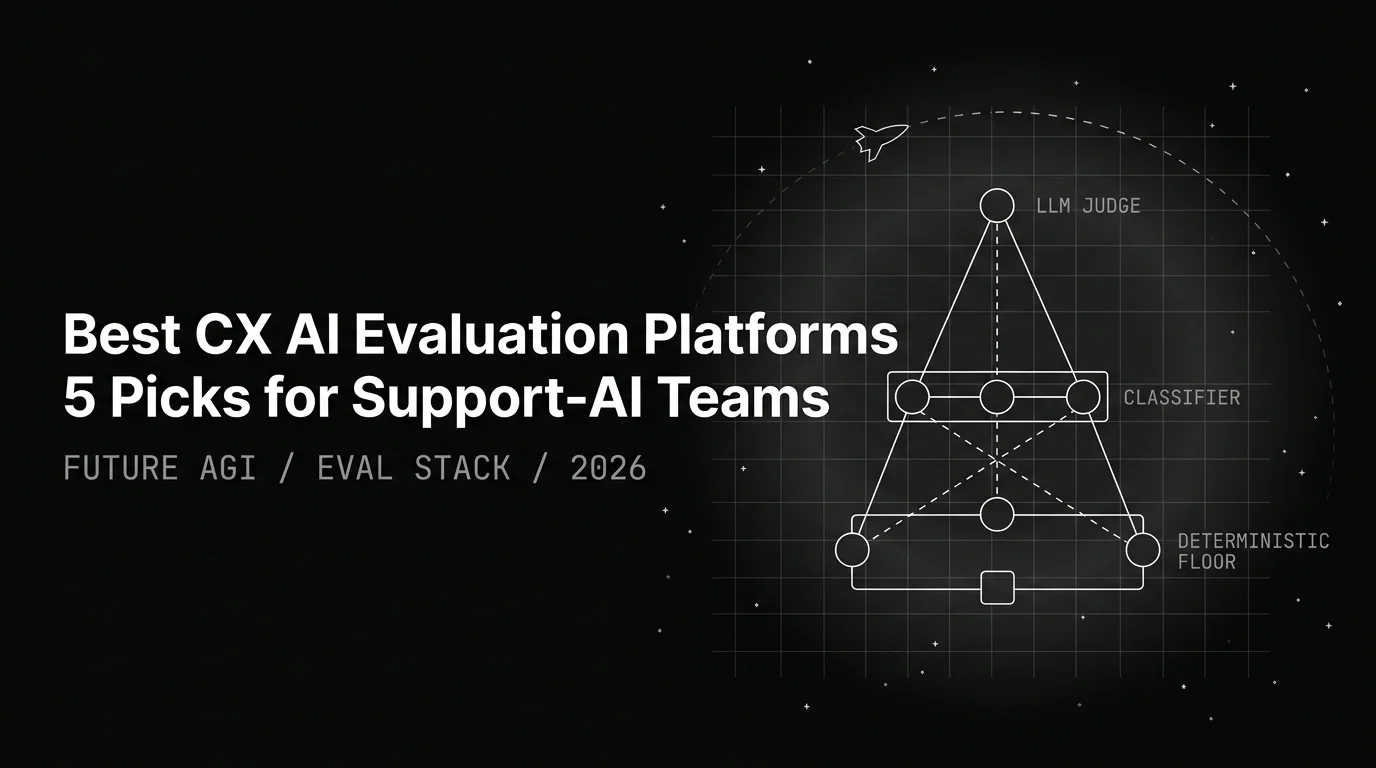
Five CX AI evaluation platforms scored on CustomerAgent rubrics, paired Containment and False-Resolution KPIs, and Zendesk/Intercom span attribution.

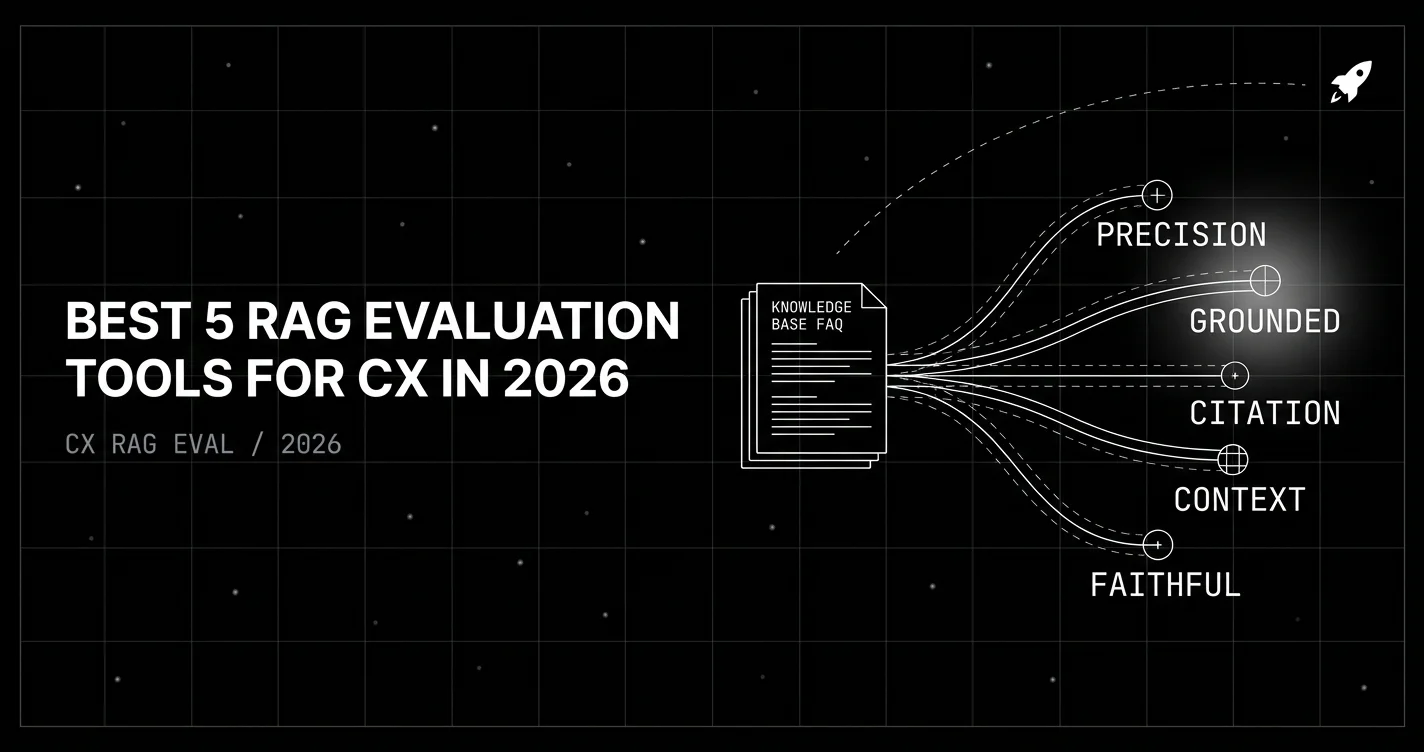
Five RAG eval tools for customer support, copilot, KB chatbot, billing agent. FTC Op AI Comply, Moffatt v. Air Canada, EU AI Act Art 50.