Best 5 AI Guardrails for Education AI Applications in 2026
Five AI guardrails platforms for education: K-12 tutoring, curriculum copilots, grading, student-records agents, IEP copilots. FERPA, COPPA, PPRA, CIPA.
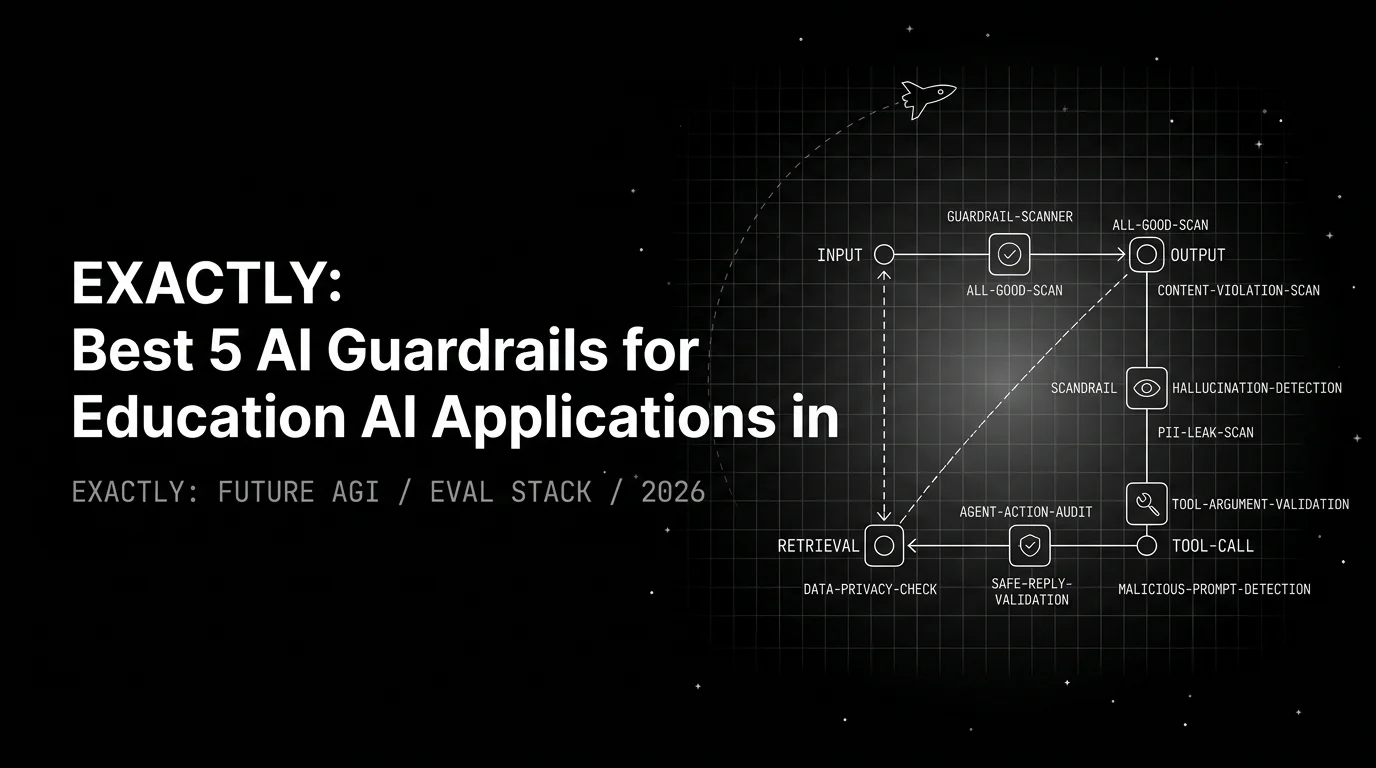
Table of Contents
Updated May 2026. A K-12 district tutoring chatbot was prompt-injected for nine days. It verbosely leaked a student’s name plus grade plus IEP status into the upstream LLM provider’s prompt-token log, outside the district’s FERPA-retention boundary. The first signal anyone got was a U.S. Department of Education Office for Civil Rights FERPA complaint two months later, filed by the parent. Across the same window, a K-12 LLM curriculum copilot was jailbroken into producing age-inappropriate content for a 6th-grade class, a CIPA-aligned content violation surfaced by a parent complaint that became a state Attorney General inquiry. This post compares the five AI guardrails platforms K-12 districts, higher-ed institutions, and EdTech vendors should consider in 2026.
The pattern is the same across the K-12 tutoring chatbot, the curriculum-generation copilot, the higher-ed plagiarism LLM, the EdTech subscription agent under 13, the grading copilot, and the special-ed IEP-drafting assistant: EdTech LLM platforms are the surface the guardrail watches, pan-industry content filters catch one class of pattern, and a minor-safety guardrail layer with FERPA-grade per-tenant audit catches the policy decision and refuses the bad output before it reaches a student or a parent. The five platforms below are ranked by what district CTOs, higher-ed CISOs, and EdTech engineering leads ship to an OCR FERPA inquiry, an FTC COPPA review, and a state DOE audit.
What Are the Five Best AI Guardrails for Education in 2026?
| # | Platform | Best for | Pricing model |
|---|---|---|---|
| 1 | Future AGI | Minor-safety policy + FERPA-grade per-tenant audit + multi-modal + ~67ms inline + WCAG-compatible | Cloud + OSS self-host; Free + Pay-as-you-go; Boost/Scale/Enterprise add-ons |
| 2 | Lakera Guard | Single-axis prompt-injection / jailbreak defense on student-facing chatbots | Cloud SaaS + enterprise |
| 3 | NVIDIA NeMo Guardrails | Open-source Colang policy library for state DOEs and district-IT engineering teams | Open source |
| 4 | AWS Bedrock Guardrails | EdTech vendors on Bedrock with AWS for Education adjacency | Per-policy / usage-based |
| 5 | Protect AI | Higher-ed research IT with ML-supply-chain integrity on grant-funded AI workloads | Open source + enterprise |
TL;DR
- Future AGI ships minor-safety enforcement built for K-12 production: refuse age-inappropriate generations, refuse academic-dishonesty assistance on assignment surfaces, refuse non-IEP-aligned responses on special-ed copilots, redact FERPA-directory-info and COPPA under-13 PII at the request boundary, per-tenant policy from the Agent Command Center for state DOE shared K-12 libraries, ~67ms p50 inline per arXiv 2510.13351, multi-modal text + image + audio, and accessibility-compatible interaction patterns aligned to Section 508 / WCAG 2.2.
- Lakera Guard for the named-vendor prompt-injection pick when student-message-as-attack-surface on a text-only chatbot is the binding constraint.
- NVIDIA NeMo Guardrails for open-source Colang policy-as-code, the strongest fit when a state DOE or large district wants to author shared K-12 guardrail policies in their own repo.
- AWS Bedrock Guardrails for the AWS-stack default for EdTech vendors with Bedrock-resident models and AWS for Education procurement adjacency.
- Protect AI (Guardian + LLM Guard) for higher-ed research IT treating ML-supply-chain integrity on grant-funded AI workloads as the binding control alongside runtime policy.
Why Are AI Guardrails Different for Education Than for Generic LLM Apps?
Education-AI failure modes are FERPA-complaint, COPPA-enforcement, and CIPA-violation shaped, and they land on students, not enterprise customers. A tutoring chatbot prompt-injected into reciting a student’s name, grade, and IEP status into the upstream LLM provider’s prompt-token log is a FERPA (34 CFR Part 99) disclosure violation and an OCR complaint surface. An EdTech subscription agent that collects under-13 PII without verifiable parental consent runs into COPPA (16 CFR Part 312), the FTC’s $6M Edmodo settlement (May 2023, the first FTC enforcement against an EdTech vendor with a permanent ban on monetizing under-13 data) and $20M Microsoft Xbox COPPA settlement (June 2023) set the named-enforcement precedent. A K-12 LLM curriculum copilot jailbroken into producing age-inappropriate content on a federally-funded school network is a CIPA violation and a parent-complaint headline. A special-ed copilot disclosing IEP / 504 plan content outside FERPA-authorized recipients is an IDEA / Section 504 due-process exposure.
Generic LLM guardrails, block harmful content, redact PII, rate-limit, fall short on three education-specific axes. First, the failure modes are minor-safety shaped: an LLM that confidently produces age-inappropriate content for a 6th-grader, or helps a student cheat on a closed-book assignment, or recommends a 504-incompatible study plan to a child with a documented accommodation, requires a refusal model, not a content filter. Second, the audit surface is FERPA-grade per-tenant: a state DOE building a shared K-12 AI guardrail policy library across 50 districts needs per-district policy isolation, per-district audit retention, and per-district guardrail-decision attribution, none of which a generic content filter ships. Third, the surface is multi-modal and accessibility-bound: image-based math tutors, audio read-aloud, and chat all have to be enforced under one policy, and the interaction has to stay WCAG 2.2 AA / Section 508 compliant so a screen-reader user or a student with a 504 plan can still complete the task after a refusal.
Most listicles in 2026 either pitch education a single-vendor LLM-security platform (catches prompt injection on text chat, misses FERPA-directory-info redaction and CIPA-aligned refusal) or treat guardrails as a feature inside an EdTech LLM platform (sells the tutor, not the layer that supervises the tutor). Future AGI Protect is the entrant that closes that gap, minor-safety enforcement built on Gemma 3n with fine-tuned adapters across 5 safety rules (Toxicity, Tone, Sexism, Prompt Injection, Data Privacy), running at ~67ms p50 inline per arXiv 2510.13351, multi-modal across text and image and audio, with per-tenant policy attached at the request boundary for state DOE shared libraries and multi-district EdTech SaaS. We rank it #1 below.
The 2026 Education Regulatory Pressure Stack
| Anchor | Surface | Named enforcement / framework |
|---|---|---|
| FERPA, 34 CFR Part 99 | Student education records | OCR FERPA complaints on AI tools (2024–25) |
| COPPA, 16 CFR Part 312 | Under-13 PII collection on EdTech | FTC Edmodo settlement, $6M, May 2023; FTC Microsoft Xbox settlement, $20M, June 2023 |
| PPRA (20 USC §1232h) | Protected-info surveys to minors | ED guidance updates on AI in classrooms (2024) |
| CIPA + E-Rate (47 USC §254) | Federally-funded school networks | FCC E-Rate audit findings on AI content |
| IDEA + Section 504 | Special education + accommodations | OCR Section 504 complaints on accessibility |
| State student-data privacy | CA SOPIPA; IL SOPPA; NY Ed Law 2-d; CT Student Data Privacy Act; TX SB 820 | State-AG actions on AI in K-12 (CA / NY, 2024–25) |
| State K-12 AI policies | CA AB 2876 / SB 1288 follow-ups; IL HB 5116; NJ guidance; VA AI guidance Jan 2025 | NYC DOE ChatGPT ban (Jan 2023) → reversal (May 2023) — policy precedent |
| ED Office of Educational Technology AI guidance | K-12 + higher-ed AI deployment | Federal guidance referenced in OCR resolution agreements |
| EU AI Act Annex III(3) + Art 6 | Education / vocational training listed as high-risk | Enforcement begins August 2, 2026 |
| GDPR Art 22 + Art 8 | Automated decisions + children under 16 | EU DPA actions on EdTech vendors |
| Title VI of the Civil Rights Act | Race-based disparate impact in AI outputs | OCR Title VI complaints on AI tools |
Every anchor in this stack maps to a runtime control on the guardrail layer, FERPA-directory-info redaction, COPPA under-13 PII refusal, PPRA survey-pattern refusal, CIPA age-inappropriate-content refusal, IDEA / 504 accommodation respect, state K-12 AI policy alignment. The guardrail platform is where the controls execute; the district, the state DOE, or the EdTech vendor is where they are configured and audited.
The Future AGI Education Scorecard
The Future AGI Education Guardrails Scorecard is a five-dimension rubric for assessing whether an AI guardrails platform meets education AI production requirements.
- Minor-safety policy enforcement. Refuse age-inappropriate content against a CIPA-aligned class library, refuse academic-dishonesty assistance on closed-book assignment surfaces, refuse non-IEP-aligned responses on special-ed copilots. This is a refusal-model task, not a content-filter task.
- FERPA-grade per-tenant audit. Per-district policy isolation, per-district audit retention, per-district guardrail-decision attribution. State DOE shared K-12 libraries and multi-district EdTech SaaS deployments require this as a default view.
- Multi-modal coverage. Text + image + audio enforced under one policy. Image-based math tutoring, audio read-aloud accessibility, and chat surfaces share one policy boundary, not three vendors.
- Inline latency for real-time tutoring. Sub-800ms p95 keeps the chat experience natural; pre-completion adapter at ~67ms p50 keeps the budget honest.
- Accessibility-compatible interaction. A guardrail that refuses a response has to do it in a way a screen-reader user or a 504-plan student can recover from. Section 508 / WCAG 2.2 AA compliance lives on the chatbot UI; the guardrail has to produce refusal payloads that the UI can render accessibly.
Comparison Matrix: 5 Platforms, 6 Capabilities
| Capability | Future AGI | Lakera Guard | NeMo Guardrails | AWS Bedrock Guardrails | Protect AI |
|---|---|---|---|---|---|
| Minor-safety refusal (age-inappropriate, academic-dishonesty) | ✓ (Toxicity + Sexism rules) | ◐ (input-side flag) | ◐ (Colang flow) | ◐ (denied topics) | ◐ (LLM Guard) |
| FERPA-grade per-tenant audit + attribution | ✓ (Agent Command Center + traceAI) | ◐ (API ruleset) | ◐ (BYO) | ◐ (Bedrock IAM) | ◐ (BYO) |
| Multi-modal text + image + audio | ✓ (Protect adapters) | ✗ (text-only) | ◐ (text; multi-modal BYO) | ◐ (text + image; audio limited) | ◐ (LLM Guard text) |
| Prompt-injection / jailbreak detection | ✓ (Prompt Injection rule) | ✓ (gandalf-bench anchored) | ✓ (Colang) | ✓ (managed) | ✓ (LLM Guard) |
| PII redaction (FERPA directory + COPPA under-13) | ✓ (Data Privacy rule, span-layer) | ◐ (limited) | ◐ (BYO Colang) | ✓ (managed PII) | ✓ (LLM Guard) |
| Deployment shape | Hybrid + BYOC self-host | Managed cloud | Open source self-host | Managed AWS | Open source + enterprise |
How We Ranked These 5 Platforms
The ranking sits on top of the scorecard. We weighted, in order:
- Minor-safety refusal coverage, age-inappropriate, academic-dishonesty, non-IEP-aligned responses caught by a refusal model.
- FERPA-grade per-tenant audit for state DOE shared libraries and multi-district EdTech SaaS.
- Multi-modal coverage, text + image + audio in one policy boundary.
- Inline latency that keeps real-time tutoring responsive.
- Calibrated honest limitations per platform.
Where things get thin in this category: no guardrail platform is FERPA-cleared-by-product, COPPA-certified, CIPA-certified, and gandalf-bench-leading all at once. Every certification is per-deployment per the district’s data-sharing agreement, per-school-network E-Rate posture, and per-vendor consent workflow. We rank Future AGI #1 because minor-safety refusal + FERPA-grade per-tenant audit + multi-modal is the combination education buyers cannot stitch together from the other four; Lakera #2 on the single-axis prompt-injection rate on student-facing text chat.
Future AGI: Best for Minor-Safety Refusal With FERPA-Grade Per-Tenant Audit
What it does. Future AGI Protect is a model family, Gemma 3n base with fine-tuned adapters across 5 safety rules (Toxicity, Tone, Sexism, Prompt Injection, Data Privacy), that runs inline at ~67ms p50 on text per arXiv 2510.13351, with image and audio adapters extending the same enforcement to multi-modal tutoring surfaces. The minor-safety policy library includes age-appropriate-content classes aligned to CIPA, academic-dishonesty refusal patterns for assignment surfaces, IEP-aligned constraint respect for special-ed copilots, and FERPA-directory-info redaction at the request boundary. Per-tenant policy attaches at the request boundary from the Agent Command Center, so a state DOE building a shared K-12 AI guardrail policy library can ship a base policy and let each district override banned-term lists and content-class thresholds under one control plane.
The closed-loop pattern: every Protect decision attaches to the trace span via traceAI; the ai-evaluation library’s 60+ built-in evaluators across 11 categories score the response that would have been delivered, with custom evaluators authored by an in-product agent against live trace data. A blocked tutoring-chatbot response, the Toxicity or Groundedness score that flagged it, and the FERPA-directory-info redaction event are linkable in the same trace, the audit record an OCR investigation under FERPA or a Title VI complaint review expects.
Where it shines. The only platform in the top five that runs minor-safety refusal + FERPA-grade per-tenant audit + multi-modal under one policy. SOC 2 Type II, HIPAA, GDPR, and CCPA all certified per the trust page; HIPAA BAA available on the Scale add-on for healthcare-adjacent EdTech (school nursing, behavioral-health copilots). 35+ traceAI integrations, 50+ ai-evaluation rubrics. The Agent Command Center supports per-district policy isolation as the operating shape for state DOEs and multi-district EdTech SaaS.
Pricing. Free + pay-as-you-go base. Compliance (SOC 2 Type II, HIPAA BAA), SSO (OAuth, SAML + SCIM), and enterprise SLAs add on as you scale. Pricing.
Pair this with the red-teaming conversational AI voice agents guide, the voice cloning safety and brand voice guardrails deep dive, and the HIPAA-compliant voice AI build-test-deploy reference.
For deeper context, pair this with the production monitoring for voice agents guide, the custom voice evaluator authoring deep dive, and the Future AGI vs Bluejay reference.
Lakera Guard: Best for Single-Axis Prompt-Injection Defense on Student Chatbots
What it does. Vertical-anchored on LLM security; the named-vendor leader for prompt-injection and jailbreak detection, with gandalf-bench as the cleanest published eval-set in the space. Drop-in proxy mode; mature InfoSec procurement story; coverage on INJECAGENT, AdvBench, and OWASP LLM Top 10 patterns.
Where it shines. Single-axis prompt-injection rate on student-facing text chatbots, student-message-as-attack-surface is exactly the case Lakera’s positioning catches. Strong fit for higher-ed CISOs and EdTech engineering leads whose binding constraint is “block jailbreak attempts on the tutoring chatbot.”
Where it falls short. Text-only, image-based math tutors and audio read-aloud are not the headline. No FERPA-grade per-tenant audit; per-district policy isolation is a vendor request, not a default. No minor-safety refusal model for academic-dishonesty or IEP-alignment patterns. Closed-source; extending detection rules with district-specific banned-claim lists is a vendor ticket.
Pricing. Cloud SaaS + enterprise. Custom pricing.
NVIDIA NeMo Guardrails: Best for Open-Source District Policy Libraries
What it does. Open-source Colang DSL for policy-as-code, the strongest open-source guardrail story in the category. Self-hostable; vendor-neutral; works with any LLM provider; backed by NVIDIA on the maintenance signal.
Where it shines. State DOEs and large district IT teams that want to author shared K-12 guardrail policies (age-appropriate-content rules, FERPA-directory-info redaction, IEP-content classification) as code in their own repo. Engineering-led EdTech platforms that operate the guardrail surface end-to-end and need vendor-neutral policy logic.
Where it falls short. Engineering lift is real; Colang is a learning curve for district policy leads or special-ed administrators authoring policy without engineering on the critical path. No managed FERPA-directory-info or COPPA-under-13 PII redaction out of the box. Built-in detection models are lighter than Lakera’s named benchmarks. Multi-modal is BYO. Less mature procurement footprint with state DOE InfoSec than the managed incumbents.
Pricing. Open source (self-host).
AWS Bedrock Guardrails: Best for AWS-Stack EdTech Vendors
What it does. Managed, cloud-native; content filters, PII redaction, denied topics, and contextual grounding configured from the AWS console. Integrates natively with Bedrock model catalog, AWS IAM, and the AWS for Education procurement track.
Where it shines. EdTech vendors whose model fleet is on Bedrock and whose procurement is already through AWS for Education. The AWS-stack default, managed PII redaction for student-record handling, IAM-scoped per-tenant policy, no separate procurement.
Where it falls short. Bedrock-only; no multi-provider routing for EdTech vendors spanning OpenAI, Anthropic, Groq, or Gemini. Brand-voice and minor-safety-class policy is limited to denied-topics framing. Vendor lock-in to AWS. Multi-modal coverage is partial, image filters are present, audio is limited. No write-side refusal scored against an IEP-aligned constraint document.
Pricing. Per-policy / usage-based; managed AWS.
Protect AI: Best for Higher-Ed Research IT (ML Supply Chain)
What it does. Guardian (commercial ML-artifact scanning + model-vulnerability detection) plus LLM Guard (open-source runtime filter for prompt injection, PII redaction, content filtering).
Where it shines. Higher-ed research IT treating ML-supply-chain integrity on grant-funded AI workloads, fine-tuned models on student data, third-party adapter pipelines, federally-funded research weights, as the binding control alongside runtime policy. Active research and disclosure pipeline on LLM-supply-chain CVEs that university CISOs reference.
Where it falls short. Not K-12-vertical-anchored; the supply-chain pitch is the headline rather than minor-safety enforcement. No FERPA-grade per-tenant audit for state DOE shared libraries. Closed-loop integration with an eval/observability stack is BYO. Multi-modal is BYO.
Pricing. Open source (LLM Guard) + enterprise (Guardian).
Decision Matrix: Which Platform Fits Which Education Buyer Profile
| If you’re a… | Pick |
|---|---|
| K-12 district CTO running a multi-school tutoring chatbot with FERPA-grade audit and CIPA-aligned refusal | Future AGI |
| State DOE building a shared K-12 AI guardrail policy library across districts with per-district isolation | Future AGI |
| Multi-district EdTech SaaS vendor running per-district policies and per-tenant attribution | Future AGI |
| Higher-ed CISO whose binding constraint is prompt-injection on a student-facing text chatbot | Lakera Guard |
| State DOE or large district with engineering capacity wanting Colang policy-as-code in their own repo | NVIDIA NeMo Guardrails |
| EdTech vendor entirely on Bedrock with AWS for Education procurement | AWS Bedrock Guardrails |
| Higher-ed research IT with grant-funded AI workloads and ML-supply-chain audit obligations | Protect AI |
| Special-ed administrator concerned with IEP / 504 plan content disclosure | Future AGI |
Where Does Each Platform Earn Its Slot?
The five platforms above split the education-AI-guardrails problem along different axes, minor-safety refusal with FERPA-grade per-tenant audit and multi-modal coverage (Future AGI), single-axis prompt-injection defense on text chat (Lakera), open-source Colang policy-as-code (NeMo), AWS-stack default (Bedrock), and ML-supply-chain integrity for higher-ed research IT (Protect AI). For most K-12 districts, higher-ed institutions, and EdTech vendors in 2026, the binding constraint is the combination, a guardrail that refuses age-inappropriate content for a 6th-grader, redacts a student’s IEP status before it reaches the upstream provider, runs on the image-based math tutor and the audio read-aloud surface and the chat in one policy, and produces per-district audit records an OCR FERPA inquiry can read.
If a minor-safety guardrail layer with FERPA-grade per-tenant audit, multi-modal coverage, and accessibility-compatible refusal payloads is the constraint that bites hardest, explore Future AGI Protect and the Agent Command Center. The workflow is purpose-built for the post-Edmodo, post-NYC-DOE-reversal, post-state-AG education-AI risk surface every district CTO, state DOE chief privacy officer, and EdTech engineering lead is underwriting in 2026.
Frequently Asked Questions
How do COPPA verifiable parental consent obligations interact with AI guardrails on under-13 EdTech surfaces?
How do AI guardrails redact FERPA directory information and protected student records at the gateway?
Can AI guardrails classify IEP / 504 plan content to prevent disclosure outside FERPA-authorized recipients?
How do K-12 LLMs block age-inappropriate content under CIPA?
Does an AI guardrail satisfy IDEA Section 504 obligations on accommodations and accessibility?
How does a state DOE or multi-district EdTech vendor run per-district policies on one guardrail platform?
How much latency does the guardrail layer add to a real-time tutoring chat?
Education AI eval in 2026: five platforms scored on COPPA + FERPA + pedagogical-correctness rubrics. FAGI, Galileo Luna-2, Braintrust, Khanmigo, on-prem.

Senior-engineer comparison of the best AI agent guardrails platforms 2026: latency budgets, placement, deployment topology, vendor fit.

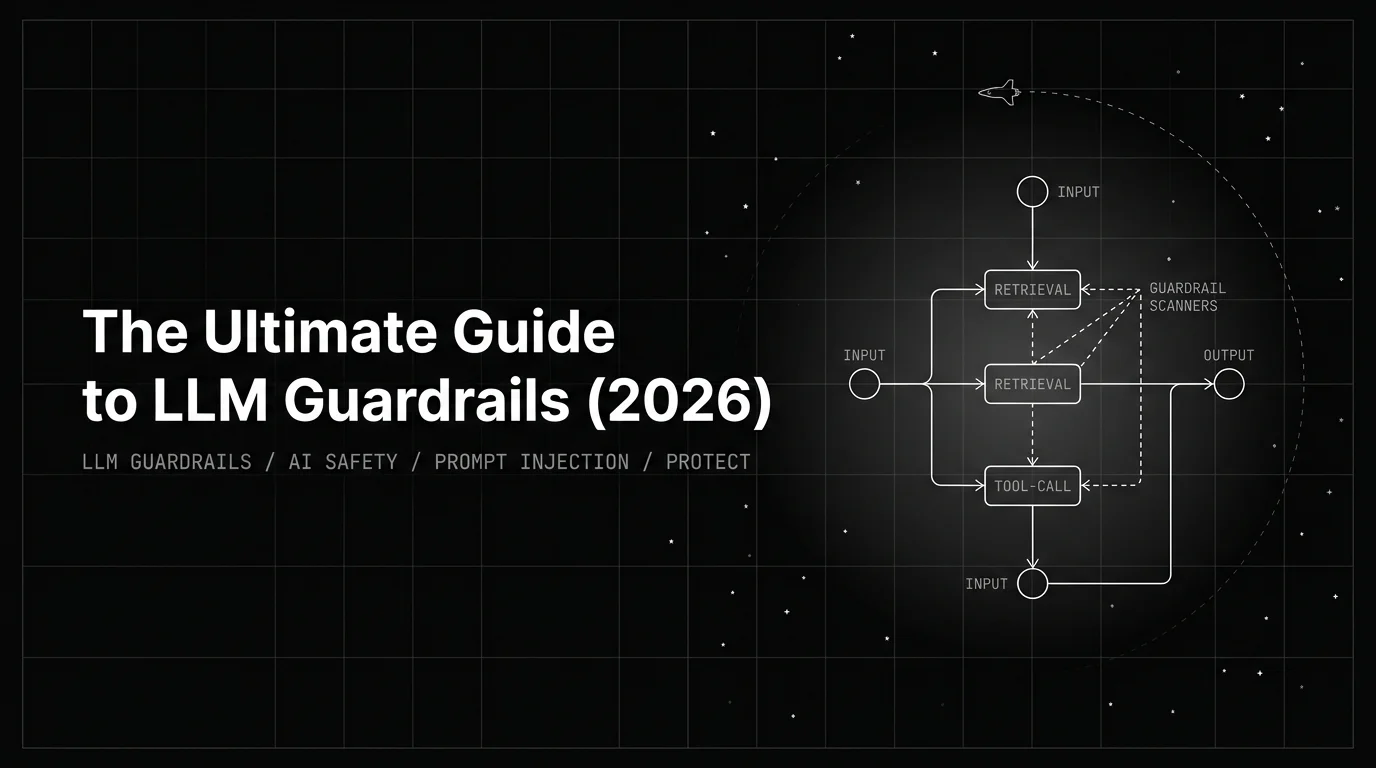
Senior-engineer guide to LLM guardrails: placement, 9 open-weight + 4 API backends, latency budgets, ensembles, precision/recall that actually catches.