Best CX AI Evaluation Platforms in 2026: 5 Picks for Support-AI Teams
Five CX AI evaluation platforms scored on CustomerAgent rubrics, paired Containment and False-Resolution KPIs, and Zendesk/Intercom span attribution.
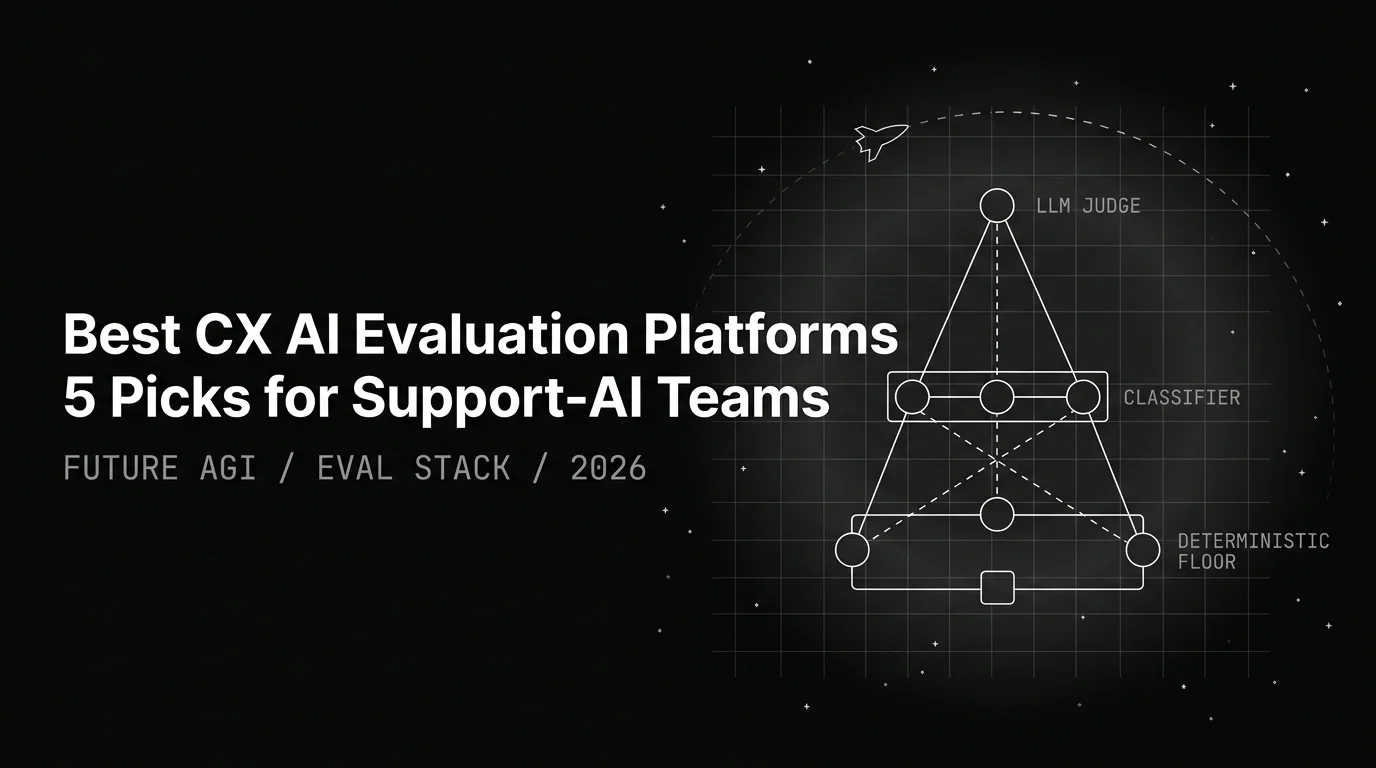
Table of Contents
The five best CX AI evaluation platforms in 2026
The best CX AI evaluation platform in 2026 depends on the unit you care about. For support-engineering teams shipping a Zendesk or Intercom-integrated bot, the unit is the resolved-or-escalated ticket, not the single response. The platforms below were scored on three CX-specific axes: a rubric library that names CustomerAgent behaviors (loop detection, context retention, termination handling, escalation correctness), paired Containment Rate x False Resolution Rate KPIs in one dashboard, and OpenTelemetry span attribution to the tool call that touched Zendesk, Intercom, or the order systems.
Five picks, scored honestly, with where each one falls short.
| # | Platform | Best for | CX-specific surface | Pricing model |
|---|---|---|---|---|
| 1 | Future AGI | Support-eng teams running Zendesk/Intercom-shaped bots with custom rubrics | 11 CustomerAgent EvalTemplates, traceAI 50+ surfaces, Containment x False-Resolution dashboards out of the box | Cloud + OSS self-host; Free + pay-as-you-go; Boost/Scale/Enterprise add-ons |
| 2 | Galileo | Enterprise CX with mature Legal/InfoSec and Luna hallucination intercept on customer chat | Luna proprietary judge, Chunk Attribution + Chunk Utilization metrics | Enterprise contract; managed cloud |
| 3 | Braintrust | Postgres-shaped eval ops with BAA-required workloads | BAA-signable, dataset versioning, experiment tracking, OTel ingest | Pro tier + Enterprise add-ons |
| 4 | Datadog AI | Ops-led CX where LLM observability lives in the same APM tenancy as the rest of the stack | Span ingestion, drift dashboards, alerting | APM seat + LLM Observability SKU |
| 5 | Cresta / Observe.AI / Level AI | Tier-1 contact centers and large BPOs needing real-time agent-assist with embedded behavioral eval | Vertical agent-assist runtime, live coaching, compliance-script coverage | Enterprise contract; per-agent-seat |
Honest sixth option for engineering-heavy teams: a custom Postgres plus hand-rolled CustomerAgent rubrics. Cheap to start, expensive to maintain. Covered in the closing section.
How we scored them: the CX evaluation rubric
Five criteria, each weighted on what actually breaks in production. Pulled from postmortems on three live Zendesk/Intercom support-bot deployments running between Q4 2025 and Q1 2026.
- CustomerAgent rubric coverage. The 11-template surface (
CustomerAgentConversationQuality,CustomerAgentLoopDetection,CustomerAgentTerminationHandling,CustomerAgentHumanEscalation,CustomerAgentQueryHandling,CustomerAgentLanguageHandling,CustomerAgentClarificationSeeking,CustomerAgentContextRetention,CustomerAgentObjectionHandling,CustomerAgentInterruptionHandling,CustomerAgentPromptConformance) is the right unit of analysis. Generic platforms score one response. A CX bot loops, drops context, and times out the user across five turns. Ship the rubrics that name those failures, or write them yourself. - Paired KPI shape (Containment x False Resolution). Both numbers in the same dashboard with the per-tier confusion matrix on the five-tier taxonomy underneath. Tune one in isolation and the other regresses. Most platforms ship one or the other.
- Zendesk/Intercom-shaped trace span attribution. OTel span named
tool.zendesk_lookup_ticketortool.intercom_get_conversationwith the score attached back to the same span. Group failures by tool, by intent, by tenant, by jurisdiction. - Escalation correctness as a first-class rubric. Not a free-text label. A five-tier confusion matrix (in-scope answer, in-scope escalate, out-of-scope refuse, ambiguous clarify, billing-sensitive route-to-human) with per-tier floors. Billing-sensitive-routed-as-answer is 0.00 - one miss fails the build.
- Honest limitations. Every platform below has one. Pick by where the binding obligation lives.
Methodology bias to disclose: Future AGI built the rubric. The CustomerAgent template library lives in our own ai-evaluation SDK, verified against python/fi/evals/templates.py lines 431-475. We scored ourselves last and applied the same caveats.
How the five compare on the CX-specific surface
| Capability | Future AGI | Galileo | Braintrust | Datadog AI | CX-vertical specialists |
|---|---|---|---|---|---|
| CustomerAgent rubric library (count) | 11 templates shipped | Bring your own | Bring your own | Bring your own | Behavioral evals embedded |
| Containment x False Resolution paired dashboards | Out of the box | Build it | Build it | Build it | Vertical UI |
| OTel span attribution to Zendesk/Intercom tool calls | Yes, traceAI 50+ surfaces, EvalTag wiring | Proprietary + OTel export | OTel ingest | Yes, APM-native | Closed runtime |
| Escalation taxonomy as confusion matrix | Five-tier with per-tier floors | Custom build | Custom build | Custom build | Vertical taxonomy |
| Custom rubric authoring path | In-product agent + Python SDK | Enterprise tier | Python SDK | Python SDK | Vendor-managed |
| Self-improving evaluators | Yes, agent-opt with 6 optimizers | No | No | No | Vendor-managed tuning |
| SOC 2 Type II + HIPAA + GDPR + CCPA | All four, trust page | SOC 2 Type II + HIPAA | SOC 2 Type II + HIPAA BAA | SOC 2 Type II + HIPAA BAA | SOC 2 Type II |
| OSS Apache 2.0 SDKs | ai-evaluation, traceAI, agent-opt | No | No | No | No |
| Per-eval cost vs Galileo Luna-2 | Lower | Baseline | Comparable | N/A (APM SKU) | Bundled |
Where things get thin in this category: most generic eval platforms still treat CustomerAgent rubrics as a feature request. Most CX-vertical specialists run a closed agent-assist runtime that doesn’t export span-level evidence to a customer-data-boundary store an engineering team can reach.
1. Future AGI: 11 CustomerAgent templates and traceAI span attribution
Best for: Support-engineering teams running a Zendesk or Intercom-integrated bot where the unit of evaluation is the resolved-or-escalated ticket. Binding need: 11 CustomerAgent rubrics out of the box, paired Containment x False-Resolution KPIs, OTel span attribution to the tool call, and the audit-trail evidence record alongside the call recording.
Key strengths.
- The 11 CustomerAgent EvalTemplates ship as code. Verified against
python/fi/evals/templates.py:431-475:CustomerAgentConversationQuality,CustomerAgentLoopDetection,CustomerAgentTerminationHandling,CustomerAgentHumanEscalation,CustomerAgentQueryHandling,CustomerAgentLanguageHandling,CustomerAgentClarificationSeeking,CustomerAgentContextRetention,CustomerAgentObjectionHandling,CustomerAgentInterruptionHandling,CustomerAgentPromptConformance. Wire each into a pytest fixture with per-tier floors. No generic platform ships these. traceAIauto-instruments 50+ AI surfaces across Python, TypeScript, Java, and C# with 14 span kinds, first-classRETRIEVERandTOOL. Spans namedtool.zendesk_lookup_ticketcarry the ticket id, the returned history, and the agent’s use of the returned context.EvalTagattaches aCustomerAgentConversationQualityscore back to the same span. The score that flagged a loop on the cancellation flow and the trace that produced it stay linkable inside the contact-center retention store.
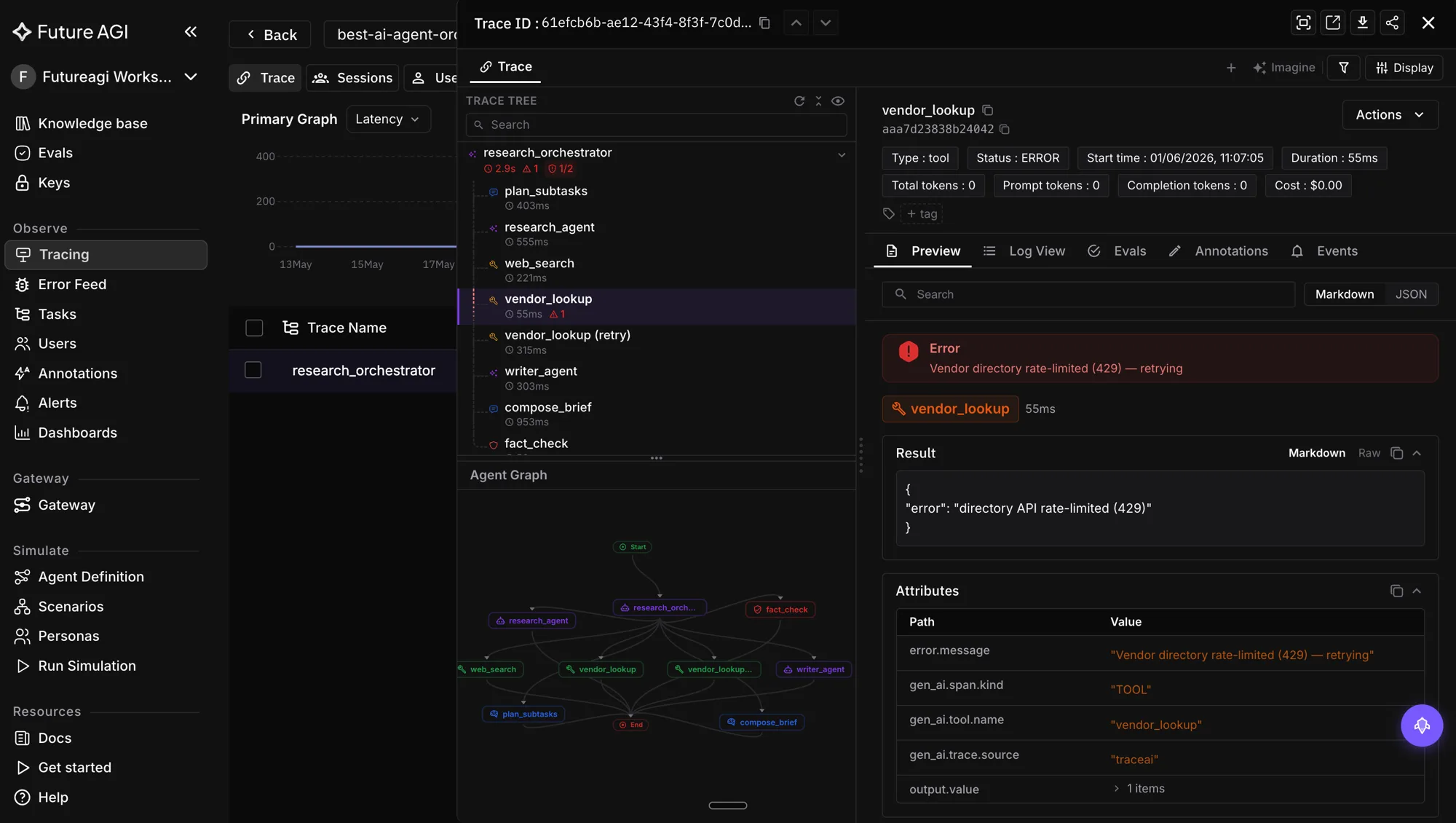
- Paired Containment x False Resolution dashboards out of the box. Both numbers in the same view with the five-by-five confusion matrix on the escalation taxonomy underneath. Per-tier floors encode the harm tradeoff the support lead signed off on.
- Field-level error localization. When the rubric fires, the platform attributes the failure to a specific component of the trace: the prompt segment, the retrieved chunk, the tool argument. That’s the score-and-reason record a QA analyst escalates on.
- Self-improving evaluators via
agent-opt. Six optimizer classes (PROTEGI, GEPA, MetaPrompt, BayesianSearch, RandomSearch, PromptWizard) tune rubrics against live trace data with support-lead thumbs feedback. The optimizer runs against real production traffic with eval scores joined to spans, not a synthetic corpus.
- In-product authoring agent for custom rubrics. The CX QA lead describes a rubric in natural language (“fail if the agent quotes a bereavement-refund policy that does not appear in the retrieved chunks”) and the in-product agent writes the evaluator against the existing trace schema. No Python, no eval engineer in the loop for routine rubrics.
- Hybrid local-and-cloud routing. 20+ heuristic local metrics (regex, JSON schema, BLEU, ROUGE, semantic similarity) keep cardholder data and customer PII inside the boundary; LLM-judge evaluators opt-in and scope to non-PII fields. PCI-DSS scope reduction is the design pattern.
- SOC 2 Type II, HIPAA, GDPR, and CCPA certified per the trust page. ISO/IEC 27001 in active audit. HIPAA BAA available on Scale. The Apache 2.0 SDK suite (
ai-evaluation,traceAI,agent-opt) avoids vendor lock-in on the eval record itself. - Lower per-eval cost than Galileo Luna-2 on the CustomerAgent rubric set, with classifier-backed evals on the high-volume rubrics.
Where it falls short.
- Opinionated prompt library. Fewer review-and-collaboration knobs than Portkey’s prompt registry, by design. The trade is that prompt, eval, and trace live in the same control plane.
agent-optself-improving loop is opt-in per route. CX teams typically enable it on tone and escalation rubrics first, then expand. The trade is that the optimizer runs against real production traffic with audit-grade provenance.- Newer than Langfuse on the OSS observability side and smaller community than LangSmith on the LangChain side. Mature for the eval-and-CustomerAgent axis; the LangChain-native flow lives in traceAI’s
traceai_langchainadapter.
Use-case fit. Zendesk/Intercom-integrated support bot eval; refund-chatbot policy-adherence scoring; returns-policy multi-jurisdiction drift detection; subscription-cancellation flow audit; voice IVR transcript scoring; per-tier confusion matrix as the lead chart.
Pricing & deployment. Cloud + OSS self-host of the Apache 2.0 SDKs. Free + pay-as-you-go base; compliance add-ons (HIPAA BAA, SAML SSO + SCIM, ISO/IEC 27001 in active audit) layer on per tier. Pricing.
Verdict. The pick for support-engineering teams who want the 11 CustomerAgent rubrics, paired KPIs, and Zendesk/Intercom span attribution in one stack. Pair with the customer support chatbot build-and-evaluate playbook for the end-to-end implementation.
2. Galileo: enterprise procurement and Luna hallucination intercept
Best for: Fortune 500 contact centers and CCaaS platforms with mature Legal and InfoSec procurement, an MSA-first vendor approach, and a binding constraint of low-latency hallucination intercept on customer-facing chat.
Key strengths.
- Luna proprietary hallucination-detection models as a managed, low-latency, enterprise-tier judge. The named pick for live-deployment hallucination intercept on customer-facing answer surfaces.
- Strong RAG-quality metric set: Chunk Attribution, Chunk Utilization, Context Adherence, Completeness. Useful observability surface for production RAG pipelines.
- Enterprise procurement story: SOC 2 Type II, HIPAA, named contact-center and CCaaS customer references, MSA-ready, established InfoSec review path.
- Runtime guardrails for live-deployment hallucination intercept.
Where it falls short.
- No CustomerAgent rubric library out of the box. Loop detection, termination handling, context retention, and escalation correctness are bring-your-own-rubric. The CX team writes Python.
- Closed-source LLM-judge stack. Luna models are not externally verifiable in the way OSS evaluator catalogs are.
- Higher per-eval cost than Future AGI on the CustomerAgent rubric set at comparable judge quality.
- High procurement floor; pricing skews toward Tier-1 budgets. Mid-market support-eng teams find the entry point steep.
Use-case fit. Tier-1 contact-center deployments; CCaaS and BPO RAG pipelines where Luna hallucination intercept is the headline; enterprise procurement-heavy CX programs already on a Galileo MSA.
Pricing & deployment. Enterprise contract; managed cloud.
Verdict. The procurement-safe pick. If Legal and InfoSec have already approved Galileo, the CX extension is straightforward. You’ll write the CustomerAgent rubrics yourself.
3. Braintrust: Postgres-shaped eval ops with BAA
Best for: Engineering-heavy CX teams that want dataset versioning, experiment tracking, and prompt management on a Postgres-shaped backend, with BAA-signable for healthcare and financial-services support.
Key strengths.
- BAA-signable for HIPAA-bound CX workloads (insurance member services, healthcare support, regulated benefits desks).
- Clean experiment tracking: dataset versions, prompt versions, eval runs, regression tests, all linkable. The “did this prompt change move the rubric” question has a sharp answer.
- Postgres-native data model. The eval record is just rows you can query, join, and back up. Engineering teams who want to own the data store like this shape.
- OpenTelemetry ingest. Spans land in Braintrust and the score sits next to them.
- Strong prompt-management surface; mature regression-test cadence for prompt and model upgrades.
Where it falls short.
- No CustomerAgent rubric library. The CX team writes loop detection, context retention, termination handling, and escalation correctness as custom rubrics from scratch. The platform doesn’t say “here is what to score”; it gives you a clean surface to score whatever you decide.
- No paired Containment x False-Resolution dashboard out of the box. Build it on top of the Postgres-shaped data model. Doable, but you own it.
- Lighter on CX-vertical context than Galileo (less hallucination intercept) and lighter on agent-runtime context than the CX specialists.
Use-case fit. Engineering-heavy support-eng teams with BAA-required workloads; Postgres-native data culture; teams that already own a prompt-versioning workflow and want eval to slot in.
Pricing & deployment. Pro tier with Enterprise add-ons; managed cloud.
Verdict. The pick when BAA-required and the engineering team wants a Postgres-shaped data model under the eval surface. Pair with hand-rolled CustomerAgent rubrics or import the ai-evaluation templates as starting points.
4. Datadog AI: ops-led CX inside the same APM tenancy
Best for: Ops-led CX teams where LLM observability lives in the same Datadog tenancy as the rest of the stack (APM, logs, metrics, traces) and the binding constraint is “one pane of glass for the on-call engineer.”
Key strengths.
- Same Datadog tenancy as your existing APM, logs, metrics, infrastructure traces. The on-call engineer doesn’t context-switch between an APM and an LLM observability tool.
- Span ingestion of LLM traces alongside the rest of the request flow. Latency, cost, and error rate dashboards roll up across both AI and non-AI services.
- Drift detection on prompt and response distributions; alerting wired into the same notification surface as the rest of the platform.
- SOC 2 Type II, HIPAA BAA available, mature InfoSec procurement story.
- Strong fit when the support bot is one service among hundreds and ops owns the on-call rotation.
Where it falls short.
- Operations-focused, not eval-focused. Datadog tells you the bot is up, latency is fine, and the span volume looks normal. It doesn’t ship CustomerAgent rubrics, doesn’t score escalation correctness, doesn’t run Containment x False-Resolution as a paired KPI.
- The eval layer is bring-your-own. Wire
ai-evaluationor a similar judge SDK to score the spans, then push the score back as a custom Datadog metric. The integration works; you build it. - LLM Observability SKU pricing layers on top of APM seat costs and can scale fast on high-span-volume support bots.
- Closed-source. The eval record sits in Datadog’s store; exporting it for a regulator-facing response requires Datadog cooperation.
Use-case fit. Ops-led teams already on Datadog APM; “one pane of glass” mandates; high-cardinality span volumes where APM-grade ingestion is the binding need.
Pricing & deployment. APM seat plus LLM Observability SKU; managed cloud.
Verdict. The ops pick when the CX bot is one service in a larger Datadog footprint. You’ll layer an eval SDK on top for the CustomerAgent rubrics.
5. CX-vertical specialists: Cresta, Observe.AI, Level AI
Best for: Tier-1 contact centers and large BPOs where real-time agent-assist with embedded behavioral evaluation in the agent-assist runtime is the binding constraint. Voice-first deployments at scale, named enterprise procurement, live-call coaching as the primary surface.
The three group together because the buying motion, the buyer (contact-center QA team, not engineering), and the failure mode are similar.
Key strengths.
- The only vertical-anchored CX-specialists on this list. End-to-end real-time agent-assist with embedded behavioral evaluation in the runtime rather than layered as a separate platform.
- Production-mature voice deployments. Named enterprise CX references in the Verizon, Intuit, Hilton, CarMax, Brinks shape (Cresta); large BPO and contact-center references (Observe.AI, Level AI).
- Live coaching loop. Agent guidance and behavioral scoring on the same model, so the score the supervisor reads and the prompt the agent sees on the next call stay linkable.
- Strong compliance-script coverage for regulated CX verticals (financial services, healthcare insurance member services, debt collection where Reg F applies).
- Vertical UI built for the contact-center QA team, not the engineering team.
Where they fall short.
- Closed runtime. Not OpenTelemetry-native. Exporting span-level evidence to a customer-data-boundary retention store an engineer can query requires vendor coordination.
- Behavioral evaluation, not RAG or agent or tool-use evaluation. Thinner on chunk attribution, tool-call correctness on Zendesk and Intercom, and the broader agent-trace evaluation shape that LLM-first CX deployments need.
- No CustomerAgent EvalTemplate library exposed as code. Rubrics are vendor-managed.
- Enterprise contract, per-agent-seat pricing. High procurement floor.
- Buyer mismatch for engineering-led support-AI teams. The platforms assume a contact-center QA leader signs the check.
Use-case fit. Real-time voice agent-assist for Tier-1 contact centers; compliance-script-heavy regulated CX; live-call coaching; large BPO deployments.
Pricing & deployment. Enterprise contract; managed cloud; per-agent-seat plus platform fee.
Verdict. The vertical-anchored CX-specialist picks. If real-time agent-assist with embedded behavioral evaluation is the workload and the contact-center QA team owns the program, these vendors are the right shape. The engineering team running a chatbot inside Zendesk or Intercom is the wrong buyer profile.
Honest sixth option: custom Postgres plus hand-rolled CustomerAgent rubrics
For engineering-heavy teams who like building, the cheapest start is a Postgres table for eval results, a thin Python wrapper around LiteLLM for LLM-as-judge calls, hand-rolled CustomerAgent rubrics in pydantic, and OpenTelemetry spans exported to Jaeger or your APM. Cost: a week of engineering. Recurring cost: someone owning the rubric maintenance forever.
# DIY CustomerAgent rubric, ~80 lines of glue you maintain
import litellm
from pydantic import BaseModel

class LoopDetectionScore(BaseModel):
    score: float           # 0.0 to 1.0
    reasoning: str
    loop_indicators: list[str]

def score_loop_detection(conversation: list[dict]) -> LoopDetectionScore:
    prompt = build_loop_detection_prompt(conversation)
    response = litellm.completion(
        model="gpt-4o",
        messages=[{"role": "user", "content": prompt}],
        response_format={"type": "json_object"},
    )
    return LoopDetectionScore.model_validate_json(
        response.choices[0].message.content)
Build this and you’ll discover three things on the way. The CustomerAgent rubrics are 80 lines of glue each, and there are 11 of them. The paired Containment x False-Resolution dashboard is another week of data-modelling work. The OTel span-to-eval-score linking is another week of wiring. By month three, you’ve built a worse version of the ai-evaluation SDK plus traceAI and now you maintain it.
The DIY option is fine for a one-route bot. For a Zendesk-integrated multi-tenant support agent, the maintenance cost is the binding constraint, not the build cost. Compare against the ai-evaluation Apache 2.0 SDK before committing to the rebuild.
Decision tree: which to pick
| If you are a… | Pick |
|---|---|
| Support-engineering team running Zendesk/Intercom-integrated bots with custom CustomerAgent rubrics, paired Containment x False-Resolution KPIs, and OTel span attribution as the binding need | Future AGI |
| Fortune 500 contact center with mature Legal/InfoSec procurement, MSA-first vendor approach, and Luna hallucination intercept on customer-facing chat as the headline | Galileo |
| Engineering-heavy CX team with BAA-required workloads and a Postgres-native data culture, willing to hand-roll CustomerAgent rubrics | Braintrust |
| Ops-led team already on Datadog APM with a one-pane-of-glass mandate, willing to layer an eval SDK on top | Datadog AI |
| Tier-1 contact center or large BPO where real-time agent-assist with embedded behavioral eval is the workload and contact-center QA team owns the program | Cresta / Observe.AI / Level AI |
| One-route side project with a single intent and a single jurisdiction | DIY Postgres + hand-rolled rubrics (until month three) |
| Federal-contractor contact center needing air-gapped data residency | Future AGI BYOC plus a vertical-anchored audit vendor for the FedRAMP cycle |
| Regulated CX vertical (healthcare member services, financial-services support, insurance claims chat) needing BAA and HIPAA | Future AGI or Braintrust (both BAA-signable) |
Where each platform earns its slot
Future AGI earns the #1 slot on the combination of the 11 CustomerAgent EvalTemplates, paired Containment x False-Resolution dashboards out of the box, traceAI OTel span attribution to Zendesk/Intercom tool calls, field-level error localization, self-improving evaluators via agent-opt, and the SOC 2 Type II / HIPAA / GDPR / CCPA-certified posture. It’s the only platform on this list that ships the full CX-evaluation surface as code rather than as a configuration exercise.
Galileo earns #2 on enterprise procurement fit and Luna hallucination intercept. Braintrust earns #3 on the BAA-signable Postgres-native shape. Datadog AI earns #4 on the same-tenancy APM story. The CX-vertical specialists earn #5 on real-time agent-assist with embedded behavioral eval, with the trade that the engineering team running a chatbot inside Zendesk or Intercom is the wrong buyer profile.
The shape of the pick isn’t which platform is best; it’s which buyer profile and unit of evaluation fits. For support-engineering teams shipping a Zendesk/Intercom bot in 2026, the unit is the resolved-or-escalated ticket, the rubrics are the 11 CustomerAgent templates, the KPIs are Containment x False Resolution, and the trace surface is OTel spans named after the tool call. Future AGI ships all four out of the box. Every other vendor on this list ships some subset.
Ready to wire the 11 CustomerAgent rubrics into a pytest fixture this afternoon? Start with the ai-evaluation SDK, then add traceAI’s traceai_langchain instrumentor when production traces start asking questions the CI gate missed. The customer support chatbot build-and-evaluate playbook walks the end-to-end implementation.
Related reading
- How to Build and Evaluate a Customer Support Chatbot in 2026
- Evaluating Tool-Calling Agents (2026)
- Evaluating Multi-Turn Conversations: A Deep Dive (2026)
- LLM Evaluation Playbook (2026)
- Best AI Agent Guardrails Platforms (2026)
- Voice Agent Regression Testing in CI/CD (2026)
Updated May 2026. Re-eval cadence: quarterly on CustomerAgent template additions, on Future AGI SDK releases, and on competitor product-surface shifts. Verified against python/fi/evals/templates.py:431-475 for the 11 CustomerAgent classes and the trust page for compliance posture.
Frequently Asked Questions
What makes CX AI evaluation different from generic LLM evaluation?
Why are Containment Rate and False Resolution Rate the right paired KPIs?
How does span attribution to Zendesk and Intercom actually work in an eval platform?
When is a generic LLM eval platform (Braintrust, Galileo) the right pick over a CX-vertical specialist (Cresta, Observe.AI)?
Can a CX team self-host the eval platform inside the customer-data boundary?
What does the eval suite look like in CI for a Zendesk-integrated support chatbot?
Does the eval record satisfy a Moffatt-shape chatbot liability investigation?
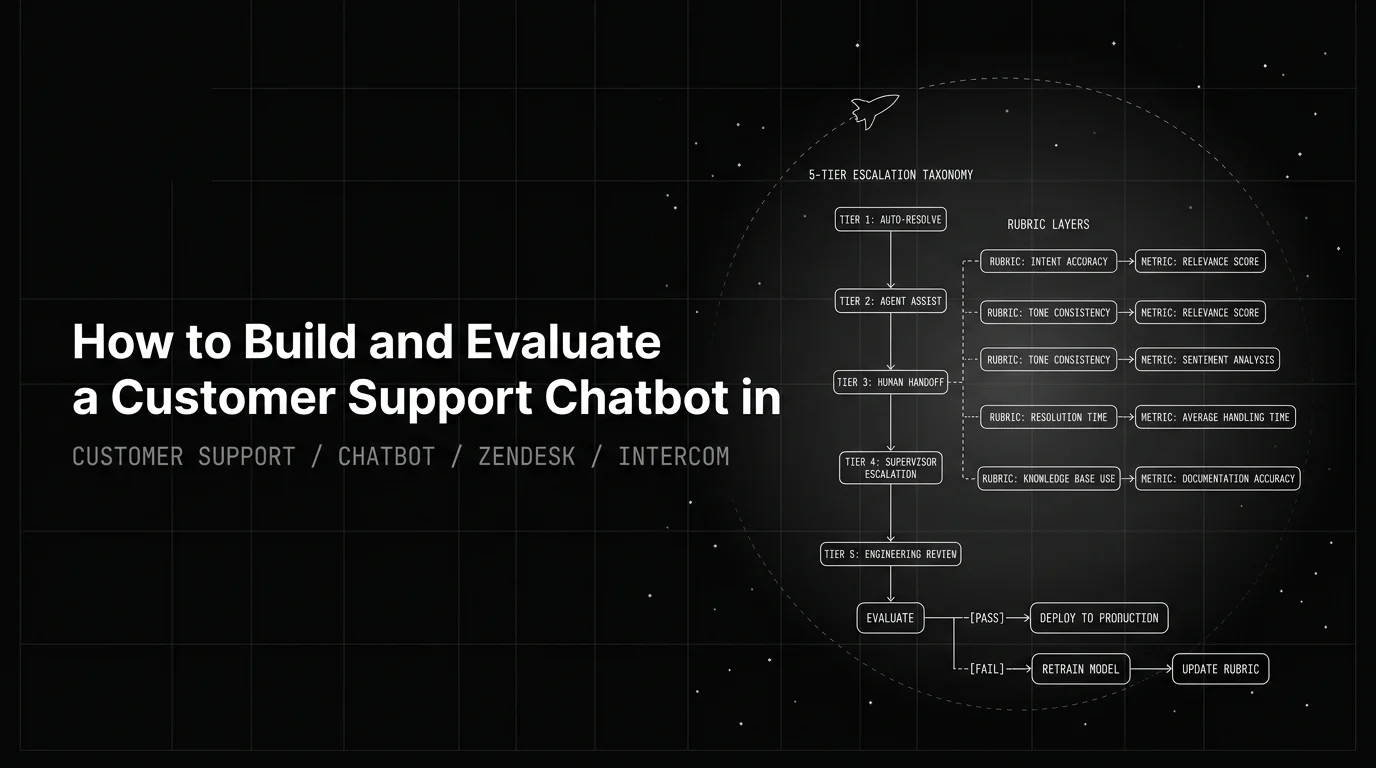
Customer support eval in 2026: escalation taxonomy first, clause-level retrieval, tool-call correctness on Zendesk and Intercom, paired Containment.

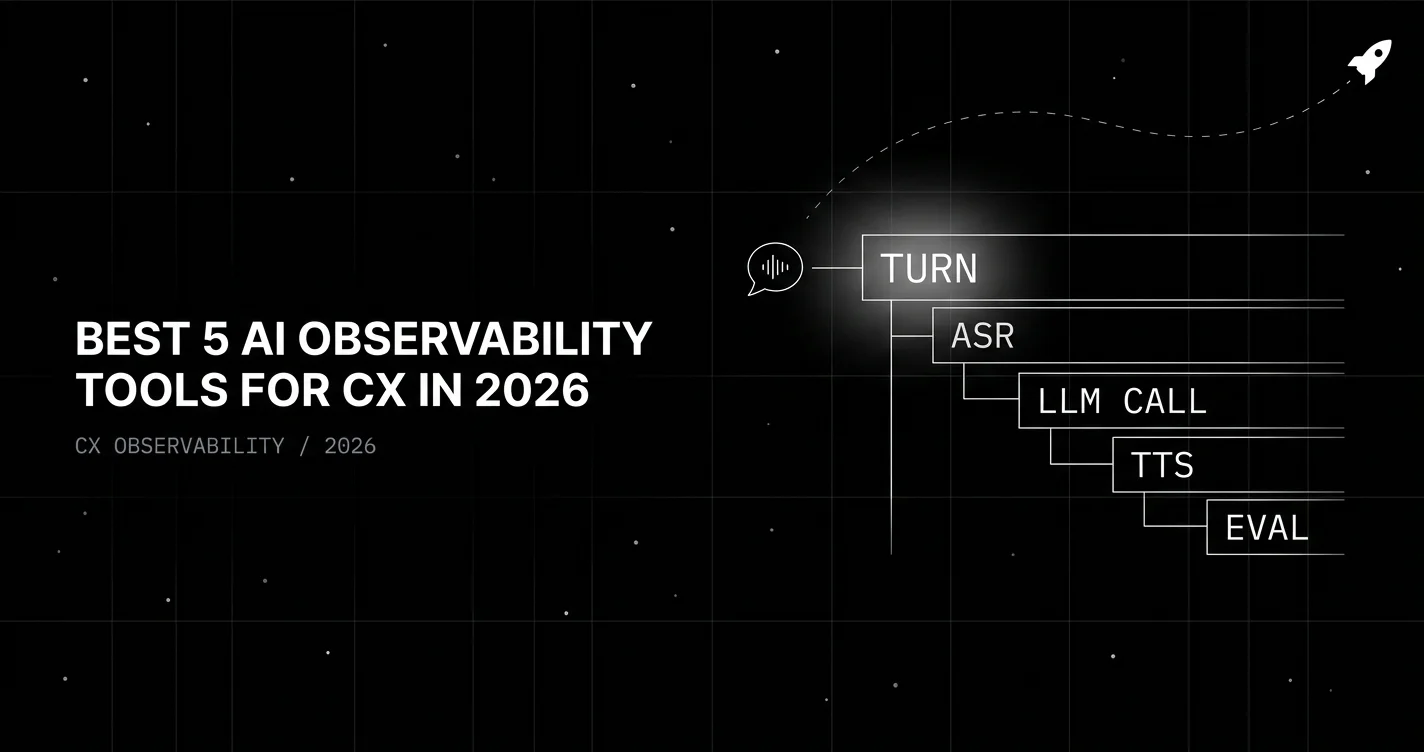
Five CX AI observability platforms scored on conversation-trace inspection, escalation-event capture, and CSAT/NPS join to Zendesk and Intercom ticket IDs.

Five RAG eval tools for customer support, copilot, KB chatbot, billing agent. FTC Op AI Comply, Moffatt v. Air Canada, EU AI Act Art 50.