Top Prompt Management Platforms in 2026: 7 Tools Compared for Versioning, Evaluation, and Deploy
Top prompt management platforms in 2026: Future AGI, PromptLayer, Promptfoo, Langfuse, Helicone, Braintrust, OpenAI Prompts API. Compared.
Table of Contents
Top prompt management platforms in 2026: TL;DR
| # | Platform | Best for | Pricing | OSS / License |
|---|---|---|---|---|
| 1 | Future AGI | Optimization + evaluation + versioning for agentic workflows | Free tier, usage-based | Apache 2.0 SDKs, managed control plane |
| 2 | PromptLayer | No-code editor for mixed product + engineering teams | Free + commercial | Commercial |
| 3 | Promptfoo | CI-driven prompt evals and regression tests | Free OSS, commercial cloud | MIT |
| 4 | Langfuse Prompts | OSS observability stack with prompt registry | Free OSS, commercial cloud | MIT (server) |
| 5 | Helicone Prompts | Prompt-as-configuration with instant rollback | Free + commercial | Apache 2.0 core + EE |
| 6 | Braintrust Prompts | Eval-first prompt management with Loop | Commercial, free trial | Commercial |
| 7 | OpenAI Stored Prompts | OpenAI-only stacks, native templates | OpenAI usage | Commercial |
Pick by primary need: optimization (Future AGI), no-code editor (PromptLayer), CI evals (Promptfoo), tracing-first (Langfuse), rollback-first (Helicone), eval-first (Braintrust), OpenAI-native (OpenAI Stored Prompts).
Why treat prompts as managed assets
A prompt is a piece of production code. Without explicit management you cannot:
- Reproduce yesterday’s behavior after a change.
- A/B test two versions on real traffic.
- Catch a regression before it ships.
- Audit who changed what and when, which compliance teams will eventually demand.
- Reuse a tested template across multiple agents and apps.
A prompt management platform formalizes the version, the test, and the deploy steps the way Git plus CI plus CD formalize them for code.
Quick comparison
| Capability | Future AGI | PromptLayer | Promptfoo | Langfuse Prompts | Helicone Prompts | Braintrust Prompts | OpenAI Stored Prompts |
|---|---|---|---|---|---|---|---|
| Versioning | Yes, hierarchical | Yes, git-style | Via filesystem and CI | Yes, registry | Yes, configuration | Yes, full tracking | Yes, version pinning |
| Visual editor | Workbench | No-code editor | CLI + minimal UI | Web UI | Web UI | In-browser | OpenAI dashboard |
| A/B testing | Built-in | Built-in | CLI matrix | Datasets | Experiments | Loop + datasets | Limited |
| Evaluation | Built-in eval suite | Add-on | Built-in | Add-on | Add-on | Built-in eval suite | Limited |
| Optimization | Automated variants | Manual | Manual | Manual | Manual | Loop AI assist | Manual |
| Multi-provider | Yes | Yes | Yes | Yes | Yes | Yes | OpenAI only |
| Self-host | SDKs OSS, control plane managed | No | Yes | Yes | Yes | No | No |
| Tracing integration | Apache 2.0 traceAI | Add-on | None | First-class | First-class | First-class | OpenAI dashboard |
The 7 platforms
1. Future AGI
Future AGI is an evaluation-and-observability platform that ships prompt management as part of an integrated workflow with optimization, evaluation, and BYOK gateway routing. The platform pairs:
- A prompt workbench with templates, dynamic variables, and an “Improve Existing Prompt” feature that generates and ranks variants automatically against your evaluator suite.
- A custom evaluation framework with built-in evaluators for faithfulness, instruction following, hallucination, groundedness, tone, completeness, and JSON correctness, plus user-defined LLM-judges and deterministic checks.
- Synthetic data generation for evaluation datasets, agent simulations, and fine-tuning corpora.
- Trace view and annotations at span level for production debugging, plus alerts on regression.
- The Apache 2.0 ai-evaluation library and Apache 2.0 traceAI library for self-hosted instrumentation.
- The Agent Command Center BYOK gateway at
/platform/monitor/command-centerthat routes prompts through OpenAI, Anthropic, Google, Mistral, and other providers with one consistent API, prompt-pinning, and live guardrails.
Best for: teams that want optimization, evaluation, versioning, and deploy in one workflow rather than four tools wired together. Especially strong fit for agentic stacks where prompt versions are part of multi-step runs.
from fi.evals import evaluate

# Compare two prompt variants on the same input.
candidate_a = "Summarize the support ticket in 1 sentence."
candidate_b = "Summarize the customer's issue and the requested action in one sentence."

# Score whichever the agent returned against a faithfulness check.
result = evaluate(
    "faithfulness",
    output=agent_output,
    context=ticket_text,
)
print(result.score, result.reason)
2. PromptLayer
PromptLayer is a prompt management platform built for collaboration between technical and non-technical teammates.
- Prompt registry with git-style version control, comments, and a no-code visual editor.
- A/B testing framework for ranking variants against datasets.
- Usage analytics for cost, latency, and per-prompt traffic.
- Quick five-minute setup with SDKs for the main languages.
Best for: teams where product managers, content designers, or domain experts iterate on prompts in a visual editor while engineers wire up the deploy path. Less suited to deep agentic-workflow tracing, where Future AGI, Langfuse, and Braintrust go deeper.
3. Promptfoo
Promptfoo is an MIT-licensed open-source CLI and library for prompt evaluation, regression testing, and LLM red-teaming.
- YAML or TypeScript config for declarative prompt evals.
- Provider-agnostic (OpenAI, Anthropic, Google, Mistral, local Ollama, etc.).
- Matrix testing across prompts, models, and parameters.
- Built-in red-teaming for jailbreaks, prompt injections, and policy violations.
- CI-friendly: returns exit codes for prompt regressions in pull requests.
Best for: engineering teams that want prompt regression tests in CI alongside their unit tests. Pairs naturally with a prompt registry like Future AGI, Langfuse, or Helicone for the deploy side.
4. Langfuse Prompts
Langfuse is an MIT-licensed open-source LLM observability platform with a first-class prompt registry.
- Prompt registry with version control, labels, and rollouts.
- Trace-level binding: every trace records which prompt version produced it.
- Datasets and experiments for A/B testing prompts against curated inputs.
- Strong LangChain, LlamaIndex, OpenAI SDK, and Vercel AI SDK integrations.
- Self-hostable (Docker) or Langfuse Cloud.
Best for: teams that already run Langfuse for tracing and want their prompt registry inside the same product. The strongest open-source option for the tracing-first workflow.
5. Helicone Prompts
Helicone is an Apache 2.0 open-source LLM observability and gateway platform with prompt-as-configuration.
- Prompt-as-configuration: prompts are deployed as configs, separate from application code, so changes ship without redeploy.
- Version control with instant rollback on regressions.
- Typed dynamic variables for safe templating.
- Environment management for dev, staging, and production with independent prompt versions.
- Inline experiments to A/B test on production traffic shadows.
Best for: teams that want fast iteration with codeless deploys and explicit rollback. Less mature for evaluation depth than Future AGI or Braintrust.
6. Braintrust Prompts
Braintrust is a commercial evaluation and observability platform with eval-first prompt management.
- Loop AI assistance that analyzes prompts and proposes optimized variants while also building scorers to match your evaluation criteria.
- Batch testing of prompts across hundreds or thousands of real or synthetic examples.
- Side-by-side diffs of scores and traces between prompt versions.
- Synthetic data generation through Loop.
- Quality gates and alerts for catching regressions in CI.
- SOC 2 Type II compliance for regulated industries.
Best for: teams whose primary discipline is evaluation-driven development, where every prompt change is gated by datasets and scorers before reaching production.
7. OpenAI Stored Prompts
OpenAI’s stored prompts (sometimes called the OpenAI Prompts API) let you define versioned prompt templates inside your OpenAI account and reference them by ID from your application code. Stored prompts include variable substitution and version pinning.
- Native to the OpenAI platform: zero extra dependencies if you are OpenAI-only.
- Version pinning of templates together with their model and parameters.
- Editing in the OpenAI dashboard with template variable management.
- Limitations: OpenAI-only (no Anthropic, Google, Mistral), thin evaluation framework, no first-class cross-provider A/B.
Best for: teams where the entire LLM stack is OpenAI and the priority is zero extra infrastructure. Pair with a separate evaluation tool (Promptfoo, Future AGI, Braintrust) for serious quality gates.
How to choose: a decision matrix
| Primary need | Pick |
|---|---|
| Automated prompt optimization plus evaluation in one workflow | Future AGI |
| No-code editor for non-technical collaborators | PromptLayer |
| CI prompt regression tests and red-teaming | Promptfoo |
| Prompt registry inside an open-source tracing stack | Langfuse |
| Configuration-style deploys with instant rollback | Helicone |
| Eval-first workflows with Loop AI assistance | Braintrust |
| OpenAI-only, zero extra dependencies | OpenAI Prompts API |
| BYOK gateway plus prompt management plus guardrails | Future AGI Agent Command Center |
Most teams end up running two: one for the registry and editor, one for the eval and CI side. By 2026 the cost of stacking two is low because most expose REST APIs or SDKs in the major languages, and several are beginning to support MCP-style tool workflows.
How to ship prompt changes safely
Whatever platform you pick, the rollout discipline matters more than the choice:
- Pin every prompt to a version ID that propagates into your traces, your evaluation scores, and your gateway logs.
- Score the candidate version offline against a curated dataset of 100 to 500 representative inputs with the same evaluators you run in production.
- Shadow the candidate on live traffic before flipping the deploy. Most platforms support traffic splitting or shadow-mode runs.
- Watch real-time aggregate metrics (faithfulness, instruction following, hallucination rate, JSON-schema validity, p95 latency, cost per request) and roll back fast if any one regresses.
- Tag the deploy in your prompt registry with the evaluation summary so the next change starts from a measured baseline.
Future AGI’s Apache 2.0 traceAI library ships OpenTelemetry instrumentation that auto-records the prompt version on each span, so the same trace shows up in Future AGI, in Langfuse, or in any OTLP collector your team prefers. Pair it with the Future AGI evaluation API for scoring at scale, and route through the Agent Command Center for BYOK gateway control across providers.
from fi_instrumentation import register, FITracer

tracer_provider = register(project_name="customer-support-agent")
tracer = FITracer(tracer_provider)

with tracer.start_as_current_span("prompt.execute") as span:
    span.set_attribute("prompt.id", "support-summarize-v12")
    span.set_attribute("prompt.version", 12)
    # ... your LLM call
How prompt management fits the wider 2026 stack
Prompt management does not stand alone. It connects to:
- LLM evaluation for offline and online scoring. See best LLM evaluation tools in 2026 for the wider landscape.
- Prompt versioning concepts more deeply. See what is prompt versioning in 2026 for the underlying discipline.
- Tracing and observability so every production call is bound to a prompt ID. See linking prompt management to tracing in 2026 for an integration walkthrough.
- Prompt optimization for the variant generation and ranking side. See top prompt optimization tools in 2025 for the optimization-focused tools.
Bottom line
In 2026 the question is no longer “do I need a prompt management platform” but “which one of these seven, or which two of them stacked, fit my workflow.” For automated optimization, evaluation, and versioning in one place across providers, Future AGI is the default pick. PromptLayer wins on no-code DX. Promptfoo wins on CI regression tests. Langfuse and Helicone are the open-source picks for tracing-first and rollback-first workflows. Braintrust is the eval-first commercial pick. OpenAI Stored Prompts is the simplest option for teams that only use OpenAI models. Start by mapping your single most important pain point onto this matrix; you can always stack a second tool later.
Frequently Asked Questions
What is a prompt management platform?
Which prompt management platform should I pick in 2026?
Do I need prompt management if I already version prompts in Git?
How does prompt management interact with LLM observability and evaluation?
Are these platforms open source?
What about Portkey, Agenta, Arize, PromptHub, and Amazon Bedrock prompt management?
Does Future AGI's prompt management support multiple model providers?
How do you evaluate which prompt version is best?
Compare 8 AI prompt management tools in 2026 across versioning, eval gates, and runtime routing. Honest tradeoffs and when to pick each.

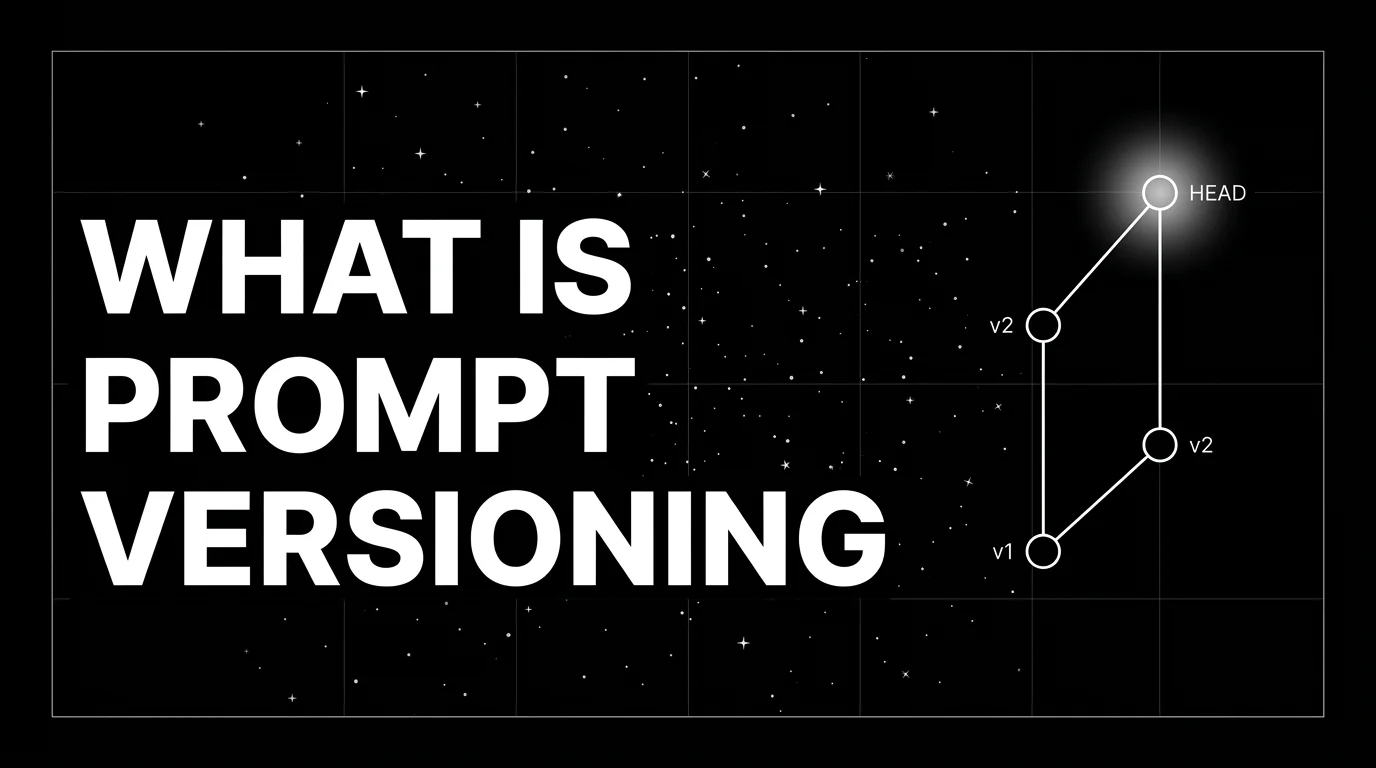
Prompt versioning treats prompts as code: unique ids, environment labels, eval-gated rollouts, one-call rollback. What it is and how to ship it in 2026.

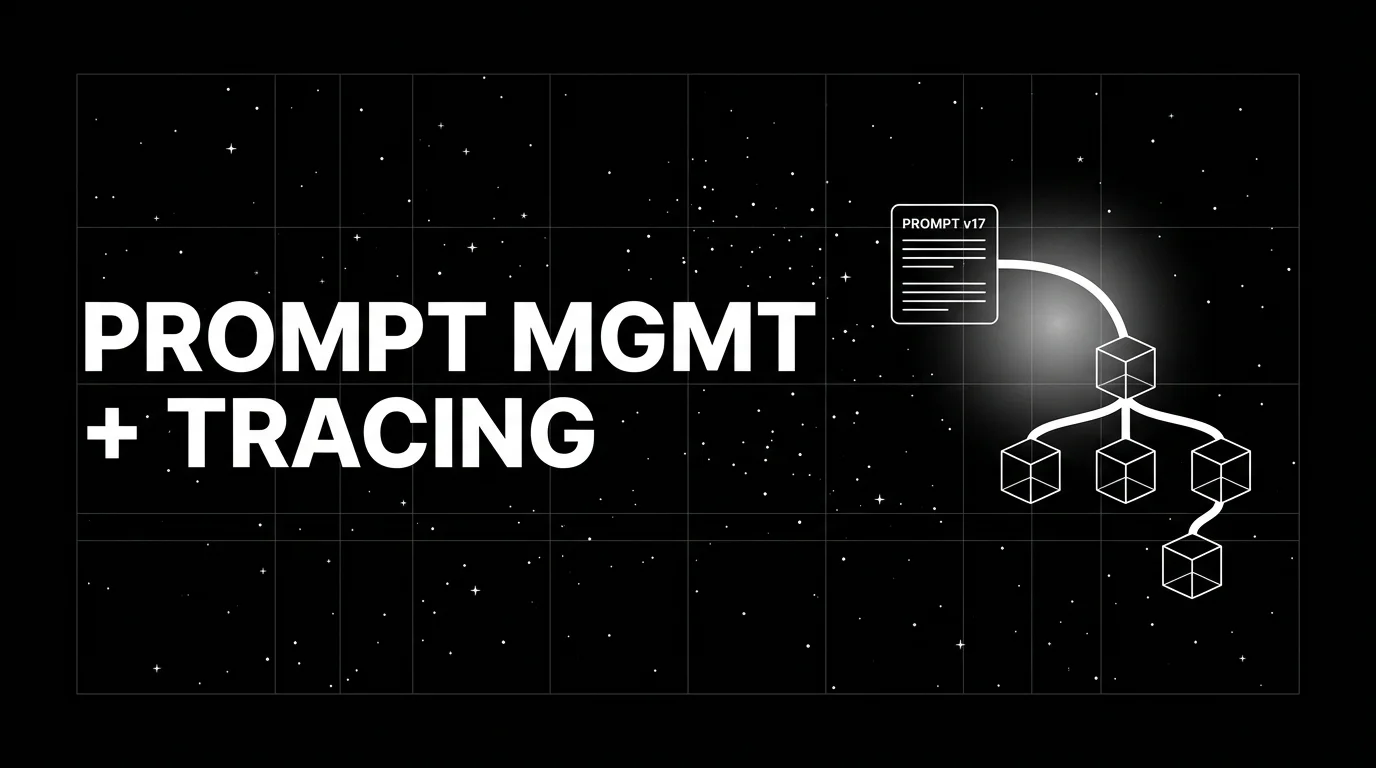
Linking prompt management with tracing in 2026: OTel attribute model, version pinning, A/B variant tags, drift attribution, and eval replay patterns.