LLM Eval Time-to-Value: A 2026 Milestone-by-Milestone Rollout
Practical time-to-value plan for your LLM eval stack: day 1-3 smoke set, week 1 PR gate, month 1 incident clustering, quarter 1 budget chargeback.
Table of Contents
Most LLM eval-stack rollouts drift into six-month build phases that never deliver value, because the team starts with “pick the right architecture” instead of “ship a smoke set this week.” The right rollout looks nothing like that. It shows ROI by week two, compounds from there, and has the eval stack load-bearing production traffic by quarter one. This is the milestone-by-milestone version of the rollout — what ships in 72 hours, what ships in week one, where the cost cascade kicks in, and what mature looks like by quarter one.
TL;DR: the seven milestones
| Milestone | What ships | What you measure |
|---|---|---|
| Day 1-3 | Install SDK, register traceAI, 50-case smoke set | Smoke set passes, eval signal visible |
| Week 1 | 200-case golden set + PR-gate eval | PR-gate running, regression catch rate |
| Week 2-4 | Classifier-backed rubric cascade with augment=True | Cost per eval call dropped 60-80 percent |
| Month 1 | Error Feed HDBSCAN clustering, Linear triage | Time-to-detect-incident dropped |
| Month 2-3 | Platform self-improving evaluators | Thresholds auto-tuned without manual sweeps |
| Quarter 1 | Five-level budget chargeback, per-tenant routing | Cost-per-route visible to FinOps |
| Quarter 2+ | Closed-loop production feedback shapes next quarter | Incident-prevention rate, self-improvement loop closing |
If you can only commit to two: ship the smoke set in three days, ship the PR gate in week one. The rest builds on those.
Why time-to-value matters more than architecture
The eval-stack rollout failure mode is consistent. A staff engineer is told “we need evals,” writes a doc proposing six rubric families, three judge models, a custom CI runner, and a Postgres-backed dataset versioning system. Six weeks later no eval has been run, and the team has shipped two regressions to production.
The teams that compound do the opposite. They ship a fifty-case smoke set on day three. By the time the architecture team is on draft four, the shipping team has a 200-case golden set, a working PR gate, and three weeks of clustered production failures to learn from. By month two the shipping team is tuning classifier cascades while the architecture team is still arguing about rubric taxonomy.
Three points the rollout pattern relies on:
- Any signal in week one beats the right signal in month six. A noisy smoke set tells you which rubrics are too strict, which are too loose, and which signal types matter. The next eval is cheaper to ship because of it.
- Each milestone unlocks the next. Without the smoke set, the golden set is invented at the desk. Without the golden set, the PR gate has nothing to score. Without the PR gate, you don’t know what the cost cascade saved you. Sequence matters more than scope.
- The eval stack should improve itself by month three. If a human is still hand-tuning thresholds at the end of quarter one, the stack is rotting. Self-improving evaluators that retune from production feedback are how the stack stays useful past the rollout phase.
For deeper coverage of the underlying engineering pattern, the 2026 LLM evaluation playbook covers the six layers (dataset, metrics, judge, CI gate, production observation, closed loop) the milestones below assemble.
Day 1-3: install, instrument, smoke set
The goal of day 1-3 is exactly one thing: a real eval signal you can read by Wednesday. The shape is small, the ROI is the unblock.
Install the ai-evaluation SDK (Apache 2.0) and register a traceAI project. The Python surface is three imports:
from fi.evals import Evaluator
from fi.evals.templates import Groundedness, TaskCompletion, AnswerRefusal
from fi_instrumentation import register, ProjectType

trace_provider = register(
    project_type=ProjectType.OBSERVE,
    project_name="agent-prod",
)
The smoke set is fifty hand-picked inputs covering the top three production use cases (the routes that handle most traffic). Score them with three or four pre-built EvalTemplate classes — Groundedness, TaskCompletion, and AnswerRefusal cover most agents — and read the output.
evaluator = Evaluator(fi_api_key=..., fi_secret_key=...)

result = evaluator.evaluate(
    eval_templates=[Groundedness(), TaskCompletion(), AnswerRefusal()],
    inputs=smoke_set,  # 50 TestCase objects
)
Three rules for the smoke set:
- Hand-pick from real traces, not invented at the desk. Pull fifty production-shaped inputs from the last week of traffic. If you haven’t shipped yet, simulate them from intent docs.
- Cover the top-three routes, weight toward the hardest 10 percent. The point of the smoke set is to surface which rubrics are too strict and which are too loose. A balanced sample gives no signal.
- Read the output yourself before automating anything. Most teams that automate from day one ship a broken eval gate by week two. Read the fifty results, sanity-check the scores, then start codifying.
What you have on day 3: first real eval visibility within 72 hours, a sense of which rubrics matter for your agent, and a working SDK installation that the next milestone builds on. What you do not have yet: a CI gate, a golden set, or any cost optimization. Those are next.
For the SDK surface in depth, see the ai-evaluation open-source library overview. For the trace-side instrumentation pattern, see instrument your AI agent with traceAI.
Week 1: the 200-case golden set and PR-gate eval
The smoke set surfaced what matters. Week one builds the dataset that ships to CI and wires the gate that stops regressions.
The golden set is 200 cases sampled from production, weighted toward the hardest 10 percent of inputs (the cases that ambiguously fail or that the smoke set surfaced as borderline). Some teams build a 500-case set in week one; this is usually a mistake. Two hundred is enough to score statistically meaningful rubric diffs on a PR, and small enough that the team will actually maintain it. Grow it weekly by promoting failing production traces.
For deeper coverage of how to build and version the golden set itself, the golden-set design guide covers sampling strategy, failure weighting, and the versioning contract.
The PR-gate eval is a CI job that runs the rubrics from the smoke set against the golden set on every PR. The pattern:
def pr_gate_eval(pr_branch_responses):
    result = evaluator.evaluate(
        eval_templates=[
            Groundedness(),
            TaskCompletion(),
            ContextAdherence(),
            AnswerRefusal(),
        ],
        inputs=golden_set,
        candidate_responses=pr_branch_responses,
    )

    baseline = load_baseline_scores()
    diff = score_diff(result, baseline)

    if any(d < -2.0 for d in diff.per_rubric):
        sys.exit(1)
Three thresholds the PR gate should enforce:
- Per-rubric drop > 2 points fails the PR. Calibrated against the baseline production score.
- Any rubric below the agreed floor fails. Often 0.75 for
Groundedness, 0.85 forTaskCompletion. Domain-specific. - Any new failure cluster appearing on the candidate but not on production auto-fails. This catches the “fixed the refund flow, broke summarization” case.
What ships in week 1: the PR-gate eval running on every pull request, with the regression catch rate measurable from the first week’s blocked PRs. What you should not try in week 1: building the full custom rubric set first, optimizing the cascade before measuring the LLM-judge baseline, or rolling out per-tenant routing. Those are later milestones for a reason. The sequence is load-bearing.
For more on what the PR gate looks like in practice when an agent passes eval but still fails in production, the agent passes evals fails production post covers the gaps the PR gate alone doesn’t catch.
Week 2-4: the cost cascade with augment=True
By the end of week two the PR gate is catching regressions, and the eval bill is starting to show up. A frontier LLM judge on every classifier rubric on every PR run is expensive. Week 2-4 wires the cascade that drops that bill 60 to 80 percent.
The pattern is augment=True on classifier-backed rubrics: cheap classifiers run on every trace, frontier LLM judges run only on the edge cases the classifiers escalate. Future AGI’s eval stack does this through the augment flag on EvalTemplate calls, backed by 9 open-weight guardrail backends and 4 API backends.
from fi.evals.guardrails import GuardrailBackend

result = evaluator.evaluate(
    eval_templates=[
        Groundedness(augment=True),
        FactualAccuracy(augment=True),
        Toxicity(augment=True),
        PromptInjection(
            augment=True,
            backend=GuardrailBackend.LLAMAGUARD_3_8B,
        ),
    ],
    inputs=golden_set,
)
The 9 open-weight backends span the cost / accuracy frontier: LLAMAGUARD_3_8B, LLAMAGUARD_3_1B, QWEN3GUARD_8B, QWEN3GUARD_4B, QWEN3GUARD_0_6B, GRANITE_GUARDIAN_8B, GRANITE_GUARDIAN_5B, WILDGUARD_7B, SHIELDGEMMA_2B. The 4 API backends (OPENAI_MODERATION, AZURE_CONTENT_SAFETY, TURING_FLASH, TURING_SAFETY) cover the cases where managed inference makes more sense. Add 8 sub-10ms Scanners (JailbreakScanner, CodeInjectionScanner, SecretsScanner, MaliciousURLScanner, InvisibleCharScanner, LanguageScanner, TopicRestrictionScanner, RegexScanner) for input-side checks that don’t need a model at all.
For workloads that can’t fit one machine, 4 distributed runners (Celery, Ray, Temporal, Kubernetes) parallelize the eval batch. Most teams don’t need this in week two; it matters by month two if the eval dataset has grown past a few thousand cases.
The measurable thing in week 2-4: cost per eval call dropped 60 to 80 percent against the LLM-judge baseline. If you skipped the baseline measurement in week one and went straight to the cascade, you have no anchor to claim the saving against — which is one of the anti-patterns covered below.
For the deeper write-up on deterministic versus LLM-as-judge tradeoffs that the cascade encodes, see deterministic vs LLM judge evals. For the broader judge-platform comparison, the best LLM-as-judge platforms post covers the surface area.
Month 1: Error Feed clustering and Linear triage
By the end of month one, the eval stack is no longer reactive. It clusters production failures, names them, proposes fixes, and routes them to the on-call rotation before a customer files a ticket.
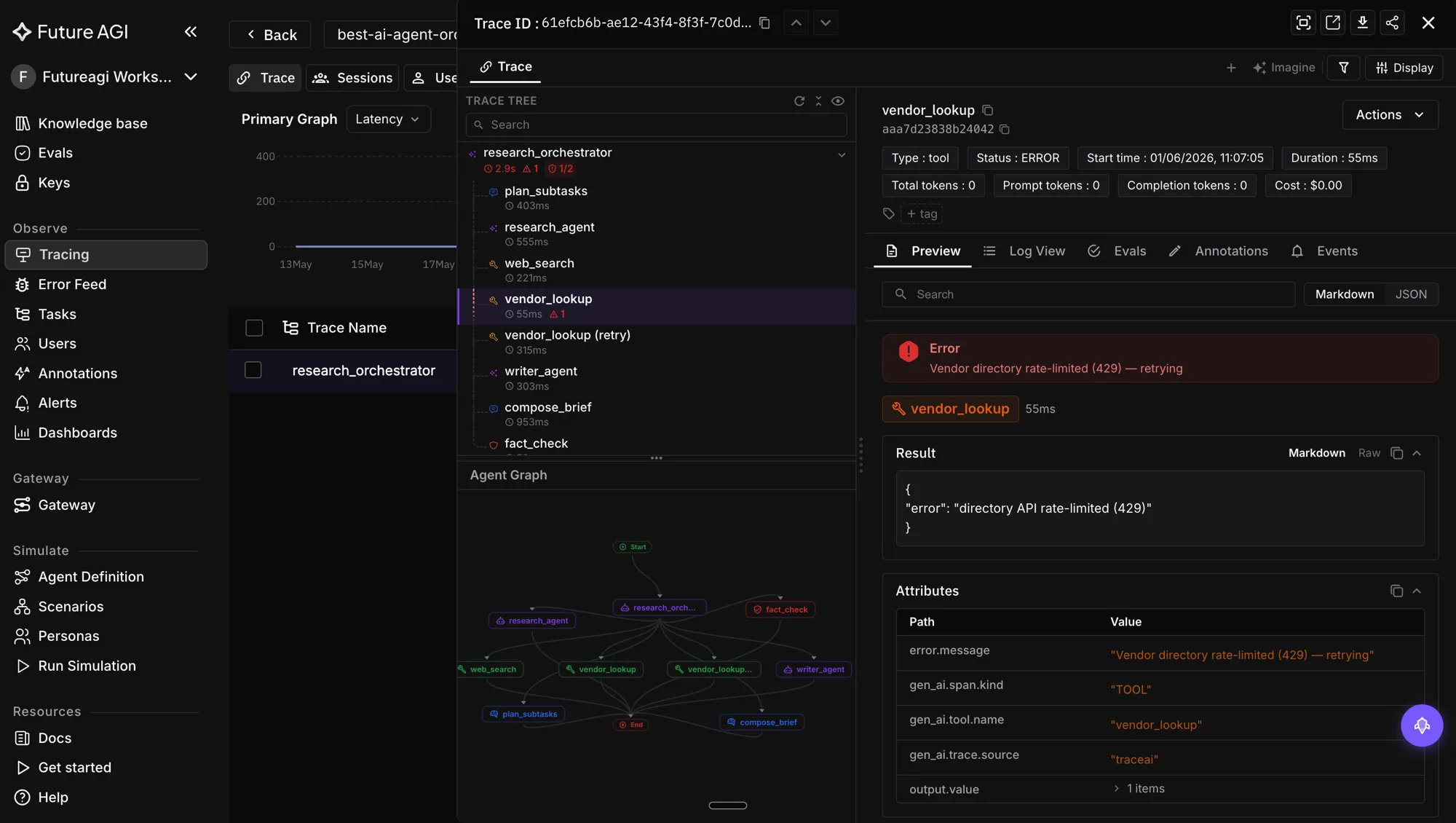
Error Feed (part of the eval stack) runs HDBSCAN soft clustering on production traces. HDBSCAN matters because production failures don’t form clean k-means clusters; they form irregular density blobs that other clustering algorithms either over-merge or shatter. A Sonnet 4.5 Judge then names each cluster, writes a summary, and proposes an immediate_fix. The output feeds back into the Future AGI Platform’s self-improving evaluators (the month 2-3 milestone).
The integration today: Linear, via OAuth. Clusters flow as issues into the engineering team’s standard backlog. Slack, GitHub, Jira, and PagerDuty integrations are on the Error Feed roadmap; do not plan on them today.
# Error Feed runs in the Platform; the on-call rotation
# sees the cluster as a Linear issue with:
# - immediate_fix proposal from the Sonnet 4.5 Judge
# - representative trace IDs
# - rubric scores per cluster member
# - prevalence (% of failing traffic in cluster)
The on-call rotation triages by cluster instead of by ticket. The measurable outcome: time-to-detect-incident drops, and the second-time-bug rate (the same bug shipping twice because no one tagged it the first time) drops faster than that.
What you should not try in month 1: building your own clustering pipeline, integrating Error Feed to Slack or PagerDuty (Linear-only today), or skipping the immediate_fix proposal step because “the engineer can figure it out.” The immediate_fix is the most expensive surface in the loop; it’s also what closes the loop fastest because it feeds the self-improving evaluators downstream.
For deeper coverage of the incident-side workflow, the LLM incident response playbook covers the on-call rotation pattern that Error Feed plugs into.
Month 2-3: the self-improvement loop
Month 2-3 is the milestone where the eval stack stops being a code project and starts being load-bearing infrastructure that improves itself.
The Future AGI Platform’s self-improving evaluators retune rubric thresholds from production feedback. The mechanism: thumbs-up / thumbs-down signal from agent users (or labelers) feeds the ThresholdCalibrator, which proposes a new threshold; the FeedbackRetriever surfaces the traces the rubric was wrong on, so the in-product agent author can sanity-check the proposal before approving. No manual sweeps. No staff engineer hand-tuning Groundedness from 0.75 to 0.78 because they “feel like” production drifted.
By month three the rubrics are tuned by production rather than by intuition. The compounding value: the eval stack’s accuracy improves with traffic instead of decaying with it.
A note on scope. Eval-driven optimization on prompts ships today via the six agent-opt optimizers (RandomSearchOptimizer, BayesianSearchOptimizer with Optuna and teacher-inferred few-shot, MetaPromptOptimizer, ProTeGi, GEPAOptimizer, PromptWizardOptimizer), with EarlyStoppingConfig to bound the search. On the roadmap: the trace-stream-to-agent-opt connector that ingests live production traces straight into the optimizer dataset. The eval-driven loop is sufficient for month 2-3; do not block the milestone on the connector.
For the deeper coverage of the optimizer surface, the automated optimization for agents post covers the six optimizers and the resumable Optuna pattern.
Quarter 1: full stack mature, chargeback live
The quarter-1 milestone is the maturity state. The PR gate is on every route. The cost cascade is on every classifier rubric. Error Feed is auto-triaging into Linear. The self-improving evaluators are running. Now the platform-level features come online.
The five-level hierarchical budget surface (org, team, user, key, tag) drives chargeback. FinOps sees cost-per-route, cost-per-tenant, cost-per-model, and cost-per-rubric in one view. The Agent Command Center gateway surfaces this through response headers like x-prism-cost, x-prism-latency-ms, x-prism-model-used, x-prism-fallback-used, x-prism-routing-strategy, and x-prism-guardrail-triggered, so any downstream metrics pipeline can consume it.
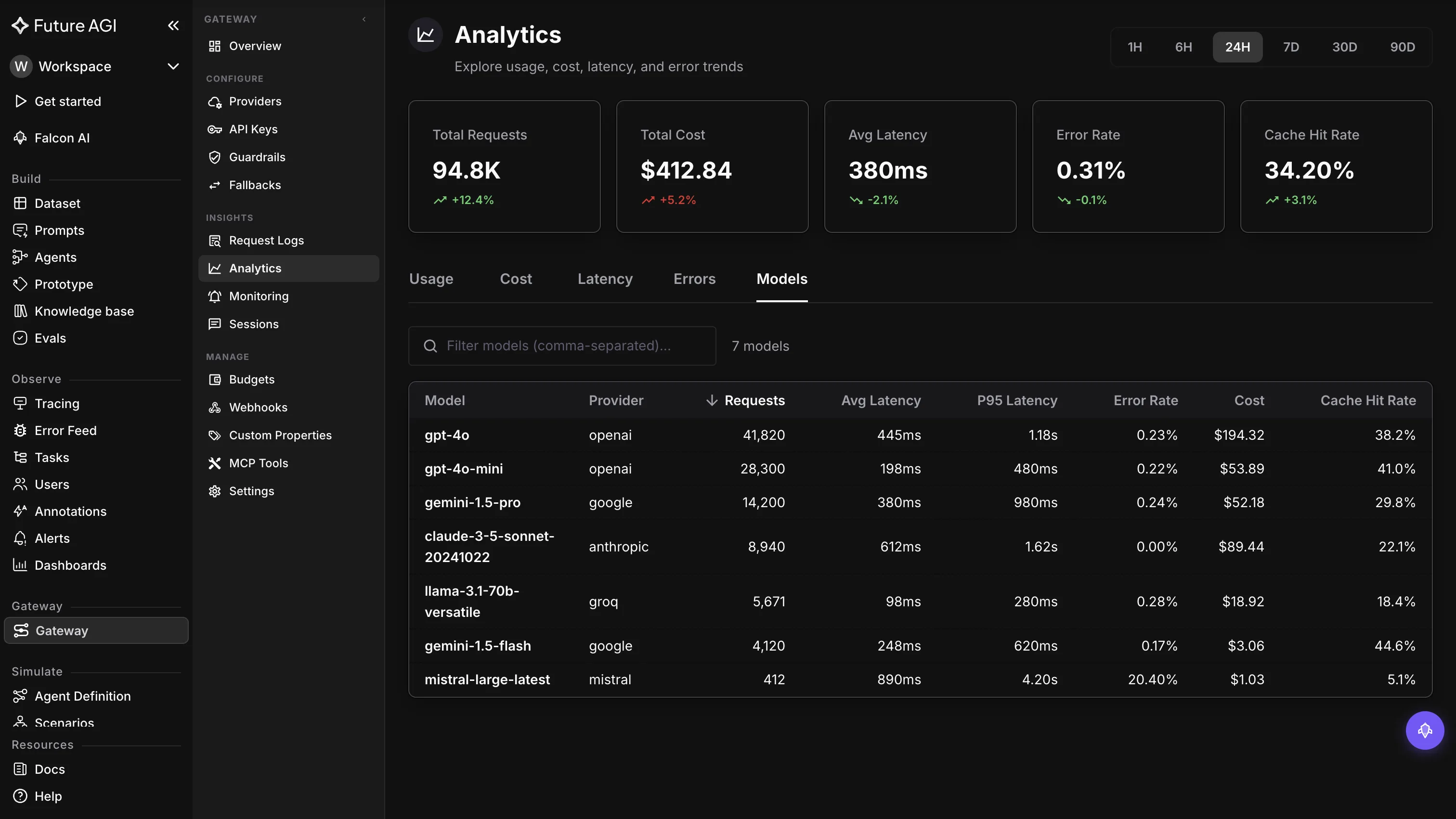
Per-tenant routing isolates premium tenants from shared-pool tail latency. The pattern: a tenant ID flows through the gateway, the routing strategy picks the tenant’s pool, and budgets are enforced at the tenant level. Combined with the budget surface, this gives the team the answer to “how much did tenant X cost us last month” in one query.
Agent Command Center is SOC 2 Type II, HIPAA, GDPR, and CCPA certified, which clears the procurement gate for regulated tenants (healthcare, fintech, government). Most teams don’t realize until quarter one that procurement is the rate-limiter on the next tier of customers; the certification surface unlocks deals that the eval stack alone couldn’t.
For the broader cost-tracking pattern, the enterprise LLM gateway cost-tracking guide covers how the budget hierarchy plugs into FinOps tooling. For the agent-side cost observability story, see AI agent cost optimization and observability.
Quarter 2+: closed-loop production feedback
Quarter two is where the closed loop starts shaping the next quarter’s work. Production traces feed Error Feed; Error Feed clusters feed the self-improving evaluators; the self-improving evaluators’ threshold changes feed the agent author’s review queue; the approved changes feed the next prompt revision; the prompt revision is scored by the PR gate before it ships.
The compounding effect is the point. Every prevented incident in quarter two is a regression that would have shipped in quarter one without the loop. The incident-prevention rate becomes a tracked metric, and team velocity stops being rate-limited by eval cost or manual rubric maintenance.
Honest framing: the trace-stream-to-agent-opt connector is on the roadmap, not shipping today. Eval-driven optimization on prompts ships now via the six agent-opt optimizers; this is sufficient for the loop in quarter two. The connector when it lands removes the explicit step of “promote failing traces into the optimizer dataset” and turns it into a stream.
What you should NOT try in week 1
Sequence matters. Five things to keep off the week-1 list:
- Don’t build the full custom rubric set first. Start with Future AGI’s 60+ pre-built EvalTemplate classes. The pre-builts cover roughly 80 percent of common agent rubrics; the time spent writing the other 20 percent in week one is time not spent shipping the PR gate.
- Don’t optimize the cascade before measuring the LLM-judge baseline. If you don’t have a baseline number, you can’t claim the cascade saved you anything. The cost-saving claim needs an anchor.
- Don’t roll out per-tenant routing before per-product routing is working. Per-product is the simpler case. Per-tenant is the harder case that depends on it. Doing them in the wrong order means you ship a half-working tenant isolation and have to revert.
- Don’t try to integrate the trace-stream-to-agent-opt connector today. It’s on the roadmap. The eval-driven loop is sufficient for the milestone. Building on a not-yet-shipped surface is the fastest way to stall the rollout.
- Don’t wire Slack, GitHub, Jira, or PagerDuty for Error Feed. Linear is the only integration live today. The other four are on the roadmap. Plan around Linear; don’t block the month-1 milestone on something that isn’t shipping yet.
A separate category is the rubric-overengineering anti-pattern. Writing five custom rubrics in week one and never touching them again is the most common eval-stack failure mode after “we never shipped a smoke set.” Start with the pre-builts. The platform’s in-product agent author lets you generate custom rubrics from natural-language descriptions later, once you know which gaps the pre-builts don’t cover.
The four anti-patterns that drift the rollout
The rollout drifts when teams hit one of four patterns. Each one has shipped a public incident or a stalled rollout in the last twelve months.
Trying to build everything before deploying anything. Week-by-week shipping beats month-by-month planning. The team that ships a smoke set in week one and a PR gate in week two has more eval signal than the team six weeks into an architecture review. The signal is what compounds.
Skipping the smoke set and going straight to full-coverage eval. The full-coverage eval over-fits to one team’s intuition about what matters. The smoke set surfaces what actually matters. Without the smoke set you’re tuning rubrics against the test author’s priors rather than against production behavior.
No PR-gate eval before quarter 2. You ship blind for a quarter. The team that runs the PR gate from week one catches regressions before they ship; the team that defers it to quarter two ships every regression in that window and has to triage them post-hoc through Error Feed. Error Feed is good at this, but it’s downstream of the regression already shipping.
Custom-rubric overengineering. Writing the perfect 12-rubric taxonomy in week one and never updating it because no one wants to touch the framework. Future AGI’s 60+ pre-builts cover most agent rubric needs. Use them. The in-product authoring agent lets you describe a custom rubric in natural language and generates the rubric definition plus reference examples; this is the right time to write custom rubrics, after the pre-builts have surfaced which gaps you actually have.
The deeper point the four anti-patterns share: time-to-value compounds. The teams that ship the smoke set in week one build the muscle for the platform features in month two. The teams that spend month one on “the right architecture” never deliver because the architecture review consumes the runway the rollout was supposed to have.
Metrics to track at each milestone
The measurable outcomes per milestone, in the order they should turn on:
- Day 3. Smoke set passes. Eval signal visible. Number of rubrics with non-trivial spread on 50 inputs.
- Week 1. PR-gate eval running on every pull request. Regression catch rate (PRs blocked by the gate per week). Golden set size and refresh cadence.
- Week 2-4. Cost per eval call dropped against the LLM-judge baseline. Classifier escalation rate (percent of traces that hit the LLM judge).
- Month 1. Time-to-detect-incident dropped. Linear cluster volume, immediate_fix acceptance rate, second-time-bug rate (lower is better).
- Month 2-3. Threshold auto-tune rate (per-rubric). Manual sweep volume (lower is better). Agent-author approval rate on platform-proposed threshold changes.
- Quarter 1. Per-tenant chargeback live. Cost-per-route, cost-per-tenant, cost-per-rubric visible to FinOps. SOC 2 / HIPAA / GDPR / CCPA procurement gate cleared.
- Quarter 2+. Incident-prevention rate. Self-improvement loop closing (eval changes shipping faster than incidents are filed).
The metric the rollout is judged on is whether the eval stack is load-bearing by quarter one. If a half-day eval outage blocks production deploys, the stack is load-bearing. If no one notices, the stack is decorative. Time-to-value is the path from decorative to load-bearing.
The deeper point
Time-to-value compounds. The smoke set is the unblock for the golden set. The golden set is the unblock for the PR gate. The PR gate is the unblock for the cost cascade. The cost cascade is what makes the Error Feed clustering affordable to run on every production trace. The Error Feed clusters are what feed the self-improving evaluators. The self-improving evaluators are what makes the platform load-bearing by quarter one.
Each milestone is small. The compounding effect is not. The team that ships milestone one in week one has all of these surfaces by quarter one. The team that defers milestone one for “the right architecture” ships none of them by quarter three. This is the gap between an eval stack that improves the agent and a slide deck about how an eval stack would improve the agent.
The eval stack package Future AGI ships covers all seven milestones. The ai-evaluation SDK is Apache 2.0 (day 1-3, week 1, week 2-4). The Future AGI Platform is the hosted runtime where the in-product authoring agent, the self-improving evaluators, and Error Feed live (month 1, month 2-3). Agent Command Center is the SOC 2 Type II / HIPAA / GDPR / CCPA certified gateway with five-level budgets and per-tenant routing (quarter 1). The six agent-opt optimizers ship the eval-driven optimization loop today; the trace-stream-to-agent-opt connector is on the roadmap and will close the last gap in the closed-loop story.
Start with the smoke set on day one. Build muscle from there. The compounding will do the rest.
Frequently Asked Questions
Why does time-to-value matter for an LLM eval stack?
What ships on day 1-3?
What's the right week-1 milestone?
When does the cost-cascade ship?
What does the month-1 milestone deliver?
How does the self-improvement loop work in month 2-3?
What's the quarter-1 maturity state?
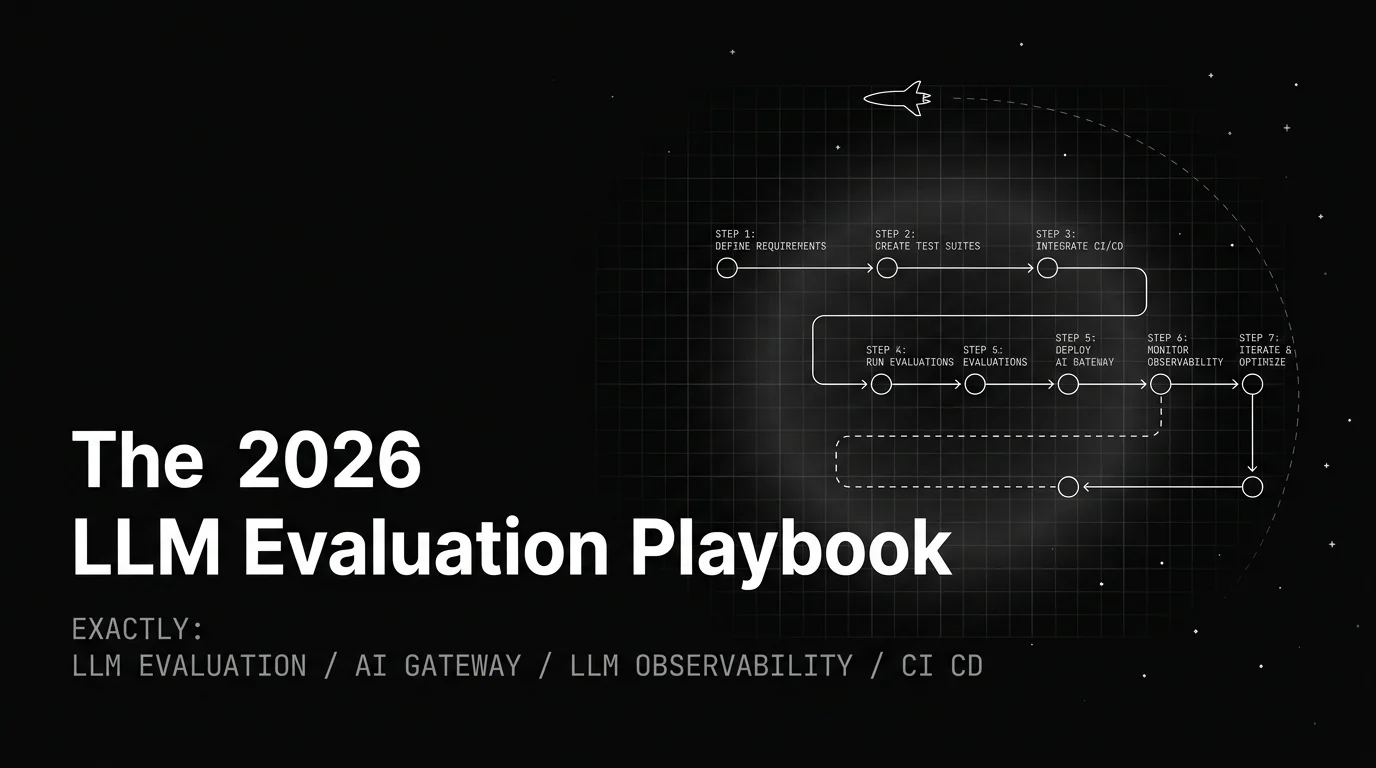
The pillar playbook for LLM evaluation in 2026: dataset, metrics, judge, CI gate, production observation, closed loop from failing trace to regression.

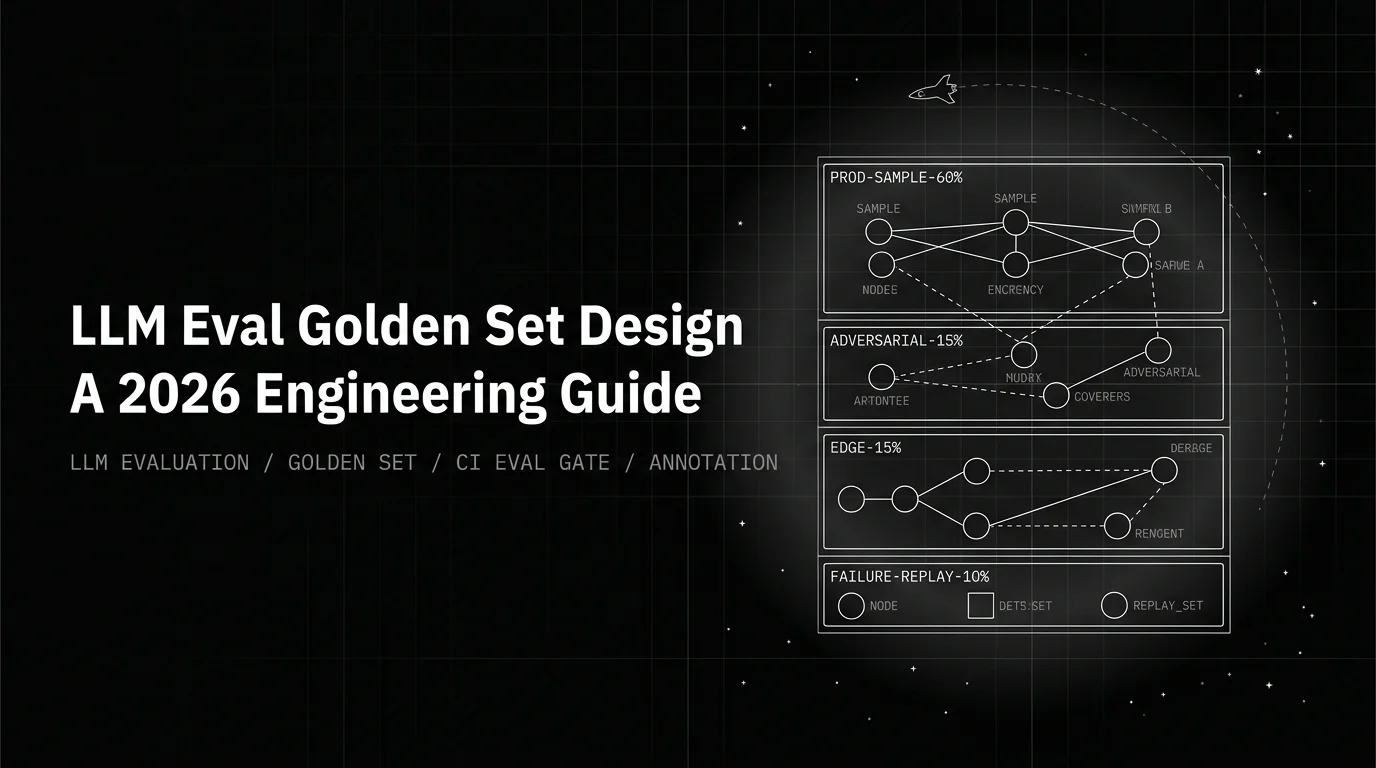
Build a four-bucket golden set (production sample, adversarial, edge cases, failure replays) so a CI eval gate actually proves something about production.

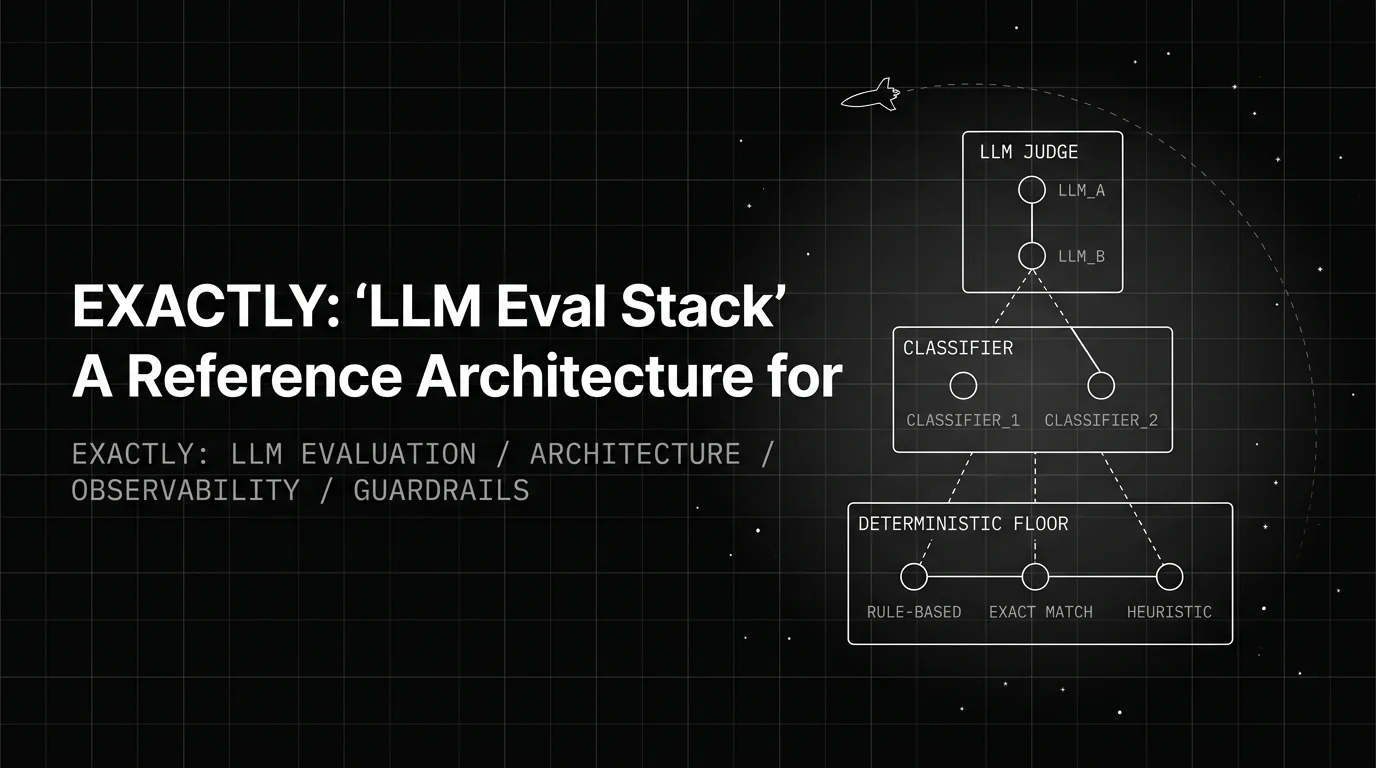
The 8-layer LLM eval reference architecture for 2026: ASCII diagrams end to end, five deployment topologies, integration points, anti-patterns it kills.