Gemini 2.5 Pro in 2026: Pricing, Benchmarks, Retirement Status, and Whether to Upgrade to Gemini 3.1 Pro
Gemini 2.5 Pro in May 2026: pricing, benchmarks, retirement status, and whether to upgrade to Gemini 3.1 Pro for new builds. With migration checklist.
Table of Contents
Updated May 14, 2026. Gemini 2.5 Pro is still available, still cheap, and still defensible for stable production traffic. For new builds it is no longer the right default. Here is the current state, the benchmark gap to Gemini 3.1 Pro, and the migration checklist.
TL;DR: Gemini 2.5 Pro in May 2026
| Question | Short answer |
|---|---|
| Still available? | Yes. Legacy model on Gemini API, AI Studio, and Vertex AI. No deprecation date announced. |
| Still the default Gemini? | No. Gemini 3.1 Pro is now the default in the Gemini API, AI Studio, and Vertex AI. |
| Pricing (May 2026) | $1.25 input / $10 output per million tokens (≤200K); $2.50 / $15 above. |
| Top SWE-bench Verified | 63.8% (launch number). Gemini 3.1 Pro reaches 85% with the Forge Code harness. |
| Top GPQA Diamond | 84.0% at launch. Gemini 3.1 Pro now leads GA at 94.3%. |
| Context window | 1 million tokens. Same in 3.1 Pro. No longer a differentiator. |
| Should I upgrade? | Yes for new builds. For existing production: run a domain reproduction first. |
| Better May 2026 picks for coding | Claude Opus 4.7 (87.6% SWE-bench Verified), GPT-5.5 (~88.7%), DeepSeek V4-Pro (80.6%). |
If you only read one row: Gemini 2.5 Pro is defensible for stable production traffic that already passes your eval, hard budget caps, or pipelines tightly coupled to its response shape. For everything else in May 2026, Gemini 3.1 Pro or Claude Opus 4.7 is the better choice.
Is Gemini 2.5 Pro still available in May 2026?
Yes. Gemini 2.5 Pro is reachable on:
- Gemini API. Model ID
gemini-2.5-pro(and the preview tags from 2025) still resolves. - Google AI Studio. Available in the model selector under legacy models.
- Vertex AI. Production endpoints for enterprise customers.
Google has not announced a deprecation date. Historical pattern: Google keeps legacy Gemini models reachable for 12 to 18 months after the next generation ships, then sunsets with 90 days of notice. Plan migrations now, do not panic about them.
Gemini 2.5 Pro pricing in May 2026
The two-tier pricing structure Google introduced in 2025 is unchanged:
| Tier | Input ($/M tokens) | Output ($/M tokens) |
|---|---|---|
| Prompts ≤ 200,000 tokens | $1.25 | $10 |
| Prompts > 200,000 tokens | $2.50 | $15 |
Free tier remains available through AI Studio with rate limits for prototyping. Vertex AI uses the same per-token pricing plus standard GCP costs.
Compared to Gemini 3.1 Pro at $2 input / $12 output (≤200K), 2.5 Pro is cheaper on input and competitive on output, but the quality-per-dollar comparison favors 3.1 Pro on most workloads. The gap widens further when you compare against DeepSeek V4-Pro at $0.435 input / $0.87 output (roughly 1/40th the GPT-5.5 output price) or Gemini 3.5 Flash at $0.075 input / $0.30 output for high-volume, low-stakes workloads.
For current numbers, check ai.google.dev/gemini-api/docs/pricing. Google adjusts tiers without long notice periods.
Gemini 2.5 Pro benchmarks: launch numbers and the May 2026 frontier
The original Gemini 2.5 Pro launch numbers, plus where they sit against the May 2026 frontier:
| Benchmark | Gemini 2.5 Pro (2025) | May 2026 GA leader | Score |
|---|---|---|---|
| GPQA Diamond | 84.0% | Gemini 3.1 Pro | 94.3% |
| Humanity’s Last Exam (no tools) | 18.8% | GPT-5.5 (no tools) | 41.7% |
| AIME 2025 | 86.7% | Grok 4 Heavy | ~100% |
| AIME 2024 | 92.0% | Grok 4 Heavy | ~100% |
| LiveCodeBench v5 | 70.4% | DeepSeek V4-Pro | 93.5% |
| Aider Polyglot | 74.0% | Claude Opus 4.7 | ~85% |
| SWE-bench Verified | 63.8% | Claude Opus 4.7 | 87.6% |
| SWE-bench Pro (contamination-resistant) | not reported | Qwen 3.6 Max-Preview | leads |
| SimpleQA | 52.9% | tied | varies |
| MMMU (multimodal) | 81.7% | Gemini 3.1 Pro | 91% |
| MRCR (128K context) | 94.5% | Gemini 3.1 Pro | 96%+ |
| Terminal-Bench 2.0 | not reported | GPT-5.5 | 82.7% |
Source: Google Gemini 2.5 thinking updates (March 2025) for 2.5 Pro launch numbers; vendor docs and public leaderboards for May 2026 leaders.
Three takeaways for the live numbers:
- The 2.5 Pro coding numbers are no longer competitive. 63.8% SWE-bench Verified is solidly mid-pack in May 2026. Claude Opus 4.7 (87.6%), GPT-5.5 (~88.7%), and even DeepSeek V4-Pro at 1/40th the price (80.6%) all outscore it.
- The multimodal lead transferred to 3.1 Pro. MMMU 81.7% was top of the leaderboard in 2025. 3.1 Pro now sits at 91%, with the same input matrix (text, image, audio, video) and added image generation via Nano Banana 2.
- The 1M context window is no longer a differentiator. Claude Opus 4.7 ships 1M with flat pricing. Llama 4 Maverick ships 10M open-weight. Several frontier vendors now ship multi-million-token windows. Long context is now table stakes.
Gemini 2.5 Pro versus Gemini 3.1 Pro: the upgrade case
| Dimension | Gemini 2.5 Pro | Gemini 3.1 Pro |
|---|---|---|
| Default in Gemini API | No (legacy) | Yes (since March 6, 2026) |
| GPQA Diamond | 84.0% | 94.3% |
| SWE-bench Verified | 63.8% | ~85% (with Forge harness) |
| MMMU | 81.7% | 91% |
| Context window | 1M | 1M |
| Native modalities | text, image, audio, video | text, image, audio, video |
| Image generation | No | Nano Banana 2 (Flash Image variant) |
| Input price (≤200K) | $1.25/M | $2/M |
| Output price (≤200K) | $10/M | $12/M |
| Code change to migrate | one line (model ID) | one line (model ID) |
Verdict. For new builds in May 2026 there is no reason to start on 2.5 Pro. The SDK is the same, the pricing gap is small, and the quality lift is real. For existing production traffic, run a domain reproduction with 100 to 500 of your real prompts before flipping the switch; 3.1 Pro is better on every public benchmark, but contamination-resistant evals and domain-specific data sometimes show smaller gaps.
Gemini 2.5 Pro versus Claude Opus 4.7 in May 2026
The comparison most readers landed here for has moved. Claude 3.7 Sonnet (the 2025 comparison target) is now legacy too. The current comparison is Gemini 2.5 Pro versus Claude Opus 4.7.
| Dimension | Gemini 2.5 Pro | Claude Opus 4.7 |
|---|---|---|
| SWE-bench Verified | 63.8% | 87.6% |
| SWE-bench Pro (contamination-resistant) | not reported | 64.3% |
| GPQA Diamond | 84.0% | ~89% |
| Context window | 1M | 1M |
| Multimodal | text, image, audio, video | text, image |
| Audio understanding | yes (native) | no (native), via STT |
| Average latency | low | medium |
| Output price | $10/M | $25/M |
| Best fit | cost-sensitive non-coding | multi-file code reasoning |
Verdict. Claude Opus 4.7 wins on coding by a large margin, wins on agent reliability over long sessions, and matches the 1M context window. Gemini 2.5 Pro is 2.5x cheaper on output and faster on average latency. For coding-heavy workflows, Claude Opus 4.7 is the May 2026 pick. For multimodal pipelines that need audio or video understanding, Gemini 2.5 Pro is still competitive; for new builds, prefer Gemini 3.1 Pro at $2/$12 pricing.
For a deeper monthly view of the frontier, see Best LLMs of May 2026.
When Gemini 2.5 Pro is still the right pick
Three scenarios where 2.5 Pro is defensible in May 2026:
- Stable production traffic that already passes your eval. Migration cost (validation, regression testing, monitoring) is non-trivial. If 2.5 Pro is working, keep it and schedule the migration for a quieter sprint.
- Hard budget cap below 3.1 Pro pricing. Input is $0.75/M cheaper on 2.5 Pro. At very high volume this matters.
- A pipeline tightly coupled to 2.5 Pro response shape. If your downstream parsers expect a specific token distribution or formatting, treat the migration as a parser update too, not just a model swap.
For everything else, skip to Gemini 3.1 Pro for new builds.
How to migrate from Gemini 2.5 Pro to Gemini 3.1 Pro
Migration is a one-line SDK change plus a domain validation. The full checklist:
1. Swap the model ID
# Before
from google import genai
client = genai.Client()
response = client.models.generate_content(
    model="gemini-2.5-pro",
    contents="Summarize this 200K-token document.",
)

# After
response = client.models.generate_content(
    model="gemini-3.1-pro",
    contents="Summarize this 200K-token document.",
)
The Gemini Python SDK is stable across 2.5 Pro and 3.1 Pro. Vertex AI and AI Studio use the same model IDs.
2. Run a domain reproduction
Take 100 to 500 of your production prompts and run them through both models. Score outputs against your acceptance criteria using an LLM judge. The Future AGI cloud API has built-in Turing eval templates that handle this.
# Requires FI_API_KEY and FI_SECRET_KEY already set in your environment.
# `call_gemini` is a stand-in for your existing Gemini API client.

from fi.opt.base import Evaluator
from fi.evals.metrics import CustomLLMJudge
from fi.evals.llm import LiteLLMProvider

# Replace with your own loader: a list of representative production prompts.
prompts = [
    "Summarize this 200K-token customer support thread.",
    "Refactor this Python module for readability without changing behavior.",
]

def call_gemini(model: str, prompt: str) -> str:
    # Stand-in: replace with the real Gemini SDK call in your stack.
    return "..."

provider = LiteLLMProvider()

response_quality_config = {
    "name": "response_quality_judge",
    "grading_criteria": (
        "Score 0-5 on: (1) factual accuracy, (2) completeness, "
        "(3) instruction adherence, (4) format compliance."
    ),
}
quality_judge = CustomLLMJudge(provider, config=response_quality_config)
evaluator = Evaluator(metric=quality_judge)

for prompt in prompts:
    for model in ["gemini-2.5-pro", "gemini-3.1-pro"]:
        response = call_gemini(model, prompt)
        score = evaluator.evaluate({"prompt": prompt, "response": response})
        print(model, prompt[:40], score)
turing_flash runs in about 1 to 2 seconds per call. Use turing_small (2 to 3 seconds) or turing_large (3 to 5 seconds) for higher-fidelity scoring on safety-critical workloads.
3. Track four metrics
Score the head-to-head on:
- Quality. LLM-judge score on your rubric, plus human spot checks on a sample.
- Cost. Real dollars per successful task (not just per-token list price).
- Latency. P50 and P95 on your actual prompt distribution.
- Reliability. Variance across repeated runs and tail behavior on edge cases.
4. Instrument with traceAI
Before flipping production traffic, wire traceAI into both code paths. Span-level visibility into every model call, retry, and post-processing step. Catch regressions the moment they appear in production rather than the next time the customer complains.
from fi_instrumentation import register, FITracer

register(project_name="gemini-migration")
tracer = FITracer(__name__)

@tracer.chain
def gemini_call(model: str, prompt: str) -> str:
    return call_gemini(model, prompt)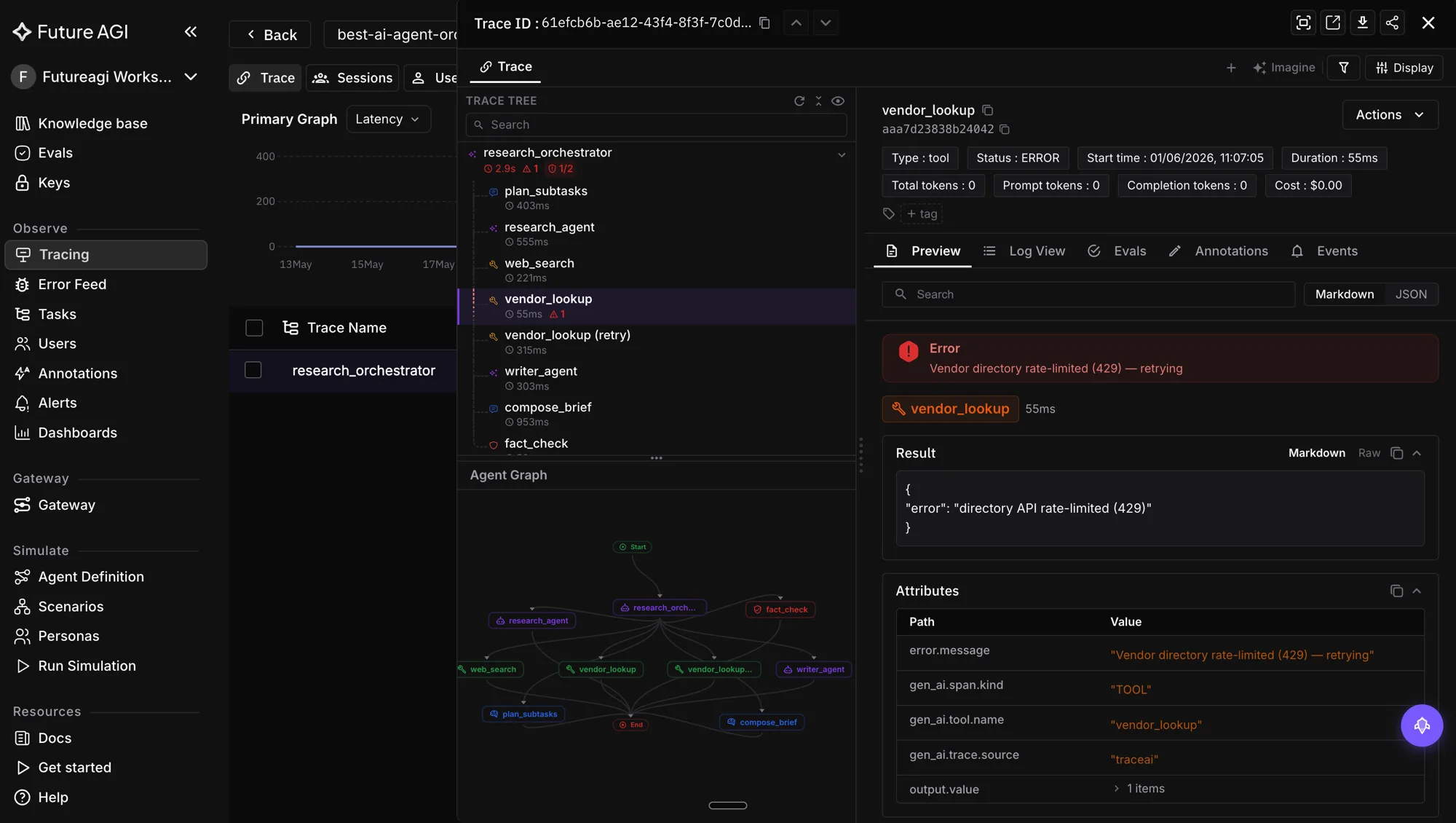
5. Cut traffic gradually
Most production teams ship a 5% canary on 3.1 Pro for a week, then 50% for a week, then full cutover. Monitor traceAI dashboards for latency spikes, quality regressions, and unexpected refusal patterns. Roll back the moment any threshold breaches.
Common mistakes when migrating off Gemini 2.5 Pro
The four most expensive errors:
- Treating the migration as a one-line change. It is one line of code, but the SDK swap is the easy part. The eval reproduction, the canary, and the monitoring are the work.
- Skipping the domain reproduction. Public benchmark scores compress when you run them on your own data. The 3.1 Pro lift is real but smaller than the public gap suggests for many domains.
- Forgetting downstream parsers. Output formatting and token distributions shift between model versions. If your post-processing assumes a specific shape, validate before flipping traffic.
- Ignoring tail behavior. P50 quality is usually fine after migration. P95 and P99 are where you find the regressions. Track tail metrics, not just averages.
How to evaluate any Gemini model for production
The pattern that works across Gemini 2.5 Pro, 3.1 Pro, 3.5 Flash, and whatever ships next:
- traceAI for span-level instrumentation. Apache 2.0, OTel-based, works with the official Google SDK. See the traceAI repo.
- Future AGI Evals for scoring. 50+ built-in metrics plus custom LLM-judge templates. Score every production call against your domain rubric and gate deploys on threshold breaches. See Future AGI Evals.
- Future AGI Simulate for adversarial testing. Persona-driven inputs and partial-failure scenarios. Catch prompt injection, refusal regressions, and reliability decay before they hit production. See Future AGI Simulate.
For a walkthrough of the trace-eval-simulate-gate pattern with runnable code, see the ADK production eval loop guide. The same loop applies to any frontier model, not just Google ADK agents.
Related reading
- Best LLMs of May 2026: monthly compare across coding, agents, multimodal
- Generative AI trends in 2026
- LLM benchmarking: what to measure, how to compare
- LLM evaluation tools in 2026
- Multimodal AI: state of the field in 2026
Sources
- Gemini 2.5 Pro thinking updates (Google DeepMind, March 2025)
- Gemini 3.1 Pro launch (Google)
- Gemini API pricing (Google AI for Developers)
- Claude Opus 4.7 announcement (Anthropic)
- GPT-5.5 announcement (OpenAI)
- SWE-bench Pro public leaderboard (Scale)
- Trustworthy Benchmarks audit (UC Berkeley RDI, April 2026)
- traceAI Apache 2.0 license
Frequently Asked Questions
Is Gemini 2.5 Pro still available in May 2026?
How does Gemini 2.5 Pro compare to Gemini 3.1 Pro in 2026?
What is the Gemini 2.5 Pro price in 2026?
Should I migrate from Gemini 2.5 Pro to Gemini 3.1 Pro?
Is Gemini 2.5 Pro good for coding in 2026?
What is the Gemini 2.5 Pro context window in 2026?
How does Gemini 2.5 Pro compare to Claude Opus 4.7 in 2026?
Does Gemini 2.5 Pro support multimodal input in 2026?
Gemini 2.5 Pro features in May 2026: 1M token context, MCP tools, Deep Think mode, Project Mariner, Live API audio, plus how to evaluate Gemini.

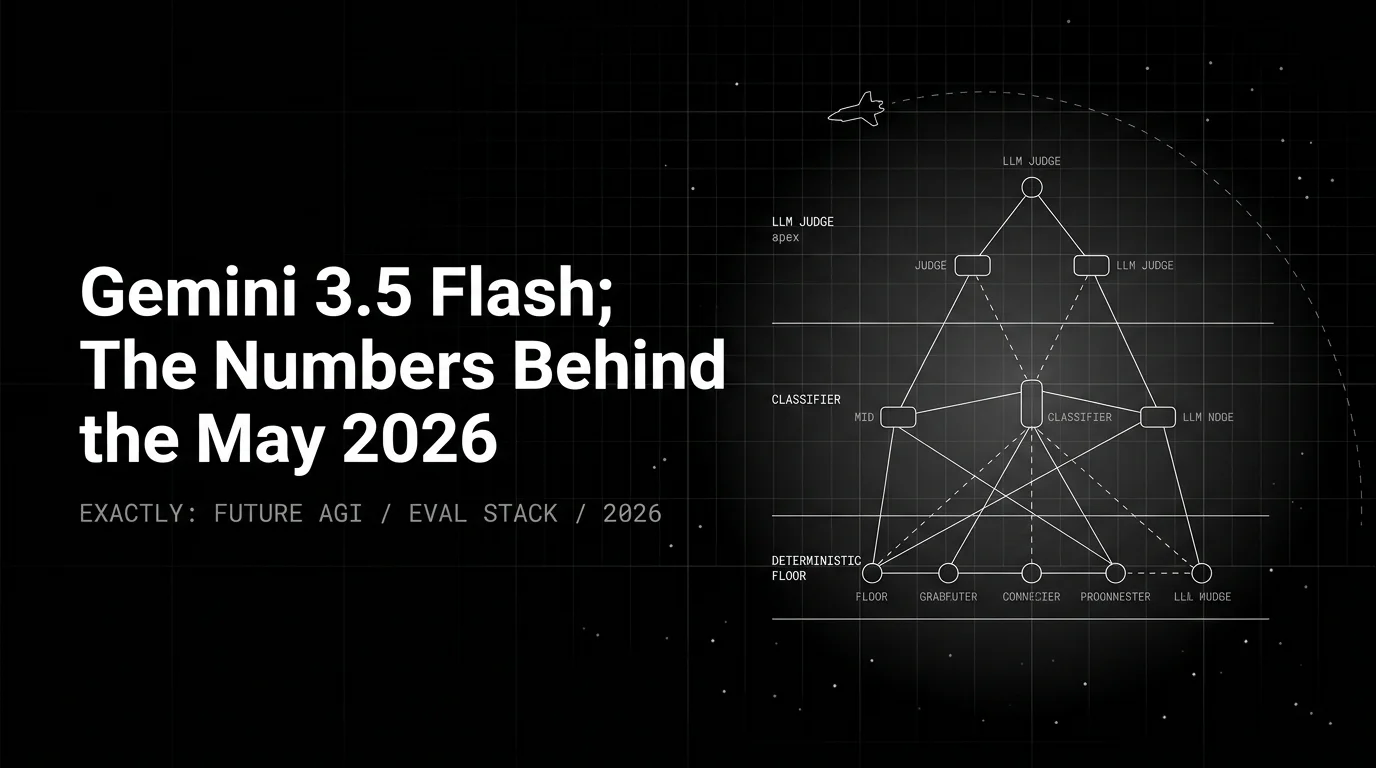
Gemini 3.5 Flash dropped today at Google I/O 2026. The 8 benchmark numbers that matter, $1.50/$9 pricing breakdown, and what to instrument before you swap.

Best LLMs May 2026: compare GPT-5.5, Claude Opus 4.7, Gemini 3.1 Pro, and DeepSeek V4 across coding, agents, multimodal, cost, and open weights.
