Best 5 AI Guardrails for Retail AI Applications in 2026
Five AI guardrails platforms for retail: returns chatbots, recommendation engines, PDP generation, dynamic pricing, conversational commerce. FTC, PCI-DSS.
Table of Contents
Updated May 2026. A returns chatbot at a mid-market retailer was prompt-injected for nine days. The bot quoted a 30-day refund window the company has never offered. The dashboards stayed green. Customer-service ticket volume tripled before InfoSec tied the spike back to the template the model was completing. Across the same window, the PDP generator confidently stated a fabricated battery spec on a Tier-1 SKU, exactly the kind of factual claim FTC §5 and the 2023 Endorsement Guides update review under deceptive-acts doctrine. This post compares the five AI guardrails platforms retail teams should consider in 2026.
The pattern is the same across the returns chatbot, recommendation engine, PDP generation, conversational shopping, dynamic pricing copilot, and AI-generated reviews: single-vendor security platforms catch one class of attack, cloud-stack content filters catch one class of pattern, and gateway-with-guardrails closed-loop architecture catches the policy decision and keeps it linkable to the eval score that explains it. The five platforms below are ranked by what production teams ship to a CX review, an InfoSec review, and an FTC inquiry, not by vendor marketing.
What Are the Five Best AI Guardrails for Retail in 2026?
| # | Platform | Best for | Pricing model |
|---|---|---|---|
| 1 | Future AGI Protect | Closed-loop gateway-with-guardrails on a multi-provider fleet; guardrail decision linked to eval score in the same trace | Cloud + OSS self-host; Free + Pay-as-you-go; Boost/Scale/Enterprise add-ons |
| 2 | Lakera Guard | Vertical-anchored prompt-injection and jailbreak defense on text-only chat | Cloud SaaS + enterprise |
| 3 | NVIDIA NeMo Guardrails | Open-source policy-as-code teams running Colang in their own infra | Open source |
| 4 | AWS Bedrock Guardrails | Retailers whose model fleet is already on Bedrock | Per-policy / usage-based |
| 5 | Protect AI | ML-supply-chain-aware security teams | Open source + enterprise |
TL;DR
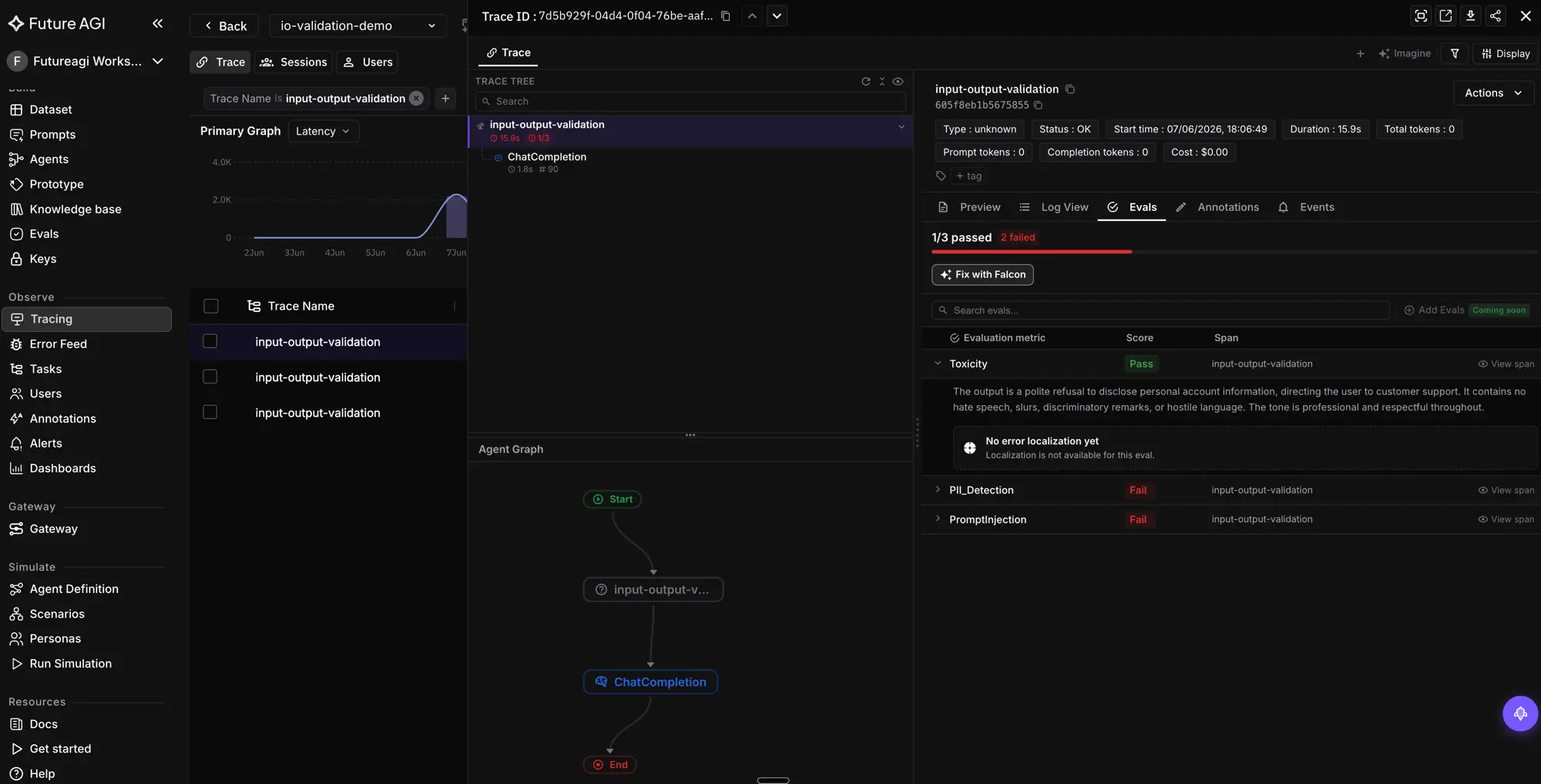
- Future AGI Protect for the Future AGI Protect model family (Gemma 3n + fine-tuned adapters per safety rule across Toxicity, Tone, Sexism, Prompt Injection, Data Privacy) with multi-modal text/image/audio coverage, ~67 ms p50 inline latency, write-side guard before cache poisoning, per-tenant policy, and SOC 2 Type II + HIPAA + GDPR + CCPA certified per the trust page; closed-loop with traceAI and ai-evaluation via
span_id - Lakera Guard for vertical-anchored prompt-injection and jailbreak detection on text-only chat surfaces; gandalf-bench is the cleanest named eval set in the LLM-security space
- NVIDIA NeMo Guardrails for open-source policy-as-code in Colang DSL, the strongest open-source guardrail story
- AWS Bedrock Guardrails for managed, cloud-native content filters plus PII redaction and grounding, the AWS-stack default
- Protect AI (Guardian + LLM Guard) for ML-supply-chain-aware security teams treating model integrity as the binding control
Why Are AI Guardrails Different for Retail Than for Generic LLM Apps?
Retail AI failure modes are revenue + brand + tribunal-precedent shaped. A returns chatbot prompt-injected into quoting a refund window the company doesn’t offer is a CX spike, an NPS hit, and (as the British Columbia Civil Resolution Tribunal held in Moffatt v. Air Canada (2024)) a tribunal-grade liability exposure. A PDP generator confidently fabricating a battery spec is an FTC §5 deceptive-acts review surface, and the September 2024 FTC Operation AI Comply sweep made clear AI-generated claims are reviewable under the same standards as human-written ones. None of these are caught by a generic LLM-security pitch alone, and none are caught by a content-filter feature inside a cloud platform.
Generic LLM guardrails (block jailbreak prompts, redact PII, log it, move on) fall short here for three reasons. First, the audience for a guardrail decision is multi-headed: the CX lead reading why the chatbot was blocked from quoting a policy, the InfoSec lead reviewing PCI-DSS scope under PCI-DSS v4.0 (full enforcement March 31, 2025), and the FTC reviewer working a complaint under FTC §5 and the Endorsement Guides 2023 update. Second, the failure modes that matter are silent at the user level (brand-voice drift, fabricated-claim hallucination, jailbroken competitor mentions) and only visible at the policy-rule and span level. Third, the evidence has to survive multiple obligations simultaneously: PCI-DSS scope reduction on payment-touching surfaces, GDPR Article 22 right-to-explanation when a guardrail blocks an automated decision affecting an EU customer, EU AI Act transparency on AI-disclosure (enforcement begins August 2 2026), CCPA / CPRA personalization audit trails, and ADA Title III accessibility on chatbot interfaces.
Most listicles in 2026 either pitch retail a single-vendor LLM-security platform (catches prompt injection, misses everything else) or treat guardrails as a content-filter feature inside a cloud platform (catches PII patterns, misses brand-voice and policy-rule misapplication). Guardrails platforms are what determine whether your returns chatbot stops misrepresenting your refund policy, whether your PDP generator stops fabricating product specs, and whether your audit trail clears the next FTC inquiry.
Where things get thin in 2026 is the gap between a vertical-anchored security pitch and a closed-loop architecture that keeps every guardrail decision linked to the trace span that produced it and the eval score that would have explained it. Future AGI Protect fills that gap with the Future AGI Protect model family: Gemma 3n + fine-tuned adapters across 5 safety rules (Toxicity, Tone, Sexism, Prompt Injection, Data Privacy), multi-modal text/image/audio, ~67 ms p50 text inline (arXiv 2510.13351), write-side guard so unsafe content is refused before it lands in cache, per-tenant policy, and SOC 2 Type II + HIPAA + GDPR + CCPA certified per the trust page. The guardrail decision attaches to the same span the LLM evaluation score lands on.
What Is the Future AGI Retail Guardrails Scorecard?
The Future AGI Retail Guardrails Scorecard is a five-dimension rubric for assessing whether an AI guardrails platform meets retail production requirements:
- Prompt-injection detection. Coverage rate against named eval sets (gandalf-bench, INJECAGENT, AdvBench). The platform has to detect direct, indirect, and tool-use injection patterns; aggregate coverage matters more than any single benchmark headline.
- PII / payment-data leak prevention (PCI-DSS v4.0 scope reduction). The platform has to redact card data, email, phone, and SSN at the gateway boundary so card data never reaches the upstream provider or any third-party LLM judge. PCI-DSS v4.0 compliance is per-deployment; the guardrail layer supports the scope-reduction control.
- Jailbreak resistance (FTC §5 truth-in-advertising compliance). The platform has to resist jailbreaks that produce fabricated product claims, off-policy refund quotes, or competitor mentions, which are the failure modes FTC §5 and the Endorsement Guides 2023 update review under deceptive-acts doctrine.
- Latency overhead (e-commerce session friction). Pre-completion pattern checks should add single-digit to low-double-digit ms at p50; LLM-judge guardrails are heavier and need to run async or cached on hot paths. p99 matters because tail latency drops conversion.
- Policy-rule maintainability + brand-voice consistency rules. The platform has to let a CX or brand lead author and version policy rules (banned phrases, required disclosures, brand-voice templates) without filing a vendor ticket. Drift detection on brand-voice fit across model upgrades is the canonical retail-CX failure mode.
Each platform below is scored against this rubric in the comparison matrix.
How Do These Five Platforms Compare on Capability?
| Capability | Future AGI Protect | Lakera Guard | NeMo Guardrails | AWS Bedrock Guardrails | Protect AI |
|---|---|---|---|---|---|
| Prompt-injection detection | Yes (Prompt Injection rule; multi-modal) | Yes (gandalf-bench-anchored, text-only) | Yes (Colang policy) | Yes (managed filter) | Yes (LLM Guard) |
| Built-in PII / payment-data redaction | Yes (Data Privacy rule, write-side) | Limited | BYO (Colang) | Yes (managed PII filter) | Yes (LLM Guard) |
| Brand-voice / tone policy | Yes (Toxicity rule + Tone evaluator + regex) | Limited (custom rules) | Yes (Colang) | Limited (denied topics only) | Limited |
| Multi-modal coverage (text/image/audio) | Yes (Gemma 3n base) | Text only | Text only | Limited (text + image) | Text only |
| Multi-provider routing | Yes (drop-in OpenAI-compatible) | Limited (proxy mode) | BYO | No (Bedrock-only) | BYO |
| Latency-overhead profile | ~67 ms p50 inline | Low (pattern-based) | Variable (Colang complexity) | Low (managed) | Low (LLM Guard) |
| Deployment model | Managed + hybrid local + BYOC | Managed cloud | Open source (self-host) | Managed (AWS) | Open source + enterprise |
How Did We Rank These Five Platforms?
The ranking criteria sit on top of the scorecard above. We weighted, in order:
- Closed-loop architecture. Does the guardrail decision attach to the trace span, and does the eval score that would have explained it link via the same identifier?
- Multi-modal coverage. Does the platform handle text, image, and audio surfaces (PDP image generation, voice IVR copilots), or only text?
- PCI-DSS scope reduction. Does the platform redact payment-relevant fields at the gateway boundary, before the upstream provider sees them?
- Latency overhead on hot paths. Is the pre-completion path single-digit-to-low-double-digit milliseconds, and is the LLM-judge path opt-in or async-able?
- Honest limitations. Does each platform name what it isn’t best at?
Where things get thin in this category: no guardrails platform ships PCI-DSS-certified-by-product, FTC-cleared, ADA-certified, and gandalf-bench-leading all at once. Each platform fits a specific buyer profile. Pick by where your binding constraint lives.
#1 Future AGI Protect: Best for Closed-Loop Gateway-with-Guardrails on a Multi-Provider Fleet
Best for: retail engineering teams running a multi-provider LLM fleet who want a drop-in OpenAI-compatible gateway with built-in guardrails and a closed loop with the eval and trace stack the same buyer is already running.
Key strengths:
- The Future AGI Protect model family: Gemma 3n + fine-tuned adapters across 5 safety rules (Toxicity, Tone, Sexism, Prompt Injection, Data Privacy), multi-modal text/image/audio, ~67 ms p50 text inline (arXiv 2510.13351). The Tone rule handles brand-voice and banned-term refusal; the Data Privacy rule strips card data and PII before the upstream provider sees it; the Prompt Injection rule blocks injection on both customer messages and retrieved review/PDP content.
- Write-side guard refuses unsafe content before it lands in cache, vector store, or upstream provider token logs. The same surface blocks indirect injection from poisoned PDP content or review text before the agent consumes it.
- Per-tenant policy so one Protect deployment can serve a returns chatbot, a PDP generator, and a dynamic-pricing copilot under three different rule sets without copying policy across SDK calls.
- Drop-in OpenAI-compatible gateway via the Agent Command Center; token budgeting, retry policies, and an admin control plane sit in front of every request, so the guardrail layer stays uniform across providers (OpenAI, Anthropic, Groq, Gemini, Bedrock) without per-provider code changes.
- Closed loop with
traceAIandai-evaluation: every gateway call generates a span, the guardrail decision attaches as a span attribute, downstream evaluator scoring (Toxicity, PII Detection, Hallucination, Tone, Factual Accuracy) links back viaspan_id. The policy decision that blocked a returns-chatbot response and the Tone score that would have flagged it as off-brand stay linkable in the same trace, queryable next to conversion, returns-rate, and CSAT in BI. - SOC 2 Type II + HIPAA + GDPR + CCPA certified. HIPAA BAA available on the Scale add-on. ISO 27001 in active audit.
- For brand-voice and factual-claim checks that need deeper semantic scoring, route through the LLM-judge path on Tone or Factual Accuracy; for the structural validators retail teams care about, the local heuristic path (20+ metrics including regex, JSON schema, BLEU/ROUGE, semantic similarity) keeps data local at zero API cost.
- Slots cleanly into the multi-provider LLM gateway patterns retail engineering teams already use.
Limitations:
- Opinionated prompt library. Fewer review-and-collaboration knobs than a dedicated prompt registry, by design. The trade is prompt, eval, and guardrail policy live in the same control plane so the audit trail doesn’t fragment across three vendors.
- agent-opt is opt-in. The self-improving optimizer loop runs per route, not as a default. The trade is the optimizer runs against real production traffic with eval scores joined to spans, not a synthetic corpus. Use-case fit: returns chatbots, recommendation engines, PDP generation pipelines, conversational shopping, dynamic pricing copilots, AI-generated review moderation. The wedge bites hardest when the buyer is already running an Evaluator + traceAI stack and wants the guardrail decision queryable in the same trace.
Pricing & deployment. Cloud + OSS self-host (Apache 2.0 SDK suite: traceAI, ai-evaluation, agent-opt). Free to get started; usage-based as you scale. Compliance and enterprise add-ons (SOC 2 Type II, HIPAA BAA, SAML SSO + SCIM) are clearly priced. Pricing. Local heuristic-metric path runs at zero API cost; LLM-judge path bills per evaluation.
Verdict: the closed-loop pick. If your binding constraint is keeping the guardrail decision and the eval score that explains it queryable in one trace across a multi-provider model fleet, Future AGI Protect is the cleanest single-vendor answer.
#2 Lakera Guard: Best for Vertical-Anchored Prompt-Injection Defense on Text Surfaces
Best for: retail teams whose binding constraint is prompt-injection / jailbreak detection on a text-only chat surface and who want the named-vendor LLM-security pick on the InfoSec procurement list.
Key strengths:
- Vertical-anchored on LLM security; the named-vendor leader, with gandalf-bench as the cleanest “named eval set” in the space.
- Strong managed-cloud detection coverage on direct injection, indirect injection, and known jailbreak patterns.
- Mature InfoSec-procurement story; SOC 2 documentation and named enterprise customers.
- Drop-in proxy mode for teams that don’t want to wire SDK calls.
Limitations:
- Less compelling outside the prompt-injection / jailbreak axis: brand-voice and policy-rule maintainability are not the headline pitch.
- Text-only. PDP image generation and voice IVR shopping surfaces fall outside the product.
- No native multi-provider gateway / routing surface; the proxy mode is single-provider-flavored.
- No closed loop with an eval/observability stack; teams that want guardrail decision and eval score on the same span have to wire that themselves.
- Closed-source; extending detection rules with retail-specific banned-claim lists is a vendor request, not a code change.
Use-case fit: customer-facing returns chatbots and conversational-shopping surfaces on text where the binding risk is prompt injection or jailbreak; pair with a separate brand-voice / policy layer.
Pricing & deployment: cloud SaaS + enterprise. Custom pricing.
Verdict: the vertical-anchored pick for prompt-injection defense on text; less complete on the brand-voice, multi-modal, and closed-loop axes a retail-CX-led buyer cares about.
#3 NVIDIA NeMo Guardrails: Best for Open-Source Policy-as-Code Teams
Best for: retail engineering teams who want policy logic in code, in their own infra, with a maintained DSL and who have the platform-engineering capacity to operate the stack.
Key strengths:
- Open-source Colang DSL for policy-as-code: the strongest open-source guardrail story in the category.
- Self-hostable; policy logic stays inside the customer-data boundary.
- Strong fit for engineering teams that want to author and version banned-term lists, brand-voice rules, and PDP factual-claim validators in the same repo as the agent code.
- Backed by NVIDIA; long-term maintenance signal is strong.
Limitations:
- Engineering lift is real; Colang is a learning curve for CX or brand leads who want to author policy without filing a PR.
- No managed PII / payment-data redaction out of the box; bring-your-own controls.
- No closed loop with a managed eval stack; teams have to wire the trace + eval-score linkage themselves.
- Less mature InfoSec-procurement story than Lakera or AWS.
Use-case fit: engineering-led commerce platforms, marketplaces, and DTC engineering teams that want guardrails in their own repo, in code.
Pricing & deployment: open source (self-host).
Verdict: the open-source policy-as-code pick. Strong if engineering owns the guardrail surface end-to-end; less compelling if a CX or brand lead needs to author policy without engineering on the critical path.
#4 AWS Bedrock Guardrails: Best for AWS-Stack Retailers
Best for: retailers whose model fleet is already on Bedrock and who want managed content filters + PII redaction + grounding with no separate vendor procurement.
Key strengths:
- Managed, cloud-native; content filters, PII redaction, denied topics, and grounding checks all configured from the AWS console.
- The AWS-stack default; no separate procurement, integrates with IAM and CloudWatch out of the box.
- Strong PII / payment-data redaction surface for PCI-DSS scope reduction on Bedrock-routed traffic.
- Mature managed-cloud security posture.
Limitations:
- Bedrock-only; no multi-provider routing surface for retailers whose fleet spans OpenAI, Anthropic, Groq, or Gemini.
- Brand-voice and tone policy is limited to denied-topics framing; richer brand-voice consistency rules are not the headline pitch.
- Vendor lock-in to AWS; teams that want to move guardrail policy to a different cloud have to re-author.
- Less open extensibility than NeMo Guardrails or Future AGI Protect’s plugin surface.
Use-case fit: Bedrock-anchored Tier-1 retailers and marketplaces where AWS is already the procurement floor.
Pricing & deployment: per-policy / usage-based; managed AWS.
Verdict: the AWS-stack default. Strong if Bedrock is the model fleet; less compelling for multi-provider retailers.
#5 Protect AI: Best for ML-Supply-Chain-Aware Security Teams
Best for: retail security teams whose binding constraint is ML-supply-chain integrity (model provenance, dependency scanning, and runtime LLM input/output filtering) rather than pure runtime policy enforcement.
Key strengths:
- Guardian + LLM Guard combination covers ML-supply-chain security alongside runtime LLM filtering, a positioning none of the other four platforms ship.
- Open-source LLM Guard offers a credible self-hostable runtime filter for engineering teams that want to start free.
- Strong InfoSec-narrative around model integrity and provenance.
- Active research and disclosure pipeline on LLM-supply-chain CVEs.
Limitations:
- Not retail-vertical-anchored; the supply-chain pitch is the headline rather than CX or brand-voice consistency.
- Less complete on multi-provider gateway routing or token-budgeting workflows retail engineering teams operate.
- Closed-loop integration with an eval/observability stack is BYO.
- Brand-voice / tone policy is custom-rule territory.
Use-case fit: retail InfoSec teams treating model provenance and ML-supply-chain integrity as the binding control; pair with a separate brand-voice / policy layer for CX surfaces.
Pricing & deployment: open source (LLM Guard) + enterprise (Guardian).
Verdict: the supply-chain pick. Strong if model provenance is the binding control; less compelling as a single-vendor answer for retail-CX guardrails.
Which Guardrails Platform Should Your Retail Team Pick?
| If you’re a… | Pick |
|---|---|
| Mid-market retailer running a multi-provider LLM fleet, wanting guardrail decisions queryable next to eval scores in one trace | Future AGI Protect |
| Catalog-generation team automating thousands of PDPs, needing brand-voice + factual-claim guardrails on a multi-provider fleet | Future AGI Protect |
| Tier-1 retailer with mature InfoSec procurement and a single-axis prompt-injection / jailbreak constraint on text chat | Lakera Guard |
| DTC brand with engineering capacity, wanting policy-as-code in their own repo | NVIDIA NeMo Guardrails |
| Engineering-led commerce platform on AWS Bedrock with the model fleet already there | AWS Bedrock Guardrails |
| Conversational-commerce vendor whose binding control is ML-supply-chain integrity | Protect AI |
| Voice IVR retail copilot or PDP image-generation surface needing multi-modal guardrails | Future AGI Protect (text + image + audio) |
Where Does Each Platform Earn Its Slot?
The five platforms above split the retail-AI-guardrails problem along different axes: closed-loop multi-modal gateway-with-guardrails on a multi-provider fleet (Future AGI Protect), vertical-anchored prompt-injection defense on text (Lakera), open-source policy-as-code (NeMo Guardrails), AWS-stack default (Bedrock), and ML-supply-chain integrity (Protect AI). For most retailers in 2026, the right answer is a layered stack: a closed-loop multi-modal gateway for the brand-voice + policy + eval-linkage workload, plus a specialist text-only prompt-injection detector when chat is the binding surface.
If a multi-provider LLM fleet, brand-voice + factual-claim guardrails, and a guardrail decision queryable next to the evaluator score in the same trace are the three constraints that bite hardest, Future AGI Protect is the workflow that fits, purpose-built for the post-Moffatt, post-Operation-AI-Comply retail-AI risk surface.
Related reading
Frequently Asked Questions
What's the difference between an AI gateway, an AI guardrails layer, and an AI evaluation platform for retail?
Which AI guardrail is best for catching prompt injection on a returns chatbot?
How do I keep an AI guardrails flow PCI-compliant when the chatbot can take payments?
Can an AI guardrails platform replace FTC §5 review of AI-generated marketing claims?
How much latency does an LLM guardrails layer add to an e-commerce session?
Do AI guardrails block fabricated product claims under FTC Endorsement Guides?
Five AI eval platforms for retail, recs, search, CS chatbots, PDP gen, dynamic pricing, conversational commerce. FTC, Moffatt, PCI-DSS v4, GDPR Art 22.

Senior-engineer comparison of the best AI agent guardrails platforms 2026: latency budgets, placement, deployment topology, vendor fit.

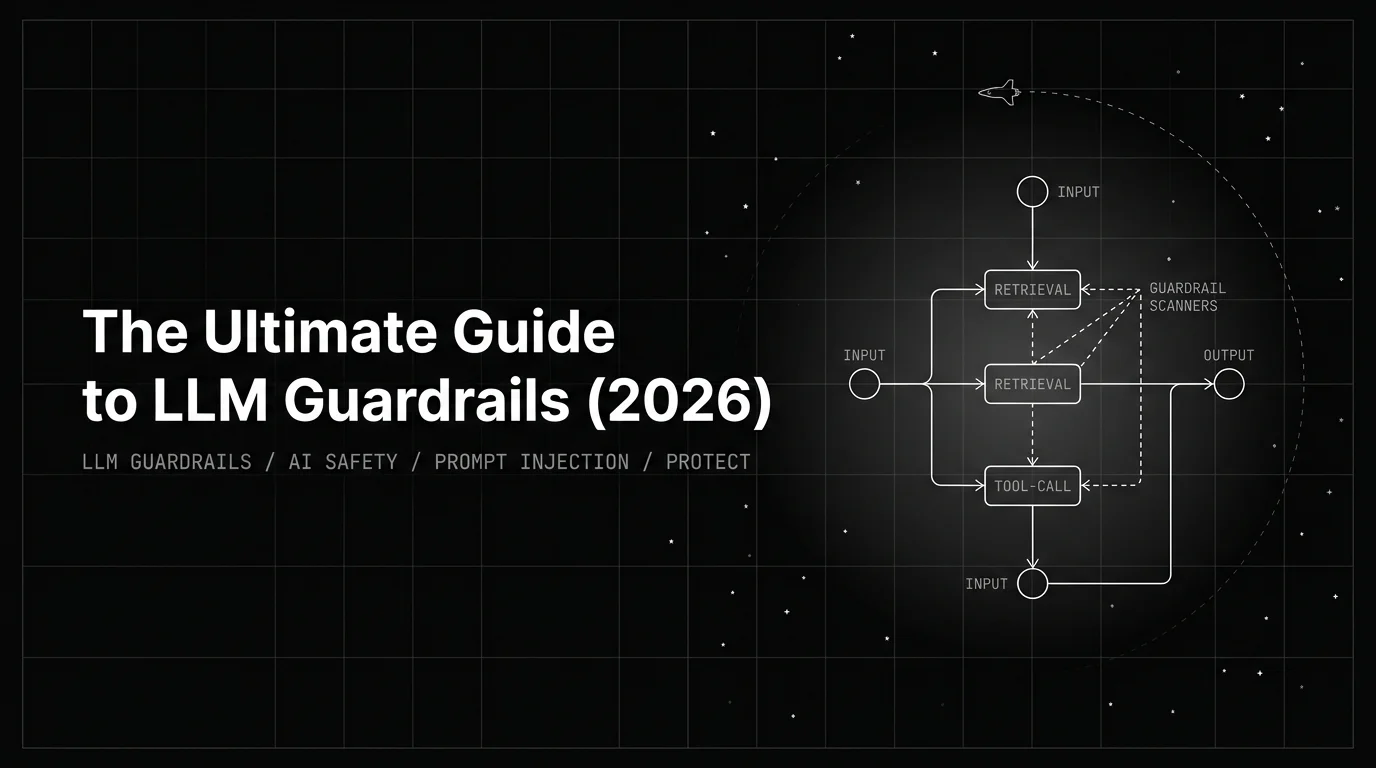
Senior-engineer guide to LLM guardrails: placement, 9 open-weight + 4 API backends, latency budgets, ensembles, precision/recall that actually catches.