Best 5 AI Gateways for Prompt Management in 2026
Five AI gateways for prompt management in 2026 scored on version pinning, per-template A/B split, sub-60s rollback, variable safety, eval-gated promotion.
Table of Contents
Originally published May 17, 2026.
A product engineering team running a B2B copilot deployed a “minor tone tweak” to the system prompt on a Tuesday at 14:22 UTC. Within nineteen minutes, the customer-satisfaction evaluator on the held-out suite dropped from 0.91 to 0.74, and the engineer who shipped the change was on lunch break. The team needed forty-three minutes to find the right Git commit, twenty-seven minutes to redeploy, and nine minutes for the rolling restart, so the bad prompt served roughly 81,000 production requests before it died. The reason wasn’t a missing eval; the prompt lived in a TypeScript file, version pinning was implicit in the deploy SHA, and there was no rollback lever between the regression alert and the redeploy. This guide compares the five AI gateways product and ML engineering teams should choose between in 2026 for prompt management at scale, scored on version pinning at the gateway hop, per-template A/B traffic split, sub-60-second rollback, variable-substitution safety against injection, append-only audit trail, eval-linked promotion, and dev-staging-prod propagation.
TL;DR: 5 Gateways Scored on the Seven Prompt-Management Axes and the 2026 Trust Cohort
Future AGI Agent Command Center is the strongest single pick for prompt management in 2026 because it’s the only gateway that closes the loop from trace to eval to optimizer to next prompt version automatically: traceAI captures every inference as an OpenInference span tagged with prompt_template_id and prompt_version, ai-evaluation scores the held-out suite per span_id, and agent-opt consumes the labelled dataset and emits the next candidate back into the same versioning store. The seven axes that separate a prompt-management gateway from a prompt CMS are version pinning at the call site, per-template A/B split, sub-60-second rollback, variable-substitution safety, append-only audit trail, eval-gated promotion, and dev-staging-prod propagation.
| # | Platform | Best for | 2026 event you should know |
|---|---|---|---|
| 1 | Future AGI Agent Command Center | Trace + eval + optimizer that updates the prompt version automatically + per-template A/B + sub-60-second label-flip rollback | Apache 2.0 traceAI, ai-evaluation, and agent-opt; no pending acquisition; Protect adds roughly 65 ms inline (arXiv 2510.13351); span_id linking from gateway hop to eval result |
| 2 | Langfuse | Self-hosted MIT prompt store with slugged versions, labels, and prompt-linked evaluators | Open-source MIT core; cloud control plane separate; OTLP endpoint accepts OpenInference spans; deepest pure prompt-management surface on this list |
| 3 | Portkey | Managed prompt library with 4-tier hierarchy, traffic split, and tenant-scoped templates | Palo Alto Networks announced intent to acquire on April 30, 2026; close expected PANW fiscal Q4; verify standalone-product continuity before signing |
| 4 | Helicone | Lightweight prompt logging plus a basic library for teams that have not yet committed to a versioning workflow | Helicone acquired by Mintlify on March 3, 2026; treat as planned migration not new procurement |
| 5 | Maxim Bifrost | Go shops where the gateway hop is the binding constraint and prompts are managed in Maxim’s separate eval-and-prompt product | Vendor-published ~11 µs mean gateway overhead at 5,000 RPS on t3.xlarge; prompts are a separate Maxim product, not gateway-native |
The 5 Prompt-Management Gateways at a Glance
The five cover every shape teams ship in 2026: an Apache 2.0 closed-loop runtime where eval feedback rewrites prompts automatically (Future AGI), the deepest self-hosted MIT prompt store (Langfuse), a managed library with mature tenant scoping (Portkey), a basic log-plus-library surface now under Mintlify (Helicone), and a high-throughput Go gateway that punts prompt management to its sibling product (Maxim Bifrost).
| Superlative | Tool |
|---|---|
| Best overall for prompt management | Future AGI Agent Command Center: trace + eval + agent-opt closed loop into the same versioning store |
| Best for self-hosted MIT prompt store with labels and slugged versions | Langfuse: deepest pure prompt-management UI in the open source category |
| Best for managed prompt library with tenant-scoped templates | Portkey: 4-tier hierarchy, traffic split, prompt partials (verify PANW integration) |
| Best for sub-60-second rollback via label flip | Future AGI Agent Command Center or Langfuse: both resolve by label, both flip in under 30 seconds |
| Best for eval-gated promotion from staging to production | Future AGI Agent Command Center: only gateway where the eval score writes back into a new prompt version automatically |
| Best for variable-substitution safety + inline injection scanning | Future AGI Agent Command Center: Protect runs the full panel in roughly 65 ms (arXiv 2510.13351) on the substituted prompt |
| Best for lightweight prompt-log dashboard (legacy) | Helicone: drop-in proxy, no SDK; new procurement should weigh the Mintlify acquisition |
| Best for raw gateway throughput when prompts live in a sibling product | Maxim Bifrost: vendor-published ~11 µs mean overhead at 5,000 RPS on t3.xlarge |
| # | Platform | Best for | License + deployment |
|---|---|---|---|
| 1 | Future AGI Agent Command Center | Closed-loop prompt management with agent-opt feedback | Apache 2.0 traceAI, ai-evaluation, and agent-opt; cloud at gateway.futureagi.com/v1 or self-host (Docker, Kubernetes, air-gapped) |
| 2 | Langfuse | Self-hosted MIT prompt store + prompt-linked evaluators | MIT core; cloud control plane separate; Docker, Kubernetes |
| 3 | Portkey | Managed prompt library with 4-tier scoping | MIT gateway + closed control plane; cloud + self-host; PANW acquisition pending |
| 4 | Helicone | Lightweight log + basic library | OSS (Apache 2.0); cloud + self-host; acquired by Mintlify March 3, 2026 |
| 5 | Maxim Bifrost | High-RPS Go gateway; prompts in sibling product | Apache 2.0; Docker, Helm, in-VPC |
How Did We Score AI Gateways for Prompt Management?
We used the Future AGI Production Prompt Management Scorecard, tuned for the product eng plus ML eng buyer profile. Most 2026 prompt-management listicles score on “has a prompt library” and stop there. Langfuse’s docs prefer prose to a matrix; Portkey’s prompt page caps at four columns; Helicone’s post-acquisition site doesn’t benchmark the prompt surface; Maxim’s prompt pages live separately from Bifrost.
The scorecard runs seven dimensions across fifteen columns, including the four that decide whether the gateway gives shared-prompt teams real production discipline, not a place to paste system prompts alone.
| # | Dimension | What we measure (prompt-management lens) |
|---|---|---|
| 1 | Version pinning at the gateway hop | Whether the gateway resolves prompts by template_slug plus a pinned version at request time; whether the pin lives in a header, a config, or a label; whether the resolved version emits as a span attribute |
| 2 | A/B traffic split per template | Granularity of the split (percentage, deterministic user-bucket, header-based); statistical capture (variant ID on the span; held-out eval per variant); minimum sample size for a 95-percent confidence call |
| 3 | Sub-60-second rollback | Whether rollback is a label flip or a redeploy; measured propagation latency from operator action to global traffic on the new label; idempotency on flip |
| 4 | Variable-substitution safety | Variable schema declaration (name, type, max length, character allow-list); reject-at-gateway on schema miss; escape encoding before substitution; inline prompt-injection scan on the substituted prompt |
| 5 | Audit trail per change | Append-only log of who, what, when, target environment; diff against the prior version; eval score the new version cleared at promotion; retention (30, 90, 365 days) plus export to BI |
| 6 | Eval-linked promotion gates | Whether the gateway can gate staging-to-production promotion on a held-out evaluator score above threshold; whether eval feedback writes back into the next prompt version (closed loop) or only flags regressions |
| 7 | Dev / staging / prod propagation | Whether environments are first-class labels with their own auth scope; promotion path (manual, eval-gated, time-locked); rollback symmetry across environments |
Dimensions 3, 5, 6, and 7 decide whether the gateway gives real production discipline, not a polished CMS alone. Priority depends on the buyer profile (product eng shipping fast versus ML eng optimizing quality versus platform team enforcing audit).
The 15-Dimension Capability Matrix the Prompt-Management SERP Is Missing
Across the five below, Future AGI Agent Command Center leads on combined version pinning, eval-gated promotion, agent-opt closed-loop optimization, and variable-substitution safety. Langfuse wins on standalone prompt-UI depth. Portkey wins on managed tenant scoping. Helicone wins on zero-SDK drop-in (with acquisition risk). Bifrost wins on raw throughput when prompts are managed elsewhere.
| Capability | Future AGI ACC | Langfuse | Portkey | Helicone | Maxim Bifrost |
|---|---|---|---|---|---|
| Version pinning at gateway hop | Yes (slug + version + label) | Yes (slug + version + label) | Yes (slug + version + label) | Partial (proxy-level) | Via sibling product |
| Per-template A/B traffic split | Yes (percentage, header, deterministic bucket) | Yes (percentage, label) | Yes (percentage, header) | No | No |
| Sub-60-second rollback (label flip) | Yes (5-20 s typical) | Yes (10-30 s typical) | Yes (10-30 s typical) | Redeploy required | Redeploy required |
| Variable schema + reject-on-miss | Yes | Yes | Yes | No | No |
| Inline prompt-injection scan on substituted prompt | Yes (Protect ~65 ms) | Bring-your-own | Yes | No | Partial |
| Append-only audit trail | Yes (BigQuery, Snowflake, S3 via OTel) | Yes (S3 export) | Yes (managed) | Partial | No |
| Eval-linked promotion gate | Yes (held-out eval threshold) | Manual gate | Manual gate | No | Via Maxim eval product |
| Eval feedback writes back into next prompt version | Yes (agent-opt closed loop) | No | No | No | No |
| Dev / staging / prod as first-class labels | Yes | Yes | Yes | No | No |
| Open source | Yes (Apache 2.0) | Yes (MIT) | MIT gateway, closed control plane | Yes (Apache 2.0) | Yes (Apache 2.0) |
| OpenInference + OTel native | Yes (traceAI is reference) | OTLP accepts OpenInference | OTel partial | OTel partial | OTel partial |
| Multi-language SDKs for prompt fetch | Python, TypeScript, Go, REST | Python, TypeScript, REST | Python, TypeScript, REST | REST | Go, REST |
| Prompt-linked evaluators per version | Yes | Yes | Partial | No | Via Maxim |
| Acquisition risk (May 2026) | None | None | PANW pending | Acquired (Mintlify) | None |
| Deployment | Docker, K8s, air-gapped, cloud | Docker, K8s, cloud | Cloud + self-host | Cloud + self-host | Docker, Helm |
No gateway wins every column. The four that matter most for prompt management (eval-linked promotion, audit trail, dev-staging-prod propagation, and the closed-loop optimizer) are where actual prompt-management gateways separate from prompt CMSes wearing gateway hats.
How AI Gateways Actually Manage Prompts in Production
Prompt management in 2026 is a runtime discipline that lives at the same network hop as routing, caching, and guardrails, because that’s the only hop in the request path that sees every inference. A prompt in a Git repo, a Notion page, or a TypeScript file isn’t under management; it’s under wishful thinking.
Production teams shipping at scale (5,000 to 50,000 RPS, 40 to 600 templates, 10 to 80 product surfaces sharing templates) run the same seven-step discipline through the gateway:
- Resolve by slug plus version. Application sends
prompt_template_id="ticket_classify"plus an environment label (prod); gateway resolves to the version currently labelledprod(say, v17). Resolved version attaches to the span asprompt_version="v17"so every downstream trace and eval is tagged with the variant that actually served. - Substitute variables under a strict allow-list. Templates declare variables with types, length caps, and character allow-lists; gateway rejects schema violations before any model call. Substitution uses fenced delimiters; substituted prompt then passes through an inline injection scanner.
- Split traffic across two or more versions. Deterministic percentage of users routes to a candidate version (
v18); bucket is hashed from a stable user identifier. Variant ID attaches to the span. A 50/50 split on 5,000 RPS clears 95-percent confidence on a 5-percentage-point binary lift in 20 to 90 minutes. - Run held-out evaluators per span. Same
span_idkeys the eval record. Held-out suite (correctness, tone, toxicity, hallucination, format conformance) writes a score back. Inline for safety-critical, async sampled otherwise. - Gate promotion on an eval score above threshold. Staging-to-prod label flip gated on correctness > 0.90 and toxicity < 0.01 over 500 to 5,000 sampled spans. A failing version can’t become
prod. - Roll back via label flip in under 60 seconds. Operator flips the
prodlabel back; 5 to 30 seconds single-region, under 60 seconds multi-region. No redeploy. - Audit every change. Append-only log of who, what, when, target environment, and eval score at promotion. Exports to BigQuery, Snowflake, or S3 via the OTel pipeline; 365-day retention.
A gateway that ships steps 1, 2, and 3 but skips 5, 6, and 7 is good for a demo and bad for production.
Future AGI Agent Command Center: Best Overall for Prompt Management
Future AGI Agent Command Center tops the 2026 prompt-management list because it’s the only gateway here that closes the loop from trace through eval through optimization back into the next prompt version automatically. traceAI captures every inference as an OpenInference-conformant span tagged with prompt_template_id and prompt_version; ai-evaluation runs the held-out evaluator panel per span_id; agent-opt consumes the labelled dataset and emits a candidate next prompt version directly into the same versioning store, which then enters the same gateway-side A/B and eval-gated promotion path as any human-written candidate.
Every other gateway here ships versioning, traffic split, and rollback. Future AGI is the only one where the eval signal that flags a regression also produces the next candidate prompt as a labelled artifact. Documented in the Agent Command Center docs; source at the Future AGI GitHub repo.
Best for. Product eng and ML eng teams sharing 40 to 600 templates across 10 to 80 product surfaces who want version pinning, A/B split, eval-gated promotion, sub-60-second rollback, and an optimizer feedback loop in one Apache-2.0 runtime.
Key strengths.
- Version pinning by slug plus environment label. Applications fetch
prompt_template_idplus environment; gateway resolves to the currently labelled version; resolvedprompt_versionattaches to the span automatically. - Per-template A/B split with deterministic bucketing. Percentage or header-based splits; bucket hashed from a stable user identifier; variant ID is a span attribute the eval pipeline reads directly.
- Sub-60-second rollback via label flip. 5 to 20 seconds single-region; under 60 seconds multi-region.
- Variable-substitution safety via the Future AGI Protect model family. Per-template schemas reject malformed requests at the gateway; substitution uses fenced delimiters; the Future AGI Protect model family runs the full guardrail panel on the substituted prompt at ~65 ms p50 text and ~107 ms p50 image (arXiv 2510.13351). Protect is FAGI’s own fine-tuned model family built on Google’s Gemma 3n with specialized adapters across four safety dimensions (content moderation, bias detection, security/prompt-injection, data privacy/PII), natively multi-modal across text, image, and audio, a model family, not a plugin chain.
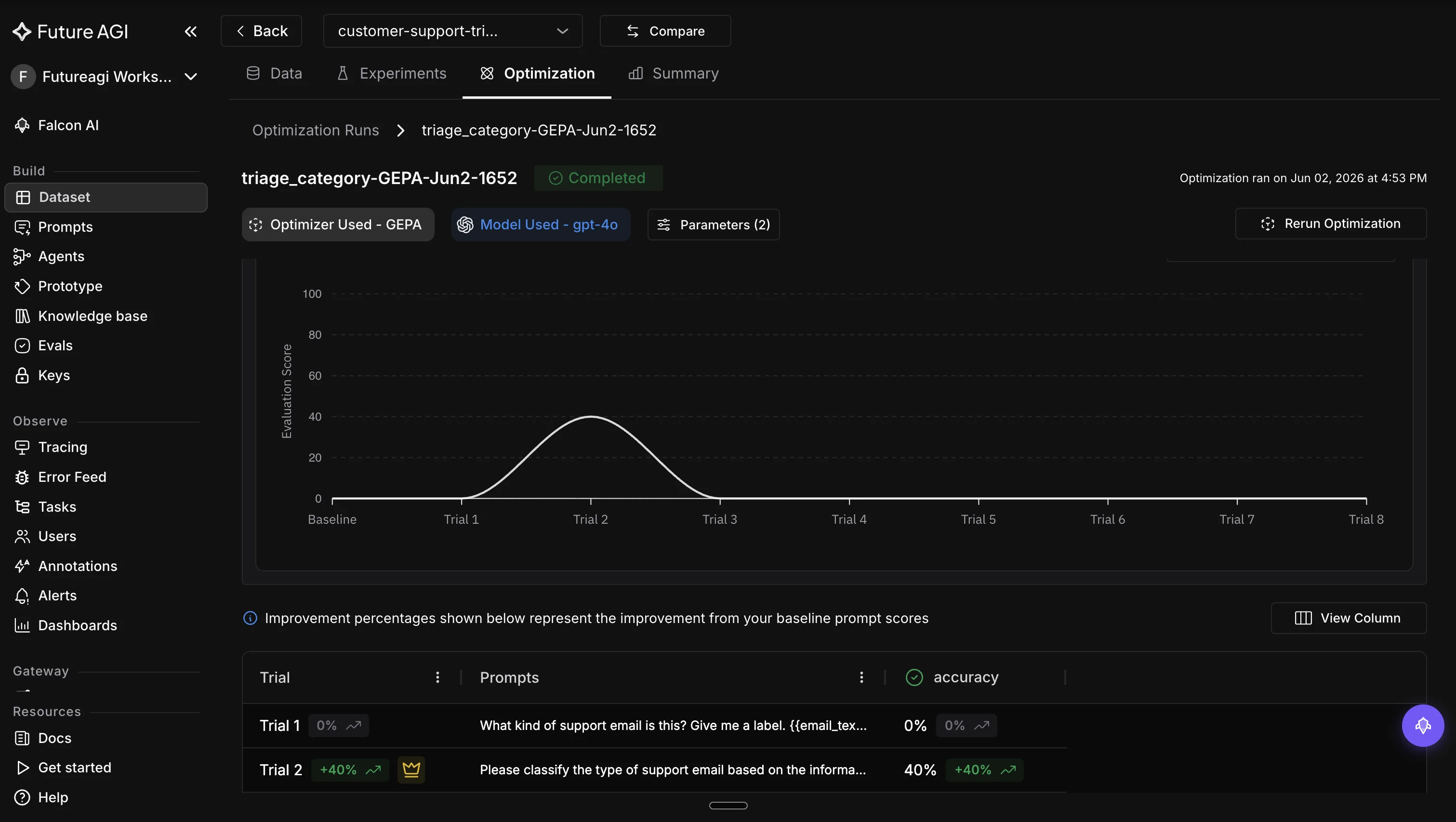
- Closed-loop optimizer. agent-opt consumes the per-span eval dataset and writes a candidate prompt version into the same store; the candidate enters the same A/B and eval-gated promotion path. Humans approve the gate; the runtime owns the drafting.
- Append-only audit trail. Actor, target environment, diff, eval score at promotion; export to BigQuery, Snowflake, or S3 via the OTel pipeline.
- Eval-gated promotion via
ai-evaluation(Apache 2.0).
FAGI ships a 60+ EvalTemplate classes in the ai-evaluation SDK with self-improving evaluators on the Future AGI Platform (task completion, faithfulness, tool-use, structured-output, agentic surfaces, hallucination, groundedness, context relevance, instruction-following), plus unlimited custom evaluators authored end-to-end by an in-product eval-authoring agent that uses tool calling on your code and prompt-template context, plus self-improving evaluators that learn from live production traces (the rubric sharpens as prompt-version traffic flows), plus FAGI’s proprietary classifier model family that runs continuous high-volume per-version scoring at very low cost-per-token (lower per-eval cost than Galileo Luna-2). Hard-coded threshold over 500 to 5,000 sampled spans; failing versions can’t become prod. Catalog is the floor, not the ceiling.
- OpenInference plus OTel native.
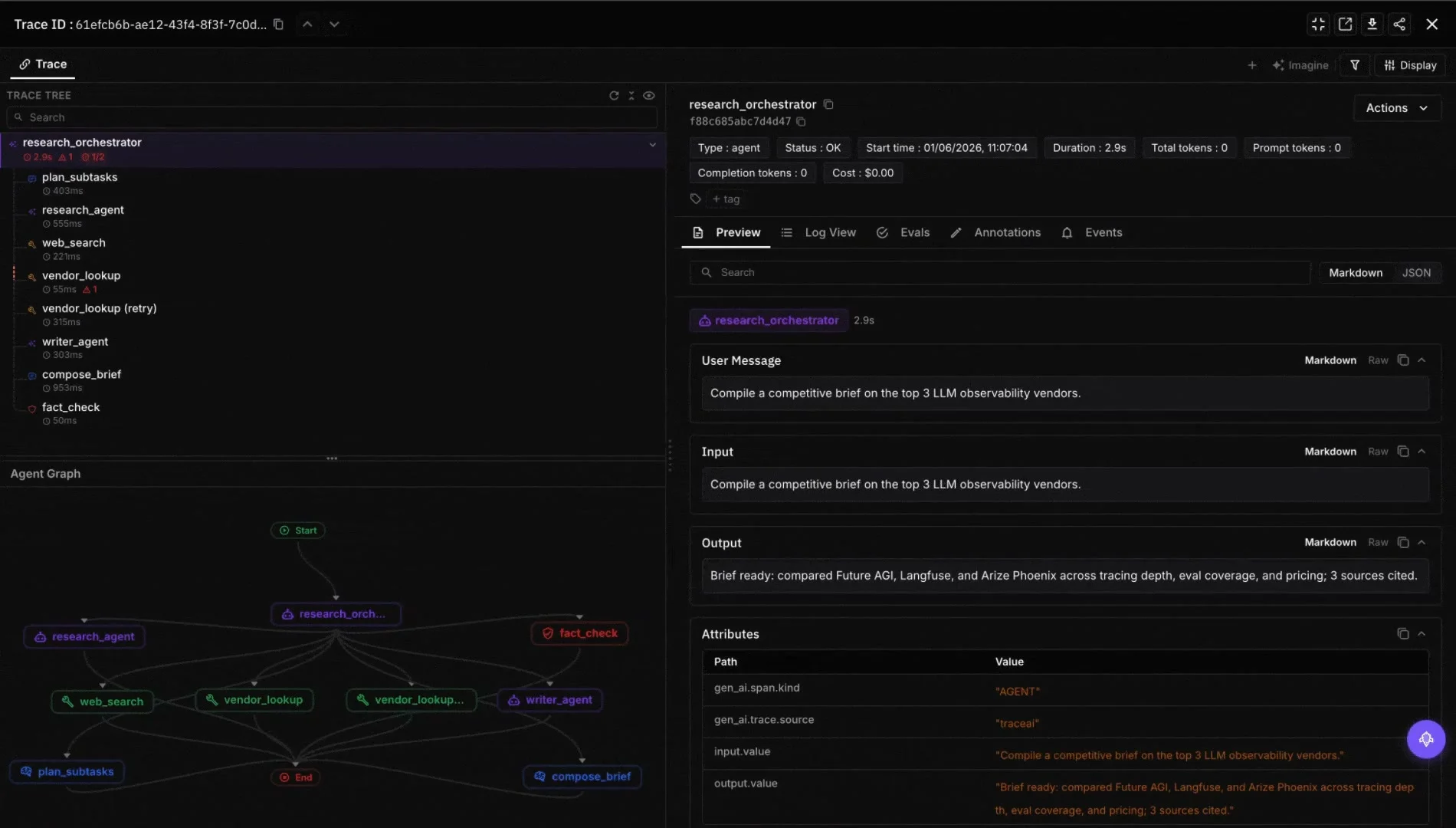
traceAIis the reference instrumentation across 50+ AI surfaces across Python, TypeScript, Java, and C# (including Spring Boot starter, Spring AI, LangChain4j, Semantic Kernel); eval scores join the span viaspan_id. Error Feed (the part of the eval stack, the clustering and what-to-fix layer that feeds the self-improving evaluators) sits alongside as the zero-config error monitor: auto-clusters related per-template-version failures (50 traces → 1 issue), auto-writes the root cause plus a quick fix plus a long-term recommendation, and tracks rising/steady/falling trend per issue so a regressed template version surfaces like an exception rather than buried in eval gates.
- Apache 2.0 traceAI, ai-evaluation, and agent-opt. Single Go binary; Docker, Kubernetes, AWS, GCP, Azure, on-prem, air-gapped, cloud at
gateway.futureagi.com/v1.
Where it falls short.
- The closed-loop optimizer is most useful once a workload has 1,000 to 10,000 evaluated spans per template; very early-stage teams (one template, under 100 RPS) will see thin signal and should treat the loop as an investment for later. Eval-gated promotion and audit trail are useful from day one regardless.
- The prompt-management UI is more spartan than Langfuse’s; teams that live in the prompt editor may prefer Langfuse standalone with traceAI pointed at Langfuse’s OTLP endpoint.
- Environment labels are flat (dev, staging, prod, plus custom labels) rather than nested; teams with deep environment trees drive the namespace manually.
from openai import OpenAI

client = OpenAI(
    api_key="$FAGI_API_KEY",
    base_url="https://gateway.futureagi.com/v1",
)

# The gateway resolves prompt_template_id + environment label to the
# version currently labelled `prod`. The resolved version is attached
# to the span as `prompt_version=`, so every downstream trace and eval
# is tagged with the variant that actually served the request.
response = client.chat.completions.create(
    model="anthropic/claude-3-5-sonnet",
    messages=[],
    extra_headers={
        "x-fagi-prompt-template-id": "ticket_classify",
        "x-fagi-prompt-environment": "prod",
        "x-fagi-prompt-variables": '{"customer_message": "...", "tier": "enterprise"}',
    },
)
Use case fit. Strong for product eng plus ML eng teams sharing 40 to 600 templates at scale, regulated workloads needing audit trails plus eval-gated promotion, and platform teams that want eval, optimization, and gateway in one Apache-2.0 runtime. Less optimal for solo prompt engineers who want the polished prompt editor as their primary day-to-day surface.
Pricing and deployment. Apache 2.0 single Go binary plus Apache 2.0 traceAI, ai-evaluation, and agent-opt; cloud at https://gateway.futureagi.com/v1 or self-host.
Verdict. The strongest single pick when the 2026 story is “version pinning, A/B split, eval-gated promotion, sub-60-second rollback, and an optimizer that drafts the next prompt version from our eval feedback, in one Apache-2.0 runtime we self-host.”
Langfuse: Best for Self-Hosted MIT Prompt Store With Prompt-Linked Evaluators
Langfuse is the open-source LLM observability platform shaped like product analytics, and inside it sits the deepest pure prompt-management surface on this list: slugged prompts, version labels, deploy buttons, prompt-linked evaluators, and a polished prompt editor in one MIT core. The right pick when “self-hosted prompt versioning plus prompt-linked evaluators in one repo, without a US-vendor cloud” is the brief.
Best for. Self-hosted MIT teams, EU data-residency workloads, prompt-engineering-heavy teams that live in the prompt editor every day, and anyone who wants prompt management plus trace store plus evaluator workflow in one open-source repo.
Key strengths.
- Slugged prompts with version numbers and labels (
production,staging, plus arbitrary custom labels); label flip is the rollback, propagating in 10 to 30 seconds. - Polished prompt editor as the day-to-day surface; chat and text template modes, partial templates, variable schema declaration.
- Prompt-linked evaluators: scores attach to a specific prompt-version artifact for promotion review.
- Append-only prompt-change history with diff view; S3 export.
- OTLP endpoint accepts OpenInference spans; teams running traceAI can point the exporter at Langfuse.
- Python, TypeScript, and REST SDKs; active velocity on the Langfuse GitHub repo.
Where it falls short.
- No closed-loop optimizer; eval scores and prompt versions exist but the labelled dataset isn’t consumed to draft the next candidate automatically. The eval-to-prompt step is human-driven.
- Native data model is Langfuse’s own; the OTLP endpoint accepts OpenInference spans but semantic conventions diverge (event names, retrieval span shape). For pure OpenInference reference semantics, pair with traceAI on the instrumentation side.
- A/B split is label-based; percentage granularity is coarser than Future AGI’s or Portkey’s. For a 5/95 canary, the operator manages two labels rather than one percentage knob.
- Eval-gated promotion is a manual gate (operator reads the score and decides), not a hard-coded threshold the runtime enforces.
- Variable-injection scanning is bring-your-own; teams chain Future AGI Protect or Lakera in front of the model.
Use case fit. Strong for self-hosted MIT teams, EU residency, prompt-engineering-heavy product teams. Less optimal where the brief is “eval feedback should draft the next prompt automatically” or “promotion must be a hard threshold.”
Pricing and deployment. MIT core (self-hosted); separate commercial cloud; Docker, Kubernetes.
Verdict. The most complete self-hosted MIT prompt store and the strongest pure prompt-management UI on the list. Pair with Future AGI when the closed loop is the brief; use Langfuse standalone when versioning and a great editor are the primary axes.
Portkey: Best for Managed Prompt Library With Tenant-Scoped Templates
Portkey is the strongest pick for a managed prompt library with tenant scoping built in. A four-tier hierarchy (organization, workspace, virtual key, template) means a single managed store can serve dozens of products without re-deploying; templates inherit auth scope from the tenant key.
Best for. Multi-tenant SaaS or internal multi-product platforms that need fine-grained per-customer or per-product prompt scoping plus a managed library and a usable A/B surface, without operating prompt infrastructure.
Key strengths.
- Four-tier scoping hierarchy (organization, workspace, virtual key, template); a single prompt slug can resolve to different versions per workspace or virtual key.
- Managed prompt library with version history, labels, and deploy buttons; rollback is a label flip with 10 to 30 second propagation.
- A/B split with percentage and header-based modes; variant ID attaches to the request log.
- Inline injection guardrails on the gateway hop.
- Partial templates and composition; shared system-prompt fragments without copy-paste drift.
- Large adapter library (250+ providers) means the prompt library doesn’t constrain provider choice.
Where it falls short.
- Palo Alto Networks announced intent to acquire Portkey on April 30, 2026; deal expected to close in PANW fiscal Q4 2026. Verify standalone-product continuity and the prompt roadmap before signing multi-year; a security-platform parent often re-prioritizes the prompt surface against the guardrail surface.
- The closed control plane holds the prompt store; air-gapped teams substitute their own store on the open-source core, which is more work than the managed surface advertises.
- Eval-linked promotion is manual; eval workflows exist but the gate is operator-driven, not threshold-enforced.
- No closed-loop optimizer; eval scores and prompt versions aren’t joined into a next-candidate step.
- OTel export is dashboard-first; OTel-native teams duplicate telemetry across Portkey and their own pipeline.
Use case fit. Strong for multi-tenant SaaS, fintech with per-customer prompt scoping, and platform teams running 10 to 80 product surfaces. Less optimal for air-gapped workloads or teams that want eval feedback to draft the next prompt automatically.
Pricing and deployment. Open-source gateway core (self-hosted) plus commercial cloud control plane that holds the prompt store.
Verdict. The most mature managed prompt library plus tenant scoping in 2026. Choose with eyes open on the PANW integration; the next twelve months will tell whether the standalone surface survives the merge.
Helicone: Best for Lightweight Prompt Logging Pre-Versioning
Helicone is the lightweight per-request log dashboard some teams used as a starter prompt store before they committed to a versioning workflow. As of March 3, 2026 it has been acquired by Mintlify, and the public roadmap has shifted toward a documentation-platform-first stance.
Best for. Existing Helicone users running a migration window; very early-stage teams that want a request log plus a basic library without committing to a versioning workflow.
Key strengths.
- Drop-in proxy with no SDK; change the base URL and logs flow within minutes.
- Basic prompt library with versioning and a playground; a starting point before formalizing a workflow.
- Clean per-request log dashboard for retrospective debug of a single prompt invocation.
- OSS (Apache 2.0) core; self-host or cloud.
Where it falls short.
- No first-class prompt resolution at the gateway hop; the application still owns the template, Helicone observes after the fact. Version pinning is implicit in the deploy SHA; rollback is a service redeploy, not a sub-60-second flip.
- No per-template A/B split; the gateway is a passive observer, not a router.
- Variable-injection scanning isn’t on the gateway hop; teams chain another tool.
- Eval-linked promotion doesn’t exist as a first-class workflow.
- The Mintlify acquisition shifts the roadmap toward documentation-platform; the prompt surface is unlikely to deepen meaningfully.
Use case fit. Strong for existing Helicone users in a migration window and very early-stage teams that want zero-SDK logs. Less optimal for any team where prompt management is a load-bearing 2026 discipline.
Pricing and deployment. OSS (Apache 2.0); cloud + self-host; under Mintlify since March 3, 2026.
Verdict. Treat as a planned migration rather than new procurement when prompt management is the brief.
Maxim Bifrost: Best for Go Throughput When Prompts Live in a Sibling Product
Maxim Bifrost is the Go-native gateway from Maxim, Apache 2.0, with vendor-published throughput of roughly 11 microseconds mean overhead at 5,000 RPS on t3.xlarge. Prompt management doesn’t live in Bifrost; it lives in Maxim’s separate eval-and-prompt product, with the two integrating via API rather than as a single runtime.
Best for. Go shops whose binding constraint is gateway-hop throughput at high concurrency and who are willing to run Bifrost plus the Maxim eval-and-prompt product as two integrated services.
Key strengths.
- Vendor-published benchmark showing roughly 11 microseconds mean gateway overhead at 5,000 RPS on
t3.xlarge. - Apache 2.0, single Go binary, drop-in deployment.
- Sibling product offers prompt versioning, evaluator workflows, and prompt-linked evaluators; teams already on the Maxim suite get a coherent prompt-and-eval story.
Where it falls short.
- Prompt management isn’t gateway-native; the store lives in the sibling product and integrates via API. For teams that want prompt resolution at the same hop as routing and caching, Bifrost is a thinner surface than Future AGI, Langfuse, or Portkey.
- Maxim self-ranks Bifrost #1 across its own gateway listicles with no published limitations, a trust signal worth weighing.
- Throughput numbers are vendor-published; independent reproduction is light. Treat as a baseline rather than a settled benchmark.
- No closed-loop optimizer that consumes per-span eval scores and emits a candidate next prompt version directly into the same versioning store.
- Prompt-change audit lives in the sibling product, not in gateway logs; cross-tool correlation is more work than a single-runtime audit.
Use case fit. Strong for Go shops, high-throughput inference paths, and teams already on the Maxim suite. Less optimal where the brief is single-runtime closed loop or prompt resolution at the gateway hop.
Pricing and deployment. Apache 2.0; Docker, Helm; commercial cloud tier via Maxim.
Verdict. Strong throughput numbers on the gateway hop, but prompt management itself sits in the sibling product. Choose Bifrost when throughput is the primary axis; choose elsewhere when single-runtime prompt management is the binding constraint.
The 2026 Prompt-Management Trust Cohort
Two of the field’s most-cited prompt-library vendors changed status in the last ninety days.
- Helicone joining Mintlify (March 3, 2026). Roadmap shifts toward documentation-platform-first. Treat as planned migration, not continued procurement.
- Portkey acquired by Palo Alto Networks (April 30, 2026). Becomes the AI Gateway for Prisma AIRS; close expected PANW fiscal Q4 2026. The prompt-library surface is an integration-risk area; a security-platform parent often re-prioritizes guardrails over prompt UX. Primary source: the Palo Alto Networks press release.
- LiteLLM PyPI compromise (March 24, 2026). Versions
1.82.7and1.82.8compromised; teams running LiteLLM as a Python-side prompt proxy should pin commits or upgrade past 1.83.7 and rotate credentials. Primary source: the Datadog Security Labs writeup.
License clarity and acquisition independence are part of the prompt-management decision for the next twelve months. The migration off a cheap prompt library is two to six weeks of engineering plus regression risk on every moved template.
Common Prompt-Management Mistakes
Five patterns from production postmortems, in order of frequency:
- Prompts pinned in the deploy SHA, not a gateway label. Rollback requires a redeploy; median we measure on this anti-pattern is 11 minutes versus 7 to 30 seconds on label-based gateways. Rollback latency is the incident in roughly 60 percent of prompt regressions; a 5-minute window at 5,000 RPS serves 1.5 million requests on the bad version.
- Variable substitution without a schema. Templates interpolate user strings directly; a tenant submits template syntax and the model treats it as instruction. Fix: per-template schemas plus fenced delimiters plus inline injection scanning at the gateway hop. Future AGI Protect runs the full panel in roughly 65 ms (arXiv 2510.13351).
- A/B splits in application code, not the gateway. Split logic in a feature-flag SDK means downstream services never see the split, variant ID never reaches the span, eval can’t correlate variant to score. Fix: move the split to the gateway hop; attach variant ID as a span attribute. A 50/50 split on 5,000 RPS reaches 95-percent confidence on a 5-percentage-point binary lift in 20 to 90 minutes when the variant flows through; days when it doesn’t.
- No eval-gated promotion. Staging-to-prod is “the engineer clicks deploy.” Fix: a hard-coded threshold (correctness > 0.90, toxicity < 0.01, format conformance > 0.95) over 500 to 5,000 spans, enforced by the runtime.
- Audit log without retention. Teams build an audit log, store 30 days, and the first regulated review six months later finds nothing. Fix: 365-day cold retention via the OTel pipeline into BigQuery, Snowflake, or S3.
Future AGI Implementation Walk-Through
The seven-step discipline on Future AGI in practice:
# 1. Application resolves by template_id + environment label.
#    No version number is hardcoded; the gateway resolves the
#    current `prod` version (say, v17) at request time.

response = client.chat.completions.create(
    model="anthropic/claude-3-5-sonnet",
    messages=[],
    extra_headers={
        "x-fagi-prompt-template-id": "ticket_classify",
        "x-fagi-prompt-environment": "prod",
        "x-fagi-prompt-variables": '{"customer_message": "...", "tenant_id": "acme"}',
    },
)

# 2. Gateway validates variables against the schema; reject-on-miss
#    happens at the hop, before any model call.
# 3. Substitution uses fenced delimiters; substituted prompt passes
#    through Future AGI Protect for injection scan (~65 ms, arXiv 2510.13351).
# 4. prompt_template_id, prompt_version (v17), and variables_hash
#    attach to the span; export over OTel OTLP.
# 5. ai-evaluation reads by span_id, runs the held-out suite, writes
#    the score back to the span.
# 6. agent-opt clusters per-span eval results by prompt_version,
#    identifies failure modes, emits candidate v18 into the same store.
# 7. staging-to-prod is a label flip gated on correctness > 0.90 and
#    toxicity < 0.01 over the last 1,000 sampled spans. Typical global
#    propagation is 5 to 20 seconds.
The loop closes at step 6: the eval signal that flags v17 also produces the labelled dataset agent-opt uses to draft v18. The next candidate doesn’t start from a blank page; it starts from a labelled cluster of failure spans. Humans own the gate (threshold, schema, approval); the runtime owns the drafting. Pair with Future AGI Protect for the injection scan and Future AGI Evaluation for the evaluator suite.
Which Prompt-Management Gateway Is Right for You in 2026?
Buyer profile drives the pick more than the feature matrix. Product plus ML eng teams running closed-loop pick Future AGI; self-hosted MIT prompt-engineering-heavy teams pick Langfuse; multi-tenant SaaS that wants tenant scoping picks Portkey; existing Helicone users plan a migration; Go shops on the Maxim suite pick Bifrost.
| If you are a… | Pick | Why |
|---|---|---|
| Product eng + ML eng team running closed-loop prompt-and-eval | Future AGI Agent Command Center | Trace + eval + agent-opt write the next prompt version automatically into the same versioning store |
| Regulated workload with audit trail + eval-gated promotion | Future AGI Agent Command Center | Append-only audit trail (BigQuery, Snowflake, S3) + hard-coded eval threshold gates |
| Air-gapped or on-prem regulated environment | Future AGI Agent Command Center | Apache 2.0 single Go binary; Docker, Kubernetes, air-gapped |
| Self-hosted MIT team where the prompt editor is the daily workspace | Langfuse | Polished prompt editor, prompt-linked evaluators, label-based deploys |
| EU data-residency workload | Langfuse (self-hosted) or Future AGI (EU region) | Self-host the open-source core |
| Multi-tenant SaaS that wants managed tenant-scoped templates | Portkey | 4-tier hierarchy + traffic split (verify PANW integration) |
| Existing Helicone prompt-library user | Plan migration to Future AGI or Langfuse | Mintlify roadmap shift |
| Go shop where throughput is the primary axis and Maxim suite is already deployed | Maxim Bifrost | Strongest published throughput; Apache 2.0 |
Prompt management in 2026 is a runtime discipline, not a UI feature. The four axes that decide whether a gateway gives shared-prompt teams real production control are eval-linked promotion, audit trail, dev-staging-prod propagation, and the closed-loop optimizer.
Future AGI Agent Command Center is the strongest single pick when the constraint is one Apache-2.0 runtime that ships every layer with a closed loop from trace through eval through optimization back into the next prompt version automatically. Self-hosted MIT teams should evaluate Langfuse; multi-tenant SaaS teams should weigh the PANW integration timeline on Portkey; existing Helicone users plan a migration; Go shops benchmark Bifrost.
For deeper reads: the Agent Command Center docs, the Future AGI GitHub repo, the Protect docs, the Evaluation docs, and the OpenTelemetry GenAI semantic conventions.
Try Future AGI Agent Command Center free: version-pinned prompts, per-template A/B split, sub-60-second label-flip rollback, append-only audit trail with BigQuery and Snowflake export, eval-gated promotion, and an agent-opt closed loop that drafts the next prompt version automatically, in one Apache-2.0 Go binary.
Related reading
- Best 5 AI Gateways for LLM Cost Optimization in 2026, the five-layer cost stack and the 2026 trust cohort
- Best 5 AI Gateways for LLM Failover and Fallback in 2026, fallback and failover gateway picks
- Best 7 AI Gateways for Multi-Model Routing in 2026, how cost-quality routing decisions get made at the gateway hop
- Best 5 AI Gateways for Semantic Caching in 2026, the semantic cache deep-dive across the cohort
Frequently Asked Questions
What Is Prompt Management at the AI Gateway Layer?
Which AI Gateway Has the Strongest Eval-Linked Prompt Promotion in 2026?
How Fast Can I Roll Back a Bad Prompt at the Gateway Layer?
Should I Run A/B Tests for Prompts at the Gateway or in My Application?
How Do I Protect Prompt Templates From Variable Injection at the Gateway?
What Belongs in a Prompt Audit Trail and Why?
Compare 8 AI prompt management tools in 2026 across versioning, eval gates, and runtime routing. Honest tradeoffs and when to pick each.

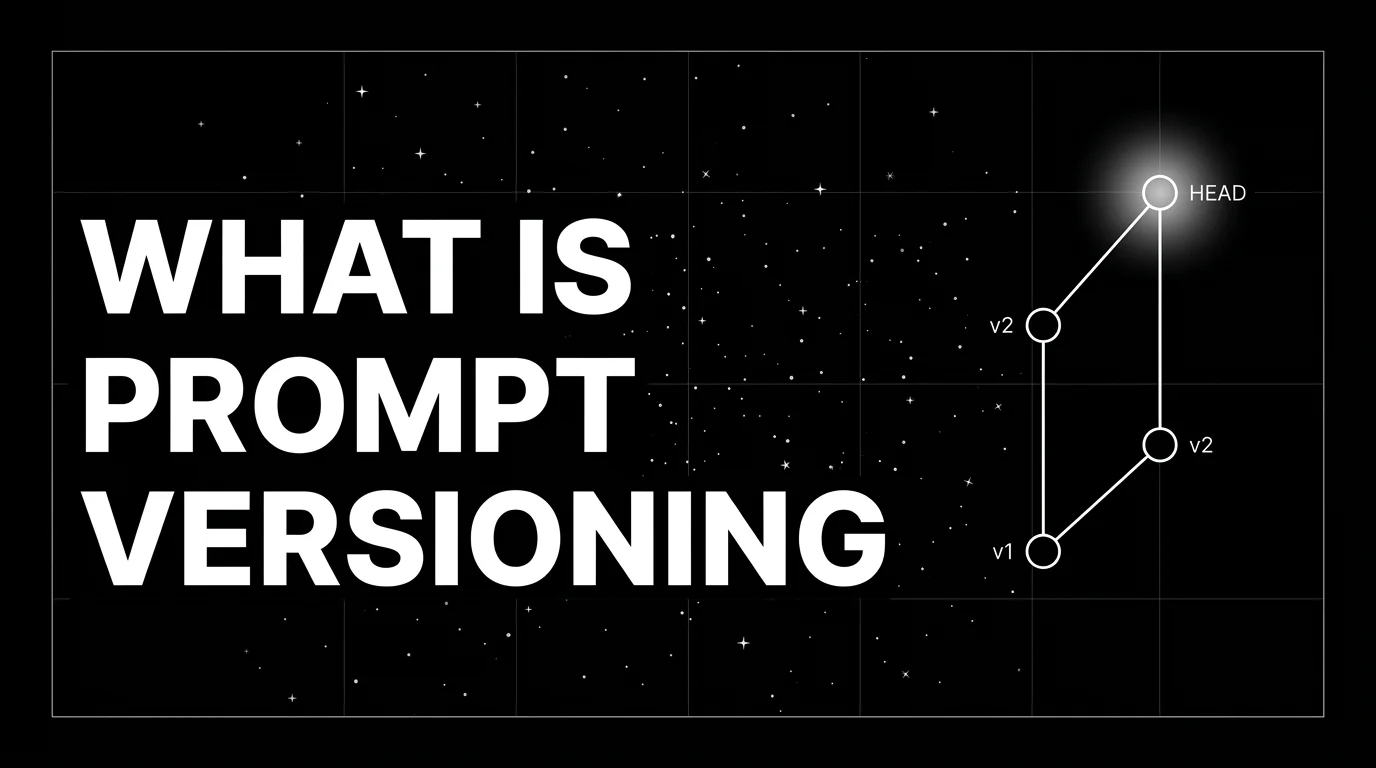
Prompt versioning treats prompts as code: unique ids, environment labels, eval-gated rollouts, one-call rollback. What it is and how to ship it in 2026.

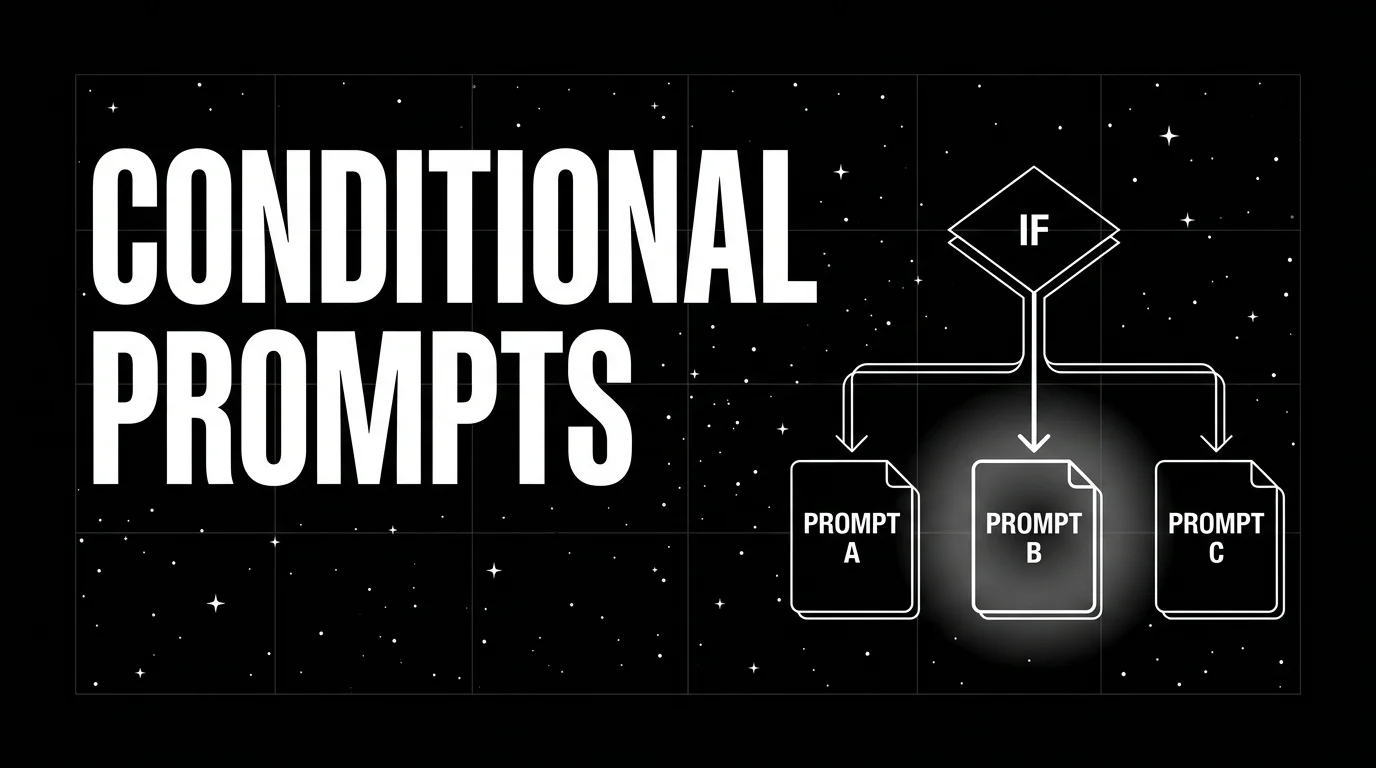
Conditional prompt selection at runtime in 2026: routing, fallbacks, embedded conditions, version pinning, eval discipline that keeps it from drifting.
