AI Infrastructure Guide 2026: The Production Reference Stack
2026 reference stack for AI infrastructure: GPU compute, distributed training, MLOps, gateway routing, observability + eval, security, FinOps, real tools.
Table of Contents
The 2026 AI infrastructure reference stack
Modern AI infrastructure has eight architectural layers. They sit on top of each other, each owning a clear responsibility, and the choices at each layer compose into a working production stack.
TL;DR: the eight layers
| Layer | Job | Common tools 2026 |
|---|---|---|
| Compute | Run training and inference jobs | H100, H200, B200, MI300X, TPU v5p, Trainium2 |
| Storage | Feed data to GPUs fast | Lustre, GPFS, S3/GCS, Parquet, TFRecord |
| Orchestration | Schedule jobs and pods | Kubernetes (NVIDIA GPU Operator), Slurm |
| Training + MLOps | Train, track, ship models | PyTorch DDP, DeepSpeed, FSDP, MLflow, Feast |
| Serving + Gateway | Serve and route inference | vLLM, Triton, TensorRT-LLM, Agent Command Center |
| Observability + Eval | Trace and score behaviour | traceAI, fi.evals, fi.simulate |
| Safety + Security | Block harm, enforce policy | Zero-trust controls, inline guardrails |
| FinOps | Keep costs honest | OpenCost, showback, MIG, spot mix |
Layer 1: compute
Compute is still the dominant cost line. The decisions that matter:
- GPU choice. H200 (141 GB HBM3e) and B200 (Blackwell) cover frontier training. MI300X is the strongest AMD alternative on HBM-heavy workloads. TPU v5p is the GCP-only option for very large dense and MoE training.
- Interconnect. NVLink and NVSwitch inside a node, RoCE or InfiniBand across nodes. GPUDirect RDMA lets GPUs exchange data directly, bypassing the CPU.
- Accelerator mix. TPUs for GCP-resident workloads, Trainium2 for AWS-resident workloads, custom ASICs (Groq, Cerebras) for narrow inference patterns.
- CPU. Still required for data prep, retrieval, and orchestration. A common ratio is 1 GPU to 8 to 16 CPU cores plus 64 to 128 GB of system RAM.
If you only build one capability at this layer, build clean GPU utilisation telemetry. Idle GPUs are the largest single line-item leak in most AI budgets.
Layer 2: storage
Storage choices follow the workload’s read pattern.
- Tiered storage. Lustre or GPFS for the hot tier (active training data), object storage (S3, GCS, R2) for archive and inference assets.
- File formats. Parquet for tabular, TFRecord or WebDataset for vision, JSONL for LLM training corpora. Petastorm and HuggingFace datasets handle the conversion layer.
- Caching. A local NVMe cache per node, populated from object storage, often via Alluxio or similar.
- Metadata. A catalog (Unity, Glue, Polaris) for lineage, schema, and discovery.
The mistake to avoid is reading raw object storage on every training step. Pre-stage into a hot tier, cache locally on the node, and your I/O budget collapses.
Layer 3: orchestration
Two real options in 2026.
- Kubernetes for elastic cloud workloads. The NVIDIA GPU Operator handles drivers, MIG, and time-slicing. Karpenter or Cluster Autoscaler scales the node pool. KubeRay handles distributed Python jobs.
- Slurm for tightly coupled training. Better gang scheduling, MPI, and topology-aware placement. The default in academic and frontier-lab clusters.
Many teams run both: Slurm for the training cluster, Kubernetes for serving, agents, and platform services. The boundary is usually the model registry.
Layer 4: training and MLOps
This layer owns the model lifecycle.
- Distributed training. PyTorch DDP for the simple case, DeepSpeed and FSDP for memory-heavy training (ZeRO-3, FP8 mixed precision). Horovod still has a footprint in TensorFlow-first shops.
- Experiment tracking. MLflow for self-hosted, Weights & Biases for managed. Both pair with a model registry.
- Feature store. Feast (open source) or Tecton (managed) if you ship traditional ML. Pure LLM stacks rarely need one.
- CI/CD. Pre-merge unit tests, data validation (Great Expectations, Pydantic schemas), and pre-deploy eval suites that gate merges on quality regression.
- Hyperparameter tuning. Optuna and Ray Tune across clusters. Bayesian and Hyperband for non-trivial search spaces.
For LLM-specific workflows, this layer also runs your eval suite. fi.evals plugs into CI to score outputs against rubric-based and managed evaluators on every PR.
from fi.evals import evaluate

result = evaluate(
    "faithfulness",
    output="EU population in 2024 was about 449 million.",
    context="EU population in 2024 was approximately 449 million.",
)
print(result.score, result.reason)
Layer 5: serving and gateway
Inference splits into two sublayers in 2026.
Self-hosted inference. vLLM is the default for high-throughput LLM serving with PagedAttention and continuous batching. NVIDIA Triton with TensorRT-LLM is the strongest option when you need multi-framework serving and tensor parallelism. SGLang has gained traction for agent-style RAG with structured outputs. Ray Serve sits on top when you need autoscaling and shared infrastructure.
Gateway. A BYOK gateway in front of hosted providers (OpenAI, Anthropic, Google, AWS Bedrock, Azure OpenAI) plus your self-hosted models. The gateway handles:
- Routing by cost and quality thresholds.
- Fallback across providers.
- Inline guardrails (prompt injection, PII).
- Per-route policy (max cost, max latency, allowed models).
- Cost attribution and rate limiting.
The Agent Command Center (/platform/monitor/command-center) is the Future AGI gateway. Portkey, Kong AI Gateway, and LiteLLM also occupy this layer with different trade-offs. For a deeper look at this layer, see what an AI gateway does.
Layer 6: observability and evaluation
This is the layer that catches problems in production. Without it the stack is flying blind.
- Tracing. Capture every model call, tool invocation, retry, and agent step as an OpenTelemetry span. traceAI (Apache 2.0) is the Future AGI option, OpenLLMetry and Phoenix are open-source alternatives.
from fi_instrumentation import register, FITracer

tracer_provider = register(project_name="payments-agent", project_type="agent")
tracer = FITracer(tracer_provider.get_tracer(__name__))

@tracer.chain
def handle(request: dict) -> dict:
return process(request)- Pre-deploy eval. Score a held-out test set on every PR with fi.evals. Gate merges on regression.
- Online eval. Sample 5 to 25 percent of live traffic, score the same evaluators, surface drift in a dashboard.
- Agent simulation. fi.simulate replays an agent against a held-out trajectory set.
from fi.simulate import TestRunner, AgentInput, AgentResponse

def my_agent(input: AgentInput) -> AgentResponse:
    return AgentResponse(content=handle({"message": input.message})["text"])

report = TestRunner(agent=my_agent).run(suite_id="payments-regression-v2")
print(report.pass_rate)- Drift monitoring. Day-over-day comparison of evaluator scores, alerting on regression.
Layer 7: safety and security
Three sublayers:
- Supply chain. Automated container scanning, SBOM, dependency pinning, signed images. The supply-chain link is a common breach surface and should be treated as a first-class security control.
- Data and models. Encryption at rest and in transit, KMS for keys, secure enclaves (Nitro, Confidential Computing) for high-sensitivity workloads, model weight access controls.
- Inline runtime guardrails. Pre-call input screening for prompt injection, jailbreaks, and PII. Post-call output screening for policy violations.
from fi.evals.guardrails import Guardrails, GuardrailModel

screener = Guardrails(models=[GuardrailModel.TURING_FLASH])

def safe_call(user_text: str) -> str:
    verdict = screener.screen_input(user_text=user_text)
    if verdict.flagged:
        return "I cannot help with that request."
    reply = handle_llm_call(user_text)
    out_verdict = screener.screen_output(model_text=reply)
    if out_verdict.flagged:
        return "I cannot share that information."
    return reply
turing_flash returns in about 1 to 2 seconds cloud latency. Choose turing_small (2 to 3 seconds) or turing_large (3 to 5 seconds) for higher-recall screens on high-risk surfaces.
Layer 8: FinOps
AI workloads burn money fast. Three controls catch most of the leakage.
- Showback. Every resource tagged with team, project, and environment. OpenCost or a per-cloud equivalent for cross-cloud visibility.
- Idle detection. GPU utilisation telemetry surfaces idle pools. Auto-scale-down policies on training clusters.
- GPU partitioning. MIG (Multi-Instance GPU) and time-slicing let smaller jobs share a device. Useful for inference and experimentation, not for tight-loop training.
Spot capacity for fault-tolerant training (most distributed training is fault-tolerant if checkpointed correctly). Reserved capacity for steady-state inference. Avoid on-demand for anything that runs 24/7.
A 2026 reference architecture
A reasonable starting topology for a mid-size AI platform team:
- Compute. 1 Slurm cluster (training) plus 1 Kubernetes cluster (everything else), both on the same cloud.
- Storage. Lustre on the training cluster, S3-class object storage shared, per-node NVMe cache.
- Orchestration. NVIDIA GPU Operator + Karpenter on Kubernetes.
- Training + MLOps. PyTorch + DeepSpeed + MLflow + Feast (if ML), CI/CD with fi.evals gating.
- Serving. vLLM for self-hosted, hosted providers (OpenAI, Anthropic, Google) via the Agent Command Center.
- Observability + Eval. traceAI everywhere, fi.evals in CI, online eval on 10 percent sample, fi.simulate for agent regression.
- Safety. Zero-trust supply chain, secure enclaves for sensitive data, inline guardrails on every user-facing surface.
- FinOps. OpenCost, per-team showback, MIG on inference pools, spot on training.
This stack scales from a handful of agents to hundreds without re-architecture. The layers stay the same; only the resourcing changes.
Where teams go wrong
The most common failure modes:
- Skipping observability until late. Trace instrumentation lands after the first user-visible incident. By then the trace history needed for the postmortem does not exist.
- One cloud for everything. Locking the gateway layer to a single cloud removes the ability to route across providers and breaks fallback.
- Feature store on a pure LLM stack. A feature store solves a problem most LLM stacks do not have. Build it only if you ship traditional ML.
- No CI eval gating. Quality regressions ship through unless gated by an automated eval check on every PR.
- Treating safety as a launch checklist. Inline guardrails on 100 percent of traffic are not optional. Pre-launch audits do not stop incidents in week 3.
Closing
The 2026 AI infrastructure reference stack is converging. The compute, storage, and orchestration layers look similar across mid-size shops. The bigger differentiator is the upper half: serving, observability and evaluation, safety, and FinOps. Investing in those layers is where reliable, cost-efficient AI gets built.
Future AGI sits on the observability + evaluation + gateway + guardrails portion of this stack: traceAI (Apache 2.0) for OpenTelemetry-style traces, fi.evals for evaluators, fi.simulate for agent regression, fi.evals.guardrails for inline screens, and the Agent Command Center at /platform/monitor/command-center for routing, policy, and BYOK across providers.
Related reading
Frequently Asked Questions
What is the 2026 AI infrastructure reference stack?
How do I choose between Kubernetes and Slurm for AI workloads?
What changed in AI infrastructure between 2025 and 2026?
How much do AI workloads actually cost in 2026?
Is multi-cloud worth the complexity?
Where does observability and evaluation fit in the stack?
Do I need a feature store?
How do I keep AI costs from running away?
Evaluate GenAI in production in 2026: pre-deploy CI evals, online metrics, LLM-as-judge calibration, drift, safety, and how to stand up a working stack.

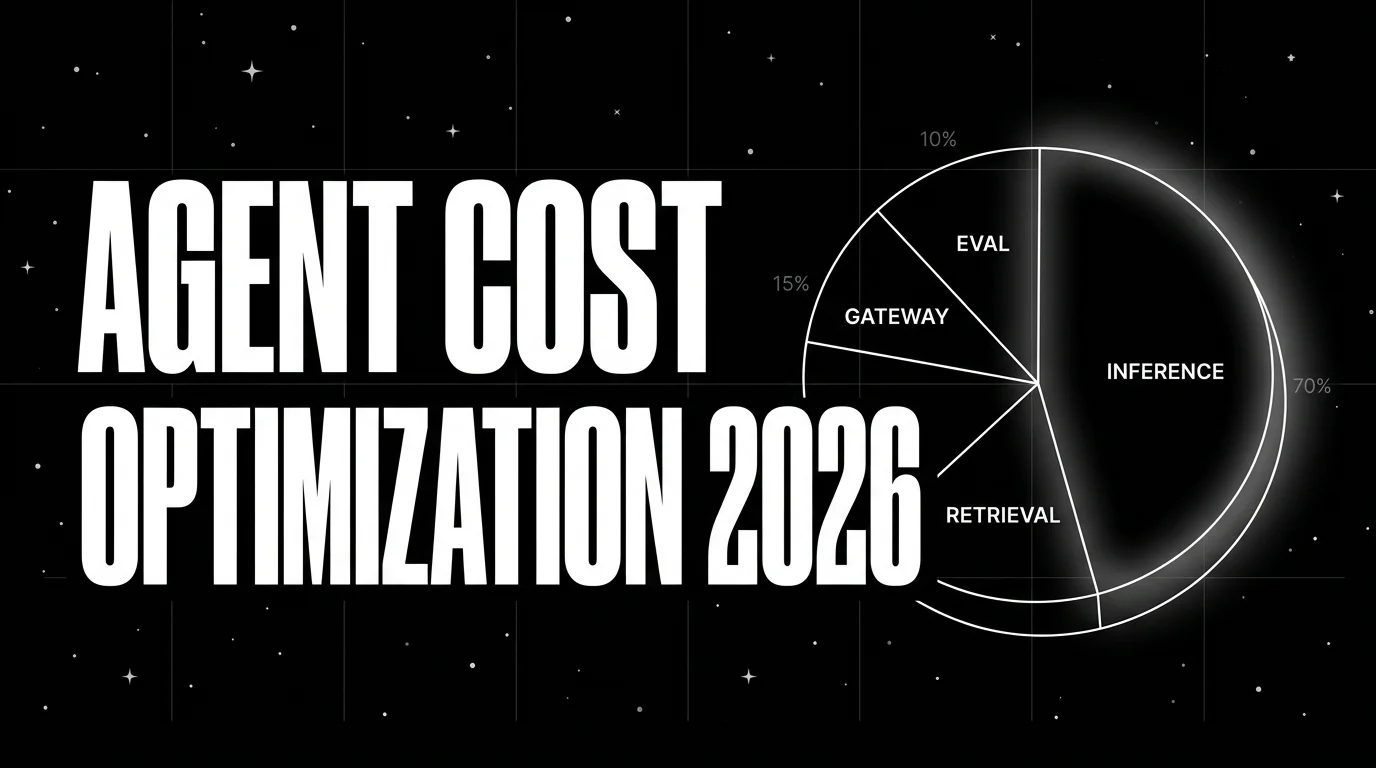
Agent cost optimization is an observability problem: trace-attributed cost, per-resolved-outcome, routing policies, quality-bounded swaps.

Honest 2026 comparison of Future AGI vs Fiddler AI: LLM eval, agent observability, traditional ML monitoring, pricing, integrations, and team-fit guidance.