AI Agents in 2026: The Good, the Bad, and the Unknown
What 2026 AI agents do well, where they still fail, and the open questions. A grounded read for teams shipping autonomous LLM systems.
Table of Contents
What 2026 AI agents actually do
AI agents in 2026 are LLM driven systems that plan, call tools, and update plans based on tool outputs. They are not chatbots. The frontier models that drive them (gpt-5, claude-opus-4-7, gemini-3.x, llama-4.x) handle longer trajectories, structured tool calls, and richer context windows than the 2023-2024 generation. They still hallucinate, still get stuck in loops, and still need evaluation.
This post is the honest version. The good: where agents reliably ship value. The bad: failure modes you will hit in production. The unknown: open questions that decide how far this gets.
TL;DR
| Dimension | The good | The bad | The unknown |
|---|---|---|---|
| Automation | Tool rich, bounded tasks ship reliably | Loops, runaway cost on long horizons | How far multi step planning generalizes |
| Accuracy | Strong on retrieval, code, structured data | Hallucinated tool calls and citations | Whether self correction scales to weeks long tasks |
| Personalization | Real time context adaptation | Bias amplification from training data | Multi agent equilibria in shared markets |
| Governance | EU AI Act + NIST AI RMF give a baseline | Audit trails fragmented across vendors | Liability when an agent acts on user behalf |
| Evaluation | Trace + step level eval is the standard | Step level ground truth still scarce | Online evaluators that match human judgement at scale |
If you are shipping an agent: instrument every step with traceAI (Apache 2.0), run 2-3 online evaluators (faithfulness, task completion, toxicity), and gate releases on a regression suite. The rest is implementation detail.
The good: where AI agents reliably help
Automation at scale, when the task is bounded
Agents excel on repetitive, tool rich tasks with verifiable outcomes. Customer support triage with CRM and ticket lookups. Code generation with a test suite that runs before merge. Data pipeline operations like schema diffs, backfill scripts, or alert routing.
The pattern: each tool call has a clear success signal, and the agent can stop when the signal flips. Anthropic’s customer support deployments and OpenAI’s coding agent benchmarks both show that bounded, instrumented tasks are where agents earn their keep (Anthropic on building effective agents, OpenAI agents docs).
Personalization without manual rules
Modern agents adapt to context in real time. Spotify’s AI DJ, Notion’s writing assistants, and Linear’s task triage all use LLM agents to tailor outputs without hand coded rules. The win is fewer rules to maintain, not better personalization in isolation.
Continuous adaptation through tool use
Agents that call retrieval and updated data sources stay current without retraining. A coding agent that reads the latest API docs is more useful than a model trained on stale snapshots. Same for financial, legal, and operational agents wired to current data.
The bad: the failure modes you will hit
Hallucinated tool calls and citations
The 2023 lawyer who cited non existent cases was the canary. In 2026 the failure mode looks like a coding agent that calls db.delete_user(user_id) with a hallucinated user_id, or a research agent that cites a real paper but fabricates the quote. Hallucination rates compound across steps, so a 5% per step error rate becomes a 23% trajectory error rate over 5 steps. The same compounding is what turns one bad tool result into a cascading failure across a chain of tool calls.
The mitigation is step level evaluation. Score each tool call and each model output as the trajectory runs, not just the final answer. Future AGI’s online evaluators (faithfulness, context relevance, function call accuracy) and traceAI step spans cover this directly (traceAI on GitHub). For a deeper treatment of why agents pass evals and still fail in production, the gap is almost always trace-level rather than final-answer.
Prompt injection from retrieved content
Retrieval based agents read untrusted content (web pages, support tickets, customer emails) and execute on whatever they read. Without separation, an attacker can plant instructions that hijack the agent. The 2024 ChatGPT plugin prompt injection writeups remain accurate for 2026 architectures (OWASP LLM Top 10).
Pair a guardrails layer (fi.evals.guardrails.Guardrails in Future AGI, equivalent libraries elsewhere) with explicit separation of trusted system context from untrusted retrieved content. The definitive guide to AI agent evaluation walks through how to wire step-level scorers and guardrails into a single eval loop.
Ethical and bias risks
Recruitment agents that learn from biased historical data reject qualified candidates. Pricing agents that learn from biased demand data reinforce existing inequities. These are real, documented harms with regulatory consequences under the EU AI Act and US state laws (Colorado SB24-205, New York LL 144).
The fix is not magic. Run bias evaluators on representative test sets, document mitigations, and keep humans on consequential decisions. Future AGI lets you author CustomLLMJudge evaluators for the bias patterns that matter in your domain.
Opacity and missing audit trails
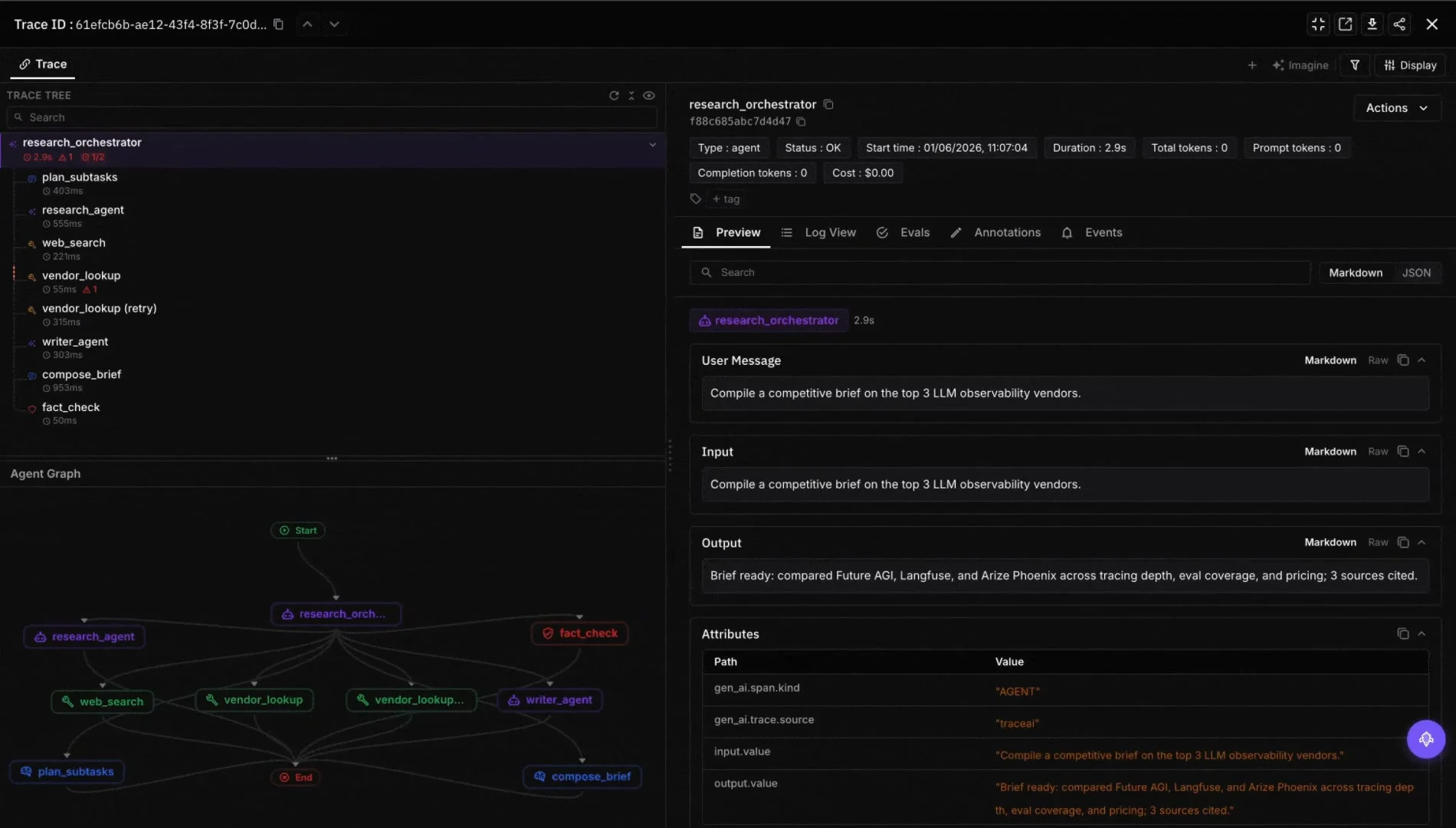
Agents that call 6 tools across 2 retrieved documents and 1 internal API are hard to audit after the fact. Without structured tracing you cannot answer “why did the agent do X?” three months later.
OpenTelemetry GenAI spans plus a platform that retains and queries them solves this. Future AGI’s Agent Command Center surfaces traces, evaluators, and guardrail events together at /platform/monitor/command-center.
Skill erosion and over reliance
Teams that hand entire workflows to agents lose the ability to operate without them. The defense is process: keep a human in the loop on novel cases, sample agent decisions for review, and rotate humans through the workflow so context does not atrophy.
The unknown: open questions for 2026 and beyond
How far does generalization scale?
Today’s agents are good specialists. Whether a single agent can plan across days, hand off to itself, and reason over novel domains without retraining is unresolved. The research is active (DeepMind, Anthropic, OpenAI, Meta), but the answer changes the architecture of every product.
What happens when many agents compete?
Two trading bots can move a market unintentionally. Two pricing agents can collude implicitly without ever exchanging messages. Multi agent equilibria in shared environments are an open game theoretic and regulatory question.
How will regulation evolve?
The EU AI Act high risk articles apply from August 2026 (EU AI Act timeline). The US NIST AI RMF is the baseline for federal contracts (NIST AI RMF). Sector regulators (FDA for medical devices, FTC for consumer protection) are increasingly active. The shape of 2027 regulation is not set.
When does liability shift to the operator?
If an autonomous agent makes a purchase, signs a contract, or executes a trade, who is liable when it errs? Existing contract and agency law assumes a human principal. Case law is being written in real time.
AI agents in the field: 2026 industry snapshot
| Industry | Where agents help | Where they fail |
|---|---|---|
| Healthcare | Clinical documentation, prior auth, triage assist | Diagnosis without expert review, regulated outputs |
| Finance | Fraud detection, KYC, agent assisted underwriting | Autonomous trading, customer facing advice |
| E commerce | Search, recommendations, returns triage | Nuanced complaints, edge case escalation |
| Legal | Discovery, contract redlining, research drafting | Court ready filings, unverified citations |
| DevOps | Alert triage, runbook execution, code review | Production deploys, irreversible changes |
The way forward: what good agent ops looks like
For teams shipping agents in 2026, the operating model is roughly the same across industries:
- Instrument every step. Use OpenTelemetry compatible tracing. Future AGI traceAI (Apache 2.0) is the no friction default.
- Run online evaluators on every trace. Faithfulness, task completion, toxicity, and any domain specific scorers. Use turing_flash (about 1-2s, cloud) for cheap inline scoring and turing_large (about 3-5s) for higher fidelity checks.
- Maintain a regression suite. Future AGI’s
fi.simulate.TestRunnerlets you replay scenarios on every model or prompt change. - Set guardrails on inputs and outputs.
fi.evals.guardrails.Guardrailsfor the common patterns, custom evaluators for domain rules. - Keep humans on consequential decisions. Define what consequential means in your domain.
from fi.evals import evaluate
from fi_instrumentation import register, FITracer

# 1) Tracing
register(project_name="support-agent-prod")
tracer = FITracer(__name__)

# 2) Inline evaluation on a generated answer
result = evaluate(
    "faithfulness",
    output=answer,
    context=retrieved_docs,
    model="turing_flash",
)
if result.score < 0.7:
    escalate_to_human(answer, retrieved_docs)
For deeper reading, see Anthropic’s building effective agents, OpenAI’s agents guide, the OpenTelemetry GenAI semantic conventions, and the traceAI repository (Apache 2.0).
Related reads on agent reliability
Frequently Asked Questions
What is an AI agent in 2026 (vs a chatbot)?
Where do AI agents work well today?
What are the main failure modes of 2026 AI agents?
How do I evaluate an AI agent in production?
Are AI agents regulated in 2026?
Will AI agents become fully autonomous?
What is the simplest way to add evaluation to my agent?
How do I prevent prompt injection in retrieval based agents?
Six AI agent reliability solutions compared in 2026 across five layers: runtime guardrails, CI eval gates, span-attached scoring, clustering, closed loop.

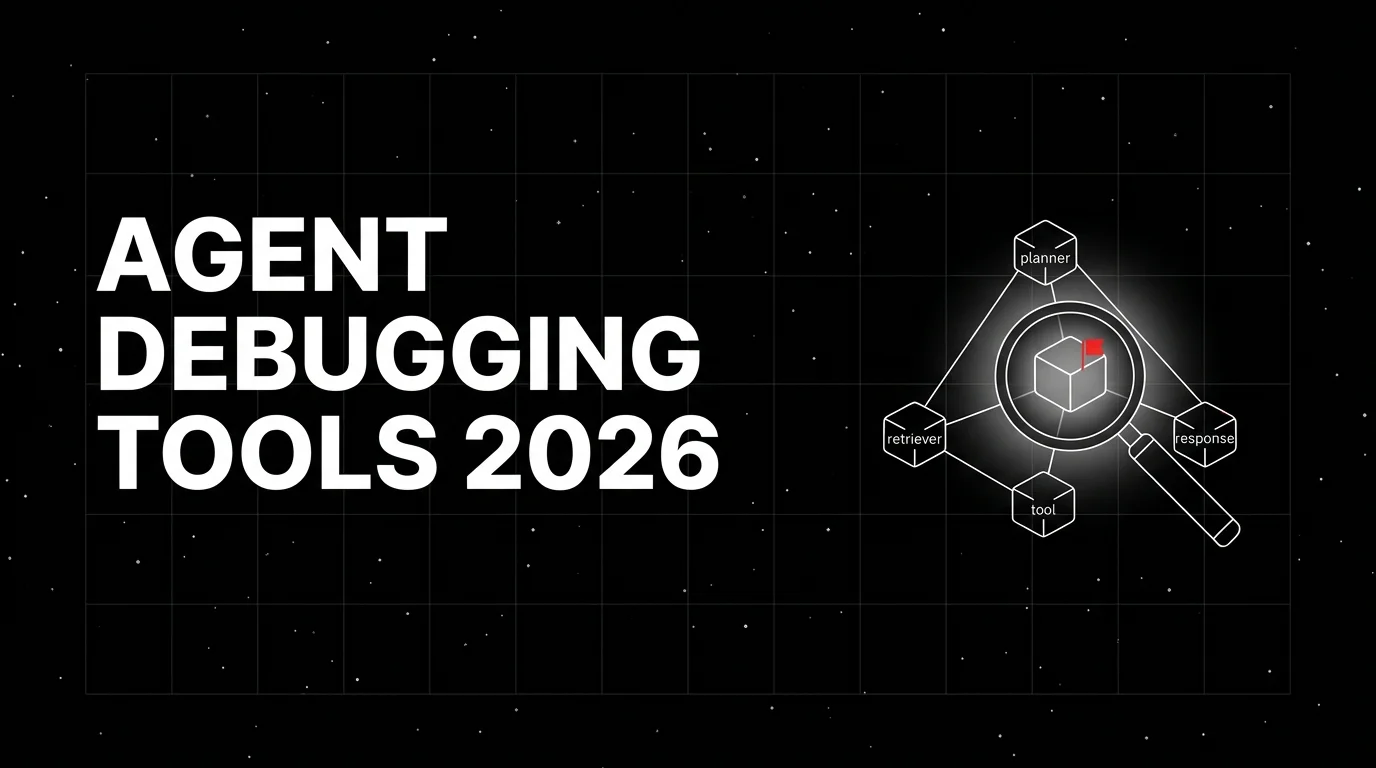
Honest 2026 comparison of agent debugging tools: Future AGI, LangSmith, Langfuse, Phoenix, Braintrust, Helicone, OpenLLMetry. Trace depth, replay, gaps.


Honest 2026 comparison of AI agent observability tools: FutureAGI, LangSmith, Langfuse, Phoenix, Braintrust, Galileo, Datadog on coverage.