How to Optimize Voice Agent Latency: 12 Techniques That Work in 2026
12 production techniques to cut voice agent latency in 2026. Streaming STT, prefix caching, prefetch tool calls, semantic cache, KV reuse, edge.
Table of Contents
How to Optimize Voice Agent Latency: 12 Techniques That Work in 2026
Voice agents in 2026 compete on latency. The agent that responds in 500ms wins the deflection. The agent that takes 1.2 seconds gets escalated. This guide walks 12 production techniques that compound into 600-900ms of savings on a P95 turn. Each technique is annotated with the concrete latency saving, when it applies, and where it fits in your pipeline.
TL;DR
- Switch to streaming STT and feed first partials to the LLM. Saves 200-400ms.
- Stream LLM tokens into TTS at the first sentence boundary. Saves 200-500ms.
- Cache the LLM prompt prefix on the provider. Saves 200-400ms TTFT.
- Route the LLM call to the closest cached region. Saves 60-150ms network.
- Prefetch tool calls on high-confidence intent. Saves 200-400ms.
- Prebuffer the first TTS audio frame. Saves 80-200ms perceived.
- Run evaluation async, never inline. Saves 100-300ms.
- Warm a parallel TTS connection per session. Saves 50-150ms first-audio.
- Use smaller models for short turns. Saves 100-300ms TTFT.
- Semantic-cache common intents. Saves 400-800ms on cache hits.
- Reuse the KV cache across turns. Saves 100-300ms LLM TTFT.
- Pin STT and TTS to the closest regional endpoint. Saves 30-80ms on round-trips.
Stacked, these techniques drop a 1400ms sequential turn to 500-700ms.
How to read this guide
Each technique below has the same shape:
- What it does. The mechanism.
- When it applies. Conditions and edge cases.
- Savings. Realistic P95 reduction on production traffic.
- How to instrument it. Span attributes that prove the saving.
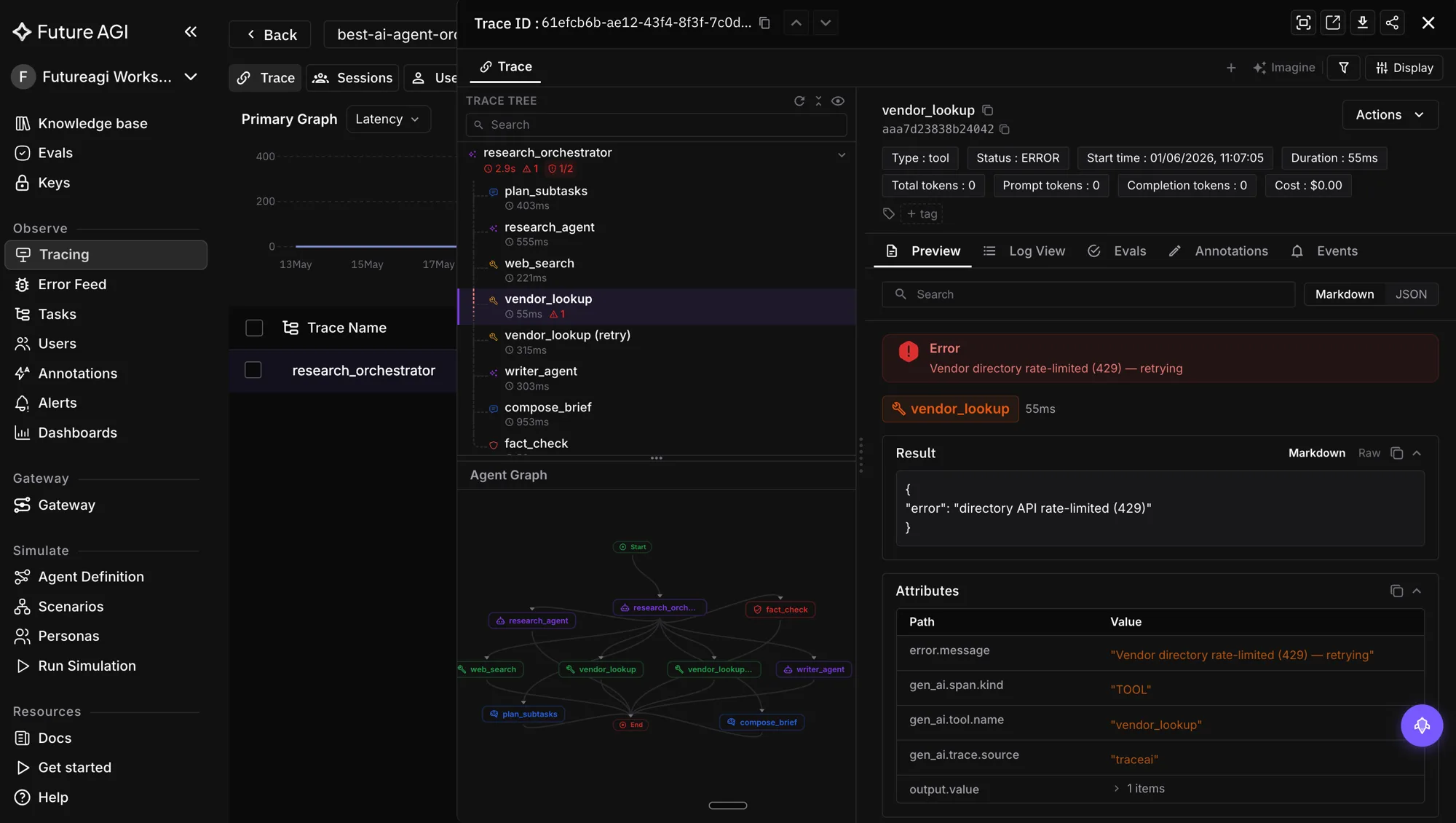
Spans matter because every “we shipped X technique” claim is hand-wavy without the per-stage timing. traceAI emits OpenInference spans for STT, LLM, TTS, and tool calls in one trace per conversation. 30+ documented integrations across Python + TypeScript cover the voice stack, including dedicated traceAI-pipecat and traceai-livekit packages, plus OpenAI Realtime, Anthropic, LiteLLM, and Vertex AI. Apache 2.0. For Vapi, Retell, and LiveKit dashboards, no SDK is needed: native voice observability ingests via provider API key + Assistant ID. Custom voices from ElevenLabs and Cartesia plug into Run Prompt and Experiments for per-run voice routing.
1. Streaming STT with first-partial routing
What it does. Switch from batch STT to streaming STT that emits partial transcripts every 100-200ms while the user is still speaking. Feed the latest partial to the LLM the moment intent confidence crosses 0.85.
When it applies. Every real-time voice agent. There is no reason to run batch STT in 2026.
Savings. 200-400ms off P95 turn latency. Streaming STT first-partial lands in 100-200ms versus 600-1200ms for batch.
How to instrument it. Capture stt_first_partial_ms and stt_final_ms as span attributes. Track the gap between first-partial and final. That gap is the parallel window where the LLM can be running.
def run_stt(turn_id, parent_span):
    with tracer.start_as_current_span("stt") as stt_span:
        t0 = time.monotonic()
        stream = stt_provider.stream(audio_chunks(turn_id))
        first_partial_seen = False
        for partial in stream:
            if not first_partial_seen and partial.confidence > 0.85:
                stt_span.set_attribute(
                    "stt_first_partial_ms",
                    (time.monotonic() - t0) * 1000,
                )
                fire_llm_call(partial.text)
                first_partial_seen = True
Deepgram Nova-3, AssemblyAI Universal-1, and Speechmatics Ursa stream first partials in the 100-200ms range.
2. Partial LLM tokens piped into TTS
What it does. Stream LLM tokens. The moment the first sentence boundary lands, fire that sentence to TTS. The user hears the first word before the LLM has finished the response.
When it applies. Any LLM provider with streaming tokens. OpenAI, Anthropic, Google, and most OSS endpoints support it.
Savings. 200-500ms on P95 user-perceived latency.
How to instrument it. Capture llm_ttft_ms, llm_first_sentence_ms, and tts_first_audio_ms. The gap between LLM first sentence and TTS first audio is the TTS pipeline overhead.
The pattern is to buffer tokens until a sentence-ending punctuation appears, then flush that buffer to the streaming TTS endpoint. Subsequent sentences chain onto the same TTS connection without reopening.
3. LLM prompt prefix caching
What it does. Anchor the system prompt at the top of the prompt. Keep it byte-identical across turns. Most major LLM providers now cache prompt prefixes server-side, slashing TTFT on cache hits.
When it applies. Multi-turn voice agents with stable system prompts. The win compounds because the conversation history up to the latest turn can also be cached if you keep it byte-stable.
Savings. 200-400ms off LLM TTFT. A 1500-token system prompt with caching hits TTFT in 200-300ms versus 500-800ms without.
How to instrument it. Capture llm_ttft_ms plus the provider’s cached_prompt_tokens field. Plot TTFT against cache hit rate. A healthy production voice agent should see 80%+ cache hit rate on the system prompt.
Common pitfalls: dynamic timestamps in the system prompt, randomly ordered tool definitions, or per-turn user IDs interpolated near the top. All defeat prefix caching. Put dynamic content near the end.
4. Edge model routing
What it does. Route the voice gateway, STT, and TTS to the closest edge POP. Route the LLM call to the provider region with the freshest prefix cache for your system prompt.
When it applies. Voice agents serving multiple regions. A single-region gateway adds 60-150ms RTT for users on the other side of the world.
Savings. 60-150ms per turn from network. Larger savings on transcontinental routes.
How to instrument it. Capture region, edge_pop, and per-stage RTT as span attributes. Build a heatmap of region versus user-perceived latency. The wrong region jumps out.
DNS-based geo routing or Anycast pinning works. For US, EU, and APAC, run three regional gateways. Cross-region failover stays available for outages.
5. Prefetch tool calls on high-confidence intent
What it does. When STT first-partial intent confidence is above 0.85, fire the tool call in parallel with the LLM call. If the user changes intent in later partials, cancel the prefetched call.
When it applies. Agents that hit tools more than 30% of the time. Lookup-heavy agents (account balance, order status, opening hours) benefit most.
Savings. 200-400ms on every prefetched turn. The cost is 2-5% wasted tool calls when intent changes.
How to instrument it. Capture tool_prefetched boolean, tool_call_cancelled boolean, and tool_call_ms. Plot prefetch success rate. Anything above 90% means the strategy pays.
def maybe_prefetch_tool(partial_transcript, conv_state):
    intent = classify_intent(partial_transcript)
    if intent.confidence > 0.85 and intent.name in TOOL_INTENTS:
        future = asyncio.create_task(call_tool(intent.name, conv_state))
        return future
    return None
6. Audio prebuffering
What it does. As soon as the LLM emits the first token, open the TTS connection. Buffer the first 80-200ms of synthesized audio before any plays. The buffer absorbs network jitter so playback is smooth without adding to user-perceived latency.
When it applies. Every real-time voice agent.
Savings. 80-200ms of perceived smoothness, which lets you reduce the conservative buffer on the playback side without stutter.
How to instrument it. Capture tts_prebuffer_ms and tts_playback_underrun_count. The underrun count should stay at zero on a properly tuned buffer.
7. Async evaluation
What it does. Run scoring after the turn commits. Never block the critical path on an LLM judge. Use a classifier model for inline rubrics if you absolutely need inline scoring.
When it applies. Every voice agent that runs evaluation. Which is every voice agent in production.
Savings. 100-300ms per turn on agents that previously ran inline LLM-judge evaluation.
How to instrument it. Capture eval_route as a span attribute (inline, async, none). Plot turn latency by eval_route. The async route should sit at the same latency as the no-eval baseline.
ai-evaluation supports per-route eval gating that decides inline versus async per route. 70+ built-in eval templates including audio_transcription, audio_quality, conversation_coherence, conversation_resolution, task_completion, plus faithfulness, tool-use accuracy, and groundedness. Unlimited custom evaluators are authored by an in-product agent that reads your code and conversation traces. Programmatic eval automation lets teams configure and re-run evals as traces accumulate. Use the 18 pre-built personas plus custom accent, background-noise, and multilingual settings to make latency tests realistic. Apache 2.0.
8. Parallel TTS warm-up
What it does. Keep a warm TTS connection open per session. When the LLM emits the first sentence boundary, the connection is already authenticated, the voice is already preloaded, and the first audio frame arrives 50-150ms faster than a cold start.
When it applies. Voice providers that support connection reuse, which is most modern streaming TTS endpoints.
Savings. 50-150ms on first-audio latency.
How to instrument it. Capture tts_connection_state (cold, warm, reused) and tts_first_audio_ms. Plot first-audio by connection state. Warm should beat cold by the saving above.
For Cartesia Sonic, ElevenLabs Turbo v2.5, and PlayHT, the connection-reuse pattern is documented in their streaming WebSocket guides.
9. Smaller models for short turns
What it does. Route short conversational turns (“hello”, “yes”, “thanks”, “can you repeat that”) to a smaller and faster model. Route complex tool turns to the larger model.
When it applies. Multi-intent agents where short acknowledgments are a meaningful share of turns.
Savings. 100-300ms TTFT on short turns. Sometimes more if the smaller model is co-located with the gateway.
How to instrument it. Capture llm_model and llm_route_reason. Plot TTFT by model. The smaller-model route should sit 200ms+ faster.
For multi-model routing, the Agent Command Center covers 15+ providers through the router surface, plus OpenAI-compatible and self-hosted backends where configured, behind one endpoint with per-route policy. Hosted with RBAC, AWS Marketplace, multi-region, SOC 2 Type II, HIPAA, GDPR, CCPA, and ISO 27001 certified per the trust page.
10. Semantic cache for common intents
What it does. Embed the user’s first-partial transcript. Search a cache of recently-answered queries by embedding similarity. If a hit lands above the threshold, return the cached audio answer in 30-80ms. The mechanics are covered in what is semantic caching for LLMs.
When it applies. Support agents with skewed query distributions where opening hours, refund policy, and account-status questions dominate.
Savings. 400-800ms on cache-hit turns. Hit rates of 15-30% are realistic on production support agents.
How to instrument it. Capture semantic_cache_hit boolean and semantic_cache_similarity. Plot hit rate over time. Cache by intent embedding plus tenant ID so per-customer answers stay isolated.
def maybe_semantic_cache(partial_text, tenant_id):
    embedding = embed(partial_text)
    hit = cache.search(
        embedding,
        filter={"tenant_id": tenant_id},
        threshold=0.92,
    )
    if hit:
        return hit.audio_response, hit.similarity
    return None, 0.0
11. KV-cache reuse across turns
What it does. Provider prompt/session caching can reduce repeated prefix processing on multi-turn calls. The model skips reprocessing the conversation history that’s already cached.
When it applies. Multi-turn voice conversations on providers that expose prompt/session caching, or self-hosted backends with explicit KV-cache reuse.
Savings. 100-300ms TTFT on turns 2 onward in the conversation.
How to instrument it. Capture kv_cache_reused_tokens plus llm_ttft_ms. The TTFT on turn N+1 should be lower than turn 1 because the conversation prefix is already cached.
Combined with technique 3 (prompt prefix caching), this is the difference between a snappy multi-turn agent and a sluggish one.
12. Regional routing for STT and TTS
What it does. Pin STT and TTS to the closest regional endpoint of the provider. Many voice providers route based on the gateway’s region by default, but the explicit region= parameter can shave 30-80ms.
When it applies. Global voice agents. Less impactful on single-region deployments.
Savings. 30-80ms on STT and TTS round-trips.
How to instrument it. Capture stt_region and tts_region. Plot per-stage latency by region. The misrouted-region tail jumps out.
Bonus: barge-in latency optimization
Barge-in is the case the 12 techniques above all forget. When the user interrupts the agent mid-sentence, three things happen: the in-flight TTS has to flush, the in-flight LLM has to cancel, and STT has to start fresh on the new user audio. Naive implementations pay 200-400ms on the barge-in turn. The voice AI barge-in and turn-taking guide covers the implementation in depth.
The fix is to treat the barge-in event itself as a span and instrument it.
def on_barge_in(turn_span, in_flight_llm, in_flight_tts):
    with tracer.start_as_current_span("barge_in") as barge_span:
        t0 = time.monotonic()
        in_flight_tts.flush()
        in_flight_llm.cancel()
        barge_span.set_attribute(
            "barge_in_flush_ms", (time.monotonic() - t0) * 1000
        )
Two practical optimizations cut the barge-in tax to under 100ms.
- Pre-allocate the cancel handles. When you fire the LLM and TTS, store the cancel handle in a session-local map keyed by turn_id. Cancellation is one map lookup, not a search.
- Use server-side TTS interrupt support. Cartesia, ElevenLabs, and PlayHT all support a streaming “stop” message on the WebSocket. Sending it cuts audio in 30-60ms versus closing and reopening the connection.
Capture barge_in_count, barge_in_flush_ms, and barge_in_recovery_ms as span attributes. A healthy agent has barge-in rates of 5-15% on conversational turns and 1-3% on scripted turns. Higher rates indicate the agent is talking too long or filling silence with unhelpful holds.
Bonus: cold-start latency optimization
The first turn of every conversation pays the cold-start tax. No prefix cache, no warm TTS connection, no DNS resolution, no audio prebuffer. First-turn latency can be 200-400ms higher than steady-state.
Warm everything on session start, before the user speaks.
- Open the TTS connection. Send a no-op or a hello message to warm the WebSocket.
- Fire a primer LLM call. Use a tiny prompt to populate the prefix cache. Discard the response.
- Pre-resolve DNS. For STT, LLM, TTS endpoints. The DNS lookup itself can be 30-80ms cold.
- Pre-warm the noise suppressor and VAD. Loading the models on first audio adds 50-150ms.
async def warm_session(session):
    await asyncio.gather(
        tts_provider.open_connection(session.voice_id),
        llm_provider.prefix_warm(session.system_prompt),
        stt_provider.warm_vad(),
    )
    session.warm = True
Track session_warm as a span attribute on the first turn. A warm first turn should sit within 50ms of the steady-state P95. A cold first turn often sits 200-400ms above.
Bonus: load testing under concurrency
A voice agent that hits 500ms P95 on a single-tenant dev environment will often hit 900ms P95 in multi-tenant production with 100+ concurrent calls. The bottleneck is usually shared infrastructure: a single Redis hop, a shared GPU, or a rate-limited provider endpoint.
Run a load test with at least 50 concurrent simulated calls before claiming any latency number in production. The test should:
- Fire from multiple regions. Cross-region load reveals network and routing issues.
- Use real audio. Synthetic silence does not trigger STT compute. Use recorded user audio with realistic length and content variation.
- Measure per-stage latency under load. The stage that degrades under concurrency is the bottleneck.
- Vary the prompt and conversation length. Long conversation history degrades LLM TTFT under load more than short.
Capture concurrent_call_count as a span attribute via a sliding window count of active conversations. Plot P95 latency by concurrency bucket. The shape of that curve is the scaling story.
Stacking the techniques: from 1400ms to 600ms
A common voice agent baseline in late 2025 looked like this:
| Stage | Baseline | After 12 techniques |
|---|---|---|
| Network RTT | 100ms | 50ms (technique 4) |
| STT | 800ms (batch) | 200ms (technique 1) |
| LLM TTFT | 700ms | 250ms (techniques 3, 11) |
| Tool call | 400ms | 0ms (technique 5, prefetched in parallel) |
| TTS first-audio | 350ms | 150ms (techniques 6, 8, 12) |
| Eval | 200ms inline | 0ms (technique 7, async) |
| Guardrail | 200ms (closed API) | Sub-100ms (Protect / ProtectFlash) |
| Total user-perceived | 1400-1800ms | 500-700ms |
The exact numbers depend on the providers, the prompt length, and the region. The pattern holds. Stacking the techniques drops a slow voice agent into the sub-800ms zone, often into the sub-500ms zone for short turns.
Anti-patterns to avoid
Five patterns that look like optimizations but hurt P95 voice latency.
1. Aggressive client-side audio buffering. A 500ms client buffer hides server-side jitter but adds 500ms to user-perceived latency. Tune the client buffer to 80-150ms with packet-loss concealment, not to 500ms.
2. Routing every turn to the largest model. Sonnet and 4o-class models have higher TTFT. Routing every turn there for “quality” adds 200-400ms versus a smart mix where short turns hit Haiku or Flash.
3. Synchronous logging on the critical path. A logger that blocks the turn for a 50ms write to a remote logging service adds 50ms to every turn. Use async batched logging with a local buffer.
4. Re-creating the LLM client per turn. TLS handshake plus connection setup adds 80-200ms. Keep a persistent client per session.
5. Running RAG retrieval inline on every turn. Even a 50ms vector lookup compounds. Run retrieval async on the partial transcript when intent confidence indicates retrieval is needed. Use a semantic cache for repeated queries.
Each anti-pattern is recoverable with a one-week refactor. The win is permanent.
Measuring the win
Every optimization in this guide produces a span attribute. The validation that the optimization paid off is a before-and-after plot of P95 latency by route, deploy-marker annotated. If P95 did not move, the optimization did not pay off, regardless of how clever the code looks.
The standard reporting cadence: weekly P95 dashboard review, monthly deep-dive on the slowest 5% of turns, quarterly rebaseline. Each cycle catches a regression early enough to fix it before customers notice.
Guardrails inside the budget
Inline guardrails are the silent latency killer. A closed safety API that adds 150-300ms per turn breaks any sub-500ms budget. The Future AGI Protect model family runs sub-100ms inline per arXiv 2510.13351. That fits inside the orchestration slice. ProtectFlash gives a single-call binary classifier path for the absolute lowest-latency surface.
Protect is built on Gemma 3n foundation with LoRA-trained adapters across 4 safety dimensions (Content Moderation, Bias Detection, Security, Data Privacy Compliance). It is multi-modal across text, image, and audio in a single model family. The inline path replaces what would otherwise be a closed-API round-trip.
Future AGI for voice latency optimization
traceAI captures TTFT plus per-stage latency for STT, LLM, TTS, and tool calls as OpenInference span attributes. 30+ documented integrations across Python + TypeScript including traceAI-pipecat and traceai-livekit cover the voice providers teams actually run. For Vapi, Retell, and LiveKit dashboards, no SDK is needed. Apache 2.0.
ai-evaluation ships 70+ built-in eval templates plus unlimited custom evaluators authored by an in-product agent that reads your code and traces. In-house classifier models are tuned for the LLM-as-judge cost/latency tradeoff so async scoring stays affordable. Programmatic eval API for configure + re-run. Apache 2.0.
agent-opt ships six prompt optimizers (Bayesian Search, Meta-Prompt per arXiv 2505.09666, ProTeGi, GEPA Genetic-Pareto per arXiv 2507.19457, Random Search per arXiv 2311.09569, PromptWizard) that tune prompts against live trace data. UI-driven optimization is also available inside the Dataset workflow: point an optimization run at a dataset, select an evaluator, pick one of the six optimizers, and review candidate prompts and final scores in the dashboard. When evaluation scores plateau, agent-opt closes the loop and improves the prompts that drive the LLM behind the voice agent.
Error Feed is the clustering and what-to-fix layer over your traces and evals. It zero-config auto-clusters trace failures into named issues with auto-written root cause, quick fix, and long-term recommendation. Latency outliers cluster into named issues instead of 10,000 raw traces.
The Agent Command Center hosts the whole stack with RBAC, SOC 2 Type II, HIPAA, GDPR, CCPA, and ISO 27001 certifications per the trust page. AWS Marketplace and multi-region hosting cover the deployment surface.
Related reading
- How to Measure Voice AI Latency: The Complete 2026 Guide
- Sub-500ms Voice AI: The Complete Latency Budget Guide for 2026
- Audio Caching for Voice AI: A Developer’s Guide to Latency Reduction in 2026
- How to Implement Voice AI Observability in 2026
Sources and references
- Future AGI Protect benchmarks: arXiv 2510.13351
- OpenInference span specification: github.com/Arize-ai/openinference
- Anthropic prompt caching docs: anthropic.com/docs
- OpenAI prompt caching docs: platform.openai.com/docs
- Future AGI trust and compliance: futureagi.com/trust
- Cartesia Sonic streaming benchmarks: cartesia.ai vendor docs
- Deepgram Nova-3 streaming benchmarks: deepgram.com vendor docs
Frequently Asked Questions
What is the single biggest latency win for a voice agent in 2026?
How much latency does prompt prefix caching actually save in voice?
When should I prefetch tool calls in a voice agent?
What is semantic caching for voice agents and how much does it save?
What latency does Future AGI Protect add to a voice turn?
Should I route voice agents through the edge or the LLM provider region?
How does async evaluation help voice latency without hurting quality?
How to hit a sub-500ms P95 voice AI turn in 2026. Per-stage budget, engineering choices, when sub-500ms is the right target and when it is not.

Measure voice AI latency end-to-end in 2026. Per-stage budgets for STT, LLM, TTS, network. OpenInference spans, P95 SLOs, runnable traceAI code.
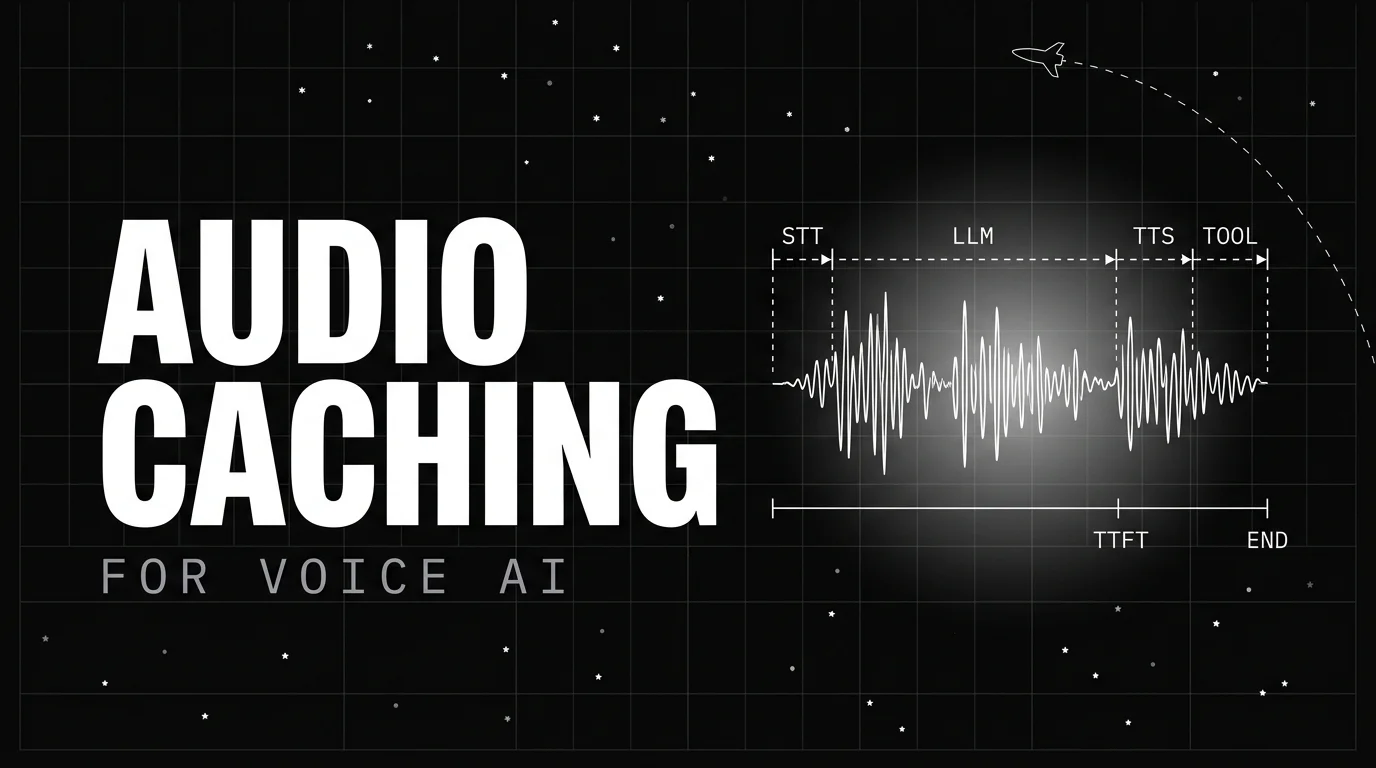
Audio caching is a quarter of the voice AI latency story. The full guide: semantic cache at the orchestrator, TTS prefix cache, streaming, p95 honestly.