Best 5 AI Guardrails for Legal AI Applications in 2026
Five AI guardrails for legal: brief drafting, contract review, legal research, e-discovery. ABA Model Rules 1.1/1.6/3.3/5.3, Mata v Avianca, FRCP 11.
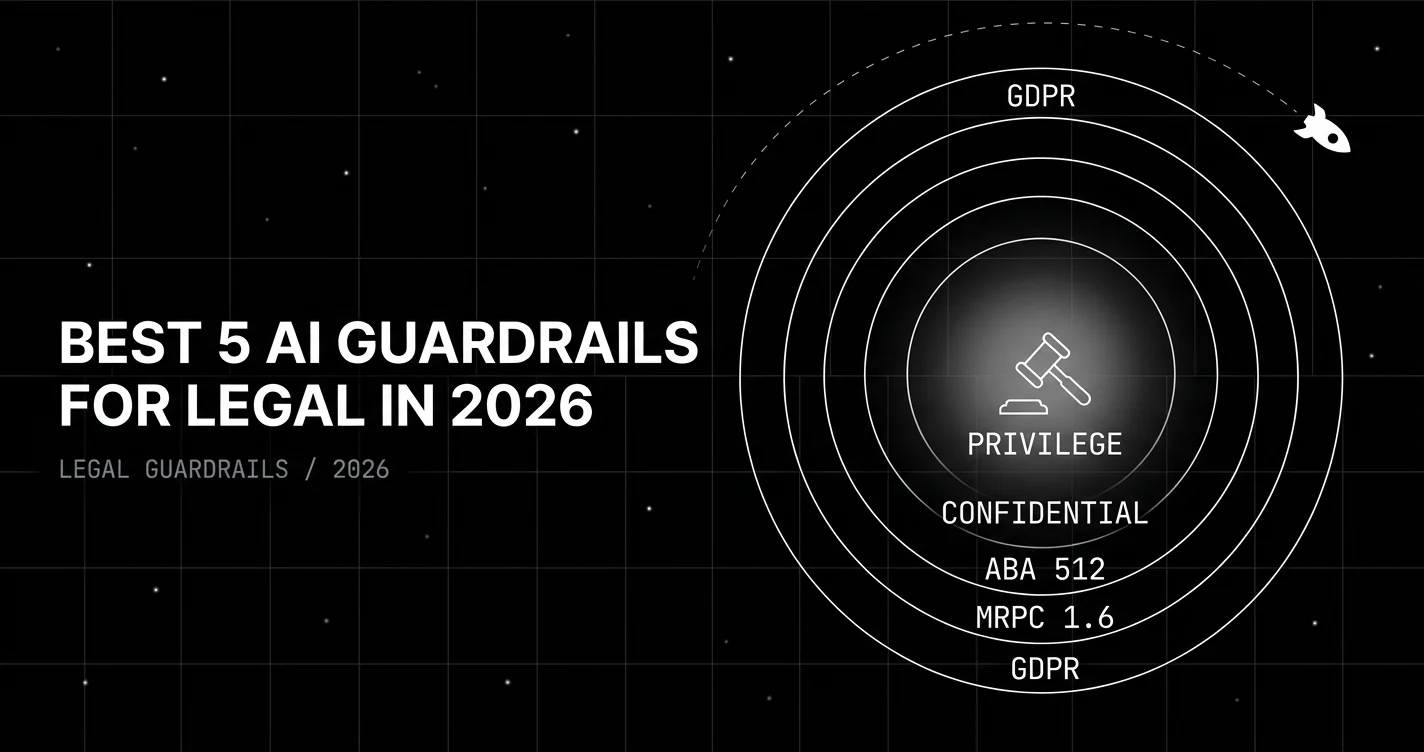
Table of Contents
What Are the Five Best AI Guardrails for Legal Practice in 2026?
The pattern is the same across brief drafting, contract review, legal research, e-discovery, deposition prep, and compliance monitoring: gateways with guardrails decide which requests reach the model and which outputs reach the partner; LLM benchmarks score academic reasoning; evaluation platforms score the output. The guardrail layer is where prompt injections get caught and where privileged data gets redacted before it leaks upstream. The five platforms below are ranked by fit for the modal AmLaw 200 firm, in-house legal team, or legal-tech vendor deploying production AI in 2026.
| # | Platform | Best for | Pricing model |
|---|---|---|---|
| 1 | Future AGI Protect | Multi-modal guardrails with write-side privilege protection and span-linked eval/trace | Cloud + OSS self-host; Free + Pay-as-you-go; Boost/Scale/Enterprise add-ons |
| 2 | Lakera Guard | Prompt-injection breadth on text-only surfaces, gandalf-bench-anchored | Usage + enterprise |
| 3 | NVIDIA NeMo Guardrails | Open-source policy framework with Colang DSL for programmable rule mapping | Open source |
| 4 | AWS Bedrock Guardrails | AWS-stack-native managed content filters, PII redaction, grounding | AWS usage |
| 5 | Protect AI | ML-supply-chain-aware security; LLM Guard open-source plus commercial Guardian | Open source + enterprise |
TL;DR
- Future AGI Protect for the Future AGI Protect model family (Gemma 3n + fine-tuned adapters per safety rule across Toxicity, Tone, Sexism, Prompt Injection, Data Privacy) with multi-modal text/image/audio coverage, ~67 ms p50 inline latency, write-side guard that strips privilege-bearing context before it leaves the firm boundary, per-tenant policy, and SOC 2 Type II + HIPAA + GDPR + CCPA certified per the trust page
- Lakera Guard for vertical-anchored prompt-injection and jailbreak detection on text-only chat surfaces with the gandalf-bench benchmark
- NVIDIA NeMo Guardrails for the strongest open-source policy framework with the Colang DSL, mappable to ABA Rule 1.6 / 3.3 by legal-tech engineering teams
- AWS Bedrock Guardrails for AWS-stack-native managed guardrails with content filters, PII redaction, and contextual grounding
- Protect AI for ML-supply-chain-aware security with the open-source LLM Guard plus commercial Guardian product
Why Are AI Guardrails Different for Legal Practice?
Legal teams ship AI faster than the bar associations catch up, and the failure mode is filing-shaped, not user-experience-shaped. A junior associate at an AmLaw 200 firm pasted opposing counsel’s brief into an AI brief-drafting copilot to summarize arguments. Buried in the brief was a prompt injection: three sentences of harmless-looking text that instructed the model to fabricate two supporting citations for a counterargument. The associate’s draft brief shipped to a partner with the fabricated citations intact. The partner did not catch them. Rule 11 sanctions issued. The firm’s AI workflow had no guardrail layer that would have flagged the prompt injection at the gateway and no eval pass that would have flagged the fabricated citations at output.
The 2023 Mata v. Avianca sanction order (a New York attorney sanctioned for filing a brief with fabricated case citations generated by ChatGPT) and the 2024 2nd Circuit Park v. Kim referral set the public reference points. Judge Brantley Starr’s standing order in the Northern District of Texas requires attorneys to certify either that no portion of a filing was AI-generated, or that any AI-generated portion was checked for accuracy by a human. ABA Formal Opinion 512 (July 2024) translated all of this into national ethics guidance. Under ABA Model Rule 5.3, the supervising attorney is responsible for AI output the same way they would be for a paralegal’s; under Model Rule 1.6, you cannot send privileged client information to a third-party LLM that does not keep it confidential; under Model Rule 3.3, you owe candor to the tribunal, and a confidently-stated fabricated citation is the cleanest 2026 candor failure.
Generic AI guardrails (block harmful content, filter PII, rate-limit) fall short on three legal-specific axes. First, the unit of failure is filing-shaped: a prompt injection through a poisoned exhibit lands as a fabricated citation in a draft, which lands as a Rule 11 sanction. Pan-industry guardrails do not map prompt-injection detection to Rule 11. Second, the data path is privilege-bearing: client-confidential matter context held in a system prompt is a Rule 1.6 leak waiting to happen if the model can be jailbroken into reciting it. Third, the policy layer has to be mapped to the actual rule: a guardrail that flags “harmful content” is not the same as a guardrail that flags “model is about to confidently invent a citation,” and the second is the supervision-record surface a partner (or a court reviewing a Rule 11 motion) actually wants to see.
Most legal-AI guardrail content in 2026 either pitches a horizontal AI-security tool (catches prompt injections, no ABA-rule mapping) or pitches a single-vendor advertorial. The actual question is which guardrail produces the policy-decision record that survives a partner review and a Rule 11 audit, while keeping privileged matter context inside the firm boundary. That is the question the five platforms below split along different axes.
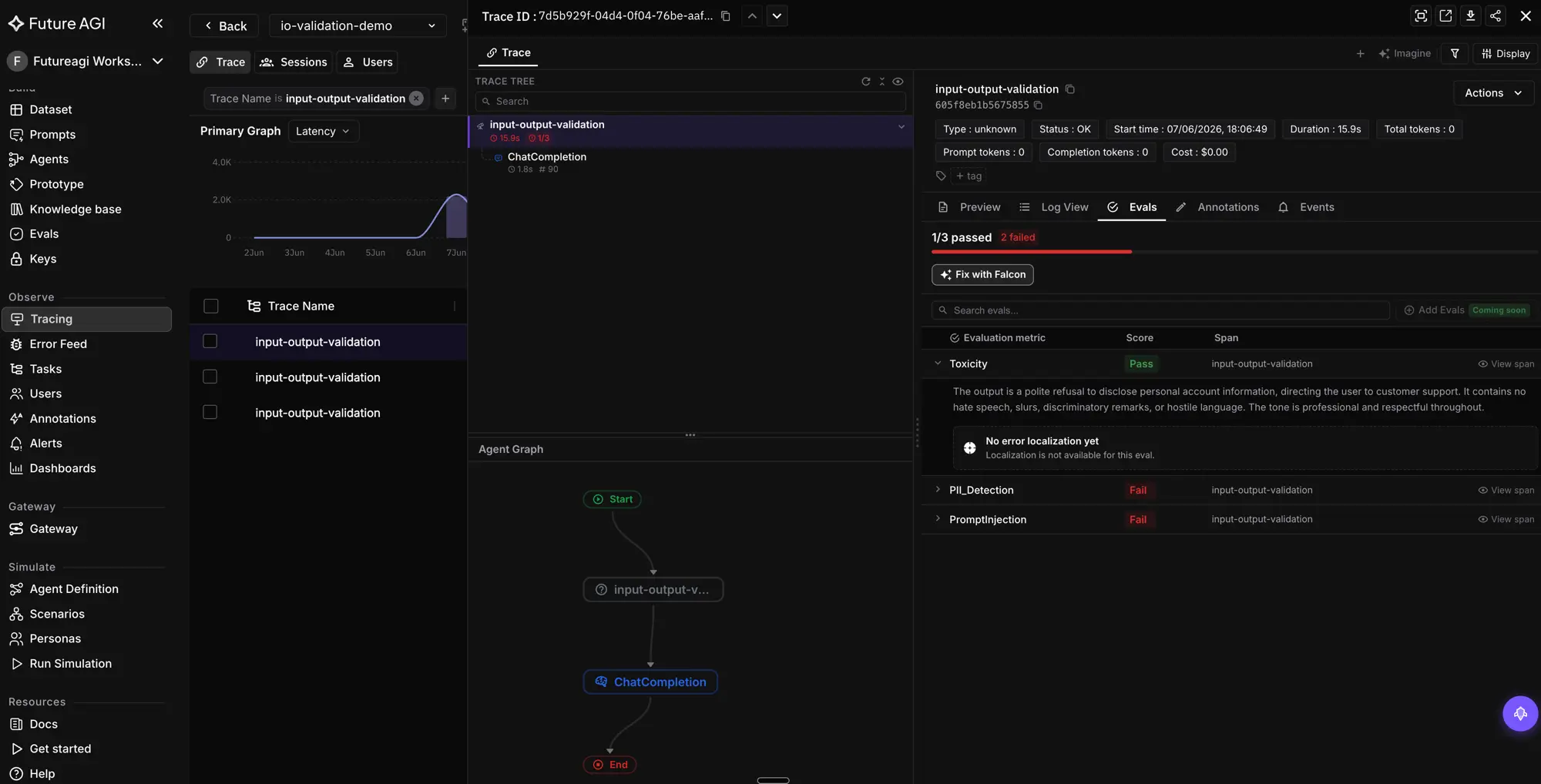
Where things get thin in 2026 is the gap between the gateway layer (which decides what reaches the model) and the eval layer (which scores what came back). Future AGI Protect fills that gap with the Future AGI Protect model family: Gemma 3n + fine-tuned adapters across 5 safety rules (Toxicity, Tone, Sexism, Prompt Injection, Data Privacy), multi-modal text/image/audio, ~67 ms p50 text inline (arXiv 2510.13351), write-side guard that refuses privilege-bearing content before it leaves the firm boundary, per-tenant policy, and SOC 2 Type II + HIPAA + GDPR + CCPA certified per the trust page. The guardrail decision that blocked a jailbreaking and prompt injection attempt and the eval score that explains why the response would have hallucinated a citation stay linkable in the same trace.
What Is the Future AGI Legal Guardrail Scorecard?
The Future AGI Legal Guardrail Scorecard is a five-dimension rubric for assessing whether an AI guardrail platform meets legal-practice production requirements:
- Prompt-injection detection. Detection rate against named eval sets (gandalf-bench, INJECAGENT, AdvBench). Maps to FRCP Rule 11 reasonable inquiry: the guardrail produces evidence that supports the supervising attorney’s record, not a guarantee.
- Privileged-data leak prevention. PII redaction at the gateway plus jailbreak resistance against system-prompt extraction. Maps to ABA Model Rule 1.6 confidentiality. The platform’s local-only paths run inside the firm’s existing privilege-protection workflow.
- Jailbreak resistance. Ability to block the model from confidently outputting fabricated citations or content the system prompt told it not to. Maps to Model Rule 3.3 candor: the second-order failure where the model is talked into producing exactly the output Rule 3.3 forbids.
- Latency overhead. p50 / p95 / p99 inflation introduced by the guardrail layer. Real-time copilots (brief drafting, contract review) are sensitive to p95 inflation above 300 to 500 ms.
- Policy-rule maintainability. DSL versus config versus ML-classifier versus YAML-as-policy. Mappable to jurisdiction-specific bar opinions and to the wave of 2023 to 2024 state-bar opinions on AI use.
Each platform below is scored against this rubric in the comparison matrix.
How Do These Five Guardrail Platforms Compare?
| Capability | Future AGI Protect | Lakera Guard | NeMo Guardrails | Bedrock Guardrails | Protect AI |
|---|---|---|---|---|---|
| Prompt-injection detection | Yes (Prompt Injection rule; multi-modal) | Yes (named gandalf-bench, text-only) | Yes (Colang policy) | Yes (managed filters) | Yes (LLM Guard) |
| PII / privileged-data redaction | Yes (Data Privacy rule, write-side) | Yes | Yes (Colang policy) | Yes (managed) | Yes (LLM Guard) |
| Jailbreak resistance | Yes (Toxicity rule + span-linked eval) | Yes (vertical-anchored) | Yes (Colang) | Yes (managed) | Yes (LLM Guard + Guardian) |
| Multi-modal coverage (text/image/audio) | Yes (Gemma 3n base) | Text only | Text only | Limited (text + image) | Text only |
| Latency overhead (p95) | ~67 ms p50 inline | Low | Variable (policy-dependent) | Low (managed) | Variable |
| Policy DSL / config surface | Gateway config + admin plane | API + ruleset | Colang DSL (open-source) | Managed config | YAML / Python |
| Deployment model | Managed + hybrid local + BYOC | Managed | Self-host (open source) | AWS-managed | Open source + Guardian (managed) |
How Did We Rank These Five Platforms?
The ranking criteria sit on top of the scorecard above. We weighted:
- Privilege-bearing data path. Does the guardrail run pre-completion at the gateway, so client-confidential fields are stripped before they reach an upstream provider?
- Integration with downstream eval and trace. Does the policy decision link via
span_idto the eval score that scored the response, so a partner can reconstruct the supervision record? - Detection rate against named benchmarks. gandalf-bench, INJECAGENT, AdvBench for prompt-injection and jailbreak resistance.
- Policy-rule maintainability. Can a legal-tech engineering team map a Colang or YAML policy to a specific bar-opinion requirement without vendor-side work?
- Honest limitations. Does each platform name what it is not best at, including the privilege-is-not-a-product-property carve-out?
Where things get thin in this category: no guardrail platform is FedRAMP, SOC 2 Type II, AEDT-grade, and self-hosted-open-source all at once. Each platform fits a specific buyer profile. Pick by where your obligation lives.
#1 Future AGI Protect: Best for Multi-Modal Guardrails With Span-Linked Eval and Trace
Best for: legal-tech vendors and AmLaw engineering teams that want the guardrail layer in the same product family as the evaluator and the tracing SDK, so the policy decision and the eval score that explains why a response would have been wrong stay linkable in one trace, under a write-side guard that strips privilege-bearing content before it leaves the firm boundary.
Key strengths:
- The Future AGI Protect model family: Gemma 3n + fine-tuned adapters across 5 safety rules (Toxicity, Tone, Sexism, Prompt Injection, Data Privacy), multi-modal text/image/audio, ~67 ms p50 text inline (arXiv 2510.13351). The Data Privacy rule is the runtime privilege-bearing redaction surface; the Prompt Injection rule blocks prompt injection and system-prompt extraction; the Toxicity rule handles refusal flows mapped to Rule 3.3 candor.
- Write-side guard refuses unsafe content before it lands in cache, vector store, or upstream provider token logs. The same surface blocks indirect injection from retrieved exhibits before the agent consumes them.
- Per-tenant policy so a legal-tech vendor can serve multiple firms under separate rule sets without copying policy across SDK calls.
- Drop-in OpenAI-compatible LLM proxy via the Agent Command Center; switch the client init line and existing OpenAI SDK code keeps working.
- Integrates with
traceAIandai-evaluation: every gateway call generates a span, the guardrail decision attaches as a span attribute, downstream evaluator scoring (Toxicity, PII Detection, Hallucination, Groundedness) links back viaspan_id. The policy decision that blocked a privileged-context jailbreak attempt and the eval score that explains why the response would have hallucinated a citation stay linkable in the same trace, which is the supervision record Rule 5.3 expects. - SOC 2 Type II + HIPAA + GDPR + CCPA certified. HIPAA BAA available on the Scale add-on. ISO 27001 in active audit. Federal procurement via air-gapped self-host (BYOC); FedRAMP on partner roadmap.
- Hybrid local execution on the eval side: 60+ built-in evaluators across 11 categories in ai-evaluation plus unlimited custom evaluators authored by an in-product agent; 20+ local heuristic metrics (regex, JSON schema, BLEU/ROUGE, semantic similarity) run inside the firm boundary at zero API cost; LLM-judge metrics stay opt-in.
- Field-level error localization on the eval side closes the gap between “the model output was wrong” and “here is which retrieved authority caused the wrong citation.”
Limitations:
- Opinionated prompt library. Fewer review-and-collaboration knobs than a dedicated prompt registry, by design. The trade is prompt, eval, and guardrail policy live in the same control plane so the audit trail doesn’t fragment across three vendors.
- agent-opt is opt-in. The self-improving optimizer loop runs per route, not as a default. The trade is the optimizer runs against real production traffic with eval scores joined to spans, not a synthetic corpus.
- Federal procurement via BYOC. Air-gapped self-host today; FedRAMP on the partner roadmap. The trade is federal-grade data residency without waiting on a vendor’s authorization cycle. Privilege itself is a deployment plus workflow plus jurisdictional property, not a product property; Protect’s local-only paths run inside the firm’s existing privilege-protection workflow, but the platform does not confer attorney-client privilege.
Use-case fit: brief-drafting copilots, contract-review copilots, legal-research copilots, e-discovery review, deposition prep, compliance monitoring. The wedge bites hardest when a unified guardrail layer plus a downstream eval score and a supervision-grade trace are the binding requirements.
Pricing & deployment. Cloud + OSS self-host (Apache 2.0 SDK suite: traceAI, ai-evaluation, agent-opt). Free to get started; usage-based as you scale. Compliance and enterprise add-ons (SOC 2 Type II, HIPAA BAA, SAML SSO + SCIM) are clearly priced. Pricing. Local heuristic-metric path on the eval side runs at zero API cost; LLM-judge path bills per evaluation.
Verdict: the integrated-stack pick. If the supervision record (gateway policy decision + downstream eval score + linkable trace) is the constraint that bites hardest, Future AGI Protect plus traceAI plus ai-evaluation is the workflow that produces it.
#2 Lakera Guard: Best for Vertical-Anchored Prompt-Injection Detection on Text Surfaces
Best for: legal-tech vendors and AmLaw firms whose top-priority failure mode is prompt injection through user-supplied text (pasted briefs, opposing-counsel exhibits, contract attachments) landing as a fabricated citation in a draft on a text-only chat surface.
Key strengths:
- Vertical-anchored on the LLM-security space; among the named-vendor leaders for prompt-injection and jailbreak detection.
- Named benchmarks (gandalf-bench, INJECAGENT positioning) the LLM-security community cites by default; the citation a partner can show during a post-incident review.
- Low-latency API integration; designed for the gateway-front-of-model deployment shape.
- Strong customer references in production-grade enterprise AI deployments.
Limitations:
- Narrow product surface; Lakera is purpose-built for prompt-injection / jailbreak / content-filter detection, not a full LLM gateway with token budgeting, retry policies, or an admin control plane.
- Text-only. Document-AI image attachments and voice-channel intake surfaces fall outside the product.
- Less integration with downstream eval scoring than a gateway that ships in the same product family as the evaluator.
- Not a substitute for output-grounded citation eval; Lakera flags the bad request but does not score the bad citation in a returned response.
Use-case fit: brief-drafting copilots, contract-review copilots, legal-research assistants on text-only chat where user-supplied text or retrieval-fetched documents could carry a prompt injection.
Pricing & deployment: usage-based with enterprise tiers; managed cloud.
Verdict: the named-vendor pick when prompt-injection detection rate against published benchmarks on text-only chat is the binding constraint. Pair with a primary LLM gateway and a downstream output evaluator.
#3 NVIDIA NeMo Guardrails: Best for Open-Source Programmable Policy
Best for: legal-tech engineering teams with the platform-engineering capacity to encode policy in Colang and the requirement that the policy layer be self-hostable and inspectable.
Key strengths:
- Open-source under a permissive license; self-hostable inside the firm boundary.
- Colang DSL is the strongest programmable-policy story in the guardrail space; legal-tech engineers can map a Colang policy to a specific bar-opinion requirement (“block any response that includes an external case citation not supported by retrieved source text”).
- Vendor-neutral; works with any LLM provider.
- Strong community traction and active NVIDIA backing.
Limitations:
- Self-hosting is real platform work; you own the upgrade path, the policy-version management, and the integration with your tracing/eval stack.
- Built-in detection models for prompt injection are lighter than Lakera Guard’s named benchmarks; teams typically pair NeMo with an external prompt-injection classifier.
- Latency overhead is policy-dependent; complex Colang flows can inflate p95 meaningfully.
- Smaller procurement footprint with AmLaw InfoSec than the managed incumbents.
Use-case fit: in-house legal AI engineering teams, regulated-industry legal teams (financial-services in-house legal), and federal-contractor legal-tech vendors that need eval and policy layers self-hosted inside the firm boundary.
Pricing & deployment: open source; bring-your-own infrastructure.
Verdict: the programmable-policy pick. If a Colang-shaped policy DSL mapped to specific bar-opinion language is the constraint, NeMo is the cleanest path. Pair with a primary gateway when prompt-injection detection rate matters more.
#4 AWS Bedrock Guardrails: Best for AWS-Stack-Native Managed Guardrails
Best for: AmLaw firms and in-house legal teams already running production AI inside AWS Bedrock who want managed content filters, PII redaction, and contextual grounding without standing up a separate guardrail layer.
Key strengths:
- Managed; no infrastructure to operate.
- Content filters, PII redaction, and contextual grounding ship as configurable guardrails on Bedrock-hosted models.
- Integrates natively with Bedrock model catalog and AWS IAM; InfoSec posture clears AmLaw faster than a third-party guardrail layer if the firm is already on AWS.
- AWS-stack data-residency and SOC 2 / FedRAMP-aligned guardrail surfaces.
Limitations:
- Locked to AWS Bedrock; not a fit for firms running models outside AWS or on a multi-provider gateway.
- Policy expressiveness is narrower than NeMo’s Colang or Lakera’s purpose-built prompt-injection layer; configuration is managed-service-shaped, not DSL-shaped.
- Detection rate against named external benchmarks (gandalf-bench) is not as published as Lakera’s.
- Less mature integration with downstream non-AWS eval and trace stacks.
Use-case fit: legal teams whose production AI runs entirely on Bedrock, especially where AWS-stack data residency and managed-service procurement are the binding constraints.
Pricing & deployment: AWS usage-based; managed inside the AWS account.
Verdict: the AWS-default pick. If you are already on Bedrock and the procurement bar is “stay inside AWS,” Bedrock Guardrails is the lowest-friction option; less obvious fit for multi-provider legal-AI stacks.
#5 Protect AI: Best for ML-Supply-Chain-Aware Guardrails
Best for: legal-tech vendors whose threat model includes the ML supply chain itself (model artifacts, third-party adapters, fine-tuned weights) alongside runtime prompt-injection and jailbreak risk.
Key strengths:
- LLM Guard ships open-source and covers prompt-injection detection, PII redaction, and content filtering.
- Guardian (commercial) extends Protect AI’s security positioning into ML-artifact scanning, model-vulnerability detection, and supply-chain hardening.
- Strongest single story for legal-tech vendors that ship their own fine-tuned models or use third-party model artifacts.
- Active research output on LLM-specific attacks.
Limitations:
- Narrower set of legal-tech customer references than the managed incumbents (Lakera, Bedrock).
- Self-hosted LLM Guard is real platform work; Guardian’s procurement story is less proven at AmLaw scale than Galileo or Lakera.
- The supply-chain-security pitch is the differentiator but not the headline ABA-rule mapping a partner-buyer is looking for.
- Less integration with downstream eval/trace stacks than a same-family product like Future AGI Protect.
Use-case fit: legal-tech vendors that ship their own models or third-party fine-tunes, or in-house teams whose security posture explicitly underwrites ML-supply-chain risk alongside runtime guardrails.
Pricing & deployment: open source (LLM Guard) plus enterprise (Guardian); self-hosted.
Verdict: the supply-chain-security pick. If your threat model extends beyond runtime traffic to the model artifacts themselves, Protect AI’s LLM Guard plus Guardian is the cleanest single-vendor answer; pair with a primary gateway when the runtime guardrail rate matters more.
Which Guardrail Platform Should Your Legal Team Pick?
| If you are a… | Pick |
|---|---|
| AmLaw 200 firm or legal-tech vendor that wants a unified gateway plus eval plus trace stack | Future AGI Protect (drop-in OpenAI-compatible + integrated traceAI + ai-evaluation) |
| AmLaw 100 firm whose top-priority failure mode is prompt injection through user-supplied text on chat | Lakera Guard (named-benchmark detection rate) |
| In-house corporate legal team with engineering capacity and a self-host requirement | NVIDIA NeMo Guardrails (Colang DSL + self-hostable open source) |
| Boutique firm running production AI entirely inside AWS Bedrock | AWS Bedrock Guardrails (AWS-native managed) |
| Legal-tech startup shipping its own fine-tuned models | Protect AI (LLM Guard open source + Guardian commercial) |
| E-discovery vendor running document-review copilots at scale with privilege-bearing data | Future AGI Protect (write-side Data Privacy rule + downstream Groundedness eval linked via span_id) |
For an honest comparison of AI evaluation platforms for legal, the output-scoring layer that pairs with the guardrail layer, see the sister post.
Where Does Each Guardrail Earn Its Slot?
The five platforms above split the legal-AI guardrail problem along different axes: multi-modal write-side guardrails with integrated eval-and-trace loop (Future AGI Protect), named-benchmark prompt-injection detection on text (Lakera), open-source programmable policy (NeMo), AWS-stack-native managed (Bedrock Guardrails), and ML-supply-chain-aware security (Protect AI). For most AmLaw firms and legal-tech vendors in 2026, the right answer is a layered stack: a multi-modal write-side guardrail with eval-and-trace integration for the supervision record, plus a specialist text-only prompt-injection detector when the binding surface is a chat copilot. The privilege-bearing data path always belongs on the firm side of the boundary, with PII redaction at the gateway and local heuristic eval inside the firm.
If a unified gateway plus eval plus trace stack, with the policy decision and the citation-grounding score linkable in one trace, and a hybrid local heuristic path that keeps privilege-bearing checks inside the firm, is the constraint that bites hardest, Future AGI Protect is the workflow that fits. It is purpose-built for the post-Mata, post-Park v. Kim, EU AI Act Article 14 human-oversight risk surface every legal-AI buyer is underwriting in 2026.
Related reading
Frequently Asked Questions
What's the difference between an AI gateway with guardrails, an LLM benchmark, and an AI evaluation platform for legal practice?
Which AI guardrail is best for catching prompt injections in a brief-drafting copilot?
Does an AI guardrail satisfy ABA Model Rule 5.3 supervision obligations?
How do I keep privileged client data out of an upstream LLM provider through a guardrail layer?
Can a guardrail block 100% of prompt injections?
How does an AI guardrail map to FRCP Rule 11 reasonable inquiry?
Five legal AI eval platforms scored on four tests: clause-citation validity, privilege, jurisdiction-correct authority, refusal calibration. May 2026.

Senior-engineer comparison of the best AI agent guardrails platforms 2026: latency budgets, placement, deployment topology, vendor fit.

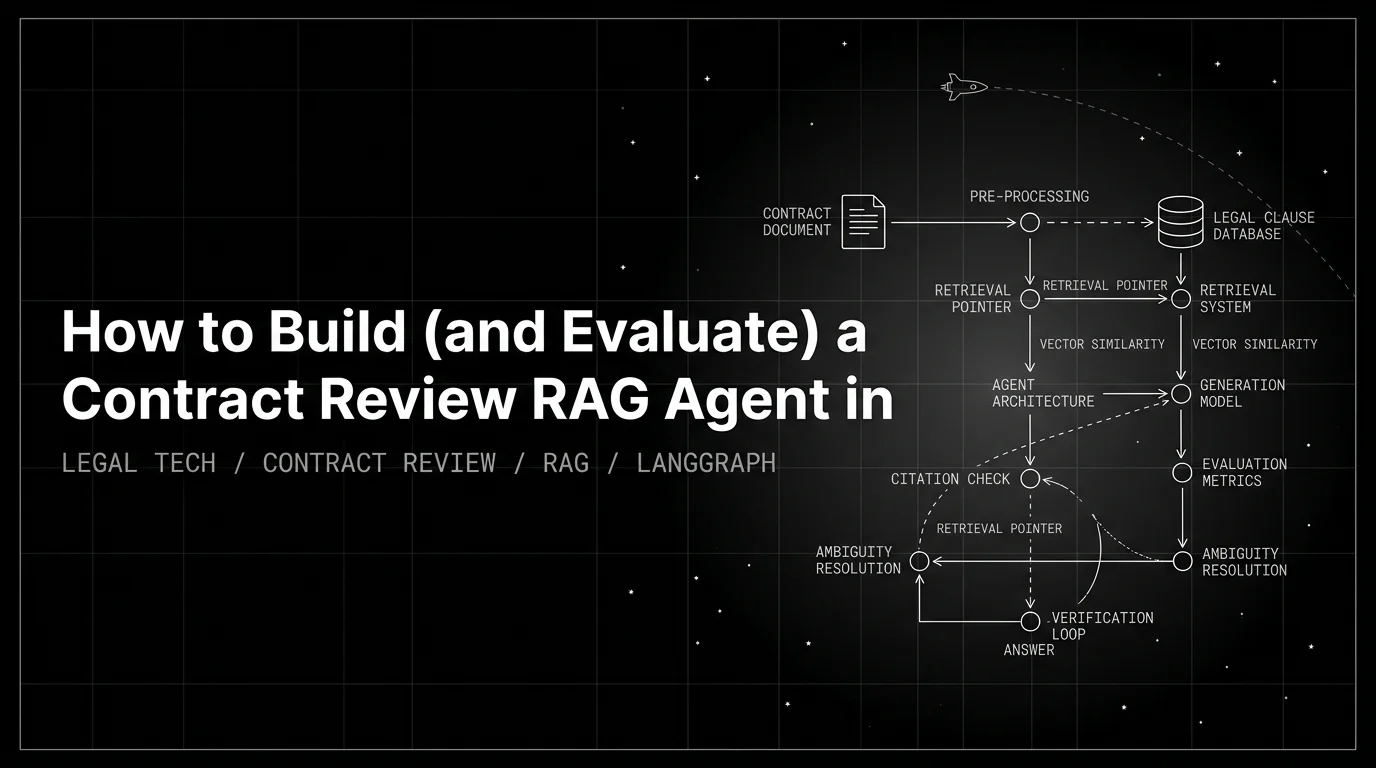
Contract review RAG in 2026: clause-level retrieval, citation enforcement, the eval suite in-house counsel signs off on, LangGraph wiring to OTel traces.