Best 5 Kong AI Gateway Alternatives in 2026
Five Kong AI Gateway alternatives scored on AI Proxy plugin portability, observability depth, native eval and optimizer surfaces, pricing above $1.5K/mo.
Table of Contents
Kong AI Gateway is the AI-Proxy-plugin stack layered on Kong’s decade-old API gateway. For platform teams already running Kong for the company’s REST APIs, the lineage is comfortable: same Lua runtime, same OTel plugin, same Konnect control plane. For teams who picked Kong for the AI workload and discovered the AI surfaces live in plugins rather than the product (separate Konnect subscription for the cloud control plane, observability piggy-backing on the generic Kong dashboard, no native eval library, no optimizer) the seams show between the second and third quarter of production agent traffic.
This guide ranks five gateways worth migrating to, names what each fixes versus Kong, and walks through the two migrations that always bite: translating AI Proxy plugin rules into a target gateway’s native format, and unwinding the Konnect control-plane assumption.
TL;DR: pick by exit reason
| Why you are leaving Kong AI Gateway | Pick | Why |
|---|---|---|
| You want trace data to feed back into routing and prompts | Future AGI Agent Command Center | Closes the loop from trace through eval to optimizer to route |
| You want a hosted gateway with virtual keys and a prompt registry | Portkey | Native prompt store, virtual keys, polished dashboard |
| You want a self-hosted, source-available proxy that is not Lua | LiteLLM | MIT-licensed Python proxy that runs entirely inside your VPC |
| You want a unified MLOps platform around the gateway | TrueFoundry | Gateway plus training, serving, and deploy in one plane |
| You need raw throughput for high-concurrency workloads | Maxim Bifrost | Go-based gateway tuned for low-latency, high-RPS routing |
Why people are leaving Kong AI Gateway in 2026
Four exit drivers show up repeatedly in /r/LLMDevs migration threads, Kong’s community forum, and platform-team conversations on LLM observability Discord servers.
1. AI features are plugins on top of an API-gateway stack
Kong’s AI surfaces (AI Proxy, AI Request/Response Transformer, AI Prompt Guard, AI Prompt Decorator, AI Rate Limiting Advanced, AI Semantic Caching) are individual Lua plugins on the same data plane that fronts your REST APIs. The developer experience is “configure a plugin against an upstream service” rather than “configure an AI route.” A team that wants per-model cost limits, semantic caching, and PII redaction is wiring three plugins, in order, with the right priorities, against the right service entity. Every AI capability is reasoned about as a plugin on a generic L7 proxy.
2. Konnect is a separate product if you want the cloud control plane
Open-source Kong Gateway runs anywhere. The hosted control plane teams actually want for fleet management (dashboards across data planes, declarative config rollout, analytics aggregation) is Konnect, billed separately. Konnect Plus starts in the low hundreds per month per data plane; enterprise plans climb past $1.5K/month once a team needs multiple data planes, audit retention, RBAC depth, and analytics. Teams who budgeted “Kong is open source” discover the Konnect line item the second time procurement reviews the renewal.
3. AI-specific observability is plugin-driven, not native
Kong’s analytics surface is the API-gateway view: requests per service, latency by route, error rates by consumer. AI-specific dimensions, tokens in and out, per-model cost, per-prompt-id attribution, eval score by route, show up only if you wire an OTel plugin to a separate sink (Grafana, Datadog, Future AGI) and build the LLM dashboards yourself. Kong’s AI Analytics plugin added per-model token counts in 2025, but cost-per-trace, per-session traces, and quality-versus-cost slices are bring-your-own.
4. No built-in eval or optimizer loop, and enterprise pricing climbs above $1.5K/month
Kong has no first-party eval library, no prompt registry, no optimizer. Traces inform humans; humans rewrite prompts; humans tune routing. The enterprise SKU that unlocks audit, advanced rate-limiting, and analytics starts around $1.5K/month and climbs steeply with data-plane count, RPS tiers, and add-on plugins (FIPS, mTLS, Advanced Auth, AI plugins bundle). A workload at the $1.5K entry tier commonly lands at $4K–$8K/month once production features turn on.
What to look for in a Kong AI Gateway replacement
The default “best AI gateway” axes are necessary but not sufficient for a Kong exit. Score replacements on the seven that map to the surfaces you’re actually migrating off:
| Axis | What it measures |
|---|---|
| 1. AI Proxy plugin portability | Can you translate Kong’s plugin-rule config into the target gateway’s native AI route config? |
| 2. Konnect parity | Does the alternative ship its own cloud control plane, or does it assume self-host? |
| 3. AI-native observability | Are tokens, cost, latency, and quality first-class in the dashboard? |
| 4. Native eval + optimizer | Does the gateway use its own trace data to improve routing and prompts? |
| 5. Pricing predictability above $1.5K/month | Does the per-request marginal cost flatten or escalate as features turn on? |
| 6. Self-host posture | Can the gateway run inside your VPC, fully air-gapped from the vendor? |
| 7. Migration tooling | Are there published scripts or importers for Kong AI Proxy plugin config specifically? |
1. Future AGI Agent Command Center: Best for closing the loop
Verdict: Future AGI fixes Kong AI Gateway’s biggest weakness, traces inform humans but never the gateway itself. Agent Command Center captures the trace, scores it with the eval library, clusters failures, runs the optimizer, and pushes the updated route or prompt back into the gateway on the next request. The other four are observation layers; FAGI is an observation layer wired to an optimizer.
What it fixes versus Kong AI Gateway:
- AI-native runtime, not a plugin stack. Command Center exposes AI routes as first-class objects: model fallback, cost-aware routing, semantic caching, PII redaction, and prompt registry are configured in one place rather than as five Lua plugins stitched in priority order. The mental model collapses from “L7 proxy plus plugins” to “AI runtime.”
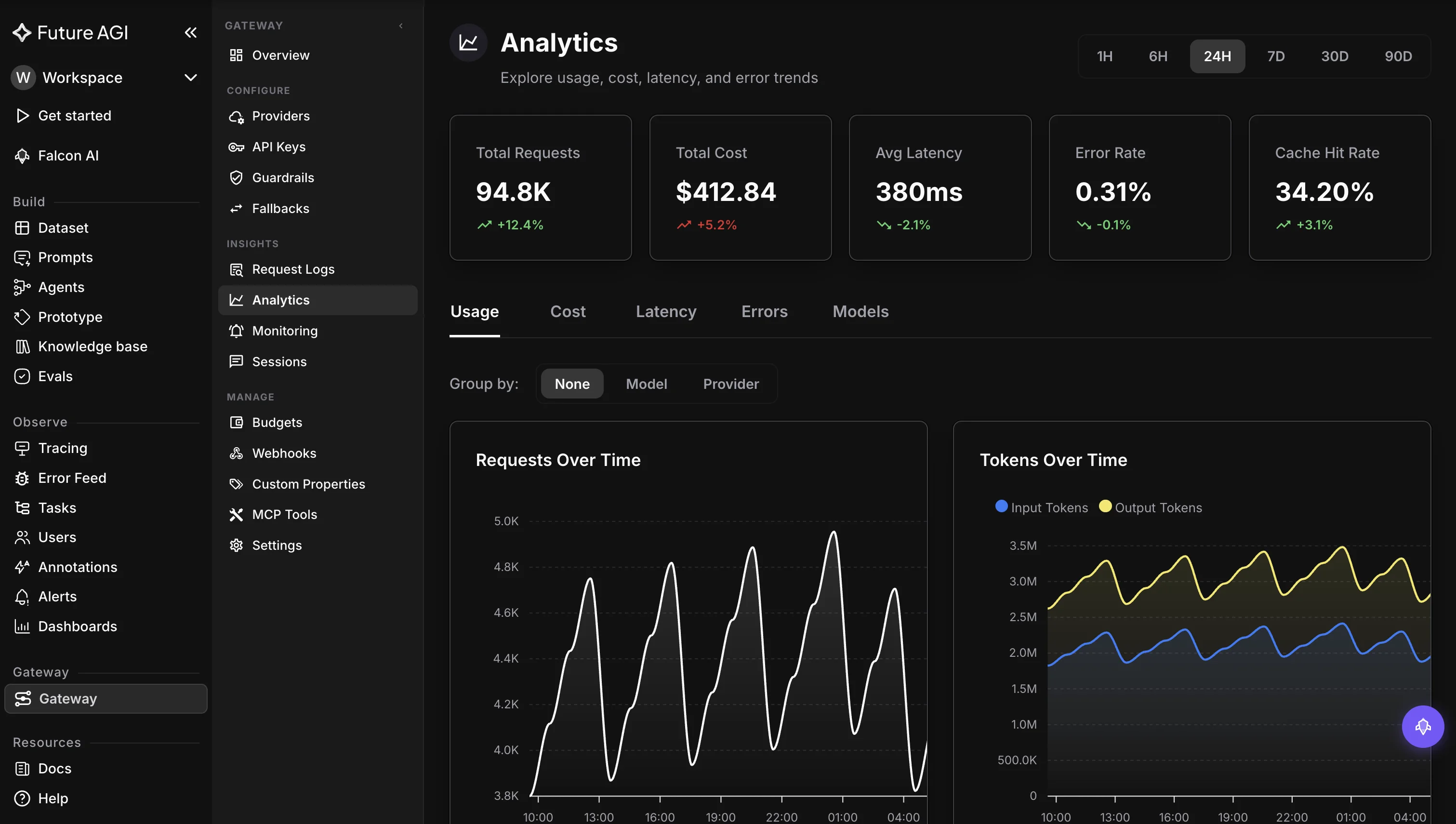
- Native eval, not bolt-on. Every captured trace is scored against task-completion, faithfulness, and tool-use rubrics by default. Kong’s AI Analytics plugin reports tokens and latency; FAGI reports tokens, latency, cost, and a per-trace eval score from the same trace.
- Self-improving loop. The optimizer (
agent-opt, Apache 2.0) rewrites prompts automatically via six optimizers — ProTeGi, GEPA, Bayesian, MetaPrompt, RandomSearch, PromptWizard, driven by eval scores fromai-evaluation(Apache 2.0). Routes update on the next request. Kong’s plugins are static.
- Native observability and predictable pricing. Sessions, users, repos, routes, and prompt IDs slice the cost dashboard without forwarding to Datadog or Grafana. Pricing is linear per trace above 5M with no add-on multipliers. PII redaction or semantic caching doesn’t move the bill.
- OSS instrumentation.
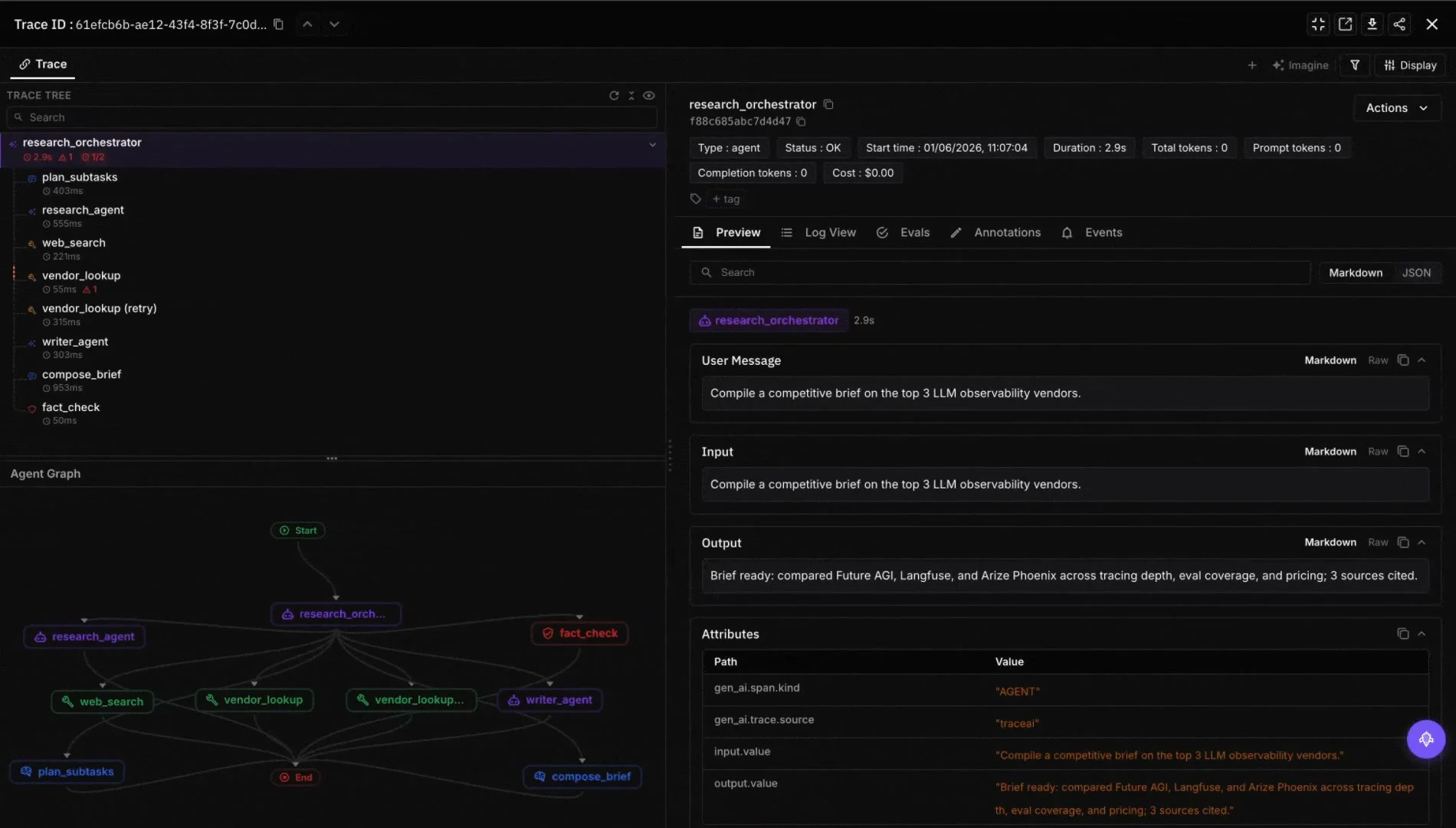
traceAI,ai-evaluation, andagent-optare all Apache 2.0. Hosted Command Center adds RBAC, failure-cluster views, the Protect guardrails layer (median 67 ms text-mode latency per arXiv 2510.13351), and AWS Marketplace procurement.
Migration from Kong AI Gateway: OpenAI-compatible endpoint, provider keys, fallback policies, and OTel traces map directly. Work concentrates in two places. AI Proxy plugin rules need to be re-expressed in FAGI’s native AI route config; the importer reads a kong.yml export, maps the AI plugin entries, and flags non-trivial cases. Consumer + tag patterns become FAGI per-identity keys. Timeline: seven to ten engineering days for fewer than 50 routes, including a shadow-traffic period.
Where it falls short:
-
agent-opt is opt-in, start with traceAI + ai-evaluation in week one and turn the optimizer on once eval baselines stabilize. The loop compounds value over weeks rather than at day one.
-
Plugin parity is selective. FAGI ships native equivalents for AI Proxy, AI Prompt Guard, AI Rate Limiting Advanced, and AI Semantic Caching, but custom Lua plugins your team wrote against Kong need a re-implementation pass.
Pricing: Free tier with 100K traces/month. Scale tier from $99/month with linear per-trace scaling above 5M (no add-on multipliers). Enterprise with SOC 2 Type II and AWS Marketplace.
Score: 7 of 7 axes.
2. Portkey: Best hosted gateway with prompt registry and virtual keys
Verdict: Portkey is the pick when the missing pieces from Kong are the prompt registry, virtual keys, and a polished hosted dashboard. Portkey was acquired by Palo Alto Networks in April 2026, a fit for security-conscious enterprises, a yellow flag for SMBs watching for SKU consolidation.
What it fixes versus Kong AI Gateway:
- Native prompt registry. Prompt Studio versions, renders, and ID-references prompts server-side. Kong has no equivalent, teams pair Kong with Langfuse, Future AGI, or an in-house Git store.
- Virtual keys as a first-class concept. Per-developer or per-service Portkey keys fan out to one provider key. Kong approximates this with consumer + tag, but chargeback reports require Grafana wiring; Portkey’s dashboard slices spend by virtual key natively.
- AI-specific dashboard out of the box. Tokens, cost, latency, and per-route attribution are the default view rather than the API-gateway-view-with-AI-plugins.
Migration from Kong AI Gateway: OpenAI-compatible endpoint and provider keys map directly. AI Proxy plugin rules translate to Portkey routing configs, fallback and load-balance syntax is Portkey’s own JSON schema, not Kong’s plugin-priority chain. Prompt Guard regexes become Portkey Guardrails entries. You give up Konnect-style multi-data-plane fleet management. Timeline: five to eight engineering days for under 50 routes plus prompt-store seeding.
Where it falls short:
- No optimizer; traces inform humans, not the gateway.
- The Palo Alto acquisition (April 30, 2026) creates uncertainty about the SMB SKU 12 to 24 months out.
- The prompt registry is a polished surface but a one-way door. Portkey-dialect template tags are sticky.
Pricing: Free tier. Scale tier from $99/month. Enterprise custom, with bundling expected into Prisma AIRS for Palo Alto customers.
Score: 5 of 7 axes (missing: optimizer, post-acquisition pricing certainty).
3. LiteLLM: Best for self-hosted exit from a Lua stack
Verdict: LiteLLM is the pick when the requirement is “this proxy runs on our infrastructure, with source we can audit, and we want out of the Lua runtime.” MIT-licensed, Python-native, and the most popular self-hosted AI proxy on GitHub. You give up Kong’s enterprise SLA and plugin ecosystem; you gain a lighter operational footprint and a codebase most engineering teams already read.
What it fixes versus Kong AI Gateway:
- Self-host without the Lua tax. LiteLLM runs as a Python service or container. Plugins are Python modules. Engineers who would need a Lua-fluent on-call rotation for custom Kong work can read and extend LiteLLM in their primary language.
- Pricing predictability. Open-source means no per-request licensing, no Konnect line item, no enterprise-tier feature gating. Enterprise tier (from ~$250/month) adds SSO, audit, and SLA.
- Virtual-key concept built in. LiteLLM’s
team_idanduser_idmodel maps cleanly onto Kong’s consumer + tag pattern, no Postgres-backed consumer entities to maintain.
Migration from Kong AI Gateway: OpenAI-compatible endpoint, provider keys, fallback policies, and rate-limit tiers map directly. AI Proxy plugin model-routing config translates to LiteLLM’s router YAML, most rules are mechanical. Custom Lua plugins become Python middleware. LiteLLM is an AI proxy, not a general L7 gateway, so you keep Kong upstream for mTLS and advanced auth if needed. Timeline: five to seven engineering days.
Where it falls short:
- No optimizer; traces inform humans, not the gateway.
- No first-party prompt registry, teams pair with Langfuse, Future AGI, or in-repo Jinja2 files.
- The bundled UI is the weakest in this list; polish lives in the Enterprise tier.
Pricing: Open source under MIT. Enterprise from ~$250/month for small teams.
Score: 5 of 7 axes (missing: native prompt registry, optimization loop).
4. TrueFoundry: Best for a unified MLOps platform
Verdict: TrueFoundry is the pick when the gateway is one of several MLOps surfaces your team needs in one plane, model serving, fine-tuning, deploys, plus the AI gateway. Strengths: integration breadth, Kubernetes-native, single procurement line.
What it fixes versus Kong AI Gateway:
- One plane instead of two. A team running Kong AI Gateway plus a separate platform for training and serving fine-tuned models ends up with two procurement contracts, two RBAC models, two on-call rotations. TrueFoundry collapses gateway + serve + deploy + train under one dashboard.
- Kubernetes-native operational model. Built around Deployments, HPAs, NetworkPolicies, aligns with platform teams already standardized on k8s.
- Native LLM gateway features. Cost tracking, model fallback, prompt management, and per-team budgets are first-class rather than plugin-mediated.
Migration from Kong AI Gateway: OpenAI-compatible endpoint and provider keys map directly. AI Proxy plugin config restates as TrueFoundry routing rules in TrueFoundry’s YAML schema. Consumer + tag patterns map to TrueFoundry’s team and project model. You give up Kong’s non-AI plugin ecosystem and Konnect-style fleet view. Timeline: ten to fourteen engineering days.
Where it falls short:
- No optimizer; traces inform humans, not the gateway.
- Gateway depth on each axis (routing primitives, semantic caching, guardrails) is a subset of dedicated AI-runtime products, value is in platform breadth.
- Kong-specific migration tooling isn’t yet published; the AI Proxy plugin rewrite is manual as of May 2026.
Pricing: Open-source core. Cloud plans from the hundreds per month; enterprise custom.
Score: 4 of 7 axes (missing: optimizer, deep AI-native observability slices, Kong-specific tooling).
5. Maxim Bifrost: Best for raw throughput
Verdict: Maxim’s Bifrost is the pick when the workload is high-concurrency and the gateway’s own latency budget matters. Bifrost is written in Go, designed for low-latency routing, and benchmarks above Lua-on-Kong and Python-on-LiteLLM proxies on RPS per node.
What it fixes versus Kong AI Gateway:
- Throughput per node. Go runtime plus connection-pooling gives Bifrost higher RPS per node than Kong’s Lua runtime on the same hardware. Maxim’s published benchmarks claim sub-millisecond overhead at p50; independent reproduction is ongoing.
- Self-host posture without a database. Bifrost runs as a Go binary, container, helm chart, or static binary. No Postgres dependency for declarative config.
- Tight integration with Maxim’s eval stack. If your team also evaluates agents with Maxim, the gateway and eval pipeline share data models.
Migration from Kong AI Gateway: OpenAI-compatible endpoint, provider keys, and basic routing rules map directly. AI Proxy plugin rules translate to Bifrost’s route config; Bifrost’s surface is leaner than Kong’s plugin chain, so multi-stage Request Transformer pipelines and custom Lua hooks need a redesign. Timeline: five to eight engineering days plus prompt-registry replacement.
Where it falls short:
- No optimizer.
- Younger than Kong, Portkey, or LiteLLM; ecosystem (Terraform providers, off-the-shelf Grafana dashboards, tutorials) is thinner.
- Teams that picked Kong for the plugin ecosystem rather than latency won’t feel the upside.
Pricing: Bifrost is open source. Maxim’s hosted gateway pricing is custom, anchored to the eval product’s usage.
Score: 4 of 7 axes (missing: optimizer, native prompt registry, mature ecosystem).
Capability matrix
| Axis | Future AGI | Portkey | LiteLLM | TrueFoundry | Maxim Bifrost |
|---|---|---|---|---|---|
| AI Proxy plugin portability | Importer reads kong.yml AI entries | Manual YAML to Portkey routes | Manual YAML to LiteLLM router | Manual YAML to TrueFoundry routes | Manual YAML to Bifrost routes |
| Konnect parity | Hosted control plane, BYOC option | Hosted control plane | Self-host primary, Cloud SaaS | Hosted + self-host | Self-host primary |
| AI-native observability | Native sessions + RBAC + eval slices | Native AI dashboard | Functional UI | Native AI dashboard | OTel pluggable |
| Native eval + optimizer | Yes (ai-evaluation + agent-opt) | No | No | No | Tied to Maxim eval |
| Pricing predictability above $1.5K/mo | Linear, no add-on multipliers | Predictable below 5M req/mo | OSS, compute only | Per-seat plus usage | OSS, throughput-focused |
| Self-host posture | BYOC + OSS instrumentation | Hosted-first | MIT, full VPC | k8s-native self-host | Go binary self-host |
| Kong migration tooling | kong.yml AI importer + key remap | Manual remap | Community scripts | Manual setup | Manual setup |
Migration notes: what breaks when leaving Kong AI Gateway
Three surfaces always need attention.
Translating AI Proxy plugin rules
Kong proxies LLM traffic via an OpenAI-compatible endpoint, but AI behavior (model selection, fallbacks, prompt guards, semantic caching, rate limits) lives in plugin configs attached to a Service and Route in kong.yml or the Admin API. Each AI plugin has its own schema, and ordering is governed by plugin priority numbers.
Target gateways express the same behavior as a single AI route object with models, fallback, guardrails, cache, and rate_limits as nested fields rather than separate plugin entities. Mechanical translation works for single-model routes with one fallback, basic regex Prompt Guard, and fixed-window rate limits. Chained Request + Response Transformer pipelines, custom Lua hooks, and priority-juggled multi-plugin pipelines need a redesign rather than a field-to-field port. Future AGI’s importer reads a Kong declarative export, maps the AI plugin entries, and flags non-mechanical cases. Under 50 routes completes in three to four days; above 200, plan a full sprint.
Unwinding the Konnect control-plane assumption
If your team uses Konnect for fleet management, declarative config rollout across data planes, analytics aggregation, RBAC, leaving Kong also means leaving Konnect. Three steps. Inventory: export services, routes, plugins, consumers, and tags via kong.yml or the Admin API. Decide: does the alternative ship its own hosted control plane (Future AGI, the hosted gateway, TrueFoundry) or assume self-host (LiteLLM, Maxim Bifrost)? Cutover plan: stand up the new control plane alongside Konnect, validate parity in shadow mode, then cut traffic by route or data plane.
Re-routing client base URLs
Kong AI Gateway is invoked by setting the OpenAI or Anthropic SDK’s base_url to the Kong route’s public address (e.g. https://gw.your-domain.com/openai/v1) plus the consumer’s API key. In practice services hard-code the URL in three places: SDK initialization, runtime config, and the deployment manifest. The checklist needs all three. Consumer + tag patterns become per-identity keys on Future AGI, Portkey, or the Python proxy; project + team on TrueFoundry.
Decision framework: Choose X if
Choose Future AGI if your reason for leaving is more than the plugin-stack mental model, you also want trace data to drive prompt rewrites and routing-policy updates, so the cost curve bends down over time. Pick this when production agent workloads are a significant line item and the OSS instrumentation plus the hosted Command Center justify the migration.
Choose Portkey if the missing pieces from Kong are a prompt registry, virtual keys, and a polished hosted dashboard, and your security team is comfortable with the post-Palo Alto roadmap.
Choose LiteLLM if the dealbreaker is the Lua runtime or the Konnect line item, and the requirement is “this gateway runs on our hardware, in a language our team reads.”
Choose TrueFoundry if your team is consolidating model serving, fine-tuning, deploys, and the gateway into a single MLOps plane.
Choose Maxim Bifrost if gateway latency at high concurrency is the dealbreaker and the proxy hop’s own latency budget shows up in your SLOs.
What we did not include
Three products show up in other 2026 Kong alternatives listicles that we left out: Cloudflare AI Gateway (strong edge primitives but prompt-registry and per-developer chargeback surfaces are thinner than this cohort’s); Helicone (excellent lightweight hosted observability but lighter on gateway-shaped surfaces, routing intelligence, virtual keys, plugin-equivalent guardrails); AWS Bedrock Gateway (good fit for AWS-resident workloads but a different procurement and ops shape, and AI Proxy plugin parity is partial).
Related reading
- Best 5 Portkey Alternatives in 2026
- Best 5 AI Gateways to Monitor Claude Code Token Usage in 2026
- Best LLM Gateways in 2026
- What Is an AI Gateway? The 2026 Definition
- Best AI Gateways for Agentic AI in 2026
Sources
- Kong AI Gateway product page, konghq.com/products/kong-ai-gateway
- Kong AI Proxy plugin documentation, docs.konghq.com/hub/kong-inc/ai-proxy
- Kong AI Prompt Guard plugin documentation, docs.konghq.com/hub/kong-inc/ai-prompt-guard
- Kong AI Rate Limiting Advanced plugin documentation, docs.konghq.com/hub/kong-inc/ai-rate-limiting-advanced
- Kong Konnect pricing and tiers, konghq.com/pricing
- Reddit /r/LLMDevs migration discussions, Q1-Q2 2026
- Portkey product documentation, portkey.ai/docs
- Palo Alto Networks press release on Portkey acquisition, April 30, 2026, paloaltonetworks.com/company/press
- LiteLLM GitHub repository, github.com/BerriAI/litellm
- TrueFoundry product page, truefoundry.com
- Maxim Bifrost product page and benchmarks, getmaxim.ai/bifrost
- Future AGI Agent Command Center, futureagi.com/platform/monitor/command-center
- Future AGI traceAI, github.com/future-agi/traceAI (Apache 2.0)
- Future AGI ai-evaluation, github.com/future-agi/ai-evaluation (Apache 2.0)
- Future AGI agent-opt, github.com/future-agi/agent-opt (Apache 2.0)
- Future AGI Protect latency benchmark, arxiv.org/abs/2510.13351 (67 ms text, 109 ms image)
Frequently Asked Questions
Why are people moving off Kong AI Gateway in 2026?
What is the closest like-for-like alternative to Kong AI Gateway?
How do I migrate AI Proxy plugin rules out of Kong?
How do I unwind the Konnect control-plane assumption?
Is there an open-source Kong AI Gateway alternative?
Which Kong AI Gateway alternative is cheapest at scale?
How does Future AGI Agent Command Center compare to Kong AI Gateway?

Future AGI vs Kong AI Gateway on routing, observability, cost attribution, security, deployment, DX. Honest verdict, pricing, self-improving loop.


FutureAGI ACC, Helicone, OpenRouter, Portkey, LiteLLM, Cloudflare AI Gateway, Vercel AI Gateway as 2026 LLM gateways. Routing, caching, guardrails.

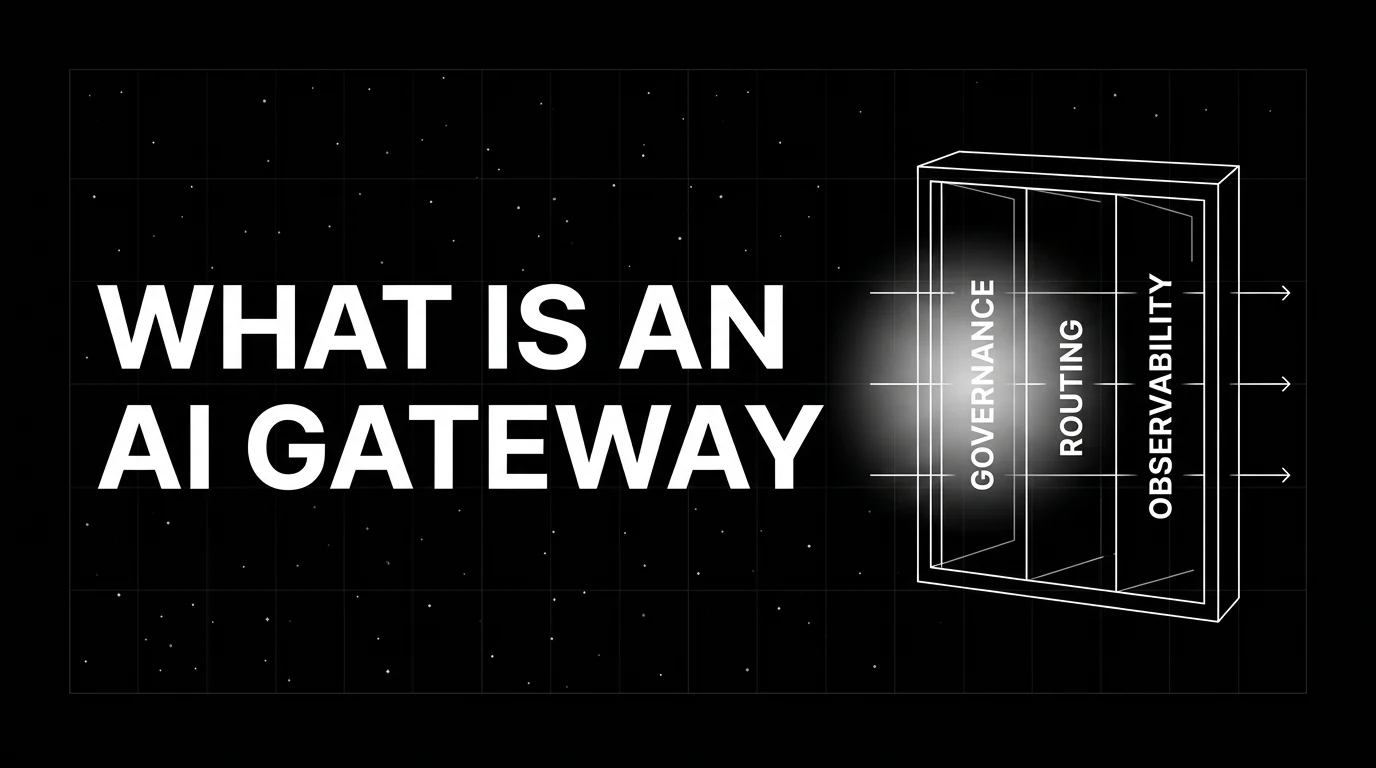
An AI gateway sits between apps and LLM providers for governance, routing, observability. What it is, how it differs from API gateways.