Best 5 AI Observability Tools for Fintech AI Applications in 2026
Five fintech AI observability platforms scored on per-decision spans, immutable audit, SOC 2 + PCI-DSS, FFIEC / SR 11-7 model risk, EU DORA alignment.
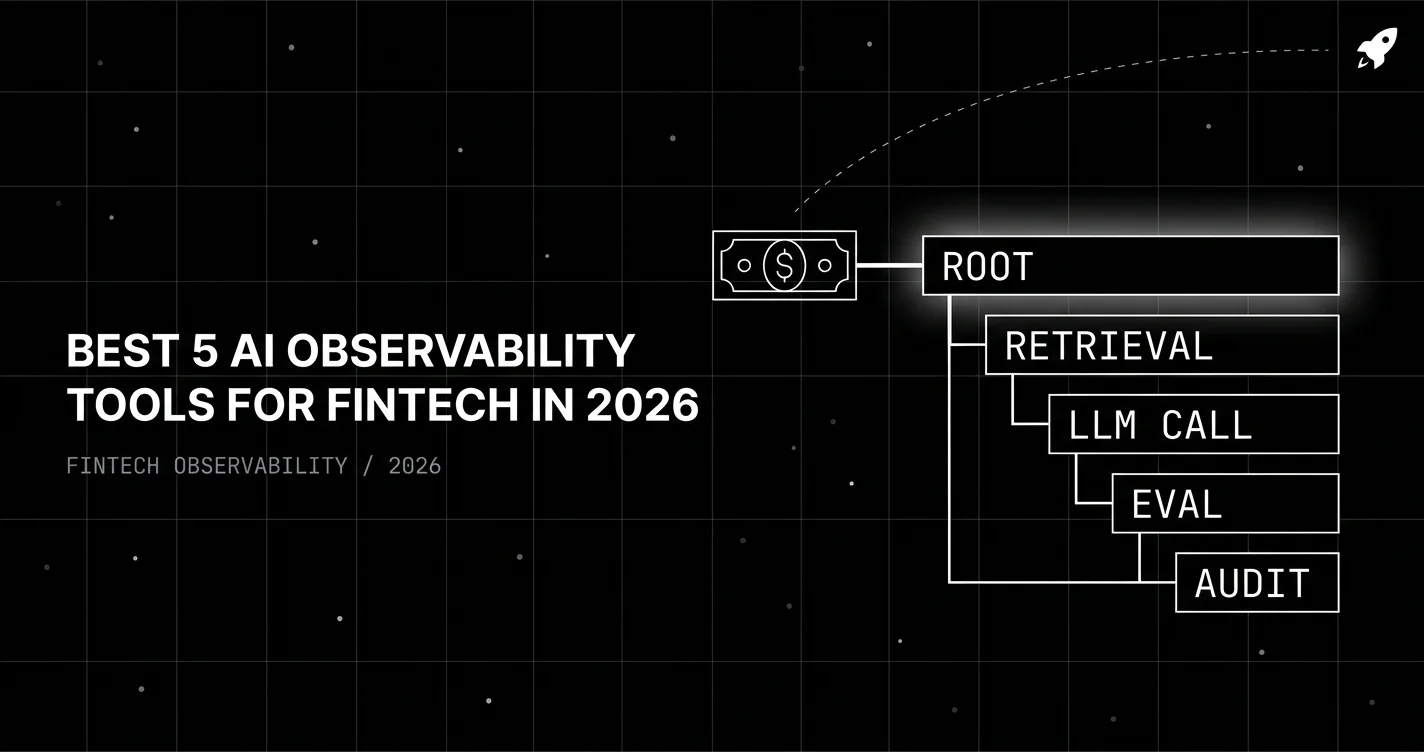
Table of Contents
Best 5 AI Observability Tools for Fintech AI Applications in 2026
A neobank stood up a credit-decisioning copilot on a tier-1 LLM observability vendor. Six weeks later the model-risk committee asked the question every fintech eventually fields: pull the per-decision span for every adverse-action notice in the last 90 days, with the prompt, the bureau data, the eval score that graded the explanation, and the reviewer override. The dashboard could not answer it. Span attributes carried raw PAN to a backend the QSA had never assessed. Retention defaulted to 30 days against a 7-year SEC 17a-4(f) horizon. Workspace-level access let every product manager read the trace. None of those failures showed up in the UI — they showed up the morning the second line asked.
Fintech AI observability in 2026 is per-decision span + immutable audit retention + SOC 2 + PCI-DSS-safe data path, under FFIEC and SR 11-7 discipline, with EU DORA’s ICT-incident-records horizon for euro-area exposure. Generic LLM observability that handles PCI poorly is how you fail your second-line.
TL;DR: the five-platform shortlist
| # | Platform | Per-decision span | Immutable retention | SOC 2 + PCI path | Best for |
|---|---|---|---|---|---|
| 1 | Future AGI | traceAI OTel-native spans across 35+ frameworks; eval scores joined via span_id; Error Feed clusters failure spans | Configurable HTTPSpanExporter to WORM store; per-tenant tamper-evident retention; SOX / 17a-4(f) / DORA-portable | SOC 2 Type II + HIPAA + GDPR + CCPA per trust page; span-layer PII redaction strips PAN / SSN / account pre-export | Mid-market lenders, neobanks, robo-advisors, fraud + KYC agents on OTel |
| 2 | Datadog AI | Full APM transcript + flame graph; GenAI semantic conventions native | Vendor-hosted; tier-1 retention; exporter not portable off Datadog | SOC 2 + HIPAA-eligible tier; PCI redaction is pipeline-layer | Tier-1 banks on Datadog APM with FFIEC-friendly retention |
| 3 | Arize Phoenix | OSS OTel-native; agent transcript view; eval link via span_id with arize-phoenix-evals | Self-host satisfies durability if you wire WORM | OSS Apache 2.0; PCI redaction is BYO processor | Sovereign deployment, engineering-led fintech, OSS-first |
| 4 | New Relic AI | OTel ingest + APM trace surface; lighter on 200+ tool-call fan-out | Vendor-hosted; configurable retention at higher tiers | SOC 2; HIPAA on separate contract; PCI redaction is BYO | APM-led fintech IT shops on New Relic |
| 5 | Custom on-prem | OTel collector + Honeycomb or Tempo; span-layer redaction | You own WORM, tamper-evidence, retention | You own SOC 2 + PCI scope; air-gapped if needed | Tier-1 banks with on-prem mandate and a real ML platform org |
Future AGI lands #1 because per-decision span attribution, span-layer PII redaction, configurable WORM-aligned export, and eval-to-span linkage all ship as product defaults — not deployment work the buyer has to engineer.
Why fintech AI observability is different from generic LLM observability
Generic observability tells you a request happened. Fintech observability has to produce the per-decision span the SR 11-7 second-line reads, the immutable record SEC 17a-4(f) requires, the PCI-DSS-safe data path the QSA inspects, and the retention horizon EU DORA Article 12 expects. Three failure modes ship in production: an advisor-copilot trace buries the fraud span three levels deep in a 200-tool-call fan-out; a KYC-pipeline span lands outside the 17a-4(f) WORM boundary; a payment-execution agent carries unmasked PAN into a span attribute that ships to a non-PCI backend.
The 2026 framing is reliability, not capability. The question is whether the trace survives the model-risk review and the bank examination.
Six anchors set the bar:
- SR 11-7 Model Risk Management — Federal Reserve guidance applied to LLM-shaped systems in 2026. Expects evaluator, threshold, test set, and monitoring per model version. The per-decision span is the unit of evidence.
- FFIEC IT Examination Handbook — supervisory expectations for AI/ML governance and audit-trail integrity at federally-supervised institutions.
- PCI-DSS v4.0 — PAN, CVV, expiration, full track cannot land outside PCI scope. Span-layer redaction is the control.
- SEC Rule 17a-4(f) — durable electronic-record retention; the off-channel-communications enforcement wave ($2B+ in settlements 2022–24) extends the rule to LLM traces.
- EU DORA — Article 12 ICT-incident records, Article 28 third-party-risk review. Vendor-hosted backends without an export path fail Article 28.
- EU AI Act Article 14 — human oversight on high-risk fintech systems; August 2026 enforcement window.
The 2026 vocabulary wiring these to the SDK is OpenTelemetry 1.37+‘s GenAI semantic conventions (gen_ai.system, gen_ai.request.model, gen_ai.usage.input_tokens, gen_ai.usage.output_tokens), emitted by Future AGI traceAI, Datadog AI, Arize Phoenix, and New Relic AI.
The Future AGI Fintech AI Observability Scorecard
Five dimensions, each with a pass criterion and the failure mode it catches.
| # | Dimension | Pass criterion | Failure mode |
|---|---|---|---|
| 1 | Per-decision span attribution | Every regulated decision resolves to a single span carrying input + retrieval + tool fan-out + output + model version + eval score | Fraud-relevant span buried 3 levels deep; FINRA 3110 supervision blind spot |
| 2 | Immutable audit retention | WORM-aligned, tamper-evident storage; configurable exporter; 7-year horizon | Trace deleted at 30-day vendor default; 17a-4(f) record failure |
| 3 | SOC 2 + PCI-safe path | SOC 2 Type II + PAN / CVV / expiration redacted at the span layer pre-export | Unmasked PAN ships to non-PCI backend; QSA finding and breach disclosure |
| 4 | FFIEC / SR 11-7 model-risk evidence | Eval result links to span via span_id; model version, threshold, override captured | Model-risk committee cannot reproduce; second-line review fails |
| 5 | EU DORA-aligned retention | ICT-incident records reproducible; OTel-portable exporter for Article 28 migration | Reportable incident lacks reproducible trace; Article 28 failure |
Three of five passing as defaults = production pick. Two = candidate. One = vendor pitch.
How the five platforms compare
| Platform | Per-decision span | Immutable retention | SOC 2 + PCI path | SR 11-7 evidence | DORA retention |
|---|---|---|---|---|---|
| Future AGI | Strong | Strong | Strong (SOC 2 + HIPAA + GDPR + CCPA; span-layer redaction) | Strong (span_id eval join; override captured) | Strong (OTel-portable exporter) |
| Datadog AI | Strong (APM transcript) | Partial (vendor-hosted) | Partial (PCI redaction pipeline-layer) | Strong | Partial (Article 28 conversation) |
| Arize Phoenix | Strong (OTel-native) | Strong via self-host | Partial (BYO redaction processor) | Partial (engineering-shaped surface) | Strong via self-host |
| New Relic AI | Partial | Partial | Partial (HIPAA separate; PCI BYO) | Partial (eval BYO) | Partial |
| Custom on-prem | You build | You build | You build (scope = your org) | You build | Strong (sovereign) |
#1 Future AGI: OTel-native traceAI, Agent Command Center, span-joined eval scores
Best for: mid-market lenders, neobanks, robo-advisors, fraud-detection agents, KYC bots, and advisor copilots on OpenTelemetry that need per-decision span attribution, span-layer PCI / PII redaction, eval-to-span linkage for the SR 11-7 artifact, and a configurable exporter that lands traces in an existing SOX / 17a-4(f) / DORA-aligned store.
Future AGI is the only platform in this shortlist where all four controls ship as product defaults. It is also the only one that closes the loop: spans flow into the eval store via span_id, eval scores feed the optimization layer (agent-opt), and optimized prompts flow back into production.
Key strengths:
- traceAI — OpenTelemetry-native SDK (Apache 2.0, OpenInference-compatible) with 35+ framework integrations across OpenAI, Anthropic, LangChain, LangGraph, LlamaIndex, AutoGen, CrewAI, Groq, Portkey, and Gemini. Per-tenant PII redaction strips PAN, SSN, account number, EIN, routing number, email, phone, and API keys at the SDK before the exporter ships. PCI scope stays inside your boundary.
- Configurable
HTTPSpanExporter— the span destination is a deployment property. Traces land in a SOX-retentioned span store, a 17a-4(f) WORM appliance, or a DORA-aligned sovereign store at your existing data residency without leaving OTel. GenAI semantic conventions emitted natively. - Agent Command Center ships per-tenant retention, RBAC, SAML SSO, SCIM, and an access audit log. Second-line reviewers read the trace store like an audit log, not a workspace dashboard.
- Eval scores join spans via
span_idthrough the ai-evaluation SDK (60+ evaluators, Apache 2.0).FactualAccuracy,Groundedness,Hallucination,ContextAdherence,ChunkAttribution, andDataPrivacyComplianceship asEvalTemplateclasses; no-investment-advice, advisory-disclaimer, KYC accuracy, and adverse-action coverage ship as aCustomLLMJudgeunder 30 lines. The SR 11-7 audit artifact assembles in one query. - Error Feed auto-clusters trace failures into named issues with auto-written root cause, quick fix, and long-term recommendation. The supervisor reviewing 200-tool-call advisor-copilot traces stops scrolling flat span lists.
- Compliance. SOC 2 Type II, HIPAA, GDPR, CCPA certified per the trust page; ISO 27001 in active audit; HIPAA BAA on the Scale tier; AWS Marketplace; air-gapped BYOC for federal residency and on-prem mandates.
Limitations:
- Opinionated prompt library; fewer collaboration knobs than a dedicated prompt-registry tool. Trade: prompt, eval, and trace in one control plane.
- The agent-opt self-improving loop is opt-in per route. Trade: the optimizer runs against real production traces, not a synthetic corpus.
- DORA Article 28 still requires your own third-party-risk review; the OTel-portable exporter closes the technical control, not the procurement document.
Pricing & deployment. Cloud + OSS self-host (Apache 2.0 SDKs); free + pay-as-you-go; SOC 2 + HIPAA BAA + SAML SSO + SCIM on Scale tier. See pricing. AWS Marketplace; BYOC for sovereign / air-gapped postures.
Verdict: the OTel-portable pick when the audit trail is the artifact. The only platform that passes the five-dimension scorecard out of the box.
Pair with the sister best fintech AI evaluation platforms guide and the generative AI trends 2026 reliability narrative.
#2 Datadog AI: FFIEC-friendly APM home with GenAI semantic conventions
Best for: tier-1 banks and broker-dealers already running Datadog APM with a SOX-retentioned span store and an FFIEC-friendly audit footprint, where the LLM observability tier extends the existing posture without a new procurement cycle.
Key strengths:
- GenAI semantic conventions adopted natively; LLM traces emit alongside Datadog’s APM schema. Per-decision span surface is APM-grade with the same flame-graph UI the platform team already runs.
- Span-level cost attribution at Tier-1 durability under 200+ tool-call agent fan-out; FFIEC-friendly retention conversations pre-vetted.
- Datadog query language and dashboards extend to LLM traces; analysts query without learning a new tool.
- SOX-retentioned span store, SSO, MSA, and named fintech customer references make the security review faster.
Limitations:
- PCI redaction is pipeline-layer, not span-SDK layer; teams handling cardholder data wire pre-export redaction with a custom OTel processor.
- Vendor-locked SDK semantics; exporting to a non-Datadog backend loses platform-specific richness. DORA Article 28 sub-processor narrative is a managed procurement conversation.
- High-floor pricing at Tier-1 spend levels; not the shape for mid-market or cost-driven fintech.
Pricing & deployment: enterprise contract; SaaS on Datadog cloud.
Verdict: the procurement-gravity pick. Tier-1 fintech already on Datadog APM extends the same posture into LLM trace data with FFIEC-friendly retention. For teams without a Datadog footprint, Future AGI traceAI ships in one line over OTel with span-layer PCI redaction as a default.
#3 Arize Phoenix: OSS OTel-native trace store for sovereign deployment
Best for: engineering-led fintech with a platform team, sovereign-deployment mandates (EU-resident data, air-gapped self-host), and OSS-first procurement where the trace store sits inside the buyer’s own boundary with no third-party sub-processor.
Key strengths:
- OTel-native; OSS Apache 2.0; self-host removes the DORA Article 28 sub-processor question when the trace store sits inside the regulated entity’s data center.
- Strong agent transcript view; engineering default for OSS LLM observability; eval link via
span_idwhen paired witharize-phoenix-evals. - GenAI semantic conventions adopted; mature LangChain, LlamaIndex, and OTel ecosystem integrations.
Limitations:
- Span-layer PCI / PII redaction is BYO at the processor layer; WORM discipline for 17a-4(f) and DORA Article 12 is your deployment work.
- SR 11-7 second-line audit surface is engineering-shaped; the per-decision artifact a model-risk committee reads in 30 seconds takes additional wiring.
- Managed-cloud (Arize SaaS) carries its own retention contract; read it against NYDFS Part 500 and DORA Article 28.
Pricing & deployment: free OSS (Apache 2.0); self-host or Arize cloud.
Verdict: the sovereign-deployment OSS pick. Pair with Future AGI’s ai-evaluation and Agent Command Center if you want the SR 11-7 audit artifact without rebuilding the second-line surface yourself.
#4 New Relic AI: APM-led alternative for non-Datadog fintech IT
Best for: fintech IT shops and broker-dealer back-office teams already running New Relic APM where the LLM observability tier extends the existing instrumentation footprint without standing up a separate trace vendor.
Key strengths:
- APM gravity is real for shops that standardized on New Relic before Datadog; security review and MSA conversation are shorter when the relationship is in place.
- GenAI semantic conventions supported; OTel-instrumented agent stacks flow in without re-instrumentation.
- Unified telemetry (logs + metrics + traces); account-level partitioning supports multi-tenant fintech vendors.
Limitations:
- PCI scope is an enterprise conversation. Span-layer redaction is BYO; a custom OTel processor scrubs PAN / account / SSN before the span lands in the vendor backend.
- LLM-trace UI depth on 200+ tool-call agent fan-out is lighter than Datadog or Future AGI.
- Vendor-hosted; exporter not OTel-portable off New Relic. DORA Article 28 conversation applies.
- Per-decision eval-to-span linkage is BYO; pair with a dedicated eval SDK for the SR 11-7 artifact.
Pricing & deployment: enterprise contract; SaaS on New Relic cloud; HIPAA tier on a separate addendum.
Verdict: the procurement-gravity pick when New Relic APM is already in place. For greenfield deployments, Future AGI traceAI ships PCI / PII redaction and span_id eval linkage as defaults New Relic asks the team to wire.
#5 Custom on-prem: OTel collector + Honeycomb / Tempo for sovereign mandates
Best for: tier-1 banks with a hard on-prem mandate, broker-dealers under board-level data-residency constraints, EU-resident DORA-scoped fintech with an Article 28 sub-processor moratorium, and central-bank-adjacent payment infrastructure.
The custom path is honest about the trade: you own the trace stack end-to-end. A self-hosted OpenTelemetry Collector handles ingestion, a PCI-redaction processor scrubs PAN / SSN / account before the span leaves the boundary, Honeycomb (or a self-hosted Grafana Tempo shape) is the trace store, and your IAM owns per-decision access. DORA Article 28 collapses to your own org.
Key strengths:
- No third-party sub-processor; SOC 2 + PCI scope = your covered entity; data-residency = your data center.
- Honeycomb’s dynamic sampling and BubbleUp pattern detection scale to 200+ tool-call agent fan-out without the unsampled-tier-1 cost curve.
- The custom path is custom operationalization, not custom primitives: use Future AGI’s Apache 2.0
traceAIandai-evaluationinside the boundary so eval, span-layer redaction, and SR 11-7 audit linkage are not also custom builds.
Limitations:
- You own the upgrade path, redaction-rule curation, storage scaling, query-layer performance, and dashboard build. Headcount math rarely beats a SOC 2 / PCI-certified vendor unless platform engineering already exists.
- Fintech rubric authoring is a research workload; no-investment-advice, KYC accuracy, and adverse-action coverage need a compliance lead, a labelled gold set, and a quarterly judge-calibration review.
- The SR 11-7 audit artifact is whatever you build it to be.
Pricing & deployment: Honeycomb SaaS has FFIEC-friendly enterprise terms; Tempo / ClickHouse self-host is infrastructure plus headcount.
Verdict: the right answer when data residency is a hard mandate and the platform org is already there. The wrong answer when the narrative is “we’ll save vendor fees” — the math rarely works at fintech-startup scale.
Which AI observability tool should your fintech team pick?
| If you are a… | Pick | Why |
|---|---|---|
| Mid-market lender or neobank with one production agent on OTel | Future AGI | All five scorecard dimensions pass as defaults; per-decision span; span-layer PCI / PII redaction; configurable WORM-aligned exporter; span_id eval linkage |
| Fraud-detection or KYC team needing PAN / SSN redaction at the span layer | Future AGI | Per-tenant PII redaction strips PAN, SSN, account, EIN, routing pre-export; PCI scope stays inside your boundary |
| Tier-1 bank with existing Datadog APM and SOX-retentioned span store | Datadog AI | Procurement gravity; FFIEC-friendly retention extends; SSO + MSA in place; analyst muscle transfers |
| EU-resident fintech under DORA Article 28 sub-processor moratorium | Arize Phoenix or Custom on-prem | OSS self-host removes the sub-processor conversation; pair with Future AGI OSS SDKs for eval and audit linkage |
| Fintech IT shop standardized on New Relic APM | New Relic AI | Existing APM gravity; pair with Future AGI traceAI for span-layer PCI redaction defaults |
| Tier-1 bank with on-prem mandate and a real ML platform team | Custom on-prem | Sovereign deployment; DORA Article 28 collapses; use OSS Future AGI SDKs inside the boundary |
Frequently Asked Questions
Why is fintech AI observability different from generic LLM observability?
Generic LLM observability tells you a request happened. Fintech observability has to produce the per-decision span the SR 11-7 second-line reads, the immutable record SEC 17a-4(f) requires, the PCI-DSS-safe data path the QSA inspects, and the retention horizon EU DORA Article 12 expects. Generic platforms ship none of those as defaults.
What is per-decision span attribution?
Every advisor recommendation, fraud verdict, KYC decision, or credit determination resolves to a single span carrying the input, the retrieved evidence, the model version, the tool calls, the output, and the eval score that graded it. The SR 11-7 reviewer reads that span as the unit of evidence. A flat trace list fails the review.
How does PCI-DSS shape the AI observability data path?
PAN, CVV, expiration, and full track cannot land in any backend outside PCI scope. The control is span-layer redaction pre-export plus a configurable exporter that targets a PCI-scoped store. Future AGI traceAI handles this at the SDK; for other platforms, run a pre-export OpenTelemetry processor.
What does immutable audit retention mean for trace data?
WORM storage with tamper-evident logs and a retention horizon that survives SEC 17a-4(f), NYDFS Part 500 §500.13, and EU DORA Article 12. Trace data containing a customer communication or a regulated decision is itself an electronic record. Vendor-hosted backends with 30-day default retention fail the durability test.
How does EU DORA change the fintech observability stack?
Article 12 expects ICT-related-incident records — the trace plus the eval score that flagged it — retained, time-stamped, and reproducible. Article 28 layers a third-party-risk review on every sub-processor. Vendor-hosted backends without an OTel-portable export path fail Article 28.
Datadog AI or Future AGI traceAI: which fits a SOX-existing fintech?
If the fintech already runs Datadog APM with a SOX-retentioned span store, Datadog AI extends the same posture. If the fintech is mid-market with OTel in place but no Datadog APM, Future AGI traceAI ships OTel-native instrumentation across 35+ frameworks, span-layer PCI / PII redaction, and eval scores joined via span_id — without the platform-tax procurement story.
Has the OpenTelemetry GenAI semantic conventions adoption matured enough?
Yes. gen_ai.system, gen_ai.request.model, gen_ai.usage.input_tokens, and gen_ai.usage.output_tokens are stable in OTel 1.37+ and adopted by Future AGI traceAI, Datadog AI, Arize Phoenix, and New Relic AI. A vendor-portable SDK is the procurement insurance against a 7-year retention horizon outlasting the SDK vendor.
Where each platform earns its slot
Future AGI earns #1 because per-decision span attribution, span-layer PCI / PII redaction, configurable WORM-aligned export, span_id eval-to-span linkage through ai-evaluation, Error Feed clustering, and SOC 2 + HIPAA + GDPR + CCPA certification per the trust page all ship as product defaults. Datadog AI earns #2 on FFIEC-friendly APM gravity. Arize Phoenix earns #3 on OSS self-host for sovereign deployment and DORA Article 28-sensitive procurement. New Relic AI earns #4 on APM gravity at non-Datadog shops. Custom on-prem earns #5 for tier-1 banks with a real ML platform team and a hard on-prem mandate.
The shape of the pick is not which platform is best — it is which buyer profile, procurement constraint, and audit horizon fits the trace your second-line will read. For mid-market fintech on OpenTelemetry looking for span-layer PCI redaction and span_id audit linkage out of the box, Future AGI’s AI observability platform is the natural next step.
Related reading: the sister best fintech AI evaluation platforms comparison, how to evaluate Google ADK agents, and the generative AI trends 2026 reliability narrative.
External anchors: SR 11-7, the FFIEC IT Examination Handbook, PCI-DSS v4.0, SEC Rule 17a-4(f), EU DORA, EU AI Act Article 14, and the OpenTelemetry GenAI semantic conventions.
Updated May 2026. Re-eval cadence: quarterly on regulatory milestones (CFPB circulars, FINRA notices, NYDFS bulletins, EU AI Act Article 14 enforcement window August 2026, EU DORA examination cycle) and OTel GenAI semantic conventions revisions.
Frequently Asked Questions
Why is fintech AI observability different from generic LLM observability?
What is per-decision span attribution?
How does PCI-DSS shape the AI observability data path?
How does EU DORA change the fintech observability stack?
Datadog AI or Future AGI traceAI — which fits a SOX-existing fintech?
Has the OpenTelemetry GenAI semantic conventions adoption matured enough for fintech production?
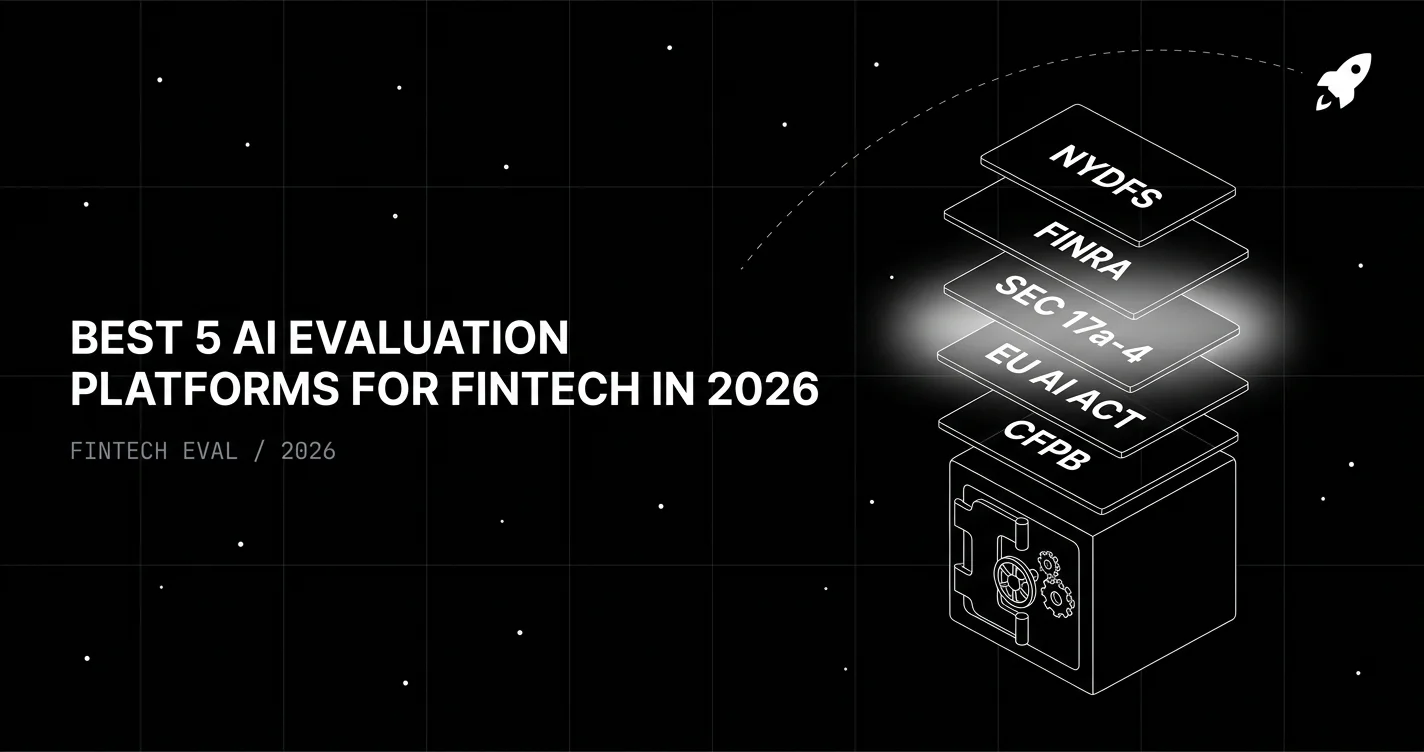
Fintech AI eval in 2026: five platforms scored on SOC 2 + PCI-DSS, financial-regulation rubrics, SR 11-7. FAGI, Galileo Luna-2, Braintrust, Datadog.

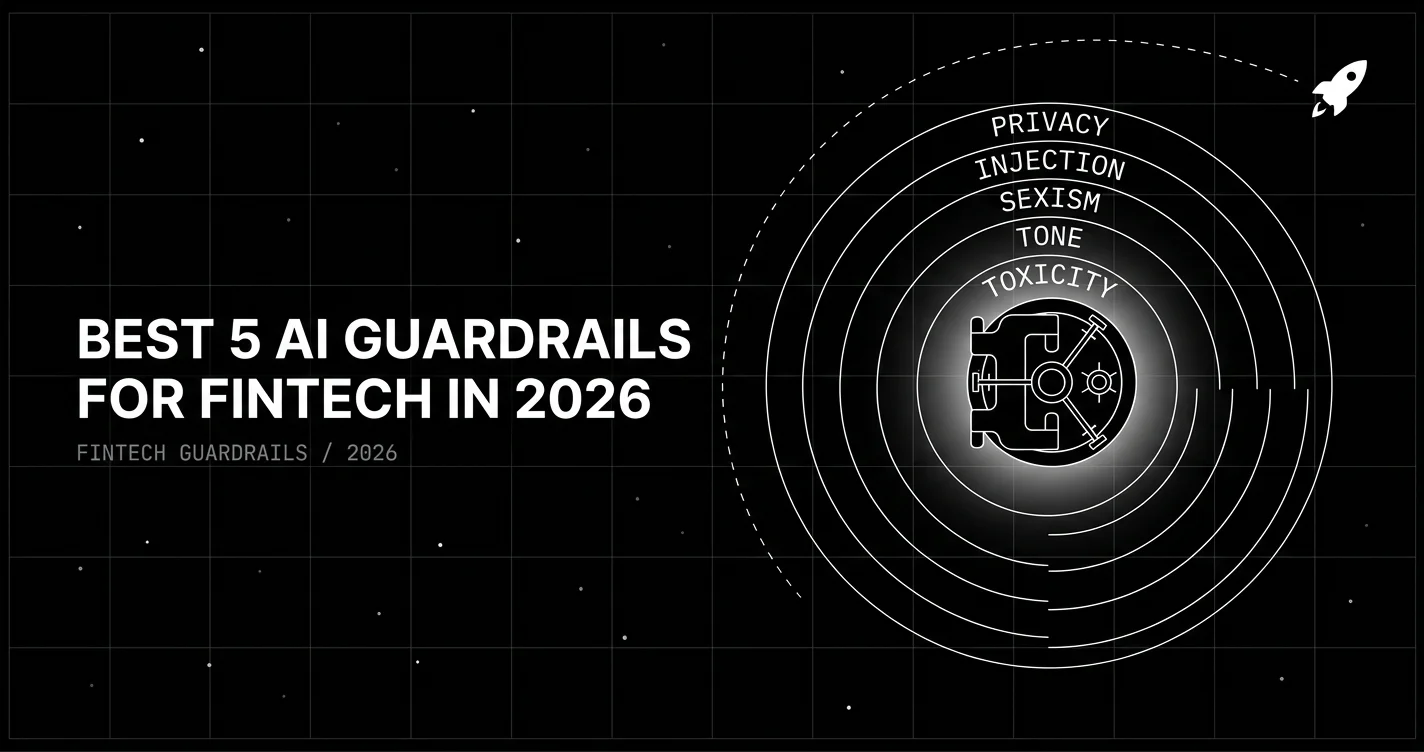
Five AI guardrails for fintech: fraud detection, credit, KYC, trading. NYDFS Part 500 §500.13, FINRA Rule 3110, SEC 15c3-5, EU AI Act Art 14, DORA.
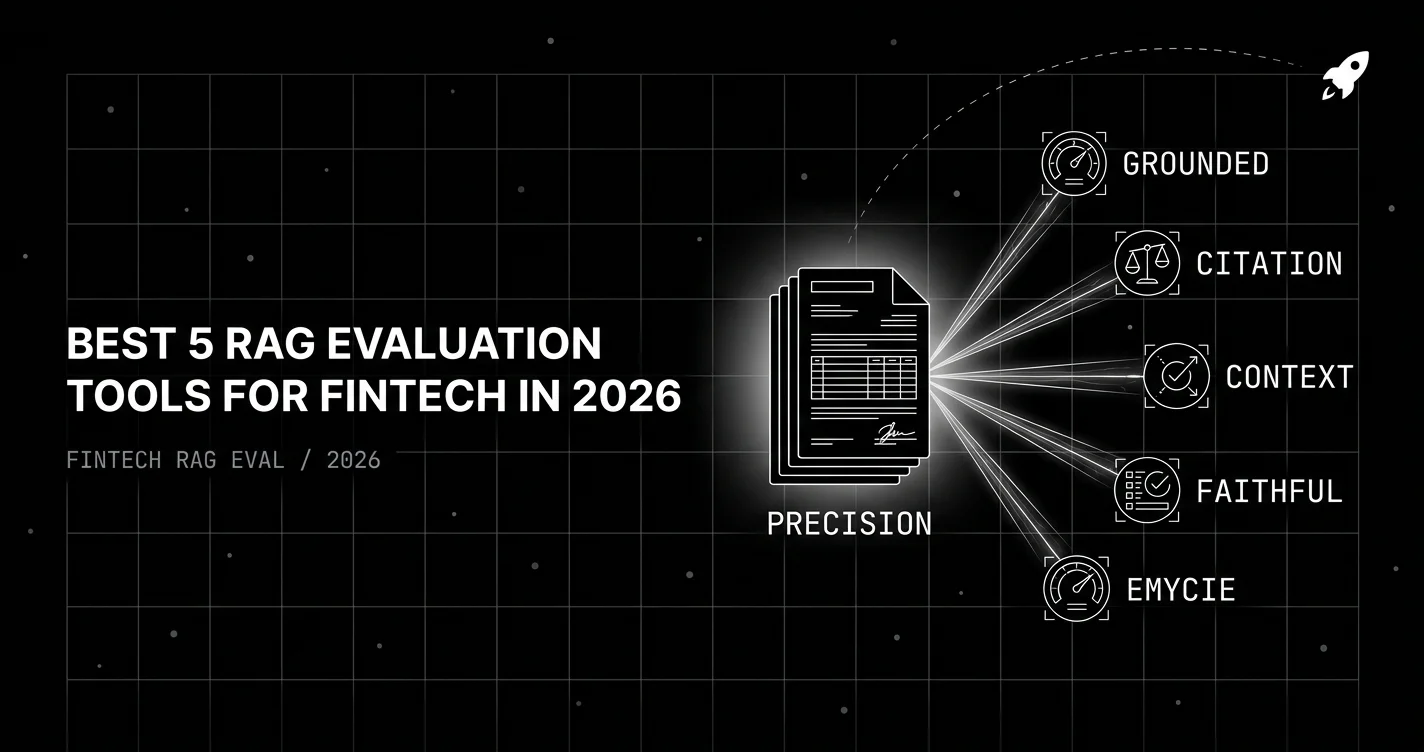
Five RAG eval tools for fintech: advisor copilots, KYC RAG, credit-decisioning RAG, regulatory research. NYDFS, FINRA, SEC 17a-4, CFPB audit covered.