Best 5 AI Gateways for SaaS Platforms in 2026: Multi-Tenant Routing, Cost Attribution, and Usage-Based Billing
Five AI gateways for B2B SaaS in 2026: multi-tenant isolation, BYO-key segmentation, per-tenant cost for usage billing, GDPR DPA, fair-share rate limits.
Table of Contents
Originally published May 17, 2026.
A Series B vertical SaaS platform shipped an AI feature to its 1,400 production customers on a Tuesday and discovered by Friday that one tenant in retry-storm mode had consumed 84 percent of the shared OpenAI organization rate-limit pool, that the usage-based billing pipeline had under-reported AI usage by 9.4 percent against the OpenAI invoice, that the BYO-key enterprise tier had been silently falling back to the shared pool when the tenant’s key throttled, and that the audit-log export the customer’s security team requested for a SOC 2 II vendor review couldn’t be filtered to just that tenant’s traffic. The product team had built an AI feature; the platform team hadn’t built an AI gateway. This guide compares the five AI gateways B2B SaaS platforms should consider in 2026, scored on the seven axes that decide whether a multi-tenant AI feature survives the customer base it ships to.
TL;DR: The 5 Best SaaS AI Gateways for 2026
Future AGI Agent Command Center is the strongest pick for a B2B SaaS AI gateway in 2026 because it bundles tenant-scoped virtual keys, per-tenant Stripe-metered budgets, BYO-key isolation, fair-share rate limiting, an OpenAI-compatible drop-in, 18+ guardrail scanners, and OpenTelemetry-native per-tenant audit logs in one Apache 2.0 Go binary you can self-host. SaaS procurement in 2026 weighs five compounding pressures: SOC 2 II and ISO 27001 evidence through Vanta and Drata, GDPR DPAs with sub-processor transparency, usage-based billing that has to reconcile within a percent of the upstream invoice, BYO-key contracts that must not commingle with the shared pool, and a board expectation that AI gross margin is reportable per tenant from quarter one.
- Future AGI Agent Command Center — Best overall. Tenant-scoped virtual keys, per-tenant Stripe-metered budgets, BYO-key isolation, fair-share rate limiting, and OTel-native per-tenant audit logs, self-hosted in the SaaS VPC.
- Portkey — Best for B2B SaaS platforms that want a managed multi-tenant cost and usage dashboard with a four-tier budget hierarchy. Verify the Palo Alto Networks acquisition timeline before signing multi-year.
- Kong AI Gateway — Best for SaaS platforms already running Kong in front of their REST APIs that want AI traffic on the same data plane, OPA policies, and observability stack.
- LiteLLM — Best for Python-first platform teams pinning a known-good commit after the March 24, 2026 supply-chain incident, with their own upstream DPA path.
- TrueFoundry AI Gateway — Best for mid-market SaaS platforms whose enterprise tenants require both gateway and control plane inside their own VPC.
Helicone is intentionally not in the list. As of March 3, 2026 it was acquired by Mintlify and is in maintenance mode. Plan a migration window, not continued procurement.
Why B2B SaaS Needs an AI Gateway in 2026
The shape is the same across vertical SaaS (legaltech, healthtech CRM, sales engagement, support, HR ops), horizontal SaaS (collaboration, productivity, low-code), and infrastructure SaaS (data, security, dev tools). A VP Engineering is shipping AI to a base ranging from a Free tier with thousands of accounts to a handful of Enterprise contracts worth six or seven figures of ARR per AI feature.
The gateway is judged on three runtime questions and one procurement question. Can it stop one tenant’s bad prompt from blocking the others? Can it attribute every cent of upstream cost to the tenant that incurred it well enough that usage-based billing reconciles within a single-digit percent? Can it keep a BYO-key tenant on its own rate limit and DPA path, separated from the shared pool? And can the customer’s security team pull a per-tenant audit log for a SOC 2 II vendor review without seeing other tenants’ data?
The 2026 B2B SaaS AI compliance stack is four layers, and a gateway that handles only one isn’t a SaaS gateway.
- SOC 2 Type II. The gateway lands in CC6 (logical access), CC7 (system operations and change management), and CC9 (vendor risk). A gateway that ships logs to a shared bucket no tenant can scope to is a CC6.1 finding in waiting; CC9.2 catches teams that haven’t evaluated upstream model providers as sub-processors.
- ISO 27001:2022. Annex A restructured into 93 controls; the gateway sits under A.5.23 (cloud services), A.5.34 (privacy and PII), A.8.16 (monitoring), and the new A.5.30 (ICT readiness). The 2013-to-2022 transition deadline was October 31, 2025; by 2026 every certified customer reads evidence against the 2022 set.
- GDPR Article 28 plus SCCs. SaaS platforms with EU customers ship a DPA naming the platform as processor and upstream providers as sub-processors. The 2021 SCCs (Module 2 and 3) are the cross-border scaffolding; Schrems II remains the backdrop, so a transfer impact assessment is part of the procurement record. The gateway enforces region pinning and the audit log behind an Article 15 data subject access request.
- Vendor risk standards (Vanta, Drata, SecureFrame, OneTrust). An AI feature doesn’t enter the product unless it survives the customer’s vendor risk questionnaire. The gateway has to expose at one click: SOC 2 II report, ISO 27001 certificate, GDPR DPA, sub-processor list, breach SLA, residency map, audit-log retention, encryption posture, RBAC matrix, BYO-key isolation policy.
How Did We Score These SaaS AI Gateways?
We used the Future AGI Production Gateway Scorecard adapted for B2B SaaS. Seven axes, scored on the same evidence across every pick.
| # | Axis | What we measure |
|---|---|---|
| 1 | Multi-tenant traffic isolation | Tenant-scoped virtual keys; per-tenant queues and rate limits; tenant_id span attribute; logical separation of audit logs |
| 2 | BYO-API-key isolation from the shared pool | Dedicated route for BYO-key tenants; independent rate limit and budget; explicit tagging; per-tenant DPA path on the BYO route |
| 3 | Per-tenant cost attribution for usage-based billing | Prompt, completion, and cached token counts per request per tenant; stable webhook to Stripe metered subscriptions, Chargebee, Maxio, or BigQuery; reconciliation delta against the upstream invoice |
| 4 | Customer-data residency under DPAs | GDPR Article 28 DPA with signed SCCs; named EU region for control plane and data plane; sub-processor list with 30-day change notification |
| 5 | Shared rate-limit pool with fairness | Weighted fair-share across tenants; per-tenant queueing under retry storm; protection of small tenants from a single noisy neighbor; OpenAI organization-key fan-out |
| 6 | Optional-feature flag routing | Feature flag as a tag on the virtual key, not an application-layer check; gradual rollout primitives; AB test surface; kill switch; per-tier gating mapped to the Stripe product catalog |
| 7 | Per-tenant audit log for the security team | Per-tenant audit-log filter; OpenTelemetry-native span emission; SOC 2 II Common Criteria evidence; ISO 27001 A.8.16 coverage; tenant-side export without exposing other tenants’ traffic |
Axes 1, 3, and 5 decide whether the gateway survives the first multi-tenant AI feature you ship; the others are confirm-before-signing. We don’t publish a composite score because the right priority depends on the SaaS profile (vertical AI-native versus horizontal feature versus AI-first platform).
Future AGI Agent Command Center: Best Overall for B2B SaaS Multi-Tenant AI
Future AGI Agent Command Center tops the 2026 B2B SaaS list because it bundles every axis the multi-tenant SaaS gateway has to satisfy at the same network hop in one Apache 2.0 Go binary.
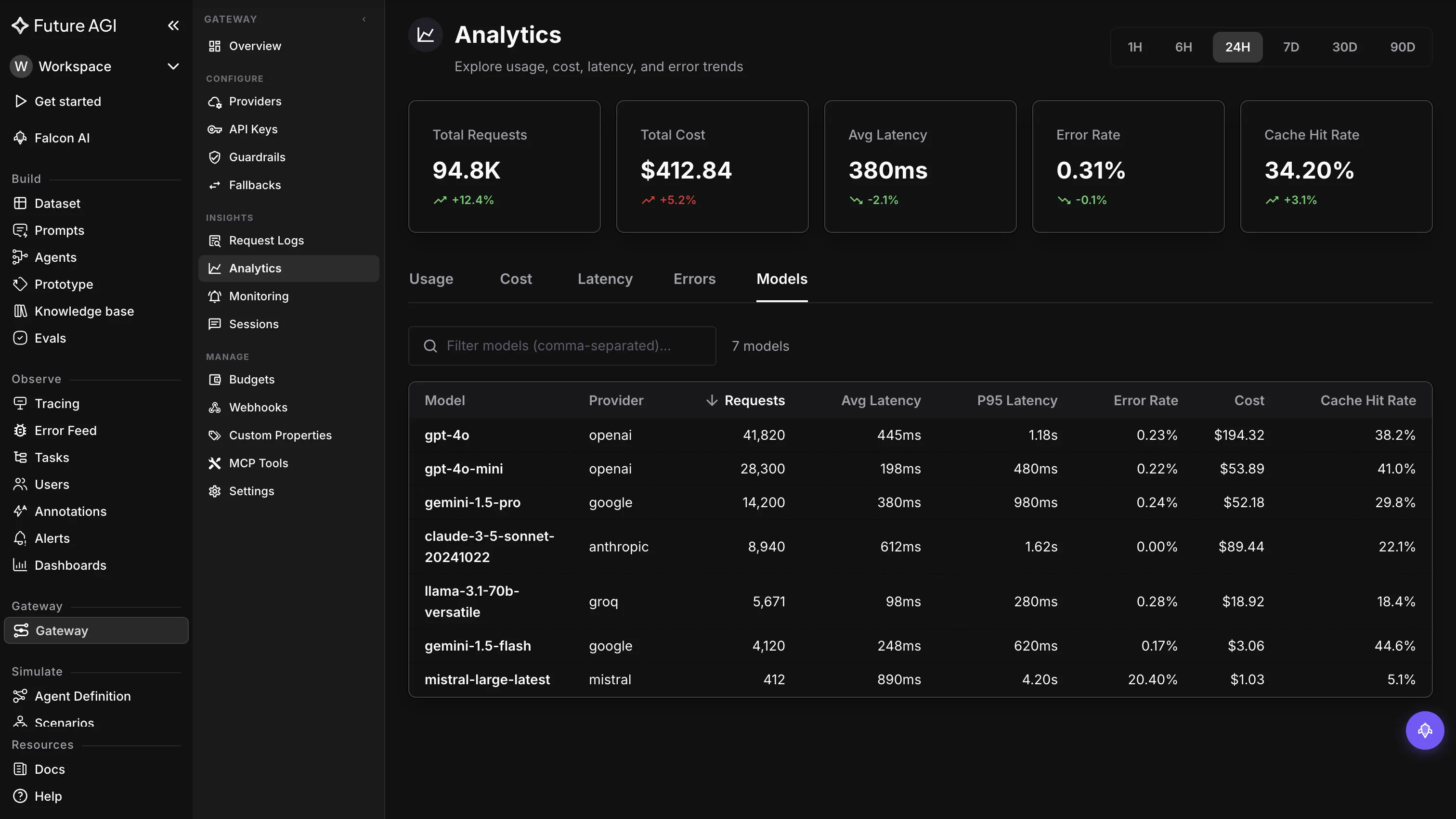
Best for. B2B SaaS platforms shipping AI to mid-market and enterprise customers that want OpenAI compat plus tenant-scoped virtual keys plus per-tenant Stripe-metered budgets plus BYO-key isolation plus OpenTelemetry per-tenant audit logs, self-hosted in the SaaS VPC.
Key strengths.
-
OpenAI-compatible drop-in. Change
base_urltohttps://gateway.futureagi.com/v1; the gateway carries tenant context as a header. A SaaS team shipping AI to 1,200 customers doesn’t rewrite SDK calls. -
Tenant-scoped virtual keys with per-tenant rate limits, budgets, cache scoping, and feature flags. The virtual key is the only object the application code touches.
-
Per-tenant cost attribution. Every span carries
tenant_id,feature_id,provider, and prompt/completion/cached token counts, exportable as a webhook to a Stripe metered subscription item, Chargebee, BigQuery, or Kafka. Teams moving from an application-layer estimate to gateway-side attribution typically cut the reconciliation delta from 6 to 12 percent to under 1 percent in the first billing cycle. -
BYO-key isolation as a first-class route. Dedicated route per BYO-key tenant with its own rate limit, budget, and DPA path; every span tagged
byo_key=true; no silent fallback to the shared pool on a 429. -
The Future AGI Protect model family for inline guardrails, ~65 ms p50 text and ~107 ms p50 image (arXiv 2510.13351). Protect is FAGI’s own fine-tuned model family built on Google’s Gemma 3n with specialized adapters across four safety dimensions (content moderation, bias detection, security/prompt-injection, data privacy/PII), natively multi-modal across text, image, and audio, a model family, not a plugin chain. A dedicated MCP Security scanner sits alongside and the same dimensions are reusable as offline eval metrics so the prod policy and the eval rubric stay in sync.
-
Shared rate-limit pool with fairness: weighted fair-share across tenants, per-tenant queueing under retry storm, OpenAI organization-key fan-out to lift the global ceiling.
-
Feature-flag routing as a tag on the virtual key. Tier A carries
feature_summarize=true; Tier B addsfeature_classify=true; Tier C addsfeature_agent=true. -
Per-tenant audit log. OpenTelemetry spans the customer’s security team pulls without seeing other tenants’ traffic, the artifact Vanta and Drata reviewers request under “logical separation of customer data in audit trails.”
-
Apache 2.0 single Go binary; Docker, Kubernetes, AWS, GCP, Azure, air-gapped or cloud; multi-tenant RBAC; BYOC.
-
Self-improving loop.
traceAIinstruments 50+ AI surfaces across Python, TypeScript, Java, and C# (including Spring Boot starter, Spring AI, LangChain4j, Semantic Kernel) OpenInference-natively and emits spans.ai-evaluation(Apache 2.0) ships a 60+ EvalTemplate classes in theai-evaluationSDK with self-improving evaluators on the Future AGI Platform (task completion, faithfulness, tool-use, structured-output, agentic surfaces, hallucination, groundedness, context relevance, instruction-following), plus unlimited custom evaluators authored end-to-end by an in-product eval-authoring agent that uses tool calling on your code and tenant context, plus self-improving evaluators that learn from live production traces (the rubric sharpens as per-tenant traffic flows), plus FAGI’s proprietary classifier model family that runs continuous high-volume scoring at very low cost-per-token (lower per-eval cost than Galileo Luna-2).agent-optlearns from systematically failing patterns. Error Feed (the part of the eval stack, the clustering and what-to-fix layer that feeds the self-improving evaluators) sits alongside as the zero-config error monitor: auto-clusters related per-tenant failures into named issues (50 traces → 1 issue), auto-writes the root cause plus a quick fix plus a long-term recommendation, and tracks trend per issue so tenant-level regressions get triaged like exceptions. Catalog is the floor, not the ceiling.
Where it falls short. SaaS buyers whose Vanta or Drata template requires a specific compliance artifact beyond SOC 2 Type II, HIPAA, GDPR, and CCPA (all certified) can take the Apache 2.0 self-host path and run the gateway inside their own perimeter so no vendor compliance dependency sits in the critical path. ISO/IEC 27001 is in active audit alongside the existing SOC 2 / HIPAA / GDPR / CCPA stack, see the Future AGI trust page for the current state.
from openai import OpenAI

# x-fagi-tenant carries per-tenant rate limit, budget, feature flags,
# BYO-key isolation, and audit-log scoping. No SDK rewrite per tenant.
client = OpenAI(
    api_key="$FAGI_API_KEY",
    base_url="https://gateway.futureagi.com/v1",
    default_headers={
        "x-fagi-tenant": "tenant_b",
        "x-fagi-feature": "summarize_thread",
    },
)
response = client.chat.completions.create(
    model="openai/gpt-4o",
    messages=[{"role": "user", "content": "Summarise the support thread above."}],
)
Verdict. The strongest single pick when the buying constraint is OpenAI compat plus tenant-scoped virtual keys plus per-tenant Stripe-metered budgets plus BYO-key isolation plus OpenTelemetry per-tenant audit logs in one Apache 2.0 Go binary, with the option to inherit your own SOC 2 II.
Portkey: Best for Managed Multi-Tenant Cost and Usage Dashboard
Portkey is the strongest pick when you want a managed multi-tenant cost dashboard, a mature semantic cache, and a four-tier budget hierarchy that maps onto multi-product, multi-feature, multi-tenant SaaS. It’s what most SaaS platforms reach for when “we need per-tenant spend control next week” is the brief, with the caveat that the Palo Alto Networks acquisition announced April 30, 2026 hasn’t yet closed and is expected to close in fiscal Q4 2026.
Best for. B2B SaaS platforms that want fine-grained per-tenant budgets, PII anonymization, and a usable dashboard, with an acceptable risk appetite for the pending acquisition.
Key strengths.
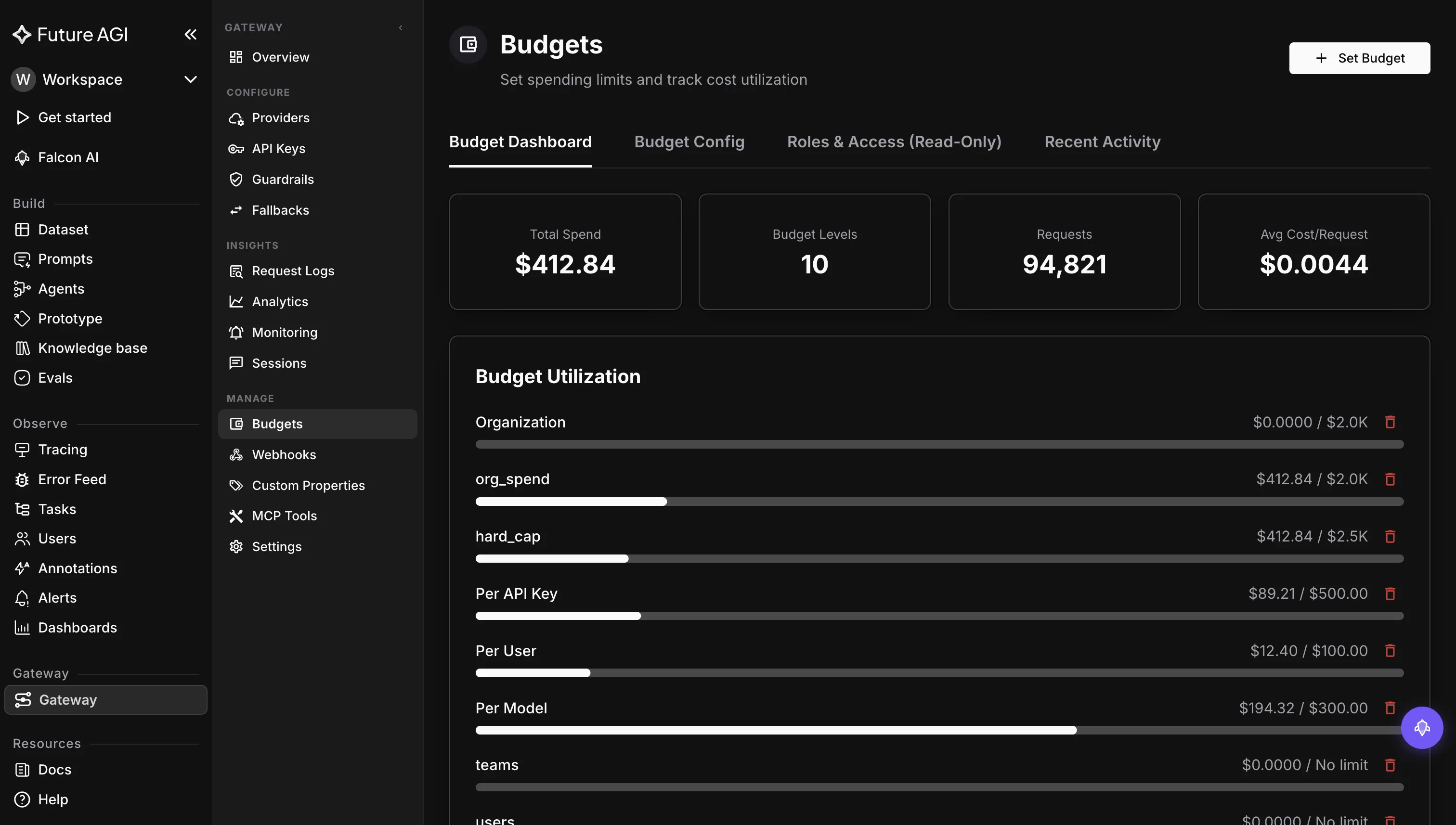
- Four-tier budget hierarchy (workspace, virtual key, model, time window) maps onto multi-product, multi-feature, multi-tenant SaaS without a custom rollup pipeline.
- Exact plus semantic caching with TTL and similarity-threshold tuning; SaaS workloads typically see 30 to 60 percent cache hit rates on internal copilot features.
- 250+ provider adapters; PII anonymization at Enterprise; SOC 2 Type 2, ISO 27001, GDPR audit-log support; published DPA template that most SaaS legal teams accept with minor redlines.
- Usable native dashboard for cost attribution by tenant, product, and feature.
Where it falls short. Acquisition by Palo Alto Networks announced April 30, 2026, not yet closed; enterprise tenants may flag the pending acquisition in their Vanta or Drata questionnaires. Observability is dashboard-first; OpenTelemetry export is less first-class than the native dashboard, adding a week of integration into a Datadog or Honeycomb stack. Source-available core plus closed control plane; air-gapped is heavier than a single Apache 2.0 binary, raising the bar for VPC-resident procurement clauses.
Verdict. Most mature managed multi-tenant cost dashboard in 2026. Eyes open on the Palo Alto integration.
Kong AI Gateway: Best for Kong-Shop SaaS Platforms
Kong AI Gateway is the strongest pick for B2B SaaS platforms already running Kong in front of REST APIs that want AI traffic on the same data plane, OPA policies, Konnect control plane, and observability stack. AI-specific plugins (ai-proxy, ai-prompt-decorator, ai-prompt-guard, ai-prompt-template, ai-rate-limiting-advanced) attach to new routes on the existing Kong DP.
Best for. B2B SaaS platforms whose API surface is fronted by Kong and whose platform team wants AI on the same data plane, SRE rotation, dashboards, and incident playbooks.
Key strengths.
- Same data plane as the existing REST gateway. For a platform with 30+ Kong DPs already in production, the integration cost is plugin configuration, not new infrastructure.
- AI-specific plugins for prompt decoration, prompt guard, prompt template, AI-aware rate limiting, semantic caching, and token-aware load balancing.
- Mature multi-tenant story inherited from REST: consumers, applications, workspaces, OPA policies, and RBAC lift straight onto AI routes.
- Open-source Apache 2.0 dataplane plus the commercial Kong Konnect control plane; strong observability via Kong Vitals and OpenTelemetry exporters already feeding the existing stack.
Where it falls short. The AI-specific guardrail surface is narrower than Future AGI’s 18+ built-in scanner library; PII, secret detection, prompt-injection blocking, and data leakage prevention go through the AI-prompt-guard plugin plus custom rules. Teams that want sub-100 ms enforcement and the MCP Security scanner have to bolt on a separate runtime guardrail service in front of Kong. Per-tenant cost attribution writes to Kong Vitals and OpenTelemetry, but the wiring to a Stripe metered subscription item or a Chargebee usage event is a custom integration, not a first-class billing webhook. The Konnect control plane is commercial; the OSS-only path runs decK plus the OSS dataplane, ceding the per-tenant dashboard to a self-built surface.
Verdict. The right pick when the team is already a Kong shop. Choose Future AGI when the guardrail library and first-class Stripe webhook matter more than Kong reuse.
LiteLLM: Best for Python-First SaaS Platform Teams Post-CVE
LiteLLM is the Python-first proxy that broke open the multi-provider unified API category. Apache 2.0 outside the enterprise directory, 20+ providers via six native adapters (OpenAI, Anthropic, Gemini, Bedrock, Cohere, Azure) plus OpenAI-compatible presets and self-hosted backends, powering a long tail of internal SaaS gateways. After the March 24, 2026 supply-chain incident, the SaaS answer is “yes for commit-pinned self-hosted deployments where the SaaS platform holds its own upstream DPA; no for the OSS path as a vendor DPA in an enterprise contract.”
Best for. Python-first SaaS teams operating a FastAPI or uvicorn surface, willing to pin commit hashes, with their own DPA path direct to the upstream provider.
Key strengths.
- Broadest provider coverage on the list (20+ providers via six native adapters (OpenAI, Anthropic, Gemini, Bedrock, Cohere, Azure) plus OpenAI-compatible presets and self-hosted backends); Apache 2.0 outside the enterprise directory; trivial to fork or audit when enterprise procurement asks for source review.
- Virtual keys with per-key budgets and budget alerts; native fit with Python observability stacks (OpenTelemetry, Prometheus, Sentry).
- Active maintainer community; easy to extend with custom adapters for per-tenant tagging, feature flags, and bespoke billing webhooks.
Where it falls short. March 24, 2026 PyPI supply-chain compromise. Versions 1.82.7 and 1.82.8 were published by the TeamPCP threat actor after PyPI publishing tokens were exfiltrated via a compromised Trivy GitHub Action in LiteLLM’s CI/CD. The malicious packages shipped a credential harvester, a Kubernetes lateral-movement toolkit, and a persistent systemd backdoor; over 40,000 downloads occurred before PyPI quarantined the packages within roughly 40 minutes. Pin to 1.82.6 or earlier, scan dependency trees, rotate any credentials accessible to an affected install. SaaS platforms whose Vanta or Drata policy flags any dependency CVE inherit a finding until the pin is documented in the SBOM and the rotation evidence is attached. The Python runtime is materially slower than Go-binary alternatives at high concurrency, which matters once the tenant pool crosses the multi-thousand range. No vendor DPA on the OSS distribution. Per-tenant cost attribution via virtual keys is supported, but the Stripe metered usage webhook and the multi-tenant audit-log path are what the SaaS team writes on top of the OpenTelemetry exporter.
Verdict. Broadest provider coverage on the list; the March 2026 incident shifts it from “default” to “pin and audit.” Treat as OSS self-hosted runtime where the SaaS platform holds the upstream DPA.
TrueFoundry AI Gateway: Best for VPC-Resident Control Plane in B2B SaaS
TrueFoundry AI Gateway is the strongest pick for B2B SaaS platforms whose enterprise procurement requires both control plane and gateway plane to run inside the customer VPC, with air-gapped support and a HIPAA BAA alongside SOC 2 Type 2 and GDPR. Shortlisted alongside Portkey when the pressure is “no third-party SaaS control plane crosses our network boundary.”
Best for. B2B SaaS platforms whose enterprise contracts include a “no SaaS-resident control plane” clause, where the SaaS team deploys both planes inside the tenant’s own VPC.
Key strengths.
- Full VPC and air-gapped install for both planes, with hands-off mode for the customer’s engineering team.
- SOC 2 Type 2 and HIPAA achieved in 2024 and maintained through 2026; FIPS on AWS GovCloud and Azure Government; GDPR DPA on standard terms.
- Routes to major DPA-eligible upstreams (Azure OpenAI, AWS Bedrock, OpenAI Enterprise plus API, Anthropic, Vertex AI) plus self-hosted endpoints.
- Data masking at Enterprise; integrates with standard audit-log retention paths.
Where it falls short. Proprietary license; not Apache 2.0; source unavailable for the kind of audit a regulated enterprise tenant can run on Future AGI or Kong’s OSS dataplane. SaaS platforms leading with an open-source posture lose that talking point on the gateway layer. Pricing starts at 499 dollars per month for Pro and rises for VPC and on-prem via sales. The runtime guardrail surface is positioned more as adapters than a built-in scanner library at the scale of Future AGI’s 18+; sub-100 ms per-tenant PII and prompt-injection enforcement on every call requires bolting on a separate runtime guardrail service. Multi-tenant primitives are present but the per-tenant Stripe-metered billing webhook is a custom integration.
Verdict. The right pick when the procurement clause is “everything runs inside our VPC, including the control plane.” Choose Future AGI when Apache 2.0 plus a 18+ guardrail library plus a first-class billing webhook matter more.
The 2026 SaaS Gateway Trust Cohort
Every B2B SaaS AI gateway post ranking on Google treats the Q1 and Q2 2026 trust events as if they didn’t happen. They did, and they reshape procurement inside an enterprise context where the customer’s Vanta or Drata vendor review is the gate.
- Helicone joining Mintlify (March 3, 2026). Maintenance mode. Plan a migration window.
- LiteLLM PyPI supply-chain compromise (March 24, 2026). TeamPCP compromise of
1.82.7and1.82.8via a stolen PyPI token. Over 40,000 downloads before PyPI quarantined. Pin to 1.82.6 or earlier; rotate affected credentials. - Anthropic MCP STDIO RCE class (April 2026). OX Security disclosed an STDIO transport flaw affecting roughly 7,000 MCP servers and 150 million plus downstream downloads. Gateways routing MCP traffic are now expected to enforce least-privilege tool access, OAuth 2.1, and Streamable HTTP. Future AGI’s MCP Security scanner is the runtime answer at the gateway hop.
- Portkey acquired by Palo Alto Networks (April 30, 2026, not yet closed). Expected to close in fiscal Q4 2026. Multi-year contracts should reference the integration plan in writing.
License clarity, DPA definitiveness, and acquisition independence are part of the buying decision for the next 12 months.
SaaS AI Gateway Picks by Buyer Profile
| If you are a… | Pick | Why |
|---|---|---|
| Vertical AI-native SaaS shipping to 1,000+ tenants on usage-based billing | Future AGI Agent Command Center | Tenant-scoped virtual keys, per-tenant Stripe-metered budgets, BYO-key isolation, OTel audit logs in one Apache 2.0 Go binary |
| Horizontal SaaS adding an AI tier on a seat-based plan | Future AGI ACC or Portkey | Feature-flag routing as a tag on the virtual key |
| Multi-tenant SaaS that wants a managed cost dashboard next week | Portkey | Fine-grained budget hierarchy plus mature dashboard (verify the Palo Alto timeline) |
| B2B SaaS already running Kong in front of REST APIs | Kong AI Gateway | Same data plane, same OPA, same SRE rotation |
| Python-first SaaS team with its own upstream DPA | LiteLLM (commit pinned) | Broadest provider coverage; pin to 1.82.6 or earlier; SBOM rotation evidence |
| Enterprise procurement requires gateway and control plane inside the tenant VPC | TrueFoundry AI Gateway | Both planes inside the customer VPC; SOC 2 Type 2 plus HIPAA on standard tier |
| AI-first platform with enterprise BYO-key contracts | Future AGI Agent Command Center | First-class BYO-key route; no shared-pool fallback on 429 |
| SaaS facing Vanta or Drata questionnaires every renewal | Future AGI Agent Command Center | Self-host runs under the platform’s own SOC 2 II; per-tenant audit-log export ready |
Implementation Pattern: Future AGI in a B2B SaaS Stack
The pattern most B2B SaaS platforms shipping a multi-tenant AI feature in 2026 will land on, in order:
- Tenant model maps to virtual keys. Issue one virtual key per tenant at sign-up or AI-tier upgrade; the application sends
x-fagi-tenant=<tenant_id>as a default header. - Feature flag routing replaces application-layer checks. Tier A keys carry
feature_summarize=true; Tier B addsfeature_classify=true; Tier C addsfeature_agent=true. Rollout, AB test, kill switch live in the dashboard. - Per-tenant cost attribution wires to billing via webhook to Stripe metered subscription items, Chargebee, BigQuery, or Kafka. Reconciliation delta typically lands under 1 percent in the first month once cached tokens are correctly attributed.
- BYO-key route for enterprise tenants. Dedicated route tagged
byo_key=true; no silent fallback to the shared pool on a 429. BYO inherits the same per-tenant audit log, PII scanner, and MCP Security scanner. - Shared rate-limit pool with fair-share. Weighted fair-share bounds any tenant in retry storm to its slice of the RPM/TPM pool. OpenAI organization keys are fanned out across multiple keys to lift the ceiling.
- Per-tenant audit log. OpenTelemetry spans filtered by
tenant_idfor SOC 2 II CC6 evidence and ISO 27001 A.8.16 monitoring evidence. - Self-improving loop. traceAI emits spans; ai-evaluation runs held-out evaluators; agent-opt proposes routing or prompt-template changes.
Which AI Gateway Is Right for Your B2B SaaS in 2026?
B2B SaaS AI in 2026 is a stack of SOC 2 Type II, ISO 27001, GDPR Article 28, and the Vanta and Drata vendor risk questionnaires every enterprise tenant runs at procurement, riding on top of an AI gateway. That gateway has to keep one tenant’s bad prompt off the others’ traffic, reconcile usage-based billing within a percent of the upstream invoice, never commingle a BYO-key tenant with the shared pool, and survive a year of acquisition and supply-chain events without forcing a re-platforming during a renewal cycle.
Future AGI Agent Command Center is the strongest pick when the buying constraint is OpenAI compat plus tenant-scoped virtual keys plus per-tenant Stripe-metered budgets plus BYO-key isolation plus OpenTelemetry per-tenant audit logs in one Apache 2.0 Go binary. Portkey when a managed dashboard is the binding constraint and the Palo Alto Networks integration risk is acceptable. Kong AI Gateway when your platform team is a Kong shop. TrueFoundry when the clause is “both planes inside our VPC.” LiteLLM for Python-first teams holding their own upstream DPA, pinned to 1.82.6 or earlier.
Further reading: the Agent Command Center docs, the observability docs, the Protect docs, the Evaluation docs, and the Future AGI GitHub repo for the Apache 2.0 source.
Try Agent Command Center free. OpenAI-compatible routing, tenant-scoped virtual keys, per-tenant Stripe-metered budgets, BYO-key isolation, 18+ guardrails, and OpenTelemetry per-tenant audit logs in one Apache 2.0 Go binary.
Related reading
- Best 5 AI Gateways for Compliance Audit Trails in 2026, the compliance and audit-trail comparison
- Best 5 AI Gateways for LLM Cost Optimization in 2026, the five-layer cost stack and the 2026 trust cohort
- Best 5 AI Gateways for Customer Support in 2026: Latency Budgets, Agent Assist, and Voice AI Passthrough, the customer-support-specific gateway picks
- Best 5 AI Gateways for Cybersecurity in 2026: Prompt Injection Defense, Tenant Isolation, and SOC 2, the cybersecurity-specific gateway picks
Frequently Asked Questions
What is the best AI gateway for a multi-tenant SaaS platform in 2026?
How does an AI gateway solve per-tenant cost attribution for usage-based billing?
How do I keep one tenant's bad prompt from blocking other tenants' traffic?
Should the BYO-API-key tier be isolated from the shared pool?
What data residency commitments should I get under GDPR?
How do I roll out AI features only to customers paying for the AI tier?
What audit-log retention should I ask each AI gateway vendor for?
Five AI gateways for LLM cost optimization in 2026 scored on the five-layer cost stack, 18+ guardrails, OTel-native cost telemetry, and 2026 trust cohort.

Five AI gateways on what compliance officers actually need: tamper-evident logs, 3-10 yr retention, SIEM exports, span granularity, legal hold, frameworks.

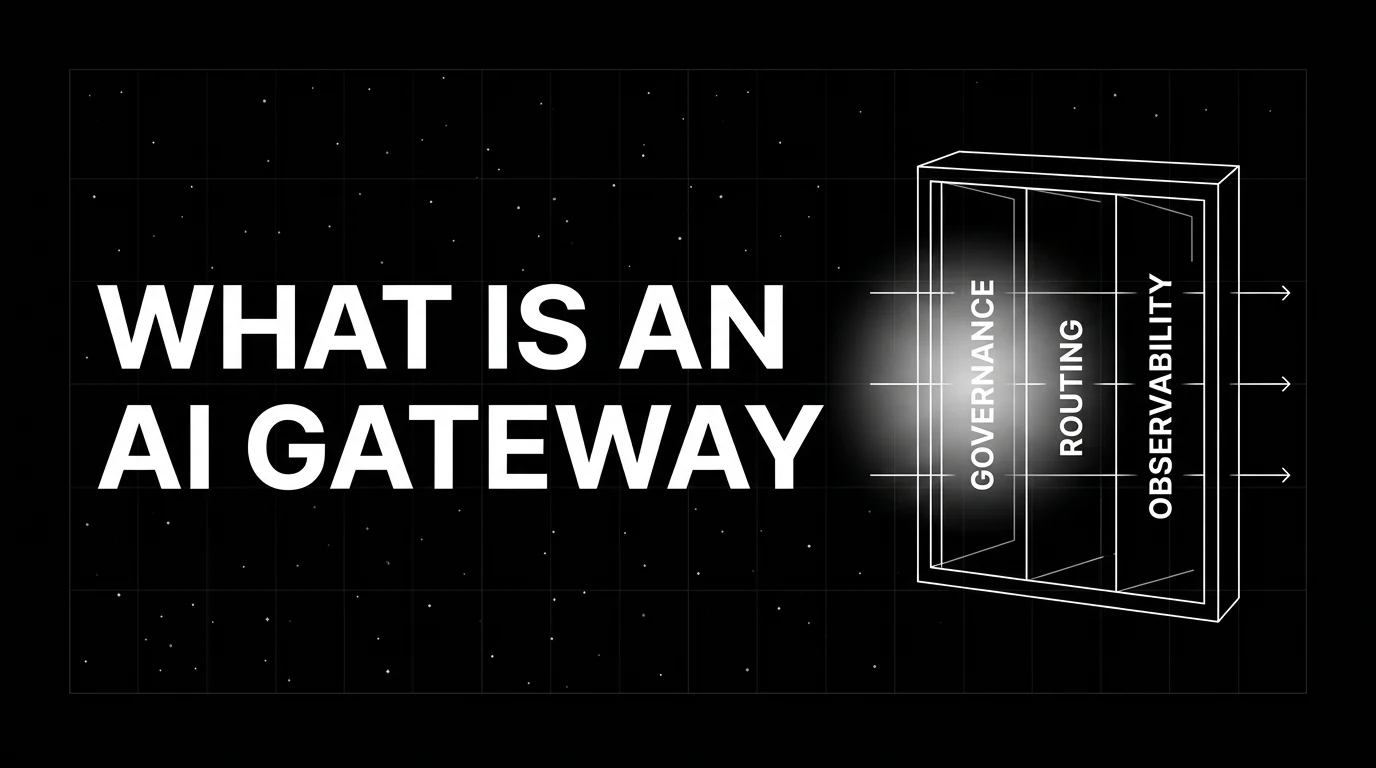
An AI gateway sits between apps and LLM providers for governance, routing, observability. What it is, how it differs from API gateways.
