Best 5 AI Gateways for HR in 2026: Hiring, Performance, and Workforce Analytics Under EEOC Scrutiny
Five AI gateways for enterprise HR in 2026 scored on EEOC Title VII, ADA, NYC AEDT 144, Illinois AIVIA, EU AI Act, Colorado SB 24-205.
Table of Contents
Originally published May 17, 2026.
A Fortune 200 industrial conglomerate ran a resume-screening pilot on a Tuesday and discovered by the end of the quarter that the gateway it shipped on had been routing protected-class signals (age inferred from graduation year, gender inferred from first name) into the system prompt with no protected-class data isolation, no bias-audit trail, no five-year audit-log retention path for an EEOC investigation, and no AEDT impact-ratio reporting hook. The screener had quietly down-ranked applicants aged 50+ at a rate that wouldn’t have cleared the four-fifths threshold under NYC AEDT Local Law 144, in the same fact pattern that drove the August 2023 iTutorGroup settlement to $365,000. This guide compares the five AI gateways enterprise HR teams should consider in 2026, scored against EEOC Title VII technical assistance (May 2023), the EEOC ADA technical assistance (May 2022, reaffirmed May 2024), NYC AEDT Local Law 144, the Illinois Artificial Intelligence Video Interview Act, EU AI Act Annex III point 4 (full force August 2, 2026), and Colorado SB 24-205.
TL;DR: The 5 Best HR AI Gateways for 2026
Future AGI Agent Command Center is the strongest pick for enterprise HR AI in 2026. It bundles OpenAI compat, 18+ guardrail scanners covering protected-class data leakage, ~65 ms inline PII redaction (arXiv 2510.13351), per-VK budgets that map to per-hire cost attribution, OTel-native audit logging with five-year retention paths, and bias evaluators that ship in the eval product.
HR procurement in 2026 weighs six obligations in the same cycle: EEOC technical assistance on Title VII and ADA, NYC AEDT enforcement, Illinois AIVIA, the Colorado AI Act (SB 24-205) effective February 1, 2026, EU AI Act Annex III point 4 entering full force August 2, 2026, and the state cohort (California SB 7, Texas TRAIGA, Maryland HB 1255).
- Future AGI Agent Command Center — Best overall. 18+ protected-class scanners, per-VK budgets, OTel audit trail with five-year retention paths, and bias-eval surface that ships in the eval product.
- Portkey — Best for multi-BU enterprises wanting a managed cost and audit dashboard. Verify the Palo Alto Networks acquisition timeline before signing multi-year.
- Kong AI Gateway — Best for HR IT organizations already on Kong. AI Proxy Advanced plus AI plug-in family on the same control plane.
- TrueFoundry AI Gateway — Best for defense, federal contractors, and large banks needing fully air-gapped control plus gateway plane inside customer VPC, with FIPS.
- LiteLLM — Best for Python-first People Analytics teams pinning a known-good commit after the March 24, 2026 supply-chain incident.
Helicone is intentionally not ranked. After the March 3, 2026 Mintlify acquisition it’s in maintenance mode; HR IT teams on Helicone should treat it as a migration window, not a continued procurement.
Why HR Needs an AI Gateway in 2026
The 2026 HR AI compliance stack is five layers. A gateway that ships one is good for marketing and bad for an EEOC charge investigation, an AEDT auditor request, or an Illinois Department of Commerce annual demographic deadline.
- EEOC Title VII and ADA technical assistance. The EEOC’s May 2023 Title VII technical assistance and the May 2022 ADA technical assistance, reaffirmed May 2024, make algorithmic decision tools subject to disparate-impact analysis under the four-fifths rule and to reasonable accommodation obligations. iTutorGroup paid $365,000 in August 2023 to settle EEOC charges its AI rejected women aged 55+ and men aged 60+. Mobley v Workday continues as a class action alleging algorithmic age discrimination.
- NYC AEDT Local Law 144. In force from July 5, 2023. Any AEDT substantially assisting NYC hiring or promotion requires an independent bias audit within one year prior to use, a published summary, and at least ten business days candidate notice. Selection rates and impact ratios are reported by sex, race-ethnicity, and intersectional categories. An impact ratio below 0.80 triggers adverse-impact analysis. Penalties run $500 first violation, $1,500 per subsequent violation, per day of non-compliant use.
- Illinois AIVIA. In force from January 1, 2020, amended January 1, 2022. Employers using AI on video interviews for Illinois positions must notify, explain, and obtain consent. Employers relying solely on AI for in-person interview decisions must file annual race-and-ethnicity demographic reports with the Illinois Department of Commerce and Economic Opportunity by December 31.
- EU AI Act Annex III point 4. Classifies AI used in employment, workers management, and access to self-employment as high-risk. Deployer obligations under Articles 9, 10, 12, 14, 26, and 50 enter full force August 2, 2026. The Digital Omnibus proposed a delay to December 2027 but prudent buyers continue to treat August 2026 as binding.
- Colorado SB 24-205 and the state cohort. Colorado’s AI Act creates a duty of care for high-risk AI developers and deployers including HR AI, with the Colorado attorney general as exclusive enforcer. Texas TRAIGA, California SB 7 (the No Robo Bosses Act), and Maryland HB 1255 extend the cohort. A multi-state employer needs per-state routing rules and per-state demographic span attributes on the same gateway hop.
The three production failure modes a gateway prevents:
- AI resume screener discriminating by protected class. Without isolation, the screener weighs graduation-year age proxies, name-based gender inference, and address-based ethnicity proxies in the system prompt. The four-fifths threshold tips, the AEDT auditor flags the impact ratio, the EEOC opens the charge.
- Audit-trail gap for an EEOC investigation. Without per-candidate decision span attributes (model version, prompt template version, applicant ID hash, role, output classification, confidence, recruiter ID), the investigator subpoenas log-shaped ATS data that isn’t investigation-ready.
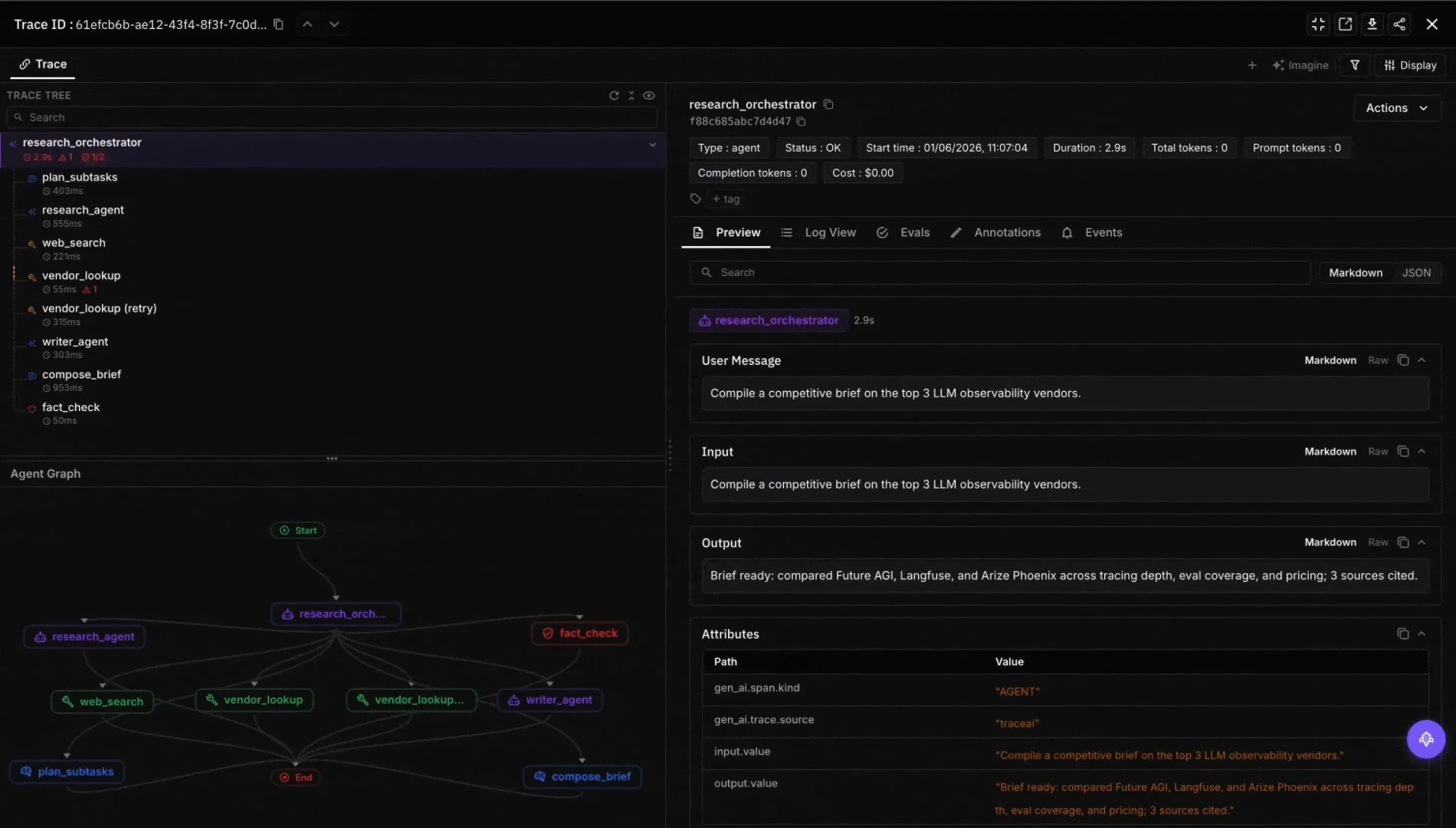
- Candidate-data leak via prompt. Without inline PII redaction, the resume PDF text including SSN, DOB, home address, and medical accommodation requests is sent into the upstream provider’s logging surface; CCPA service-provider review, GDPR Article 28 review, and privacy office all open.
How We Picked
We used the Future AGI HR Gateway Scorecard, a seven-axis rubric tuned to what a CHRO and HR IT Director at a 5,000+ employee enterprise face when an EEOC commissioner sends a charge letter or a Colorado attorney general opens discovery.
| # | Axis | What we measure |
|---|---|---|
| 1 | Bias-audit trail per candidate decision | Per-request capture of model version, prompt template version, applicant ID hash, role, output decision, confidence, recruiter ID. |
| 2 | EEOC-investigation-ready audit log (5-year retention) | OTel traces, protected-class redaction event capture, trace-to-eval linking, five-year retention path, WORM option. |
| 3 | Protected-class data isolation | Built-in scanners for name-based gender inference, graduation-year age inference, address-based ethnicity proxy, photograph stripping, accommodation-request redaction, ZIP redlining proxy. |
| 4 | AEDT-style bias-audit reporting hooks | Native export of selection rates and impact ratios per sex, race-ethnicity, and intersectional categories; four-fifths threshold detection. |
| 5 | Candidate-data residency (US-only for US hires) | Per-VK regional pinning, US-only endpoint enforcement, cross-region call blocking. |
| 6 | Per-hire cost attribution | Per-VK, per-requisition, per-recruiter, per-BU budgets; per-hire unit cost dashboard. |
| 7 | Vendor sub-processor transparency | Published sub-processor list, training-data-use posture, DPA tier definitiveness. |
Axes 1, 2, 3, and 4 are the four that decide whether the gateway keeps an HR organization safe in production.
Disqualifiers. Two automatic disqualifiers: a vendor that ships protected-class signals into upstream provider logs by default with no scanner toggle, and a vendor without a documented five-year audit-log retention path.
The 5 HR AI Gateways: At a Glance
The pattern holds across resume screening, candidate ranking, video interview analysis, performance-review summarization, internal-mobility matching, workforce analytics, succession planning, and compensation calibration.
| Capability | Future AGI ACC | Portkey | Kong AI Gateway | TrueFoundry | LiteLLM |
|---|---|---|---|---|---|
| Pricing | Apache 2.0 plus cloud (free + pay-as-you-go base; HIPAA BAA + SSO + dedicated CSM available as add-ons) | Source available plus cloud | Kong OSS plus Enterprise | Pro from $499/mo | Apache 2.0 OSS plus enterprise tier |
| Runtime | Single Go binary | Node and Python SDKs | OpenResty and Lua | Multi runtime | Python |
| Providers | 100+ | 250+ | Major plus self-hosted | Major plus self-hosted | 100+ |
| Deployment | Docker, K8s, on-prem, air-gapped, cloud | Cloud, self-host, hybrid, air-gapped at Enterprise | Konnect, hybrid, on-prem | Full VPC (both planes) | pip, Docker self-host |
| OpenAI compat drop-in | Yes (base_url swap) | Yes | Yes (AI Proxy Advanced) | Yes | Yes |
| Built-in protected-class scanners | Yes (18+ plus ~65 ms inline PII per arXiv 2510.13351) | Yes (PII anonymization at Enterprise) | Yes (AI PII Filtering plus Prompt Guard) | Yes (data masking at Enterprise) | Via adapters |
| Bias-audit span attributes | Yes (OTel native plus per-VK tagging) | Partial (dashboard-first) | Partial (audit log plus custom plug-in) | Partial (Enterprise) | Customer-managed |
| AEDT impact-ratio reporting | Yes (eval pipeline plus held-out fairness eval) | Partial | Partial (custom plug-in) | Partial | Via adapters |
| 5-year audit log retention | Yes (OTel to customer WORM) | Enterprise | Enterprise audit log | Enterprise | Customer-managed only |
| US-only candidate-data residency | Yes (per-VK regional pinning) | Enterprise | Route plug-in | Enterprise | Customer-managed only |
| Per-hire cost attribution | Yes (per key, per VK, per model, per window) | Yes (4-tier hierarchy) | Yes (rate limit plus consumer groups) | Yes | Yes (basic) |
| Self-improving bias-eval loop | Yes (traceAI plus ai-evaluation plus agent-opt) | No | No | Partial | Via adapters |
| Sub-processor transparency | Published; Apache 2.0 source; BAA at Scale | Published; SOC 2 Type II, ISO 27001 | Published; SOC 2 Type II; FIPS | Published; SOC 2 Type 2, FIPS GovCloud | OSS: customer holds upstream DPA |
The four columns that matter most for HR (protected-class isolation depth, bias-audit per decision, AEDT reporting, audit retention to five years) are where the field separates.
Future AGI Agent Command Center: Best Overall for Enterprise HR
Future AGI Agent Command Center tops the 2026 list because it bundles every layer of the HR compliance stack at the same network hop in one Apache 2.0 Go binary, and because it closes the self-improving loop from production trace to held-out bias eval to gateway routing policy.
The inline PII redaction layer documented in arXiv 2510.13351 runs at approximately 65 ms added latency, keeping the protected-class scrub inside the budget for a synchronous candidate-experience touch. The self-improving loop ships as three Apache 2.0 OSS components: traceAI (OTel-native trace capture), ai-evaluation (the held-out bias-eval and impact-ratio library), and agent-opt (the optimizer that ingests bias-eval feedback and proposes routing or prompt updates when the impact ratio drifts under 0.80).
Key strengths.
-
OpenAI-compatible drop-in: change
base_urltohttps://gateway.futureagi.com/v1. No SDK rewrite in the existing ATS or HRIS integration. -
20+ providers via six native adapters (OpenAI, Anthropic, Gemini, Bedrock, Cohere, Azure) plus OpenAI-compatible presets and self-hosted backends including OpenAI Enterprise plus API, Anthropic, Azure OpenAI under the Microsoft Online Services DPA, AWS Bedrock under the AWS DPA, plus self-hosted via Ollama, vLLM, LM Studio.
-
The Future AGI Protect model family for inline guardrails, ~65 ms p50 text and ~107 ms p50 image (arXiv 2510.13351). Protect is FAGI’s own fine-tuned model family built on Google’s Gemma 3n with specialized adapters across four safety dimensions (content moderation, bias detection, security/prompt-injection, data privacy/PII), natively multi-modal across text, image, and audio, a model family, not a plugin chain. The Bias Detection dimension covers the protected-class proxies an EEOC investigator asks about by name (graduation-year age, name-based gender, address-based ethnicity, photograph stripping, accommodation-request redaction, ZIP redlining proxy). The same dimensions are reusable as offline eval metrics so the prod AEDT policy and the held-out bias rubric stay in sync.
-
Per-key, per-VK, per-model, and per-time-window budgets with tag-based custom properties for per-requisition, per-recruiter, and per-BU enforcement mapping to the FP&A per-hire unit cost reconciliation.
-
OTel-native traces and Prometheus metrics on
/-/metrics. Same span attributes feed Grafana, the AEDT impact-ratio pipeline, and the Future AGI Evaluation pipeline viaspan_id.traceAIinstruments 50+ AI surfaces across Python, TypeScript, Java, and C# (including Spring Boot starter, Spring AI, LangChain4j, Semantic Kernel) OpenInference-natively, and Error Feed. the part of the eval stack, the clustering and what-to-fix layer that feeds the self-improving evaluators, turns those traces into named issues with zero config: auto-clusters related screener-bias and resume-redaction failures (50 traces → 1 issue), auto-writes the root cause plus a quick fix plus a long-term recommendation per issue, and tracks rising/steady/falling trend per issue so emerging four-fifths-threshold drift gets triaged like an exception rather than buried in the AEDT pipeline.
- Apache 2.0 Go binary. Free + pay-as-you-go base; SOC 2 Type II and HIPAA BAA available as compliance add-ons when procurement asks (pricing).
Where it falls short
- Full agent execution tracing is “In Progress” on the public roadmap; multi-tool internal-mobility agents spanning ten or more tool calls see partial tracing on the longest spans until rollout completes.
- The AEDT auditor export ships a
bias-auditspan tag plus CSV emitter; the human-readable audit summary the auditor publishes still requires the auditor’s own analysis layer on top of the exported data. - The held-out bias eval cohort has to be representative of the live applicant pool. For a multi-state employer hiring across thirty roles, cohort construction is a one-week setup with the People Analytics team, not a same-afternoon configuration.
- HIPAA is certified with BAA available; smaller HR-tech vendors embedding ACC for their own customer base should request the BAA via FAGI sales as part of the OEM contract.
- The Colorado SB 24-205 deployer impact-assessment narrative is the deployer’s own legal artifact; the gateway provides per-decision evidence but doesn’t draft the legal narrative.
from openai import OpenAI

client = OpenAI(
    api_key="$FAGI_API_KEY",
    base_url="https://gateway.futureagi.com/v1",
)

# Gateway runs protected-class data isolation, per-VK per-requisition
# budgets, and AEDT-style impact-ratio span attributes at the same hop.
response = client.chat.completions.create(
    model="azure-openai/gpt-4o",
    messages=[{"role": "user", "content": "Summarise candidate fit for the requisition above."}],
    extra_headers={
        "x-fagi-vk": "vk_req_45211",
        "x-fagi-recruiter-id": "r_2310",
        "x-fagi-business-unit": "industrial-east",
    },
)
Verdict. The strongest single pick if the 2026 HR infrastructure story is “OpenAI compat drop in plus protected-class data isolation plus per-VK budgets plus a five-year audit path plus a self-improving bias-eval loop, in our HR IT VPC, under a published-tier DPA.”
Portkey: Best Managed HR Cost and Audit Dashboard
Portkey is the strongest pick when the binding constraint is a managed cost and audit dashboard out of the box, plus the most mature semantic cache in production and a four-tier budget hierarchy with PII anonymization at Enterprise. The Palo Alto Networks acquisition announced April 30, 2026 hasn’t yet closed.
Key strengths.
- Exact plus semantic caching. HR teams see 30 to 60 percent hit rates on internal-mobility matching and performance-review summarization.
- Most fine-grained per-VK budget hierarchy on the list, mapping onto multi-BU HR tenancy.
- 250+ provider adapters including private OSS and on-prem Llama variants.
- PII anonymization at Enterprise; HIPAA BAA at Enterprise; SOC 2 Type 2, ISO 27001, GDPR audit-log support.
Where it falls short
- The Palo Alto Networks acquisition is announced but not closed. Multi-year HR contracts should reference the integration plan in writing.
- Observability is dashboard-first; OTel export is less first-class than the native dashboard, extending the first week when integrating Splunk or Datadog in HR IT.
- Protected-class data isolation is the PII anonymization plug-in at Enterprise; the named protected-class proxies are configured as custom rules rather than shipped as a named scanner library on the scale of Future AGI’s 18+.
- Source available core plus closed control plane; air-gapped deployment at Enterprise but the control plane setup is heavier than a single Apache 2.0 binary.
- AEDT impact-ratio reporting has to be assembled from the dashboard export plus custom analysis; Portkey doesn’t ship a pre-built four-fifths threshold detector.
Verdict. Most mature managed cost and audit dashboard for enterprise HR AI in 2026. Choose with eyes open on the Palo Alto Networks integration.
Kong AI Gateway: Best for HR IT Organizations Already on Kong
Kong AI Gateway is the strongest pick when the HR IT organization already runs Kong for its REST API surface (ATS, HRIS, candidate portal, internal-mobility engine) and wants AI Proxy Advanced, AI Prompt Guard, AI Prompt Decorator, AI PII Filtering, and AI Semantic Caching on the same Kong control plane.
Key strengths.
- Kong AI plug-in family in Gateway 3.x: AI Proxy Advanced (multi-provider routing), AI Prompt Guard, AI Prompt Decorator, AI PII Filtering, AI Semantic Caching, AI Rate Limiting Advanced.
- API-gateway-grade SLAs on the same Konnect cloud HR IT already runs.
- Kong Enterprise audit log supports a five-year retention horizon with WORM storage via customer-managed export.
- FIPS option, SOC 2 Type II, GDPR audit-log support.
Where it falls short
- Protected-class data isolation is AI PII Filtering; the named protected-class proxies are configurable but Kong doesn’t ship the canonical 18+ named scanner library out of the box. The HR IT team authors the address-based ethnicity detector and graduation-year age detector as plug-in config.
- The AEDT impact-ratio report has to be assembled from the Kong audit log plus custom analysis; no pre-built four-fifths threshold detector.
- The self-improving loop (trace, eval, optimizer) isn’t a Kong concept; the HR IT team runs the bias eval externally and updates Kong plug-in config manually.
- The OpenAI compat surface is on AI Proxy Advanced; the ATS team writes against the Kong AI Proxy contract rather than the OpenAI SDK directly, a small but real refactor.
- Pricing is bundled into Kong Enterprise; standalone AI-only pricing isn’t the default sales motion, which complicates procurement for a team that isn’t already a Kong Enterprise customer.
Verdict. The right pick when the HR IT organization is already a Kong customer. Choose Future AGI ACC when the binding constraint is a built-in named protected-class proxy scanner library plus a closed self-improving loop.
TrueFoundry AI Gateway: Best for Fully Air-Gapped Enterprise HR
TrueFoundry AI Gateway is the strongest pick for defense contractors, federal contractors, and large banks with HR functions under joint regulator supervision that need both the control plane and the gateway plane inside the customer VPC, with full air-gapped support and FIPS on AWS GovCloud.
Key strengths.
- Full VPC and air-gapped install for both control and gateway planes, with hands-off mode where TrueFoundry support operates inside agreed boundaries.
- HIPAA BAA; SOC 2 Type 2 and HIPAA maintained through 2026; FIPS on AWS GovCloud and Azure Government.
- Routes to the major DPA-eligible upstreams (Azure OpenAI, AWS Bedrock, OpenAI Enterprise plus API, Anthropic, Vertex AI) plus self-hosted endpoints.
- Data masking at Enterprise; integrates with audit log retention for the five-year EEOC window plus OFCCP two-year contractor rule.
Where it falls short
- Proprietary license, not Apache 2.0; the source isn’t available for the audit a regulated entity can run on Future AGI ACC. Federal contractors with an open-source-first procurement posture should weigh this.
- Pricing starts at $499/month for Pro and rises for VPC and on-prem via sales; smaller HR-tech vendors should compare against cloud-tiered alternatives.
- The HR-specific guardrail set (protected-class proxy detectors, AEDT-style impact-ratio reporting) is positioned as adapter integration rather than a built-in named scanner library on the scale of Future AGI’s 18+.
- The self-improving loop on bias-eval feedback isn’t a TrueFoundry concept; the HR IT team runs the bias eval externally and updates routing policy manually.
- The Colorado SB 24-205 deployer impact-assessment artifact has to be assembled from the TrueFoundry audit log plus a custom legal-narrative layer.
Verdict. The right pick when the procurement constraint is “everything inside our VPC including the control plane, with FIPS.” Choose Future AGI ACC when Apache 2.0 plus a built-in guardrail library plus a closed self-improving loop matter more.
LiteLLM: Best for Python-First People Analytics Teams Post-CVE
LiteLLM is the Python-first proxy that broke open the multi-provider unified API category. Apache 2.0 outside the enterprise directory, 20+ providers via six native adapters (OpenAI, Anthropic, Gemini, Bedrock, Cohere, Azure) plus OpenAI-compatible presets and self-hosted backends, and a long tail of internal HR-IT gateways. After the March 24, 2026 supply-chain incident the enterprise HR answer is “yes for self-hosted commit-pinned deployments where the enterprise holds its own DPA path.”
Key strengths.
- 20+ providers via six native adapters (OpenAI, Anthropic, Gemini, Bedrock, Cohere, Azure) plus OpenAI-compatible presets and self-hosted backends, the broadest single-project coverage. Useful for People Analytics comparative evaluation across upstream model families.
- Apache 2.0 outside the enterprise directory; trivial to fork or audit.
- Virtual keys with per-key budgets and alerts. Native fit with Python observability stacks.
- Active maintainer community; easy to extend with custom adapters for HR-specific protected-class proxy detectors.
Where it falls short
- March 24, 2026 PyPI supply-chain compromise. Versions
1.82.7and1.82.8were published by the TeamPCP threat actor after PyPI publishing tokens were exfiltrated via a compromised Trivy GitHub Action in LiteLLM’s CI/CD. The malicious packages shipped a credential harvester, a Kubernetes lateral-movement toolkit, and a persistent systemd backdoor; over 40,000 downloads occurred before PyPI quarantined within roughly forty minutes (Datadog Security Labs writeup). Pin to 1.82.6 or earlier, scan dependency trees, rotate accessible credentials. - Python runtime; materially slower at high concurrency than Go-binary alternatives, a real constraint when campus-recruiting is submitting resumes at peak.
- No vendor DPA on the OSS distribution; HR deployment requires the enterprise to hold the DPA directly with the upstream model provider.
- Built-in named protected-class proxy scanner library isn’t the default; protected-class data isolation is via adapters.
- AEDT-style impact-ratio reporting and the held-out bias eval cohort runner are People Analytics team work, not gateway features. The compliance evidence burden shifts to the team.
Verdict. Still the broadest provider coverage, but the March 2026 incident shifts LiteLLM from “default pick” to “pin commits and audit.” HR deployments should treat it as an OSS runtime where the enterprise holds the upstream DPA directly.
Compliance and Risk Matrix Across the 5 Picks
| Axis | Future AGI ACC | Portkey | Kong AI Gateway | TrueFoundry | LiteLLM |
|---|---|---|---|---|---|
| EEOC Title VII (May 2023) evidence path | Full | Partial | Partial | Partial | Customer-managed |
| EEOC ADA (May 2022, reaffirmed 2024) | Full | Partial | Partial | Partial | Customer-managed |
| NYC AEDT Local Law 144 bias audit | Full (impact-ratio span, four-fifths detector) | Partial | Partial | Partial | Customer-managed |
| Illinois AIVIA consent and demographics | Full (consent span, demographic CSV) | Partial | Partial | Partial | Customer-managed |
| EU AI Act Annex III point 4 Article 12 logging | Full (OTel-native trace) | Partial | Partial | Partial | Customer-managed |
| Colorado SB 24-205 deployer assessment | Full | Partial | Partial | Partial | Customer-managed |
| 5-year audit-log retention | Full (OTel to WORM) | Enterprise | Enterprise audit log | Enterprise | Customer-managed only |
| US-only candidate-data residency | Full (per-VK regional pinning) | Enterprise | Route plug-in | Enterprise | Customer-managed only |
| Deployment posture | Apache 2.0 binary; on-prem, air-gapped, cloud | Source available core; air-gapped at Enterprise | Konnect, hybrid, on-prem | Full VPC (both planes) | pip, Docker self-host |
| HIPAA BAA tier | Scale add-on | Enterprise | Enterprise | Enterprise | Customer-held only |
| SOC 2 Type II tier | Boost add-on | Yes | Yes | Yes | Enterprise |
The four rows that matter most for HR procurement (EEOC evidence, AEDT bias-audit evidence, Colorado SB 24-205 deployer evidence, five-year retention) are where the field separates.
HR AI Gateway Picks by Buyer Profile
| If you are a… | Pick | Why |
|---|---|---|
| Fortune 500 with 50,000+ hires/yr across NYC, IL, CO, CA | Future AGI ACC | OpenAI compat plus 18+ scanners plus per-VK budgets plus AEDT span attributes plus self-improving loop |
| Multi-BU enterprise with managed per-BU dashboard requirement | Portkey | Most fine-grained budget hierarchy; verify PANW timeline |
| HR IT already on Kong Konnect for REST APIs | Kong AI Gateway | AI Proxy Advanced plus AI plug-ins on same control plane |
| Defense or large federal contractor under OFCCP | TrueFoundry | Both planes inside VPC; HIPAA, SOC 2, FIPS GovCloud |
| Python-first People Analytics team with upstream DPA path | LiteLLM (pinned) | Broadest providers; pin to 1.82.6 or earlier after March CVE |
| EU employer running Annex III point 4 workload | Future AGI ACC plus Azure OpenAI | Article 12 logging plus Article 14 oversight at same hop |
| Microsoft 365 plus Azure shop on Azure OpenAI | Azure OpenAI behind Future AGI ACC | MOSA DPA; gateway adds protected-class isolation and AEDT reporting |
| Mid-market 5,000-employee enterprise evaluating | Future AGI ACC free tier | Apache 2.0 self-host; upgrade to Scale for BAA |
| HR-tech vendor embedding AI (ATS, HRIS) | Future AGI ACC plus OEM | Apache 2.0 source plus published-tier BAA plus scanner library |
Implementation Pattern with Future AGI
The pattern that gets a 5,000-employee enterprise from “we want AI for resume screening, candidate ranking, performance-review summarization, and internal-mobility matching” to AEDT-compliant, EEOC-ready, Article 12 logged production is five steps.
- Wire the OpenAI compat drop-in. Change
base_urlin the ATS, HRIS, performance platform, and internal-mobility engine. No SDK rewrite. - Enable the protected-class scanner family. Turn on the 18+ named scanners in policy mode. Run a one-week shadow eval flagging but not blocking; People Analytics tunes false positives before going blocking.
- Define per-VK per-requisition budgets. One virtual key per business unit; tag each request with requisition ID and recruiter ID; set per-VK monthly budgets matching the FP&A per-hire unit cost target.
- Wire the bias-eval pipeline. Define a representative applicant cohort, run the held-out bias eval weekly through ai-evaluation, link to the trace via
span_id. The AEDT auditor reads the same eval output the routing policy responds to. - Set the five-year audit-log retention path. Export OTel traces to customer-managed WORM storage (S3 object lock, GCS retention policy, Azure Blob immutable). EEOC investigator, AEDT auditor, Illinois Department of Commerce annual report, and the Colorado deployer impact assessment all read from the same log.
Integration budget for a 5,000-employee enterprise: one HR IT engineer for two weeks plus one People Analytics analyst for one week. Cost is dominated by legal review, not engineering.
Which AI Gateway Is Right for Your HR Organization in 2026?
Enterprise HR AI in 2026 is a stack of EEOC Title VII and ADA technical assistance, NYC AEDT Local Law 144, the Illinois AIVIA, EU AI Act Annex III point 4, Colorado SB 24-205, Texas TRAIGA, and California SB 7, riding on top of an AI gateway. That gateway has to keep protected-class signals out of the prompt, retain five years of per-candidate audit logs, report selection rates and impact ratios on demand for the AEDT auditor, and survive a year of acquisition events without a re-platforming.
Future AGI Agent Command Center is the strongest pick when the buying constraint is OpenAI compat plus 18+ built-in protected-class data-isolation scanners, per-VK budgets that map to per-hire cost attribution, OTel-native traces with a five-year retention path, and a self-improving loop on bias-eval feedback, in one Apache 2.0 Go binary, with HIPAA BAA at Scale and SOC 2 Type II at Boost.
Portkey is right when a managed cost and audit dashboard is the binding constraint and the Palo Alto Networks integration risk is acceptable. Kong AI Gateway is right when the HR IT organization is already a Kong customer. TrueFoundry is right when both planes must run inside the enterprise VPC with no external SaaS dependency. LiteLLM is right when the People Analytics team is Python-first and the enterprise holds the upstream DPA directly.
For deeper reads: the Agent Command Center docs, observability docs, Protect docs, Evaluation docs, and the Apache 2.0 source for traceAI, ai-evaluation, and agent-opt at the Future AGI GitHub repo.
Try Agent Command Center free. OpenAI-compatible routing, 18+ protected-class data-isolation guardrails, per-VK budgets, and OpenTelemetry-native audit logging in one Apache 2.0 Go binary.
Related reading
- Best 5 AI Gateways for Compliance Audit Trails in 2026, the compliance and audit-trail comparison
- Best 5 AI Gateways for LLM Cost Optimization in 2026, the five-layer cost stack and the 2026 trust cohort
- Best 5 AI Gateways for Customer Support in 2026: Latency Budgets, Agent Assist, and Voice AI Passthrough, the customer-support-specific gateway picks
- Best 5 AI Gateways for Cybersecurity in 2026: Prompt Injection Defense, Tenant Isolation, and SOC 2, the cybersecurity-specific gateway picks
Frequently Asked Questions
What Is the Best AI Gateway for HR Compliance in 2026?
Does the EEOC Apply Title VII and ADA Guidance to AI Resume Screening?
How Does NYC AEDT Local Law 144 Apply in 2026?
What Does the EU AI Act Require for HR AI After August 2, 2026?
How Does the Illinois AIVIA Apply to Hiring?
What Audit-Log Retention Should an HR AI Gateway Support?
How Is Future AGI ACC Different from Portkey for HR?
Five AI guardrails for HR: resume screening, AI interviews, internal mobility, recruiter copilots. NYC AEDT, EEOC 4/5 rule, FCRA, ADEA, EU AI Act III.

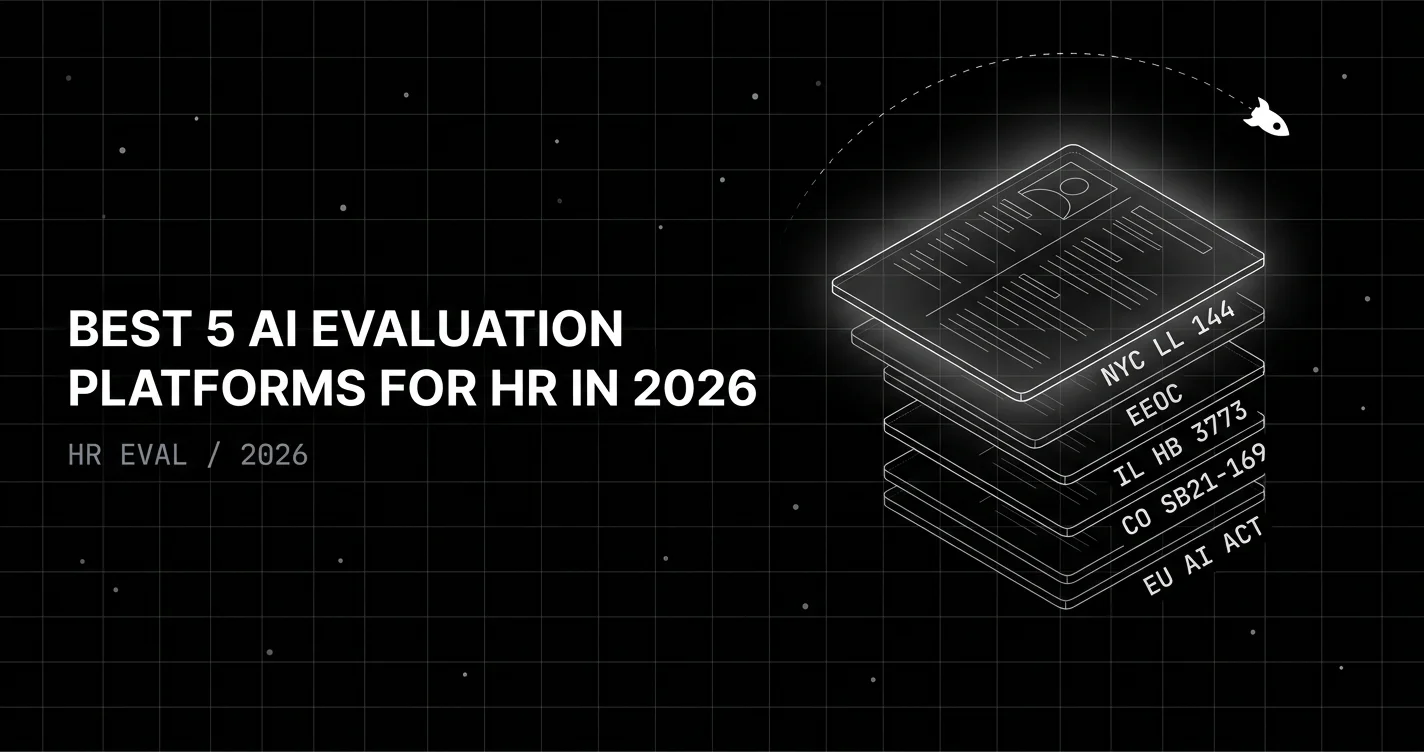
HR AI eval in 2026: five platforms scored on demographic bias detection, per-decision audit, impact-ratio reporting. FAGI, Galileo, Braintrust, Holistic.
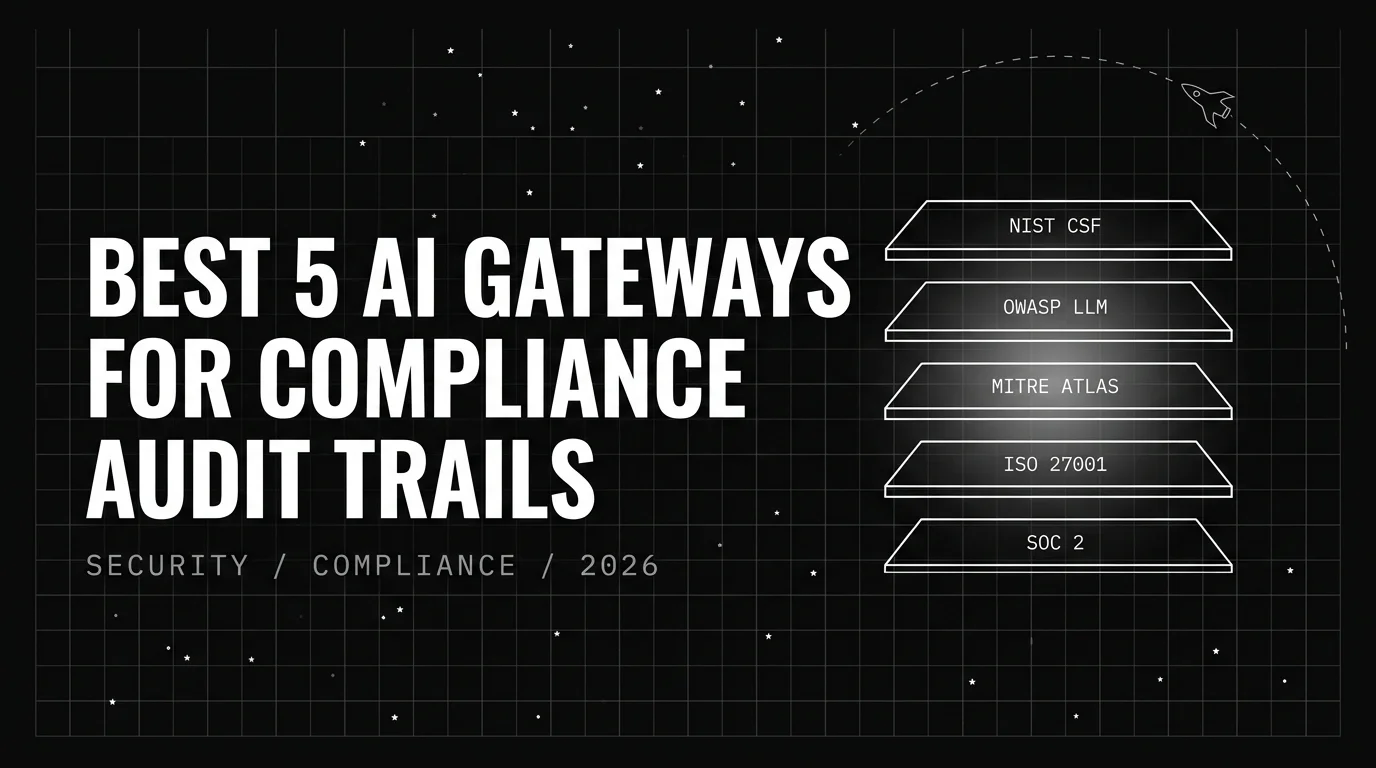
Five AI gateways on what compliance officers actually need: tamper-evident logs, 3-10 yr retention, SIEM exports, span granularity, legal hold, frameworks.
