What Is an MCP Gateway? The 2026 Definition and Architecture Guide
Canonical 2026 MCP gateway definition: MCP 2025-11-25, OAuth 2.1, OpenTelemetry GenAI, post-April STDIO RCE threat model, 5 named approaches, 12 steps.
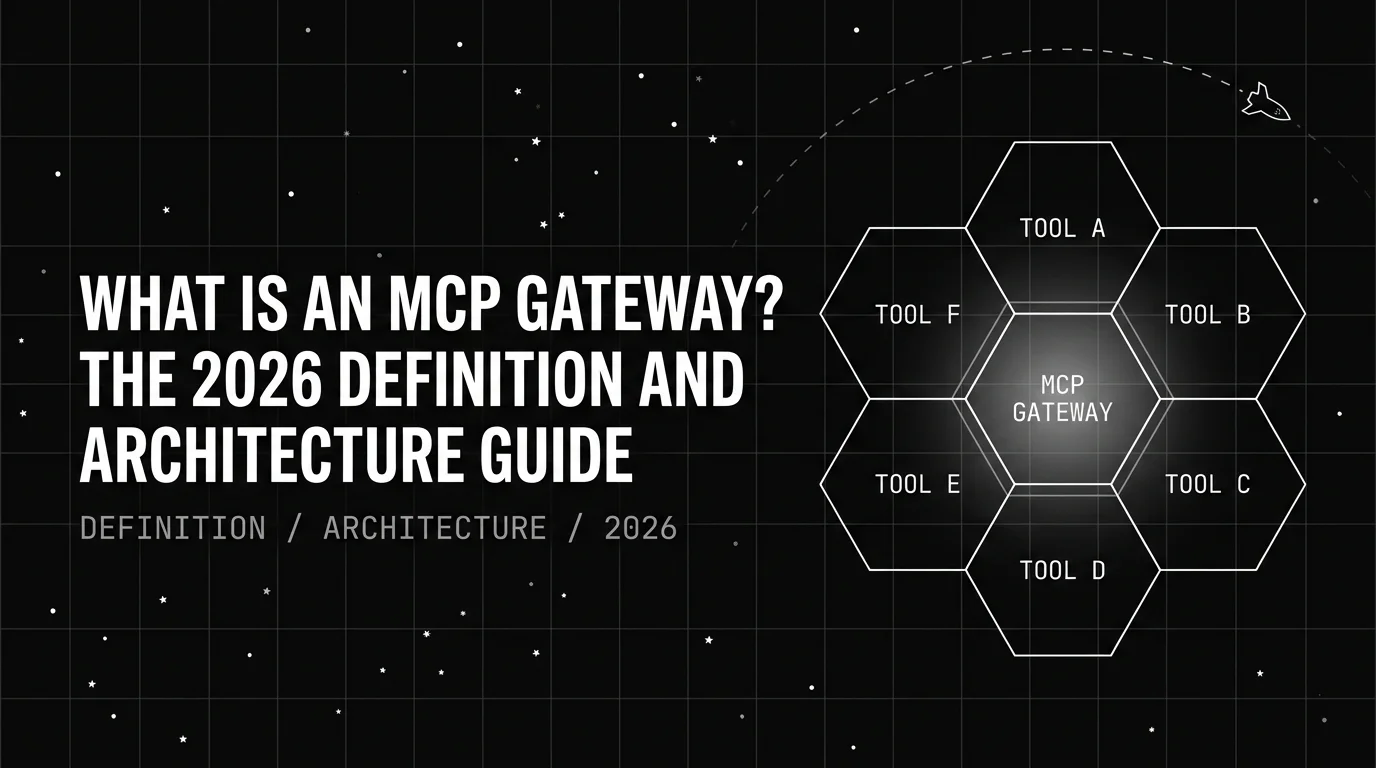
Table of Contents
Originally published May 17, 2026.
A platform team at a B2B SaaS company wired Claude Code to a community MCP server for repository search on a Wednesday morning, with no tool allowlist, no OAuth 2.1 boundary, no audit on the MCP path, and a STDIO transport that came straight from a
pip installof an SDK pinned to a known-vulnerable version.By Friday they had three separate incidents: a malicious server name passed through the STDIO interface had executed a shell command on the agent host and exfiltrated AWS keys to an attacker-controlled endpoint, an unrelated tool-poisoning attempt had rewritten the agent’s system prompt mid-task, and the finance lead asked why the agent’s token bill had doubled in two days from re-reading a 300-tool catalog on every turn.
This guide defines the MCP gateway, the canonical category that fills the missing hop between an AI agent and the Model Context Protocol servers it actually touches, anchored to the Model Context Protocol 2025-11-25 specification, OAuth 2.1, OpenTelemetry GenAI semantic conventions, and the post April 2026 STDIO RCE threat model that made tool-call inspection mandatory.
TL;DR: The 2026 MCP Gateway Definition
An MCP gateway is a Layer 7 proxy on the Model Context Protocol path between an AI agent and one or more MCP servers that filters the tool catalog by a per agent allowlist, enforces OAuth 2.1 at the boundary with scope rewriting, runs an MCP Security guardrail scanner against tool descriptions and tool responses inline, and emits an OpenTelemetry span for every tool discovery and tool invocation tied back to the originating LLM call by span_id.
The category was effectively forced into existence on April 15, 2026, when OX Security disclosed CVE-2026-30623: the Anthropic MCP STDIO transport executes arbitrary host commands on any process passed to the interface, the flaw is baked into the official Python, TypeScript, Java, and Rust SDKs, and Anthropic confirmed the behavior is by design and declined to change the protocol.
- Canonical category, not a vendor pitch. The MCP gateway sits on the MCP path between agents and the filesystem, github, postgres, browser, slack, and custom MCP servers your agents actually call. Five named architectures (proxy mode, federation, scanner, code mode, audit-only) map every production deployment in 2026.
- Four standards anchor it: Model Context Protocol 2025-11-25 for the agent-to-tool contract, OAuth 2.1 (RFC 9700) for the authorization boundary, OpenTelemetry GenAI semantic conventions for MCP span attributes, and OWASP Top 10 for LLM Applications 2025 for the guardrail surface (LLM01, LLM05, LLM06, LLM08, LLM10).
- Twelve-step tool-call flow in this post: client tool discovery, gateway authentication, catalog filter, scope rewrite, agent reads filtered catalog, tool-call dispatch, allowlist check, MCP Security scan on the request, downstream MCP server call, response scan, response shaping, OpenTelemetry span export.
- Five named approaches: proxy mode (the default), federation, scanner, code mode, and audit-only.
- Open-source picks in 2026: Future AGI Agent Command Center (Apache 2.0, single Go binary, native MCP plus A2A), Lunar.dev MCPX (open-source pure-play MCP gateway), IBM ContextForge (multi-protocol federation), Composio (broadest managed MCP server catalog), and Maxim Bifrost (Go-native throughput plus Code Mode). The companion ranked review is in our Best 5 MCP Gateways in 2026 post.
What Is an MCP Gateway?
An MCP gateway is a Layer 7 proxy that speaks the Model Context Protocol on both sides, intercepts every tool-discovery and tool-invocation call between an AI agent and the downstream MCP servers it depends on (filesystem, github, postgres, browser, slack, and any custom servers your platform team operates), and applies OAuth 2.1 authorization, per-agent tool allowlists with scope rewriting, inline guardrails on the MCP path, and OpenTelemetry-native audit on every call before the request reaches the downstream server.
The Model Context Protocol was published by Anthropic in November 2024 and revised through 2025; the current specification is dated 2025-11-25, and MCP was donated to the Linux Foundation Agentic AI Foundation in December 2025. The protocol defines two roles: an MCP client (the agent runtime) and an MCP server (filesystem, github, postgres, browser, slack, and any custom server an engineering team writes). An MCP gateway is a third role that didn’t exist in the original specification: a proxy that speaks the client protocol downward to the MCP servers and the server protocol upward to the agent, so every tool discovery and every tool invocation passes through one auditable network hop.
The category is converging on a shared shape across the production-relevant gateways in 2026:
- Future AGI Agent Command Center ships native MCP and A2A protocol support, the Future AGI Protect model family as the inline guardrail layer (FAGI’s own fine-tuned Gemma 3n adapters across content moderation, bias detection, security/prompt-injection, and data privacy/PII at 65 ms text / 107 ms image median time-to-label per arXiv 2510.13351, a model family, not a plugin chain) with a dedicated MCP Security scanner alongside, OAuth 2.1 enforcement at the gateway boundary, OpenTelemetry GenAI native audit in one Apache 2.0 Go binary, plus Error Feed (part of the eval stack (the clustering and what-to-fix layer that feeds the self-improving evaluators)) auto-clustering MCP failures into named issues with zero config.
- Lunar.dev MCPX is an open-source pure-play MCP gateway built around a declarative policy engine and audit trail, configured in code rather than per server.
- IBM ContextForge federates MCP, REST-to-MCP translation, and gRPC under one Apache 2.0 federation layer with 40-plus plugins.
- Composio ships the broadest managed MCP server catalog plus a Python and TypeScript SDK; the dashboard handles OAuth flows per integration.
- Maxim Bifrost is an Apache 2.0 Go-native gateway that bundles LLM provider routing and MCP gateway features in one binary, with vendor-published throughput in the 11 microsecond P50 range at 5,000 RPS on
t3.xlarge.
The shared shape is unambiguous: a proxy on the MCP path that adds OAuth 2.1, allowlists, guardrails, and audit on top of the raw MCP protocol. The variation is which axes each gateway optimizes for.
MCP Gateway vs AI Gateway, Tool SDK, and MCP Server
Four concepts get confused with each other in 2026 agent architecture diagrams: MCP gateway, AI gateway, tool SDK, and MCP server. They aren’t interchangeable. Each one handles a distinct kind of traffic at a distinct point in the agent’s request path, and a production stack often runs three of them stacked end to end.
One-line definitions for each:
- AI gateway sits in front of LLM provider APIs (OpenAI, Anthropic, Bedrock, Vertex AI), handles model routing, caching, budgets, provider failover, prompt-injection guardrails on user input, and OpenTelemetry GenAI traces. The canonical definition lives in our What Is an AI Gateway post.
- MCP gateway sits in front of MCP servers (filesystem, github, postgres, browser, slack), handles tool discovery with per-agent allowlists, OAuth 2.1 authorization, tool poisoning and prompt-injection guardrails on tool descriptions and tool responses, and OpenTelemetry MCP semantic conventions.
- Tool SDK is the in-process MCP client library the agent runtime uses to speak MCP: the official Python, TypeScript, Java, and Rust SDKs from Anthropic, plus framework-bundled clients in LangChain, LlamaIndex, OpenAI Agents SDK, and Claude Code. The SDK doesn’t add a gateway hop; it’s where the agent emits the tool call.
- MCP server is the process that exposes a tool surface: filesystem, github, postgres, sqlite, puppeteer, slack, gdrive, and time servers from Anthropic plus thousands of community and vendor servers.
| Layer | Traffic type | Key primitives | Examples |
|---|---|---|---|
| AI Gateway | LLM provider traffic; user prompts and model completions | Routing, caching, budgets, prompt-injection guardrails, OpenTelemetry GenAI | Future AGI Agent Command Center, Cloudflare AI Gateway, Portkey, Bifrost |
| MCP Gateway | Tool-discovery and tool-invocation calls between agent and MCP servers | Tool allowlists, OAuth 2.1, scope rewriting, MCP Security scanner, audit | Future AGI Agent Command Center, Lunar.dev MCPX, IBM ContextForge, Composio, Maxim Bifrost |
| Tool SDK | In-process MCP client library | Speaks MCP protocol (STDIO, Streamable HTTP, WebSocket) | Anthropic Python/TS/Java/Rust SDKs, LangChain MCP client, OpenAI Agents SDK |
| MCP Server | Exposes a tool surface (filesystem, github, postgres, slack) to MCP clients | Implements MCP server methods; returns tool definitions and tool responses | Anthropic filesystem, github, postgres, sqlite, puppeteer, slack, gdrive, time |
The four roles stack rather than compete. A typical 2026 production agent request travels through the AI gateway at LLM call time, runs the model, receives a tool-call instruction, dispatches the call through the tool SDK to the MCP gateway, the MCP gateway routes to the right MCP server, and the response flows back. Treating them as alternatives is a common architecture mistake; treating them as complementary layers, often inside one binary, is the production-correct pattern.
Why MCP Gateways Exist: The Post-April 2026 Threat Model
MCP gateways existed as a concept before April 15, 2026. After April 15, 2026, they stopped being optional for production agents.
On April 15, 2026, OX Security disclosed a design flaw in Anthropic’s official MCP STDIO transport. Any process command passed to the STDIO interface executes on the host whether or not it spawns a valid MCP server. The flaw is baked into the official Python, TypeScript, Java, and Rust SDKs and affects roughly 7,000 publicly accessible MCP servers; primary sources are the Hacker News writeup of the Anthropic MCP STDIO design flaw and the OX Security advisory on MCP RCE vulnerabilities.
The downstream CVE inventory grew quickly: CVE-2026-30623 (LiteLLM authenticated RCE via MCP STDIO, fixed in 1.83.7-stable) plus assignments across Agent Zero, Upsonic, Flowise, Windsurf, DocsGPT, Langchain-Chatchat, Bisheng, MCP Inspector, and LibreChat. The Model Context Protocol 2025-11-25 specification acknowledges the security model relies on developer enforcement rather than protocol-level controls. Anthropic confirmed the STDIO behavior is by design, putting sanitization on the implementor.
That puts the gateway on the critical path for four control planes you used to glue together yourself:
- Tool catalog and discovery. Every tool listing the gateway returns is filtered by an allowlist scoped to that agent’s role. Unknown servers don’t appear in the agent’s tool list, and a tool whose description fails the MCP Security scanner is dropped before the agent reads it.
- OAuth 2.1 authorization and policy. The gateway enforces OAuth 2.1 at the boundary, validates audience and scope per RFC 9700 best current practices, and rewrites tokens before passing requests downstream. Scope rewriting prevents an agent from inheriting more privilege than it actually needs.
- Audit and OpenTelemetry. Every tool invocation captures agent identity, tool name, arguments, and response in an OpenTelemetry span tied back to the originating LLM call via
span_id, with MCP semantic conventions emitted under the experimental flagOTEL_SEMCONV_STABILITY_OPT_IN=gen_ai_latest_experimental. - Guardrails on the MCP path. A dedicated MCP Security scanner validates protocol traffic, blocks tool poisoning, and short-circuits prompt injection attempts that target tool arguments or tool responses.
A gateway that ships layers 1 and 2 but skips 3 and 4 is good for an internal demo and bad for production.
The 5 Named MCP Gateway Approaches in 2026
Production MCP gateways ship in five named architectures. They aren’t mutually exclusive; the strongest gateways combine two or three patterns inside one binary, and the buyer profile decides which combination matters most.
1. Proxy Mode (The Default)
Proxy mode is the canonical MCP gateway pattern: the gateway is a transparent MCP proxy that intercepts every tool-discovery and tool-invocation call and applies OAuth 2.1, allowlists, guardrails, and audit inline before the request reaches the downstream server. The agent’s MCP client URL points at the gateway instead of at the individual MCP server URLs.
Future AGI Agent Command Center, Lunar.dev MCPX, and Maxim Bifrost ship proxy mode as the default surface. It’s the right shape when the buying constraint is “one auditable hop between every agent and every MCP server, with policy enforced in line.”
2. Federation
Federation aggregates many MCP servers behind one virtual MCP server, so the agent only sees one endpoint and one unified tool catalog. The federation layer handles tool-name collisions, translates non-MCP protocols (REST APIs, gRPC services) into MCP, and exposes the union as a single MCP surface.
IBM ContextForge is the reference federation gateway in 2026: Apache 2.0, 40-plus plugins, and the broadest protocol surface (MCP, REST-to-MCP, gRPC) on the production list. Federation is the right shape when the agentic surface spans MCP plus REST APIs plus internal gRPC services and one federation layer is worth a higher operational footprint than a single-binary proxy.
3. Scanner Mode
Scanner mode is a passive observer on the MCP path. The gateway emits OpenTelemetry spans and policy decisions for every tool-discovery and tool-invocation call but doesn’t block in line; the SIEM, the platform team, or a downstream enforcement layer acts on the signal. Most production gateways ship scanner mode as a configuration of proxy mode (enforcement: log_only) rather than as a separate product, and it’s the natural posture during a phased rollout.
4. Code Mode
Code mode replaces individual MCP tool calls with a sandboxed code interpreter that the agent calls once per task. Instead of round-tripping every micro tool call through the LLM (read a file, list a directory, grep a string, write a file, commit, push), the agent generates one code block that calls the MCP tools as local function calls inside a sandbox, and the sandbox returns one consolidated result.
The pattern was popularized by Cloudflare’s Code Mode for Workers AI and is shipped by Maxim Bifrost as Code Mode for MCP token reduction in Claude Code workflows, with vendor-claimed up to 92.8 percent input-token reduction across 508 tools on 16 MCP servers. The tradeoff is that the sandbox itself becomes a trust boundary that needs its own guardrails; the gateway is still the audit point for what the sandbox is allowed to call.
5. Audit-Only
Every tool invocation is logged with agent identity, tool name, arguments, response shape, and span_id linking back to the originating LLM call.
Audit-only is the right shape when the platform team needs evidence for the EU AI Act Article 12 logging obligation (which entered full force August 2, 2026) without changing existing agents in flight. It’s also the natural starting mode for any MCP gateway rollout: ship it in audit-only for two weeks, watch the spans, then flip to proxy mode with allowlists once the platform team has a baseline.
The 12-Step MCP Tool-Call Flow Inside an MCP Gateway
A production tool call through an MCP gateway runs through twelve numbered steps; each step is a place where the gateway can fail open, fail closed, or emit a span attribute to the trace.
- Client tool discovery. The agent’s MCP client connects to the gateway URL and requests the tool catalog via
tools/list. - Gateway authentication. The gateway validates the agent’s OAuth 2.1 token at the boundary; audience and scope are checked against the per-agent policy.
- Catalog filter. The gateway fetches catalogs from downstream MCP servers in the agent’s allowlist, applies the per-agent tool filter, and runs the MCP Security scanner against every tool description.
- Scope rewrite. Tools that require scope narrowing (an agent with
read:filesystemcalling a tool that defaults toread+write) have their advertised scope rewritten before the catalog is returned. - Filtered catalog return. The agent receives only the tools its role can call, only the tools whose descriptions passed the scanner, and only the tools whose scopes have been narrowed.
- Tool-call dispatch. The LLM emits a tool-call instruction; the agent runtime dispatches the call to the gateway via
tools/call. - Allowlist check plus MCP Security scan on the request. The gateway re-validates the allowlist, runs the scanner against tool arguments for prompt-injection patterns, and rejects out-of-scope calls before any downstream call.
- Downstream MCP call. The gateway dispatches the validated tool call to the right downstream MCP server using STDIO, Streamable HTTP, or WebSocket. STDIO transport calls are sanitized per the post-April 2026 hardening.
- Server response. The downstream MCP server executes the tool and returns the response.
- Response scan plus shaping. The gateway runs the scanner against the response (tool-poisoning attempts, prompt-injection patterns, secret leaks) and applies response shaping (summarization, truncation) if the response exceeds the configured size budget.
- Response return. The shaped, scanned response is returned to the agent; the agent dispatches it back to the LLM as a tool-call response.
- Audit log plus OpenTelemetry span export. The gateway writes an audit log entry; an OpenTelemetry span is emitted with MCP semantic conventions and
span_idlinking back to the originating LLM call.
Every step adds one decision and one span attribute, and the whole trace is the evidence record an auditor reads when the next CVE drops.
The 4 Standards an MCP Gateway Anchors To in 2026
Four standards anchor a production MCP gateway in 2026. None are vendor-specific; all four are governed by neutral bodies (Linux Foundation, IETF, OpenTelemetry, OWASP).
- Model Context Protocol 2025-11-25. Defines the agent-to-tool contract: client and server roles, transports (STDIO, Streamable HTTP, WebSocket), the
tools/listandtools/callmethods, the resources and prompts surface, and the JSON-RPC envelope. MCP was donated to the Linux Foundation Agentic AI Foundation in December 2025; the 2026 roadmap covers transport scalability and enterprise-grade auth and gateway behavior (2026 MCP roadmap). - OAuth 2.1 (RFC 9700). The authorization layer at the gateway boundary. The gateway validates audience and scope per RFC 9700 best current practices, requires PKCE on all authorization-code flows, rejects implicit grants, and rewrites tokens before passing requests downstream.
- OpenTelemetry GenAI semantic conventions. Defines spans, metrics, and events for GenAI clients and MCP. The MCP semantic conventions cover tool name, tool arguments, response shape, and the
span_idlink to the originating LLM call. Reference: OpenTelemetry GenAI semantic conventions. - OWASP Top 10 for LLM Applications 2025. The guardrail surface the MCP gateway is the natural enforcement point for: LLM01 Prompt Injection (scans on tool arguments and tool responses), LLM05 Improper Output Handling (shapes and validates tool responses), LLM06 Excessive Agency (per-agent tool allowlists with scope rewriting), LLM08 Vector and Embedding Weaknesses (control over which tool responses feed retrieval), and LLM10 Unbounded Consumption (tool-call budgets per agent). Reference: OWASP LLM Top 10 2025.
Pages that name and cite all four are still rare on the MCP gateway SERP.
Wiring an Agent to an MCP Gateway
The wiring is intentionally trivial: every production MCP gateway in this category speaks the MCP protocol on both sides, so you change the MCP client URL in your agent runtime from the individual MCP server URLs to the gateway URL.
# Future AGI Agent Command Center as both the AI gateway (LLM side)
# and the MCP gateway (tool side).
import os
from openai import OpenAI

llm = OpenAI(
    api_key=os.environ["FAGI_API_KEY"],
    base_url="https://gateway.futureagi.com/v1",
)

# MCP side: the agent runtime's MCP client points at the gateway URL,
# not at the individual MCP server URLs. The gateway handles tool
# discovery, OAuth 2.1, the per-agent tool allowlist, the MCP Security
# scanner, audit, and OpenTelemetry span export.
mcp_config = {
    "mcp_gateway_url": "https://gateway.futureagi.com/mcp",
    "agent_id": "support_copilot_v1",
    "allowed_servers": ["filesystem", "github", "postgres"],
}

response = llm.chat.completions.create(
    model="anthropic/claude-3-5-sonnet",
    messages=[{"role": "user", "content": "Search the repo for stale TODOs and open an issue per match."}],
    extra_body={"mcp": mcp_config},
)
The same pattern works for any MCP client (Claude Code, OpenAI Agents SDK, LangChain MCP client, custom Go and Rust agents). For Claude Code specifically, the wiring is in our How to connect Claude Code to an MCP gateway post.
Common MCP Gateway Architecture Patterns
Production MCP gateways ship in four architecture patterns. The first three are true Layer 7 proxy deployments; the fourth (library SDK) retains tool filtering and audit logic in process without the network hop, trading lower latency for a weaker audit trail.
| Pattern | Where the gateway runs | When to use it |
|---|---|---|
| Dedicated service (most common) | Standalone process or container, in front of MCP servers | The default; cloud-hosted, self-hosted, and air-gapped deployments |
| Sidecar | Inside the agent pod alongside the agent runtime container | Per-pod isolation (NYDFS 500.11 segmentation, multi-tenant agentic SaaS) |
| Ingress controller plugin | Inside the ingress (Kong, Istio, Nginx) | When you already operate Kong or Istio and want one less moving part |
| Library SDK (in-process variant) | In process inside the agent runtime | Very low latency paths, edge functions; weaker audit trail |
Most teams in 2026 deploy the dedicated service pattern: cleanest separation between agent runtime and MCP enforcement, lowest operational surprise, cleanest audit trail.
The Open-Source MCP Gateways Worth Considering in 2026
Five open-source and source-available projects are the production-relevant set in 2026. All five appear in our ranked review in Best 5 MCP Gateways in 2026.
- Future AGI Agent Command Center is Apache 2.0 as a single Go binary, bundles 18-plus built-in guardrail scanners including a dedicated MCP Security scanner, native MCP and A2A protocol support, OAuth 2.1 enforcement, exact plus semantic caching, and OpenTelemetry GenAI native audit.
- Lunar.dev MCPX is the open-source pure-play MCP gateway with a declarative policy engine and audit trail; pair with a separate AI gateway for the LLM side.
- IBM ContextForge is Apache 2.0 multi-protocol federation across MCP, REST-to-MCP, and gRPC with 40-plus plugins for auth, observability, transformation, and policy.
- Composio is source-available with the broadest managed MCP server catalog plus Python and TypeScript SDK.
- Maxim Bifrost is Apache 2.0 in Go, ships LLM and MCP routing in one binary with vendor-published throughput in the 11 microsecond P50 range at 5,000 RPS on
t3.xlarge, plus Code Mode for Claude Code workflows.
License clarity matters for procurement because three of the largest paid alternatives are in transition: Helicone joined Mintlify on March 3, 2026; Portkey announced acquisition by Palo Alto Networks on April 30, 2026; and the LiteLLM MCP server carries the March 24, 2026 PyPI compromise of versions 1.82.7 and 1.82.8 plus CVE-2026-30623 in April. Pin commits and verify Sigstore signatures from v1.83.7-stable onward.
MCP Gateway Buyer’s Guide for 2026
The buyer profile drives the pick more than the feature matrix does. Five named profiles cover most production rollouts in 2026.
- OpenTelemetry-first engineering teams pick Future AGI Agent Command Center: native MCP semantic conventions and
span_idcontinuity from LLM call to tool call in one binary. - Regulated enterprises that need OAuth 2.1 plus per-agent allowlists plus an MCP Security scanner inline pick Future AGI Agent Command Center (MCP-only surface) or IBM ContextForge (multi-protocol surface).
- Open-source pure-play teams that already operate an AI gateway and want a focused MCP layer pick Lunar.dev MCPX for the declarative policy engine and small surface area.
- Integration-catalog buyers that need 200-plus MCP servers wired by Friday pick Composio, paired with Future AGI or MCPX for the guardrail and OAuth 2.1 layer.
- Go shops where throughput is the binding constraint pick Maxim Bifrost for the vendor-published 11 microsecond P50 at 5,000 RPS.
Skip an MCP gateway only when you have one agent, one MCP server, one trust boundary, no PII or PHI on the MCP path, and a latency budget that can’t absorb the gateway overhead. For most production teams in 2026, that combination disappears within the first sprint of agentic traffic.
Six MCP Gateway Myths Worth Killing
The category is young enough that the SERP still carries six misconceptions worth naming.
- Myth: An AI gateway is enough; you don’t need a separate MCP gateway. An AI gateway terminates LLM provider traffic, not MCP traffic. The strongest production gateways ship both surfaces in one binary, but the responsibilities are distinct, and a gateway that only handles the LLM side leaves the MCP side unprotected.
- Myth: Tool poisoning is rare in practice. Tool poisoning is the highest-frequency MCP attack class on the 2026 SERP because the MCP catalog is read by the LLM and treated as trusted instructions by default.
- Myth: STDIO transport is fine if you sanitize inputs. Sanitization is the implementor’s responsibility per Anthropic, and the burden falls on every SDK and every server. Streamable HTTP with OAuth 2.1 is the post-April 2026 default because the transport itself doesn’t execute commands on the host.
- Myth: An MCP gateway adds unacceptable latency. Proxy-mode overhead is in the single-digit-millisecond to low-tens-of-milliseconds range; Maxim publishes 11 microsecond P50 for the bare proxy. Latency is dominated by the downstream MCP server, not the gateway hop.
- Myth: An MCP gateway only matters for big enterprises. The threshold question is how many MCP servers any single agent touches, not how many agents you run. One Claude Code instance connected to filesystem plus github plus postgres plus a browser server plus slack already crosses four trust boundaries.
- Myth: A managed MCP catalog replaces the gateway. A managed catalog (Composio) handles integration breadth, not the OAuth 2.1 boundary, the per-agent allowlist, the MCP Security scanner, or the audit trail.
The 2026 MCP Gateway Landscape
The MCP gateway category is mostly being defined by the engineering teams shipping the gateways themselves rather than by analyst market guides. The named picks in 2026:
- Open-source proxy mode: Future AGI Agent Command Center and Lunar.dev MCPX.
- Federation: IBM ContextForge is the only fully Apache 2.0 multi-protocol federation gateway with 40-plus plugins.
- Managed catalog: Composio ships the broadest hosted MCP server catalog plus developer SDK.
- Throughput plus Code Mode: Maxim Bifrost for Go shops and Claude Code at scale.
- Specialist gateways: Docker MCP Gateway and MCPJungle are lighter options for smaller deployments; Cloudflare AI Gateway MCP is a managed edge surface for teams already on the Cloudflare stack.
The two trust events that reshape procurement for the next 12 months: the LiteLLM PyPI supply-chain compromise on March 24, 2026 and the Anthropic MCP STDIO RCE on April 15, 2026. The full ranked review with the 16-row capability matrix is in our Best 5 MCP Gateways in 2026 post.
Where Future AGI Agent Command Center Fits in the MCP Gateway Category
Future AGI Agent Command Center is the strongest production MCP gateway pick in 2026 when the buying constraint is one Apache 2.0 binary handling the AI gateway and the MCP gateway in the same audit context. The product fit:
- Apache 2.0 single Go binary with 18-plus built-in guardrail scanners including a dedicated MCP Security scanner, native MCP and A2A protocol support, OAuth 2.1 enforcement with scope rewriting, per-agent tool allowlists, exact plus semantic caching, and OpenTelemetry GenAI native audit. Self-hostable in Docker, Kubernetes, AWS, GCP, Azure, or air-gapped.
- The Protect guardrail library the MCP Security scanner is part of runs at production-grade latency: Protect runs at 65 ms text / 107 ms image median time-to-label, with the latency-versus-accuracy tradeoff documented in our TurboML eval research (arXiv 2510.13351).
- A self-improving loop across the open-source traceAI observability framework, the ai-evaluation library, and the agent-opt optimizer (all three under Apache 2.0), so eval scores from production tool calls feed the next iteration of agent prompts and allowlists without a separate ML pipeline.
- SOC 2 Type II, HIPAA, GDPR, and CCPA all certified, BAA available per the Future AGI trust page; the Agent Command Center product page carries the current pricing.
- Same code path as the Future AGI evaluation surface, the observability documentation, and the Protect documentation, so an MCP tool call ties back to an eval score via
span_idin one stack rather than three.
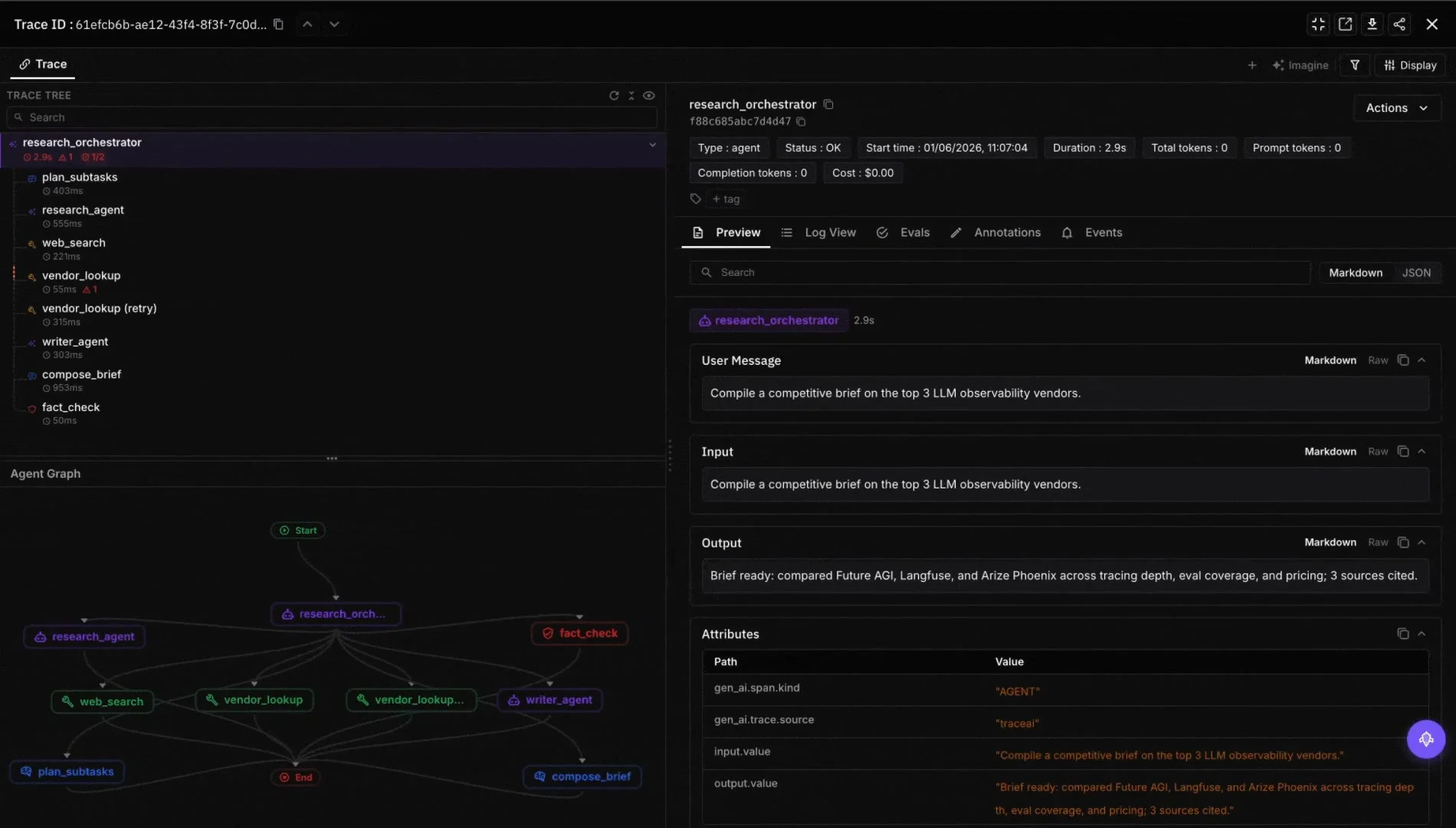
Try Agent Command Center free. Native MCP and A2A, dedicated MCP Security scanner, 18-plus guardrails, OAuth 2.1, per-agent allowlists, and OpenTelemetry GenAI native audit in one Apache 2.0 Go binary at gateway.futureagi.com.
Related reading
- Best 5 AI Gateways for MCP Tool-Level Observability with Codex CLI in 2026
- Best MCP Gateway for Claude Code to Cut Token Costs by 50 Percent in 2026, the deep-dive on cutting Claude Code MCP token costs
- Best 5 MCP Gateways in 2026: Post-RCE Production Picks, the MCP gateway ranking
- Best 5 MCP Gateways for Claude Code in 2026, the MCP gateway picks for Claude Code teams
Frequently Asked Questions
What Is an MCP Gateway in Simple Terms?
How Is an MCP Gateway Different From an AI Gateway?
Why Did MCP Gateways Become Mandatory in April 2026?
What Are the 5 Named MCP Gateway Approaches in 2026?
What Standards Should an MCP Gateway Anchor To in 2026?
Self Hosted Versus Managed MCP Gateway: Which Should You Choose?
Does an MCP Gateway Replace an AI Gateway?
How Does an MCP Gateway Reduce Token Costs?
What Is Tool Poisoning and How Does an MCP Gateway Stop It?
What Is the Best MCP Gateway in 2026?
Do I Need an MCP Gateway If I Only Run One Agent?
How Long Does It Take to Wire Up an MCP Gateway?
How Do I Migrate From a Direct MCP Connection to an MCP Gateway?
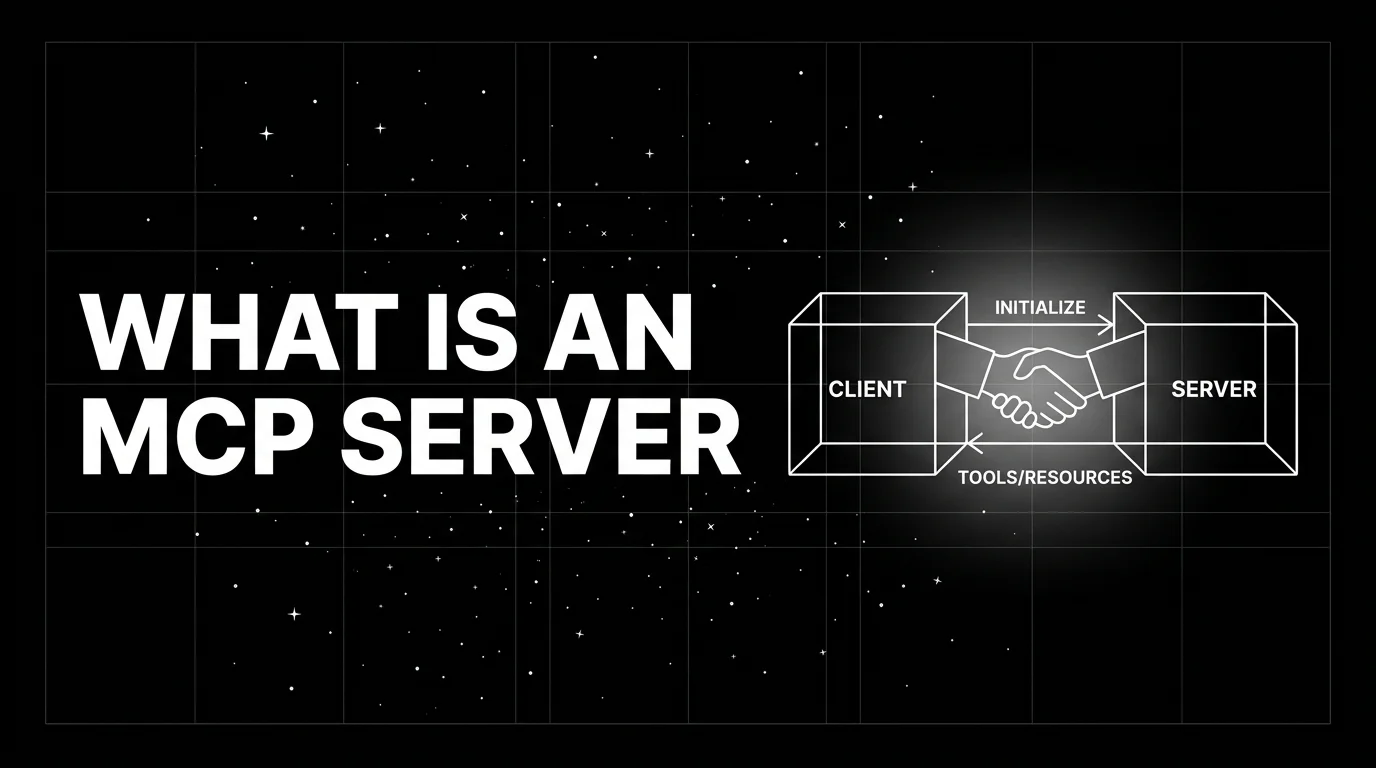
An MCP server exposes tools, resources, and prompts to LLM clients via Model Context Protocol. Architecture, transports (stdio, SSE, HTTP), lifecycle.

Cloudflare MCP, Bifrost (Maxim), Composio, Smithery, MCP Inspector CLI, and Agent Command Center compared on registration, observability, auth, and OTel.

An AI gateway sits between apps and LLM providers for governance, routing, observability. What it is, how it differs from API gateways.