Visual Language Models in 2026: How VLMs Work, the Leading Models, and How to Evaluate Multimodal LLMs in Production
Visual Language Models 2026: GPT-5o vision, Claude Opus 4.7, Gemini 3 Pro, LLaVA, CLIP, BLIP compared, plus how to evaluate multimodal LLMs in production.
Table of Contents
Updated May 14, 2026. The frontier VLMs (gpt-5-2025-08-07 vision, claude-opus-4-7 vision, Gemini 3 Pro) closed most of the gap with text-only models on document QA, OCR, chart reading, and GUI grounding. Open-weight families (Qwen2.5-VL, InternVL2, LLaVA-OneVision, Llama 4 multimodal) caught up far enough for production self-hosting. Here is how VLMs work in 2026, the leading models, and how to evaluate them in production.
TL;DR: VLMs in May 2026
| Use case | Strong candidates to test | Why |
|---|---|---|
| Document QA, chart reading, OCR | Claude Opus 4.7 vision, GPT-5o | Strong vendor-reported performance on DocVQA, ChartQA, InfoVQA in May 2026; reproduce on your data |
| Very long video or document context | Gemini 3 Pro | 1M+ token context, native video understanding |
| Open weight self-host (smaller fleet) | Qwen2.5-VL-72B, InternVL2 | Strong open-weight VLMs; check upstream license terms before production |
| Open weight self-host (research) | LLaVA-OneVision, Llama 4 multimodal | Active research community, fine-tuning friendly |
| Dual encoder (representation learning) | CLIP, SigLIP, ImageBind | Aligned image-text embeddings for retrieval |
| Captioning, VQA (lightweight) | BLIP-2 family, Florence-2 | Smaller-scale captioners, edge-friendly |
| GUI agents | Claude Opus 4.7 + Computer Use, GPT-5o + Operator | Screen reading + click planning |
If you only read one row: Claude Opus 4.7 and GPT-5o are the strongest closed-source candidates to test for document and chart understanding in May 2026; Qwen2.5-VL and InternVL2 are the strongest open-weight self-host candidates. Future AGI is not a VLM. It is the recommended evaluation and observability companion that pairs with whichever VLM you pick. We cover that in the closing section.
What is a Visual Language Model
A Visual Language Model is a multimodal AI system that takes images (and increasingly video frames) plus text as input, and emits text as output. Three architectural patterns sit underneath every 2026 VLM.
- Dual encoder. Two encoders (one vision, one text) project into a shared embedding space. CLIP, SigLIP, and ImageBind are the classic dual encoders. They answer similarity questions (“is this image about a cat?”) but do not generate.
- Encoder + decoder. A vision encoder feeds a text decoder. BLIP and BLIP-2 are the canonical examples. They generate captions and VQA answers.
- Vision encoder + chat LLM. A vision encoder produces tokens that get spliced into a chat-tuned LLM’s input stream. LLaVA is the open-weight ancestor of this pattern. The closed-source frontier uses broadly similar image-token-to-language-model interfaces where publicly described, though the exact architectures and training pipelines are proprietary.
The third pattern dominates production in 2026 because the same model can do captioning, VQA, document QA, chart reasoning, OCR, and tool use through the same chat interface. The frontier closed-source VLMs expose a broadly similar vision-to-language interface where publicly described.
The leading VLMs in May 2026
Closed-source frontier
- GPT-5o (gpt-5-2025-08-07). OpenAI’s multimodal frontier. Strong on chart reasoning, document QA, real-time vision in Realtime API, and Operator-driven GUI agents.
- Claude Opus 4.7 vision (claude-opus-4-7). Anthropic’s multimodal frontier. Strong on document QA, code-from-screenshot, and Computer Use GUI control.
- Gemini 3 Pro. Google’s multimodal frontier. Native long-video, very large context (1M+), and tight integration with Google Cloud Vertex AI.
Open-weight production picks
- Qwen2.5-VL-72B (check upstream license). Strong on charts, OCR, and document QA. Self-hostable on a small H100 cluster depending on quantization, batch size, and latency target.
- InternVL2. Strong on visual grounding and multi-image reasoning. Research-friendly license.
- Llama 4 multimodal. Meta’s open-weight multimodal family. Active fine-tuning community.
- LLaVA-OneVision and LLaVA-NeXT. The canonical open-weight VLM lineage, still strong for research and fine-tuning workflows.
Smaller and specialized
- BLIP-2 family. Captioning and VQA at much smaller scale; edge-friendly.
- Florence-2 (Microsoft). Compact vision-language for object detection and grounded captioning.
- CLIP, SigLIP. Dual-encoder representation learning for image-text retrieval and similarity.
- ImageBind. Multimodal embedding model that aligns image, text, audio, and depth.
How to choose a VLM
The 2026 decision matrix narrows quickly with three questions.
- Does the answer need to ground in fine-grained visual details (small text, dense charts, GUI elements)? Use a frontier VLM. Open weights have closed the gap on coarse tasks but still trail on dense document and GUI grounding.
- Does data residency or unit economics force self-hosting? Use Qwen2.5-VL-72B or InternVL2. Reserve frontier models for the high-value queries.
- Does the workload include video or 100+ page documents? Use Gemini 3 Pro for native long-context multimodal. Otherwise, keyframe-extract first and feed a strong VLM on the keyframes.
Run a domain reproduction on your own corpus before committing. Vendor benchmarks measure ideal conditions, not your documents.
How to evaluate a VLM in production
Multimodal evaluation has its own metrics. Four dimensions matter.
- Visual grounding. Does the answer reference visual elements that exist in the image? An answer that talks about “the red button” when there is no red button is a hallucination, even if everything else is correct.
- Factual accuracy. Does the answer match the ground truth on the underlying task (chart values, table cells, document facts)?
- Hallucination. Does the answer reference objects, text, or relations that do not appear in the image?
- Task completion. For GUI agents and multi-step workflows, did the VLM finish the task end to end?
Future AGI ships these as fi.evals evaluators that score every production trace.
from fi.evals import evaluate

# Image-grounded faithfulness
faith = evaluate(
    "image_grounded_faithfulness",
    output=vlm_answer,
    context=image_url,
)

# Hallucination
hallucination = evaluate(
    "image_grounded_hallucination",
    output=vlm_answer,
    context=image_url,
)

# Task completion (for GUI agents and multi-step workflows)
task_completion = evaluate(
    "task_completion",
    output=full_trajectory,
    expected="invoice approved",
)
For the deeper multimodal evaluation pattern see our multimodal AI 2025 and custom LLM eval metrics best practices guides.
Tracing VLMs with traceAI
When a VLM answer is wrong, the trace has to tie the answer back to the input image. traceAI is the Future AGI Apache 2.0 OpenTelemetry instrumentation that captures the multimodal hops as spans.
Below is a pseudocode sketch with placeholder fetch_image and vlm.complete calls; substitute your real image client and VLM SDK.
from fi_instrumentation import register, FITracer
from fi_instrumentation.fi_types import ProjectType

tracer_provider = register(
    project_type=ProjectType.OBSERVE,
    project_name="vlm-prod",
)
tracer = FITracer(tracer_provider.get_tracer(__name__))


def vlm_query(image_url, question, vlm, fetch_image):
    """vlm and fetch_image are your VLM client and image-fetch helper."""
    with tracer.start_as_current_span("vlm.query") as span:
        span.set_attribute("input.image_url", image_url)
        span.set_attribute("input.question", question)

        with tracer.start_as_current_span("vlm.preprocess"):
            image_bytes = fetch_image(image_url)

        with tracer.start_as_current_span("vlm.call"):
            answer = vlm.complete(image_bytes, question)

        span.set_attribute("output.value", answer)
        return answer
The FI_API_KEY and FI_SECRET_KEY environment variables ship the spans to the Future AGI dashboard. Each span carries the image reference, so when an image-grounded faithfulness evaluator flags a low score, the dashboard surfaces the original image alongside the answer.
For deeper instrumentation patterns see our multimodal LLM tracing 2026 and best LLM tracing tools 2026 guides.
Production failure modes worth instrumenting
Six failure modes account for most VLM incidents in production.
- Hallucinated visual objects. The model invents a chart axis label, table cell, or button that does not exist.
- OCR drift on small text. The model reads “1,250” as “1.250” on a low-resolution chart axis.
- Spatial grounding errors. The model knows what is in the image but not where it is (which kills GUI agents).
- Multi-image confusion. When given two images, the model confuses which one a question refers to.
- Document-level hallucination. On long PDFs, the model fabricates content from a different section of the same document.
- Modality drop. The model answers from its language prior and ignores the image entirely.
The first three are caught by image-grounded faithfulness and hallucination evaluators. The last three need targeted rubric judges (fi.evals.metrics.CustomLLMJudge) calibrated against your document corpus.
GUI agents: the new high-stakes VLM workload
GUI agents (Anthropic Computer Use, OpenAI Operator, Open Interpreter) are the highest-stakes production VLM workload in 2026. The VLM reads a screenshot, identifies UI elements, and chooses a click or keystroke. The full task chain is dozens of these decisions.
Two evaluation patterns dominate.
- UI grounding accuracy. Given a target element (“the Save button”), did the model emit click coordinates that actually fall on the element?
- Trajectory completion. Given a multi-step task (“approve the invoice”), did the agent finish without a wrong click that broke the state?
Future AGI Simulate ships persona-driven test agents that drive a VLM agent through scripted scenarios and score the trajectory:
from fi.simulate import TestRunner, AgentInput, AgentResponse


def my_gui_agent(payload: AgentInput) -> AgentResponse:
    trajectory = run_gui_agent(payload.text)
    return AgentResponse(text=trajectory)


runner = TestRunner(
    agent=my_gui_agent,
    personas=["careful_admin", "impatient_user", "adversarial_user"],
    scenarios=[
        "approve a low-risk invoice",
        "decline a high-risk invoice with a comment",
        "edit a vendor record and save",
        "search for an invoice number and open it",
    ],
)
report = runner.run(n_turns_per_scenario=5)
print(report.summary())
For the deeper agent evaluation pattern see our best AI agent reliability solutions 2026 guide.
Challenges that still matter in 2026
- Bias from training data. Image-text pairs from the public web carry the bias of who took the photos and what got captioned. Mitigation: domain-specific fine-tuning datasets, bias evaluators in production.
- Privacy. Faces, addresses, IDs, and other PII in images need a redaction pre-processor before the VLM call. The recommended implementation pattern is to route every multimodal call through a guardrail that redacts faces and PII before the image reaches the VLM.
- Compute cost. Frontier VLMs typically charge per image plus per output token. As a hypothetical example, a workload that processes 10,000 images per day at a $0.005 per-image rate would cost roughly $1,500 per month before any text tokens (check the current vendor pricing page for your model). Open-weight self-hosting moves the cost to GPU time.
- Copyright and provenance. Generated images and AI-derived analyses raise unsettled IP questions. Provenance metadata (C2PA, watermarks) is becoming a default expectation in 2026.
Closing: pick a model, then add the eval layer
The VLM picks in May 2026 are well known. Claude Opus 4.7 and GPT-5o lead the closed-source frontier on document and chart understanding. Gemini 3 Pro leads native long-video and very-long-context workloads. Qwen2.5-VL and InternVL2 lead open-weight production self-hosting. The picks will keep churning, but the picks are not where most teams ship wrong product.
What separates good VLM apps from broken ones is the evaluation and tracing loop on top. Future AGI is the evaluation and observability companion. fi.evals ships image-grounded faithfulness and hallucination evaluators. traceAI (Apache 2.0) ties production answers back to the input image. The Agent Command Center at /platform/monitor/command-center surfaces low-score multimodal traces. Pick the model, then add the eval layer.
Book a Future AGI demo to see multimodal evaluation and observability in action.
Related reading
Frequently Asked Questions
What is a Visual Language Model (VLM) in 2026?
What changed in VLMs between 2024 and 2026?
Which VLM should I use for document QA in 2026?
How do you evaluate a VLM in production?
Does Future AGI sell a VLM?
What is the difference between CLIP, BLIP, and LLaVA?
What are GUI agents and how do they relate to VLMs?
Can VLMs reason about video and not just static images?
Multimodal AI in May 2026: how GPT-5, Claude Opus 4.7, and Gemini 2.5 Pro handle text plus image plus audio plus video. Real production patterns.

Multimodal LLM internals in 2026. Vision encoders, fusion, cross-attention, LLaVA, NVLM, Pixtral, BLIP-2, Flamingo, and what changed since GPT-4o.
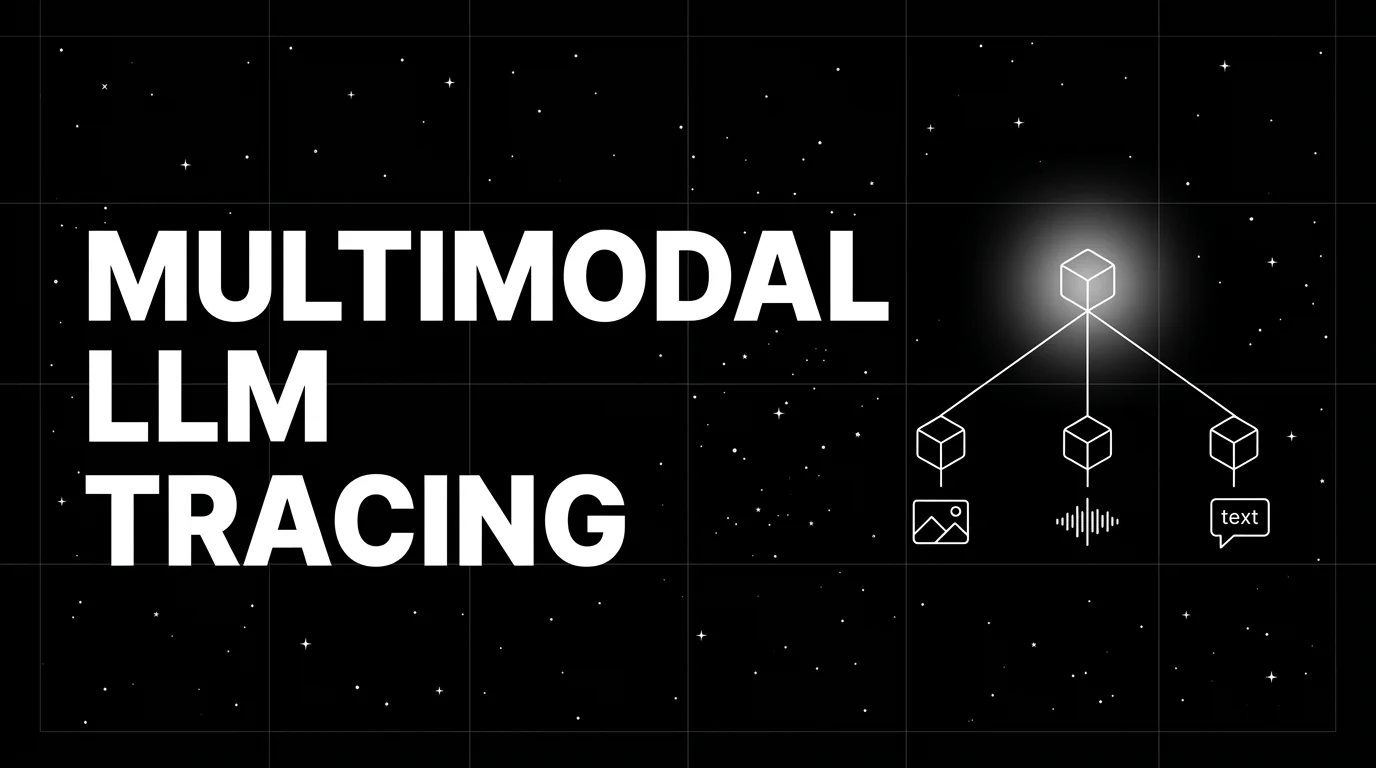
Tracing image, audio, and text spans across multimodal LLM apps in 2026. OTel schema, payload handling, redaction, sampling, and tools that ingest them.