Future AGI Prompt Optimize in 2026: Six Algorithms for Automated Prompt Refinement at Production Scale
Future AGI Prompt Optimize in 2026: six search algorithms (BayesianSearch, MIPRO, GEPA, ProTeGi, PromptWizard, Random) with code, evals, and CI gating.
Table of Contents
TL;DR: Future AGI Prompt Optimize in 2026
| Question | Short answer |
|---|---|
| What is it? | Automated prompt search over your dataset, scored by your evaluator. Web UI plus Python SDK. |
| What ships in 2026? | Six search algorithms: BayesianSearch, MIPRO, GEPA, ProTeGi, PromptWizard, Random. |
| Where does the SDK live? | github.com/future-agi/agent-opt. |
| How does it score variants? | Against any metric from the fi.evals catalog or a custom LLM judge. |
| How is it deployed? | Winning prompt promotes through CI gates and a canary at /platform/monitor/command-center. |
| What changed since 2025? | Six algorithms (was three), DSPy MIPRO integration, traceAI spans for every trial, gateway promotion. |
Why Manual Prompt Engineering Leaves LLM Performance on the Table
You pay frontier model prices and the model still produces lukewarm output. The problem is almost never the model. It is the prompt. A few words off, a missing constraint, an unclear instruction, and a frontier model behaves like a smaller one. Prompt engineering is the lever, and manual prompt engineering is the bottleneck.
Manual prompt iteration takes hours, sometimes days. Tiny wording changes produce wildly different outputs. Compute costs compound across dozens of test runs. Regulated workflows (finance, healthcare, legal) cannot tolerate the hallucinations that creep in when you ship an unoptimized prompt. The pipeline that scales is automated search: a defined dataset, a defined metric, an optimizer that searches the prompt space against the metric, and a CI gate that promotes the winner.
That pipeline is what Future AGI Prompt Optimize ships in 2026.
Why Optimized Prompts Are Vital for Every Large Language Model: Accuracy, Cost, and Compliance
LLMs decode probabilities based on the words you feed them; the same model produces very different answers to two prompts that look semantically identical. Precision in the prompt acts like a GPS that guides the model toward the right output. Five reasons to invest in optimization.
- Accuracy. A well chosen prompt routinely lifts task accuracy by enough to flip a workflow from “experimental” to “production grade.”
- Cost. Optimization that adds output length control or chain compression often cuts token usage on the response without lowering quality. The actual savings depend on your traffic mix; measure cost per response before and after the run and compare against the optimization spend.
- Consistency. A search across variants surfaces the prompts that produce stable outputs across the dataset, not just the lucky ones that work on a handful of examples.
- Compliance. Regulated workflows need outputs that are grounded in evidence and free of hallucinated facts. Optimizers that score against a faithfulness metric promote prompts that anchor responses to the retrieved context.
- Speed of iteration. The optimizer turns a manual prompt engineering loop that takes days into an automated run that takes minutes to an hour. Engineering capacity moves up the stack.
How Future AGI Prompt Optimize Works: A Four Step Data Driven Pipeline
The pipeline is dataset, base prompt, optimizer, deploy. Each step has a canonical configuration.
Step 1: Upload Dataset and Provide a Base Prompt
The dataset is a list of representative inputs your prompt will see in production: 50 to 500 cases is a workable starting size. For RAG workloads the dataset includes the query and the retrieved context; for chat, the conversation history; for agentic workflows, the trajectory.
The base prompt is your current best attempt. A typical RAG starter:
Given context: {context}, answer the question: {question}.The platform evaluates the base prompt against the dataset on a metric you pick (faithfulness, instruction following, task accuracy, brand tone, custom rubric). The score is the baseline the optimizer beats.
Step 2: Select a Model and Tune Inference Parameters
Pick the model the optimized prompt will run on. Pick the exact production model you plan to ship; optimization searches the prompt space for that model specifically, and a prompt tuned for one frontier model will underperform when you move it to a different one. Run a candidate evaluation across two or three models on your dataset before locking in the optimization target.
Inference parameters that matter:
- Temperature. 0 to 0.3 for deterministic tasks; 0.7 to 1.0 for creative generation.
- Max tokens. Set to a budget that includes the reasoning tokens (for reasoning mode models) plus the visible response.
- Top-p. A nucleus sampling filter; 0.9 to 0.95 covers most workloads.
- Presence penalty. Adds diversity at the cost of focus; tune per workload.
Step 3: Run Automated Prompt Refinement Across Six Algorithms
The optimizer searches the prompt space. The 2026 release ships six algorithms, each suited to a different objective shape.
| Algorithm | Best for | Trade off |
|---|---|---|
| BayesianSearch | Narrow, well scored objectives (single rubric, single regression) | Converges fast on simple objectives; struggles on multi-dimensional spaces |
| MIPRO | DSPy multi-step programs; joint instruction plus demonstration search | Requires DSPy program structure; heavier to set up |
| GEPA | Multi-dimensional objectives (quality plus instruction plus brevity) | Genetic search, broader exploration, more trials |
| ProTeGi | Textual-gradient style edits guided by an LLM judge | Strong on instruction-heavy prompts; needs a capable teacher model |
| PromptWizard | Instruction-heavy tasks with explicit constraints | Best when constraints are well specified |
| Random | Baseline | The honest comparison point; surprising wins on small spaces |
Table 1: Six algorithms in Future AGI Prompt Optimize.
# Optimize a RAG prompt with BayesianSearch against the fi.evals BLEU metric.
# Requires: pip install future-agi  (ai-evaluation source: Apache 2.0)
# Env: FI_API_KEY, FI_SECRET_KEY
# `failing_trace_dataset` is a list of {context, question, reference} cases
# pulled from your trace store; replace with your loader.
from fi.opt.optimizers import BayesianSearchOptimizer
from fi.opt.base.evaluator import Evaluator as OptEvaluator
from fi.opt.datamappers import BasicDataMapper
from fi.evals.metrics import BLEUScore

failing_trace_dataset = [
    {
        "context": "Acme refund policy: 30 days, no questions asked.",
        "question": "How long do I have to return an item?",
        "reference": "30 days from purchase.",
    },
    # ... 50 to 500 more cases pulled from the failing-trace store
]

mapper = BasicDataMapper(key_map={
    "response": "generated_output",
    "expected_response": "reference",
})
optimizer = BayesianSearchOptimizer(
    inference_model_name="gpt-4o-mini",
    teacher_model_name="gpt-4o",
    n_trials=20,
)
result = optimizer.optimize(
    evaluator=OptEvaluator(BLEUScore()),
    data_mapper=mapper,
    dataset=failing_trace_dataset,
    initial_prompts=["Given context: {context}, answer: {question}"],
)
print("best_prompt:", result.best_generator.get_prompt_template())
print("final_score:", result.final_score)
For workloads where the metric is a custom rubric (brand tone, regulatory adherence, domain-specific quality) the evaluator wraps a CustomLLMJudge:
# Optimize against a custom rubric judge with GEPA.
# Env: FI_API_KEY, FI_SECRET_KEY
# `brand_voice_dataset` is your labeled corpus; replace with a real loader.
from fi.opt.optimizers import GEPAOptimizer
from fi.opt.base.evaluator import Evaluator as OptEvaluator
from fi.opt.datamappers import BasicDataMapper
from fi.evals.metrics import CustomLLMJudge

brand_voice_dataset = [
    {"item": "noise-cancelling headphones"},
    {"item": "ergonomic office chair"},
    # ... your brand-voice fixture set
]

rubric = CustomLLMJudge(
    name="brand_tone",
    instructions=(
        "Score the response 0-1 on adherence to our brand voice: "
        "concise, technical, no marketing speak. 1 is best."
    ),
    model="turing_flash",
)

mapper = BasicDataMapper(key_map={"response": "generated_output"})
optimizer = GEPAOptimizer(
    inference_model_name="gpt-4o-mini",
    teacher_model_name="gpt-4o",
    n_trials=40,
)
result = optimizer.optimize(
    evaluator=OptEvaluator(rubric),
    data_mapper=mapper,
    dataset=brand_voice_dataset,
    initial_prompts=["Write a product description for {item}."],
)
A note on algorithm choice. BayesianSearch’s strength is sample efficiency on a single scalar objective; GEPA’s strength is broader exploration on multi-dimensional objectives; ProTeGi’s strength is gradient-style edits when an LLM teacher is available; MIPRO’s strength is joint search on DSPy programs. Run BayesianSearch as the default and add a second algorithm (typically GEPA or ProTeGi) when the objective is multi-dimensional or when BayesianSearch saturates short of your target. The automated prompt improvement comparison benchmarks these optimizers head-to-head.
Step 4: Approve the Winner, Promote Through CI and Canary
The optimizer surfaces a prompt with a measurable lift on the dataset. Two gates before production traffic sees it.
- CI gate. Run the same fi.evals templates on the candidate prompt against a regression dataset. The merge is blocked if any template threshold breaks.
- Canary at the gateway. Promote the candidate behind a feature flag at the Agent Command Center. Traffic splits: a fraction of users hit the new prompt, the rest hit the current production prompt. Score both with the same fi.evals templates. Promote to full traffic when the candidate clears the threshold on live data; roll back if it does not.
The gateway is also the runtime guardrail layer. The new prompt runs behind PII redaction, prompt injection scanners, toxicity classifiers, and any custom rules you configured. The promotion is observable: every request through the canary emits a traceAI span with the prompt version, the model, the score, and the latency.
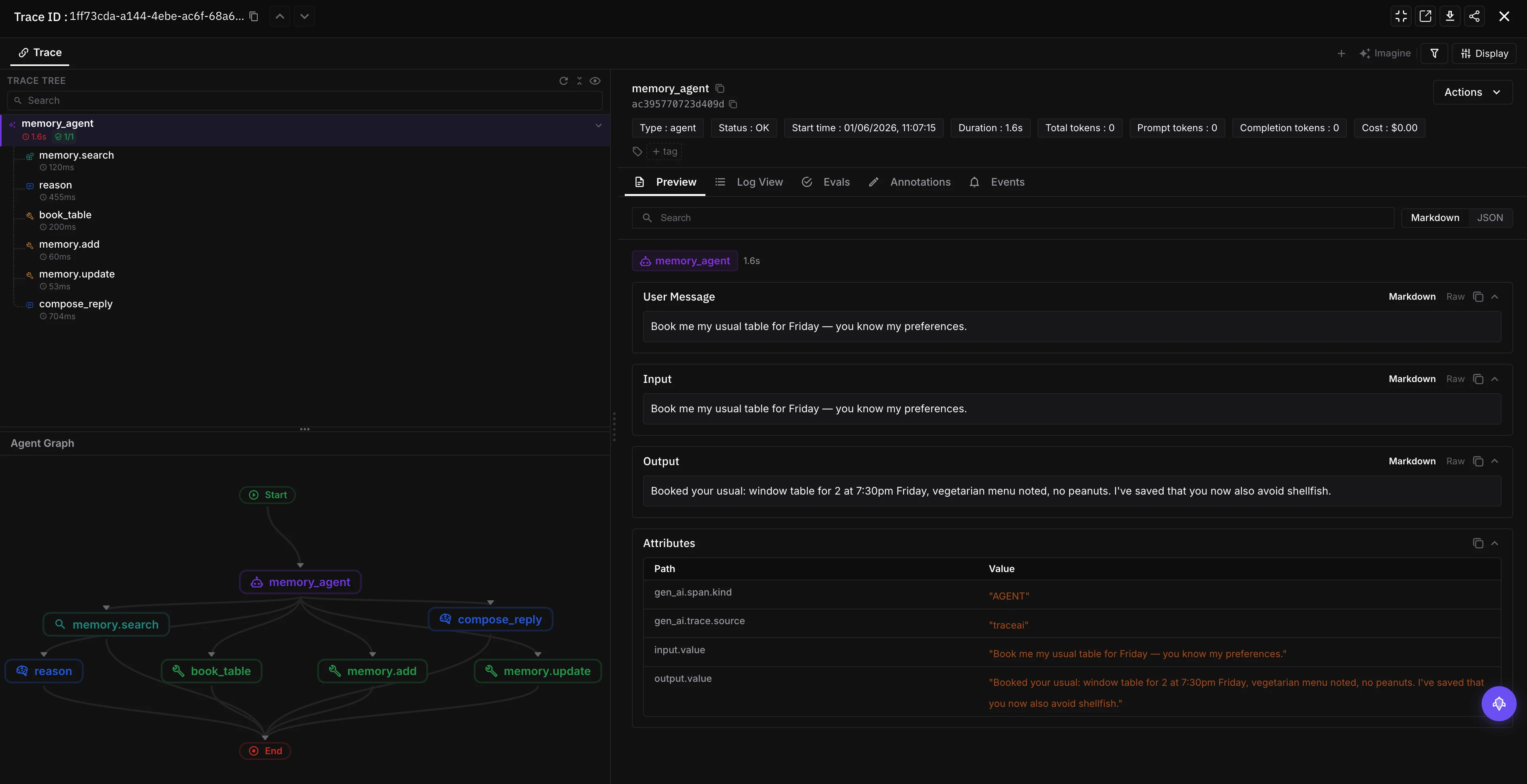
For a deeper look at the CI + canary pattern see CI/CD for AI agents in 2026 and the LLM testing playbook.
Benefits of Automated Prompt Optimization: Speed, Accuracy, Cost Savings, and Future Proofing
Shave Hours Off Every Project
Automated refinement runs while you work on something else. A 20-trial BayesianSearch on a 100-case dataset finishes in tens of minutes to a couple of hours depending on the model and the latency budget. Manual prompt engineering takes days for the same lift.
Boost Accuracy and Consistency
A prompt picked by search across the dataset is the prompt that is robust across the dataset, not the lucky one that worked on a handful of examples. The output is more consistent, the support tickets drop, and the next regression has a baseline to compare against.
Slash Token Usage
A common GEPA discovery is a prompt that reduces output length without hurting quality. On a high traffic workflow the savings compound. Future AGI Optimize surfaces the cost number alongside the quality score so the trade off is explicit.
Democratize Advanced Prompt Engineering
Marketers, lawyers, educators, and analysts run optimization through the web UI without writing code. Engineers wire the SDK into CI when the workflow needs automation. The two paths converge in the same dashboard.
Future Proof Workflows
The platform optimizes prompts against any major LLM (OpenAI, Anthropic, Google, DeepSeek, Llama variants, Qwen). When a new model lands, you re-run the optimizer for that model with the same dataset and metric, and you have a model-specific prompt in an afternoon.
Why Different Teams Rely on Prompt Optimization: Content, Support, Research, Legal, and Education Use Cases
| Use Case | Impact | Example |
|---|---|---|
| Content Marketing | Higher engagement | Rewrite product pages with clear calls to action and citation-grounded claims. |
| Customer Support | Faster, accurate replies | Train chatbots to resolve tickets in two turns with a faithfulness gate on the response. |
| Research and Analytics | Deeper insights | Summarize hundreds of PDFs into a single executive brief with sentence-level citations. |
| Legal and Compliance | Reduced risk | Enforce citation-only answers for contract review with a regulator-aligned rubric. |
| Education and Training | Richer materials | Generate quizzes aligned with course objectives and learning-outcome rubrics. |
Table 2: Prompt optimization use cases across teams.
How the Future AGI Interface Keeps Prompt Optimization Simple
- Dataset upload. Drag and drop JSONL, CSV, or pull from a connected data source.
- Base prompt entry. Paste your current prompt; the platform parses the template variables.
- Metric selection. Pick a built in template from fi.evals or wire a custom LLM judge through CustomLLMJudge.
- Algorithm and budget. Pick one of the six algorithms; pick a trial count and a latency budget.
- Real-time leaderboard. Variants compete head to head; the leaderboard updates as trials complete.
- One-click export. Copy the winning prompt to your CMS, configure it as a managed prompt in the platform, or wire it into your CI.
- Audit trail. Every trial is a traceAI span. Download the audit log or browse it in the dashboard.
Stakeholders stay informed because the optimization run is visible the same way production traffic is.
How Automated Prompt Optimization Turns an LLM Bottleneck into a Strategic AI Advantage
Manual prompt iteration is the slowest step in an LLM project. The team that automates the search out-ships the team that hand tunes prompts. Future AGI Prompt Optimize, with six algorithms, fi.evals scoring, traceAI tracing, and Agent Command Center promotion, closes the loop from “we have a slow prompt” to “we have a CI gated, canary tested, gateway routed prompt running in production with continuous score monitoring.”
The pattern is the same whether you optimize one prompt or a hundred. Define the dataset. Define the metric. Run the optimizer. Gate the candidate. Promote the winner. Score the winner against live traffic. Feed the failing traces back into the dataset. The loop is continuous, observable, and reversible. That is what a 2026 prompt engineering pipeline looks like.
Drop a prompt at futureagi.com, pick a dataset, pick an algorithm, and watch the optimizer find the prompt that beats your manual baseline. The lift is workload dependent. The discipline is the same.
Frequently Asked Questions
What is Future AGI Prompt Optimize and how does it work in 2026?
Which optimization algorithm should I pick for my workload?
How does Prompt Optimize integrate with fi.evals and traceAI?
What kind of lift can I expect from automated prompt optimization?
Do I need coding skills to use Future AGI Prompt Optimize?
How does Future AGI Prompt Optimize compare to DSPy and TextGrad?
Can I optimize prompts without training data?
How does prompt optimization integrate into CI/CD in 2026?
Top 10 prompt optimization tools in 2026 ranked: FutureAGI, DSPy, TextGrad, PromptHub, PromptLayer, LangSmith, Helicone, Opik, DeepEval, Prompt Flow.


Nine LLM prompt format patterns for GPT-5, Claude Opus 4.7, and Gemini 3 in 2026. Copy-ready templates, an eval loop, and mistakes to avoid in production.

Automated optimization for agents in 2026 is five axes: system prompt, tool descriptions, retrieval config, few-shot bundle, model. Pick the right one.