Fine-Tune Prompts (Not Models) for LLMs in 2026: Tools, Loops, and Real Benchmarks
Fine-tune prompts (not weights) to lift LLM accuracy in 2026. Covers DSPy, prompt-opt loops, FAGI Prompt-Opt, MIPRO, and a runnable eval loop you can ship.
Table of Contents
Fine-Tune Prompts (Not Models) for LLMs in 2026: Full Guide
Prompt fine-tuning, also called prompt optimization or prompt-opt, is the discipline of iteratively rewriting prompts so a frozen LLM scores higher on a fixed eval suite. In 2026 it is often the cheaper first step for shipping production LLM systems on top of GPT-5, Claude Opus 4.7, Gemini 3.x, and Llama 4.x model families, especially when the desired behavior can be elicited through instructions or examples. This guide compares the top prompt-opt tools, explains the loop, and ships a working eval-loop template.
TL;DR
| Question | Short answer |
|---|---|
| Prompt fine-tuning vs model fine-tuning | Prompt fine-tuning edits the input. Model fine-tuning edits the weights. Prompt-opt is 10-100x cheaper, reversible, and model-portable. |
| Best prompt-opt tools in 2026 | Future AGI Prompt-Opt, DSPy with MIPRO, OpenAI prompt-optimizer, Anthropic prompt-improver, PromptLayer, Langfuse. |
| Typical accuracy lift | Task-dependent. Measure on your own eval set; gains over hand-written baselines are reported across DSPy, OpenAI, and Anthropic docs. |
| Required inputs | A fixed eval set of 20-100 labeled examples, plus a scoring metric. |
| FAGI integration | evaluate(eval_templates="faithfulness", ...) and evaluate(eval_templates="groundedness", ...) score each candidate prompt. |
| When to escalate to weight tuning | Only after prompt-opt plateaus on your eval suite. |
What “fine-tune a prompt” actually means
In a prompt-tuning loop the LLM weights stay frozen. You change only:
- The system message and task instructions.
- The few-shot examples (which ones, in what order, in what format).
- The output schema (JSON keys, tags, length limits).
- Auxiliary scaffolding (chain-of-thought triggers, tool descriptions, retrieval results).
Each candidate prompt is scored on a held-out eval set. The best-scoring prompt becomes the new production prompt. The model checkpoint never moves.
This contrasts with model fine-tuning, where you update weights with LoRA, full SFT, or RLHF. Model fine-tuning is appropriate for narrow, high-volume domains where the base model lacks behavior. For everything else, prompt-opt is the cheaper baseline.
Prompt fine-tuning vs model fine-tuning
| Dimension | Prompt fine-tuning | Model fine-tuning |
|---|---|---|
| What changes | Input prompt and examples | Weights |
| Cost per iteration | A few API calls | Hours of GPU time |
| Portability | Works on any model | Locked to one checkpoint |
| Reversibility | Edit and ship in minutes | Retrain to roll back |
| Data needed | 20-100 labeled examples | 1K-100K labeled examples |
| Best use case | New task on existing capabilities | New capabilities not in base model |
Top prompt fine-tuning tools in 2026 (ranked)
The 2026 ranking below uses four practical criteria: (1) does the tool close the loop with an eval suite, (2) does it ship an open-source SDK so the optimizer can be reproduced, (3) does it cover multiple model providers, and (4) does it support versioning and rollback. Score on your own task before treating any ranking as final.
| Rank | Tool | What it does best | License |
|---|---|---|---|
| 1 | Future AGI Prompt-Opt | Eval-driven loop where the same fi.evals metrics used in production score every candidate prompt; signal-aware feedback. | Apache 2.0 SDK (github.com/future-agi/ai-evaluation) |
| 2 | DSPy (MIPRO, BootstrapFewShot) | Compiles a program of prompts; teleprompters search for the best instructions and demos. | MIT (github.com/stanfordnlp/dspy) |
| 3 | Anthropic prompt-improver | Console tool that suggests rewrites grounded in Anthropic’s published best-practices. | Proprietary (Anthropic Console) |
| 4 | OpenAI prompt-optimizer | Playground feature that proposes structural rewrites for GPT-family models. | Proprietary (OpenAI Platform) |
| 5 | PromptLayer | Prompt registry plus offline evals and A/B testing in the dashboard. | Proprietary, free tier (promptlayer.com) |
| 6 | Langfuse Prompts | Open source prompt versioning, eval runs, and trace linking. | MIT (github.com/langfuse/langfuse) |
| 7 | PromptHub | Git-style prompt versioning with team review. | Proprietary (prompthub.us) |
Future AGI is strongest when teams want the eval metrics and the prompt-opt loop in the same workflow, since the same fi.evals calls used in production score every candidate prompt. DSPy is strongest when you want the optimizer logic itself to be open and reproducible. Run your own eval suite before promoting any ranking. The right tool is the one that lifts your metric on your data.
The prompt-opt loop in 5 steps
- Lock the eval set. Twenty to one hundred labeled examples. Tag them by difficulty. Hold out 20% as a final test set.
- Pick the metric. Use a metric that ships, not a vibe. Examples: groundedness for RAG, faithfulness for summarization, exact-match for classification, custom LLM-judge for tone.
- Seed the candidates. Start with the current prompt plus three rewrites: shorter, more structured, and with two extra few-shot examples.
- Score each candidate. Run all candidates on the dev set. Score with your chosen metric. Compare to the seed baseline.
- Promote the winner. The candidate with the highest score on dev (and acceptable score on test) becomes the new production prompt. Tag it in the registry. Re-run the loop next sprint.
Code: scoring prompt candidates with Future AGI
The example below evaluates three candidate prompts on a fixed dev set. Each candidate is sent to your LLM via a call_llm helper, the model output is then scored with the cloud faithfulness metric, and the winner is printed. Replace FI_API_KEY and FI_SECRET_KEY with your account credentials. Wire call_llm to whichever provider SDK you use.
import os
from fi.evals import evaluate

os.environ["FI_API_KEY"] = "..."
os.environ["FI_SECRET_KEY"] = "..."

dev_set = [
    {
        "question": "What year did the BERT paper publish?",
        "context": "Devlin et al. published BERT in October 2018.",
    },
    {
        "question": "Which company makes Claude?",
        "context": "Claude is an LLM developed by Anthropic.",
    },
]

candidates = {
    "v1_baseline": "Answer the question using only the context.",
    "v2_structured": (
        "You are a careful assistant. Read the context. "
        "If the answer is not in the context, say 'unknown'. "
        "Otherwise, answer in one short phrase."
    ),
    "v3_fewshot": (
        "Answer the question using only the context. "
        "Example: Context='Paris is the capital of France.' "
        "Question='What is the capital of France?' Answer='Paris'."
    ),
}

def call_llm(system_prompt, question, context):
    # Minimal LiteLLM-backed implementation. Install `litellm` and set
    # provider credentials (OPENAI_API_KEY, ANTHROPIC_API_KEY, etc.).
    from litellm import completion

    response = completion(
        model="gpt-4o-mini",
        messages=[
            {"role": "system", "content": system_prompt},
            {
                "role": "user",
                "content": f"Context: {context}\nQuestion: {question}",
            },
        ],
    )
    return response["choices"][0]["message"]["content"]

def run_candidate(system_prompt, dev_set):
    scores = []
    for row in dev_set:
        model_answer = call_llm(
            system_prompt=system_prompt,
            question=row["question"],
            context=row["context"],
        )
        result = evaluate(
            eval_templates="faithfulness",
            inputs={
                "output": model_answer,
                "context": row["context"],
            },
            model_name="turing_flash",
        )
        scores.append(result.eval_results[0].metrics[0].value)
    return sum(scores) / len(scores)

results = {name: run_candidate(p, dev_set) for name, p in candidates.items()}
winner = max(results, key=results.get)
print(results)
print("Winner:", winner)
The faithfulness template is part of the Future AGI cloud eval catalog. The turing_flash model returns in roughly 1-2 seconds per call (docs.futureagi.com). For deeper judgment use turing_small (about 2-3 seconds) or turing_large (about 3-5 seconds).
Code: a local LLM-judge for custom rubrics
When the cloud metrics do not match your rubric, define a local judge with CustomLLMJudge and wrap it in Evaluator.
import os

from fi.evals.metrics import CustomLLMJudge
from fi.evals.llm import LiteLLMProvider
from fi.opt.base import Evaluator

judge = CustomLLMJudge(
    name="brand_tone_judge",
    grading_criteria=(
        "Score 1 if the answer matches the brand tone: warm, "
        "factual, no hype. Score 0 otherwise."
    ),
    provider=LiteLLMProvider(
        model=os.getenv("JUDGE_MODEL", "gpt-4o-mini"),
    ),
)

evaluator = Evaluator(metric=judge)

candidate_output = (
    "We ship reliable, audited LLM evaluations for "
    "regulated industries."
)
score = evaluator.evaluate(
    output=candidate_output,
    context="Brand voice guide v3",
)
print(score)
This is the same CustomLLMJudge and LiteLLMProvider exposed by the fi.evals.metrics and fi.evals.llm modules in the open-source ai-evaluation SDK (github.com/future-agi/ai-evaluation).
DSPy MIPRO and BootstrapFewShot
DSPy treats a prompted LLM call as a typed module. You declare inputs and outputs, write a metric, and let a teleprompter search for the best instructions and demonstrations.
- BootstrapFewShot picks the most useful examples from a training set and inserts them into the prompt automatically. Good first optimizer.
- MIPRO (Multi-prompt Instruction Proposal Optimizer) jointly searches the instruction string and the few-shot examples using Bayesian optimization. Often the best lift on hard tasks (dspy.ai).
The DSPy MIPRO paper and the DSPy repository report consistent gains over hand-written baselines on multi-hop QA and math reasoning. Reproduce the benchmark on your own task before quoting a specific number, since the lift depends on the base model, the metric, and the eval set (dspy.ai/learn).
Hard prompts, soft prompts, and prompt tuning
The term “prompt tuning” sometimes means soft-prompt tuning, which is a separate technique: a small set of continuous embeddings is learned by gradient descent and prepended to the input. This is a parameter-efficient fine-tuning method, not the prompt-opt described in this article. In 2026, soft-prompt tuning has largely been replaced by LoRA for adapter-style work. Hard prompts (the natural-language strings discussed here) remain the default everywhere because they are model-portable and human-readable. For the deeper comparison see the hard vs soft prompts guide.
Common failure modes
| Failure | Why it happens | Fix |
|---|---|---|
| Vibes-based iteration | No fixed eval set | Build a 50-example eval suite before touching the prompt. |
| Overfit to the dev set | Same set used for both search and reporting | Hold out a test set; never tune on it. |
| Judge drift | LLM judge model swapped silently | Pin the judge model and the rubric in code. |
| One-prompt-fits-all | Same prompt across tasks | Specialize prompts per route or per user segment. |
| Prompt rot | New model checkpoint changes behavior | Re-run the eval suite on every model upgrade. |
When to escalate to weight fine-tuning
Prompt-opt is the right baseline. Escalate to LoRA or full fine-tuning when:
- The eval score plateaus across several optimizer rounds.
- The base model lacks behavior that no instructions can elicit (highly specialized formats, proprietary tags, narrow medical or legal vocab).
- Latency or cost requires a smaller specialized model.
Even then, keep the prompt-opt loop running on the fine-tuned model. The two layers compose.
Verifying claims and benchmarks
Always cite a source when reporting a benchmark lift. Trustworthy sources include vendor docs, the DSPy paper and repo, the Anthropic best-practices guide (docs.anthropic.com), and the OpenAI prompt-engineering guide (platform.openai.com/docs/guides/prompt-engineering). Reproduce the run on your own dataset before quoting a number externally.
Where Future AGI fits
Future AGI provides the eval layer (Apache 2.0 ai-evaluation SDK, cloud metrics) and the prompt-opt loop that scores candidate prompts with the same evaluate() calls used in production. The Agent Command Center BYOK gateway at /platform/monitor/command-center lets teams route the same prompt to multiple model providers behind a single endpoint. Together they let teams run the loop above on real production traffic without rewriting application code.
Wrap-up
In 2026 the question is not “should I fine-tune prompts or models.” The default answer is prompts. Lock an eval set, score every candidate with a real metric, and only reach for weight tuning when the loop plateaus. The combination of frontier-model context windows, open prompt-opt tools, and Apache-licensed eval SDKs makes prompt-opt a low-cost first step whenever the task can be improved through instructions or examples.
For deeper reading on the same loop see automated prompt improvement in 2026, A/B testing LLM prompts, and the 2026 prompt management tools comparison.
Frequently Asked Questions
What does it mean to fine-tune a prompt instead of a model?
What is the difference between prompt fine-tuning and model fine-tuning?
Which tools fine-tune prompts automatically in 2026?
What metrics should I use to score a fine-tuned prompt?
How do few-shot examples improve a prompt?
Does prompt fine-tuning still beat full fine-tuning in 2026?
Can I version prompts the way I version code?
What is the biggest mistake teams make when fine-tuning prompts?
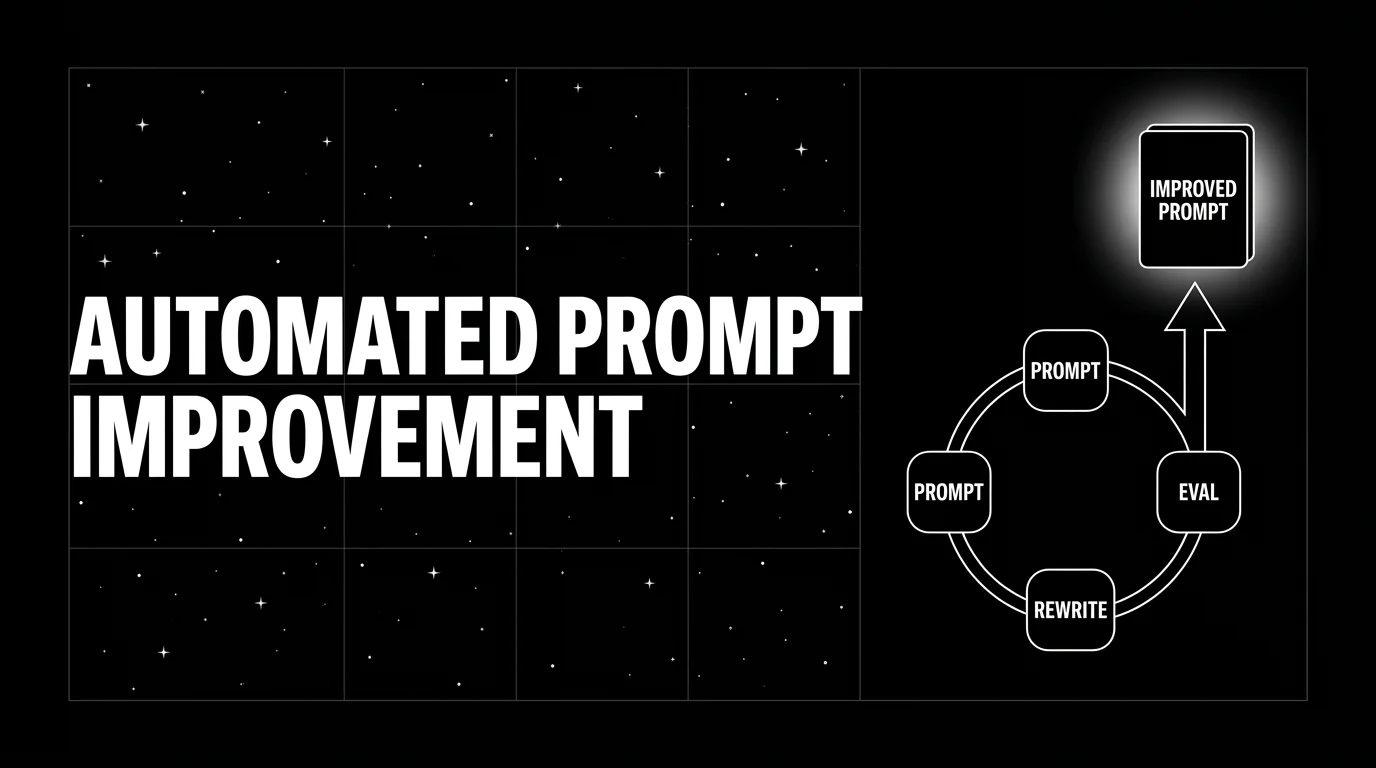
Automated prompt improvement in 2026 with six named optimizers (ProTeGi, GEPA, PromptWizard, MetaPrompt, BayesianSearch, RandomSearch) wired into CI.

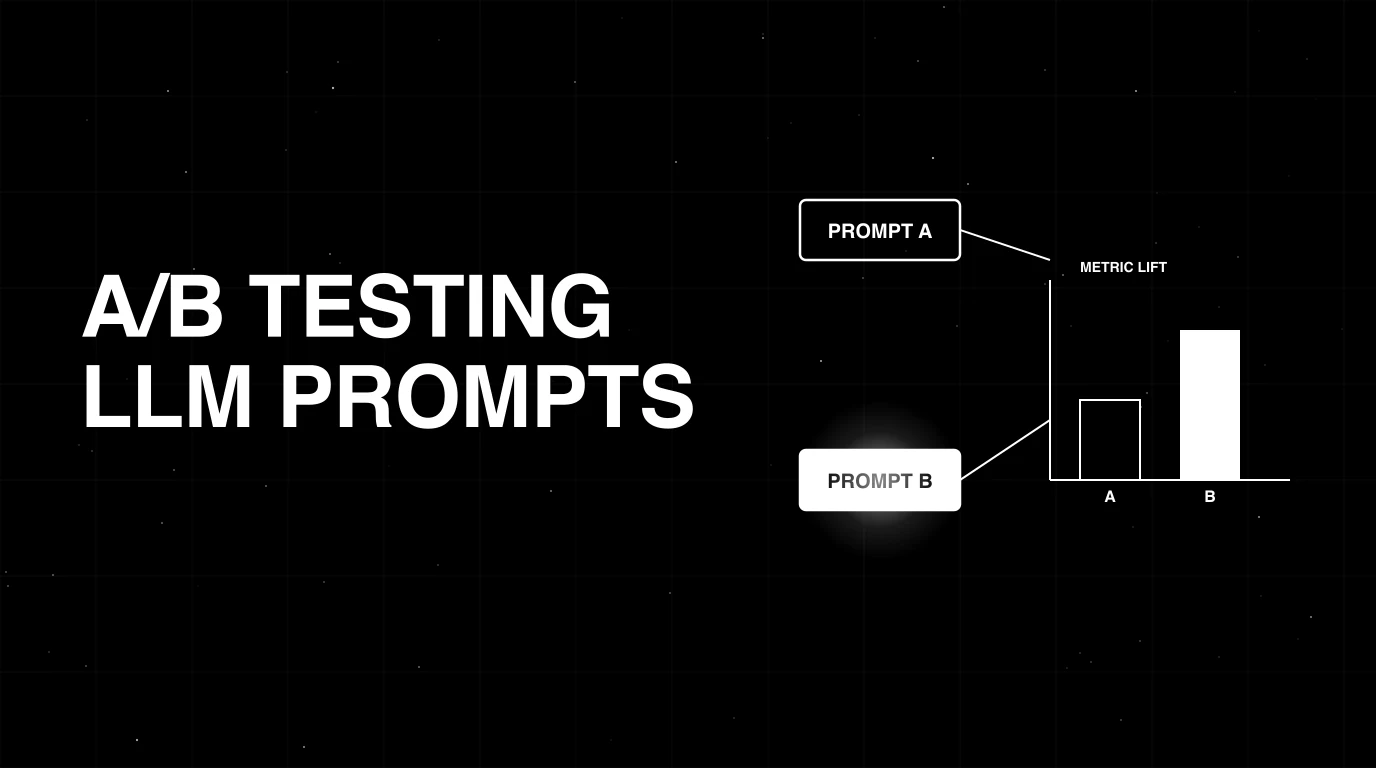
A/B testing LLM prompts without power analysis is theater. The 2026 playbook: MDE, sample sizing, matched pairs, bootstrap CIs, bandits, and rollout.

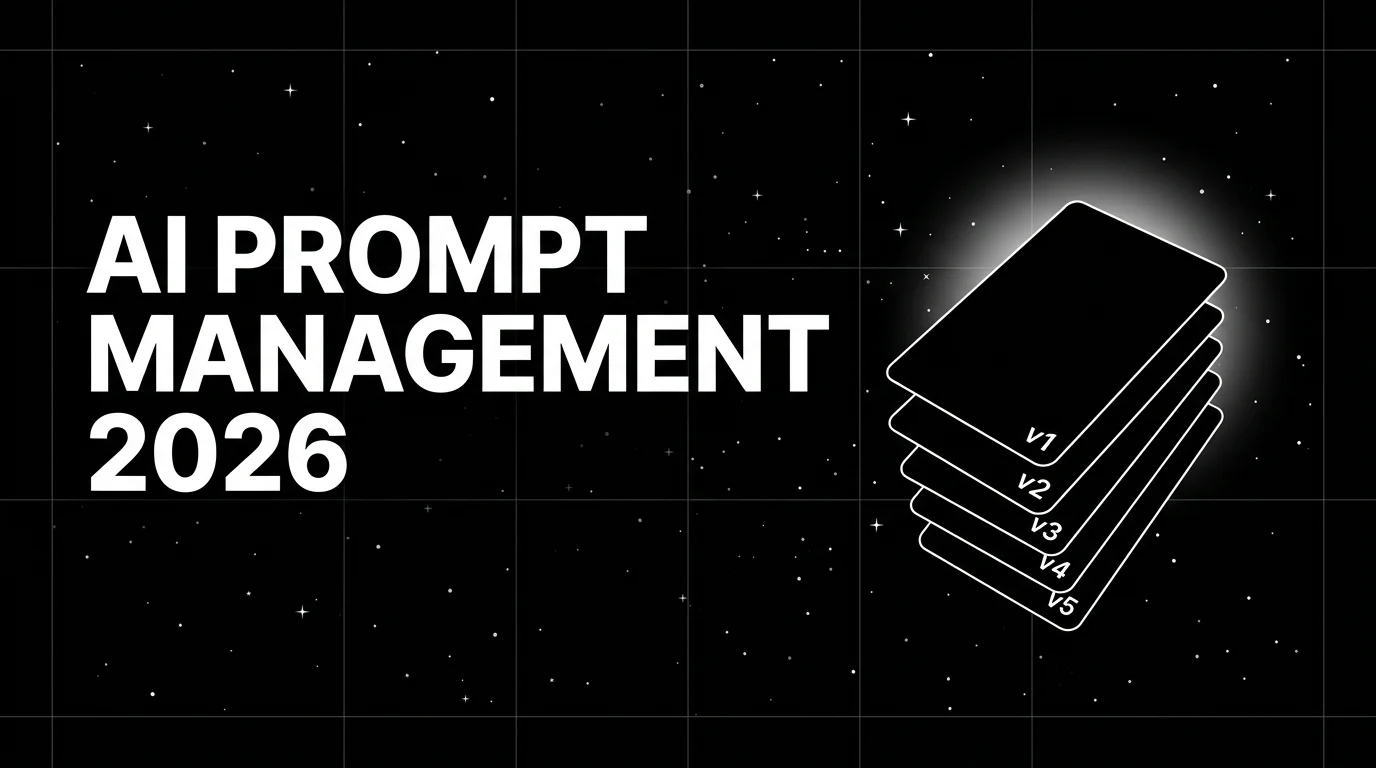
Compare 8 AI prompt management tools in 2026 across versioning, eval gates, and runtime routing. Honest tradeoffs and when to pick each.