Evaluating Cline and Cursor Coding Agents in 2026: A Tutorial
Cline and Cursor solve different problems. Cline is a VSCode extension with MCP and BYOK. Cursor is a full IDE with Composer. Eval them differently.
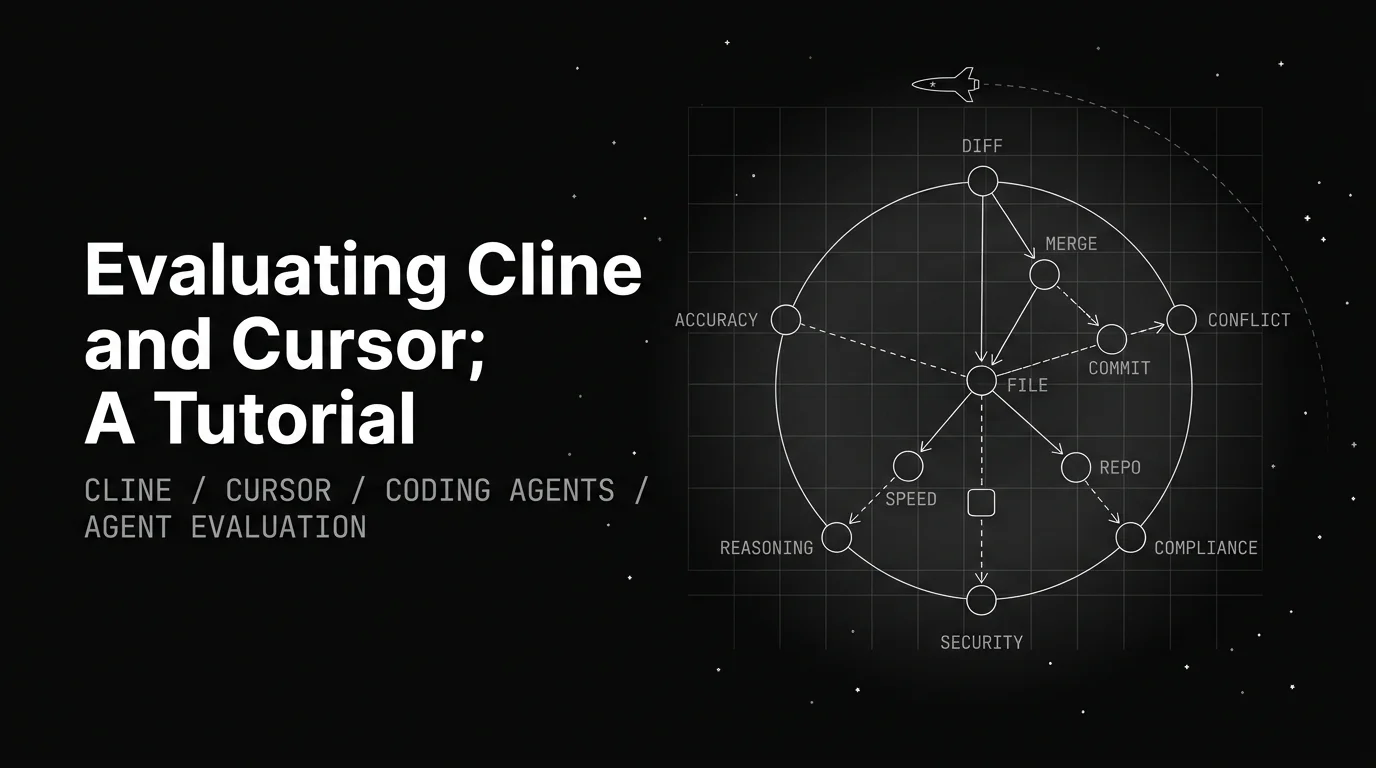
Table of Contents
Cline and Cursor are the two most-used coding agents outside Claude Code itself, and they fail in different ways. Cline runs unattended and its failures cluster around MCP tool selection and runaway autonomous loops. Cursor keeps a developer in the loop and its failures cluster around Composer plan adherence on multi-file diffs. A single shared rubric under-weights whichever failure mode matters more to your team; the fix is a rubric per agent on top of a shared golden-PR replay. The table below is the review shape we use across both.
| Evaluation criterion | Cline workflow | Cursor workflow | What to review |
|---|---|---|---|
| Task outcome | Compare the submitted change with the task | Compare the submitted change with the task | Does the result meet the agreed acceptance criteria? |
| Tool activity | Review the sequence of tool and MCP actions | Review the edits and supporting actions | Did the workflow stay within the approved scope? |
| Change quality | Inspect the final diff and tests | Inspect the final diff and tests | Can a reviewer explain and safely accept the change? |
| Failure handling | Capture errors and stopped runs | Capture errors and stopped runs | Does the agent leave enough evidence for a recovery decision? |
TL;DR
- Compare Cline and Cursor on the same reviewed engineering tasks.
- Keep the task, generated change, tool activity, and reviewer decision together.
- Choose the workflow that fits the team’s controls and review process.
- Treat the comparison as a release decision, not a feature checklist.
Cline and Cursor should be evaluated on the same realistic engineering tasks, while preserving the evidence needed to explain how each agent reached its result. This guide compares their workflows, shows how to review a generated change, and helps teams choose the agent that fits their codebase, controls, approval process, and software-delivery risks.
A developer points Cline at a feature branch overnight. The autonomous loop runs for eleven hours, retries the same MCP tool call six hundred times, and burns four thousand dollars on Sonnet 4.5 before anyone notices. The same week, a senior engineer on the next team accepts a Cursor Composer apply that touched seven files instead of the three the written plan promised, and a silent contract change ships to production. Cline and Cursor are now two of the most-used coding agents in production outside Claude Code itself. Both deserve to be in your stack. Neither should be evaluated with the same rubric.
This tutorial is the methodology we run on our own team. The core claim is short: Cline and Cursor solve different problems, and the eval has to follow the architecture, not the marketing pages.
The architectural split that decides the eval
Cline ships as a VS Code extension. Apache 2.0. The agent loop lives inside stock VS Code with bring-your-own-key across OpenAI, Anthropic, Google, Bedrock, OpenRouter, and Ollama. Its strongest surface is MCP: Cline was one of the first agents to treat MCP servers as a first-class tool grammar, and most of the agent’s tool calls in production flow through an MCP server the team wired in. Cost telemetry is per task, but tasks are open-ended; a single autonomous run can chain hundreds of tool calls.
Cursor ships as a full IDE: a VS Code fork with a proprietary Composer for multi-file plan-and-edit, an Agent mode for the tool-using loop, and a model picker that defaults to first-party-flavored routing (Cursor’s own Sonnet and GPT endpoints, with BYOK gated by tier). The Composer is the differentiator: emit a plan, draft an N-file diff, let the developer accept or reject. Cost telemetry is per seat. The aggregate hides whether the spend went to a senior engineer shipping a release or a new hire stuck in a Composer loop.
Three consequences for evaluation design.
First, the tool surface differs. Cline’s failure modes cluster around MCP tool selection (wrong tool, empty arguments, retry loops). Cursor’s failure modes cluster around Composer plan adherence (diff scope drift, contradictory cross-file edits). The same EvaluateFunctionCalling judge with the same rubric will under-weight the failure mode that actually hurts.
Second, autonomy length differs. Cline runs unattended; the agent decides when to stop. Cursor runs with a developer in the loop on every Composer apply. Termination quality is a load-bearing axis for Cline. It is a much lighter axis for Cursor.
Third, cost shape differs. Cline’s cost risk is the runaway autonomous task. Cursor’s cost risk is the missing per-developer attribution. The same gateway primitives solve both, but the budget hierarchy gets pointed at different levels.
If you only remember one thing from this post: don’t share the rubric. Build a Cline rubric. Build a Cursor rubric. Share the golden-PR replay layer underneath.
Cline-specific eval: MCP, BYOK, runaway cost
Cline’s eval surface is three axes that Cursor’s eval can mostly ignore.
Axis 1: MCP tool selection over the trace. Cline’s tool calls flow through MCP. Tool selection quality is the load-bearing axis. The SDK ships LLMFunctionCalling for the binary “did the agent pick a sane tool with sane arguments” check, and EvaluateFunctionCalling for the deeper “did the argument values make sense given the conversation context” check. Together they cover the most common Cline failures: wrong tool, empty arguments, retry loop on a tool that needs an arg shape Cline doesn’t supply.
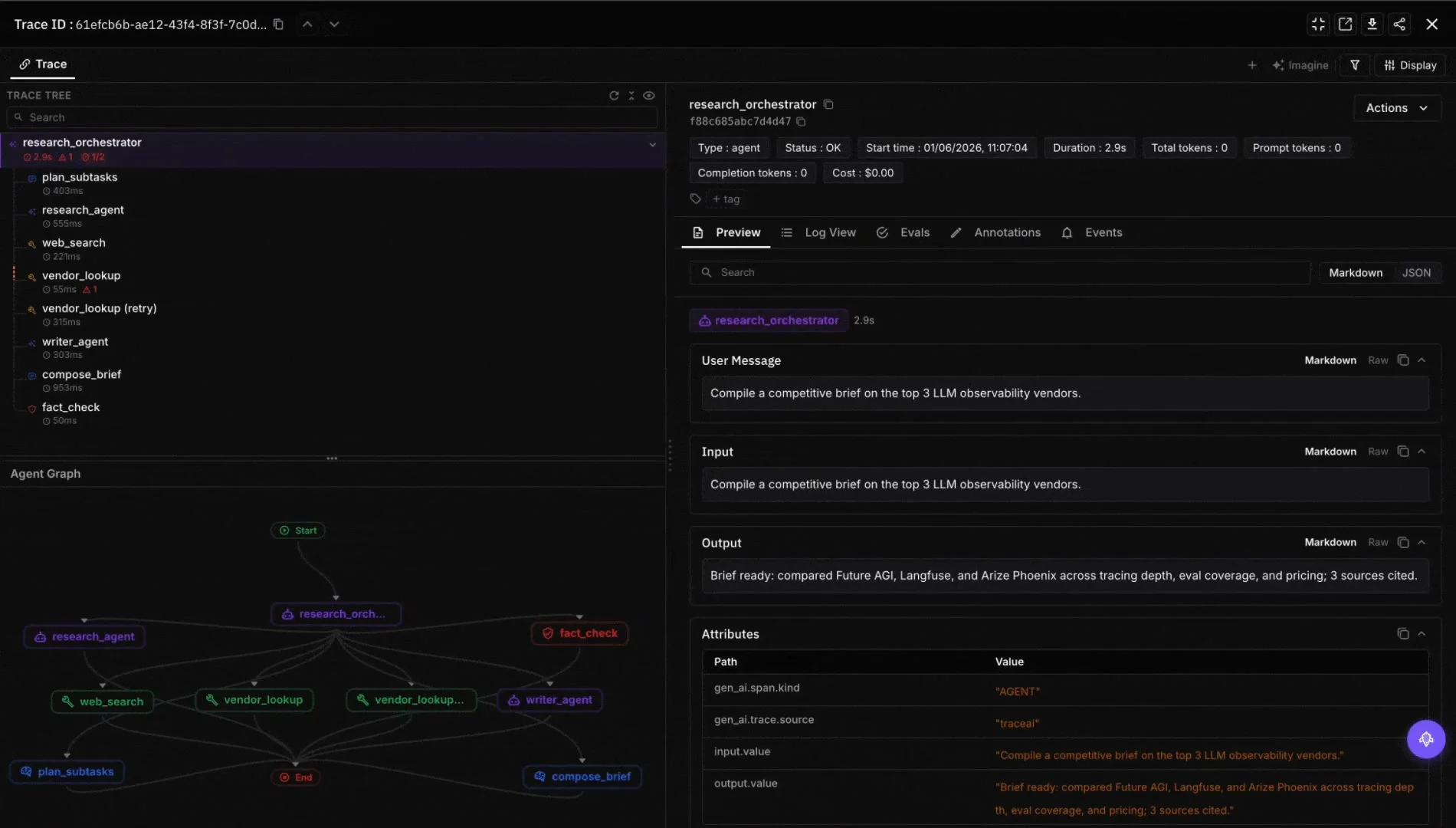
The trace dimension matters here. With traceAI capturing every MCP tool call as a span (fi.span.kind=TOOL), you can run EvaluateFunctionCalling over the whole trace rather than just the final answer. The patterns from evaluate MCP-connected AI agents in production apply directly.
from fi.evals import Evaluator, TestCase
from fi.evals.templates import EvaluateFunctionCalling, CustomLLMJudge

mcp_selection = EvaluateFunctionCalling(
    grading_criteria=(
        "Score each MCP tool call in the trace. 1.0 if the tool fit "
        "the step in the plan and arguments were complete. Subtract "
        "0.4 per call that retried the same tool with the same args "
        "after a failure. Subtract 0.5 per call where the agent had "
        "a better-fit MCP tool available and did not pick it."
    ),
)

evaluator = Evaluator(fi_api_key=FI_KEY, fi_secret_key=FI_SECRET)
evaluator.evaluate(
    eval_templates=[mcp_selection],
    inputs=[TestCase(
        trace=cline_run.spans,
        plan=cline_run.plan,
        outcome=cline_run.diff,
    )],
)
A Cline failure cluster the Error Feed surfaces almost weekly: “Cline retried mcp:filesystem.read for 22 minutes on a path that didn’t exist.” HDBSCAN soft-clustering pulls these together. A Sonnet 4.5 Judge writes an immediate_fix per cluster (“add a max-retries cap on this MCP server, fall back to filesystem.list”), and the fix feeds back into the Platform self-improving evaluators.
Axis 2: BYOK cost-per-task with a hard cap. Cline’s autonomous loop can run for hours. Per-task cost telemetry is helpful after the fact, but for prevention the cap has to fire in-flight. Route Cline’s LLM calls through gateway.futureagi.com/v1, tag every request with the Cline task id, and attach a tag-level budget. The gateway returns a 429 budget-exceeded once the cap trips, which Cline surfaces to the developer.
export ANTHROPIC_BASE_URL=https://gateway.futureagi.com/v1
export ANTHROPIC_API_KEY=fagi_dev_<per-developer-virtual-key>
Response headers feed the eval pipeline:
x-prism-cost— actual cost in cents after cache hitsx-prism-latency-ms— end-to-end including provider plus gateway hopx-prism-model-used— what routing actually picked
Logging those into traceAI gives a per-span cost time series, which feeds the runaway-detection logic. The cross-developer cache helps too: long Cline runs that repeatedly call the same MCP tools see cache hit rates climb past 40 percent inside a week. See best AI gateways for Cline agent workflows for the Cline-specific routing config.
Axis 3: autonomous-run termination. Cline decides when to stop. The eval has to answer two questions: did it stop at the right turn, and if it kept going, was the over-run productive or a retry loop. Score every Cline run with a custom termination judge that takes the run trace and the final state.
termination_judge = CustomLLMJudge(
    name="ClineTermination",
    grading_criteria=(
        "Given the Cline run trace and final task state, classify "
        "termination as on-time, over-run-productive, over-run-loop, "
        "or under-run. Return JSON with verdict and a one-sentence "
        "rationale that cites the span that decided it."
    ),
)
The trace plus the rubric is what lets termination get scored at all. Without span-level capture, the eval collapses to “did the final diff pass tests,” which misses the cost story entirely.
Cursor-specific eval: Composer plan adherence, multi-file coherence
Cursor’s eval surface is two axes that Cline’s eval mostly ignores.
Axis 1: Composer plan adherence. Composer mode emits a plan, then drafts a multi-file diff. The plan is text. Score it. Plan adherence asks two questions: does the plan match the user’s intent at the start, and does the final diff still match the plan at the end. Drift hides between them.
plan_judge = CustomLLMJudge(
    name="ComposerPlanAdherence",
    grading_criteria=(
        "Score the Composer plan against the user instruction, then "
        "score the final diff against the plan. 1.0 if both alignments "
        "are exact. Subtract 0.3 if the plan dropped a requirement. "
        "Subtract 0.5 if the diff added behavior the plan did not "
        "promise. Subtract 0.4 if the file list in the diff is wider "
        "than the file list in the plan."
    ),
)
Senior engineers describe a “plan-first workflow: measure 15 times, cut once.” The Composer is built for it; plan-adherence eval is what keeps that workflow honest. Without the scoring step, scope creep ships silently across Composer applies and nobody notices until a contract changes downstream.
Axis 2: multi-file edit coherence under Composer. The Composer applies an N-file diff in one shot. The failure mode is contradictory edits: a type rename in models.py that gets propagated to views.py but dropped in handlers.py, two imports that look correct in isolation but compile-fail together, a constant moved from config to environment without a docker-compose update.
The protocol is mechanical. Take the Composer diff, walk the import graph from every changed file, produce the list of touched-or-should-have-touched files, and ask a code-review judge whether each is consistent with the diff.
coherence_judge = CustomLLMJudge(
    name="ComposerMultiFileCoherence",
    grading_criteria=(
        "Walk the import graph from every file in the Composer diff. "
        "For each downstream file, score consistency. 1.0 if all "
        "imports resolve, all renamed symbols are updated at every "
        "call site, no public API surface is silently removed. "
        "Subtract 0.4 per broken import. Subtract 0.6 per stale call "
        "site of a renamed public symbol. Subtract 0.3 per config or "
        "env update that should have followed the code change."
    ),
)
The Cursor-specific failure cluster the Error Feed pulls together: “Composer merges contradictory edits across 3 files in a multi-file refactor.” A Sonnet 4.5 judge per cluster writes an immediate_fix (“add a pre-apply check on cross-file symbol consistency”), and the fix feeds into the next eval cycle. The broader pattern is in best AI gateway for Cursor Composer multi-file edits.
Cost attribution sits underneath. Cursor’s per-seat billing aggregates to a single line item; per-developer virtual keys flip that on. Each Cursor seat gets its own gateway virtual key, every call lands with developer attribution and x-prism-cost, and “which engineer’s Cursor sessions cost the most last week” becomes one query. See best AI gateways for Cursor spend across teams for the per-seat detail.
Shared eval: golden-PR replay across both agents
The two agent-specific rubrics sit on top of a shared layer: golden-PR replay. Build it once, reuse it on both.
The protocol is the same one from the broader evaluating coding agents 2026 post. Pick your last 50 merged PRs. Skip version bumps and generated files. Capture the parent commit, the issue text, the merged diff, and the test deltas. For each PR, revert to the parent and hand the issue to both Cline and Cursor with the same underlying model where the surface allows it. Score the runs on diff quality, not exact text match.
from fi.evals import Evaluator, TestCase
from fi.evals.templates import TaskCompletion, CustomLLMJudge

replay_judge = CustomLLMJudge(
    name="GoldenPRReplay",
    grading_criteria=(
        "Score 1.0 if the agent's patch would pass the same code "
        "review as the merged patch. Behavioral equivalence over "
        "textual match. Subtract 0.3 if the agent added unrelated "
        "reformats. Subtract 0.5 if the patch fails any test the "
        "merged patch passes. Subtract 0.2 if the diff is more than "
        "2x the size of the merged diff for the same outcome."
    ),
)

for pr in golden_set:
    for agent_name, agent_run in [("cline", cline_runs[pr.id]),
                                  ("cursor", cursor_runs[pr.id])]:
        Evaluator(fi_api_key=FI_KEY, fi_secret_key=FI_SECRET).evaluate(
            eval_templates=[TaskCompletion(), replay_judge],
            inputs=[TestCase(
                input=pr.issue_text,
                output=agent_run.diff,
                context=pr.merged_diff,
                metadata={"agent": agent_name},
            )],
        )
The agent-tagged metadata is what lets the cross-agent leaderboard emerge. Aggregate the replay scores per (agent, task pattern) and the picture sharpens fast. The pattern we see in production: Cline wins long autonomous tasks (dependency upgrades, large test-suite fixes); Cursor wins composer-driven multi-file feature work with a developer iterating. Neither wins universally. That is the point of the leaderboard.
Refresh weekly. Promote one freshly merged PR into the set; drop the oldest. The set ages well as long as the workload mix tracks reality. For the golden-set design itself, LLM eval golden set design is the reference.
Production observability with traceAI
A 50-PR replay is offline. Production runs forever. The eval that survives the first month streams from the agent loop in real time.
from fi_instrumentation import register, ProjectType
from traceai_anthropic import AnthropicInstrumentor
from traceai_openai import OpenAIInstrumentor
from traceai_bedrock import BedrockInstrumentor

trace_provider = register(
    project_type=ProjectType.OBSERVE,
    project_name="cline-cursor-eval",
)
AnthropicInstrumentor().instrument(tracer_provider=trace_provider)
OpenAIInstrumentor().instrument(tracer_provider=trace_provider)
BedrockInstrumentor().instrument(tracer_provider=trace_provider)
Every Cline run and every Cursor Composer apply that flows through the process emits OpenInference spans with fi.span.kind set to AGENT, TOOL, or CHAIN. Tag spans with agent.tool_name="cline" or "cursor" and session.id set to the Cline task id or the Cursor session id, and the cross-agent comparison becomes one query.
Four scanners run sub-10ms on every diff before apply. Cline generates and executes shell commands; Cursor writes code the developer applies and runs. Both are security surfaces.
from fi.evals import Protect
from fi.evals.guardrails.scanners import (
    SecretsScanner, CodeInjectionScanner,
    MaliciousURLScanner, RegexScanner,
)

protect = Protect(scanners=[
    SecretsScanner(),
    CodeInjectionScanner(),
    MaliciousURLScanner(),
    RegexScanner(patterns=[
        r"eval\(",
        r"subprocess\.run\([^,]*shell=True",
        r"os\.system\(",
    ]),
])
SecretsScanner catches API keys the agent invented. CodeInjectionScanner flags eval, exec, and shell interpolation. MaliciousURLScanner flags fetches to suspicious hosts (matters for Cline’s generated curl lines). RegexScanner enforces the repo’s banned patterns. The mapping to threat categories is in OWASP LLM Top 10 risks and mitigations.
Wire the scanners into a guardrail chain with RailType.OUTPUT and AggregationStrategy.ANY so any trip blocks the apply. For Cline, the scanner runs on every tool-call argument and every generated shell line. For Cursor, it runs on the full Composer diff before the developer hits apply.
Anti-patterns we see often
Sharing the same rubric across both agents. The most common rollout mistake. A rubric tuned for Cursor Composer adherence under-weights Cline’s MCP retry loop; a rubric tuned for Cline termination quality misses Cursor’s plan-vs-diff drift. Build two rubrics, share the golden-PR layer.
No per-task cost cap on Cline. The autonomous loop will eventually hit a retry pattern that consumes thousands of dollars overnight. Tag-level budgets at cline:task_* scope catch it before the bill lands.
No per-developer attribution on Cursor. Per-seat billing aggregates to a single line, so engineering managers cannot tell who consumed what. Per-developer virtual keys flip that on.
No model-swap re-eval. Both agents let you swap models with one config change. Swap from Sonnet 4.5 to GPT-5.1 to save 30 percent and you can ship a silent regression where tool-call selection changes or multi-file consistency drops. Re-run the golden-PR replay on every model swap.
No Scanner pre-gate. Long Cursor Composer diffs and long Cline autonomous runs are exactly where a SecretsScanner or CodeInjectionScanner regression hides. Pre-gate on every output.
Generic agent eval without coding specifics. MCP tool selection, Composer plan adherence, and multi-file coherence are not optional for coding agents. The chat-agent eval kit does not cover them.
Where Future AGI fits
Future AGI is not a coding agent. It’s the eval, observability, and gateway stack for teams running Cline, Cursor, or both in production.
- traceAI — Apache 2.0 OpenTelemetry SDK; 50+ AI surfaces; auto-instruments Anthropic, OpenAI, Bedrock, LangChain, and others; PII redaction on by default.
- ai-evaluation — Apache 2.0 SDK with 60+ pre-built
EvalTemplateclasses andCustomLLMJudgefor the four coding-agent-specific judges; 8 sub-10ms Scanners for generated code and shell. - Agent Command Center — OpenAI-compatible LLM gateway in a single Go binary (Apache 2.0); 100+ providers, 18+ built-in guardrail scanners, 5-level budget hierarchy, OTel-native observability. Self-host or use
gateway.futureagi.com/v1.
The honest boundary: the agent vendor owns the prompt and the tool grammar. We don’t optimize Cline’s loop or Cursor’s Composer. We own the surface around them — per-developer attribution, cross-developer cache, Bedrock / Anthropic / OpenAI routing, 5-level budgets, sub-10ms scanners, and the trace that outlives whichever vendor surface you ship on. The Platform’s self-improving evaluators retune per-agent over time, so the Cline judge and the Cursor judge converge to different baselines without you maintaining two prompts by hand.
Future AGI runs SOC 2 Type II, HIPAA, GDPR, and CCPA per futureagi.com/trust, with ISO/IEC 27001 in active audit.
The shortest version
Cline and Cursor solve different problems. Cline is a VSCode extension with strong MCP support and BYOK across major providers; eval it on MCP tool selection over the trace, BYOK cost-per-task with a hard cap, and autonomous-run termination. Cursor is a full IDE with a proprietary Composer; eval it on plan adherence and multi-file diff coherence. Share a golden-PR replay layer underneath so the cross-agent leaderboard emerges per task pattern. Route both through the gateway so attribution and budgets are real. Run a Scanner pre-gate on every generated diff. Re-run the replay after every model swap. The agent vendor owns the prompt. You own the trace, the eval, the cost, and the routing — and the everything-else is what decides whether the agent ships against your code.
Read next
Frequently Asked Questions
Why is evaluating Cline different from evaluating Cursor?
What does MCP-server eval mean for Cline specifically?
What does Composer plan adherence mean for Cursor specifically?
How do you compare Cline and Cursor on the same task?
How do you cap Cline cost without breaking autonomous runs?
Which FAGI evaluators apply to Cline and Cursor?
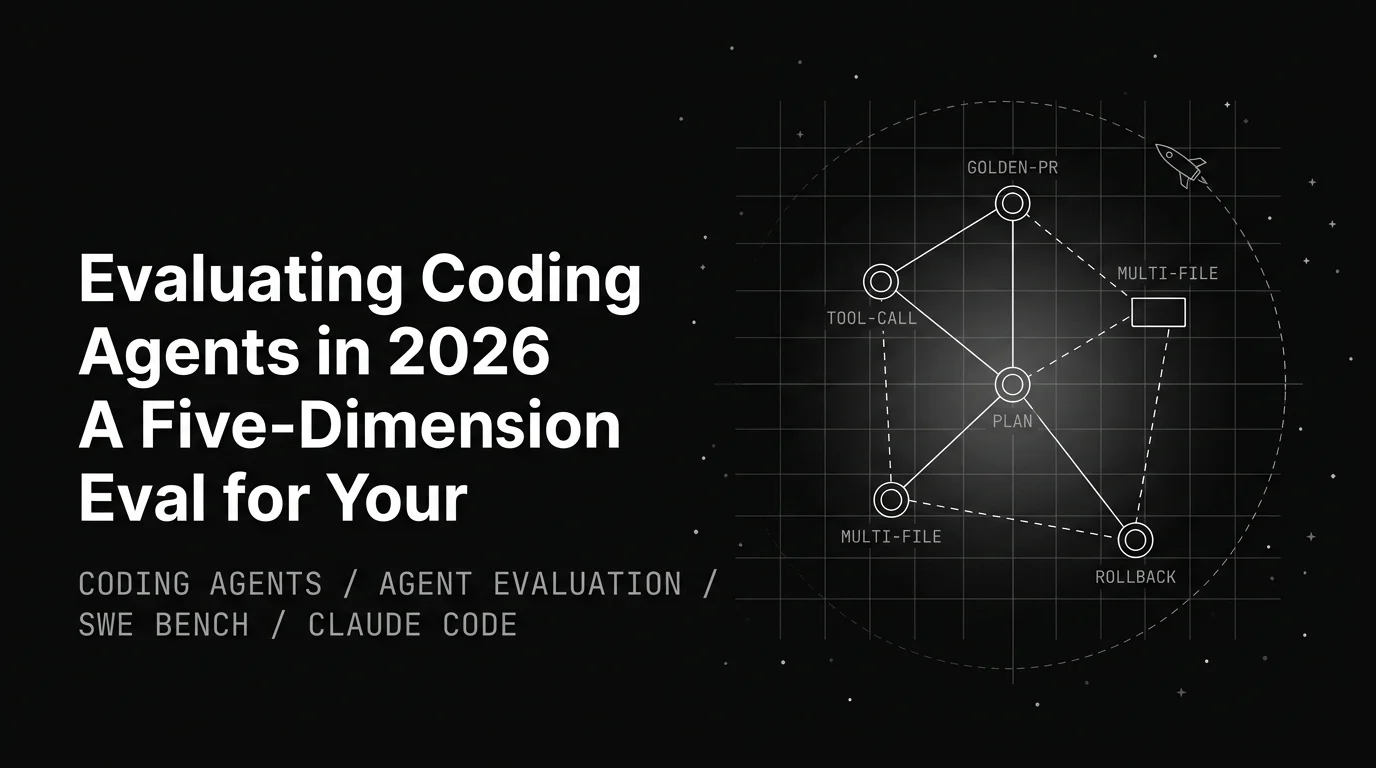
Public SWE-bench scores don't transfer to your codebase. Evaluate coding agents on golden-PR replay, tool calls, multi-file coherence, plan, and rollback.

Best AI coding agents 2026 by job-to-be-done. Cursor, Claude Code, Cline, Aider, GitHub Copilot, Replit Agent ranked by where the agent actually lives.

Evaluating Claude Code tool use in 2026: per-tool selection F1, argument fidelity, irreversibility awareness, recovery on error, on traceAI traces.