Prompt Engineering in 2026: 10 Patterns and Tools That Actually Maximize LLM Performance
Prompt engineering patterns that actually move LLM performance in 2026: CoT, ToT, structured outputs, XML tags, multi-shot, plus tools and benchmarks.
Table of Contents
Prompt Engineering in 2026: 10 Patterns and Tools That Actually Maximize LLM Performance
Prompt engineering changed shape between 2024 and 2026. Frontier models reason natively. Structured output APIs replaced regex parsing. Automated prompt optimization moved from research demo to production tool. The patterns that move metrics today are not the same as the ones that worked two years ago. This guide covers what actually works on GPT-5, Claude Opus 4.7, Gemini 3.x, and Llama 4.x, plus the tooling stack to optimize at scale.
TL;DR
| Pattern | When to use it | Lift in 2026 |
|---|---|---|
| Specific instructions | Always | Baseline; vague prompts still fail |
| Chain-of-thought | Multi-step reasoning, audit-required outputs | Smaller than 2023 but still meaningful |
| Tree-of-thoughts | Hard reasoning with deep branches | High lift, high cost |
| Few-shot / multi-shot | Classification, extraction, format-tight tasks | Strong, plateaus around 10-20 examples |
| Structured outputs (JSON schema) | Parseable APIs, tool calling | Replaces brittle parsing |
| XML tags | Long, multi-section prompts | Especially strong on Claude family |
| System prompts | Persistent persona, policy, format | Reliable on 2026 frontier models |
| RAG | Long-tail facts, freshness | Pairs with prompting, not a replacement |
| Self-critique | High-stakes outputs | Catches reasoning errors at small cost |
| Automated optimization | When manual iteration plateaus | Largest single lever in 2026 |
Why Prompt Engineering Still Matters in 2026
Frontier models in 2026 are smarter, but they still hinge on how you ask. Three reasons prompt engineering remains the lever:
- Sensitivity to phrasing. Even small wording shifts move accuracy and latency on every frontier model. Eval-driven prompt iteration is the only reliable way to lock in gains.
- Cost efficiency. A well-shaped prompt cuts tokens, reduces multi-turn retries, and avoids fine-tuning. On high-volume traffic, 20% token reduction compounds.
- Reliability. Prompts encode the contract between your product and the model. Without explicit instructions on format, refusal, and edge cases, agents drift under load.
The bar moved. In 2023, “write clearer prompts” was the advice. In 2026, the advice is “write clear prompts, evaluate them on a held-out set, optimize automatically, and observe behavior in production.”
10 Patterns That Actually Move LLM Performance in 2026
1. Clear, Specific Instructions
LLMs reward clarity. State the task, audience, format, length, and constraints explicitly.
Bad: “Explain AI.”
Better: “Explain Artificial Intelligence in 2-3 sentences for a healthcare CFO. Focus on cost reduction and risk.”
Specific instructions reduce regenerations, narrow output shape, and reduce token cost.
2. Chain-of-Thought (CoT) Reasoning
Ask the model to reason step by step before answering. Chain-of-thought prompting remains valuable for multi-step extraction, business-logic problems, and any output you need to audit. Modern reasoning models do this natively for math and code, but explicit CoT still helps when you want traceable thought.
Example: “Walk through the calculation step by step, then give the final answer in JSON.”
3. Tree-of-Thoughts (ToT)
Tree-of-thoughts prompting generates multiple reasoning branches, evaluates them, and picks the best path. Higher cost (multiple inferences per query) but stronger results on hard reasoning, planning, and game-like search problems. Use ToT sparingly on high-value queries.
4. Few-Shot and Multi-Shot Prompting
Provide examples in the prompt that demonstrate the input-output shape:
Input: "I love this product!"
Sentiment: positive

Input: "Took 3 weeks to arrive."
Sentiment: negative

Input: "{user_text}"
Sentiment:
Few-shot (1-5 examples) works for most tasks. Multi-shot (10-50 examples) gains on classification and extraction where the model needs to learn label boundaries. 1M-plus context models make many-shot feasible in 2026. Diminishing returns above ~20 examples.
5. Structured Outputs (JSON Schema)
Define the output contract with a JSON schema. The model conforms or returns a schema-validation error you can retry.
schema = {
    "type": "object",
    "properties": {
        "summary": {"type": "string"},
        "sentiment": {"type": "string", "enum": ["positive", "neutral", "negative"]},
        "topics": {"type": "array", "items": {"type": "string"}}
    },
    "required": ["summary", "sentiment", "topics"]
}
Stops regex hell and brittle parsing. Default to structured outputs whenever a downstream system consumes the response.
6. XML Tags for Sectioning
Anthropic recommends XML tags for multi-section prompts on Claude. Tags make the model’s job easier to parse:
<context>
The customer is a Pro tier user with three open tickets.
</context>

<question>
Should we escalate the latest ticket to engineering?
</question>

<instructions>
Reply with yes or no and one-sentence reasoning.
</instructions>
Works on GPT-5 and Gemini too, with smaller relative lift than on Claude.
7. System Prompts and Role Setting
The system prompt persists across every turn. Put persona, policy, persistent constraints, output format, and refusal rules there. Reserve user turns for the actual task input.
System prompts in 2026 are more reliable than in 2023-2024, but prompt injection on user input still happens. Combine system prompts with runtime guardrails (Future AGI Protect, output filtering) for high-stakes applications.
8. Retrieval-Augmented Generation (RAG)
Inject relevant context from a vector store, document index, or knowledge base instead of relying on parametric memory. Retrieval-augmented generation complements prompt engineering: the prompt structures the task, retrieval provides the facts.
Standard pattern: embed user query, retrieve top-k chunks, inject into a <context> tag, generate. Evaluate end-to-end (retrieval recall plus generation faithfulness) with Future AGI’s fi.evals.evaluate("faithfulness", output=..., context=...).
9. Self-Critique and Self-Refine
Have the model critique its own output and revise:
Output: {first_response}

Critique your response for accuracy and completeness. Revise if needed.

Revised output:
Two inferences per query, but catches reasoning errors before they ship. Especially useful for code generation and structured extraction.
10. Automated Prompt Optimization
The largest single lever in 2026. Tools systematically search prompt variations against your eval suite:
- Future AGI Prompt Optimization: ties directly to the FAGI eval stack and observability. See the prompt-optimization tools roundup for current rankings and criteria.
- DSPy: declarative framework for composing and optimizing prompts as programs.
- OpenAI prompt tuning: built into the OpenAI playground for prompt refinement.
The shift from manual iteration to metric-driven search has been one of the major workflow changes in prompt engineering since 2023, especially for teams running production traffic at scale.
Tooling Stack: How to Run Prompt Engineering at Production Scale in 2026
A production-grade prompt engineering loop in 2026 looks like this:
- Write candidate prompts (manual draft or LLM-generated).
- Run eval suite against a held-out test set. Future AGI’s cloud evaluators (
turing_flash~1-2s,turing_small~2-3s,turing_large~3-5s) score on faithfulness, toxicity, task completion, and dozens of other dimensions. - Compare metrics across candidates statistically, not by eyeballing five outputs.
- Promote the winner to staging, observe in production through traceAI (Apache 2.0, GitHub LICENSE).
- Continuous optimization in the background as new data arrives.
Minimal Eval Loop with Future AGI
from fi.evals import evaluate

# `call_llm(text)` is your provider call (OpenAI, Anthropic, Google).
# `test_input` is one row from your held-out test set.
prompts = [
    "Summarize the following text in 3 sentences.",
    "Summarize this for a busy executive. 3 sentences. Plain English.",
    "<task>Summarize</task><format>3 sentences, executive-friendly</format>",
]

def call_llm(text: str) -> str:
    raise NotImplementedError("Wire your provider SDK here")

test_input = "Sample passage to summarize."

for prompt in prompts:
    output = call_llm(prompt + "\n" + test_input)
    result = evaluate(
        "faithfulness",
        output=output,
        context=test_input,
    )
    print(prompt[:40], result.score)
Run this across a test set of 100-1000 examples and pick the winner by aggregate score. Set FI_API_KEY and FI_SECRET_KEY before running.
Custom LLM Judge for Domain-Specific Scoring
from fi.evals.metrics import CustomLLMJudge
from fi.evals.llm import LiteLLMProvider

judge = CustomLLMJudge(
    name="executive-summary-judge",
    grading_criteria=(
        "Score 1 if the summary is 3 sentences or fewer, "
        "covers the main point, and avoids jargon. Score 0 otherwise."
    ),
    model=LiteLLMProvider(model="gpt-5-2025-08-07"),
)

# Example inputs (replace with your own).
output = "GPT-5 reduces token cost on tool-heavy tasks."
test_input = "Long passage about model pricing and benchmarks."

score = judge.evaluate(output=output, context=test_input)
print(score)
Custom judges let you encode domain-specific quality criteria that off-the-shelf evaluators miss.
Illustrative Case Study: How an Eval-Driven Prompt Loop Tightens a Support Triage Agent
The following is an illustrative example based on the typical lift teams see when they move from manual prompt iteration to an eval-driven loop. Treat the percentage ranges as directional, not vendor-attributed measurements.
A customer support team deploying an LLM-powered ticket triage agent saw inconsistent outputs from their initial prompt:
- “Answer customer questions about product returns.”
Outputs were vague, sometimes off-topic, and missed return policy edge cases. The team ran a prompt optimization loop with Future AGI:
- Candidates: 15 prompt variants tested with system prompts, XML tags, few-shot examples, and explicit refusal rules.
- Eval suite: faithfulness, task completion, refusal correctness, customer-tone scoring.
- Test set: 500 historical tickets with verified correct answers.
The winning prompt combined a system message setting the persona (“customer service agent for an e-commerce return desk”), XML tags around the policy context, and three few-shot examples. Aggregate clarity scores improved meaningfully, response latency dropped due to tighter outputs, and refusal correctness on out-of-policy queries improved on the held-out set.
The lift came from the eval-driven loop, not any single clever phrase.
Balancing Performance and Cost: Token Optimization Without Quality Loss
Overly verbose prompts hurt twice: they cost more tokens per call, and they slow responses. Practical tactics in 2026:
- Compress system prompts. Remove redundant instructions. Frontier models do not need polite framing.
- Cache stable context. OpenAI and Anthropic both offer prompt caching that drops repeat tokens to a fraction of the cost. Put your stable policy, persona, and examples first.
- Use shorter evaluators in the loop.
turing_flashat ~1-2s is fast enough for online checks; reserveturing_largefor batch quality assessments. - Trim few-shot examples. Test whether 3 examples produce the same quality as 10. Often they do.
Future AGI’s observability surfaces per-call token usage and latency by prompt version, so you see cost regressions immediately after a prompt change.
What Does Not Work Anymore: Patterns to Retire in 2026
A few patterns that helped in 2022-2023 are less useful or counterproductive in 2026:
- “You are an expert” boilerplate. Frontier models do not need persona inflation for capability. Use roles for behavior (tone, refusal policy) not capability boost.
- Manual regex parsing. Replace with JSON schema or tool-calling APIs.
- Single-shot eyeballing. Statistical comparison on held-out sets is the standard, not “I tried five inputs and it looked good.”
- Ignoring system prompts. Putting persistent instructions in user turns wastes tokens and is less reliable than the system slot.
How Future AGI Helps in 2026
Future AGI sits at the center of the prompt engineering loop in 2026:
- Eval suite:
fi.evals.evaluatefor cloud evaluators on faithfulness, toxicity, task completion, refusal, and dozens more. Custom LLM judges viafi.evals.metrics.CustomLLMJudgefor domain-specific scoring. - Prompt Optimization: systematic search over prompt candidates against your eval suite. Ranks at the top of our prompt optimization tooling roundups because optimization ties directly to evals.
- Observability: traceAI (Apache 2.0, OpenTelemetry) captures every prompt version, output, latency, and token count in production.
- Simulate: stress test prompts against scripted and randomized scenarios before launch.
- Protect: runtime guardrails enforce refusal and content policies on top of prompt-level instructions.
- Agent Command Center: BYOK gateway at
/platform/monitor/command-centerroutes traffic across OpenAI, Anthropic, Google, and others with policy enforcement.
A single platform can consolidate much of a stack that often requires eval, observability, prompt management, and gateway tools wired together by hand.
Bottom Line: Treat Prompts as Code, Evaluate, Optimize, Observe
Prompt engineering in 2026 is software engineering. Write prompts. Evaluate against a held-out set. Optimize automatically. Observe in production. The teams that ship reliable LLM products treat prompts the way they treat any other production artifact: versioned, tested, monitored, and iterated against measurable metrics.
The patterns in this guide cover what works on GPT-5, Claude Opus 4.7, Gemini 3.x, and Llama 4.x. The biggest gains come from the workflow, not any single trick.
Start with a held-out eval set. Add Future AGI’s eval suite. Turn on Prompt Optimization. Wire traceAI into production. The rest follows.
Frequently Asked Questions
What changed in prompt engineering between 2024 and 2026?
Does chain-of-thought still help in 2026?
What is the difference between few-shot and multi-shot prompting?
Should I use XML tags or JSON for prompt structure?
What is automated prompt optimization?
How do I evaluate whether a prompt change actually helped?
Do system prompts persist across the whole conversation?
When should I switch from prompting to fine-tuning?
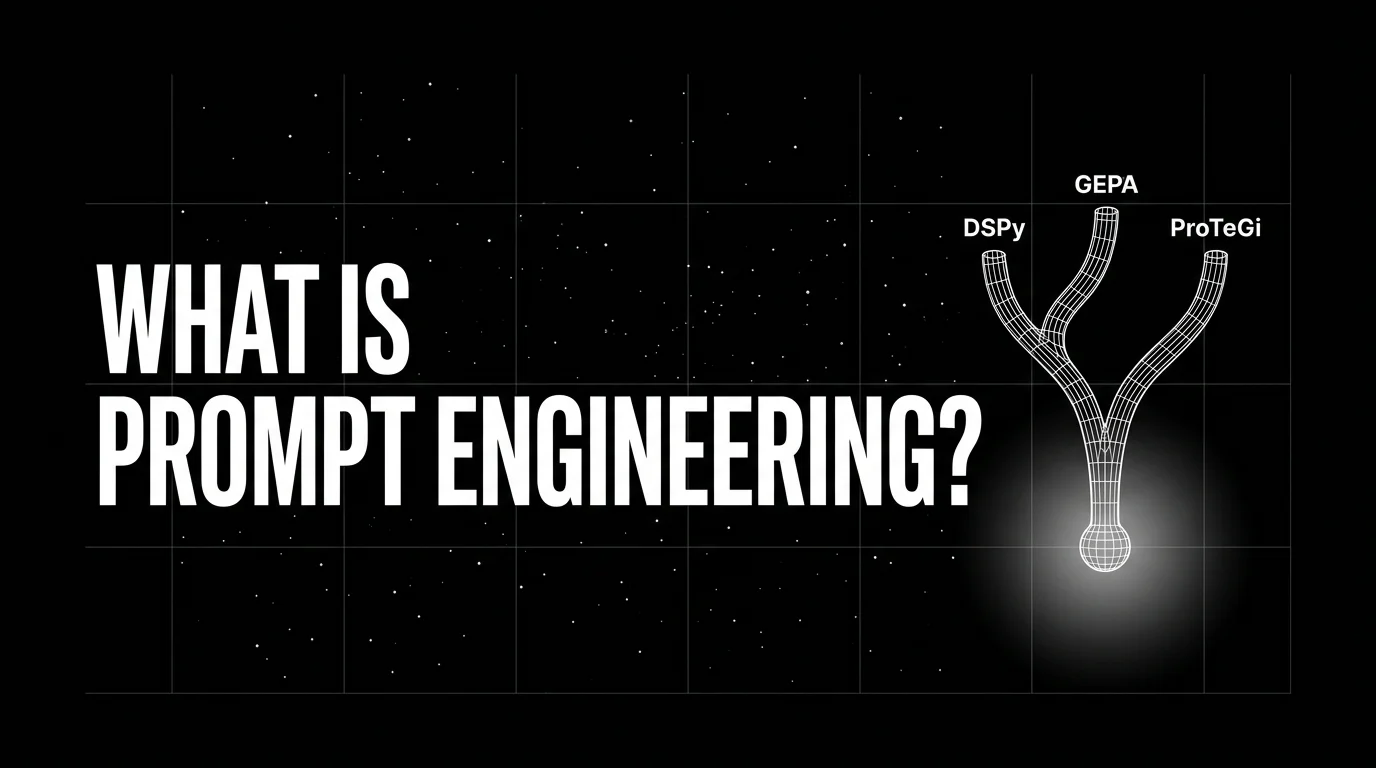
What prompt engineering means in 2026 after Bayesian, GEPA, and ProTeGi optimizers. Anatomy, techniques, tools, and where hand-tuning still earns its keep.

Top 10 prompt optimization tools in 2026 ranked: FutureAGI, DSPy, TextGrad, PromptHub, PromptLayer, LangSmith, Helicone, Opik, DeepEval, Prompt Flow.
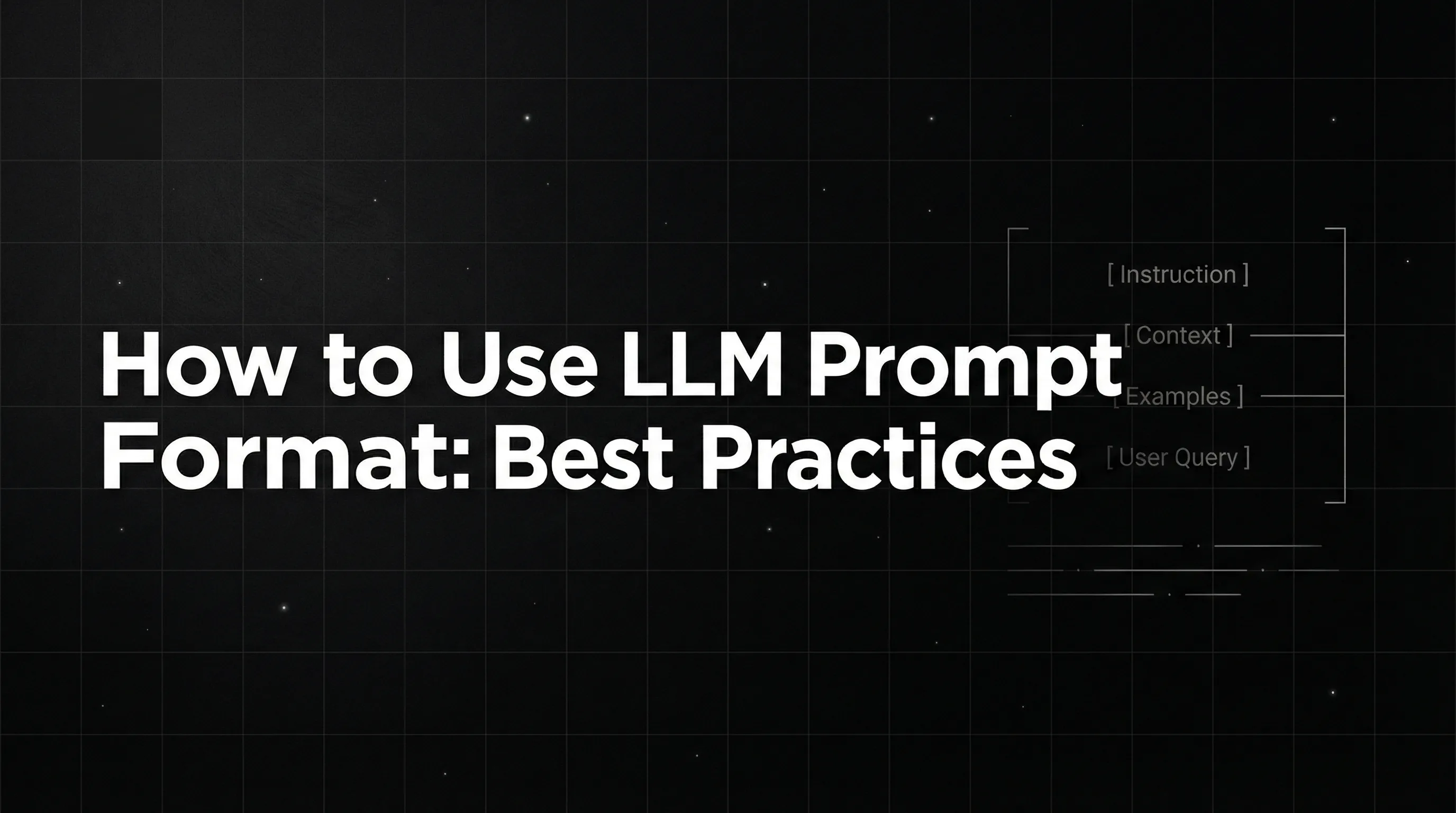
Nine LLM prompt format patterns for GPT-5, Claude Opus 4.7, and Gemini 3 in 2026. Copy-ready templates, an eval loop, and mistakes to avoid in production.