Best 5 Vectara Alternatives in 2026
Five Vectara alternatives on vector-store depth, hosted vs self-host, index-and-query cost. What each actually fixes outgrowing managed RAG-as-a-service.
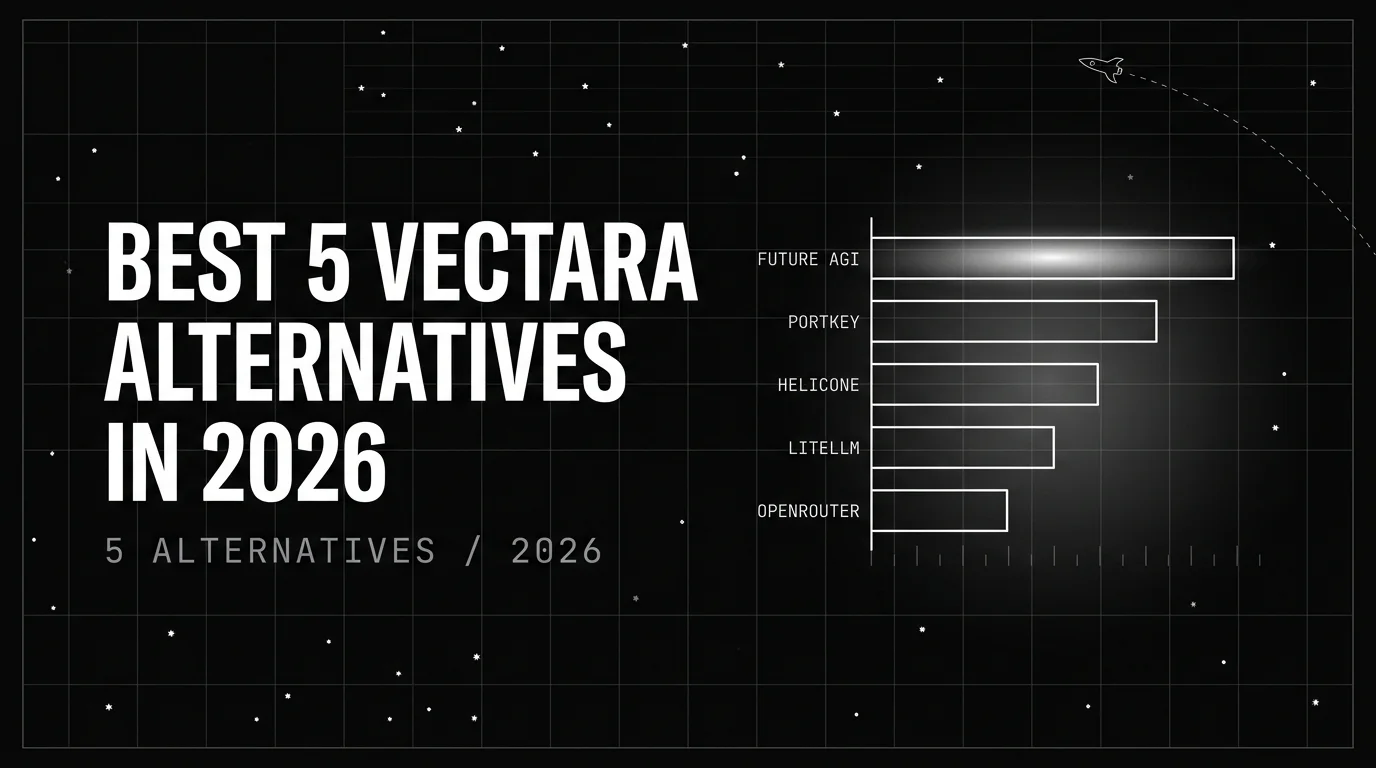
Table of Contents
Vectara built managed RAG-as-a-service the way a search-engine team would: a hosted corpus, a tuned dense-and-hybrid retriever (Boomerang), a generative summarizer (Mockingbird), and an opinionated API that hides the index plumbing. For teams who wanted RAG to “just work” without standing up a vector database, that opinionation was the pitch. In 2026 it’s the exit driver. Pricing scales with index size and queries, the platform is hosted-only, and the surface stops at retrieval and summarization. Teams whose workloads now look like “agent platforms with retrieval inside them” hit the ceiling.
This guide ranks five real vector-database and RAG alternatives worth migrating to, names what each fixes, and ends with the platform layer that augments whichever vector store you pick.
TL;DR: five real Vectara alternatives
| Why you are leaving Vectara | Pick | Why |
|---|---|---|
| You want the most mature serverless vector index | Pinecone | Serverless tier, strong recall and latency benchmarks, BYO embeddings, large community |
| You want GraphQL-native vector and hybrid search with modules | Weaviate | Self-host or cloud, hybrid built-in, modular vectorizers, generative search |
| You want OSS Rust-native vector search you can self-host fully | Qdrant | Apache 2.0 Rust core, self-host or cloud, payload filtering and rich query DSL |
| You want enterprise-scale OSS with distributed cluster mode | Milvus | Distributed architecture for billion-scale corpora, GPU-accelerated index, OSS |
| You want lightweight, developer-first embeddable vector DB | Chroma | Apache 2.0 embeddable, simple Python-first API, in-memory or persisted |
Future AGI isn’t in this table. FAGI isn’t a vector database, it’s the platform layer (tracing, evals, optimizer, gateway, guardrails) that augments whichever store you pick. The dedicated FAGI section is below the five alternatives.
Why people are leaving Vectara in 2026
Five exit drivers show up repeatedly in the Vectara community Discord, Reddit /r/LocalLLaMA and /r/LLMDevs migration threads, and G2 reviews from the last two quarters.
1. Pricing escalates with index size and query volume
Vectara’s pricing climbs along two axes: storage (per million tokens indexed) and queries (per thousand). Multi-tenant SaaS with many small per-customer corpora pay storage for every tenant even when most barely query. Agentic workloads that hit retrieval many times per turn (planner, verifier, sub-agent) compound query cost in a way the original RAG-chatbot pricing model didn’t anticipate. A /r/LLMDevs spreadsheet in March 2026 showed a workload at ~$1,800/month on Vectara dropping to under $700/month on a self-managed Pinecone or Qdrant index with comparable recall.
2. Hosted-only with no real self-host story
Vectara is a managed cloud service. No on-prem, no air-gapped install, no “run this in our VPC” SKU comparable to Weaviate, Qdrant, or Milvus. For regulated workloads (health, defense, EU public sector) a non-starter on procurement.
3. Limited embedding and model flexibility
Vectara picks the embedding (Boomerang) and summarizer (Mockingbird) for you. A feature for the first wave; friction for teams who later wanted a domain-tuned embedding (legal, biomedical, code), a newer general-purpose embedding when benchmarks shifted, or a frontier summarizer under their own contract.
4. The “RAG-as-a-service” abstraction leaks at scale
The pitch (“send documents, get answers”) works at demo scale and the lower end of production. At higher recall and lower latency, teams need to control chunking, hybrid weighting, metadata filtering, and re-ranker selection more directly than the API exposes. Several G2 reviews in late 2025 and early 2026 used the same phrase: “we ran out of dials.”
5. Closed-source platform with vendor lock-in
Vectara’s stack is closed. Migration off requires re-embedding the entire corpus on a destination model and reasoning about chunking choices Vectara hides. Teams that valued portability, being able to swap embeddings, change index parameters, or run an air-gapped install, increasingly start with an open-source vector store.
What to look for in a Vectara replacement
Score replacements on the seven axes that map to the surfaces you’re actually migrating off:
| Axis | What it measures |
|---|---|
| 1. Recall and latency benchmarks | Published numbers on standard datasets (MS MARCO, BEIR), or anecdotal? |
| 2. Self-host / VPC posture | OSS option for air-gapped, BYOC, or fully managed? |
| 3. Hybrid and metadata-filtering depth | Dense + sparse + filter expression DSL — how rich? |
| 4. Embedding and model flexibility | BYO embeddings as first-class? Any model, any dimension? |
| 5. Scale ceiling | Billion-scale corpora, distributed cluster mode, GPU-accelerated index? |
| 6. Cost curve at corpus and query scale | Storage and query decoupled, or coupled? |
| 7. Developer ergonomics | API shape, SDK quality, simplicity for getting started |
Note: tracing, eval, optimizer, gateway, and guardrails are not on this list. None of the five vector stores ship those natively. That gap is what the Future AGI section below covers, the platform layer wrapping the RAG stack.
1. Pinecone: Best for serverless managed index
Verdict: Pinecone is the most mature managed vector index in 2026, serverless architecture that decouples storage and queries, strong recall and latency benchmarks, BYO embeddings as a first-class surface, and the largest community in the category. For teams who want managed but with engineering control beyond Vectara’s opinionated wrapper, Pinecone is the default.
What it fixes versus Vectara:
- Serverless decoupled architecture. Storage and queries scale and bill independently. Multi-tenant workloads with cold tenants pay less.
- Published benchmarks on recall and latency. Pinecone’s serverless tier publishes numbers Vectara doesn’t match on equivalent workloads.
- BYO embeddings as a first-class surface. Bring any embedding model and dimension. Hosted embedding via Pinecone Inference is optional, not required.
- Pinecone Assistant. Managed RAG-as-a-service on top of the Pinecone index for teams who want Vectara’s shape but on a stronger substrate.
- Largest community and ecosystem. SDKs, integrations, and Stack Overflow coverage are deepest.
Migration from Vectara: Export corpus, re-embed against your chosen model (Boomerang vectors aren’t portable), ingest into Pinecone. Filter syntax differs, every filtered query needs touching. Timeline: ten to fourteen engineering days for under 10M chunks.
Where it falls short:
- Hosted-only. No on-prem option.
- Closed-source.
- Cost curves at very high QPS still climb; Qdrant or Milvus self-hosted is typically cheaper at sustained billion-scale.
Pricing: Free tier with limited storage. Serverless usage-priced. Enterprise custom.
Score: 6 of 7 axes (missing: self-host / VPC posture).
2. Weaviate: Best for hybrid search with modular vectorizers
Verdict: Weaviate is the pick when the workload needs first-class hybrid search (dense + sparse + filters), modular vectorizers (swap embedding providers behind a uniform interface), and the choice between self-host and managed cloud. GraphQL-native query API, Go-based core, large open-source community.
What it fixes versus Vectara:
- Hybrid search as first-class. BM25 + dense + alpha-blended hybrid built in. Vectara has hybrid but exposes fewer knobs.
- Modular vectorizers. Swap between OpenAI, Cohere, HuggingFace, or BYO embeddings via configuration.
- GraphQL query language. Rich filter expressions, nested queries, and generative search modules (RAG inside the query) built in.
- Self-host or managed cloud. Apache 2.0 core, Docker or Kubernetes deploy, or Weaviate Cloud for managed.
- Generative search modules. Built-in modules call your LLM with retrieved context as part of the query. Vectara’s Mockingbird analog, but pluggable.
Migration from Vectara: Re-embed, ingest, rewrite query syntax to GraphQL or REST. Timeline: ten to fourteen engineering days.
Where it falls short:
- GraphQL is unfamiliar to some teams; learning curve is real.
- Self-host operations at scale require ops capacity.
- Smaller benchmark coverage than Pinecone on very large corpora.
Pricing: Apache 2.0 self-host. Weaviate Cloud has free tier and scaling tiers.
Score: 6 of 7 axes (missing: deepest scale ceiling for billion-scale).
3. Qdrant: Best for OSS Rust-native self-host
Verdict: Qdrant is the pick when the priority is OSS, self-hosted, Apache 2.0, with strong performance and a rich query DSL. Rust core, payload filtering integrated with vector search, distributed cluster mode for scale, and a managed cloud option for teams who want managed without the closed-source lock-in.
What it fixes versus Vectara:
- Apache 2.0 Rust core. Self-host on your hardware, audit the source, no vendor lock-in.
- Payload filtering integrated with vector search. Filter expressions evaluate alongside the vector search instead of as a post-filter, better recall under filters.
- Distributed cluster mode. Horizontal scaling for large corpora.
- Rich query DSL. Combine vector search, filters, full-text, and re-ranking in a single query.
- Cloud managed option. Qdrant Cloud for teams who want managed but with the OSS escape hatch.
Migration from Vectara: Re-embed, ingest into Qdrant, rewrite filter syntax. Timeline: ten to twelve engineering days.
Where it falls short:
- Self-host operations require ops capacity.
- Cloud tier is newer than Pinecone’s and Weaviate’s.
- No first-class generative search module, bring your own LLM for the synthesis step.
Pricing: Apache 2.0 self-host. Qdrant Cloud has free tier and scaling tiers.
Score: 6 of 7 axes (missing: turnkey generative search module).
4. Milvus: Best for billion-scale OSS
Verdict: Milvus is the pick when the corpus is genuinely large (hundreds of millions to billions of vectors) and the requirement is OSS, distributed, GPU-accelerated. Distributed architecture from day one, broad index type support (HNSW, IVF, GPU-accelerated DiskANN), and the largest reference deployments in the OSS vector-DB category.
What it fixes versus Vectara:
- Distributed architecture for billion-scale. Horizontal scaling across many nodes, GPU-accelerated index construction and query.
- Broadest index-type catalog. HNSW, IVF_FLAT, IVF_SQ8, GPU-accelerated DiskANN, etc. Tune for your recall/cost/latency point.
- OSS Apache 2.0. Self-host on Kubernetes; Zilliz Cloud is the managed offering.
- Reference customers. Used in production at scale by major OSS RAG and search workloads.
Migration from Vectara: Re-embed, ingest into Milvus, rewrite query API calls. Operational complexity is higher. Milvus is a Kubernetes-native distributed system, not a single-binary install. Timeline: two to three weeks per workload.
Where it falls short:
- Operational complexity. Kubernetes-native distributed deployment is the right answer, but the ops surface is larger than Qdrant or Pinecone.
- Cloud (Zilliz) is the simplest path; self-hosted at scale requires real operations capacity.
- Developer ergonomics trail Pinecone and Chroma for getting-started speed.
Pricing: Apache 2.0 self-host. Zilliz Cloud has free tier and scaling tiers.
Score: 5 of 7 axes (missing: developer ergonomics for the small-corpus case, simpler ops).
5. Chroma: Best for lightweight embeddable
Verdict: Chroma is the pick when the requirement is “lightweight, Python-first, run it inside the app process for low-volume use cases, scale up to a server when needed.” Apache 2.0, simple API, in-memory or persisted, and a managed cloud tier for production.
What it fixes versus Vectara:
- Lightweight and Python-first. Install via pip, embed in your application, no separate database to run.
- Simple API. Get started in minutes; the abstraction is “collections with documents, metadatas, embeddings.”
- OSS Apache 2.0. Self-host or run embedded.
- Chroma Cloud. Managed option for production scale; same API as embedded.
Migration from Vectara: Re-embed, ingest into Chroma. Smallest learning curve in this list. Timeline: five to seven engineering days for small corpora; longer if scale grows past Chroma’s sweet spot.
Where it falls short:
- Scale ceiling. Chroma is excellent up to single-digit-millions of vectors; beyond that, Pinecone, Qdrant, or Milvus are better fits.
- Hybrid search is newer than Weaviate’s or Qdrant’s.
- Fewer published benchmarks than Pinecone.
Pricing: Apache 2.0 self-host. Chroma Cloud has free tier and scaling tiers.
Score: 5 of 7 axes (missing: scale ceiling, hybrid depth).
Future AGI: the platform layer that augments whichever vector store you pick
Pinecone, Weaviate, Qdrant, Milvus, and Chroma are vector databases. Future AGI isn’t. FAGI doesn’t store vectors. It’s the platform layer that sits around whichever vector store you pick, capturing the full RAG trace (query, embedding, retrieved chunks, re-ranker output, summarizer prompt, model response), scoring against faithfulness and context-relevance, clustering failures, running the optimizer on prompts and chunking strategy, and pushing the updated configuration into the next request.
The shape is a self-improving loop, trace, eval, cluster, optimize, route, re-deploy, wrapped around your RAG pipeline.
What FAGI adds to any vector-store choice on this list:
traceAI(Apache 2.0). OpenInference-compatible instrumentation with 35+ framework integrations including LlamaIndex, LangChain, Haystack, and direct Pinecone, Weaviate, Qdrant, Milvus, and Chroma adapters. Every retrieval call becomes a span with query, retrieved chunks, ranking scores, and downstream summarizer prompt.ai-evaluation(Apache 2.0). RAG-specific rubrics. Faithfulness (is the answer supported by retrieved context?), context-relevance (did retrieval surface the chunks the answer used?), citation correctness, hallucination, and custom rubrics.
agent-opt(Apache 2.0), prompt optimizer that rewrites summarizer prompts via ProTeGi, Bayesian search, or GEPA based on eval scores. Chunking strategy and retrieval parameters become tuned knobs.
- Agent Command Center (hosted), gateway in front of the LLM that handles summarization. Multi-provider routing, virtual keys, per-key budgets, RBAC, failure-cluster views, AWS Marketplace procurement, SOC 2 Type II.
- Protect guardrails. Inline PII, prompt-injection, jailbreak, and policy enforcement with median ~67ms text-mode latency and ~109ms image-mode (per arXiv 2510.13351).
Why “augment, not replace”: FAGI isn’t a vector database. It doesn’t store embeddings or answer ANN queries. That’s the vector store’s job. Pinecone, Weaviate, Qdrant, Milvus, or Chroma. FAGI wraps the RAG pipeline, providing the observability, eval, and optimization loop that no vector database ships natively. You can keep Vectara (or migrate to any of the five), and FAGI works the same way underneath.
Capability matrix
| Axis | Pinecone | Weaviate | Qdrant | Milvus | Chroma |
|---|---|---|---|---|---|
| Recall and latency benchmarks | Strong, published | Strong | Strong | Strong | Less published |
| Self-host / VPC posture | No | Yes | Yes | Yes | Yes |
| Hybrid and metadata-filtering depth | Strong | Strongest | Strong | Strong | Basic |
| Embedding and model flexibility | BYO first-class | Modular vectorizers | BYO | BYO | BYO |
| Scale ceiling | Serverless to large | Cluster mode | Cluster mode | Billion-scale distributed | Single-digit-millions |
| Cost curve | Decoupled storage/query | Self-host = compute | Self-host = compute | Self-host = compute | Self-host = compute |
| Developer ergonomics | Polished SDK | GraphQL learning curve | Polished Rust + clients | Heavier (K8s-native) | Simplest pip install |
Future AGI isn’t in the matrix because it doesn’t store vectors. FAGI plugs around all five.
Migration notes: what breaks when leaving Vectara
Three surfaces always need attention.
Exporting the Vectara corpus
Paginate the corpus list, then for each corpus paginate documents, persisting one JSON per document with id, metadata, and text or chunks. Sanity-check by reading a sample back through the index for character-level parity.
Embeddings don’t export usefully. Boomerang vectors are model-specific; even if extractable, no other store accepts them. Treat re-embedding as the default, pick a destination model (OpenAI text-embedding-3-large, Cohere, Voyage, or an open-weight model) and re-embed the corpus. For one million chunks, re-embedding against a hosted API takes a few hours and costs under a few hundred dollars; for ten million, plan a day of wall-clock.
Metadata fields usually map cleanly. Corner cases: filter syntax (Vectara’s dialect differs from Pinecone’s, Qdrant’s, and Weaviate’s, every filtered query needs touching) and any reliance on Vectara’s hybrid scoring weights, which you’ll retune on the new store.
Re-indexing in the target vector store
Three sharp edges. Chunking strategy. Vectara’s default may not match what the new stack wants; many teams take migration as the chance to redesign (semantic, parent-child, sliding-window with overlap). Batch size and rate limiting. Pinecone, Qdrant, Weaviate, Milvus, and Chroma each have their own ingestion sweet spots. Index parameters (HNSW M and ef-construction, or serverless analogs) need tuning before the new index is “done.”
Safe pattern: re-index in staging, run representative queries against both Vectara and the new index, compare on recall-at-k and ranking correlation. Cut over only after parity numbers look right.
Re-wiring the query path and adding the platform layer
Vectara’s query API returns chunks and an optional generated summary in one call. After migration, the query path is two steps: retrieve from the new store with embeddings-of-the-question, then call your LLM with the chunks as context. The summarizer prompt is now yours, you control it, A/B it, let eval score it. This is where FAGI sits, wrap the LLM call with Agent Command Center for routing and guardrails, and instrument retrieval with traceAI so faithfulness and context-relevance scores flow back into the optimizer.
Decision framework: Choose X if
Choose Pinecone if the priority is managed-but-flexible and you want the most mature serverless vector index in 2026.
Choose Weaviate if hybrid search depth, modular vectorizers, and the self-host-or-managed flexibility matter.
Choose Qdrant if OSS Rust-native self-host with rich filtering is the priority.
Choose Milvus if the corpus is genuinely billion-scale and you have Kubernetes operations capacity.
Choose Chroma if the workload is small-to-medium and Python-first developer ergonomics beat scale ceiling.
Add Future AGI around any of the five (or Vectara itself, kept as the vector store) when the gap is RAG observability, eval, optimizer, gateway, or inline guardrails.
What we did not include
Three products show up in other 2026 Vectara alternatives listicles that we left out: Cohere RAG (capable hosted retrieval, but narrower surface and similar model lock-in); Azure AI Search with skillsets (compelling for Azure-native teams, but procurement and the Microsoft-stack assumption put it in a different decision bucket); pgvector (a Postgres extension, useful when you already run Postgres at scale, but the developer experience is “Postgres with vector columns,” not a purpose-built vector DB).
Related reading
- Best 5 Portkey Alternatives in 2026
- Best LLM Gateways in 2026
- What Is an AI Gateway? The 2026 Definition
- Best AI Gateways for Agentic AI in 2026
Sources
- Vectara product documentation, vectara.com/docs
- Vectara pricing, vectara.com/pricing
- Reddit /r/LLMDevs and /r/LocalLLaMA migration threads, January-April 2026
- Vectara community Discord migration threads, Q1 2026
- Pinecone product documentation, docs.pinecone.io
- Pinecone serverless architecture, pinecone.io/learn/serverless
- Weaviate documentation, weaviate.io/developers
- Qdrant open-source repository, github.com/qdrant/qdrant
- Milvus documentation, milvus.io/docs
- Chroma documentation, docs.trychroma.com
- Future AGI Agent Command Center, futureagi.com/platform/monitor/command-center
- Future AGI traceAI, github.com/future-agi/traceAI (Apache 2.0)
- Future AGI ai-evaluation, github.com/future-agi/ai-evaluation (Apache 2.0)
- Future AGI agent-opt, github.com/future-agi/agent-opt (Apache 2.0)
- Future AGI Protect latency benchmark, arxiv.org/abs/2510.13351 (67 ms text, 109 ms image)
Frequently Asked Questions
Why are people moving off Vectara in 2026?
What is the closest like-for-like alternative to Vectara?
How do I export my corpus from Vectara?
Do I need to re-embed when migrating away from Vectara?
Is there an open-source Vectara alternative?
Which Vectara alternative is cheapest at scale?
How does Future AGI compare to Vectara?
Pinecone, Milvus, Weaviate, Qdrant, pgvector, Chroma, Vespa for RAG in 2026. Compared on recall, latency, hybrid search, OSS license, eval-fit.

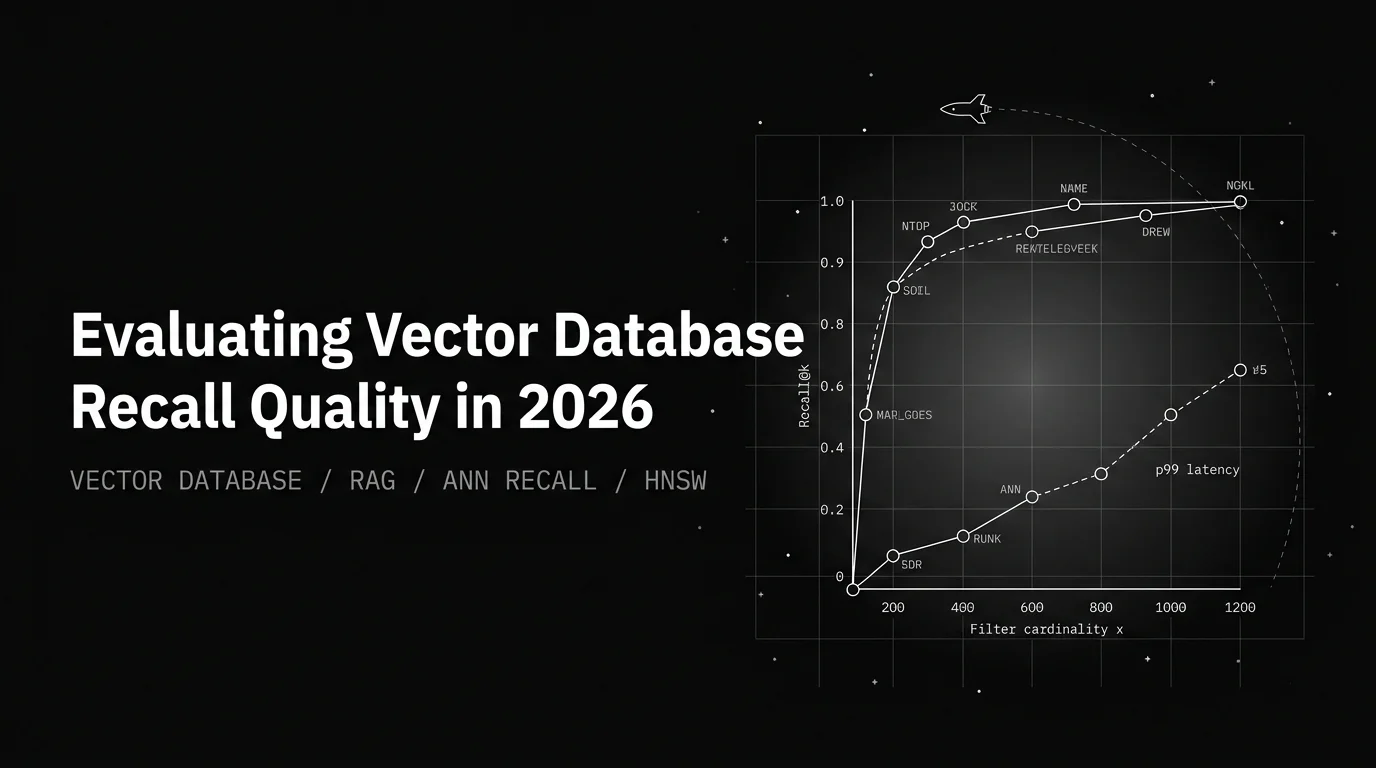
Vendor vector-DB benchmarks are theater. ANN-vs-exact-knn recall on your vectors plus p99 under your filter cardinality is the eval that decides prod.

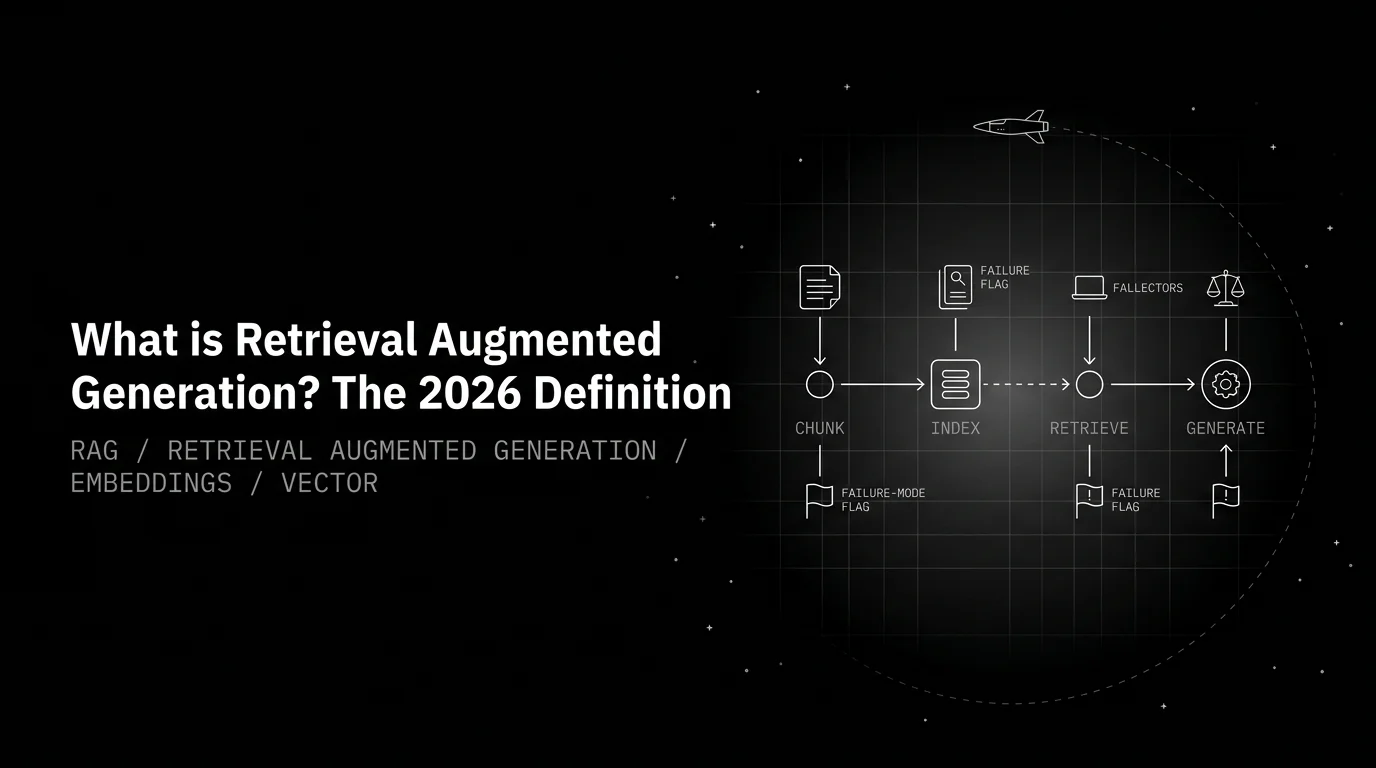
RAG is four pipeline stages and three failure modes per stage. A methodology reference for picking each stage and measuring what it broke.