Best Prompt Management Tools for LangGraph Apps in 2026
The 6 best prompt management tools for LangGraph apps in 2026, ranked on per-node versioning, tracing, evaluation, and safe deployment of node prompts.
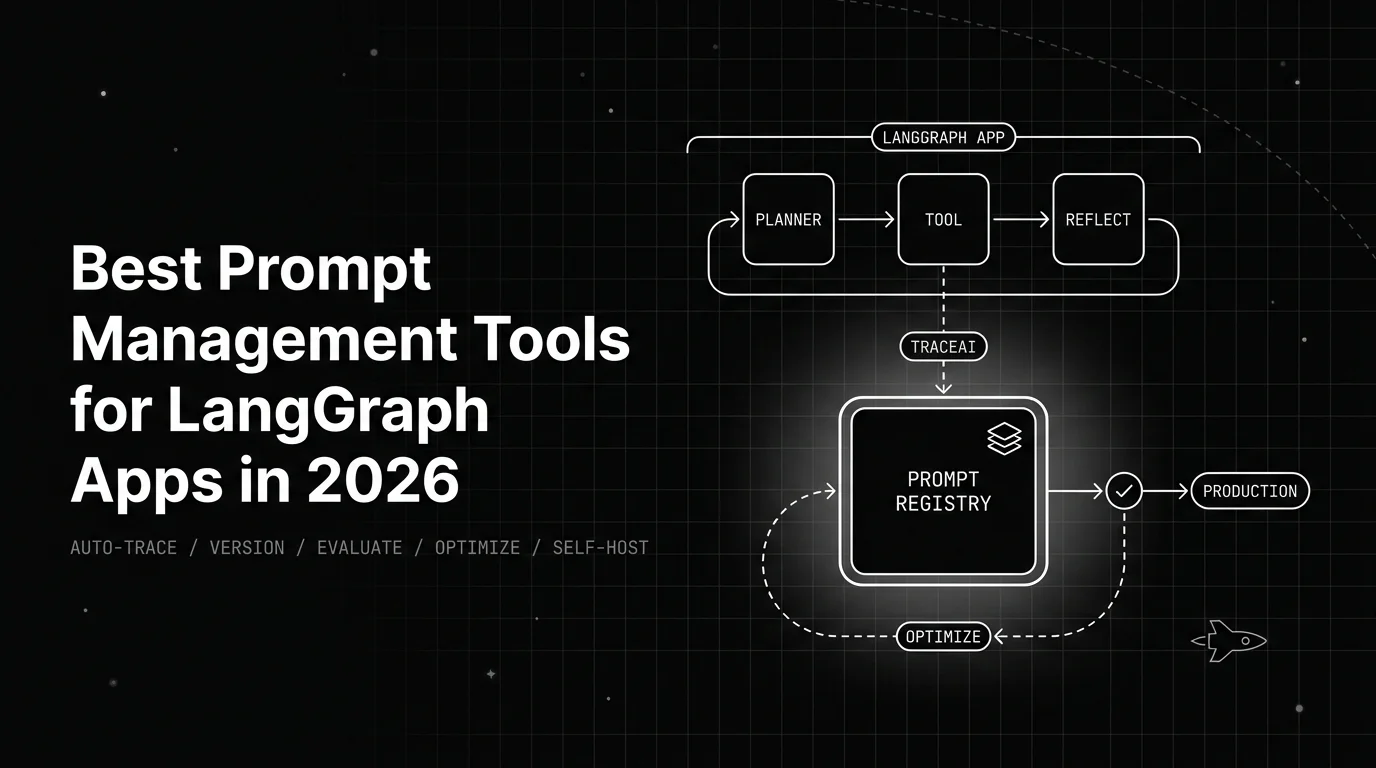
Table of Contents
A LangGraph agent routes on its own output. The planner node writes a decision into shared state, an edge reads that decision, and the graph picks the next node from it. So changing the planner prompt does not just change an answer. It changes which path the graph takes. One week the agent starts looping between the planner and a tool node, burning tokens on a task it used to finish, and no one can say which version of the planner prompt sent it into the circle. This guide ranks the six prompt management tools worth using with a LangGraph app in 2026, scored on per-node tracing, versioning, and whether a version ties back to the graph run it executed in.
TL;DR: 6 Prompt Management Tools for LangGraph Apps, Scored on Per-Node Control
Future AGI is the strongest overall prompt management tool for LangGraph apps in 2026, because it runs the complete per-node prompt lifecycle in one platform. You version each node with labels, score it with a built-in evaluator library, gate it in CI/CD, optimize it with six algorithms, and trace the whole graph with traceAI, all Apache-2.0. The table below ranks all six on best fit and the one capability each does best.
| Rank | Tool | Best for | Standout capability |
|---|---|---|---|
| 1 | Future AGI | Closed-loop node prompts: trace, version, score, optimize | traceAI traces the graph, then a built-in evaluator library and a CI/CD gate in one platform |
| 2 | LangSmith | LangGraph-native teams who want the first-party layer | First-party graph tracing with commit-hash versions and named Environments |
| 3 | PromptLayer | A decoupled registry whose callback logs the graph’s runs | Official callback plus release labels with traffic-split dynamic labels |
| 4 | Langfuse | Open-source tracing plus prompt management you self-host | MIT core with a callback handler and labels you self-host on Docker |
| 5 | Portkey | Routing the graph’s model calls through a gateway plus a Prompt Library | An MIT gateway to 1,600+ models with prompts pulled by ID or label at runtime |
| 6 | Agenta | An open-source playground for experimenting on node prompts | MIT variants as git-like commits with OpenTelemetry tracing |
Why Does LangGraph Prompt Management Break in Production?
LangGraph models an LLM app as a stateful graph. Nodes do the work, edges decide what runs next, and every node reads and writes shared state. That structure is what gives LangGraph its power, and what makes its prompts hard to manage. A node does two things at once: it produces an answer, and it writes state the edges read to choose the next node. So a node prompt is not just wording. It is part of the graph’s control flow.
Change that prompt and you can change more than one reply. You can change the path the graph takes, or send it into a cycle that never ends. The same node also re-fires as the graph loops, each time against state that has grown since the last pass. When those prompts live inline in the node functions, every edit is a deploy, no one can see which version each node runs, and a bad route hides among the good ones. A git commit reproduces a build. A prompt edited in a node function does not reproduce a score. Three requirements separate a graph-aware prompt tool from a generic one.
-
Per-node capture from the graph itself. A graph-aware tool hooks into the execution layer, through a callback handler or OpenTelemetry, so every node’s prompt run is recorded with its inputs, its version, and the graph run it fired in. In a cyclic graph the same node runs again and again against changing state, and a tool that cannot see those runs is just an external string store.
-
Per-node versioning and safe promotion. Each node’s prompt should be its own immutable version the graph pulls at runtime, not a literal in the source. That lets you ship a fix to the planner node without touching the reflection node, promote one node across environments, and roll a single node back, none of which redeploys the graph.
-
Reproducibility through evaluation. Capturing and versioning is table stakes. The harder bar is gating a node’s version on an evaluation score before it ships, and, at the top of the field, generating a better candidate automatically from the runs the graph already produced.
Most tools now handle the first two at some level. The differentiator this scorecard rewards is the third, plus the step after it: using evaluation results to write the next version automatically. That is how the loop runs from a real graph run back to an improved node prompt, instead of stalling at a score.
The LangGraph Node Prompt Scorecard
We scored every tool with the LangGraph Node Prompt Scorecard, a six-part rubric for the question this title asks: not which tool stores a string, but which one manages prompts at the granularity a stateful, cyclic graph needs. The rubric leads with how the tool ties into a LangGraph run, then adds the two parts that decide whether node prompts improve over time: built-in evaluation and automated optimization.
| # | Dimension | What we measure |
|---|---|---|
| 1 | LangGraph integration | Native tracing, a callback handler, or OpenTelemetry auto-instrumentation for graph runs |
| 2 | Version model | Immutable versions with a readable history and per-node rollback |
| 3 | Promotion | Mapping a node version across production, staging, or another environment |
| 4 | Built-in evaluation | Scoring a node prompt version against a dataset inside the tool |
| 5 | Automated optimization | Writing a higher-scoring next version, ideally from captured runs |
| 6 | License and self-host | Open-source license and free self-hosting versus Enterprise-gated |
We do not publish a single composite score. The decision table later maps buyer profiles to picks, because the right tool depends on your stack, license constraints, and who edits the node prompts.
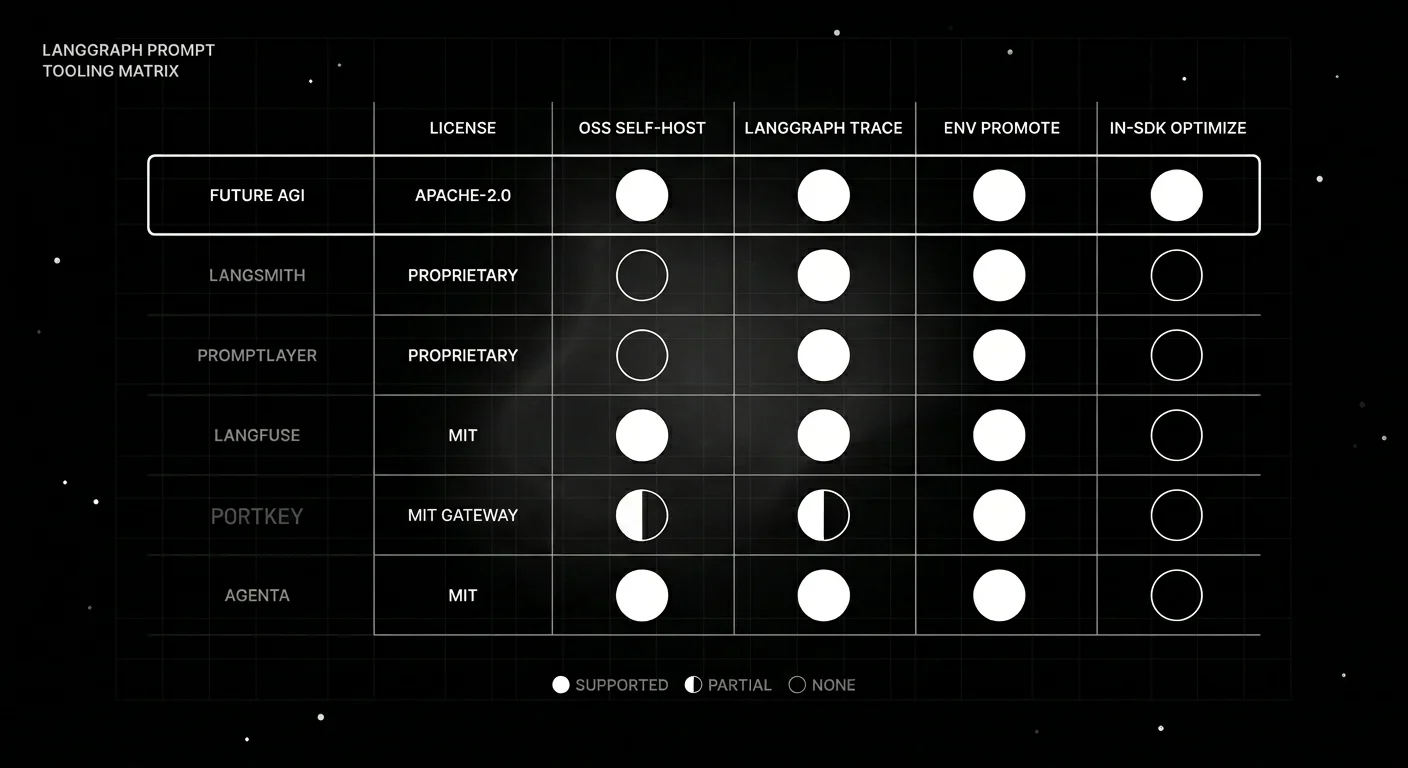
| Tool | License | OSS self-host | LangGraph trace | Promotion | Automated optimization |
|---|---|---|---|---|---|
| Future AGI | Apache-2.0 core | Yes, full stack | traceAI over OpenTelemetry | Repoint a label to promote or roll back | Six algorithms (agent-opt) |
| LangSmith | Proprietary | No, Enterprise | Native, same team | Named Environments | Manual |
| PromptLayer | Proprietary | No, Enterprise | Callback handler | Release labels + dynamic labels | Manual |
| Langfuse | MIT core | Yes, Docker | Callback handler | Labels, including protected | Manual |
| Portkey | MIT gateway, cloud prompt mgmt | Gateway only, Docker | Gateway logs, no native tracer | Publish to a label pointer | Manual |
| Agenta | MIT core | Yes, Docker | OpenTelemetry auto-instrument | Environments | Manual |
Storage, versioning, and some form of LangGraph integration are now table stakes. The differentiators are narrower. Only Future AGI, Langfuse, and Agenta offer free open-source self-hosting. Only Future AGI closes the loop with automated optimization. And Portkey’s graph tie-in is gateway-level logs rather than a node-level tracer. The sections below take each tool in turn.
1. Future AGI: Best Overall for Closed-Loop LangGraph Node Prompts
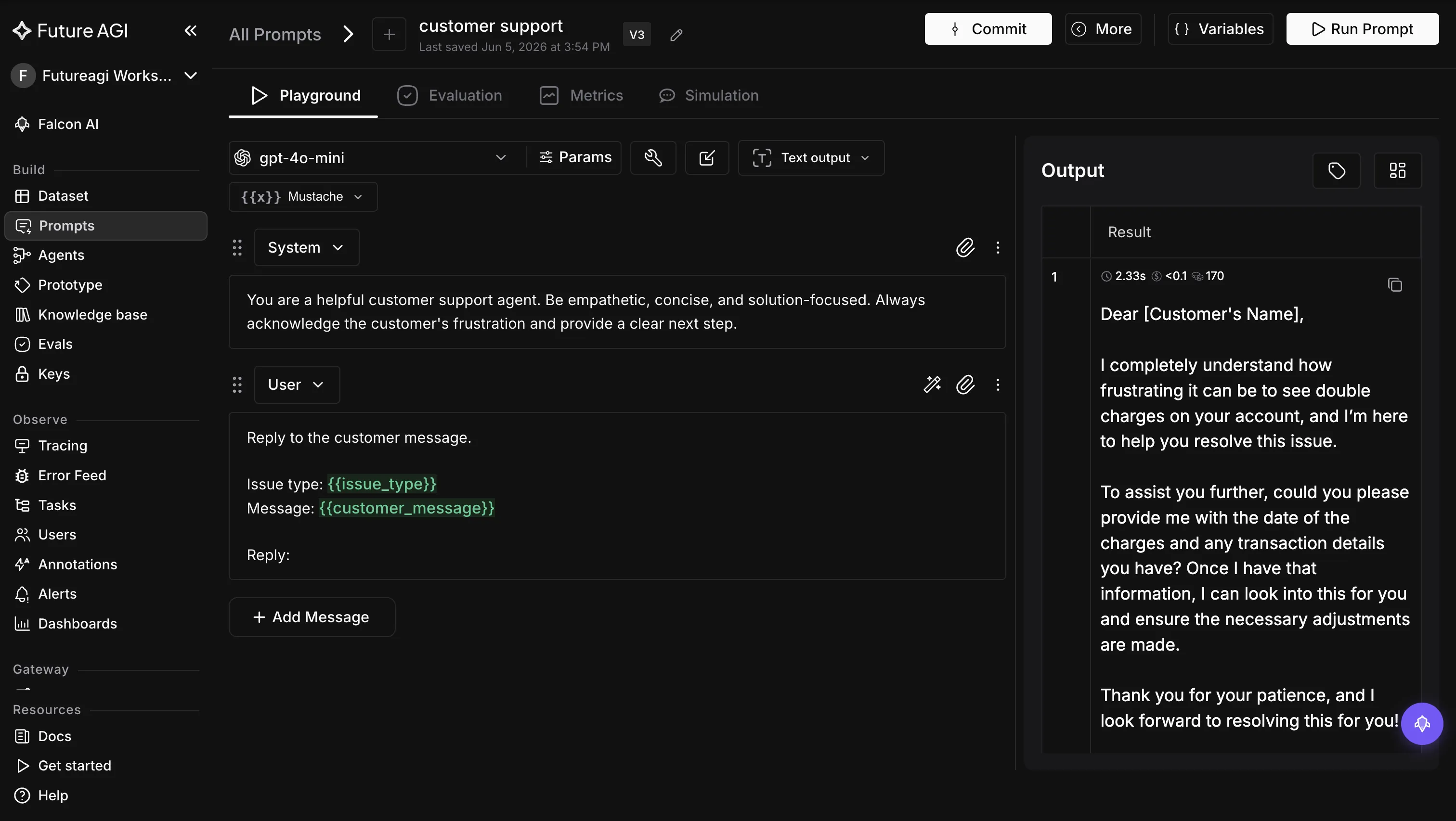
Quick take. Future AGI runs the complete per-node prompt lifecycle in one place. You author each node’s prompt in the Agent Playground, version it with named labels (Production, Staging, Development), score it with a built-in evaluator library, gate it in CI/CD, and optimize it with six algorithms. traceAI traces the LangGraph app through its LangChain instrumentor and feeds live runs back into the loop, all under Apache-2.0.
Ideal for. LangGraph teams that want tracing, versioning, evaluation, and optimization in one platform. Capture a node run, version the prompt, score it, gate it in CI/CD, let an optimizer propose a better candidate, and watch it live. You get all of it without stitching a tracer, a registry, and an eval tool together across a multi-node graph.
Key strengths.
-
traceAI stitches each node run into the graph run. traceAI is OpenTelemetry-native tracing with instrumentors for 50+ frameworks. Because LangGraph runs on LangChain’s callback system, its LangChain instrumentor stitches each node run into the graph run it belongs to, with the prompt version behind it and the state the node read. That trace is the raw material the rest of the loop runs on, so a misrouted graph walks back to the node that routed it.
-
Immutable versions with label-based promotion, not a flat list. Future AGI stamps each node edit as its own immutable version and never overwrites the last. A named label, Production, Staging, or Development, decides which version is live. The graph pulls each node’s prompt by name and label at runtime, so the planner and the reflection node keep separate histories. Rolling a node back repoints its label to an earlier version, so the graph routes correctly again on its next run, with no redeploy.
-
Versions that are scored, not just saved. Each node version can be measured with a built-in evaluator library and the custom evals you write, across quality, safety, factuality, RAG retrieval, and format. You run a candidate beside the live version on the same graph runs. A node can score well on the first pass and misroute the graph on a later loop, so the score judges it on real multi-cycle runs, not a single call.
-
Evaluation as a CI/CD gate. You can run the same evals as a gate in your CI/CD pipeline, so a node change that misroutes the graph fails the build in the pipeline, before a single cycle can carry it into a live graph.
-
Optimization that writes your next node version. When manual edits to a node stop raising its score, the open-source agent-opt library steps in with six algorithms: Random Search, Bayesian, ProTeGi, Meta-Prompt, PromptWizard, and GEPA. Each measures a node prompt against your evaluator and returns a stronger candidate, tuned on how that node behaved across the graph’s cycles, not on one pass. Because agent-opt reads the runs traceAI stitched into each graph, the rewrite reflects real loops, and every other tool here stops at scoring.
Pricing and deployment. Future AGI has a free tier, pay-as-you-go usage, and Enterprise plans on its pricing page. The core SDK and product repos are Apache-2.0 and self-hostable at no license cost with Docker Compose, so the whole loop runs in the same network as the graph. The paid plans include SOC 2 Type II and a HIPAA BAA.
Verdict. Future AGI is the strongest overall pick for LangGraph teams that want one self-hostable platform to author, version, score, gate, and optimize each node’s prompt in a single feedback loop. It replaces a tracer plus a registry plus a separate eval tool with one Apache-2.0 platform that runs every stage, from node prompt to improved candidate.
2. LangSmith: Best for LangGraph-Native Teams Who Want the First-Party Layer
Quick take. LangSmith is the prompt and tracing layer from the LangChain team, who also build LangGraph. For an app already standardized on the graph, it is the most natural fit, with the deepest first-party tracing, the Prompt Hub, and the Playground. Its versioning is commit-based and immutable, which maps cleanly onto how engineers already reason about code.
Ideal for. Teams whose stack is built on LangGraph and who want prompt versioning, tracing, and evals from the same vendor that builds the framework. If your services already emit LangGraph runs, LangSmith captures them with the least setup of any tool here, which makes it the default for a fully LangChain-native org.
Key strengths.
- Tracing is native and unmatched in depth, because the framework and the prompt layer come from one team, so a LangGraph app reports its node and state transitions into LangSmith with the least wiring of any tool here.
- Each edit lands as an immutable commit with its own commit hash, human-readable tags ride across those commits independently, and you fetch a prompt from the Prompt Hub by name and hash or by tag.
- Named Environments promote a commit between deployment targets such as Staging and Production without a code change, with a diff toggle to compare two commits side by side, and Experiments score a specific graph version against a dataset.
Limitations. LangSmith is proprietary even though LangGraph itself is open source, so self-hosting is an Enterprise arrangement. It ships no automated optimization, so the loop from a scored node prompt to an improved one stays manual. Its strengths also concentrate inside the LangChain and LangGraph ecosystem and thin out beyond it.
Pricing. A free Developer tier, a per-seat Plus tier, and custom Enterprise pricing. Hosted by default; self-hosting requires Enterprise.
Verdict. LangSmith is the default when your stack is already LangGraph and you want the prompt layer from the team that builds the framework. It is a weaker fit if you need free self-hosting, an automated optimization loop, or a tool that works equally well outside the LangChain ecosystem.
3. PromptLayer: Best Decoupled Registry Whose Callback Logs the Graph’s Runs
Quick take. PromptLayer is a prompt registry built so non-engineers, such as product managers, can manage and version prompts alongside developers. It ties into a LangGraph app through an official callback handler, so each node’s runs land in a polished, decoupled registry. That gives a cross-functional team visual release control without leaving the graph’s native callback layer.
Ideal for. LangGraph teams that want each node’s prompt managed in a dedicated visual registry, editable by people who do not live in a code editor. It fits orgs where product managers and subject-matter experts review node prompt changes through diffs and messages, and where release control needs to be visual rather than code-driven.
Key strengths.
- An official callback handler records the graph’s runs into PromptLayer with tags and request IDs, so you get framework-aware logging without leaving the registry that manages your node prompts.
- A version stores a message and a visual diff against earlier ones, so a product manager sees exactly what changed in a node prompt without reading code or walking a git history.
- Release Labels map a version to environments such as
prodandstaging, and Dynamic Release Labels split traffic by percentage or user segment for staged rollouts. Rollback is a label reassignment, and Evaluations and Datasets live on the prompt page.
Limitations. PromptLayer is proprietary, and self-hosting requires an Enterprise contract, so you cannot run the registry on your own infrastructure without a sales conversation. The version model is linear with no branching or merging, evaluation depth and automated optimization are lighter than eval-led platforms, and pricing scales with team features rather than raw usage.
Pricing. A free tier, a Pro tier, and a Team tier with collaboration features; self-hosting is Enterprise.
Verdict. PromptLayer is the best decoupled registry when the people editing a graph’s node prompts include non-engineers and visual release control matters most. It is a weaker fit if you need free open-source self-hosting, deep evaluation, or an optimizer that writes the next node version.
4. Langfuse: Best Open-Source Tracing Plus Prompt Management
Quick take. Langfuse is the open-source option teams reach for when self-hosting both tracing and the prompt registry matters more than a managed UI. Its MIT-licensed core covers prompt versioning, labels, and tracing, pairs an official callback handler for LangChain and LangGraph with auto-versioning, and runs entirely on your own infrastructure.
Ideal for. LangGraph teams that want a widely adopted open-source tool they can self-host at no license cost, with trace observability and per-node prompt management in one place. It suits teams whose data-residency rules out a hosted-only vendor, since the MIT core runs on your own infrastructure.
Key strengths.
- An official callback handler auto-traces a LangChain or LangGraph app into Langfuse, so node prompt runs, inputs, and latency are captured through the framework’s own callback layer in a few lines.
- Re-saving a prompt under one name mints the next immutable integer version on its own, so history builds up without ceremony, and the MIT core self-hosts free on Docker.
- Labels such as
productionmap versions to environments, protected labels let admins lock the production pointer against accidental moves, rollback is a label reassignment, and Prompt Experiments score a version against a dataset.
Limitations. A client-side cache means a reassigned label takes effect server-side at once but reaches the running graph only after the cache refreshes. The richest commercial features, including protected labels on a self-hosted instance, live in a separate ee folder rather than the MIT core, and there is no built-in optimization that writes a better node prompt for you.
Pricing. A free Hobby cloud tier and self-hosting at no license cost, with paid Core, Pro, and Enterprise cloud tiers above them.
Verdict. Langfuse is the best open-source pick for LangGraph teams who want tracing and prompt management in one free, self-hostable instance, with a label model that handles promotion and rollback cleanly. The tradeoff is that optimization lives elsewhere, so teams that need an optimizer pair it with a separate tool.
5. Portkey: Best for Routing the Graph Through a Gateway With a Prompt Library
Quick take. Portkey is an AI gateway that routes calls to 1,600+ LLM models, with prompt management handled by a Prompt Library. It fits a LangGraph app by routing each node’s model calls through the gateway and pulling each node prompt by ID or label at runtime. The gateway is open-source MIT; the Prompt Library, dashboard, and Studio are proprietary cloud.
Ideal for. LangGraph teams that already want a multi-model gateway in front of the graph and are comfortable managing each node’s prompt in a cloud Prompt Library called by ID or label. It fits teams that put model-routing flexibility across many providers ahead of a native graph tracer or a built-in eval loop.
Key strengths.
- The gateway routes to 1,600+ models and is open-source MIT, self-hostable via Docker or
npx @portkey-ai/gateway, so the graph’s node model calls run through one routing layer you can host yourself. - Each node pulls its prompt by reference, pinned to an immutable version such as
promptID@12or to a label such as@production,@staging,@development, or a custom one. Promotion and rollback are a matter of repointing a label or restoring a version from Version History. - Observability covers request logs, tracing, 40+ metrics, and OpenTelemetry, and Portkey documents integrations with frameworks including LangChain, LangGraph, LlamaIndex, CrewAI, and AutoGen.
Limitations. Prompt management is secondary to the gateway, and the Prompt Library, dashboard, and Studio are proprietary cloud rather than part of the MIT gateway. There is no native LangGraph tracer, only gateway-level request logs, no built-in evaluation or optimization, and versioning has no commit messages, diffs, or branches, so you pair it with external eval tools.
Pricing. A free tier with paid Pro and Enterprise tiers above it; the gateway is free to self-host under MIT.
Verdict. Portkey is a strong fit when you want a multi-model gateway in front of the graph, with each node’s prompt pulled by label at runtime. It is weaker if you need a native LangGraph tracer, built-in evaluation, or an automated optimization loop, since those require pairing it with separate tools.
6. Agenta: Best Open-Source Playground for Experimenting on Node Prompts
Quick take. Agenta is an open-source, MIT-licensed LLMOps platform. Its prompt playground and git-like variants make it a strong fit for experimenting on the prompt inside each LangGraph node, and its OpenTelemetry-compliant tracing auto-instruments the app. It pairs a side-by-side prompt comparison surface with environments for promotion, all self-hostable for free.
Ideal for. LangGraph teams that want a free, open-source playground to iterate on node prompt variants and promote them across environments, with OpenTelemetry tracing included. It suits teams who value comparing variants side by side and experimenting quickly on a single node’s prompt, without adopting a proprietary managed service.
Key strengths.
- Agenta is OpenTelemetry-compliant and works with standard auto-instrumentation, so graph traces are captured and shown alongside any custom spans, without a proprietary tracer.
- Variants act like git branches, with each change recorded as an immutable commit you can compare side by side, which suits rapid experimentation on a single node’s prompt.
- Environments such as
development,staging, andproductionmap a variant to a deployment, the runtime pulls the config by environment, the MIT core self-hosts free on Docker, and evaluation is built in.
Limitations. SSO and the deeper enterprise controls sit behind the ee license rather than the MIT core, and the free tier has evaluation and retention caps. No built-in automated optimization writes a better prompt candidate for you. The broad LLMOps scope also means more configuration upfront than a prompt-only tool.
Pricing. A free Hobby tier and self-hosting at no license cost under MIT, with paid Pro and Business tiers and custom Enterprise above them.
Verdict. Agenta is the best open-source playground for LangGraph teams that want to experiment on node prompt variants and promote them across environments at no license cost. It is a weaker pick if you need automated optimization built in, a managed zero-setup experience, or enterprise controls outside the ee license.
Which Prompt Management Tool Should You Choose for Your LangGraph App?
There is no single winner for every LangGraph team, so match the tool to the constraint that matters most to you.
| If you need | Choose | Because |
|---|---|---|
| To trace, version, score, and optimize per-node prompts in one platform | Future AGI | traceAI traces the graph, then scores and optimizes under Apache-2.0 |
| The first-party layer from the LangGraph team | LangSmith | Native tracing, Prompt Hub, and Playground built by the same team |
| A decoupled registry whose callback logs the graph’s runs | PromptLayer | Official callback plus release labels and visual diffs |
| Free open-source tracing plus prompt management | Langfuse | MIT core on Docker with an official callback handler |
| A multi-model gateway in front of the graph plus a Prompt Library | Portkey | An MIT gateway to 1,600+ models with prompts pulled by ID or label |
| A free open-source playground for node prompt experiments | Agenta | MIT variants and environments with OpenTelemetry tracing |
Most tools here handle storage and versioning well, so that is no longer the differentiator. Future AGI leads because it closes the full loop: traceAI stitches graph runs together, each node prompt is scored against a built-in evaluator library, evals gate the CI/CD build, and six algorithms write a better candidate, all under Apache-2.0. LangSmith is the tighter fit for fully LangGraph-native stacks where lowest setup wins.
How Do You Roll Out LangGraph Prompts Without Breaking Production?
Adopting a tool is the easy part. These practices keep a node prompt rollout from becoming a hidden regression in a stateful graph.
- Pull each node’s prompt from a registry, never hard-code it. Move every prompt out of the node functions and into a registry the graph reads at runtime, so a single node’s prompt change ships without a code deploy and a non-engineer can edit a production node safely.
- Capture the run through the graph’s own layer. Use a callback handler or OpenTelemetry so every node’s prompt run is recorded with its version and the graph run, rather than logging by hand. A node prompt you cannot trace is one you cannot debug when the graph loops.
- Make every node prompt change a new immutable version. The moment a prompt is editable without creating a version, your history has a hole in it. Save a version on every change so each node’s diff reads clearly later in an incident review.
- Tie each node version to an evaluation run before you promote it. A version you cannot score is a version you cannot trust. Run the candidate against the current production version on the same graph runs, and run that eval as a CI/CD gate so a regression in the planner or reflection node fails the build. Our prompt versioning and lifecycle guide covers this gate in depth.
- Close the loop from run to next version. A node version that scores well offline can still misroute on real traffic. Feed the graph’s runs back into evaluation and optimization so the next version is grounded in real cycles, and rehearse a single-node rollback so it works under pressure.
Where Future AGI Fits in Your LangGraph Stack
A LangGraph agent routes on its own output, so changing a node’s prompt can change the path the graph takes. Go back to the agent that looped between the planner and a tool node, where no one could name the version behind the circle. On Future AGI that version has a name from the start. It is the one wearing the planner’s Production label that the graph pulled at runtime. traceAI stitches every node run into the graph run it fired in, so the loop leads back to the node that routed it. The score behind it is the eval that gated its CI/CD build. When a node’s prompt has to change, agent-opt writes the next candidate from its own runs.
Your agent will always route on its own output. The difference is that a bad route is now a named version you can open, and one label move puts the graph back on course. Start with Future AGI or the Apache-2.0 repo.
Frequently Asked Questions About LangGraph Prompt Management
What Is LangGraph Prompt Management?
LangGraph prompt management treats the prompt inside each node of a stateful LangGraph app as a versioned, governed asset rather than a hard-coded string. Because a node writes state the edges read to choose the next node, its prompt is part of the graph’s control flow, not just its output. The practice captures each node’s run through a tracing layer, stores it as an immutable version, and scores a candidate before it ships, without redeploying the graph. The unit of management is the per-node prompt, tied back to the graph run it executed in.
Can You Version Each LangGraph Node’s Prompt Separately?
Yes, and per-node versioning is the main reason to adopt a prompt tool for a LangGraph app. Store each node’s prompt as its own version and pull it at runtime, so the planner and the reflection node keep independent histories, scores, and rollbacks. Future AGI stamps an immutable version on every save and rolls back by repointing a label, LangSmith pulls by name and commit hash, and Langfuse, PromptLayer, and Agenta resolve a node prompt by label.
Does Future AGI Work With LangGraph?
Yes. Because LangGraph runs on LangChain’s callback system, Future AGI’s traceAI library instruments a LangGraph app through its LangChain instrumentor over OpenTelemetry, logging each node’s prompt templates and variables without rewriting the graph. The same platform versions those node prompts with named labels, scores them with a built-in evaluator library and custom evals, gates changes in CI/CD, and improves them with six optimization algorithms, all under Apache-2.0 you can self-host next to the graph.
How Does LangSmith Compare to Other Prompt Tools for LangGraph?
LangSmith has the deepest first-party LangGraph integration because the LangChain team builds both the framework and the prompt layer, and its named Environments promote a commit between staging and production without a code change. The tradeoff is no built-in optimization and an Enterprise arrangement for self-hosting. Other tools integrate through callback handlers or OpenTelemetry, so you are not tied to one vendor.
Can You Evaluate and Optimize LangGraph Node Prompts Automatically?
You can evaluate a LangGraph node prompt on every tool in this comparison, since built-in evaluation is now table stakes. Only Future AGI also optimizes automatically: its agent-opt library runs six algorithms (Random Search, Bayesian, ProTeGi, Meta-Prompt, PromptWizard, GEPA) against real graph runs captured by traceAI and returns a higher-scoring candidate. Every other tool in this comparison stops at scoring.
Frequently Asked Questions
What Is LangGraph Prompt Management?
Can You Version Each LangGraph Node's Prompt Separately?
Does Future AGI Work With LangGraph?
How Does LangSmith Compare to Other Prompt Tools for LangGraph?
Can You Evaluate and Optimize LangGraph Node Prompts Automatically?
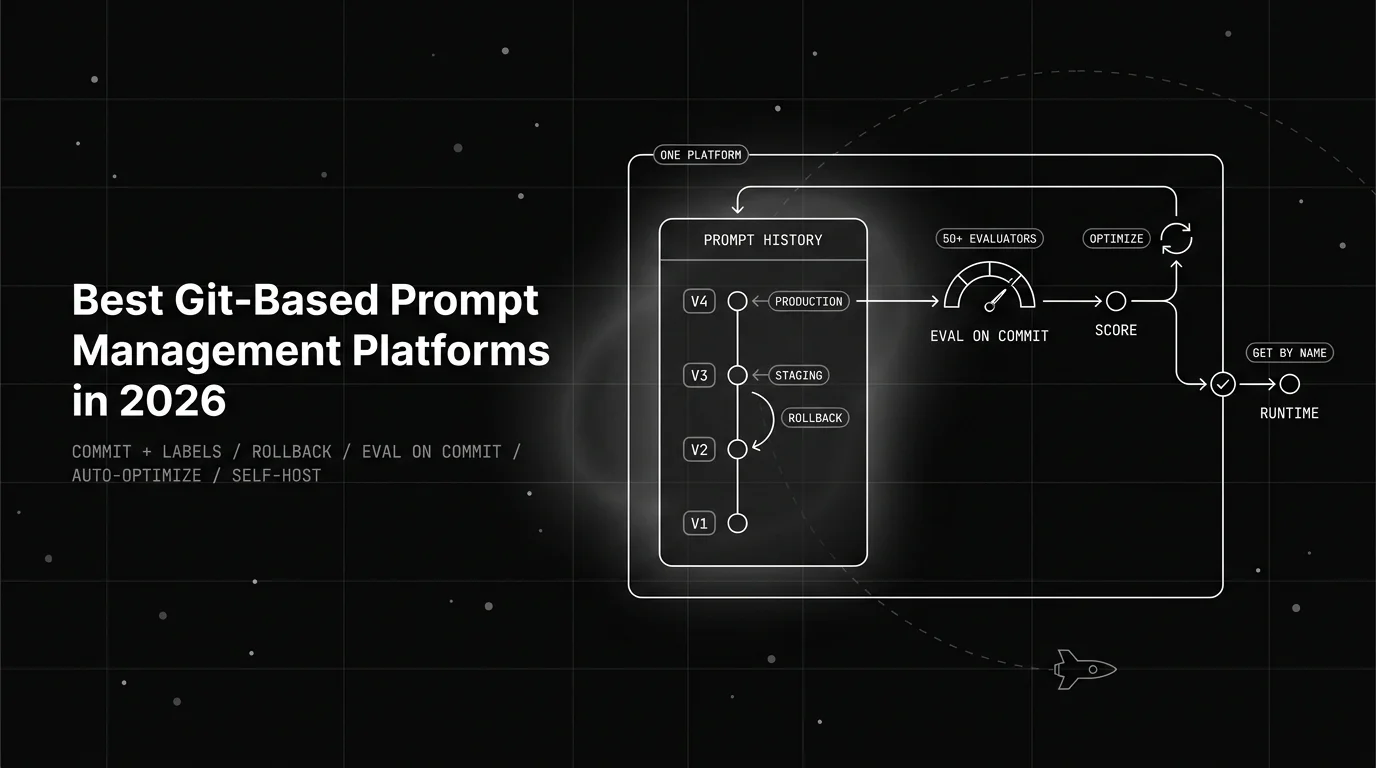
Compare the 6 best git-based prompt management platforms of 2026 on version control, branching, diffs, and code-first prompt workflows for engineering teams.

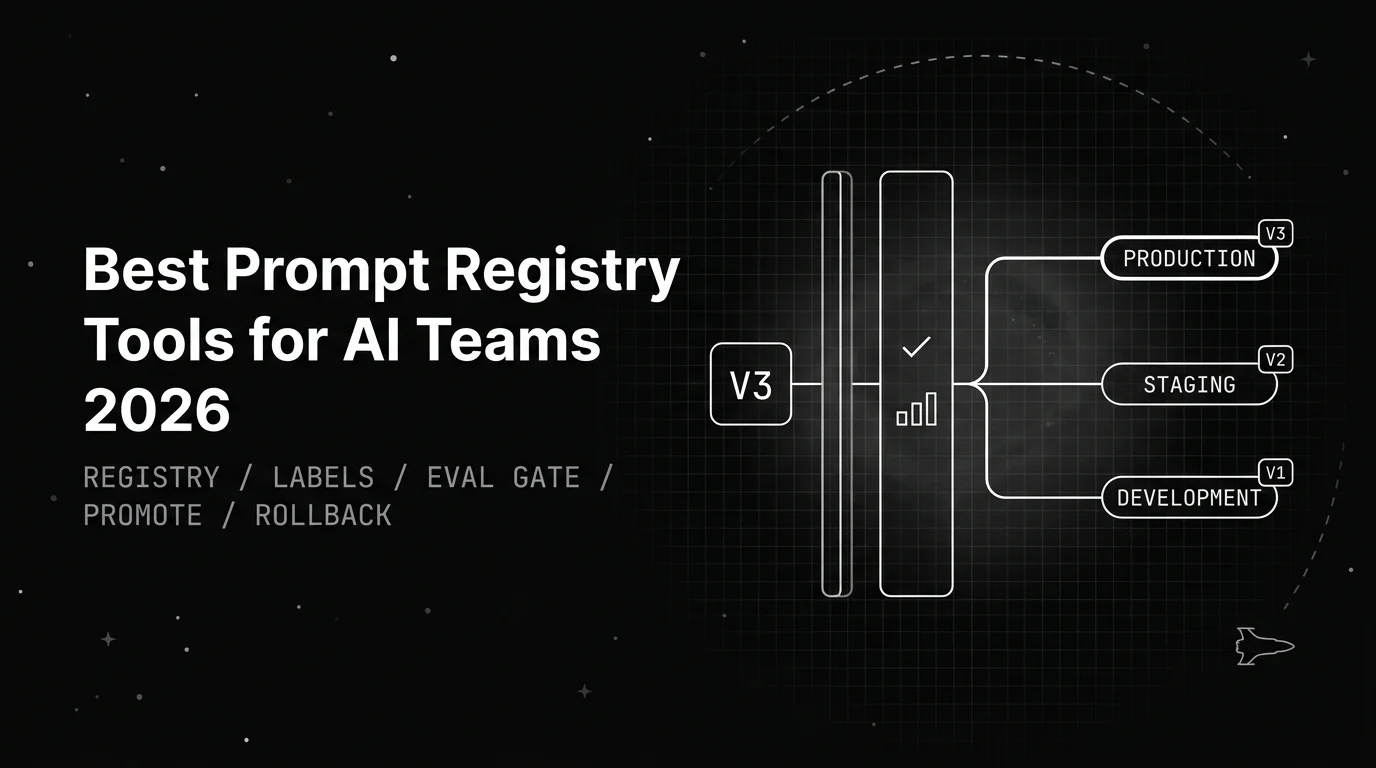
A ranked guide to the 6 best prompt registry tools for AI teams in 2026, compared on central storage, versioning, labels, and fetching prompts at runtime.
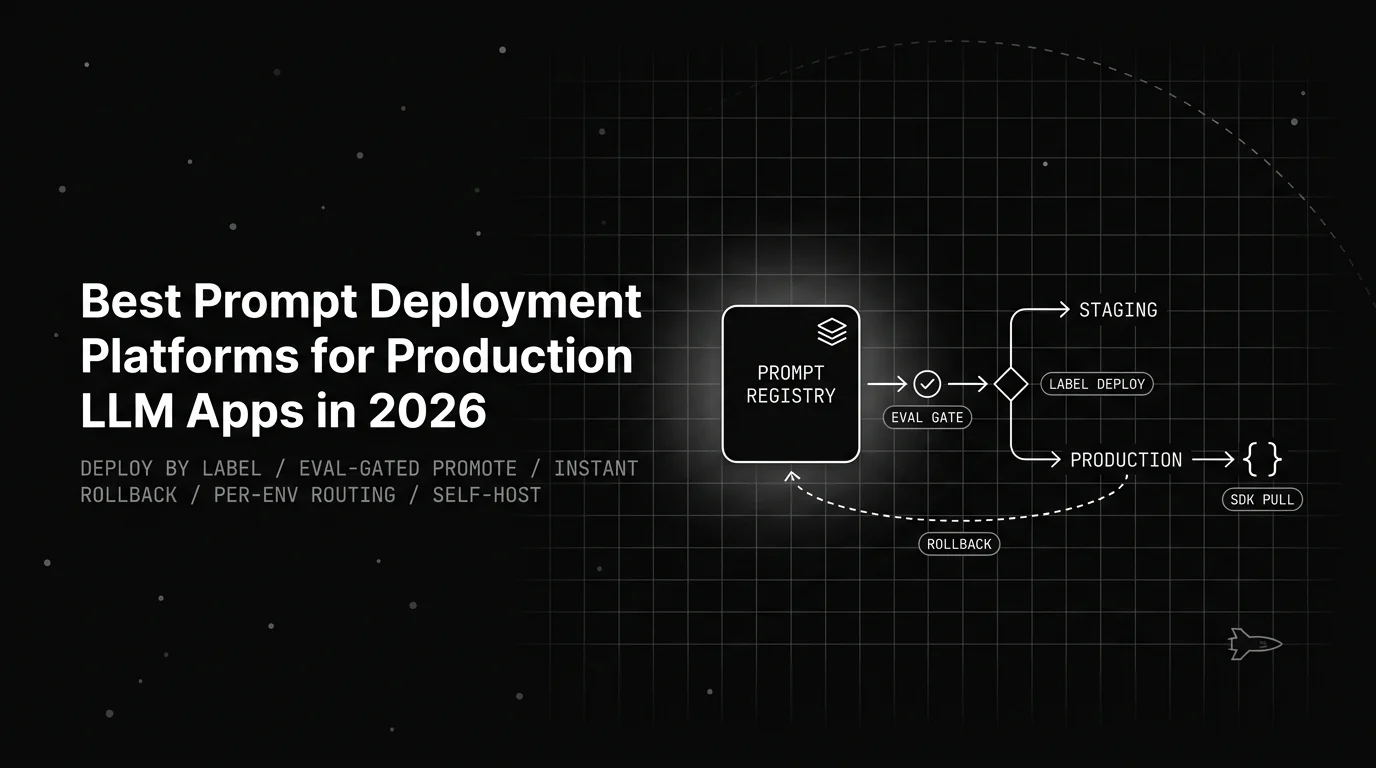
Compare the 6 best prompt deployment platforms for production LLM apps in 2026 on labels, rollback, runtime fetching, and safe, controlled prompt releases.