Best Prompt Iteration Tools in 2026
The 7 best prompt iteration tools in 2026, ranked on fast editing, versioning, evaluation, and comparing prompt changes before you ship them to users.
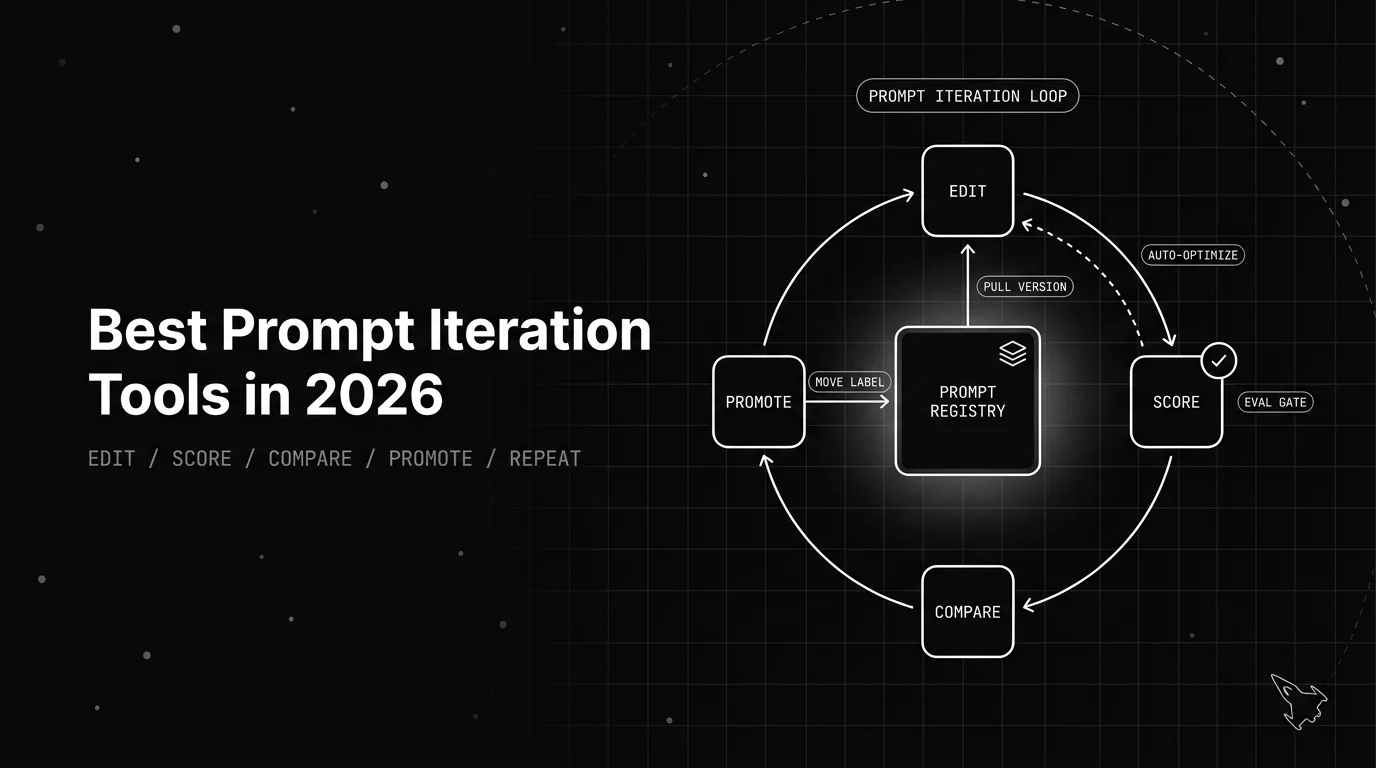
Table of Contents
A team ships a support prompt, then spends a month trying to make it better. Someone rewords it, the version reads sharper, it goes live. A week later a failure surfaces that no one can tie to any single round, because no round was ever scored against the one before it. The loop that should be fast and measured, draft a variant, score it, compare it, ship the winner, watch it, is instead a string of hunches. This guide ranks the seven prompt iteration tools worth using in 2026 on how completely they close that loop. What counts is four things: variant tracking, side-by-side comparison, built-in evaluation, and production traces that feed the next round.
TL;DR: 7 Prompt Iteration Tools Scored on the Draft, Evaluate, Compare, Ship, Observe Loop
Future AGI is the strongest overall prompt iteration tool for 2026, because it runs the whole prompt lifecycle on one platform. You compare variants side by side in the Agent Playground and score each against a built-in evaluator library. You gate the winner in CI/CD, then watch the shipped variant through traceAI. Every tool here stores a variant. What separates a 2026 platform is whether the loop closes. The table below ranks all seven.
| Rank | Tool | Best for | Standout capability |
|---|---|---|---|
| 1 | Future AGI | End-to-end prompt lifecycle: iterate, evaluate, optimize, and observe in one platform | Agent Playground side-by-side compare, a built-in evaluator library, CI/CD gate, six optimizers, traceAI |
| 2 | PromptLayer | A dedicated registry for fast, non-engineer-friendly iteration | Visual diffs and release labels for cross-functional rounds |
| 3 | Langfuse | Open-source observability plus iteration you self-host | MIT core pairing prompt versions with trace-linked experiments |
| 4 | LangSmith | LangChain-native teams iterating in one ecosystem | Commit-hash versions with named Environments and a Playground |
| 5 | Latitude | Open-source iteration with an eval-driven Refiner copilot | A copilot that proposes the next variant from eval results |
| 6 | Promptfoo | Fast, measured iteration loops in code and CI | A YAML matrix of prompts x providers x test cases scored from the CLI |
| 7 | Maxim AI | A broad simulate, evaluate, and ship suite | Prompt iteration inside an end-to-end agent-quality platform |
Why Does Prompt Iteration Break in Production?
A prompt is the cheapest thing to edit in an LLM application and the fastest way to change a behavior. That same property makes it dangerous: a reword that looks like an improvement ships on a hunch, and the regression it causes surfaces elsewhere days later. Three requirements separate a real iteration tool from a text box with a save button.
The first requirement is variant tracking you can compare and revert. Each round must produce a named, immutable version with a legible diff, and reverting to an earlier variant must be a single action rather than a hunt through chat logs. Without that, iteration is editing in place with no honest way to compare where you are to where you were two rounds ago.
The second is a scored comparison, not an eyeballed one. The point of iteration is to know the new variant is better, not to feel it. That requires built-in evaluation. Each candidate is scored against a stable dataset, so the comparison is a number. A side-by-side view puts both variants and their scores next to each other.
The third requirement is a closed feedback loop: production traces from the shipped variant flow back into the next round, and the team can gate a candidate before it ships. Most tools now handle variant tracking and many add evaluation. The differentiator this scorecard rewards is whether the loop actually closes, from a variant to a score to a shipped change to production traces that inform the next variant.
The Prompt Iteration Loop Scorecard
We scored every tool with the Iteration Loop Scorecard, a six-dimension rubric. It measures how completely a tool closes the full loop, not just whether it can store a prompt. Most roundups score on raw feature counts or blur iteration with one-shot optimization and pass-fail testing. This rubric leads with the dimensions that decide how an iteration loop actually performs: variant tracking, side-by-side comparison, built-in evaluation, and production feedback.
| # | Dimension | What we measure |
|---|---|---|
| 1 | License and free self-host | The exact license, and whether the whole stack self-hosts for free or only on Enterprise |
| 2 | Variant tracking | Immutable versions, legible diffs, and a one-action path back to an earlier variant |
| 3 | Side-by-side comparison | Comparing versions or variants across models in one view |
| 4 | Built-in evaluation | Scoring a candidate against a fixed dataset inside the tool |
| 5 | Production feedback | Traces or logged runs from the shipped variant that inform the next round |
| 6 | Automated optimization | Generating a higher-scoring candidate when a round needs more than a hand edit |
We do not publish a single composite score, because the right tool depends on your stack, your license requirements, and who edits the prompts. The decision table later maps buyer profiles to picks. The optimization dimension is weighted as an accelerator rather than the headline. Iteration is a human-in-the-loop process, and an optimizer is one optional step inside it.
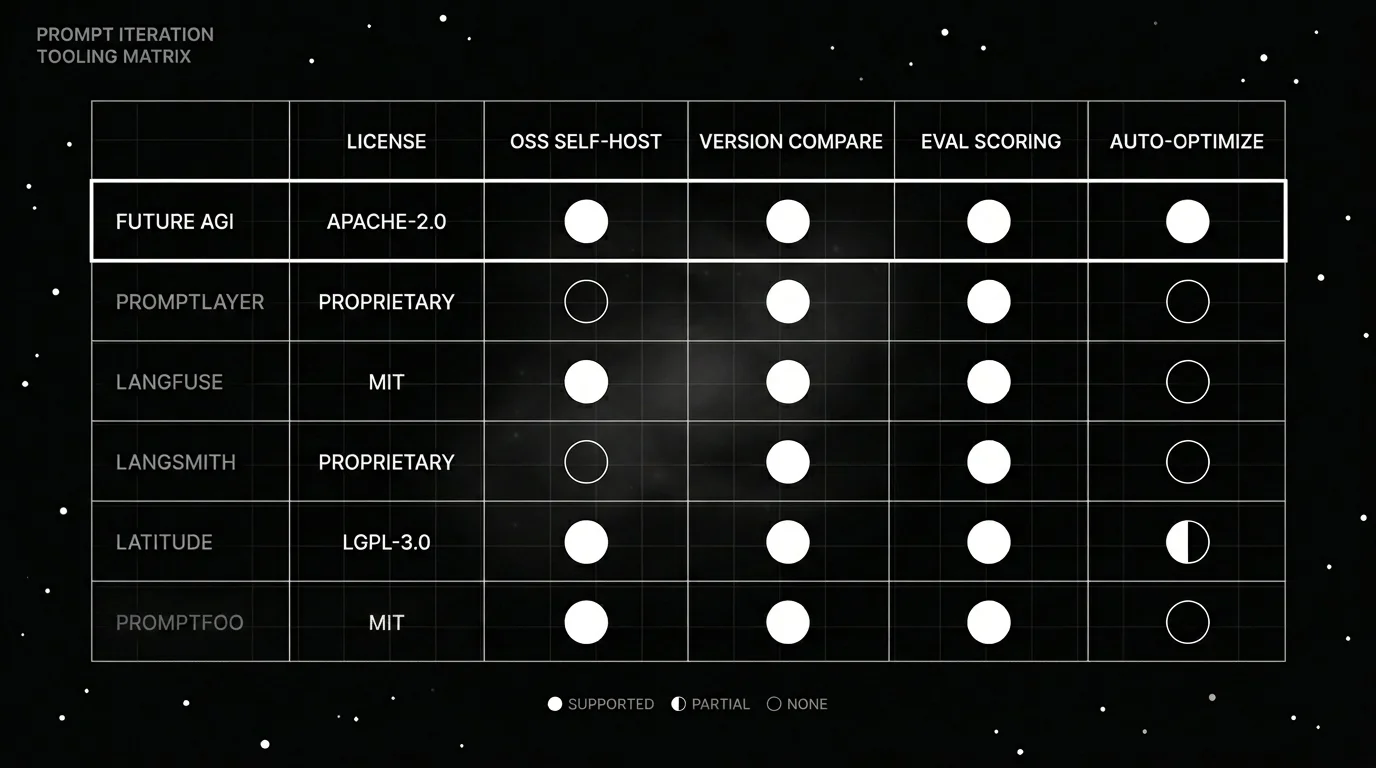
| Tool | License / self-host | Variant tracking | Side-by-side compare | Built-in evals | Production feedback | Automated optimization |
|---|---|---|---|---|---|---|
| Future AGI | Apache-2.0 core, self-host free | Immutable version snapshots + labels (Production/Staging/Development) | Agent Playground side-by-side compare | Built-in evaluator library | traceAI (OTel, 50+ frameworks) | Six algorithms (agent-opt) |
| PromptLayer | Proprietary, self-host Enterprise | Numbered versions + diffs | Visual version compare | Evals on the registry | Request logging | Manual |
| Langfuse | MIT core, self-host free | Auto integer versions | Prompt Experiments compare | Prompt Experiments | Trace-linked prompts | Manual |
| LangSmith | Proprietary, self-host Enterprise | Commit hash, immutable | Playground + commit diff | Eval SDK + datasets | Tracing | Manual |
| Latitude | Open-source, self-host free | Draft / Published + diff | Playground compare | Rules, LLM judge, human | Logs and evaluations | Partial, eval-driven Refiner |
| Promptfoo | MIT, runs locally free | Git / file-based YAML | Local web viewer (promptfoo view) | Assertions + llm-rubric | None, CLI / CI tool | Manual |
| Maxim AI | Proprietary, in-VPC Enterprise | Published versions + diffs | Compare up to five versions | Evaluator library | Production logging | Evaluator-guided optimizer |
Variant tracking, comparison, and evaluation are now table stakes. The differentiators are narrower. Only Future AGI, Langfuse, Latitude, and Promptfoo offer free open-source self-hosting. And only Future AGI closes the full loop in one stack, with production traces, a CI/CD eval gate, and six optimization algorithms alongside the variant store. The sections below take each tool in turn.
1. Future AGI: Best for Closing the Iteration Loop in One Platform
Quick take. Future AGI is the end-to-end platform for prompt iteration. You compare variants side by side in the Agent Playground and score each against a built-in evaluator library. You gate the winner in CI/CD, then ship by reassigning a label with no redeploy. Production behavior comes back through traceAI. Six optimization algorithms generate a higher-scoring candidate when a hand edit stalls, all under an Apache-2.0 license you self-host.
Ideal for. Production teams that want the full iteration lifecycle on one self-hostable platform. You compare variants side by side before saving, then score the winner against a fixed evaluation set. You gate it in CI/CD and ship it by reassigning a label, with no redeploy. Production traces feed straight into the next round. You do all of it without stitching a registry to a separate eval tool and a tracing tool.
Key strengths.
-
Every round of iteration is an immutable version, not an in-place edit. Future AGI snapshots each round as an immutable version and keeps every earlier one. A label such as Production, Staging, or Development decides which round’s output an environment serves. Shipping this round’s winner moves the Production label onto it, and rolling back moves the label to the previous winner, both with no code release. Because your app resolves that label at request time, the version now serving is the baseline the next round has to beat.
-
Each round is scored, so an improvement is a number rather than an impression. Future AGI grades every variant with a built-in evaluator library and the custom evals you write, across quality, safety, factuality, RAG retrieval, and format. Because every round runs on the same pinned dataset, a new variant’s score is directly comparable to the one it aims to beat. That is what turns “this reword feels sharper” into “this scored higher than the version it replaces.”
-
The same evals gate the round in CI/CD. You run those evals as a gate in your CI/CD pipeline, so a round that scores below the current baseline fails the check and never ships. The version users already have keeps serving until a round genuinely beats it.
-
Production traces start the next round. traceAI surfaces how each shipped variant behaves on live traffic, on OpenTelemetry with instrumentors for 50+ frameworks. A round does not end when you ship it; it ends when the traces show you what to improve next. That is what makes iteration a continuous loop rather than a one-time tuning pass.
-
When a manual round stalls, an optimizer runs the next one for you. When hand-editing stops moving the score, the open-source agent-opt library runs the next round automatically. Its six algorithms, Random Search, Bayesian, ProTeGi, Meta-Prompt, PromptWizard, and GEPA, generate and score candidates against your evaluator and return the one that beats your current best. It is one optional accelerator inside the loop, not the loop itself: a person still reads the result and decides to ship.
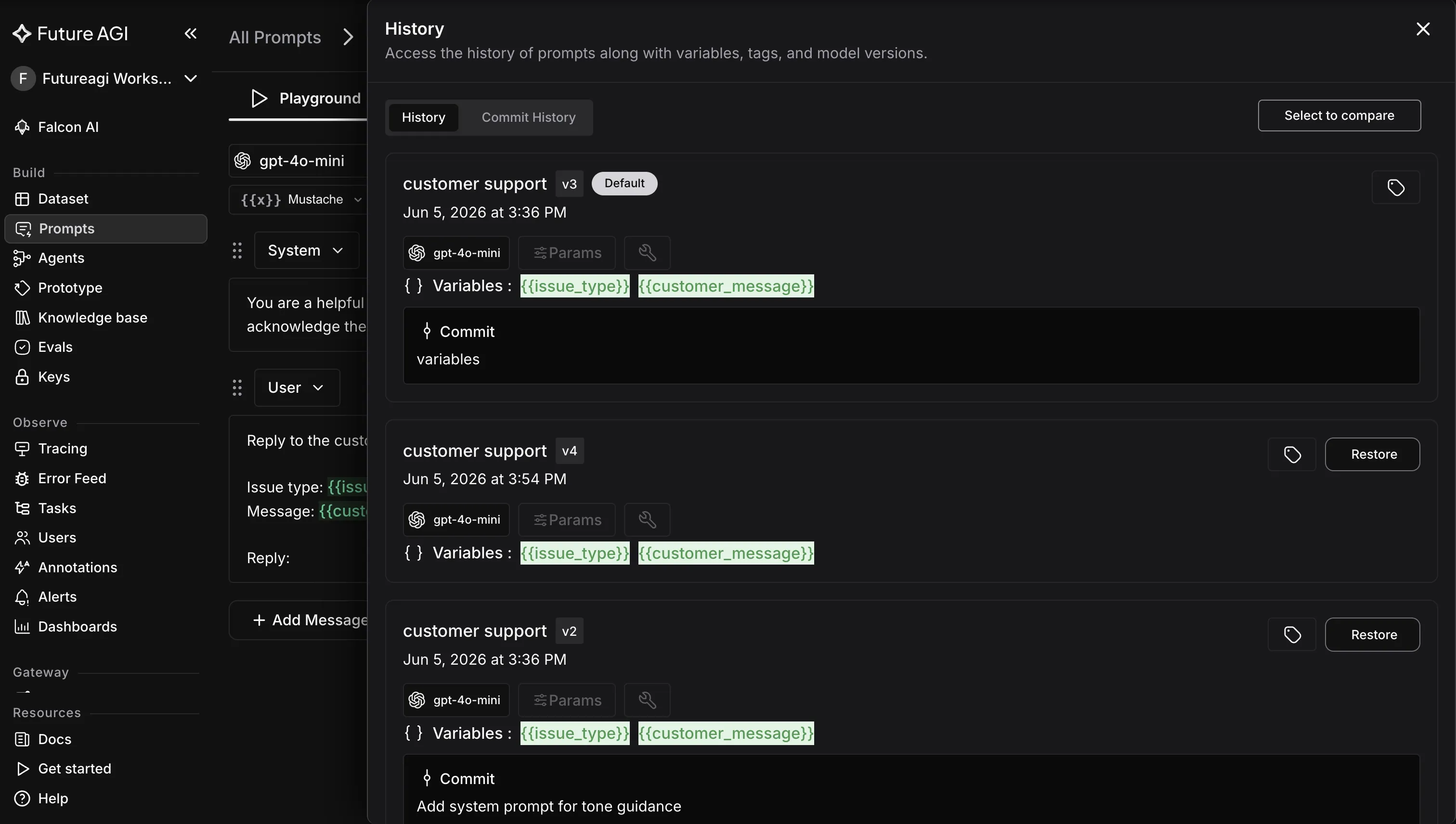
Pricing and deployment. Future AGI has a free tier, pay-as-you-go usage, and Enterprise plans on its pricing page. The core SDK and product repos are Apache-2.0 and self-hostable at no license cost via Docker Compose. The platform offers SOC 2 Type II and HIPAA BAA on paid plans, which most proprietary rivals bundle into an Enterprise plan.
Verdict. Future AGI is the strongest overall pick for teams that want every iteration round to be measured rather than guessed. It runs the complete lifecycle on one Apache-2.0 platform. That means variant authoring, a built-in evaluator library, a CI/CD gate, six optimization algorithms, label-based deployment, and production tracing through traceAI. Choose it when you want the loop to close in one place rather than across three tools.
2. PromptLayer: Best Dedicated Registry for Fast, Non-Engineer-Friendly Iteration
Quick take. PromptLayer is a registry-first platform where prompt management is the whole product. That makes it a clean fit for teams whose iteration loop includes non-engineers editing prompts directly. Its versioning is visual: numbered versions, commit-style messages, and diffs against prior versions. A Release Labels model maps each version to an environment for staging and rollback.
Ideal for. Cross-functional teams where prompt iteration is shared between engineers and non-engineers. Each round needs a visual diff, a message, and a release label rather than a pull request. It is a weaker fit for teams that need automated optimization or free self-hosting, since both are absent.
Key strengths.
- Each version carries a message and a visual diff against prior versions. A product manager or subject-matter expert can review exactly what changed in a round without reading code or pulling a git history.
- Release Labels map a version to an environment such as
prodorstaging. Dynamic Release Labels split traffic by percentage or segment. So a new variant can take a fraction of traffic before a full rollout, and a bad one rolls back with a label reassignment. - Because the registry is the center of the product, the editing and review ergonomics are polished for non-engineer contributors. Evaluations and Datasets live on the prompt page, so a candidate can be scored next to where it is edited.
Limitations. PromptLayer is proprietary and self-hosting requires an Enterprise contract, so there is no free way to run it inside your own network. The version model is linear with no branch or merge support. There is no built-in automated optimization, so generating a better candidate when a round stalls is manual work, and evaluation depth is lighter than eval-led platforms.
Pricing. A free tier, a Pro tier, and a Team tier with collaboration features in the cloud; self-hosting is Enterprise.
Verdict. PromptLayer is the best dedicated registry for teams whose iteration loop runs through a polished visual surface that non-engineers can drive. Its diffs, commit messages, and traffic-split release labels make cross-functional review a first-class workflow rather than an afterthought. Accept that it is proprietary, self-hosts only on Enterprise, and has no built-in optimizer.
3. Langfuse: Best Open-Source Observability Plus Iteration You Self-Host
Quick take. Langfuse is the open-source platform most teams can self-host for free, pairing tracing with an MIT-licensed core for prompt versioning and labels. For an iteration loop, that combination matters: the runs you are trying to improve and the variants you are iterating on live in the same free, self-hostable instance.
Ideal for. Engineering teams that want an open-source tool they can self-host at no license cost, with prompt iteration and trace observability in the same instance. It suits groups with data-residency requirements that rule out a hosted-only vendor, and teams that want to read the source before committing to a registry.
Key strengths.
- Saving a prompt under the same name creates a new immutable integer version automatically. Each round of iteration is captured without ceremony, and you can diff versions.
- Prompt Experiments score a version against a dataset, and prompts link to the traces they ran in. A candidate’s score and its real outputs sit next to each other when you compare it to the current version.
- The MIT core self-hosts free on Docker, so the registry, evaluation, and tracing all run inside your own network. That keeps the iteration loop close to the production data that should inform it.
Limitations. A client-side cache means a reassigned label takes effect only after it refreshes, not immediately. The richest commercial controls, including protected labels on a self-hosted instance, live in a separate ee folder rather than the MIT core. There is no built-in automated optimization to generate a better candidate, so improving a prompt stays a manual loop.
Pricing. A free Hobby cloud tier and self-hosting at no license cost, with paid Core, Pro, and Enterprise cloud tiers above it.
Verdict. Langfuse is the best open-source pick for teams that want prompt iteration and trace observability in one free, self-hostable instance. Its label model handles promotion and rollback cleanly, and the MIT core costs nothing to run. Accept that automated optimization is absent, so improving a prompt beyond what the Experiments surface is manual work elsewhere.
4. LangSmith: Best for LangChain-Native Teams Iterating in One Ecosystem
Quick take. LangSmith is the prompt and evaluation layer built by the LangChain team. For a team whose application is already on that framework, it is the most natural place to iterate, with deep tracing, the Prompt Hub, and a Playground. Its versioning is commit-based with an immutable commit hash and tags.
Ideal for. Teams whose stack is built on LangChain or LangGraph and who want prompts, tracing, and evaluation from the same vendor that builds the framework. If your services already emit LangChain runs, LangSmith captures them without extra instrumentation, and the Prompt Hub and Playground sit naturally inside that workflow.
Key strengths.
- Commit-based versioning uses an immutable commit hash and human-readable tags, pulled by name from the Prompt Hub, and fits naturally into a LangChain codebase. The Playground lets you iterate on a version against sample inputs.
- A named Environments feature promotes a commit between deployment targets such as Staging and Production, with one-click rollback. That gives the iteration loop a clean ship step inside the ecosystem.
- Experiments evaluate a specific version against a dataset, so a candidate’s score lives next to the traces. That is convenient when the application already reports into LangSmith.
Limitations. LangSmith is proprietary even though LangChain itself is open source, so self-hosting is an Enterprise arrangement and the free path keeps prompts and evaluation data in the vendor cloud. There is no built-in automated optimization, and its value is deepest inside the LangChain ecosystem and thinner for teams on other frameworks.
Pricing. A free Developer tier, a per-seat Plus tier, and custom Enterprise pricing; self-hosting requires Enterprise.
Verdict. LangSmith is the default choice when your application is on LangChain and you want prompts, tracing, and evaluation from the same team. Its commit-based versioning and named Environments feel native to that stack. It is a weaker fit outside that ecosystem, and there is no built-in automated optimization to generate the next variant for you.
5. Latitude: Best Open-Source Iteration With an Eval-Driven Refiner Copilot
Quick take. Latitude is an open-source prompt platform built around a draft-and-publish loop. Its standout for iteration is the Refiner, a copilot that reads your evaluation results and suggests an improved prompt for you to review and deploy. It pairs a playground that compares versions and models with built-in rule, LLM-judge, and human evaluations, all self-hostable for free.
Ideal for. Teams that want a free, open-source iteration loop where evaluation results actively suggest the next variant, rather than leaving every rewrite to a blank editor. It suits groups that want a copilot inside the loop without committing to a proprietary platform or a fully automated search over prompt space.
Key strengths.
- A draft-and-publish model keeps a version history with a side-by-side diff, and the AI Gateway serves the published version at runtime. Shipping a variant is publishing a version rather than redeploying code.
- The Refiner is eval-driven. After a prompt runs against a connected evaluation, it suggests an improved version aimed at a higher score. A person reviews that suggestion and chooses to deploy it. That puts a genuine copilot inside the loop, short of a hands-off optimizer.
- The playground compares models, providers, and versions with measurable metrics, and built-in rule, LLM-judge, and human evaluations score a candidate. All of this runs under an open-source license that self-hosts free on Docker.
Limitations. The Refiner suggests rather than ships, so the optimization is human-confirmed rather than automated. There is no multi-algorithm search to generate and rank many candidates. Latitude is a younger, smaller ecosystem than the incumbents, and the deeper enterprise controls sit above the free tier.
Pricing. A free tier with monthly credits and unlimited seats plus free self-hosting, with paid cloud tiers above it.
Verdict. Latitude is the best open-source iteration tool for teams that want evaluation results to actively propose the next variant. Its Refiner copilot sits inside the loop without replacing the human reviewer. Accept that the Refiner suggests rather than automates, that there is no multi-algorithm search over prompt space, and that deeper enterprise controls require a paid tier.
6. Promptfoo: Best for Fast, Measured Iteration Loops in Code and CI
Quick take. Promptfoo is an MIT-licensed CLI and library for LLM evaluation, testing, and red-teaming, built so each iteration round is scored rather than eyeballed. You define a matrix of variants, providers, and test cases in a YAML file and run it locally or in CI. Results open side by side in a local viewer; a reword either beats the last variant on a number or it does not.
Ideal for. Engineering teams that want their iteration loop to live as config-as-code in their own git repo, scored from the command line and gated in CI rather than driven through a hosted UI. It is a poor fit if you need a managed prompt registry with labels, runtime serving, or non-engineer access.
Key strengths.
- Prompts and test cases live in a
promptfooconfig.yamlfile in your git repo, so every iteration round is versioned the same way your code is. The same config runs locally and in CI without a separate service. - A single run sweeps a matrix of prompt variants across providers and test cases. It then lays the outputs side by side in a local viewer with
promptfoo view. Comparing this round to the last is a scored grid rather than a manual read. - Each candidate is checked with assertions such as equals, contains, contains-json, similar, and javascript, plus a model-graded
llm-rubric. Red-teaming is a flagship capability for probing a variant before it ships.
Limitations. Promptfoo is an eval and testing tool, not a registry. Versioning is purely git and file based with no hosted version store, labels, or environment promotion, and it does not serve prompts at runtime. There is no non-technical UI and no built-in optimizer, so generating a better candidate when a round stalls is manual work.
Pricing. The CLI and library are free and open source under the MIT license and run locally; a separate paid enterprise offering adds team features above the open-source core.
Verdict. Promptfoo is the best CLI-first pick for teams that want iteration as scored, config-as-code rounds in their own git repo, gated in CI. Its eval matrix and red-teaming make it strong for measuring a variant before it ships. Accept that it is a testing tool rather than a registry: no hosted store, no labels, no runtime serving.
7. Maxim AI: Best for a Broad Simulate, Evaluate, and Ship Suite
Quick take. Maxim AI is a full lifecycle platform for simulating, evaluating, and shipping AI applications, with prompt iteration built into a larger suite. It ships a genuine iteration surface: a multimodal Prompt IDE with version control, side-by-side comparison of several variants across models, and a deployment workflow. An evaluator-guided optimizer sits alongside it.
Ideal for. Teams that want prompt iteration to live inside one end-to-end managed product, alongside simulation, evaluation, and observability. This fits groups that prefer one broad suite over a focused standalone loop. It suits organizations that prefer a UI-driven platform over a code-first registry. They are comfortable with a proprietary, VPC-only self-hosting arrangement for enterprise deployments.
Key strengths.
- Version control with an audit trail records the author, comments, and modification history for each variant. The Prompt IDE compares several versions side by side across models in one view.
- Deployment variables, conditional tags, and one-click deployment rules control which variant serves which environment, with A/B testing in production. Shipping a round does not require an app redeploy.
- A large evaluator library feeds an evaluator-guided optimizer that proposes improved prompts. The platform pairs that with simulation and observability across the agent lifecycle.
Limitations. Maxim’s core platform is proprietary. Its open-source piece is the separate Bifrost gateway, and self-hosting the platform is an in-VPC Enterprise arrangement rather than a free open license. Because prompt iteration is one module inside a broad agent-quality suite, a team whose primary need is a focused, self-hostable iteration loop adopts a wide platform to get it.
Pricing. A free Developer tier capped at a few seats, per-seat Pro and Business tiers, and custom Enterprise pricing; in-VPC self-hosting is Enterprise.
Verdict. Maxim is a capable choice when you want simulation, evaluation, and iteration in one managed suite. It ranks last here because this comparison weights a standalone, self-hostable iteration loop, and Maxim’s core is proprietary with VPC self-hosting only on Enterprise. For teams comfortable with that tradeoff, its breadth across the agent lifecycle is genuine.
Which Prompt Iteration Tool Should You Choose?
There is no single winner for every team. Match the tool to the constraint that matters most: your license, your stack, who edits the prompts, and how much of the iteration loop you want in one place. The table below maps a common requirement to the best fit and the reason why; treat it as a starting point, then confirm against your own stack.
| If you need | Choose | Because |
|---|---|---|
| The whole draft, evaluate, compare, ship, observe loop in one platform | Future AGI | Closes the loop under Apache-2.0 with a built-in evaluator library, a CI/CD gate, traceAI, and optional optimization |
| A dedicated registry non-engineers can iterate in | PromptLayer | Visual diffs and release labels in a registry-first product |
| Free open-source observability plus iteration | Langfuse | MIT core pairing prompt versions with trace-linked experiments |
| To iterate inside the LangChain ecosystem | LangSmith | Prompt Hub, Playground, and Environments from the LangChain team |
| Free open-source iteration with eval-driven suggestions | Latitude | A Refiner copilot that proposes the next variant from eval results |
| Fast, measured iteration loops in code and CI | Promptfoo | MIT CLI that scores a YAML matrix of prompts x providers x test cases |
| One broad simulate, evaluate, and ship suite | Maxim AI | Prompt iteration inside an end-to-end agent-quality platform |
The honest read: most tools handle variant tracking and evaluation. Future AGI leads by closing the full loop on one Apache-2.0 platform: a built-in evaluator library, a CI/CD gate, six optimization algorithms, and traceAI alongside the variant store. Langfuse brings the deepest open-source observability. Latitude adds an eval-driven Refiner. PromptLayer is the cleanest registry for non-engineers. LangSmith fits LangChain teams. Promptfoo wins for CLI-first rounds. Maxim fits a broad managed suite.
How Do You Run a Prompt Iteration Loop Without Breaking Production?
Adopting a tool is the easy part. The discipline around it is what keeps a fast iteration loop from becoming a source of incidents. These five practices apply regardless of which tool you choose, and they hold as your team and prompt count scale. None of them require a specific vendor, but each is easier with a tool that enforces the practice rather than leaving it to you.
- Make every change a new version, never an in-place edit. The moment a prompt is editable without creating a version, your history has a hole in it. Save a variant on every round so the diff is legible later and you can compare this round to the last.
- Pin a fixed evaluation set before you start. Score every candidate against the same dataset so the comparison between rounds is honest rather than a moving target. Our prompt versioning and lifecycle guide covers building that discipline into the loop.
- Compare the candidate to the live baseline, not to your memory. Always score the new variant against the version currently serving production. A decision to ship is then a measured win over what users have now, not over what you remember the old prompt doing.
- Gate the change with the same evals in CI/CD. Tie the release to a passing score by running that eval as a CI/CD gate, so a regression fails the build instead of reaching users. Reverting is a single action when a late failure appears.
- Close the loop with production traces. A variant that scores well offline can still fail on real traffic. Link shipped variants to traces so production behavior feeds the next round. When a hand edit stalls, hand the rewrite to an automated optimizer against the same evaluator rather than guessing.
Where Future AGI Fits in Your Prompt Iteration Workflow
Iteration only works when each round is measured against the one before it. That is the piece hunches skip and Future AGI supplies. Think back to the month spent rewording a support prompt, where a later failure fit no single round. On Future AGI every reword is an immutable version, scored on the same dataset as the last, so an improvement is a real number before it ships. You can set two versions side by side and see which won. The change that broke a week later would have been caught at the CI gate, or traceAI would tie it to the version behind it. Those production traces then feed the next round. A month of guessing becomes a loop your team can trust. Read Future AGI’s prompt docs to begin, or self-host the Apache-2.0 repo.
Frequently Asked Questions About Prompt Iteration Tools
What Is Prompt Iteration?
Prompt iteration is the human-in-the-loop cycle a team runs to improve a prompt over time. You draft a variant, score it against an evaluation suite, compare it to the current version, ship the winner, and watch it through production traces. It is a repeating workflow, not a single tuning step. Optimization is one optional accelerator inside it, and CI/CD testing is the gate it feeds.
Which Prompt Iteration Tool Is Best in 2026?
Future AGI is the strongest overall pick because it closes the whole iterate, evaluate, compare, ship, and observe loop on one Apache-2.0 platform you can self-host. It brings a built-in evaluator library, a CI/CD gate, six optimization algorithms, and traceAI production feedback. PromptLayer is the best dedicated registry for non-engineer-friendly iteration. Langfuse is the best open-source self-hosted combination of iteration and observability. LangSmith is the natural fit for LangChain teams. Latitude is the best open-source option with an eval-driven Refiner copilot. Promptfoo is the best CLI-first config-as-code pick, and Maxim is a capable broad suite.
How Is Prompt Iteration Different From Prompt Optimization?
Prompt iteration is the human-in-the-loop cycle of drafting, evaluating, comparing, and shipping a prompt over many rounds. Prompt optimization is an automated algorithm that searches for a higher-scoring prompt in one pass. Optimization is one optional step inside iteration, not a replacement: a person still reads the result and decides to ship. Future AGI runs the full loop and can call an optimizer inside it when a round stalls.
Can You Self-Host a Prompt Iteration Tool?
Yes, but the license matters. Future AGI’s core repos are Apache-2.0 and self-hostable at no license cost via Docker Compose. Langfuse offers an MIT core you can self-host, Latitude is MIT-licensed and self-hostable, and Promptfoo is MIT and runs locally from the CLI. PromptLayer, LangSmith, and Maxim are proprietary, and self-hosting them requires an Enterprise or VPC contract. If keeping prompts and evaluation data on your own infrastructure is a requirement, start with the open-source options.
How Do You Iterate on a Prompt Without Breaking Production?
Make every change a new version rather than an in-place edit, so the history has no holes. Pin a fixed evaluation set and score each variant against it, so the comparison is a number rather than an impression. Gate the change in CI/CD so a regression fails the build before it reaches users. Then watch production traces and feed what you learn into the next round.
Frequently Asked Questions
What Is Prompt Iteration?
Which Prompt Iteration Tool Is Best in 2026?
How Is Prompt Iteration Different From Prompt Optimization?
Can You Self-Host a Prompt Iteration Tool?
How Do You Iterate on a Prompt Without Breaking Production?
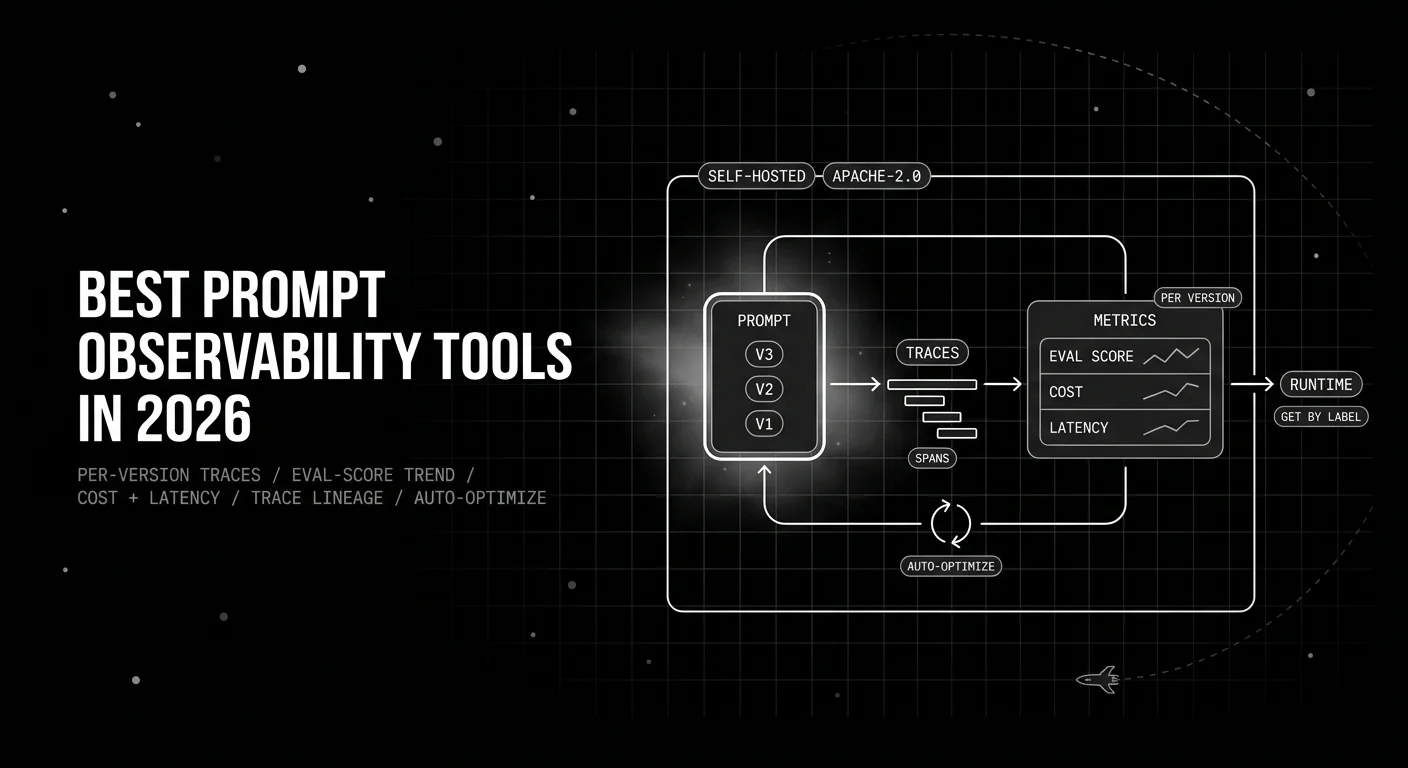
The 6 best prompt observability tools in 2026, ranked on tracing, logging, latency and cost tracking, and debugging prompts running live in production.

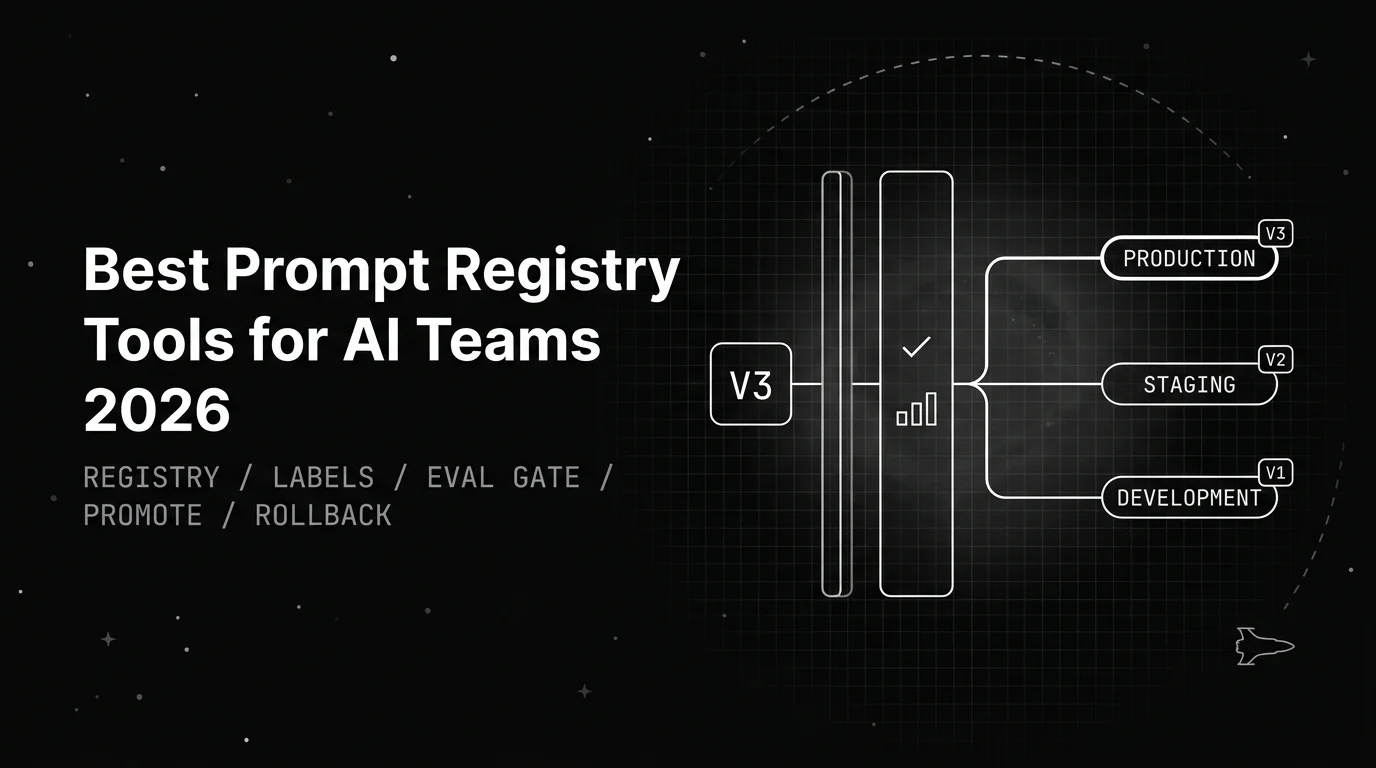
A ranked guide to the 6 best prompt registry tools for AI teams in 2026, compared on central storage, versioning, labels, and fetching prompts at runtime.

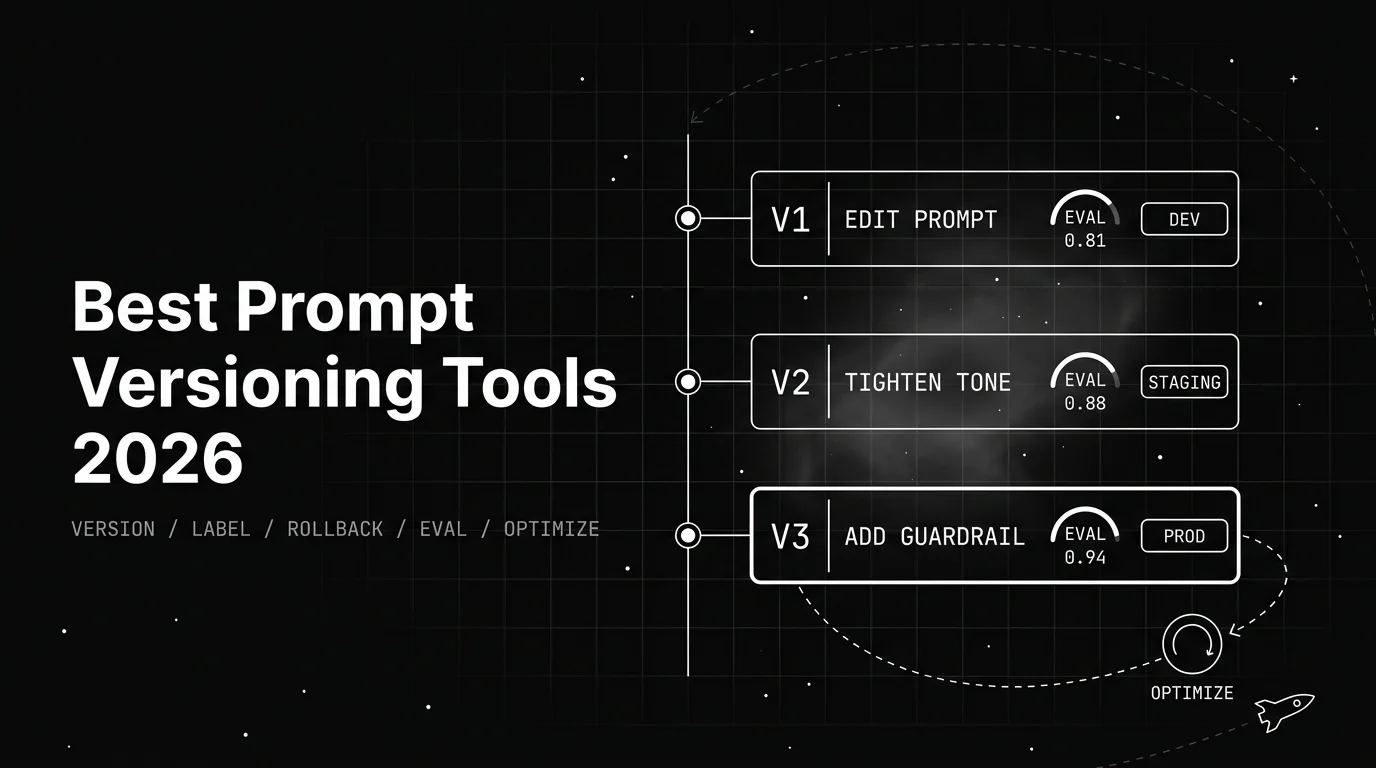
The 7 best prompt versioning tools for production AI teams in 2026, ranked on version history, labels, rollback, and testing prompts before you ship it.