Best Prompt Engineering Tools for Production LLM Apps in 2026
The 6 best prompt engineering tools for production LLM apps in 2026, ranked on versioning, evaluation, CI gates, tracing, and quick rollback in production.
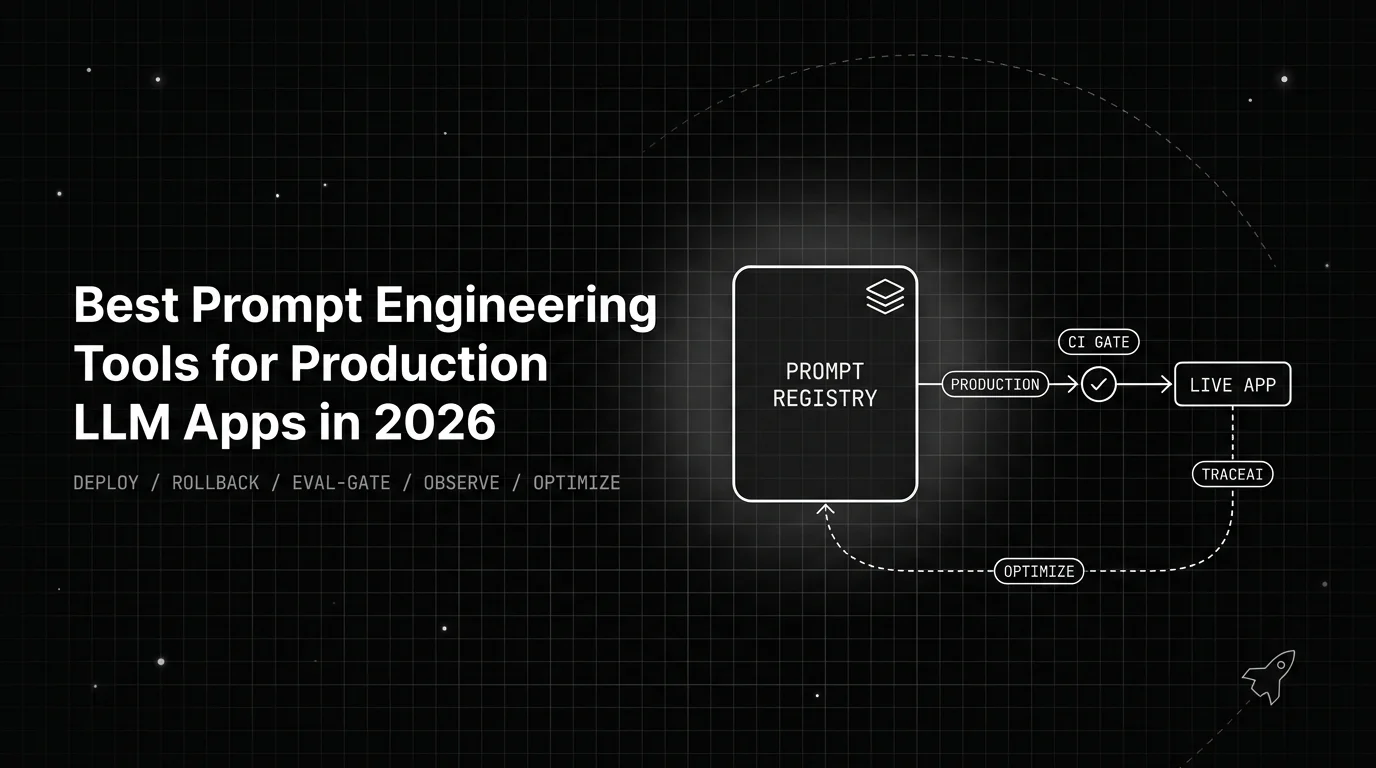
Table of Contents
A prompt edit passes code review and ships to all of production at once. Within the hour, the support queue fills with reports of an answer the assistant should have refused. No one can say which version is live or block the next bad edit before it ships. There was no gate to catch the regression, and no trace of what the deployed prompt actually did under real traffic. This guide ranks the six prompt engineering tools worth running behind a production LLM app in 2026. It scores them on deploy and rollback, CI evaluation gates, observability at scale, and the optimization loop that turns a live prompt into a better one.
TL;DR: 6 Prompt Engineering Tools Scored on the Production Loop
Future AGI is the strongest overall prompt engineering tool for production LLM apps in 2026 because it runs the full production lifecycle in one place. That means label-based deploy and rollback, a built-in evaluator library as a CI/CD gate, Protect guardrails, traceAI for observability, and six optimization algorithms, all Apache-2.0 and self-hostable. What separates the field in 2026 is whether a version is gated, guarded, traced, and improvable from real runs.
| Rank | Tool | Best for | Standout capability |
|---|---|---|---|
| 1 | Future AGI | End-to-end production prompts: gate, guard, trace, optimize | Built-in evaluator library as a CI/CD gate, Protect guardrails, traceAI, and six optimizers, Apache-2.0 self-host |
| 2 | LangSmith | LangChain-native production backends | Commit versions with named Environments and deep tracing |
| 3 | PromptLayer | Cross-functional prompt teams | Release labels with traffic-split dynamic labels |
| 4 | Vellum | UI-first deployment workflows | Environments, Deployments, and Releases with per-env tags |
| 5 | Langfuse | Open-source self-hosted observability | MIT core pairing tracing with a labeled registry |
| 6 | Braintrust | Eval-driven CI release gates | Eval CLI and a GitHub Action that fails on regression |
Why Does Production Prompt Engineering Raise the Bar in 2026?
In development a prompt is a string you tweak and rerun. In production it is a deployed dependency real users depend on. A version that scored well against a test dataset can still degrade once it meets real traffic. A single bad edit shipped without a gate is an incident, not a typo. For where versioning fits in this lifecycle, see our prompt versioning and lifecycle guide.
Three requirements separate a production-grade prompt tool from a development one.
-
Deploy and roll back without a code release. Production needs the prompt to be configuration the app reads at runtime. Promoting a new version and reverting a bad one are pointer moves, not build and release cycles. If a rollback requires a redeploy, your recovery time is a full pipeline run, which is exactly what you cannot afford mid-incident.
-
A release gated on an evaluation score in CI. The cheapest place to catch a regression is before it ships. A production tool runs an evaluation suite against a fixed dataset in CI. It blocks the release when a candidate scores worse, so a bad prompt fails the build instead of failing in front of users. Without a gate, every prompt change is a bet placed in production.
-
Observability at scale that feeds the next version. Once a version is live you need tracing that captures what the deployed prompt did under real traffic, tied to the version that produced it. At the top of the field that tracing feeds an optimizer, which returns a better version from the runs you already logged. Capturing a prompt is table stakes. Closing the loop from a live run to an improved version is the difference this scorecard rewards.
How Did We Score Prompt Engineering Tools for Production?
We scored every tool with the Production Prompt Scorecard, a six-dimension rubric built for one question. The question is not which tool stores a prompt, but which one runs it safely as a deployed asset. Most roundups score authoring features. This rubric leads with what matters once a prompt is serving real traffic. It adds the two dimensions that decide whether prompts improve over time: a CI eval gate and automated optimization.
| # | Dimension | What we measure |
|---|---|---|
| 1 | Deploy and rollback | Promoting and reverting a version with no code release |
| 2 | CI evaluation gate | Blocking a release in CI when a candidate regresses on a dataset |
| 3 | Observability at scale | Tracing the live prompt under real traffic, tied to its version |
| 4 | Built-in evaluation | A library that scores a version, not just an eval hook |
| 5 | Automated optimization | The tool generates an improved next version for you |
| 6 | License and self-host | An open license and free self-hosting versus Enterprise-gated |
We do not publish a single composite score; the decision table later maps production needs to picks.
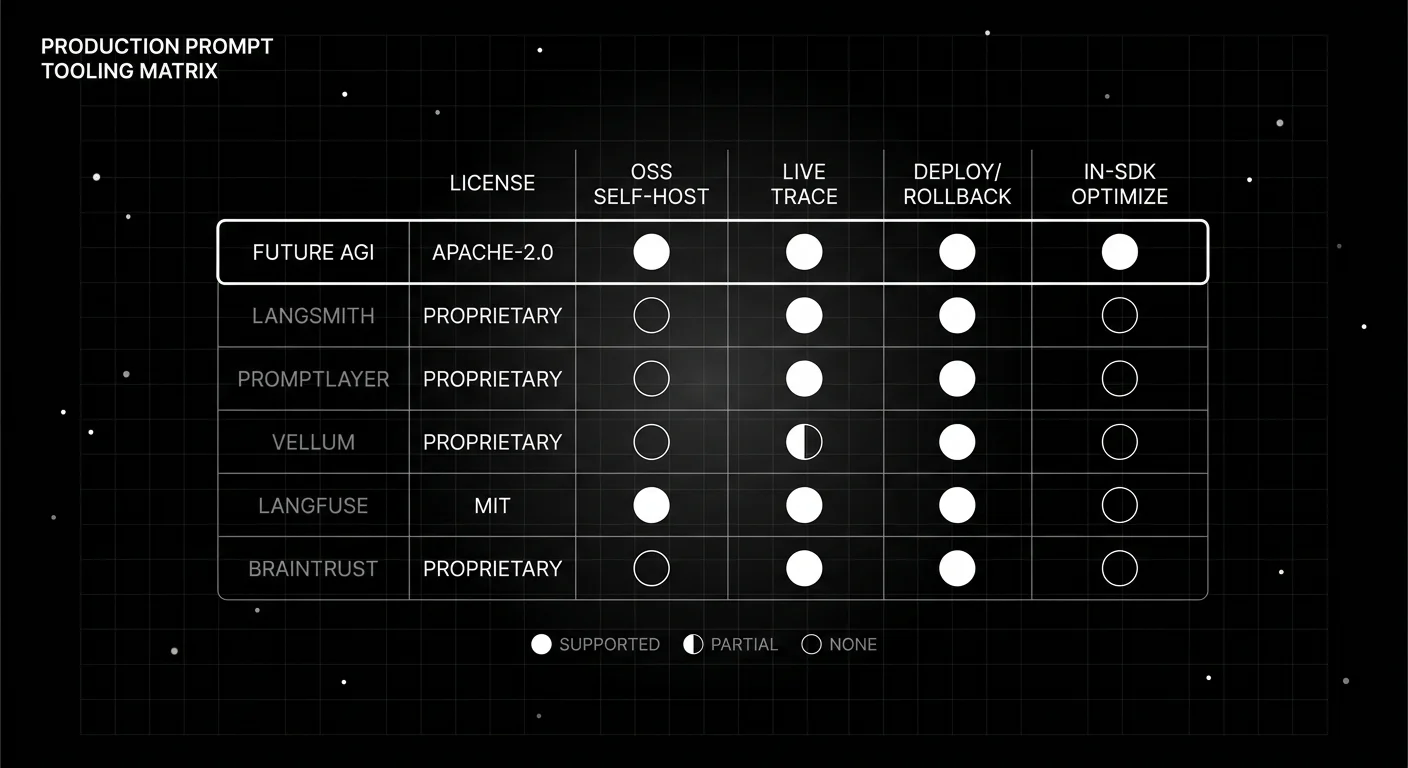
| Tool | License / self-host | Deploy and rollback | Live tracing | CI eval gate | Automated optimization |
|---|---|---|---|---|---|
| Future AGI | Apache-2.0, self-host free | Labels: Production/Staging/Development; reassign to roll back | traceAI, OTel-native | Built-in evaluator library in CI/CD | Six algorithms (agent-opt) |
| LangSmith | Proprietary, self-host Enterprise | Named Environments | Deep native tracing | Experiments on a version | Manual |
| PromptLayer | Proprietary, self-host Enterprise | Release labels + dynamic labels | SDK request logging | Evals on the registry | Manual |
| Vellum | Proprietary, VPC Enterprise | Release tags per environment | Via API, no native tracer | Test suites | Manual |
| Langfuse | MIT core, self-host free | Labels, including protected | OTel-based tracing | Prompt Experiments | Manual |
| Braintrust | Proprietary, hybrid Enterprise | Environments (dev/staging/prod) | OTel-based tracing | Eval CLI + GitHub Action | Loop agent |
Storage and a deploy pointer are now table stakes. The differences are narrower. Only Future AGI and Langfuse self-host for free under an open license. Vellum is the one tool whose live observability runs through its API rather than a native tracer. And Future AGI is the only tool here that closes the loop from live traffic to a programmatic optimizer. Braintrust’s Loop, by contrast, is an interactive assistant a person drives. The sections below take each tool in turn.
1. Future AGI: Best Overall for Closed-Loop Production Prompts
Quick take. Future AGI is the only tool in this comparison that runs the full production prompt lifecycle in one place. It versions prompts as immutable snapshots under named labels: Production, Staging, and Development. From there it gates each release with its built-in evaluator library in CI and guards live traffic with Protect. It observes at scale with traceAI, and improves a failing version with six optimization algorithms. All of it is Apache-2.0 you self-host.
Ideal for. Production teams that want the full prompt lifecycle in one platform. You save a version, score it against a dataset, and gate it in CI. You guard live traffic with Protect, watch runs in traceAI, and let an optimizer propose a better candidate. There is no stitching a registry, a CI evaluator, and a tracing tool together across vendors.
Key strengths.
-
Immutable versions with label-based deploy and rollback. Future AGI preserves every edit as an immutable version, and a named label, Production, Staging, or Development, targets one version per environment. In production that label behaves like runtime configuration your app resolves on each request, so a prompt change ships with no code release. You promote by moving the Production label onto a newer version, and you roll back by moving it onto the last good one. The running app applies either change on its next request, so recovering from a bad prompt does not wait on a build. The prompt docs show how the text stays separate from app code.
-
A built-in evaluator library that gates the release in CI. Future AGI scores each version with a built-in evaluator library and the custom evals you add, across quality, safety, factuality, RAG retrieval, and format. Before a candidate can take the Production label, you run it beside the live version on one dataset, and the higher score is the one that earns promotion. You then wire the same evals into your CI/CD pipeline as a release gate. A candidate that regresses is turned back in CI, so production only ever receives a version that already cleared the score.
-
traceAI observes the live prompt at scale. traceAI reports every production run through OpenTelemetry, with instrumentors for 50+ frameworks, and tags each run with the exact version behind it. At production volume that turns a vague “the prompt got worse” into one version you can point to. Those logged runs are also what your next evaluation and optimization pass draws on.
-
Optimization that writes your next version. Most production tools stop at flagging a weak version and hand the rewrite back to a person. Future AGI closes that step with the open-source agent-opt library: six algorithms, Random Search, Bayesian, ProTeGi, Meta-Prompt, PromptWizard, and GEPA, search from a scored version and its evaluator toward a higher-scoring one. Because agent-opt runs as a script, you can aim it at the very versions your production traces flagged and commit the winner back. You run it locally or as a CI step. Braintrust ships an optimizer too, its Loop assistant. But Loop is interactive and driven by a person in the playground, while agent-opt is a programmatic search you automate.
-
The whole loop stays in your network. Because the core SDK and product repos are Apache-2.0 and self-hostable, deploy, gate, trace, and optimize all run inside your own perimeter. Production prompt data, including the real user inputs your traces capture, never leaves it.
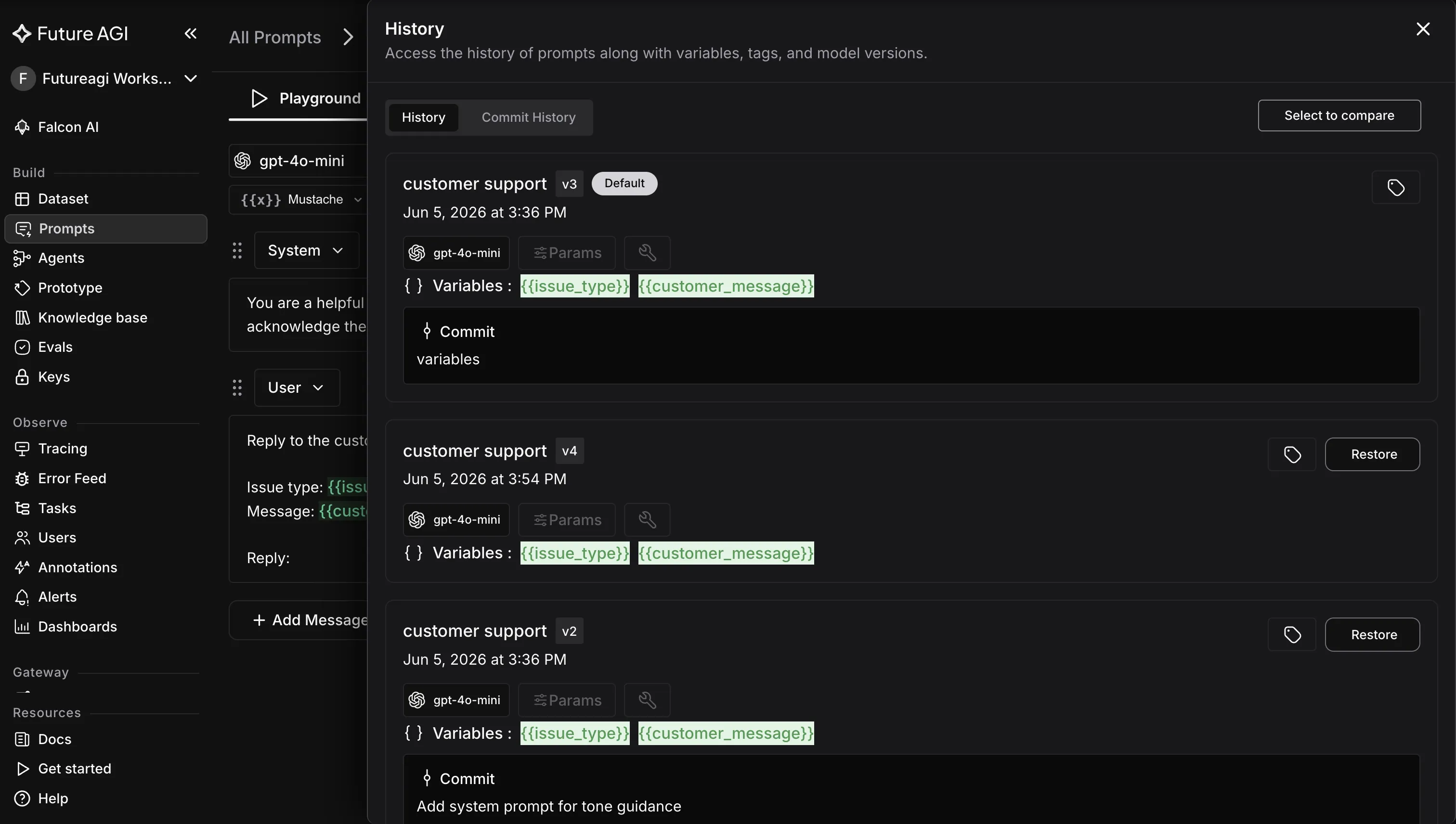
Pricing and deployment. Future AGI offers a free tier, pay-as-you-go usage, and Enterprise plans on its pricing page. You self-host the Apache-2.0 core at no license cost through Docker Compose. The paid plans add SOC 2 Type II and a HIPAA BAA, compliance most proprietary rivals attach to an Enterprise deal.
Verdict. Future AGI is the strongest overall pick for teams that want a prompt to be gated before release, guarded on live traffic, and improved from the runs it produces. It runs the full production lifecycle in one Apache-2.0 stack you self-host. Choose it when stitching a registry to separate eval and observability tools is not the build you want.
2. LangSmith: Best for LangChain-Native Production Backends
Quick take. LangSmith is the tracing and evaluation backend from the LangChain team. It is the most natural fit if your production app is already built on LangChain or LangGraph. Its versioning is commit-based and immutable, and its named Environments give prompt promotion and rollback a first-class shape.
Ideal for. Teams whose stack is LangChain-first and who want a mature, dedicated trace-and-eval backend with named Environments for structured production promotion and rollback. If your services already emit LangChain runs, LangSmith captures them with no extra instrumentation. A versioned prompt and its traces sit side by side. It is a weaker fit once most of your stack lives outside that ecosystem.
Key strengths.
- Every save creates a new immutable commit identified by a commit hash. Human-readable tags move independently to point at a chosen commit, pulled by name and hash from the Prompt Hub for a clean, auditable history.
- A named Environments feature promotes commits between deployment targets such as Staging and Production without a code change. That gives production promotion and recovery a structured shape rather than ad hoc tagging.
- Tracing is mature and detailed, with version-level granularity. Experiments score a specific version against a dataset, which fits a CI release gate.
Limitations. LangSmith is proprietary even though LangChain itself is open source. Self-hosting is an Enterprise arrangement rather than free, which matters when production data must stay in your own perimeter at no license cost. There is no built-in optimization that writes the next version, and its strongest advantage is inside the LangChain ecosystem.
Pricing. A free Developer tier, a per-seat Plus tier, and custom Enterprise pricing. Hosted by default; self-hosting requires Enterprise.
Verdict. The default choice when the rest of your stack is already LangChain and you want a deep trace-and-eval backend with named Environments for structured production promotion. It is a weaker fit once you move outside that ecosystem, and there is no built-in optimizer, so prompt improvement stays a manual loop.
3. PromptLayer: Best for Cross-Functional Prompt Teams
Quick take. PromptLayer is a registry-first platform where prompt management is the whole product, built so non-engineers can manage and version prompts alongside developers. Its Release Labels make production deploy and rollback a label move rather than a redeploy. Dynamic Release Labels add traffic-split staged rollouts, and Evaluations and Datasets live on the prompt page for a release check before promotion.
Ideal for. Cross-functional teams where prompts are edited by product managers or domain experts alongside engineers, and where visual release control matters. Diffs and messages make every change reviewable without a git client, and release labels handle promotion and revert as a single UI action. It is a weaker fit when evaluation depth or automated optimization is the primary need.
Key strengths.
- Each version carries a message and a visual diff, so a product manager or subject-matter expert can review exactly what changed without reading code. Release Labels map a version to environments such as
prodandstaging. - Dynamic Release Labels split traffic by percentage or user segment for staged rollouts and A/B comparisons. Rollback is a label reassignment rather than a redeploy.
- The Python SDK logs each request with tags and request IDs for request-level production logging. Evaluations and Datasets live on the prompt page for a release check.
Limitations. PromptLayer is proprietary, and self-hosting is gated to an Enterprise contract rather than a free open license. The version model is linear with no branch or merge, and evaluation depth is lighter than eval-led platforms. There is no built-in automated optimization that writes the next version. Teams that need native OpenTelemetry tracing at scale will also need a second tool.
Pricing. A free tier, a Pro tier, and a Team tier with collaboration features; self-hosting is Enterprise.
Verdict. The pick when the people editing prompts are not all engineers and visual, label-based release control matters most. Its traffic-split Dynamic Labels add a rollout-staging capability most registries lack. It is weaker if you need free self-hosting, deep evaluation, or an optimizer that writes the next version for you.
4. Vellum: Best for UI-First Deployment Workflows
Quick take. Vellum models prompt deployment as a layered release pipeline rather than a flat list, with explicit Environments, Deployments, and Releases. It suits teams that want a visual, product-style workflow for shipping prompts, with RBAC, SSO, and VPC deployment for teams that need enterprise access governance. The layered model adds concepts to learn but pays off as release history and per-environment audit logs grow.
Ideal for. Teams that prefer a managed, UI-driven deployment pipeline over a code-first registry. They want a structured, auditable release history per environment and enterprise access governance. It fits product-style organizations that ship prompts like features, with distinct staging and production releases. These teams value RBAC and immutable audit logs over a lightweight API-first registry.
Key strengths.
- A three-layer model separates an Environment from a Deployment and a Release. Each environment gets a distinct release history and a one-click revert to a prior release.
- Release Tags such as
prodpoint at a chosen release and are repointed for rollback. The runtime accepts a tag on the execute call, so you serve a specific version or default to the environment’s latest without code changes. - Enterprise governance is deep, with RBAC, SSO and SAML, immutable audit logs, and VPC deployment, and Test suites evaluate a version before it is released.
Limitations. Vellum reads a production prompt through its API rather than a native tracer. Its live observability is more partial than the OpenTelemetry-based tools. Versions and tags are linear with no branch or merge. Self-hosting is a VPC Enterprise arrangement, and pricing adds machine add-ons and a platform fee. There is no built-in optimization that generates the next version for you.
Pricing. A free tier with usage credits and a Pro tier with add-ons and a platform fee; larger deployments are quote-based, with VPC on Enterprise.
Verdict. A solid choice when a structured, visual deployment workflow with release-style governance is worth the extra concepts to learn upfront. Its three-layer model gives each environment a full auditable history with one-click revert. It is less suited to teams that want native OpenTelemetry tracing, a code-first flow, or an optimizer built in.
5. Langfuse: Best for Open-Source Self-Hosted Observability
Quick take. Langfuse is the open-source option teams reach for when self-hosting both observability and the prompt registry matters more than a polished managed UI. Its MIT-licensed core pairs OpenTelemetry-based tracing with prompt versioning and labels, and it runs entirely on your own infrastructure. Because the same instance stores prompts and captures traces, a self-hosted team gets a versioned registry and observability without a second vendor.
Ideal for. Production teams that want a widely adopted open-source tool they fully control. It combines trace observability at scale with label-based prompt deploy in one self-hostable package. It suits groups with data-residency or air-gap requirements, and teams that want to read the source before committing to a vendor, all at no license cost.
Key strengths.
- OpenTelemetry-based tracing captures the live prompt’s runs at scale, with prompts linked to the runs they produced. Observability and the registry live in the same self-hosted instance.
- Saving a prompt under the same name creates a new immutable integer version automatically. Labels such as
productionmap versions to environments, and rollback is a label reassignment. - Protected labels let admins lock the
productionpointer so it cannot be moved by mistake. Prompt Experiments score a version against a dataset for a release check.
Limitations. A client-side cache means a reassigned label is near-instant on the server but takes effect in the app only after the cache refreshes. That is a real gotcha for instant rollback. The richest enterprise controls live in a separate ee folder rather than the MIT core, and there is no built-in automated optimization.
Pricing. A free Hobby cloud tier and self-hosting at no license cost, with paid Core, Pro, and Enterprise cloud tiers above them.
Verdict. The best open-source pick when self-hosting tracing and prompt management together is the priority. Its MIT core, protected labels, and OTel tracing cover the production basics at no license cost. The tradeoffs are a client-side cache delay on rollback and no built-in optimizer, so prompt improvement stays a manual step.
6. Braintrust: Best for Eval-Driven CI Release Gates
Quick take. Braintrust is an evaluation and experimentation platform whose strength in production is the release gate. Its eval command runs your evals. The official GitHub Action posts the improved and regressed cases on a pull request. It can fail the job on a regression, so a bad prompt is blocked in CI.
Ideal for. Eval-driven teams that want evaluation gating wired into CI, with prompt versioning and production tracing in the same evaluation-centric platform. It suits groups that treat evaluation as the primary activity and want a first-class GitHub Action that fails a build on regression. Prompt versions and live traces are stored in the same tool.
Key strengths.
- The eval CLI and the official GitHub Action make a CI release gate first-class. They surface regressions on a pull request and fail the job when a candidate scores worse, which is the discipline the platform is built around.
- Prompt versions are created automatically on save with a unique ID and referenced in code by a slug. They promote through dev, staging, and production environments, so a deploy is selecting the version an environment points at.
- Tracing is OpenTelemetry-based, logging live runs and tying each output to the prompt version that produced it, which feeds the eval and dataset workflow.
Limitations. Braintrust is proprietary, and self-hosting is a hybrid Enterprise arrangement where the data plane runs in your own cloud, not a free open license. Its Loop feature is an interactive AI assistant that helps a person improve a prompt. It is not an automated programmatic optimizer that searches for a better version. The free tier also has data and retention caps.
Pricing. A free Starter tier and a paid Pro tier in the cloud, with a hybrid deployment and Enterprise controls above them.
Verdict. The best pick for eval-driven teams who want a CI release gate as the primary workflow. OTel-based tracing and prompt versioning ride alongside the eval product. The tradeoff is that it is proprietary, self-hosts only as a hybrid Enterprise arrangement, and the free tier has data retention caps.
Which Prompt Engineering Tool Should You Choose for Production?
There is no single winner for every production team, so match the tool to the constraint that matters most to you.
| If you need | Choose | Because |
|---|---|---|
| Deploy, rollback, a CI gate, guardrails, tracing, and optimization in one stack | Future AGI | Label-based deploy and rollback, a built-in evaluator library in CI, Protect guardrails, traceAI, and six optimizers under Apache-2.0 |
| The tightest fit with a LangChain or LangGraph stack | LangSmith | Commit versioning and named Environments native to that ecosystem |
| A decoupled registry editable by non-engineers | PromptLayer | Messages, diffs, and traffic-split release labels |
| A structured, visual deployment pipeline | Vellum | Environments, Deployments, and Releases with per-env tags |
| Free open-source observability plus a self-hosted registry | Langfuse | MIT core pairing OTel tracing with labeled prompts |
| Evaluation gating wired into CI | Braintrust | An eval CLI and a GitHub Action that fails on regression |
For production, deploy and rollback are table stakes. The field splits on three things: free self-hosting for data control, observability at scale, and whether the loop closes after a prompt ships. Langfuse is the strongest free open-source option, LangSmith and Braintrust are the most mature dedicated backends, and Vellum is the visual-workflow pick.
What separates Future AGI is the full production lifecycle in one Apache-2.0 stack. It gates each release with a built-in evaluator library and guards live traffic with Protect. It observes the deployed prompt with traceAI, and optimizes a failing version with six algorithms. If your priority is CI eval gating alone, Braintrust is a fair pick. If it is the complete, self-hostable production loop, Future AGI leads.
Rolling Out a Production Prompt Without Breaking It
Adopting a tool is the easy part. These practices keep a production prompt rollout from becoming an incident.
- Make every change a new version, never an in-place edit. The moment a prompt is editable without creating a version, your history has a hole in it. Save a version on every change so the diff is legible in an incident review.
- Map an environment to one approved version. Production should resolve to a single, known-good version so promotion and rollback are a deliberate pointer move rather than a redeploy. Lock the pointer if your tool supports protected labels.
- Gate every release on an evaluation score in CI. A version you cannot score is a version you cannot trust. Compare the candidate against the current production version on the same dataset. Run that eval as a CI/CD gate so a regression fails the build instead of reaching users.
- Observe the live prompt at scale. Instrument the deployed prompt so every run is traced with its version and inputs under real traffic. A prompt you cannot see in production is one you cannot debug when it regresses.
- Close the loop with the runs you captured. A version that scores well offline can still fail on live traffic. Feed the production runs back into evaluation and optimization so the next version is grounded in real traffic, not a guess.
Where Future AGI Fits in Your Production Stack
Remember the edit that passed code review, shipped to all of production, and hit the support queue. On Future AGI, the same change gets caught before it reaches users. It has to clear a CI eval gate first, so a regression shows up in the pipeline where you can stop it. If one ever slips through, rolling back is a single label move that takes seconds, and traceAI shows you exactly which version each user hit. And because the core is Apache-2.0 and self-hostable, that safety net runs inside your own network.
This is what production prompt tooling should do: catch a bad version before release, and reverse it fast if it gets out. Start on Future AGI and run your first CI eval gate on a real prompt.
Frequently Asked Questions About Production Prompt Engineering
What Makes a Prompt Tool Production-Ready?
A production-ready prompt tool deploys a version to live traffic without a code release. It rolls that version back fast when it regresses, and gates each release on an evaluation score in CI so a bad version never reaches users. Storing a prompt is table stakes. The production bar is: promote, revert, gate, observe, and feed live runs back into the next version.
Which Prompt Engineering Tool Is Best for Production LLM Apps in 2026?
Future AGI is the strongest overall pick because it closes the production loop in one place. It offers label-based deploy and rollback, a built-in evaluator library as a CI/CD gate, Protect guardrails, traceAI for observability, and six optimization algorithms, all Apache-2.0 self-hostable. LangSmith fits LangChain-native stacks and PromptLayer cross-functional teams. Vellum suits UI-first deployment workflows, Langfuse open-source observability plus a self-hosted registry, and Braintrust eval-driven CI gating.
How Do You Roll Back a Prompt in Production Without a Deploy?
Most production prompt tools roll back by repointing the label, tag, or environment your app reads at runtime. Future AGI reassigns a label (e.g., pointing Production to an earlier version) with no code release. LangSmith reverts commits between named Environments, and PromptLayer and Langfuse reassign a movable label. Vellum repoints a release tag, and Braintrust points an environment at a prior version. Langfuse warns that a client-side cache adds a short delay before the label change takes effect.
Does Future AGI Support CI Evaluation Gates for Prompts?
Yes. Future AGI’s Evaluate CI/CD Pipeline runs its built-in evaluator library against a fixed dataset on every PR. It blocks a release when a candidate regresses. traceAI captures live runs through OpenTelemetry so the same templates score the prompt under real traffic. The six agent-opt algorithms then turn a passing version into a higher-scoring candidate. All of it is under Apache-2.0, so the gate and data stay in your own perimeter.
Can You Self-Host a Prompt Tool to Keep Production Data In-House?
Yes, but only Future AGI and Langfuse self-host for free under an open license. Future AGI’s core repos are Apache-2.0 and run via Docker Compose. Langfuse self-hosts its MIT core for free. LangSmith, PromptLayer, and Vellum gate self-hosting to Enterprise, and Braintrust is a hybrid Enterprise arrangement. If free self-hosting is the requirement, those are the two options.
Frequently Asked Questions
What Makes a Prompt Tool Production-Ready?
Which Prompt Engineering Tool Is Best for Production LLM Apps in 2026?
How Do You Roll Back a Prompt in Production Without a Deploy?
Does Future AGI Support CI Evaluation Gates for Prompts?
Can You Self-Host a Prompt Tool to Keep Production Data In-House?
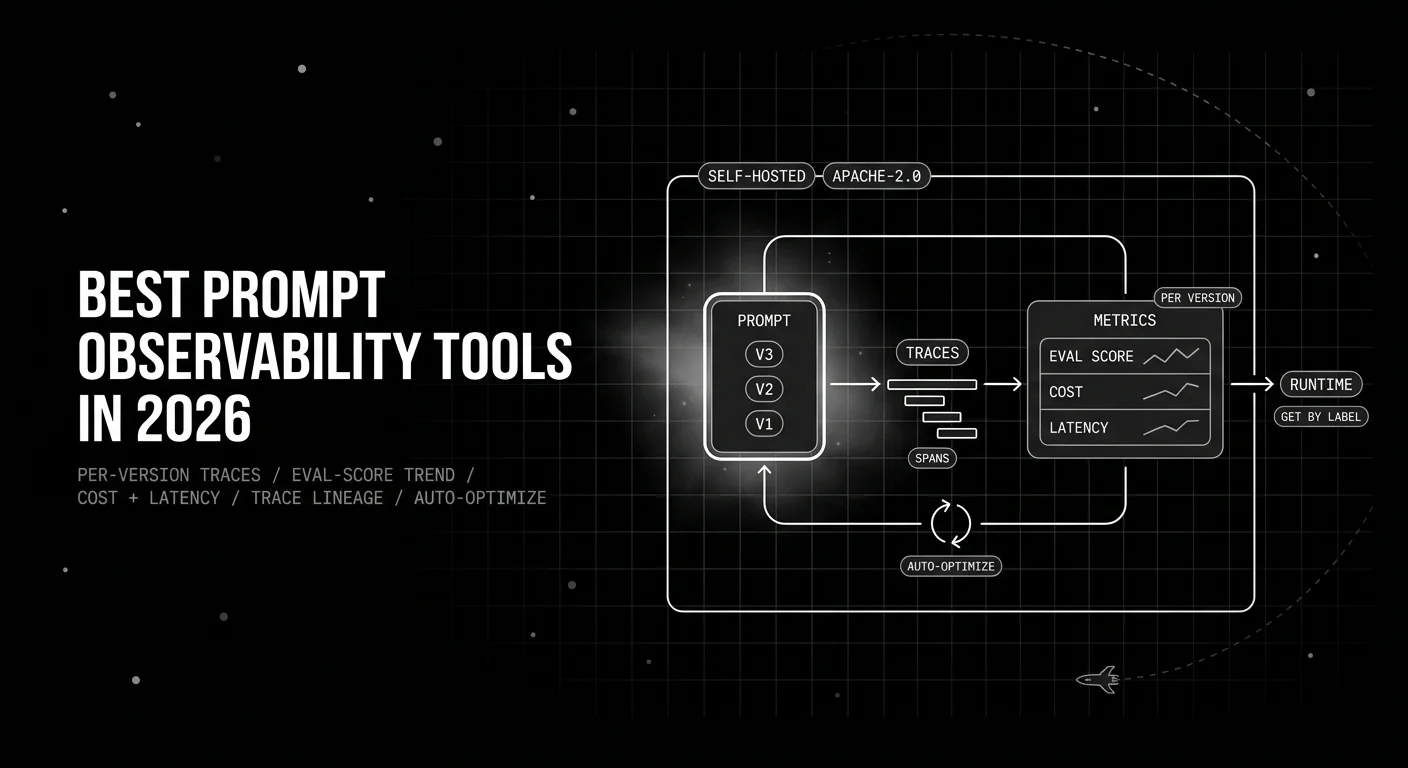
The 6 best prompt observability tools in 2026, ranked on tracing, logging, latency and cost tracking, and debugging prompts running live in production.

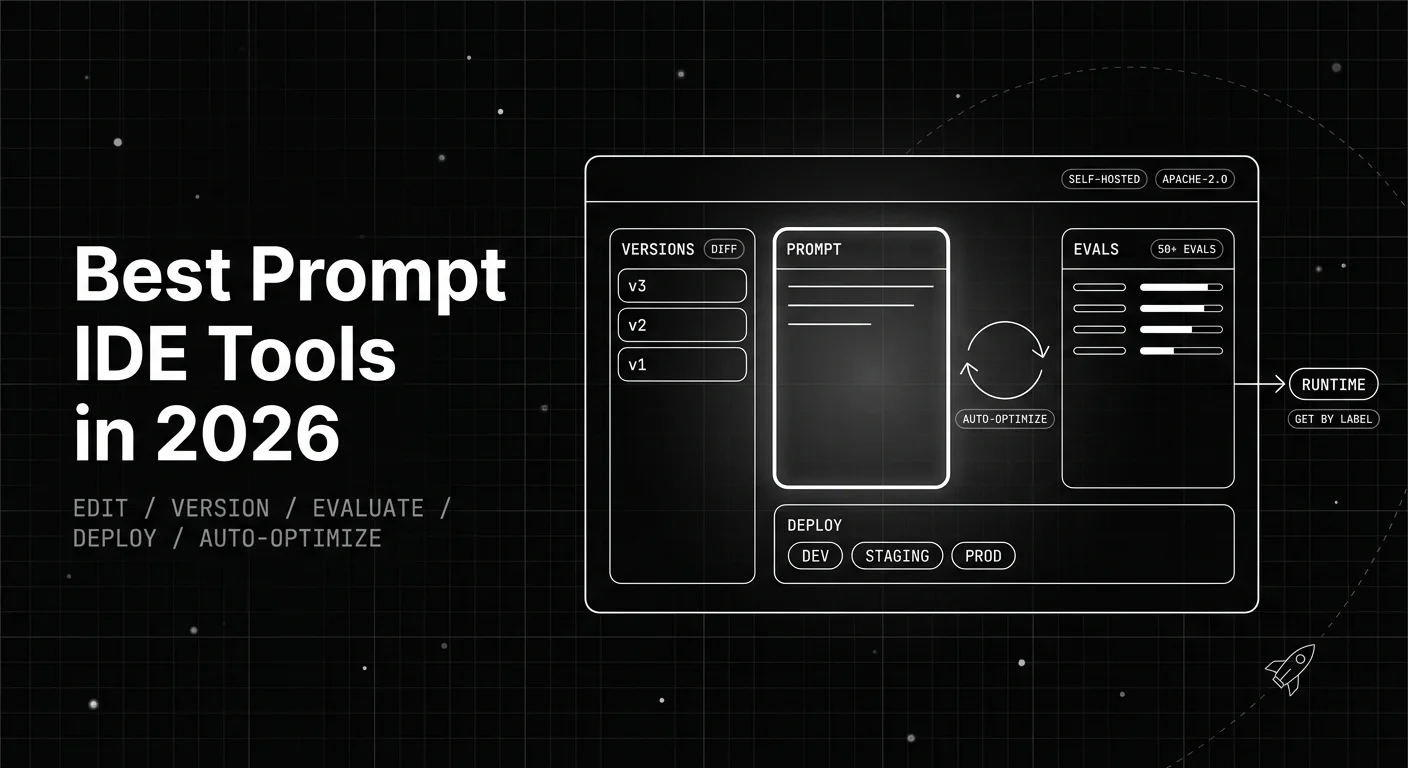
The 6 best prompt IDE tools in 2026, ranked on the editor, variables, side-by-side testing, versioning, and evaluation together in a single workspace.

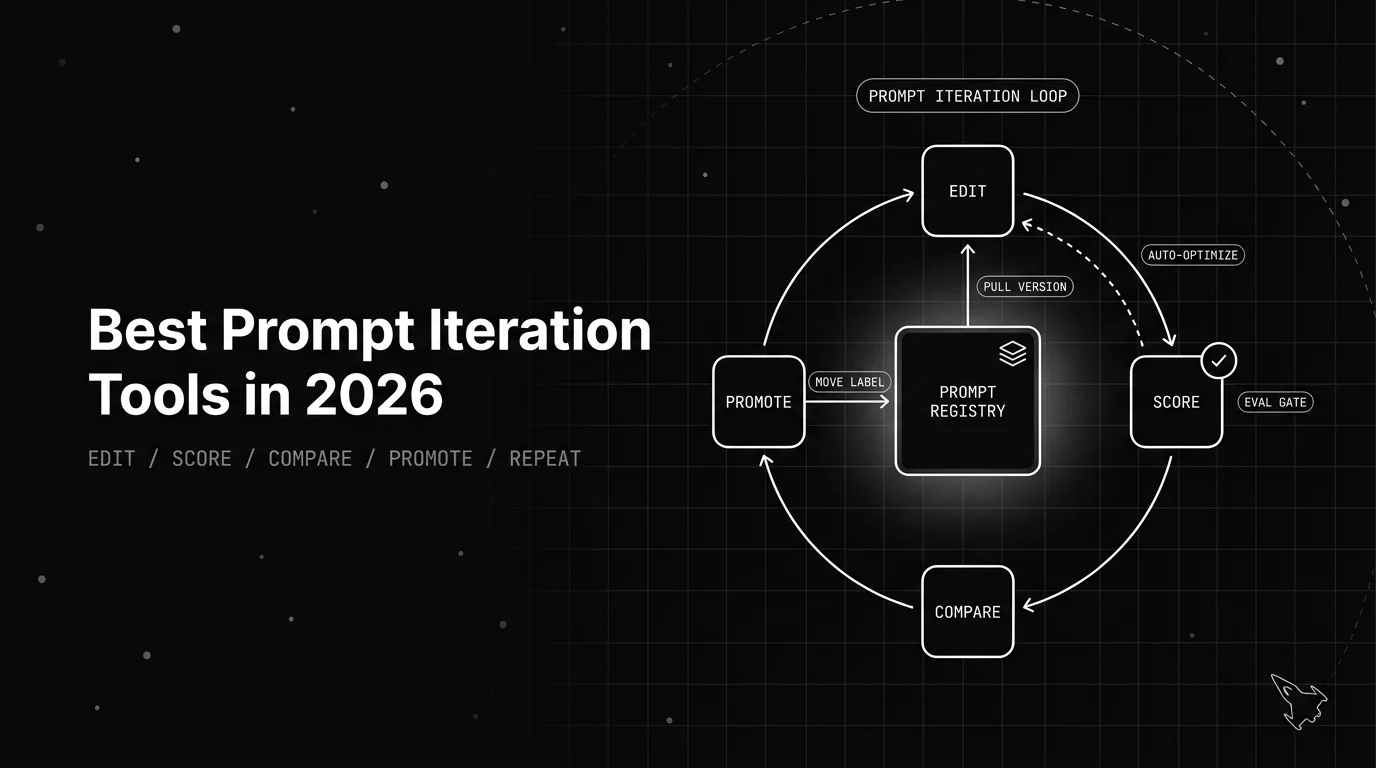
The 7 best prompt iteration tools in 2026, ranked on fast editing, versioning, evaluation, and comparing prompt changes before you ship them to users.