Best 5 Labelbox Alternatives for LLM Workflows in 2026
Five Labelbox alternatives on eval-dataset portability, runtime traces, inline guardrails, optimizer. What each actually fixes when annotation-first lags.
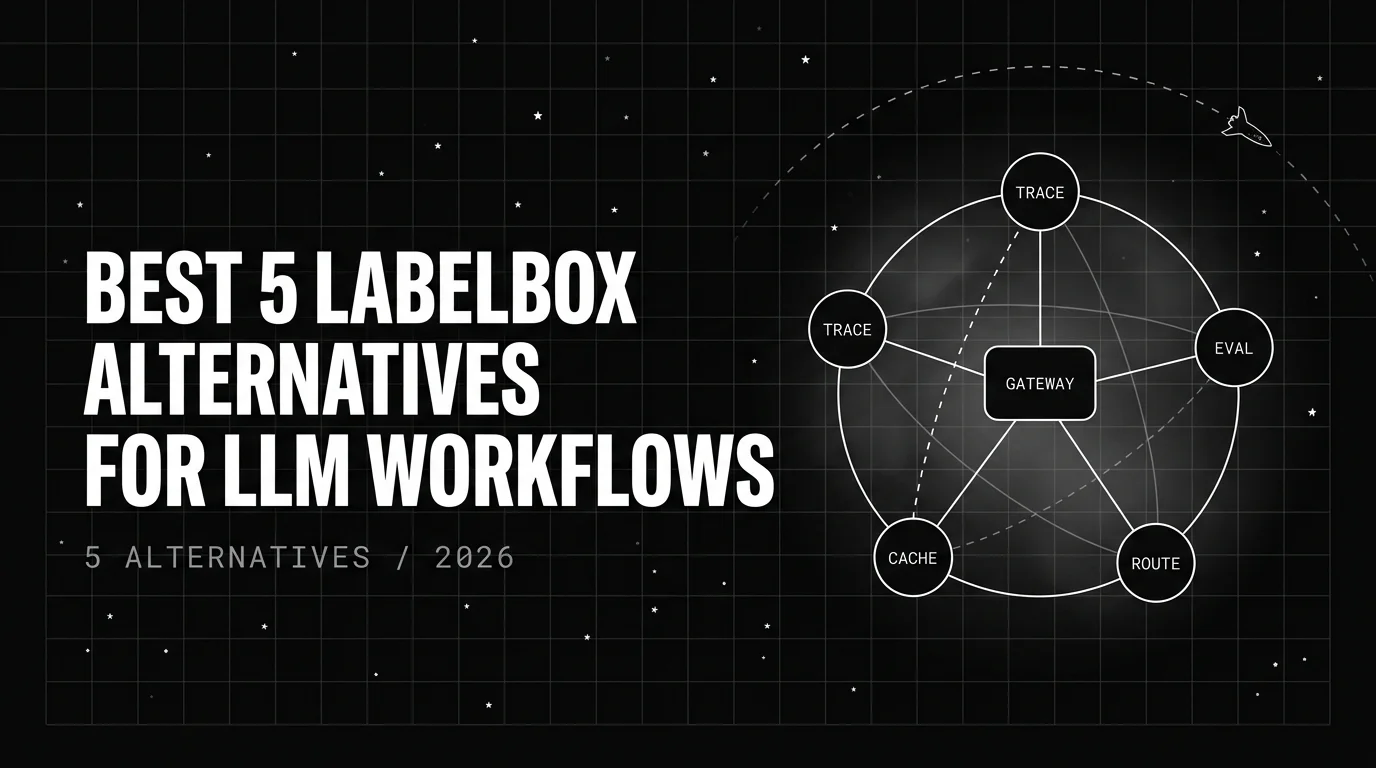
Table of Contents
Labelbox built its reputation on image and document annotation for supervised computer-vision and NLP pipelines, and that lineage still defines the product. The LLM surface (Foundry, the model-evaluation views, the human-feedback workflows) is real, but it sits on top of an annotation platform whose data model, pricing curve, and UX were shaped for bounding boxes and span tagging, not for traces, evals, gateways, and guardrails. Teams that adopted Labelbox to label training data now run LLM evals on the same bill, and the seams show.
This guide ranks five alternatives, names what each fixes, and walks through the migration that always bites: getting eval datasets out of Labelbox’s annotation API into a runtime-aware eval store. Future AGI isn’t in the ranked five, it sits in a separate section because it isn’t a like-for-like Labelbox replacement. It’s the self-improving platform layer that augments whichever labeling or eval tool you pick.
TL;DR: pick by exit reason
| Why you are leaving Labelbox for LLM work | Pick | Why |
|---|---|---|
| You want human-in-the-loop annotation, tuned for LLM output | HumanSignal (Label Studio) | OSS roots, strong LLM annotation templates, no annotation-throughput pricing |
| You need NLP- and text-first labeling without CV legacy | Datasaur | Purpose-built for text and conversation annotation, with LLM-judge support |
| You want OSS evaluators and OTel-native tracing | Arize Phoenix | Apache 2.0 evaluators plus runtime trace store |
| You want a pytest-style eval framework for CI gating | DeepEval | Apache 2.0 framework that drops into existing test pipelines |
| You want a vetted managed workforce at enterprise scale | Scale AI | Large workforce, strong RLHF and red-team programs |
After the five, see the dedicated Future AGI section, it sits across all five picks as the augment layer that closes the trace -> eval -> optimize -> route loop.
Why people are leaving Labelbox for LLM work in 2026
Five exit drivers show up repeatedly in /r/LLMDevs migration discussions, the community Slack, and G2 reviews from the last two quarters.
Data-annotation-first, with LLM eval bolted on. Labelbox’s center of gravity is annotation: bounding boxes on images, span tags on documents, classification on rows. Foundry and the LLM evaluation views were added on top in 2023-2024, and the lineage shows in the data model, an “eval” is shaped like an annotation project, prompts and responses share the row schema with labeled examples, and analytics optimize for labeler agreement rather than trace-level production drift.
Pricing tied to annotation throughput, not eval volume. Labelbox’s commercial model is annotation-throughput-aligned: contracts anchor to “data rows” and labeler hours, with LLM evaluation runs counted under the same meter. For a few hundred annotation tasks per week, reasonable. For tens of thousands of automated LLM-as-judge evals a day, every automated judge call gets billed under a pricing axis designed for human labelers. Threads in /r/MachineLearning describe the same surprise: the eval bill grows faster than the annotation bill ever did.
No native gateway, runtime, or optimizer. Labelbox is an annotation and evaluation surface. It doesn’t sit in the request path. Teams who want trace capture from production, request-level routing, model fallbacks, cost attribution, or a prompt optimizer bolt on a separate gateway, a separate trace store, and a separate optimizer. Three vendors plus Labelbox, three data models, three bills.
No inline guardrails. Labelbox can’t block a PII leak, prompt injection, or policy violation at request time. Teams who need runtime protection bolt on NeMo Guardrails, Lakera, or a hosted Protect, and now the offline scoring rubric and the runtime guardrail policy drift apart, maintained in two places.
Separate products for traces, evals, and gateways. A team running Labelbox for evals plus Portkey for the gateway plus Datadog for traces reconciles three identifiers (data_row_id, request_id, trace_id) by hand. The 2026 expectation is one platform with one identifier surface.
What to look for in a Labelbox replacement for LLM work
| Axis | What it measures |
|---|---|
| Eval-dataset portability | Can you import Labelbox annotation projects as eval datasets without losing metadata? |
| Runtime trace capture | Does it capture production traces, not just offline annotations? |
| Annotation UX | Is the labeler workflow first-class or stripped down? |
| Workforce | Self-serve labelers, managed pool, or BYO team? |
| Gateway + cost attribution | Native gateway with per-request cost, or external bolt-on? |
| Pricing fit for eval volume | Linear with eval calls, or anchored to annotation throughput? |
| Migration tooling | Published importers or scripts for Labelbox annotation exports? |
1. HumanSignal (Label Studio): Best for human-in-the-loop with LLM templates
Verdict: HumanSignal (the company behind Label Studio) is the right pick when the requirement is “we still need real human annotation on LLM output, but Labelbox’s pricing and annotation-first defaults are misaligned.” For the conceptual background on queues, agreement, and adjudication, see what LLM annotation actually involves. Label Studio is OSS at its core, self-hostable, and has matured a strong set of LLM-specific annotation templates (response ranking, rubric scoring, harm classification).
What it fixes: Label Studio Community is Apache 2.0 and self-hostable. HumanSignal’s Enterprise tier prices on seats and features, not a data-rows meter. Response comparison, rubric scoring, prompt-output pairs, and chat-trace annotation are first-class template categories, not workarounds layered on top of “image classification.” Label Studio’s webhook and SDK surfaces drop into Python and TypeScript pipelines without Labelbox-specific glue.
Migration: Annotation projects export as JSON; Label Studio reads a compatible schema with a small mapping layer. Foundry rubrics rebuild as Label Studio labeling configs (XML-based, learnable in a day). Labeler-agreement scores migrate as task metadata. You lose Foundry LLM-evaluation views and the model-comparison surface. Five to eight engineering days for the annotation projects.
Where it falls short: No inline guardrails. No optimizer. No native gateway. Self-hosting at enterprise volume needs a real Postgres-plus-storage footprint.
Pricing: Label Studio Community is Apache 2.0. HumanSignal Enterprise is custom-priced, anchored to seats and features rather than annotation throughput.
2. Datasaur: Best for text and conversation annotation
Verdict: Datasaur is the pick when Labelbox’s image and document lineage gets in the way of pure text and conversation work. Purpose-built for text (span tagging, document classification, conversation annotation, LLM-as-judge) without the CV-shaped baggage. Added LLM-evaluation features earlier than Labelbox and stayed text-first.
What it fixes: Span boundaries, token spans, conversation turns, and rubric scoring are native; nothing is layered on top of an image-annotation schema. Datasaur’s LLM-labs surface treats LLM-as-judge as a first-class labeler, not an experimental view. Datasaur prices on workspaces, seats, and feature tiers rather than data-row throughput. Multi-turn dialogue, agent-trace annotation, and tool-call tagging have first-class views.
Migration: Annotation exports map onto Datasaur’s text-project schema cleanly for span and classification tasks. Image-annotation projects don’t have a home in Datasaur, that workload stays with Labelbox or moves to a CV-specific tool. Rubric definitions rebuild as Datasaur LLM-labs configurations. Five to seven engineering days for text-only datasets.
Where it falls short: No inline guardrails. No optimizer. No native gateway. Trace store is shallow, teams pair Datasaur with a separate runtime observability layer. CV and document-image workloads aren’t Datasaur’s strength.
Pricing: Free tier for small teams. Paid plans tier by features and seats. Enterprise is custom.
3. Arize Phoenix: Best for OSS evaluators with runtime tracing
Verdict: Phoenix is the right pick when the requirement is OSS evaluators and OTel-native tracing, with no annotation surface and no SaaS dashboard bill. Apache 2.0, runs locally or self-hosted, evaluator library covers the standard LLM rubric set.
What it fixes: Phoenix is OpenTelemetry-native end to end. Every production trace lands in the same store the evaluators run against, closing the offline-to-production gap Labelbox can’t bridge. Most of Labelbox’s Foundry rubrics have a Phoenix equivalent (faithfulness, relevance, QA correctness, hallucination, tool-use). Dashboard is part of the OSS package. No annotation-throughput pricing. Phoenix is free under Apache 2.0.
Migration: Labelbox annotation JSON exports rebuild as Phoenix datasets via the evaluator API. Foundry rubrics rewrite as Phoenix Evals definitions. Seven to ten engineering days, most of the cost in rubric calibration.
Where it falls short: No inline guardrails layer. Phoenix scores responses after the fact. No optimizer. No native gateway. Self-hosting at production scale needs operational investment. Arize AX (hosted) is a separate paid SKU.
Pricing: Phoenix is Apache 2.0. Arize AX is custom-priced.
4. DeepEval: Best for pytest-style CI gating
Verdict: DeepEval is the pick when the reason for leaving is narrow, “we just want unit-test-style LLM evals running in CI, gated on pull requests, and Labelbox is overkill.” Apache 2.0, drops into existing pytest pipelines, metric base classes cover the standard rubric set.
What it fixes: assert_test() cases live in the repo, run on every pull request, block merges when scores drift. The artifact is the repo, not a SaaS dataset. The framework is fully free; Confident AI is the only paid surface and is opt-in. Teams already running pytest get the eval surface for free.
Migration: Labelbox annotation exports rebuild as DeepEval Datasets. Foundry rubrics map onto DeepEval’s metric base classes, FaithfulnessMetric, AnswerRelevancyMetric, ToolUseCorrectnessMetric, and the rest. Custom rubrics subclass BaseMetric. Three to five engineering days for the test-suite port.
Where it falls short: No inline guardrails. No native gateway. No runtime trace capture in the framework, production traces need a separate tool. No optimizer in the framework itself. Python-only.
Pricing: DeepEval is Apache 2.0. Confident AI has a free tier and paid plans.
5. Scale AI: Best for managed enterprise workforce
Verdict: Scale AI is the pick when the requirement is “we need a vetted managed workforce at enterprise scale,” more than a self-service annotation tool. Strong RLHF and red-team workforces, mature procurement, broad SKU coverage.
What it fixes: Scale’s workforce coverage spans CV, NLP, RLHF, red-teaming, and increasingly LLM eval, significantly larger and more specialized than Labelbox’s. SOC 2 Type II and enterprise procurement come standard. Scale Rapid offers self-serve onboarding; Scale Studio handles ongoing programs with project management included. RLHF and red-team SKUs ship with their own rubric and review pipelines.
Migration: Export labeled data from Labelbox, register a Scale project, and load tasks via the Scale API. Taxonomies rebuild in Scale’s instruction format. Two to four weeks because workforce onboarding and program kickoff are heavier than self-service tools.
Where it falls short: Hosted-only, no OSS path. Pricing is task-volume based and typically exceeds Labelbox at low volume. LLM-eval-specific tooling lags purpose-built eval platforms. Scale’s strength is the workforce. No inline guardrails, no optimizer, no gateway.
Pricing: Custom enterprise pricing tied to task volume and program scope.
Capability matrix
| Axis | HumanSignal | Datasaur | Phoenix | DeepEval | Scale AI |
|---|---|---|---|---|---|
| Eval-dataset portability | JSON schema mapping | Text-project mapping | Manual rebuild | Manual rebuild | API import |
| Runtime trace capture | None | Shallow | Native, OTel | None | None |
| Inline guardrails | No | No | No | No | No |
| Annotation UX | Full (OSS + Enterprise) | Text-first | None | None | Managed workforce |
| Workforce | BYO | BYO | None | None | Managed |
| Gateway + cost | No | No | No | No | No |
| Pricing fit | Seat-based | Seat-based | OSS + compute | OSS + paid dashboard | Task volume |
Future AGI: the self-improving platform layer that augments whichever you pick
Future AGI doesn’t belong on the ranked list above because it isn’t a one-for-one Labelbox replacement. The five products above are where you go when you want a different annotation or eval tool. Future AGI is the layer you bolt on top of any of them, including Labelbox itself, if you aren’t ready to swap, so that labels feed eval datasets, runtime traces feed evals, evals feed an optimizer, and the optimizer rewrites prompts the gateway serves on the next request.
The loop: trace -> eval -> cluster -> optimize -> route -> re-deploy.
OSS components, Apache 2.0:
traceAI. OpenInference-compatible auto-instrumentation with 35+ framework integrations (OpenAI, Anthropic, LangChain, LlamaIndex, CrewAI, AutoGen, Haystack, DSPy, and more). One-line auto-instrument; spans emit through OTel into Phoenix, Langfuse, the FAGI Command Center, or your own ClickHouse.ai-evaluation. Rubric library covering faithfulness, answer-correctness, context-precision, tool-use correctness, hallucination, and task-completion. Imports Labelbox annotation JSON exports directly via the importer; preserves labeler-agreement scores as metadata.
agent-opt. Prompt optimizer with six optimizers — ProTeGi, GEPA, Bayesian, MetaPrompt, RandomSearch, PromptWizard algorithms. Takes captured traces plus eval scores and produces optimized prompts, which the registry serves to the gateway on the next request.
Hosted: Agent Command Center. Adds an OpenAI-compatible multi-provider gateway, RBAC, audit log, SOC 2 Type II, AWS Marketplace procurement, and hosted Protect guardrails, inline jailbreak detection, PII redaction, and content filtering with median ~67 ms text-mode latency and ~109 ms image-mode latency reported in arXiv 2510.13351.
How it pairs with the five above:
- With HumanSignal. Label Studio captures human labels;
ai-evaluationconsumes Label Studio JSON exports as eval seeds.traceAIadds the runtime layer Label Studio doesn’t ship;agent-optrewrites prompts. Label Studio annotates, FAGI runs the loop. - With Datasaur. Datasaur handles text annotation and LLM-as-judge; FAGI consumes the exports and runs the runtime-eval-plus-optimizer layer.
- With Phoenix. Phoenix is OpenInference-native;
traceAIemits OpenInference. Phoenix renders the spans;ai-evaluationadds rubrics;agent-optrewrites prompts. - With DeepEval. DeepEval gates evals in CI; FAGI runs the runtime trace layer DeepEval lacks; the optimizer reads scores from either surface.
- With Scale AI. Scale produces labels at scale; FAGI consumes them as the eval seed and runs the production loop.
Why this is the augment, not the alternative: the five products above each cover label, eval, trace, or workforce. None of them close the loop from production trace to an automated prompt or routing change with labels as the seed. FAGI exists to be that loop.
Pricing: OSS components (Apache 2.0) are free. Hosted Agent Command Center: free tier with 100K traces and 10K eval runs per month, scale from $99/month with linear per-trace and per-eval scaling (no annotation-throughput multipliers), enterprise with SOC 2 Type II and AWS Marketplace.
Migration notes: what breaks when leaving Labelbox
Exporting eval datasets from Labelbox’s annotation API. List projects via GET /v1/projects, then for each project call the export endpoint (projects/{id}/export-v2 or the GraphQL exportV2 mutation) to get a signed URL to a JSON file with one object per data_row. Each row carries the input payload, the annotations array (rubric scores, span tags, or rankings), and metadata including labeler_agreement when present. The rewrite converts those rows into eval-dataset rows on the destination. Common cases (single-rubric scoring, prompt-response pairs, ranking tasks) are mechanical. Harder cases. Foundry workflows that chain rubrics, custom labeler-disagreement resolution, image-plus-text mixed schemas, need a manual pass. Under 50 projects and standard rubrics: three to five days. Above 200 projects with custom Foundry workflows: a full sprint.
Re-binding rubrics onto the destination evaluator library. Labelbox’s Foundry rubrics are configured in the UI with custom names, score scales, and instructions. Most rubrics have a direct equivalent in ai-evaluation, Phoenix’s evaluator set, or DeepEval’s metric base classes. But the score scale often differs. Common pattern: Labelbox rubric uses 1-5 Likert; the destination evaluator emits 0-1 normalized. A calibration pass (re-run a sample, compare distributions, adjust thresholds) is non-optional. Skipping it produces a “we migrated and our scores all dropped” incident a week in.
Bridging the runtime gap. Labelbox doesn’t capture production traces; the offline dataset is the only artifact. On Phoenix, Langfuse, or FAGI, the runtime trace store is the default surface, and the eval rubric runs against live traffic, not the curated offline set alone. Plan the migration in two phases: phase one ports the offline dataset and rubrics; phase two instruments the runtime path with traceAI (or the destination’s equivalent) and scores live traffic. Phase two is where the value shows up.
Decision framework: Choose X if
Choose HumanSignal if you still need real human-in-the-loop annotation, particularly with LLM-specific templates, and the annotation-throughput pricing is the dealbreaker.
Choose Datasaur if your data is text and conversation, the CV lineage of Labelbox gets in the way, and you want a tool whose defaults match LLM input and output.
Choose Phoenix if the dealbreaker is dashboard cost and you want OSS evaluators plus OTel-native tracing. Self-hosting is acceptable.
Choose DeepEval if you just want pytest-style evals gated in CI and Labelbox is overkill. The artifact you want is the repo.
Choose Scale AI if you need a vetted managed workforce at enterprise scale.
Add Future AGI on top of whichever you pick to consume labels as eval seeds, instrument the runtime with traceAI, score with ai-evaluation, and let agent-opt rewrite prompts so the loop closes without manual work.
What we did not include
Three products show up in other 2026 Labelbox alternatives listicles that we left out: Snorkel Flow (weak-supervision and programmatic-labeling-first, a different shape from runtime LLM evals); Surge AI (human labeling marketplace, no eval-runtime surface, a complement, not a replacement); SuperAnnotate (strong CV labeling, LLM-eval surface is narrower than this cohort’s).
Related reading
- Best 5 DeepEval and Confident AI Alternatives in 2026
- Best 5 HumanSignal Alternatives in 2026
- Best 5 Portkey Alternatives in 2026
- Best AI Gateways for Agentic AI in 2026
Sources
- Labelbox export API documentation, docs.labelbox.com/reference/export-v2
- Labelbox Foundry product page, labelbox.com/product/foundry
- HumanSignal / Label Studio repository, github.com/HumanSignal/label-studio (Apache 2.0)
- Datasaur product page, datasaur.ai
- Arize Phoenix repository, github.com/Arize-ai/phoenix (Apache 2.0)
- DeepEval repository, github.com/confident-ai/deepeval (Apache 2.0)
- Scale AI product pages, scale.com
- Future AGI Agent Command Center, futureagi.com/platform/monitor/command-center
- Future AGI traceAI, github.com/future-agi/traceAI (Apache 2.0)
- Future AGI ai-evaluation, github.com/future-agi/ai-evaluation (Apache 2.0)
- Future AGI agent-opt, github.com/future-agi/agent-opt (Apache 2.0)
- Future AGI Protect latency benchmark, arxiv.org/abs/2510.13351 (67 ms text, 109 ms image)
Frequently Asked Questions
Why are people moving off Labelbox for LLM work in 2026?
What is the closest like-for-like alternative to Labelbox for LLM work?
How do I migrate eval datasets out of Labelbox?
Why does Labelbox's pricing model feel wrong for LLM evals?
Is there an open-source Labelbox alternative for LLM evals?
Where does Future AGI fit if it is not on the ranked list?
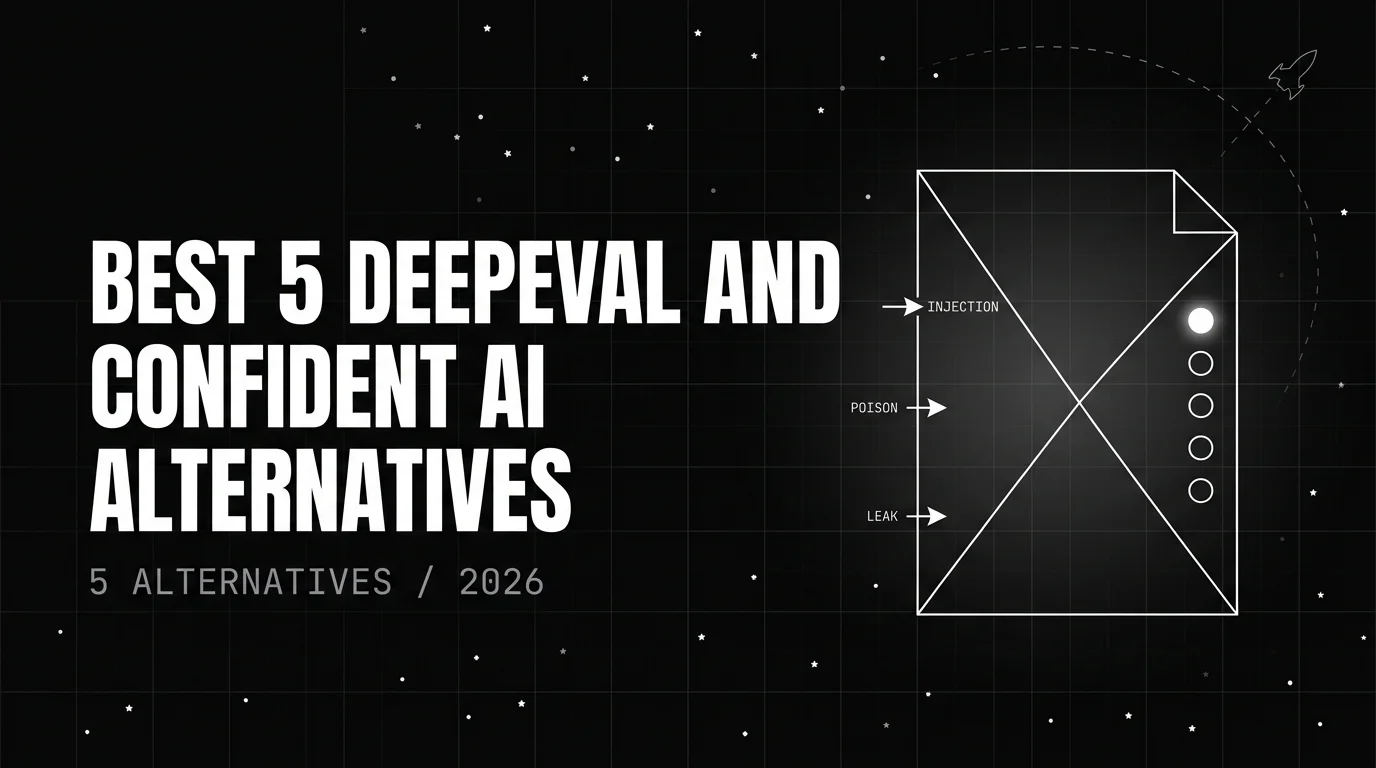
Five DeepEval/Confident AI alternatives on eval-suite portability, runtime guardrails, dashboards, languages. What each actually fixes past the framework.

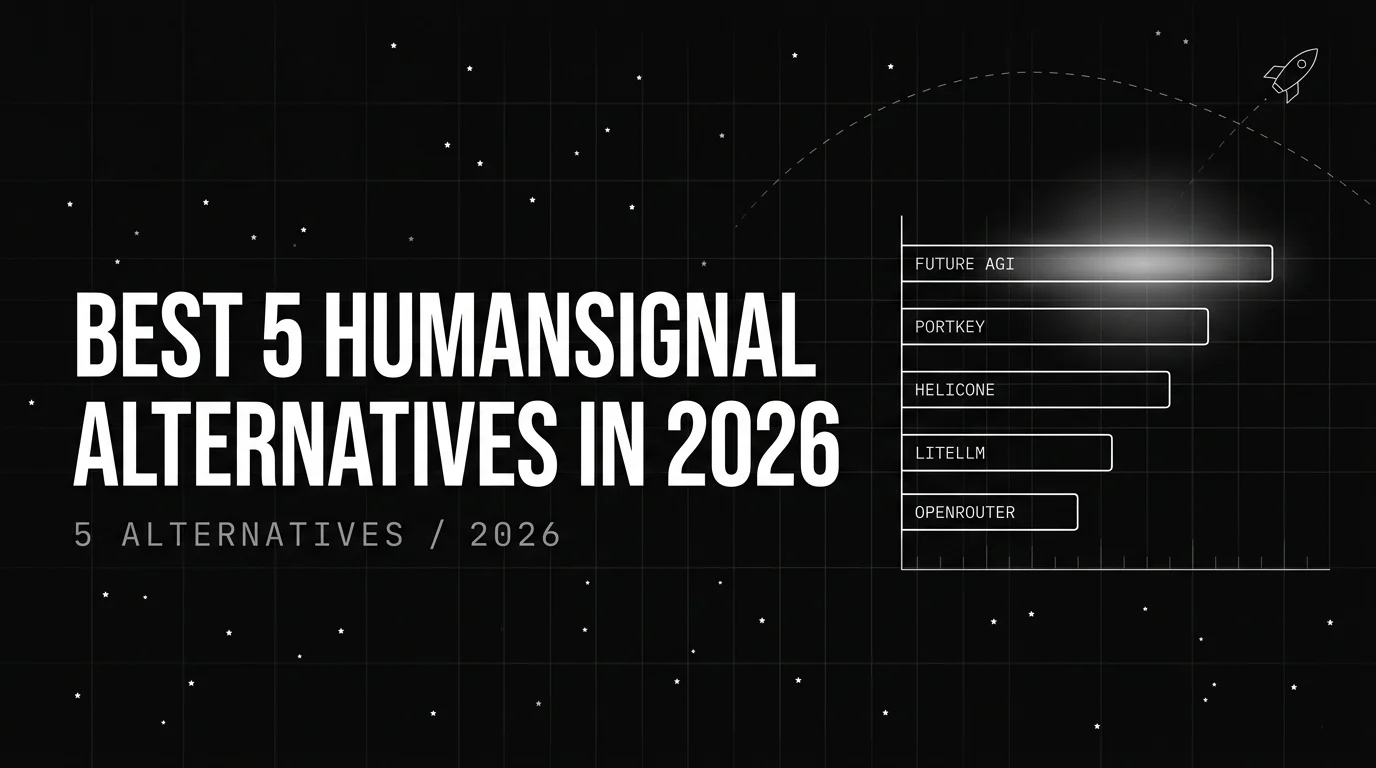
Five HumanSignal/Label Studio alternatives on labeled-data portability, runtime LLM eval, guardrails, optimizer. What actually fixes production agents.
Best LLM annotation tools in 2026 across marketplaces, self-service queues, and in-product queues. 8 platforms compared on calibration, IAA, and traces.
