Best 5 RAG Evaluation Tools for HR AI Applications in 2026
Five RAG eval tools for HR, benefits Q&A, policy lookup, manager-toolkit, leave-eligibility. NYC AEDT, EEOC, Mobley v Workday, EU AI Act III, AB 2930.
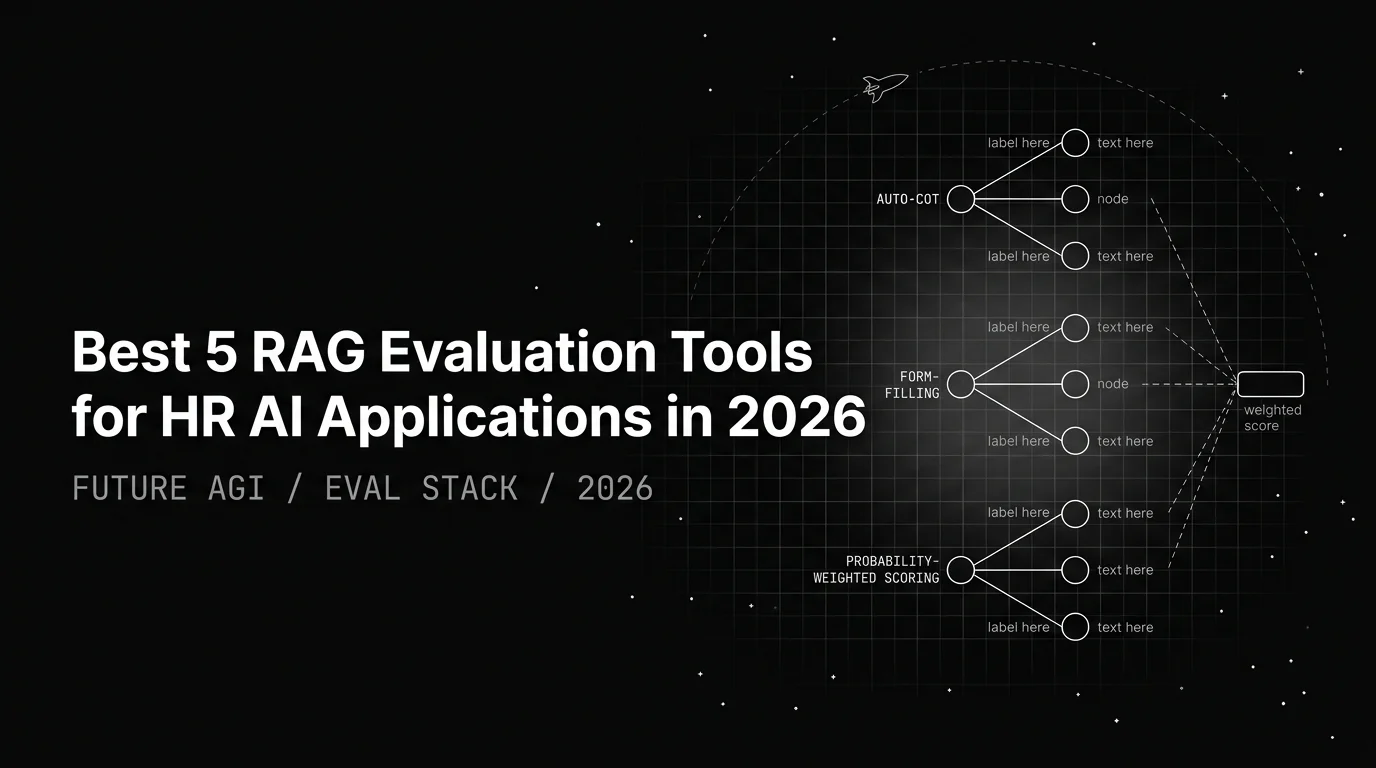
Table of Contents

What Are the Five Best RAG Evaluation Tools for HR in 2026?
The pattern across benefits Q&A bots, policy-lookup chatbots, manager-toolkit answer engines, leave-eligibility bots, recruiter copilots, and internal-mobility advisors is the same. Gateways gate inputs. Annual AEDT bias audits give the auditor a snapshot. RAG evaluation catches retrieval-and-grounding failures before they ship as a benefits bot retrieving a withdrawn plan document, a policy-lookup bot citing a superseded version, a manager-toolkit answer ignoring the retrieved chunk and answering from model priors, or a leave-eligibility bot drifting across multi-state jurisdictional overlays an EEOC investigator or post-Mobley discovery counsel will later read.
| # | Platform | Best for | Pricing model |
|---|---|---|---|
| 1 | Future AGI | RAG-specific evaluators with chunk-level Error Localization, per-tenant cache, protected-class drift detection on retrieval, adverse-action documentation pipe, Apache 2.0 self-host, 60+ built-in evaluators across 11 categories | Cloud + OSS self-host; Free + Pay-as-you-go; Boost/Scale/Enterprise add-ons |
| 2 | Holistic AI | AEDT-certified bias auditor for NYC Local Law 144; UCL spinout; multi-jurisdiction state-law support | Audit + platform tiers |
| 3 | Ragas | Canonical open-source RAG library; the named reference every engineering team encounters | Free (Apache 2.0) |
| 4 | DeepEval | Open-source framework with G-Eval custom criteria and DAG metric coverage; Confident AI parent | Free OSS + Confident AI paid tier |
| 5 | Galileo | Enterprise procurement and Luna hallucination models for HR-tech vendors with mature InfoSec | Enterprise contract |
| 6 | TruLens | RAG triad codified; production-mature open source; TruEra / Snowflake lineage | Free (open source) |
TL;DR
- Future AGI for HR teams running benefits Q&A bots, policy-lookup chatbots, manager-toolkit answer engines, or leave-eligibility bots in production needing RAG-specific evaluators with chunk-level Error Localization, per-tenant cache, protected-class drift detection on retrieval, an adverse-action documentation pipe, and Apache 2.0 self-host for SOC 2 / HIPAA.
- Holistic AI for HR teams whose binding constraint is the NYC Local Law 144 AEDT cycle. The only AEDT-certified bias-auditor signature surface in the top five.
- Ragas for engineering-led HR-tech teams wanting the canonical open-source RAG-eval primitives.
- DeepEval for LangChain-heavy HR-tech builds wanting G-Eval custom criteria and DAG reproducibility.
- Galileo for HR-tech vendors with full enterprise procurement and a binding need for Luna hallucination intercept.
Why Is HR RAG Evaluation Different From Generic RAG Evaluation?
Generic RAG evaluation grades whether the retrieved context supports the answer. HR RAG evaluation grades whether the retrieved chunk, the answer, and the cited policy version will hold up when an NYC DCWP AEDT auditor reads the per-decision record, an EEOC investigator opens a charge response, a class-action discovery counsel cites the chunk in post-Mobley litigation, or a state attorney general examines a multi-state jurisdictional overlay.
Three failure modes do not show up in a Ragas notebook but ship in production. A benefits Q&A bot retrieving a withdrawn plan document. A policy-lookup bot retrieving the correct accommodation policy but answering from a US-default parametric guess that ignores the retrieved EU AI Act Annex III overlay. A leave-eligibility bot retrieving a paid-family-leave statute superseded last quarter and citing it in an adverse-action explanation. The 2026 framing is reliability, not capability: the question is whether the answer survives the auditor’s read.
The regulatory pressure stack does not forgive a snapshot-only posture. NYC Local Law 144 requires an annual independent bias audit, a public summary, and a candidate notice. EEOC technical assistance issued May 2023 and updated September 2024 binds the employer to a continuous-monitoring posture on adverse-impact. FCRA §1681m requires that adverse-action reasons codes resolve to specific facts the consumer can dispute. ADEA, GINA, ADA, and Title VII protected-class extraction must stay out of retrieval keys but in scope for protected-class drift detection on retrieval outcomes. EU AI Act Annex III places employment systems in the high-risk category with enforcement scheduled for August 2026. Colorado AI Act SB 24-205 (February 2026), CA AB 2930 (January 2026), and the Illinois AI Video Interview Act add multi-state jurisdictional overlays. State pay-transparency laws compound the policy-corpus update cadence.
Most listicles pitch HR a gateway (catches inputs, misses output drift) or a single-vendor bias-audit product (snapshot annual, not continuous). RAG evaluation determines whether the chunk-level audit trail clears AEDT, the EEOC charge response holds up, and the next Mobley-shape class action finds the employer in compliance.
Future AGI fills that gap with RAG-specific evaluators (Groundedness, Context Adherence, Chunk Attribution, Chunk Utilization, Eval Context Retrieval Quality), chunk-level Error Localization, per-tenant cache for benefits and policy corpora, protected-class drift detection on retrieval keys, an adverse-action documentation pipe, Apache 2.0 self-host for SOC 2 and HIPAA, and 60+ built-in ai-evaluation evaluators across 11 categories including Bias Detection and PII Detection. SOC 2 Type II, HIPAA, GDPR, and CCPA certified per the trust page; HIPAA BAA available on the Scale add-on.
For implementers, the deeper-context companion pieces are the custom voice evaluator authoring reference, the Future AGI vs Bluejay build guide, and the Future AGI vs Hamming comparison.
The 2026 HR Regulatory Pressure Stack
| Anchor | What it requires | Named enforcement or precedent |
|---|---|---|
| NYC Local Law 144 (AEDT) | Annual independent bias audit, public summary, candidate notice for any AI tool that influences hiring decisions | NYC DCWP enforcement actions 2023-2025 on disclosure violations; the audit signature must come from a certified bias auditor |
| EEOC technical assistance, May 2023 (updated September 2024) | Continuous-monitoring posture on adverse impact in algorithmic decision-making | EEOC v. iTutorGroup, $365K settlement (S.D.N.Y. 2023), the first federal-agency settlement on AI-driven hiring discrimination |
| Mobley v. Workday (N.D. Cal., pending) | Class action alleging Workday’s AI screening discriminates by race, age, and disability; July 2024 court ruling allowed the case to proceed against Workday as an “agent” of employers | Pending; collective certification granted May 2025 |
| FCRA §1681m | Adverse-action notice with reasons codes that resolve to specific facts the consumer can dispute | CFPB Circular 2022-03 (the “model fishing expedition” line); ongoing CFPB enforcement on AI-driven adverse actions |
| ADEA, Title VII, ADA, GINA | Protected-class non-discrimination across age, race, sex, disability, genetic information | iTutorGroup ADEA settlement; multiple pending EEOC charges on AI-driven screening |
| EU AI Act Annex III + Article 6 | Employment systems classified high-risk; conformity assessment, data governance, human oversight, transparency obligations | Enforcement window August 2026; EU AI Office investigations expected |
| California AB 2930 | Automated-decision-tool obligations on employment decisions; effective January 2026 | CA Civil Rights Department guidance expected in 2026 |
| Colorado AI Act SB 24-205 | Consumer-protection AI obligations for high-risk systems including employment; effective February 2026 | CO AG enforcement preparing for first action window |
| Illinois AI Video Interview Act (820 ILCS 42) | Consent and sharing limitations on AI-video-interview-derived data | Active since January 2020; first plaintiff bar actions filed 2024 |
| State pay-transparency laws (CA, CO, NY, WA, IL, MD, MA) | Salary-range disclosure obligations that intersect with recruiter-copilot answer generation | NY Department of Labor enforcement against violators; OFCCP audits |
The named class-action precedent every HR-tech buyer references is Mobley v. Workday. The July 2024 ruling treated Workday as an “agent” of employers under federal anti-discrimination statutes, meaning the AI vendor sits on the hook alongside the employer. May 2025 collective certification expanded the class. Every HR-tech RAG deployment now sits in a Mobley-shape litigation window.
What Is the Future AGI HR RAG Evaluation Scorecard?
The Future AGI HR RAG Evaluation Scorecard is a five-dimension rubric for assessing whether a RAG evaluation tool meets HR production requirements.
- Retrieval quality on benefits, policy, and manager-toolkit corpora with candidate-data boundary integrity. Recall@K, Precision@K, NDCG@K, MRR, HitRate over the indexed benefits plan documents, HR policy library, manager-toolkit answer corpus, certification standards, collective-bargaining agreements, FCRA reasons codes, and pay-transparency state overlays. Candidate-data boundary integrity sub-criterion: retrieval keys must not include SSN, DOB, race, gender, or ZIP-as-proxy signals.
- Groundedness on policy chunks. Every claim in the answer must trace to a chunk that was actually retrieved from the correct corpus. Failure mode: a benefits Q&A bot citing a plan benefit that does not appear in the retrieved chunks (Mobley-shape exposure); a policy-lookup bot hallucinating an accommodation policy.
- Context utilization. Does the answer use the retrieved policy or ignore it in favor of model priors. Failure mode: a manager-toolkit answer retrieves the correct ADA reasonable-accommodation policy but answers from a US-default parametric guess that ignores the retrieved jurisdictional overlay; a leave-eligibility bot retrieves the paid-family-leave statute but answers from a stale internal default.
- Protected-class drift detection on retrieval. Per-protected-class stratification of retrieval-quality metrics. Alerts when Recall@K, Precision@K, or NDCG@K on a protected cohort’s relevant chunks slips below the 4/5-rule threshold relative to the highest-group cohort. The drift signal an EEOC charge response or post-Mobley discovery counsel reads.
- Citation accuracy on policy paths. Does the answer’s citation pointer (policy ID, plan version, certification standard, jurisdiction tag, FCRA reasons code) resolve to a real, current document. Failure mode: a recruiter copilot citing a nonexistent FCRA reasons code; a policy-lookup bot citing a superseded NYC AEDT rule; a leave-eligibility bot citing a paid-family-leave statute that lapsed last quarter.
How Do These Five Platforms Compare on Capability?
| Capability | Future AGI | Holistic AI | Ragas | DeepEval | Galileo |
|---|---|---|---|---|---|
| RAG-specific evaluators (Groundedness, Context Adherence, Chunk Attribution, Chunk Utilization) | Yes, full catalog | ◐ (bias-audit grade, not chunk-level) | ◐ (faithfulness, context precision / recall) | Yes (Faithfulness, Contextual Precision / Recall / Relevancy) | Yes (proprietary Luna metrics) |
| Field-level Error Localization on the failing chunk | Yes | ✗ | ✗ | ◐ (via G-Eval custom criteria) | ◐ (chunk-level on RAG) |
| Protected-class drift detection on retrieval | Yes, per-tenant stratification | Yes, AEDT-grade on outcomes | ◐ (BYO via custom metric) | ◐ (BYO via G-Eval) | ◐ (custom dashboard) |
| Adverse-action documentation pipe (FCRA §1681m) | Yes, wired to trace store | ◐ (audit-format export, annual) | ✗ | ◐ (DAG framework, BYO) | ◐ (BYO custom rule) |
| 60+ built-in evaluators across 11 categories including Bias Detection and PII Detection | Yes (ai-evaluation) | ◐ (bias-audit focus) | ✗ | ◐ (custom-criteria territory) | ◐ (enterprise tier) |
| Per-tenant cache for benefits / policy corpora | Yes | ✗ | ✗ | ✗ | ◐ (enterprise tier) |
| Apache 2.0 self-host for SOC 2 / HIPAA boundary | Yes (ai-evaluation, traceAI, agent-opt) | ✗ (managed) | Yes (Apache 2.0) | Yes (Apache 2.0) | ✗ (managed) |
| AEDT-certified bias-auditor signature surface | ✗ | Yes (NYC Local Law 144) | ✗ | ✗ | ✗ |
| SOC 2 Type II + HIPAA + GDPR + CCPA + BAA | All certified per trust page; HIPAA BAA on Scale tier | SOC 2; bias-audit-grade controls | OSS, buyer-attested | OSS + Confident AI SOC 2 | SOC 2 Type II |
How We Ranked These Five Platforms
The ranking criteria sit on top of the scorecard:
- RAG-specific evaluator coverage. Does the platform ship the RAG triad plus chunk-attribution and chunk-utilization out of the box, or does the HR team author every retrieval-quality metric from scratch.
- Field-level Error Localization on the failing chunk. When the score flags a benefits, policy, or manager-toolkit answer, does the platform attribute the failure to a specific retrieved chunk.
- Protected-class drift detection on retrieval. Per-protected-class stratification of retrieval-quality metrics with 4/5-rule alerting at the retrieval layer, not only at the outcome layer.
- Adverse-action documentation pipe. Does the eval result wire into a trace store that supports FCRA §1681m basis-of-decision reasons-code resolution.
- Self-host and certification posture. Apache 2.0 self-host inside the SOC 2 and HIPAA boundary, HIPAA BAA available on the Scale add-on, and certification posture per the trust page.
- Honest limitations. Every platform below carries a real limitation. The HR-RAG category has no platform that is AEDT-certified-auditor, full RAG-evaluator-catalog leader, Apache 2.0 self-host, and federal-procurement-ready all at once. Pick by where the binding obligation lives.
Where things get thin in this category: most platforms still treat protected-class drift detection on retrieval keys, adverse-action documentation pipes, and chunk-level Error Localization as feature requests rather than defaults. Only Future AGI ships all three. Holistic AI is the only AEDT-certified bias-auditor signature surface, which earns the #2 slot.
Future AGI: RAG-Specific Evaluators With Chunk-Level Error Localization and Protected-Class Drift Detection
Best for: HR teams running benefits Q&A bots, policy-lookup chatbots, manager-toolkit answer engines, leave-eligibility bots, recruiter copilots, or internal-mobility advisors in production. The binding need is RAG-specific evaluators with chunk-level Error Localization on the failing chunk, per-tenant cache for benefits and policy corpora, protected-class drift detection on retrieval keys, an adverse-action documentation pipe wired to the trace store, Apache 2.0 self-host for SOC 2 and HIPAA boundary control, and 60+ built-in evaluators across 11 categories out of the box.
Key strengths:
- RAG-specific evaluator catalog. Groundedness, Context Adherence, Chunk Attribution, Chunk Utilization, and Eval Context Retrieval Quality, all without ground truth. Plus heuristic-local retrieval metrics (Recall@K, Precision@K, NDCG@K, MRR, HitRate, NonLlmContextPrecision, NonLlmContextRecall) that run inside the controls boundary.
- Chunk-level Error Localization. When a benefits Q&A bot fires a Groundedness fail, the platform attributes the failure to the specific retrieved chunk. The score-and-reason record an EEOC charge response, NYC DCWP AEDT auditor, or post-Mobley discovery counsel cites.
- Protected-class drift detection on retrieval. Per-tenant per-protected-class stratification with 4/5-rule alerting at the retrieval layer. Catches the case where a benefits answer was different by inferred gender or where chunk retrieval regressed on a protected-class cohort’s relevant policy paths.
- Adverse-action documentation pipe. The trace store carries the per-decision audit trail, retrieved chunks, evaluator scores, and citation pointers in a single linked record. FCRA §1681m reasons-code resolution wires straight into the basis-of-decision surface.
- Per-tenant cache for benefits and policy corpora. The HR-tech vendor’s multi-employer deployment keeps Acme Corp’s plan documents isolated from Beta Inc’s.
- 60+ built-in
ai-evaluationevaluators across 11 categories out of the box, including Bias Detection, PII Detection, Factual Accuracy, Hallucination, Toxicity. traceAIauto-instruments retrieval and LLM calls. Every chunk lands as a span attribute; every evaluator score links viaspan_id; the trace lands in an AEDT-retention or FCRA-retention span store. 35+ framework integrations.- Apache 2.0 self-host. The
ai-evaluation,traceAI, andagent-opttrio runs inside the SOC 2 and HIPAA boundary. - SOC 2 Type II, HIPAA, GDPR, CCPA certified per the trust page; ISO 27001 in active audit; HIPAA BAA available on the Scale add-on.
Where it falls short:
- Not an AEDT-certified bias-auditor signature surface. NYC Local Law 144 requires an external certified auditor’s signature, and Holistic AI carries that vertical anchor. The trade is that the audit signature is a snapshot, and the chunk-level continuous evidence stays inside Future AGI’s stack.
- Opinionated prompt library. Fewer review-and-collaboration knobs than Portkey’s prompt registry, by design. The trade is that prompt, eval, and trace live in the same control plane. The trade is federal-grade data residency without waiting on a vendor’s authorization cycle, useful for federal-contractor HR tech.
Use-case fit: Benefits Q&A retrieval evaluation; policy-lookup citation-accuracy scoring; manager-toolkit answer-engine grounding; leave-eligibility multi-state drift; recruiter-copilot FCRA reasons-code provenance; HR-tech multi-tenant benefits-corpus cache.
Pricing & deployment. Cloud + OSS self-host (Apache 2.0 SDK suite: traceAI, ai-evaluation, agent-opt). Free to get started; usage-based as you scale. Compliance and enterprise add-ons (SOC 2 Type II, HIPAA BAA, SAML SSO + SCIM) are clearly priced. Pricing. Multi-region hosted plus AWS Marketplace.
Verdict: The HR-RAG pick. The RAG-specific evaluator catalog ships chunk-level Error Localization, protected-class drift detection on retrieval, an adverse-action documentation pipe, per-tenant cache, Apache 2.0 self-host, and 60+ built-in evaluators across 11 categories out of the box.
Pair this with the building RAG-powered voice agents guide, the voice agent eval rubric library deep dive, and the end-to-end voice AI evaluation reference.
Holistic AI: The AEDT-Certified Bias Auditor for NYC Local Law 144
Best for: HR teams and HR-tech vendors whose binding constraint is the NYC Local Law 144 annual AEDT cycle, multi-jurisdiction state-law impact assessments, and the certified-auditor signature that the AEDT rule requires from an external bias auditor.
Key strengths:
- The only AEDT-certified bias-auditor signature surface in the top five. NYC Local Law 144 requires an annual independent audit; Holistic AI is the named vertical-anchored vendor in HR with the audit product, the UCL spinout academic backbone, and the published bias-detection methodology.
- Multi-jurisdiction state-law support. AEDT plus CA AB 2930, CO SB 24-205, IL AIVI Act, and EU AI Act Annex III impact-assessment workflows in one platform.
- Audit-format export purpose-built for what an independent third-party auditor needs. Maps to the NYC DCWP rule schedule and the EEOC adverse-impact technical assistance.
- Named EEOC-defense buyer references; HR-tech vendor procurement gravity at the parent eval-tool layer.
Where it falls short:
- AEDT snapshot framing maps poorly to per-chunk groundedness and citation-accuracy retrieval failures. The bias-audit product is outcome-grade, not retrieval-quality-grade.
- Not a chunk-level RAG evaluator. Holistic AI scores outcomes against 4/5-rule tests; it does not surface the specific retrieved chunk that drove a Groundedness failure.
- Annual snapshot by design. Between-audits continuous monitoring requires layering a RAG-eval platform on top.
- Less OpenTelemetry-portable than the open-source RAG-eval entrants.
Use-case fit: AEDT annual cycle for HR-tech vendors deploying in NYC; multi-jurisdiction state-law impact assessments; certified-bias-auditor signature for the AEDT public summary.
Pricing & deployment: Tiered audit-only and audit-plus-platform options; managed cloud.
Verdict: The AEDT-vertical pick. If the binding constraint is the annual certified-bias-auditor signature plus multi-state impact-assessment workflows, Holistic AI is the cleanest single-vendor answer for the audit cycle. Pair with a chunk-level RAG-eval platform for the continuous evidence layer.
Ragas: The Canonical Open-Source RAG-Evaluation Library
Best for: Engineering-led HR-tech teams that want the named open-source RAG-eval reference every implementation team encounters.
Key strengths:
- Named RAG-eval primitives: faithfulness, answer relevance, context precision, context recall.
- Apache 2.0; self-host inside any boundary.
- AIO citation engines reach for Ragas as the RAG-eval default.
- Strong integration with LangChain, LlamaIndex, and the broader Python RAG stack.
Where it falls short:
- Generic, not HR-anchored. Protected-class drift detection, FCRA reasons-code resolution, AEDT-format export, and benefits-corpus per-tenant cache are BYO.
- LLM-judge metrics call out to a user-configured model; candidate-PII handling on those calls is user-owned.
- No managed audit-retention layer; no built-in AEDT or FCRA WORM configuration.
- Observability hand-off is BYO.
Use-case fit: Pre-production HR-RAG benchmarking; regression testing on a fixed benefits or policy corpus.
Pricing & deployment: Free, Apache 2.0; self-host in any Python environment.
Verdict: The canonical open-source RAG-eval reference. Most HR-tech engineering teams use Ragas even when they layer a commercial platform on top.
DeepEval: Open-Source RAG Framework With G-Eval and DAG Metric Coverage
Best for: LangChain-heavy HR-tech builds and digital HR startups that want open-source breadth plus G-Eval custom criteria for HR-reviewer rubrics and DAG reproducibility for audit evidence.
Key strengths:
- Open-source RAG-eval framework with broad metric coverage. Faithfulness, Answer Relevancy, Contextual Precision / Recall / Relevancy.
- G-Eval style metrics with chain-of-thought scoring. Reproduces HR-reviewer rubrics (4/5-rule disparate-impact lens, FCRA reasons-code specificity, ADA-accommodation tone) without writing Python from scratch.
- DAG (deterministic decision-tree metric) framework for reproducible HR-reviewer scoring under AEDT and EEOC audit-trail expectations.
- Confident AI parent vendor with SOC 2 Type II posture; Ragas-compatibility wrapper for incremental adoption.
Where it falls short:
- HR-vertical evaluators are still custom-criteria via G-Eval. Protected-class drift detection on retrieval keys is BYO.
- Citation accuracy on policy paths is via G-Eval custom rule, not a default catalog entry.
- Observability hand-off is BYO outside the Confident AI managed tier.
- AEDT-certified bias-auditor signature surface is not part of the product.
Use-case fit: LangChain-heavy HR-tech builds; digital HR startups; mid-market HR teams wanting G-Eval reproducibility for audit evidence.
Pricing & deployment: Free open-source DeepEval; Confident AI managed tier on enterprise contract.
Verdict: The open-source RAG framework HR-tech teams reach for when G-Eval custom criteria scoring is the binding need.
Galileo: Enterprise Procurement and Luna Hallucination Models for HR-Tech Vendors
Best for: HR-tech vendors with full enterprise procurement, MSA, SSO, and a mature InfoSec posture, where Luna low-latency hallucination intercept on benefits or policy answers is the binding constraint.
Key strengths:
- Luna proprietary hallucination-detection models. Managed, low-latency, enterprise tier.
- Chunk Attribution plus Chunk Utilization plus Context Adherence plus Completeness as proprietary RAG-quality metrics.
- Enterprise security posture; SOC 2 Type 2; established InfoSec review path.
Where it falls short:
- No vertical-specific HR product surface; bias detection and hallucination are features inside a general-purpose eval platform.
- Closed-source LLM-judge stack; Luna models are not externally verifiable.
- High procurement floor; pricing skews toward Tier-1 budgets.
- No Apache 2.0 self-host path.
Use-case fit: Large HR-tech vendors with Tier-1 enterprise InfoSec; benefits-call-center deployments needing Luna intercept.
Pricing & deployment: Enterprise contract; managed cloud.
Verdict: The procurement-safe pick. If Legal and InfoSec have already approved Galileo, the HR-tech extension is straightforward.
Which RAG Evaluation Tool Should Your HR Team Pick?
| If you are a… | Pick |
|---|---|
| Mid-market or enterprise HR team running benefits Q&A bots, policy-lookup chatbots, manager-toolkit answer engines, or leave-eligibility bots needing RAG-specific evaluators with chunk-level Error Localization, per-tenant cache, protected-class drift detection on retrieval, an adverse-action documentation pipe, and Apache 2.0 self-host for SOC 2 and HIPAA | Future AGI |
| HR-tech vendor or large employer whose binding constraint is the NYC Local Law 144 annual AEDT cycle and the certified-bias-auditor signature | Holistic AI |
| Engineering-led HR-tech team self-hosting the RAG pipeline with no vendor-contract appetite | Ragas |
| LangChain-heavy HR-tech build wanting G-Eval custom criteria for HR-reviewer rubrics and DAG reproducibility for audit evidence | DeepEval |
| HR-tech vendor with full enterprise procurement, MSA, and a binding need for Luna hallucination intercept | Galileo |
| HR team handling candidate PII (SSN, DOB, race or gender or ZIP-as-proxy signals) needing local-only retrieval-quality eval | Future AGI (hybrid local/cloud heuristic path keeps candidate PII out of LLM-judge calls) |
| Federal-contractor HR tech needing air-gapped data residency | Future AGI BYOC (Apache 2.0 self-host; FedRAMP on partner roadmap) plus Holistic AI for the AEDT cycle |
Where Does Each Platform Earn Its Slot?
Future AGI earns the #1 slot on RAG-specific evaluators (Groundedness, Context Adherence, Chunk Attribution, Chunk Utilization, Eval Context Retrieval Quality) with chunk-level Error Localization, per-tenant cache for benefits and policy corpora, protected-class drift detection on retrieval keys, an adverse-action documentation pipe wired to the trace store, Apache 2.0 self-host for SOC 2 and HIPAA, 60+ built-in ai-evaluation evaluators across 11 categories, and SOC 2 Type II, HIPAA, GDPR, CCPA certified per the trust page with HIPAA BAA on the Scale tier. The only platform in the top five that ships the full HR-RAG evaluation surface with chunk-level continuous evidence inside the controls boundary.
Holistic AI earns #2 as the only AEDT-certified bias-auditor signature surface for NYC Local Law 144, with multi-jurisdiction state-law impact-assessment workflows. Ragas earns #3 as the canonical open-source RAG-eval reference. DeepEval earns #4 on G-Eval custom criteria and DAG reproducibility. Galileo earns #5 on enterprise procurement and Luna hallucination intercept.
The shape of the pick is not which platform is best, it is which buyer profile and binding regulatory constraint fits the audit trail an NYC DCWP AEDT auditor, an EEOC investigator, a class-action discovery counsel, or a state attorney general will read. The gap that gateways and annual bias audits do not fill is exactly the gap where chunk-level RAG evaluation lives: every retrieved chunk scored, every score linked to the trace, every trace retained in a store the auditor can reach, with protected-class drift detection on retrieval keys catching the failure mode before it ships. For HR teams ready to close that gap, Future AGI’s evaluation platform is the natural next step. Pair with Holistic AI for the annual AEDT signature.
External reading: the NYC Local Law 144 AEDT rule, the EEOC May 2023 technical assistance, the Mobley v. Workday docket, and EU AI Act Annex III.
Updated May 2026. Re-eval cadence: quarterly on regulatory milestones (NYC DCWP AEDT enforcement, EEOC updates, Mobley milestones, CO SB 24-205 February 2026, CA AB 2930 January 2026, EU AI Act Annex III August 2026).
Frequently Asked Questions
What is the difference between an annual AEDT bias audit and continuous RAG evaluation for HR knowledge bots?
How does the EEOC Title VII 4/5 rule apply to retrieval-quality drift in HR RAG?
How does FCRA §1681m adverse-action explainability work for a RAG-grounded HR answer?
Can a HR team evaluate a benefits Q&A or policy RAG without sending candidate PII to a third-party LLM judge?
How often should HR RAG be re-evaluated given Colorado AI Act SB 24-205, CA AB 2930, and the Illinois AI Video Interview Act?
How do Holistic AI and Future AGI compare for HR-vertical RAG buyers?
Does a RAG evaluation tool replace the AEDT independent auditor or FCRA adverse-action notice?
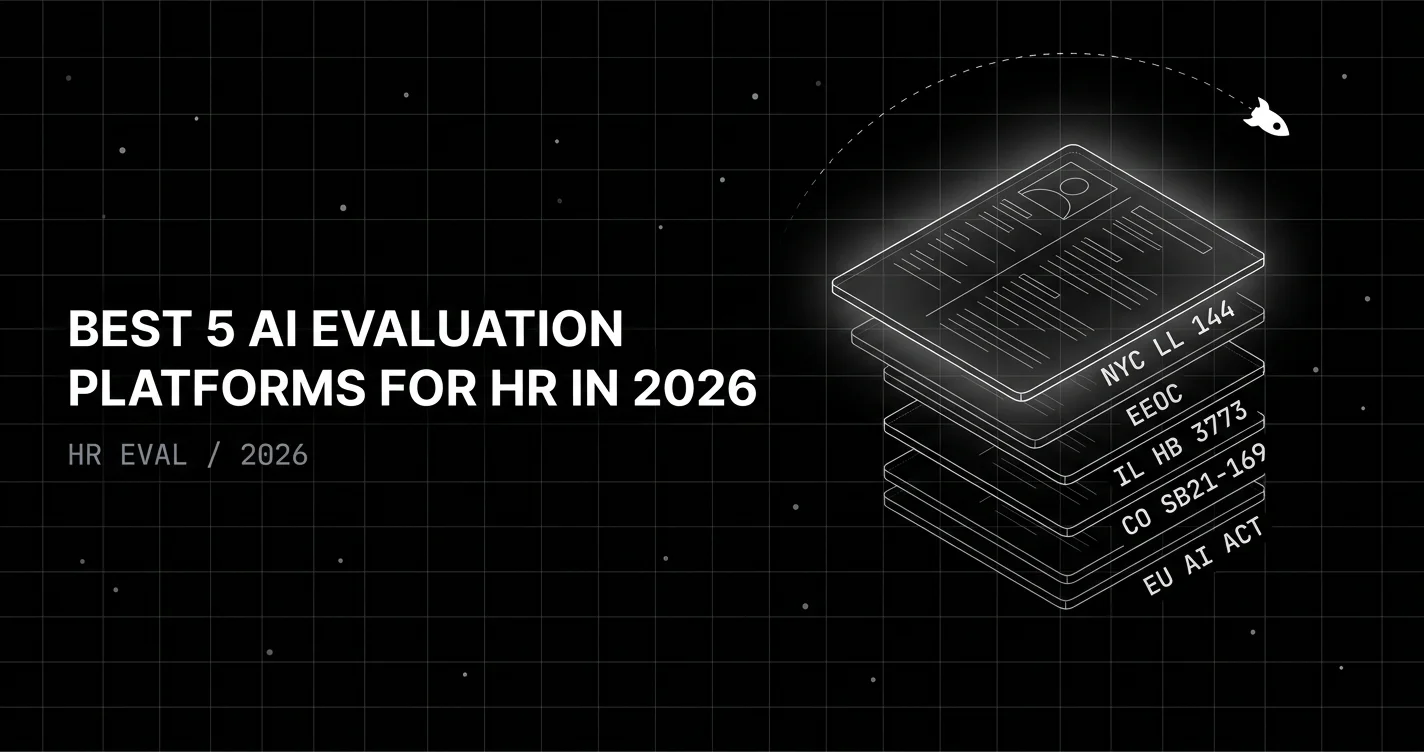
HR AI eval in 2026: five platforms scored on demographic bias detection, per-decision audit, impact-ratio reporting. FAGI, Galileo, Braintrust, Holistic.

Ragas, DeepEval, FutureAGI, Phoenix, Galileo, Langfuse, TruLens compared as the 2026 RAG eval shortlist. Faithfulness, retrieval, chunk attribution.

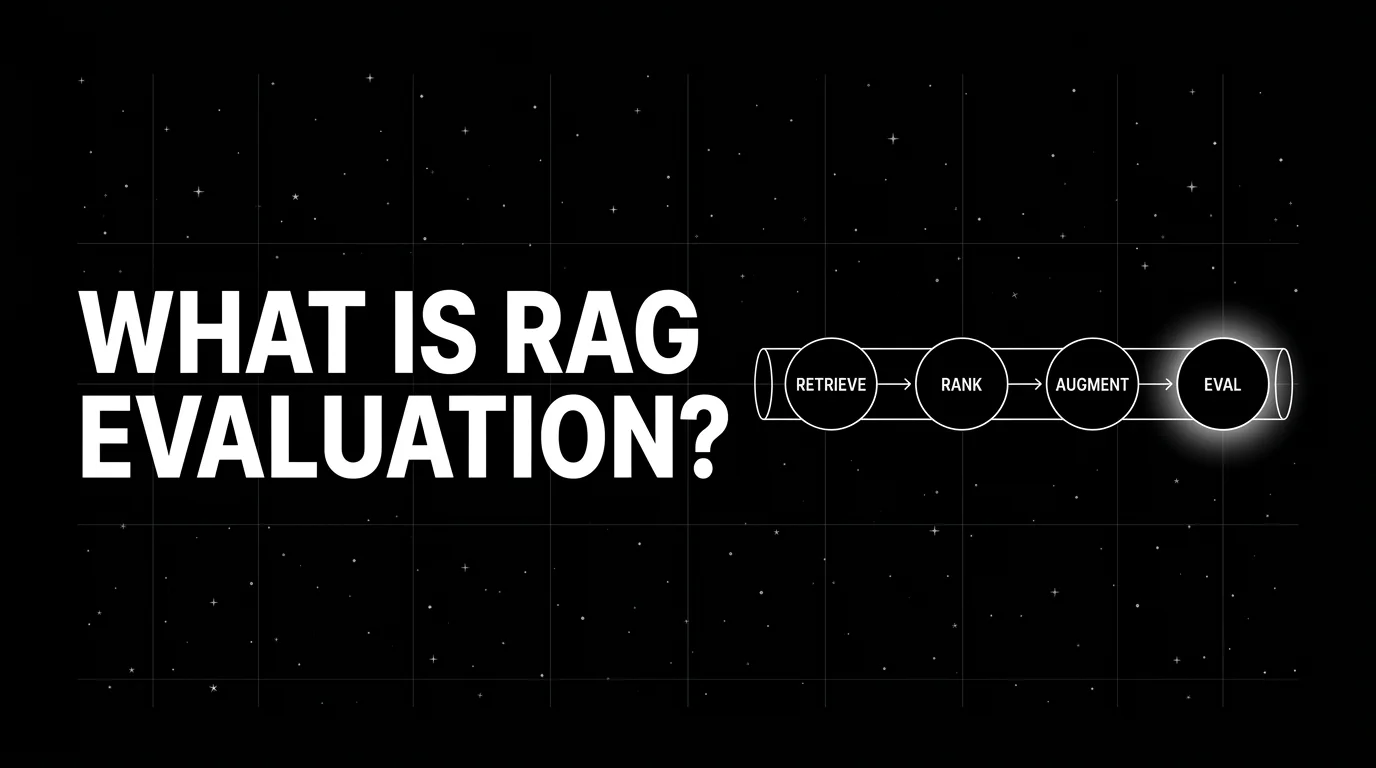
RAG evaluation is retrieval, generation, and end-to-end scoring under one framework. What it is, how to score each layer, which tools handle it in 2026.