Best 5 DSPy Alternatives in 2026
Five DSPy alternatives scored on production runtime, optimizer breadth, instrumentation, what each fixes when research-grade prompt optimization hits prod.
Table of Contents
DSPy convinced a meaningful slice of the LLM-engineering audience that prompts are programs, signatures are types, and optimization is a compile step. BootstrapFewShot, MIPRO, MIPROv2, and the signature DSL anchor most academic papers on automatic prompt optimization, and the Stanford NLP repo crossed 21K stars.
Then teams tried to take a dspy.Module to production and ran into the wall. There’s no gateway. There’s no observability runtime. There are no inline guardrails. The optimizer runs offline in a notebook, prints a compiled program to disk, and disappears, leaving a regular Python object the production stack has to babysit. The community is smaller than Phoenix’s or Langfuse’s. The framework is Python-only. The learning curve is steep enough that the first quarter of any DSPy adoption is mostly internal teaching.
This guide ranks five alternatives worth migrating to, names what each fixes versus DSPy, and walks through the migration that always bites: re-writing dspy.Module plus signature classes into something the production runtime can actually serve.
TL;DR: pick by exit reason
| Why you are leaving DSPy | Pick | Why |
|---|---|---|
| You want DSPy-class optimization wired into a production runtime | Future AGI Agent Command Center | agent-opt ships six optimizers (RandomSearchOptimizer, BayesianSearchOptimizer Optuna-backed with teacher-inferred few-shot templates and resumable studies, MetaPromptOptimizer, ProTeGi, GEPAOptimizer, PromptWizardOptimizer), all sharing an EarlyStoppingConfig (patience + min_delta + threshold + max_evaluations) and the same unified Evaluator over 60+ FAGI rubrics inside a gateway + eval + guardrails stack |
| You want a research library with a less prescriptive abstraction | AdalFlow | Similar academic posture as DSPy with a lighter signature layer |
| You want gradient-style optimization without the signature DSL | TextGrad | ”Textual gradients” over LLM calls; tighter scope than DSPy |
| You want production observability, with optimization as a workflow you build | Arize Phoenix | Mature trace + eval surface; optimization stays in your notebook |
| You want eval-pipeline-first with experiments and CI gates | Braintrust | Strong eval product; pairs with external optimization libraries |
Why people are leaving DSPy in 2026
Four exit drivers repeat across the Stanford NLP discussion forum, Reddit /r/LocalLLaMA and /r/LLMDevs threads, the DSPy GitHub issue tracker, and post-mortems from teams that ran a six-month DSPy pilot.
1. No production runtime
DSPy compiles a program offline and serializes it. The thing that comes out of compile() is a Python object with prompts and few-shots baked into module attributes. To serve it, you write your own FastAPI wrapper, your own logging, your own retry policy, your own cost tracking. There’s no gateway, no virtual keys, no per-route metadata, no rate-limit or fallback policy primitive. Phoenix, Langfuse, LiteLLM, Helicone, every adjacent runtime project, assumes traces, sessions, and a serving surface as the starting point. DSPy assumes the surface is your problem.
2. No native observability or guardrails
A DSPy program runs as ordinary OpenAI/Anthropic SDK calls. By default there’s no trace, no per-step span, no eval hook, no inline guardrail. You can wire in OpenInference manually, send spans to Phoenix, run a separate eval suite, and bolt a content filter at the edge. But that’s four separate projects. The DSPy core repo doesn’t ship any of it. For teams whose security review requires inline PII redaction, a jailbreak detector at the prompt boundary, or a cost cap that auto-pauses a runaway agent, the layer is structurally absent.
3. Python-only, with a steep on-ramp
DSPy is a Python package. There’s no JavaScript port, no Go runtime, no first-class TypeScript story. Teams running a Node-based application stack adopt DSPy as a sidecar, a Python service the rest of the application calls, which is fine for offline compilation but unnatural for production serving.
The learning curve is real. The Signature DSL, the Module + forward pattern, the difference between Predict and ChainOfThought and ReAct, and the mechanics of dspy.settings.configure plus an LM client, it takes a quarter for an engineer new to the framework to be productive. Phoenix, Braintrust, and LiteLLM all clear that bar in an afternoon.
4. Smaller community than Phoenix or Langfuse
DSPy’s GitHub repo (~21K stars at the time of writing) is meaningful but the question-and-answer surface trails Phoenix and Langfuse. A typical “how do I do X in DSPy” search returns 2 to 3 useful threads; the same search for Phoenix returns 10 to 15. The Discord is active but smaller. Stack Overflow coverage is thin. Most of the live discussion is on the Stanford NLP forum and in the GitHub issue tracker. For a team relying on community answers to debug a production incident at 2am, the smaller surface matters.
What to look for in a DSPy replacement
The default “best LLM framework” axes are necessary but not sufficient for a DSPy exit. Score replacements on the seven that map to the surfaces you’re actually missing:
| Axis | What it measures |
|---|---|
| 1. Production runtime | Is there a gateway, RBAC, virtual keys, and a way to serve the compiled program? |
| 2. Optimizer breadth | Does it ship multiple optimization algorithms (few-shot, instruction, search-based)? |
| 3. Observability depth | Per-trace, per-span, per-eval native, or do you wire it in? |
| 4. Guardrails inline | Can you put PII redaction or jailbreak detection at the prompt boundary? |
| 5. Eval suite native | Is there a library of task-completion / faithfulness / tool-use rubrics? |
| 6. Multi-language posture | Python only, or also TypeScript / Java / Go? |
| 7. Learning curve | Time from pip install to a useful first program |
1. Future AGI Agent Command Center: Best for production optimization
Verdict: Future AGI is the only framework in this list that takes DSPy-class optimization (ProTeGi, Bayesian search, GEPA) and wires it into a production runtime, gateway, observability, eval suite, and inline guardrails, so the optimizer keeps running after the notebook closes. DSPy stops at “here is your compiled program.” Future AGI starts there.
What it fixes versus DSPy:
- Optimization on the production runtime, not the notebook.
agent-opt(Apache 2.0) ships ProTeGi (gradient-style text optimization with feedback), Bayesian search over prompt + few-shot space, and GEPA (Generalized Evolutionary Prompt Adaptation). The same algorithms DSPy uses forMIPRO-class work, packaged as a library that runs against captured production traces, not a static training set in a notebook. Every trace becomes a candidate evaluation; every regression becomes an optimizer signal.
- Native instrumentation.
traceAI(Apache 2.0) emits OpenInference-compatible spans for every LLM, tool, and retrieval step.ai-evaluation(Apache 2.0) scores those spans against task-completion, faithfulness, tool-use, and custom rubrics. DSPy ships none of this; you write the equivalent or import three other projects.
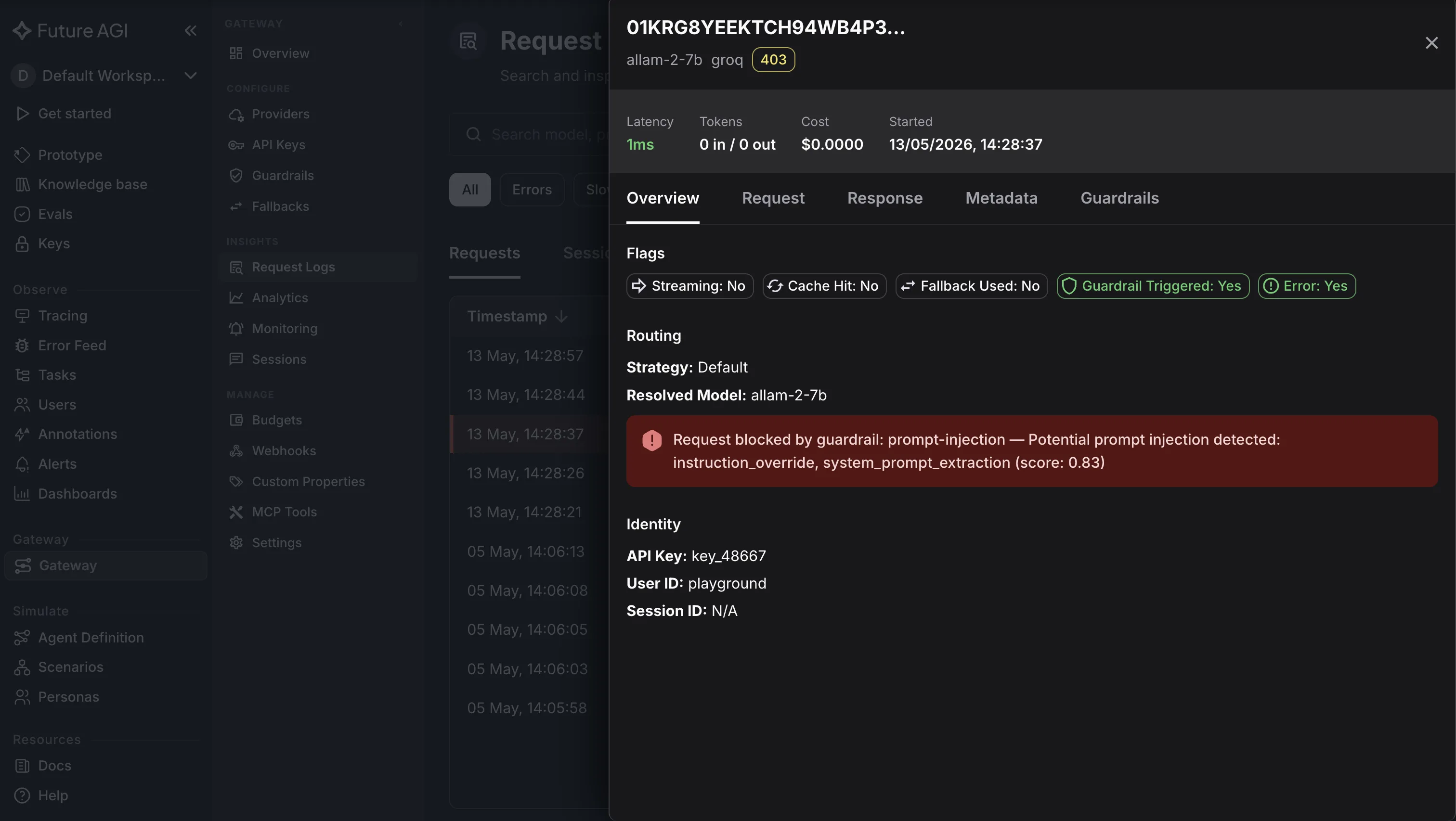
- Inline guardrails. Protect, the guardrails layer, runs PII redaction, jailbreak detection, and content filtering at the prompt boundary with median 65 ms text-mode latency and 107 ms image-mode latency on the published arXiv benchmark (arXiv 2510.13351). DSPy has no equivalent, the layer is genuinely absent, not immature alone.
- Self-improving loop, not a one-shot compile. DSPy’s
compile()is offline, run once, ship the artifact. The Command Center loop captures traces, scores them, clusters failures, runs the optimizer, and pushes the updated prompt or routing decision back into the gateway on the next request. The artifact is alive, not frozen. - The Agent Command Center. The hosted surface includes RBAC, failure-cluster views, the Protect guardrails layer, AWS Marketplace procurement, and a registry that accepts prompts as Jinja2 (the format most teams already use for their templates).
Migration from DSPy: Each dspy.Module becomes an agent-opt program, the forward method is roughly preserved, but signatures get rewritten as explicit input/output schemas and Predict/ChainOfThought/ReAct become composable building blocks in the agent-opt runtime. The optimizer interface is similar enough that teams that built intuition around MIPRO find ProTeGi and GEPA familiar after a week. Timeline: ten to fifteen engineering days for a medium-size DSPy program (under 20 modules), including a shadow-traffic period and an eval baseline.
Where it falls short:
-
The optimization layer is broader than DSPy’s, which means more knobs. Teams that liked DSPy’s “one optimizer, one signature DSL” simplicity will feel the surface area.
-
The signature-DSL ergonomics of DSPy aren’t replicated 1:1. The trade is intentional, explicit schemas play better with the gateway and the eval suite. But a DSPy diehard will miss the DSL.
Pricing: Free tier with 100K traces/month. Scale tier from $99/month with linear per-trace scaling above 5M (no add-on multipliers). Enterprise with SOC 2 Type II and AWS Marketplace.
Score: 7 of 7 axes.
2. AdalFlow: Best for research-library exit
Verdict: AdalFlow is the pick when the dealbreaker is DSPy’s signature DSL or the prescriptiveness of Module + forward, but you still want a research-grade library you can experiment with in a notebook. Posture: lighter abstraction, similar optimization toolkit, easier escape hatch.
What it fixes versus DSPy:
- Lighter abstraction. AdalFlow’s
ComponentandGeneratorprimitives have less ceremony than DSPy’sSignature+Modulepair. The on-ramp is shorter. - Auto-optimization with fewer constraints. AdalFlow’s optimizer (text-grad style with a few-shot bootstrapper) covers the common DSPy use cases (instruction tuning, demo selection) without requiring a signature class.
- Better escape hatch. The compiled artifact is closer to a regular Python function, wrapping it in a FastAPI service or a Lambda is less fiddly than wrapping a DSPy
Module.
Migration from DSPy: Signatures translate to AdalFlow’s Generator constructors. Module.forward translates to a Component definition. The optimizer call site changes shape but the inputs (training set, metric, search budget) are similar. Timeline: five to seven engineering days for a medium DSPy program.
Where it falls short:
- No production runtime. AdalFlow is a library; the serving layer is still your problem.
- No inline guardrails. Same gap as DSPy.
- Community is smaller than DSPy’s, which was itself a complaint.
- Optimizer breadth is narrower than DSPy’s full toolkit (MIPRO, MIPROv2, BootstrapFinetune, etc.).
Pricing: Open source under MIT.
Score: 3 of 7 axes (missing: runtime, observability, guardrails, eval).
3. TextGrad: Best for gradient-style optimization without the DSL
Verdict: TextGrad is the pick when you liked DSPy’s optimization story but not the signature-DSL framing. TextGrad treats LLM outputs as differentiable variables and uses “textual gradients”, natural-language feedback from a critic model, to update prompts. Tighter scope, faster on-ramp, no DSL.
What it fixes versus DSPy:
- No signature DSL. A TextGrad program is closer to “regular function” than DSPy’s
Module+Predictpattern. Engineers new to the field can produce a useful first program in an afternoon. - A clear optimization mental model. “Textual gradients” map to a familiar metaphor (gradient descent), and the update rule is explicit: critic produces feedback, feedback updates the prompt, repeat. DSPy’s MIPRO internals are harder to explain to a colleague.
- Smaller surface. TextGrad does one thing (prompt optimization via textual gradients) and doesn’t try to also be a programming model for agents.
Migration from DSPy: This is more of a re-architecture than a port. DSPy programs that lean on Predict and ChainOfThought decompose cleanly into TextGrad “modules” (different concept, same name). Programs that use ReAct or multi-hop signatures need more rewriting. Timeline: variable, three to four days for simple programs, two weeks for complex multi-module ones.
Where it falls short:
- No runtime, no observability, no guardrails, no eval suite. TextGrad is purely an optimization library.
- Community is smaller than DSPy’s.
- The “textual gradient” approach is less well-studied than MIPRO at large scale; published benchmarks are encouraging but thinner than DSPy’s body of work.
Pricing: Open source under MIT.
Score: 2 of 7 axes (missing: runtime, observability, guardrails, eval, broad optimizer toolkit, multi-language).
4. Arize Phoenix: Best for production observability with notebook-side optimization
Verdict: Phoenix is the pick when production observability is the priority and prompt optimization stays a notebook activity. The thesis: instrument first, optimize second. Mature trace surface, native eval library, large community. You keep DSPy (or AdalFlow, or TextGrad) for offline optimization and let Phoenix handle production.
What it fixes versus DSPy:
- Production observability. OpenInference-native spans for every LLM, retrieval, and tool call. Per-session and per-user views. Failure clustering. The default dashboard answers most production debugging questions out of the box, none of which DSPy attempts.
- Native eval library.
phoenix.evalsships task-completion, hallucination, retrieval-relevance, and tool-use rubrics. You can run them inline as part of the trace pipeline or offline against a captured dataset. - Self-host posture. Phoenix self-hosts cleanly (Apache 2.0) on Postgres. Arize’s cloud product is optional.
- Community. The Discord is active, the GitHub is high-traffic, and the integration ecosystem (LlamaIndex, LangChain, CrewAI) is mature.
Migration from DSPy: Phoenix and DSPy aren’t a direct swap, they cover different surfaces. Most teams keep DSPy (or a successor) for offline optimization and add Phoenix as the production observability layer. Wiring DSPy to emit OpenInference spans into Phoenix is one configuration block. Timeline: two to three engineering days to instrument; the optimization-loop integration takes longer.
Where it falls short:
- No optimizer. Trace data informs humans; the framework doesn’t rewrite prompts.
- No native gateway. Phoenix observes; it doesn’t route or rate-limit.
- No inline guardrails.
- Optimization stays in the notebook, with all the freezing and re-deploy that DSPy users wanted to escape.
Pricing: Phoenix is Apache 2.0. Arize AX (cloud) starts free, scales by trace volume.
Score: 3 of 7 axes (missing: optimizer, gateway, guardrails, multi-language depth).
5. Braintrust: Best for eval-pipeline-first teams
Verdict: Braintrust is the pick when the team’s culture is eval-first, you want a strong experiment surface, CI gates that block regressions, and a versioned dataset of golden traces. Braintrust pairs naturally with an external optimization library (DSPy, TextGrad, agent-opt) used in a notebook to produce candidate prompts that Braintrust then evaluates and gates.
What it fixes versus DSPy:
- Eval as a first-class product. Datasets, scorers, experiments, and a UI that diffs runs against a baseline. DSPy’s eval primitives are minimal; Braintrust’s are the whole product.
- CI integration. Braintrust’s eval runs slot into GitHub Actions and similar CI surfaces. A prompt change that regresses on a key metric fails the PR. DSPy’s
Evaluateruns in a notebook; Braintrust’s runs in CI. - Versioned datasets. Production traces flow into a dataset that becomes the test suite for the next iteration. The loop is “trace → dataset → experiment → ship.”
Migration from DSPy: Like Phoenix, Braintrust isn’t a direct swap. Teams keep DSPy (or successor) for optimization and add Braintrust as the eval-and-gating layer. Migration is about plumbing, wire trace export, define datasets, write the first scorers. Timeline: four to six engineering days to a useful first experiment.
Where it falls short:
- No optimizer. Same gap as Phoenix.
- Lighter gateway story. Routing and virtual keys aren’t the product.
- No inline guardrails.
- The product is hosted-first. Self-host is possible but the polish is in the cloud.
Pricing: Free tier with limited scorers and dataset rows. Pro from $249/month for small teams. Enterprise custom.
Score: 3 of 7 axes (missing: optimizer, gateway, guardrails, multi-language).
Capability matrix
| Axis | Future AGI | AdalFlow | TextGrad | Arize Phoenix | Braintrust |
|---|---|---|---|---|---|
| Production runtime | Native (gateway + RBAC) | None | None | Observability only | Eval product, no gateway |
| Optimizer breadth | ProTeGi + Bayesian + GEPA | Text-grad + bootstrapper | Textual gradients | None | None (pairs with library) |
| Observability depth | Native sessions + clusters | None | None | OpenInference-native | Experiment-centric |
| Guardrails inline | Protect (~65 ms text) | None | None | None | None |
| Eval suite native | ai-evaluation library | Light | None | phoenix.evals | Full eval product |
| Multi-language posture | Python + TS SDKs | Python | Python | Python + TS | Python + TS |
| Learning curve | Medium (broader surface) | Light | Light | Light | Light |
Migration notes: what breaks when leaving DSPy
Three surfaces always need attention.
Re-writing dspy.Module and signature classes
This is the bulk of the work. A typical DSPy program declares a Signature class with input and output fields, then a Module whose forward method composes Predict, ChainOfThought, or ReAct calls over those signatures. None of the alternatives share this exact shape.
In agent-opt, the equivalent is a program object whose entry point takes explicit inputs and returns explicit outputs, with intermediate LLM calls expressed as composable steps. Signature classes become input/output schema definitions (Pydantic or JSON Schema). Predict collapses to a single LLM call with a templated prompt; ChainOfThought becomes that prompt plus an explicit reasoning field in the schema; ReAct becomes a tool-use loop with the tool registry made explicit. The rewrite is mechanical for Predict and ChainOfThought. ReAct modules with deep tool chains, custom retrievers, or Suggest/Assert constraint blocks need a manual pass. A team with 5 to 10 DSPy modules completes the rewrite in 7 to 10 days; above 20 modules, plan a full sprint.
Translating the optimizer call
DSPy’s optimization sites (BootstrapFewShot, MIPRO, MIPROv2, COPRO, BootstrapFinetune) each have analogs but the call shape differs. The most important translation is from MIPRO/MIPROv2 to a combination of agent-opt’s Bayesian search and ProTeGi: similar in spirit, different parameter names. Our automated prompt improvement guide compares the six optimizers head-to-head. The training-set format usually maps 1:1 (a list of Example objects becomes a list of dicts or rows in a dataset). The bigger conceptual shift is timing: DSPy’s optimization runs once, offline, against a training set, where agent-opt runs continuously against captured production traces with updates gated by the eval suite before they ship. The runtime supports the “compile, ship, keep improving” loop, but it’s a workflow change.
Wiring observability and guardrails
DSPy programs typically had no observability beyond print statements. The new program should emit OpenInference spans for every LLM and tool call, surface them in the trace dashboard, and gate prompt changes through the eval suite. For Future AGI, this is built in; for Phoenix or Braintrust, this is the whole reason you adopted them; for AdalFlow and TextGrad, you still wire it in yourself. Guardrails are the cleanest new addition. PII redaction, jailbreak detection, content filtering at the gateway boundary means every program (DSPy-descended or new) benefits from the same policy.
Decision framework: Choose X if
Choose Future AGI if your reason for leaving DSPy is “the optimizer is great in the notebook but the moment it leaves the notebook we lose the loop.” Pick this when production agent workloads are becoming a significant line item and you want the optimizer wired into a gateway, eval suite, and guardrails layer so the program keeps getting better in production, not in a research environment alone.
Choose AdalFlow if your reason for leaving is the prescriptiveness of DSPy’s signature DSL and Module shape, but you still want a research-grade Python library. Pick this when the runtime isn’t the bottleneck (you have your own serving stack) and a lighter optimization library is the right swap.
Choose TextGrad if you liked DSPy’s optimization story but not its programming-model framing. Pick this when “textual gradients from a critic model” feels more natural than MIPRO-style instruction search, and the rest of your stack handles serving, observability, and eval.
Choose Arize Phoenix if observability was the bigger DSPy gap and you can keep optimization as a notebook activity. Pick this for teams whose first production fire is “we can’t see what our DSPy program is doing in prod,” and optimization gets to wait.
Choose Braintrust if eval is the missing piece and your team wants CI gates that block prompt regressions. Pick this when “no PR ships without a passing eval” is the cultural fix you need most.
What we did not include
Three projects show up in other 2026 DSPy alternatives listicles that we left out: LangChain LCEL (a composition framework, not an optimization library); Outlines (structured-output library (adjacent to DSPy’s optimization story); PromptLayer (a prompt registry and logging tool) covers parts of the observability gap but not optimization).
Related reading
- Best 5 Portkey Alternatives in 2026
- Best LLM Gateways in 2026
- Best AI Gateways for Agentic AI in 2026
- What Is an AI Gateway? The 2026 Definition
Sources
- DSPy GitHub repository, github.com/stanfordnlp/dspy
- DSPy documentation, Signatures and Modules, dspy.ai/learn
- MIPRO paper, arxiv.org/abs/2406.11695
- AdalFlow GitHub repository, github.com/SylphAI-Inc/AdalFlow
- TextGrad GitHub repository, github.com/zou-group/textgrad
- TextGrad paper, arxiv.org/abs/2406.07496
- Arize Phoenix GitHub repository, github.com/Arize-ai/phoenix
- Phoenix evaluation library, docs.arize.com/phoenix/evaluation
- Braintrust product page, braintrust.dev
- Future AGI Agent Command Center, futureagi.com/platform/monitor/command-center
- Future AGI traceAI, github.com/future-agi/traceAI (Apache 2.0)
- Future AGI ai-evaluation, github.com/future-agi/ai-evaluation (Apache 2.0)
- Future AGI agent-opt, github.com/future-agi/agent-opt (Apache 2.0)
- Future AGI Protect latency benchmark, arxiv.org/abs/2510.13351 (65 ms text, 107 ms image)
- Reddit /r/LocalLLaMA and /r/LLMDevs DSPy production threads, Q1-Q2 2026
Frequently Asked Questions
Why are people moving off DSPy in 2026?
Is DSPy still useful for research?
What is the closest like-for-like alternative to DSPy?
How do I migrate a `dspy.Module` to another framework?
How do I migrate DSPy's optimizer to `agent-opt`?
Is there an open-source DSPy alternative?
Which DSPy alternative gives me the optimizer in production?
How does Future AGI Agent Command Center compare to DSPy?
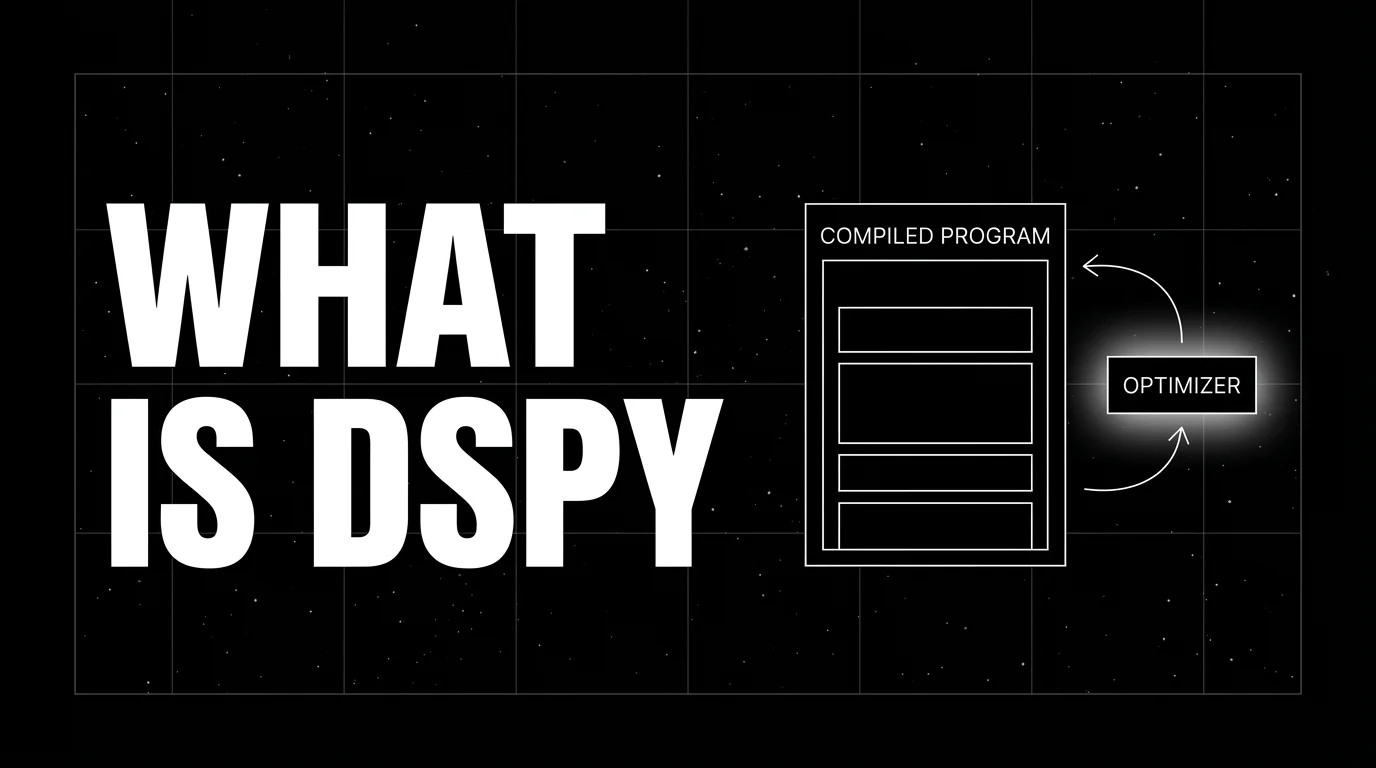
DSPy is a Stanford framework that compiles LLM programs into optimized prompts. Signatures, modules, optimizers, MIPRO, and how it differs from LangChain.

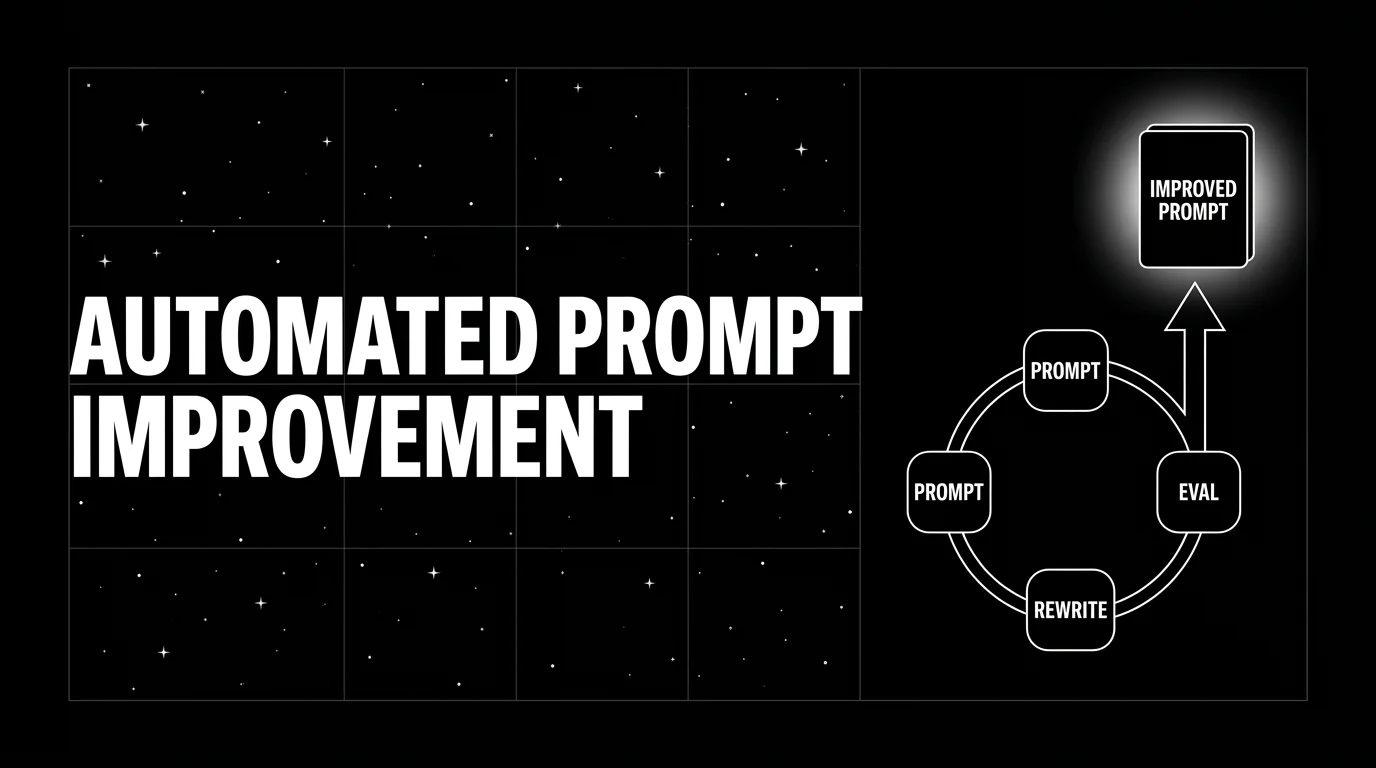
Automated prompt improvement in 2026 with six named optimizers (ProTeGi, GEPA, PromptWizard, MetaPrompt, BayesianSearch, RandomSearch) wired into CI.

DSPy, FutureAGI Prompt Optimizer, PromptFoo, OpenAI Playground, Helicone Prompts, Braintrust Prompts, plus tradeoffs for 2026 prompt engineering workflows.
