Best 5 AI Gateways for PII Redaction in LLM Calls in 2026
Five AI gateways for PII redaction in LLM calls 2026: seven-axis privacy rubric, detector latency, entity coverage, per-region policy support.
Table of Contents
Originally published May 17, 2026.
A payments team shipped a support copilot Tuesday and woke up Wednesday to a privacy-engineering thread: the model had been summarizing 14,000 tickets, the prompt template stuffed raw PAN, email, and home address into every call, and the upstream provider’s data-share posture was opt-out by default. The gateway had a regex stripping “credit card numbers” that matched only 16-digit Visa, missed every 15-digit Amex, missed every name, every IBAN, and never scanned the response. This guide compares the five AI gateways security and privacy engineering teams should choose between in 2026 for PII redaction, scored on a seven-axis rubric: detector latency, entity-type coverage, per-region policy, redaction-mode choice, audit trail, response-side redaction, and false-positive management.
TL;DR: 5 Gateways Scored on the Seven-Axis Privacy Rubric
Future AGI Agent Command Center is the strongest single pick for PII redaction in LLM calls in 2026 because it bundles an inline detector at ~65 ms text and ~107 ms image (independent benchmark in arXiv 2510.13351), 18 default entity classes tunable per region (GDPR, CCPA, PIPEDA, HIPAA), mask plus hash plus tokenize plus refuse modes per entity, per-event audit trails, response-side redaction on the same detector hop, and a self-improving loop that feeds flagged false positives back into the classifier in one Apache-2.0 Go binary. Request-side regex stripping no longer cuts it; the four axes separating a 2026 privacy-grade gateway from a 2024 LLM proxy are detector latency under a real budget, per-region policy mapping (GDPR vs CCPA vs PIPEDA), response-side redaction (the model can leak PII back), and an audit trail an auditor or DPO can replay six months later.
| # | Platform | Best for | 2026 event you should know |
|---|---|---|---|
| 1 | Future AGI Agent Command Center | Inline ~65 ms text + 107 ms image PII detector + 18 entity classes + region-aware mask/hash/tokenize/refuse + response-side scan + self-improving false-positive loop in one Apache-2.0 Go binary | Independent benchmark in arXiv 2510.13351 (October 2025) covers joint PII + prompt-injection at ~65 ms text; no pending acquisition |
| 2 | Portkey | Managed Guardrails plugin layer with bundled Presidio adapter + per-virtual-key policy attach + native audit dashboard | Palo Alto Networks announced intent to acquire on April 30, 2026; close expected PANW fiscal Q4 |
| 3 | Kong AI Gateway | Platform teams already on Kong who want the ai-prompt-guard plugin plus a side-car Presidio container on the route | Kong 3.8+ ships the AI gateway plugins; Enterprise tier for the Advanced policy surface |
| 4 | agentgateway.dev (Linux Foundation) | MCP-tool-call scanner + agent-to-agent identity-bound redaction at the tool boundary | Linux Foundation project (Solo.io contributed) focused on the MCP and A2A scan surface |
| 5 | Helicone | Vault-style secret obfuscation for API keys plus light-weight observability hooks | Acquired by Mintlify on March 3, 2026; roadmap shifting to documentation-platform-first |
The 5 PII-Redaction Gateways at a Glance
The five cover every privacy-engineering shape teams ship in 2026: an Apache-2.0 platform with the rubric in one binary (Future AGI), a managed Guardrails layer with acquisition pending (Portkey), an enterprise plugin gateway for teams on Kong, a Linux-Foundation MCP scanner (agentgateway.dev), and a vault-style secret obfuscation layer (Helicone).
| # | Platform | Best for | License + deployment |
|---|---|---|---|
| 1 | Future AGI Agent Command Center | Inline detector + 18 entity classes + region-aware policy + four redaction modes + response-side scan + false-positive feedback loop | Apache 2.0; cloud at gateway.futureagi.com/v1 or self-host (Docker, Kubernetes, air-gapped) |
| 2 | Portkey | Managed Guardrails plugin with bundled Presidio + native audit dashboard | MIT (open-source gateway) + cloud control plane; PANW acquisition pending |
| 3 | Kong AI Gateway | Platform teams already on Kong who want ai-prompt-guard plus Presidio side-car on the AI route | Apache 2.0 core + Enterprise tier; self-host or Kong Konnect cloud |
| 4 | agentgateway.dev | MCP-tool-call PII scan + agent-to-agent identity-bound redaction | Apache 2.0; Linux Foundation; self-host |
| 5 | Helicone | Vault-style secret obfuscation for API keys; light observability | MIT + cloud; acquired by Mintlify March 3, 2026 |
Helicone is in the list because Vault remains the cleanest pattern for “don’t let the OpenAI API key out the door.” Treat the broader PII roadmap as a migration window given the Mintlify integration.
How Did We Score AI Gateways for PII Redaction?
We used the Future AGI Privacy Scorecard. Most 2026 PII listicles score on “does it have a regex” and stop there. They don’t score detector latency, don’t list the entity-type matrix, don’t surface the GDPR-versus-CCPA-versus-PIPEDA split, don’t explain mode-per-entity, don’t check the audit trail, don’t measure response-side redaction, and don’t address false-positive management.
| # | Axis | What we measure (privacy lens) |
|---|---|---|
| 1 | Detector latency | p99 and added time-to-first-token; benchmark provenance (vendor versus independent) |
| 2 | Entity-type coverage | Default entity classes; tunable additions; per-region presets (GDPR, CCPA, PIPEDA, HIPAA) |
| 3 | Per-region policy support | GDPR Article 4(1) vs CCPA 1798.140(v) vs PIPEDA Schedule 1 vs HIPAA Safe Harbor; residency-aware attach |
| 4 | Redaction-mode choice | Mask, hash, tokenize, refuse; per-entity-per-route mode selection |
| 5 | Audit trail per event | One event per redaction with entity_type, mode, original_hash, policy_id; retention; SIEM forward |
| 6 | Response-side redaction | Same detector applied on the way back; PII confabulation guard; in-stream SSE redaction |
| 7 | False-positive management | Audit-triggered relabeling; classifier retraining loop; precision/recall reporting |
Axes 1, 3, 6, and 7 decide whether the gateway actually does privacy engineering work in production.
Capability Matrix
Future AGI Agent Command Center leads on combined detector latency, entity-type coverage, per-region policy, redaction-mode choice, audit trail, response-side redaction, and false-positive management. Portkey wins on managed Guardrails dashboard polish. Kong wins on existing plugin maturity. agentgateway.dev wins on the MCP surface. Helicone wins on the narrow secret-leak path.
| Capability | Future AGI ACC | Portkey | Kong AI Gateway | agentgateway.dev | Helicone |
|---|---|---|---|---|---|
| Inline detector text latency p99 | ~65 ms (arXiv 2510.13351) | Plugin call (~150 to 400 ms via Presidio) | Plugin call (Presidio side-car latency dependent) | MCP-call scan (~50 to 100 ms) | No inline free-text detector |
| Inline detector image latency p99 | ~107 ms (arXiv 2510.13351) | Vision-guard plugin (separate) | Manual plugin | Not applicable | None |
| Default entity classes | 18 | ~14 (via Presidio defaults) | Presidio defaults (configurable) | MCP-tool-call scoped | Secret-leak only |
| Per-region policy presets (GDPR/CCPA/PIPEDA/HIPAA) | Yes (region-aware policy maps) | Manual policy author | Manual plugin config | Manual config | None |
| Custom entity types | YAML config + classifier retrain | Plugin config | Lua plugin or Presidio recognizer | Config file | Not applicable |
| Mask mode | Yes | Yes | Yes | Yes (refuse default) | No |
| Hash mode (deterministic) | Yes | Yes | Manual (custom Lua) | Manual | No |
| Tokenize mode (reversible vault) | Yes | Yes | Manual | Manual | Yes (for secrets) |
| Refuse mode (422 + audit) | Yes | Yes | Yes | Yes (default) | No |
| Audit event per redaction | Yes (OTel span) | Yes (dashboard) | Yes (opentelemetry plugin) | Yes (event log) | Limited |
| Response-side redaction | Yes (same detector) | Partial (response hooks) | Manual (response-transformer plugin) | Limited (request side focus) | None |
| In-stream SSE redaction | Yes | Partial | Manual | Limited | None |
| False-positive feedback loop | Yes (agent-opt retrain) | Manual relabel | Manual | Manual | None |
| OTel-native audit export | Yes (/-/metrics) | Partial | Yes (OTel plugin) | Yes | Partial |
| Self-host / air-gapped | Yes (Apache 2.0 Go binary) | Yes (open-source core) | Yes | Yes | Self-host (community), cloud now Mintlify |
No gateway wins every column. The five that matter most are inline-detector latency, per-region policy presets, response-side redaction, audit trail per event, and false-positive feedback loop.
How AI Gateways Actually Redact PII in LLM Calls
Four failure modes hit teams shipping a single-axis regex stripper: contextual-entity miss, response-side leak, regulatory mismatch, silent-fine path.
- Detector latency. Regex runs at 1-5 ms but misses 30-60 percent of contextual entities. A small inline classifier catches names, contextual phones, addresses. Combined, both should land under 100 ms p99 on text; Future AGI Protect lands at ~65 ms on the joint PII+prompt-injection scan (arXiv 2510.13351). 250+ ms means the model is too large for the inline path.
- Entity-type coverage. Ten classes is the 2026 minimum: gov ID (SSN, NRIC, Aadhaar, PAN), email, phone, postal address, full name, credit card, IBAN, IP, generic ID, DoB. HIPAA adds 18 PHI categories; CCPA 1798.140(v) adds geolocation and biometric.
- Per-region policy. GDPR Article 4(1), CCPA 1798.140(v), PIPEDA Schedule 1 Principle 4.4, HIPAA Safe Harbor each define different obligations. Without a per-region mapping, the gateway over-redacts (signal loss) or under-redacts (regulator letter).
- Redaction mode. Mask as safe default. Hash (deterministic SHA-256 prefix) when the model needs entity identity without value. Tokenize (reversible vault token) when the response needs the entity restored client-side. Refuse (422) for entities that must never reach the provider (PCI PAN to non-PCI provider). Mode-per-entity-per-route, not mask-everything-always.
- Audit trail. One event per redaction with
entity_type,mode,original_hash,policy_id,tenant_id,span_id,timestamp. 12-month retention minimum; SIEM forward. Without it, the gateway is a black box; with it, the team answers “show every SSN redaction for Acme in March” in seconds. - Response-side redaction. The model can confabulate a real-looking SSN, regurgitate memorized PII, or return a customer record a tool call leaked back. A prompt-only scanner covers maybe 50-70 percent of leak vectors; the other 30-50 percent come back from the model.
- False-positive management. A 0.92-recall, 0.88-precision detector flags 12 percent of legitimate text as PII on day one. Every false positive marked in the audit trail becomes a labeled negative the classifier retrains on. Without the loop, precision and recall drift the moment your prompt distribution changes.
Future AGI Agent Command Center: Best Overall for PII Redaction
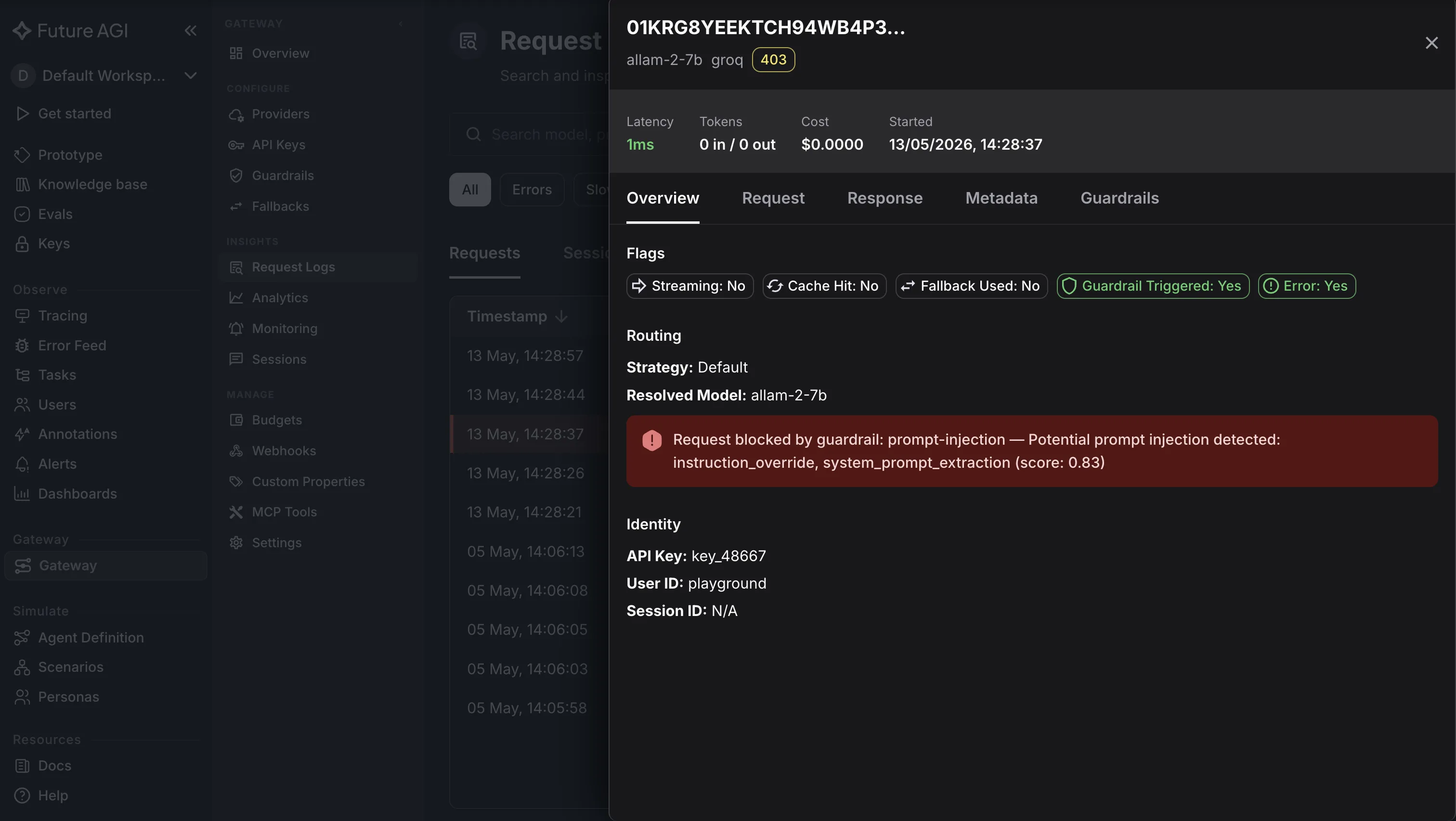
Future AGI Agent Command Center tops the list because it bundles every axis of the rubric at one network hop in one Apache-2.0 Go binary, and the inline-detector latency numbers have an independent benchmark to cite. It loses on managed-dashboard polish to Portkey and existing-Kong gravity to Kong AI Gateway; for buyers whose binding constraint is sub-100 ms inline detection on request and response with region-aware policy, four redaction modes, and a false-positive feedback loop into OpenTelemetry, the combined surface still puts it first. Docs at Agent Command Center; source at the Future AGI GitHub repo.
Best for. Security and privacy engineering teams on OpenTelemetry wanting OpenAI-compatible drop-in, sub-100 ms p99 text and sub-150 ms image detection, per-region presets for GDPR/CCPA/PIPEDA/HIPAA, four modes per entity, response-side scan, audit trail per event, and a self-improving false-positive loop.
Key strengths.
-
OpenAI-compatible drop-in: change
base_urltohttps://gateway.futureagi.com/v1; redaction policy attaches at the same hop without SDK changes. -
The Future AGI Protect model family as the inline detector at ~65 ms p50 text and ~107 ms p50 image (arXiv 2510.13351) on the joint PII + prompt-injection scan. Lands inside the time-to-first-token budget for chat. Protect is FAGI’s own fine-tuned model family built on Google’s Gemma 3n with specialized adapters across four safety dimensions (content moderation, bias detection, security/prompt-injection, data privacy/PII), natively multi-modal across text, image, and audio, a model family, not a plugin chain of third-party detectors. The same four dimensions are reusable as offline eval metrics so the prod policy and the eval rubric stay in sync.
-
18 default entity classes on top of the data-privacy adapter (SSN, NRIC, Aadhaar, PAN, email, phone, postal address, name, credit card with Luhn check, IBAN, IP, customer ID, DoB, plus HIPAA PHI and CCPA biometric/geolocation extensions). Custom entities via YAML + classifier fine-tune.
-
Per-region presets: GDPR Article 4(1), CCPA 1798.140(v), PIPEDA Schedule 1, HIPAA Safe Harbor.
X-Regionheader or tenant property selects the policy at request time. -
Four modes per entity (mask, hash deterministic SHA-256, tokenize reversible vault, refuse 422+audit), selectable per-entity-per-route in YAML.
-
Audit trail: one OTel span per redaction with
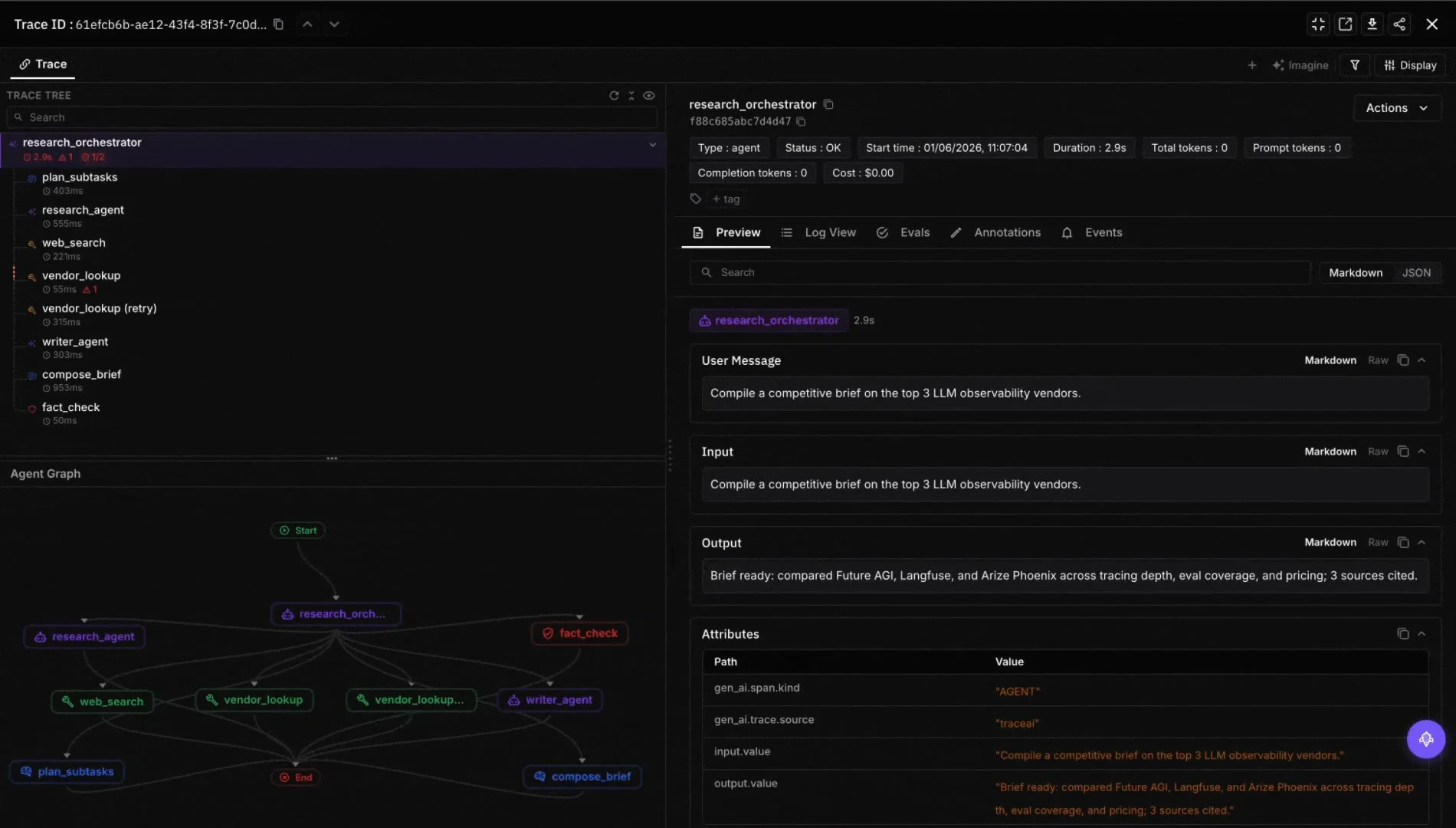
entity_type,mode,original_hash,policy_id,tenant_id,span_id,region,timestamp; Prometheus on/-/metrics; 12-month default retention; SIEM forward via OTLP.traceAIinstruments 50+ AI surfaces across Python, TypeScript, Java, and C# (including Spring Boot starter, Spring AI, LangChain4j, Semantic Kernel) OpenInference-natively, and Error Feed (the part of the eval stack, the clustering and what-to-fix layer that feeds the self-improving evaluators) sits alongside as the zero-config error monitor: auto-clusters related false-positive and detector-miss failures (50 traces → 1 issue), auto-writes the root cause plus a quick fix plus a long-term recommendation per issue, and tracks rising/steady/falling trend per issue so emerging PII-leak patterns surface like exceptions rather than buried in SIEM rows.
-
Response-side redaction on the same detector hop; in-stream SSE buffering through a small lookback window.
-
False-positive feedback loop via agent-opt: every relabeled FP becomes training data. The same trace that flags the FP produces the labeled dataset the optimizer uses. No other gateway closes this loop end-to-end.
-
Apache 2.0 (traceAI, ai-evaluation, agent-opt); single Go binary; Docker, Kubernetes, air-gapped, or cloud at
gateway.futureagi.com/v1.
Where it falls short. The managed-audit dashboard trails Portkey’s visual polish; teams wanting a finance-grade native UI will reach for Portkey first. The image detector at ~109 ms is heavier than text; size the inline path accordingly. The tokenize vault retains the original for reversibility; teams banning any plaintext PII on the gateway should use tokenize only where restoration is needed and mask or hash elsewhere. Self-host ops cost is non-zero; choose the hosted endpoint to skip it.
from openai import OpenAI

client = OpenAI(
    api_key="$FAGI_API_KEY",
    base_url="https://gateway.futureagi.com/v1",
)

response = client.chat.completions.create(
    model="anthropic/claude-3-5-sonnet",
    messages=[{"role": "user", "content": (
        "Summarise this ticket from Jane Hernandez "
        "(jane@example.com, +1-415-555-0173, SSN 123-45-6789) about order #ORD-29384."
    )}],
    extra_headers={
        "X-Tenant-Id": "acme-corp",
        "X-Region": "eu-gdpr",
        "X-Policy-Id": "support-copilot-eu",
    },
)

# Before the request leaves the gateway hop:
#   "Jane Hernandez"   -> mask     (policy: mask names in eu-gdpr)
#   "jane@example.com" -> hash     (session identity)
#   "+1-415-555-0173"  -> mask
#   "123-45-6789"      -> refuse   -> 422 + audit event
Verdict. The strongest single pick when the 2026 PII story is sub-100 ms inline detection on request and response, region-aware policy (GDPR/CCPA/PIPEDA/HIPAA), per-entity mode choice, an audit event per redaction, and a false-positive feedback loop in one Apache-2.0 binary.
Portkey: Best for Managed Guardrails Dashboard
Portkey is the strongest pick when you want a managed Guardrails plugin layer with a bundled Presidio adapter, per-virtual-key policy attach, and a usable audit dashboard out of the box. It’s what teams reach for when “privacy plane with a UI next week” is the brief.
Key strengths.
- Bundled Microsoft Presidio adapter; policy attaches per virtual key so an EU-plan tenant gets a different entity set and mode from a US-plan tenant.
- Mask, hash, tokenize, refuse modes via the Guardrails policy file.
- Native dashboard for redaction-event attribution by tenant, feature, route, entity type; one-click drill-down with
entity_type,mode, hashed reference. - 250+ provider adapter library; same policy across providers.
- Open-source gateway core (github.com/Portkey-AI/gateway); self-host gateway, run control plane in Portkey cloud.
Where it falls short. Palo Alto Networks announced intent to acquire Portkey on April 30, 2026; close expected PANW fiscal Q4 2026, Portkey becoming the AI Gateway for Prisma AIRS. Verify standalone continuity before signing multi-year. Detector latency depends on the Presidio side-car: typically 150-400 ms p99, materially heavier than the ~67 ms Future AGI benchmark. Per-region presets are manual; the policy author writes the mapping. Response-side redaction is via hooks; the default library skews request-side. False-positive management is manual relabel; no retraining loop. Control plane is closed; verify the open-source core covers air-gapped.
Verdict. The most mature managed Guardrails layer with a native dashboard in 2026. Choose with eyes open on the PANW integration.
Kong AI Gateway: Best for Platform Teams Already on Kong
Kong AI Gateway is the AI overlay on the Kong gateway. Teams already on Kong for REST get the ai-prompt-guard plugin plus the ability to wire a Presidio side-car or custom Lua redactor on the same AI route, with the same observability, RBAC, audit, and rate-limit surface.
Key strengths.
ai-prompt-guardenforces allow-list, deny-list, prompt-template rules; pair with Presidio side-car or Lua plugin for free-text entity detection.response-transformerplugin handles response-side redaction with the same side-car.- Per-consumer, per-credential, per-service, per-route policy via the Consumer entity.
- Native OpenTelemetry export; redaction events surface as spans.
- Kong Konnect managed cloud or on-prem Kong Gateway Enterprise.
Where it falls short. No first-party inline PII detector; the team wires Presidio or Lua as a side-car, putting latency at 150-400 ms p99. The AI-specific layer lags the rest of the Kong plugin ecosystem in cadence. Per-region presets are manual; entity set is a static plugin parameter. Tokenize and hash modes require custom Lua. False-positive management is manual; no retraining loop. Heavier control-plane footprint than a single Go binary; for teams not already on Kong, ops cost isn’t justified by the AI redaction surface alone.
Verdict. Right pick when Kong is already the platform plane. Choose elsewhere when AI-specific PII features (inline-detector latency, region presets, tokenize vault, classifier retraining) are the binding constraint.
agentgateway.dev: Best for MCP-Tool-Call PII Scan
agentgateway.dev is the Linux Foundation project (Solo.io contributed) focused on the MCP and agent-to-agent surface. It takes the MCP-tool-call boundary as the privacy plane: every tool description, argument, and result passes through an identity-bound scan before the agent loop continues. Post-April-2026 OX Security MCP STDIO disclosure, this surface is the one most teams realise they were missing.
Key strengths.
- MCP-tool-call scanner: every tool description, argument, and result scans for entities; policy attaches per tool, per agent identity, per session.
- Refuse-by-default at the tool-call boundary; opt a tool into “may see PII” rather than the inverse. Matches the post-April-2026 least-privilege MCP threat model.
- Identity-bound redaction: keyed off agent identity + user identity + session, so the same tool shows different redaction levels to different agents.
- Apache 2.0; Linux Foundation governance; OTel-native event log; alignment with OWASP LLM Top 10 excessive-agency and sensitive-information-disclosure entries.
Where it falls short. Free-text-prompt PII isn’t the focus; pair with a request-side inline detector for chat. Entity coverage scopes to what tool calls carry (account IDs, structured records); contextual free-text entities are weaker. Mask and refuse are the defaults; hash and tokenize need additional config plus a vault you bring. Per-region presets are manual. Response-side at the chat layer isn’t the primary surface. Dashboard and audit UI thinner than Portkey’s; smaller community than Kong’s.
Verdict. Right pick for MCP-tool-call and agent-to-agent redaction; wrong pick standalone for a chat-only workflow. Pair Future AGI on the chat path with agentgateway.dev on the MCP-tool path.
Helicone: Best for Vault-Style Secret Obfuscation
Helicone ships a Vault feature that obfuscates API keys plus light-weight observability hooks. For the narrow “don’t let the OpenAI API key leak out of the application code” problem, the Vault pattern is one of the cleanest. The broader free-text PII surface isn’t the focus, and the March 3, 2026 Mintlify acquisition shifts the roadmap to documentation-platform-first.
Key strengths.
- Vault: reversible-token pattern for API keys; the upstream provider key never lives in app code.
- Light-weight observability: per-request logging, basic dashboards.
- MIT open-source core; self-host or cloud (now under Mintlify).
Where it falls short. No inline free-text PII detector; the Vault pattern obfuscates secrets, not user-entered or model-returned PII. Entity coverage for free-text PII is absent. Per-region presets don’t apply. Mask, hash, refuse modes for free-text are absent; tokenize is secret-key only. No response-side free-text redaction. Audit limited to Vault substitution events. Mintlify acquisition makes long-term gateway cadence uncertain.
Verdict. Right for narrow Vault-style secret obfuscation; wrong as a standalone PII-detection gateway in 2026. Keep Vault for secrets; migrate the broader PII surface to a gateway with an inline free-text detector.
The 2026 Gateway Migration and Trust Cohort
Every listicle on the SERP treats these as if they didn’t happen. They did, and they reshape the procurement question.
- Helicone joining Mintlify (March 3, 2026). Roadmap shifts to documentation-platform-first. Vault primitive still useful; broader PII roadmap is a migration window.
- LiteLLM PyPI supply-chain compromise (March 24, 2026). Versions
1.82.7/1.82.8exfiltrated SSH keys, cloud credentials, Kubernetes configs (Datadog writeup). Pin hashes, rotate credentials, upgrade past 1.83.7. For a privacy gateway, a supply-chain compromise is a first-class disqualifier. - Anthropic MCP STDIO RCE class (April 2026). OX Security disclosed a transport flaw affecting 7,000+ MCP servers and 150M+ downloads. Identity-bound redaction at the tool-call boundary became default overnight (Hacker News).
- Portkey acquired by Palo Alto Networks (April 30, 2026). Becomes the AI Gateway for Prisma AIRS; close expected PANW fiscal Q4 2026 (PANW release). Standalone continuity pending integration.
A gateway whose roadmap is about to be re-platformed inside an acquirer, or whose PyPI package was malware for 48 hours, isn’t “still a default” for a privacy buyer.
Decision Framework
The buyer profile drives the pick more than the feature matrix does.
Choose Future AGI Agent Command Center for PII redaction if:
  - You need sub-100 ms inline detection on text and sub-150 ms image
  - GDPR vs CCPA vs PIPEDA vs HIPAA per-region presets matter
  - Response-side redaction is non-negotiable
  - Audit trail per event must be OTel-native and SIEM-forwarded
  - False-positive feedback loop matters to you
  - Apache 2.0 single Go binary is the deployment shape

Choose Portkey if:
  - Managed Guardrails dashboard out of the box is the binding requirement
  - You can hand-author the per-region policy mapping
  - 150 to 400 ms Presidio side-car latency is acceptable
  - The PANW acquisition timeline is acceptable for your contract

Choose Kong AI Gateway if:
  - Kong is already the platform plane for REST
  - You will wire Presidio or Lua as the detector
  - Enterprise plugin maturity outweighs AI-specific cadence

Choose agentgateway.dev if:
  - MCP tool calls are the load-bearing leak surface
  - Identity-bound redaction at the tool-call boundary matters
  - You pair it with a chat-prompt detector elsewhere

Choose Helicone (Vault only) if:
  - Your only redaction problem is the upstream provider API key
  - You migrate the broader PII roadmap elsewhere
Common PII-Redaction Implementation Mistakes
Five mistakes account for most of the privacy-engineering incidents we see.
- Regex-only detector. Catches Luhn-checksummed PANs, country-prefixed IBANs, well-formed IPs; misses 30-60 percent of contextual entities. First user with a non-Western name gets a false-negative. Fix: regex plus a small inline classifier, both under 100 ms p99.
- Mask-everything-always. Summarization quality drops 15-25 percent. Fix: mode-per-entity-per-route. Mask names; hash emails when session identity is needed; tokenize customer-ID when restoration is needed; refuse SSNs to non-scope providers.
- Request-side only. A month in, a user posts a model response containing a confabulated-but-real SSN. Fix: response-side detection from day one; in-stream SSE buffering through a small lookback window.
- No per-region policy map. A German user gets the US default that under-redacts under GDPR; a Californian gets GDPR over-redaction. Fix: region-aware attach via header or tenant property; map GDPR, CCPA, PIPEDA, HIPAA to entity sets and modes.
- No audit trail per event. Team can’t answer “show every SSN redaction for Acme in March” when the DPO asks. Fix: one OTel span per redaction with
entity_type,mode,original_hash,policy_id,tenant_id,span_id; 12-month retention; SIEM forward.
Future AGI PII-Redaction Implementation Walk-Through
A production-grade policy is five pieces composed together: region-aware attach, entity-set per region, mode-per-entity-per-route, response-side scan, and audit-trail-plus-feedback-loop. Agent Command Center configures all five in one YAML.
# gateway.yaml - PII redaction policy
pii_redaction:
  # Region-aware policy map
  regions:
    eu-gdpr:
      entity_set: gdpr_full      # 18 entities incl. names, addresses, IPs
      retention_days: 365
    us-ccpa:
      entity_set: ccpa_full      # 14 entities incl. geolocation, biometric
      retention_days: 365
    ca-pipeda:
      entity_set: pipeda_full
      retention_days: 365
    us-hipaa:
      entity_set: hipaa_safe_harbor   # 18 PHI categories
      retention_days: 2190     # 6 years per HHS minimum

  # Mode per entity per route
  policies:
    - id: support-copilot-eu
      route: /v1/chat/completions
      region: eu-gdpr
      modes:
        FULL_NAME: mask
        EMAIL: hash
        PHONE: mask
        POSTAL_ADDRESS: mask
        CREDIT_CARD: refuse        # PCI: never to a non-PCI provider
        IBAN: refuse
        SSN_LIKE_GOV_ID: refuse
        CUSTOMER_ID: tokenize      # reversible for the response

    - id: analytics-internal-us
      route: /v1/analytics/*
      region: us-ccpa
      modes:
        FULL_NAME: hash
        EMAIL: hash
        IP_ADDRESS: mask
        GEOLOCATION: hash
        CREDIT_CARD: refuse

  # Detector configuration
  detector:
    text:
      regex_layer: enabled
      classifier_model: fagi-protect-text-v3
      target_recall: 0.92
      target_precision: 0.88
      latency_budget_ms: 100      # p99 hard cap
    image:
      classifier_model: fagi-protect-image-v3
      latency_budget_ms: 150

  # Response-side scan (same detector, same modes)
  response_scan:
    enabled: true
    in_stream_buffer_tokens: 24    # lookback for SSE

  # Audit trail
  audit:
    otlp_endpoint: $OTLP_ENDPOINT
    prometheus_metrics: /-/metrics
    span_attributes:
      - entity_type
      - mode
      - original_hash      # SHA-256 prefix, never plaintext
      - policy_id
      - region
      - tenant_id
      - span_id
      - timestamp
    siem_forward:
      target: splunk
      retention_days: 365

  # False-positive feedback loop
  feedback:
    relabel_endpoint: /admin/relabel
    retrain_schedule: weekly
    optimizer: agent-opt
    min_relabels_per_entity: 50
Three production dashboards land once telemetry flows: redactions by entity by tenant (an SSN_LIKE_GOV_ID spike flags a new upstream caller stuffing identifiers); FP relabel rate by entity by route (healthy under 5 percent; over 15 percent triggers a tuning candidate); refuse-rate by route by region (healthy under 0.1 percent; an EU-GDPR spike flags a new use case stuffing forbidden entities).
The closed loop is what no other gateway here ships end-to-end. The Future AGI optimizer reads redaction events, relabel rate, and refuse-rate from the OTel trace; proposes adjustments to thresholds, mode policy, and per-region entity set; surfaces them as a tuning candidate the privacy team reviews. The same trace that flags a FP produces the labeled dataset agent-opt uses to revise the detector.
PII redaction in 2026 isn’t a regex. It’s a stack: inline detection under a real latency budget, region-tunable entity sets, four modes per entity per route, audit event per redaction, response-side scan with in-stream buffering, and a false-positive feedback loop.
Future AGI Agent Command Center is the strongest single pick when the constraint is one Apache-2.0 binary covering every axis of the rubric. Portkey teams should weigh the PANW integration; Kong teams should size the Presidio side-car; agentic-AI teams should pair agentgateway.dev; Helicone teams should keep Vault for secrets only.
For deeper reads: Agent Command Center docs, Future AGI Protect docs, arXiv 2510.13351, GDPR Article 4, CCPA 1798.140, PIPEDA Schedule 1, HHS HIPAA Safe Harbor.
Try Future AGI Agent Command Center free: drop-in routing, ~65 ms text + ~107 ms image detector, 18 entity classes per region, four modes per entity per route, audit trail with SIEM forward, response-side redaction, and a self-improving FP feedback loop in one Apache-2.0 Go binary.
Related reading
- Best 5 AI Gateways for Compliance Audit Trails in 2026, the compliance and audit-trail comparison
- Best 5 AI Gateways for LLM Cost Optimization in 2026, the five-layer cost stack and the 2026 trust cohort
- Best 5 AI Gateways for Cybersecurity in 2026: Prompt Injection Defense, Tenant Isolation, and SOC 2, the cybersecurity-specific gateway picks
- Best 5 AI Gateways for Prompt Injection Defense in 2026, prompt-injection defense at the gateway hop
Frequently Asked Questions
What Is the Right Latency Budget for an Inline PII Detector at the Gateway?
Which Entity Types Should an AI Gateway Detect Before Sending to the LLM Provider?
Mask, Hash, Tokenize, or Refuse: How Do You Pick a Redaction Mode per Entity Type?
Does the AI Gateway Need to Redact PII in the Model's Response, Not Just the Prompt?
How Do You Manage the False-Positive Versus False-Negative Tradeoff?
How Do GDPR, CCPA, and PIPEDA Treat PII Sent to a Third-Party LLM Provider?
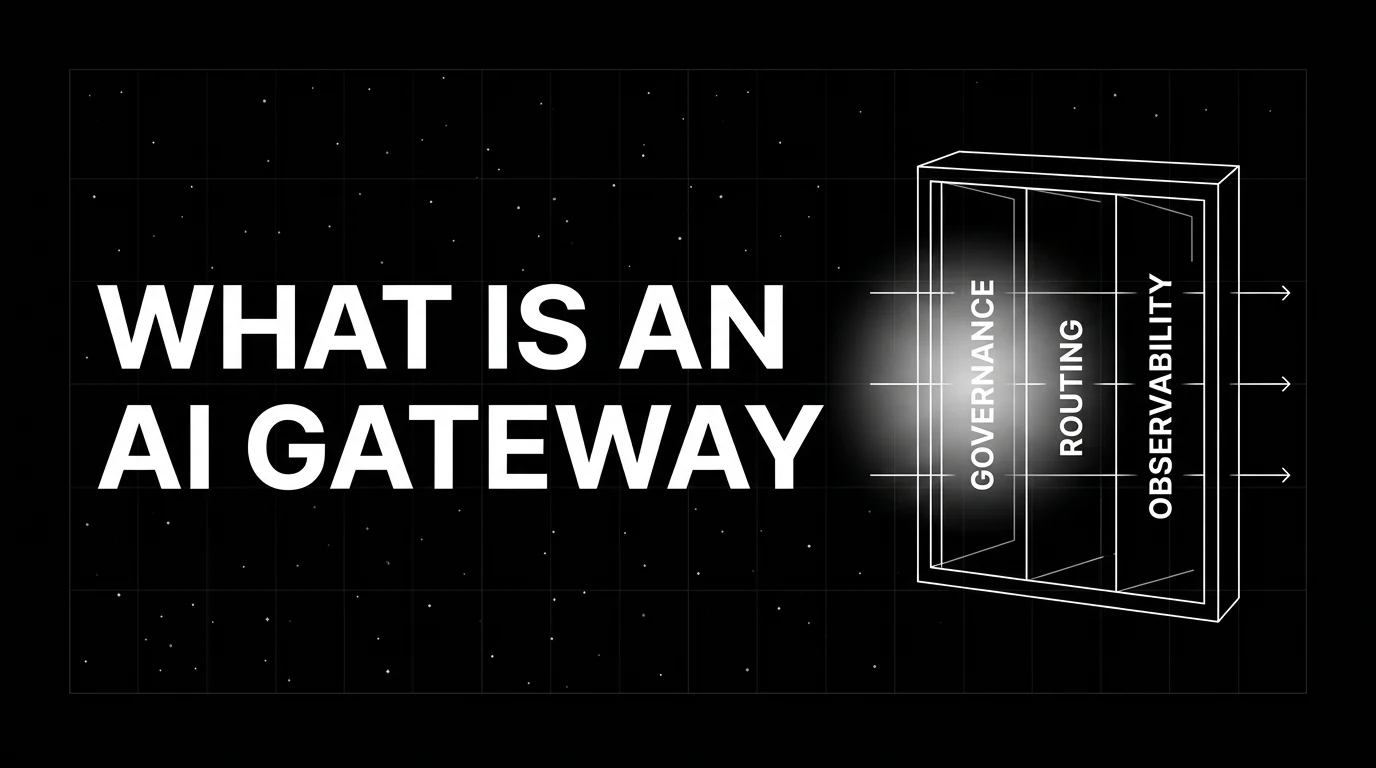
An AI gateway sits between apps and LLM providers for governance, routing, observability. What it is, how it differs from API gateways.

PII detection eval is per-entity precision AND recall on adversarial AND benign sets. One F1 score hides a HIPAA breach. The 2026 methodology.
Five AI gateways for prompt injection defense in 2026 scored on direct and indirect detection, sub-100ms inline latency, openness, modes, robustness.
