Best 5 Adaline Alternatives in 2026
Five Adaline alternatives on prompt-as-config portability, provider catalog, self-host, integrated eval. What each actually fixes vs Adaline hosted-only.

Table of Contents
Adaline picked a specific niche in 2024 and 2025: a hybrid that bundled prompt-management with a thin LLM gateway, optimized for product teams who wanted “prompts as configuration” plus a single proxy URL. Two years in, the same teams are asking different questions: where is the optimizer that uses my eval scores to rewrite prompts; where is the self-host option for the regulated workload; where is the provider added last month that everyone else shipped on day one; where is the community when something breaks at 2 a.m. and Stack Overflow has six results.
This guide ranks five replacements worth migrating to, names what each fixes versus Adaline, and walks through the migrations that always bite: extracting prompts out of Adaline’s prompt-as-config schema and re-instrumenting the REST surface your services already point at.
TL;DR: pick by exit reason
| Why you are leaving Adaline | Pick | Why |
|---|---|---|
| You want eval scores to feed an optimizer that rewrites prompts automatically | Future AGI Agent Command Center | Closes the loop from trace through eval to optimizer back into the registry |
| You want the same hybrid shape with a broader provider catalog | Portkey | Wider catalog, hosted polish, virtual keys, mature prompt registry |
| You want OSS observability with a deep community | Langfuse | Apache 2.0, large GitHub community, mature prompt registry |
| You want lightweight hosted observability and per-request cost telemetry | Helicone | Drop-in proxy, friendly pricing curve, simple surface area |
| You want a self-hosted, source-available proxy with full sovereignty | LiteLLM | MIT-licensed proxy that runs entirely inside your VPC |
Why people are leaving Adaline in 2026
Four exit drivers show up repeatedly in Hacker News threads, /r/LLMDevs migration discussions, the Adaline community Discord, and G2 reviews from the last two quarters.
1. Hosted-only posture with no self-host option
Adaline ships as a hosted product. There’s no open-source core to drop into your VPC and no air-gapped enterprise build. For teams whose regulated workloads (healthcare, finance, defense) require the proxy to live inside their own infrastructure, Adaline drops out of consideration in the second procurement meeting. /r/LLMDevs migration threads show a consistent pattern: teams who started on Adaline for the developer-experience polish hit a compliance wall once a regulated customer asks where prompts and traces are stored, and Adaline doesn’t publish a self-host SKU.
2. Narrower provider catalog than the broader cohort
Adaline’s supported provider list is real but lags Portkey, LiteLLM, and OpenRouter. New models from second-tier providers (xAI, DeepSeek, Reka) and regional providers (Bytedance Doubao, Baidu Ernie, Alibaba Qwen on Aliyun) tend to land on the broader gateways first and on Adaline months later. For teams running model bake-offs every quarter, the lag means routing around Adaline to test a new model, which defeats the point of having a gateway.
3. Smaller community and ecosystem
Stack Overflow tag counts, Discord member counts, and GitHub-issue throughput show Adaline’s community at a small fraction of the LiteLLM, Langfuse, or Portkey communities. When something breaks at 2 a.m. (a malformed tool-call response, a provider quota error wrapped oddly, a streaming-protocol edge case) the question of whether someone else has already filed the issue or published the fix has a different answer on Adaline than on the bigger projects. A small Discord and a thin public issue tracker is a real cost for production teams.
4. No integrated optimizer: prompts are static configuration
Adaline’s prompt-as-config model is the cleanest part of the product: prompts live as versioned configuration objects with a REST surface, and services pull them at request time. The model is also static. Adaline doesn’t ship an integrated optimizer that takes eval scores from production traces and rewrites prompts automatically. Teams who picked Adaline for “prompts as configuration” eventually want “prompts as a self-improving artifact”, and end up bolting on a separate optimization stack, which is the complexity Adaline was supposed to eliminate.
What to look for in an Adaline replacement
The default “best AI gateway” axes are necessary but not sufficient for an Adaline exit. Score replacements on the seven that map to the surfaces you’re migrating off:
| Axis | What it measures |
|---|---|
| 1. Prompt-as-config portability | Can you import Adaline’s prompt-as-config schema without losing version history? |
| 2. Provider catalog breadth | Does the replacement cover the same providers plus the long tail Adaline lagged on? |
| 3. Self-host posture | Can the gateway run inside your VPC, fully air-gapped from the vendor? |
| 4. Community depth | Stack Overflow tags, Discord members, GitHub stars, issue throughput |
| 5. Observability depth | Per-session, per-key, per-route — native, or bolt-on? |
| 6. Eval + optimizer loop | Does the gateway use its own trace data to improve routing and prompts? |
| 7. Migration tooling | Are there published scripts or importers for Adaline specifically? |
1. Future AGI Agent Command Center: Best for closing the loop
Verdict: Future AGI is the only gateway in this list that fixes Adaline’s biggest weakness, prompts are configuration but never improve themselves. Agent Command Center captures the trace, scores it with the eval library, clusters failures, runs the optimizer, and pushes the updated prompt back into the registry on the next request. Adaline gives you static config; FAGI gives you a self-improving loop wired to the same prompt surface.
What it fixes versus Adaline:
- Prompt portability with a self-improving loop. The Agent Command Center prompt registry accepts Jinja2 directly. The Adaline importer reads Adaline’s prompt-as-config JSON export, normalizes the schema, and preserves version metadata. Once prompts live in FAGI, the optimizer (
agent-opt, Apache 2.0) rewrites them automatically via six optimizers — ProTeGi, GEPA, Bayesian, MetaPrompt, RandomSearch, PromptWizard, driven by eval scores fromai-evaluation(Apache 2.0). Adaline’s prompt-as-config is the destination for a human edit; FAGI’s registry is the destination for an automated rewrite.
- Self-host posture Adaline doesn’t offer. The OSS instrumentation (
traceAI,ai-evaluation,agent-opt) is Apache 2.0 and runs entirely in your VPC. The hosted Command Center adds the dashboard, RBAC, failure clustering, and procurement surfaces, but the trace and eval pipeline itself is portable. - Native eval, not bolt-on. Every captured trace is scored against task-completion, faithfulness, and tool-use rubrics by default. Cost and quality data sit in the same row, no separate eval product to wire up.
- Protect, the Future AGI Protect model family. Fine-tuned adapters on Gemma 3n covering Content Moderation, Bias Detection, Security (prompt injection / adversarial / system-prompt extraction), and Data Privacy Compliance (PII, GDPR, HIPAA). Multi-modal across text, image, and audio. ~65 ms p50 text inline enforcement per arXiv 2510.13351, adds a runtime safety layer between the gateway and the model that Adaline doesn’t ship at all. Same dimensions reusable as eval metrics for offline batch scoring.
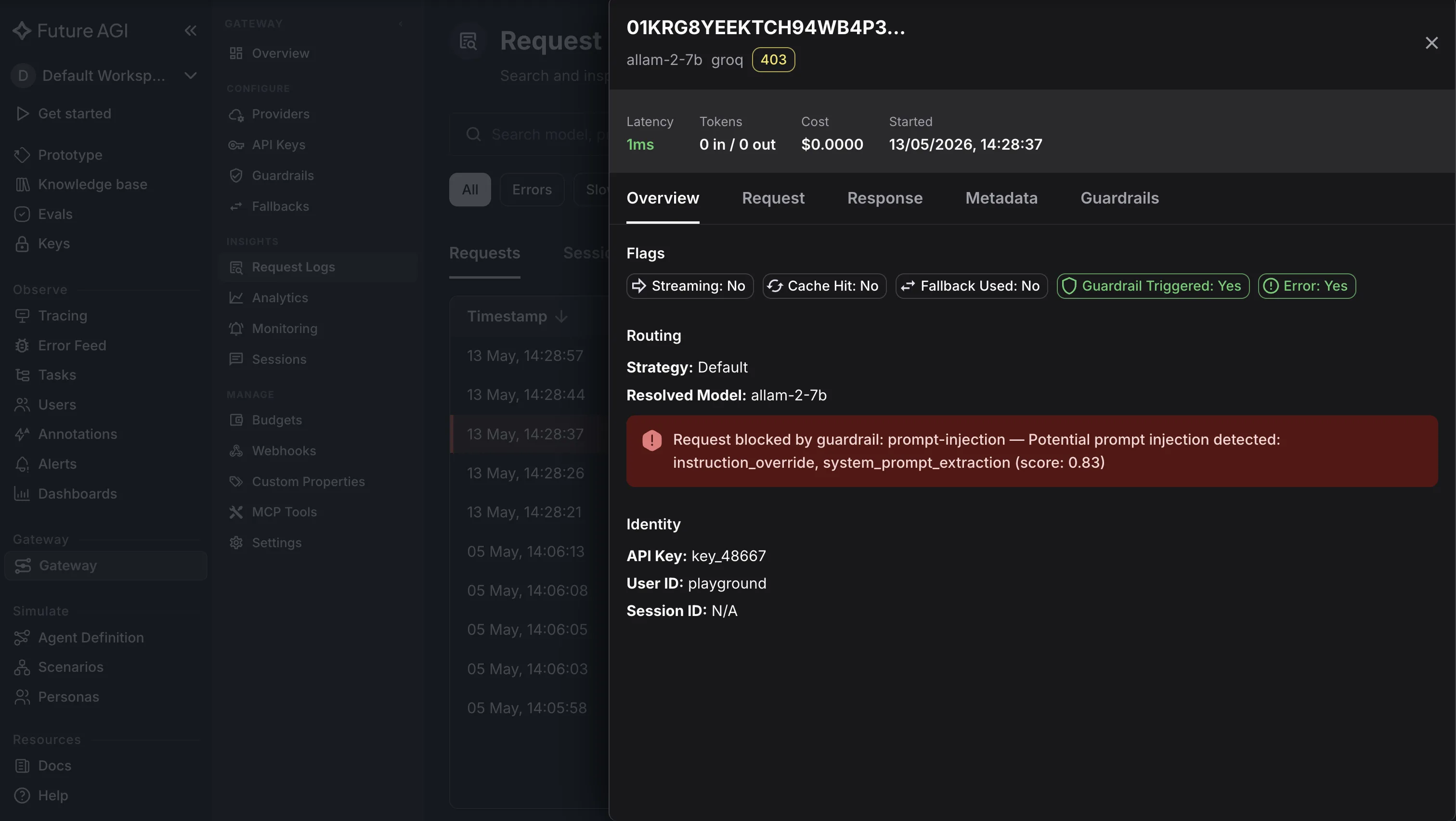
Migration from Adaline: Provider keys, REST endpoints, and routing rules map directly. Adaline’s prompt-as-config schema converts to Jinja2 cleanly for common cases; nested references and Adaline-specific filters need a manual pass. The trace and eval surface is new, teams replace the limited Adaline analytics view with a much deeper trace explorer. Timeline: seven to ten engineering days for under 200 prompts and a typical multi-service deployment, including a shadow-traffic period.
Where it falls short:
-
agent-opt is opt-in, start with traceAI + ai-evaluation in week one and turn the optimizer on once eval baselines stabilize. The loop compounds value over weeks rather than at day one.
-
The prompt-as-config REST surface is functionally equivalent but the URL shape is different, services need a
BASE_URLupdate.
Pricing: Free tier with 100K traces/month. Scale tier from $99/month with linear per-trace scaling above 5M (no add-on multipliers). Enterprise with SOC 2 Type II and AWS Marketplace.
Score: 7 of 7 axes.
2. Portkey: Best like-for-like hybrid replacement
Verdict: Portkey is the closest shape-match to Adaline, a hosted hybrid that bundles a prompt registry with an LLM gateway. The provider catalog is broader, the prompt registry (Prompt Studio) is more mature, and virtual keys give you per-developer attribution Adaline doesn’t match. One caveat: the Palo Alto Networks acquisition (April 30, 2026) added uncertainty about the SMB SKU’s roadmap. The public position is “no change for 12 months,” but Palo Alto’s historical pattern is to narrow the standalone SMB tier within 18 to 24 months. Portkey still ships the cleanest like-for-like alternative for 2026; some teams pair it with a portability plan from day one.
What it fixes versus Adaline:
- Broader provider catalog. Portkey’s supported list covers the major model APIs plus the long tail Adaline lagged on, second-tier US providers, regional APIs, and most of the Aliyun and Tencent Cloud surfaces. New-model lag is measured in days, not months.
- Mature prompt registry. Prompt Studio’s version-diff view, partial-prompt references, and template testing are more developed than Adaline’s prompt-as-config UI.
- Virtual keys with per-developer attribution. Every developer or service holds a Portkey-issued virtual key that fans out to one underlying provider key, preserving bulk pricing while exposing per-identity attribution. Adaline doesn’t match the fanout pattern at the same level of polish.
- Hosted polish. Dashboards, RBAC, audit logs, and SOC 2 Type II are all in the box for teams who want a hosted product but a broader one.
Migration from Adaline: REST endpoint shape is similar; provider keys map directly. Adaline’s prompt-as-config schema converts to Portkey’s Prompt Studio dialect with a per-prompt rewrite. Portkey uses {{handlebars}}-shaped tags with Portkey-specific filters, so plan a syntax-normalization pass. Timeline: five to seven engineering days for under 200 prompts.
Where it falls short:
- The Palo Alto Networks acquisition adds longer-term uncertainty about the SMB SKU.
- No optimizer. Traces inform humans, not the gateway.
- Hosted-only at the polished tier; the self-host story is thinner than LiteLLM’s.
- Pricing escalates noticeably above 5M requests per month when add-ons (Guardrails, Prompt Studio, Audit Logs) are enabled.
Pricing: Free tier with limited traces. Scale tier from $99/month. Enterprise custom.
Score: 5 of 7 axes (missing: optimizer loop, sovereign self-host).
3. Langfuse: Best OSS observability with deep community
Verdict: Langfuse is the pick when the exit reason is “I want a real community and an Apache 2.0 license I can audit.” Largest OSS observability project in the LLM space by GitHub stars and Discord members, a mature prompt registry, native evals, and a hosted EU tier for teams that need data residency.
What it fixes versus Adaline:
- Self-host posture. Langfuse runs anywhere, bare metal, VPC, Kubernetes. The hosted EU and US tiers are optional. The entire core is Apache 2.0; no surface is gated behind a closed-source binary.
- Community depth. Tens of thousands of GitHub stars, an active Discord with thousands of members, and a public issue tracker with high throughput. The “is the workaround already on Stack Overflow” question has a different answer here than on Adaline.
- Mature prompt registry. Langfuse Prompts supports version history, A/B routing by version, and an SDK that resolves prompts at request time. The shape is close enough to Adaline’s prompt-as-config that the migration is mostly schema-mapping.
- Native eval. LLM-as-a-judge, dataset-based offline eval, and per-trace scores all live in the same product surface. Cost and quality sit in the same row.
Migration from Adaline: Prompts map cleanly via a schema-conversion script; SDKs are first-party for Python, Node, and Go. Adaline’s REST surface for fetching prompts gets replaced by langfuse.get_prompt(). The gateway aspect of Adaline (the OpenAI-compatible proxy URL) doesn’t have a direct Langfuse equivalent, because Langfuse is observability-first rather than proxy-first; teams pair Langfuse with LiteLLM or a thin proxy for the routing piece. Timeline: seven to ten engineering days because the migration is a split between Langfuse for prompts and observability and a separate piece for routing.
Where it falls short:
- Not a gateway in the proxy sense, pair with LiteLLM or another proxy for routing.
- No optimizer. Eval scores live in Langfuse but the rewrite step is human-driven.
- Self-host at scale (millions of traces per day) requires a real Postgres + ClickHouse deployment, not a single Docker container.
- The dashboard polish has improved a lot but lags Adaline’s hosted UX in places.
Pricing: Open source under Apache 2.0. Hosted EU and US tiers from $59/month. Enterprise custom.
Score: 5 of 7 axes (missing: integrated gateway, optimizer loop).
4. Helicone: Best for lightweight hosted observability
Verdict: Helicone is the right pick if your reason for leaving Adaline is pricing and you don’t need a deep prompt registry. Drop-in proxy with per-request cost telemetry, session traces, and a clean dashboard. One wrinkle: Helicone acquired Mintlify in March 2026, and parts of the docs surface have folded into Mintlify’s stack, most users haven’t noticed, but the roadmap reflects the org change.
What it fixes versus Adaline:
- Friendlier pricing curve below 10M req/mo. Helicone’s Pro tier starts at $25/month and scales more gently than Adaline’s hosted pricing for low-volume workloads.
- Self-host option. Helicone’s open-source self-host (Apache 2.0) runs on Postgres + ClickHouse. The project’s own docs admit scale-out beyond a few hundred RPS gets non-trivial, but for teams who want sovereign infrastructure for moderate workloads, the self-host is real.
- Simpler surface area. If you used Adaline mostly for the proxy and trace surface and treated the prompt registry as optional, Helicone covers the same ground with one-third of the configuration.
- Larger ecosystem. Header-based instrumentation works with any OpenAI-compatible SDK; the community has documented patterns for nearly every framework.
Migration from Adaline: OpenAI-compatible endpoint maps directly. Helicone-User-Id header replaces Adaline’s per-identity headers; custom properties replace Adaline metadata. Helicone’s Prompts product is less feature-rich than Adaline’s prompt-as-config, so many teams keep prompts in-repo as Jinja2 post-migration. For a dedicated comparison of registry-grade options, see the best AI prompt management tools. You lose the prompt registry depth, the per-developer key fanout (Helicone has proxy keys but the fanout needs more wiring), and any Adaline-specific dashboard quirks. Timeline: three to five engineering days if you don’t need a prompt-registry replacement; longer if you do.
Where it falls short:
- No optimizer.
- Routing intelligence is basic (round-robin and failover); cost-aware model routing requires upstream code.
- Self-host operations get harder above a few hundred RPS.
- The prompt registry is shallower than Adaline’s.
- The Mintlify acquisition is recent enough that some surfaces are still in flux.
Pricing: Free tier with 10K requests/month. Pro from $25/month. Enterprise custom.
Score: 4 of 7 axes (missing: optimizer, mature prompt registry, deep routing).
5. LiteLLM: Best for sovereign self-host
Verdict: LiteLLM is the pick when the Adaline exit driver is “this proxy needs to run entirely on our infrastructure with source we can audit.” MIT-licensed, Python-native, and the most popular self-hosted AI proxy on GitHub. You give up hosted polish; you gain full sovereignty and the broadest provider catalog in the space.
What it fixes versus Adaline:
- Self-host posture. The entire proxy runs in your VPC. No telemetry leaves unless you configure an OTel sink. For teams whose security review of Adaline’s hosted-only posture is the exit trigger, this is the cleanest answer.
- Broadest provider catalog. LiteLLM’s supported provider list is the widest in the space, well over a hundred models across major and second-tier providers. New-model lag is typically measured in hours after a provider’s public launch, not days or months.
- Cost curve. Open-source means no per-request licensing. Compute and storage scale linearly. The Enterprise tier (from ~$250/month) adds SSO, audit, and SLA without per-request escalation.
- Virtual-key parity. LiteLLM’s
team_idanduser_idmodel maps cleanly onto a per-identity key system. Migration is a script: dump Adaline’s per-identity keys, recreate in LiteLLM with matching team and user assignments.
Migration from Adaline: OpenAI-compatible endpoint, provider keys, and per-request metadata all map directly. LiteLLM has no first-party prompt registry, so teams pair it with Langfuse, Future AGI, or in-repo Jinja2 files. You lose Adaline’s hosted dashboard UX. Timeline: five to seven engineering days for the proxy cutover, plus another week for a separate prompt store.
Where it falls short:
- No optimizer. Traces inform humans, not the gateway.
- The bundled UI is the weakest in this list; polish lives in the Enterprise tier.
- The prompt-library story is a separate purchase or build, which loses the “hybrid in one product” promise Adaline shipped.
- Python-native means deployment ops look different than a Go binary; some platform teams prefer the latter.
Pricing: Open source under MIT. Enterprise from ~$250/month for small teams.
Score: 5 of 7 axes (missing: native prompt registry, optimizer loop).
Capability matrix
| Axis | Future AGI | Portkey | Langfuse | Helicone | LiteLLM |
|---|---|---|---|---|---|
| Prompt-as-config portability | Native Adaline importer | Schema-mapping rewrite | Schema-mapping rewrite | Basic prompt module | External tool needed |
| Provider catalog breadth | Broad, growing | Broad | N/A (observability-first) | Broad | Broadest in the space |
| Self-host posture | OSS instrumentation + BYOC | Hosted-only at the polished tier | Apache 2.0, full VPC | Apache 2.0 self-host | MIT, full VPC |
| Community depth | Growing | Mature | Largest OSS community | Mature | Largest by stars |
| Observability depth | Native sessions + RBAC | Native | Native, mature | Per-request dashboard | Functional UI |
| Eval + optimizer loop | Yes (ai-evaluation + agent-opt) | No | Eval, no optimizer | No | No |
| Adaline migration tooling | Prompt importer + key remap | Schema-conversion docs | Schema-conversion docs | Header mapping | Community scripts |
Migration notes: what breaks when leaving Adaline
Three surfaces always need attention.
Extracting prompts out of Adaline’s prompt-as-config schema
Adaline stores prompts as versioned configuration objects with a REST surface. The export script most teams write does three things: paginate the GET /v1/prompts (or equivalent) endpoint to list all prompt IDs; for each, fetch the version history; persist as one JSON file per prompt with versions as an array.
The rewrite step converts Adaline’s template dialect to your destination format. Common cases (variable substitution, defaults, simple conditionals) are mechanical. Harder cases, nested prompt references, Adaline-specific filters, and any inclusion mechanism that resolves server-side, need a manual pass. Future AGI’s Adaline importer handles the common cases and flags nested references for review. A team with under 100 prompts completes extract-and-rewrite in three to four days; above 200, plan a full sprint. Adaline returns the current version cleanly; reconstructing the full version graph (author, timestamp, diff per revision) is a separate API pass, plan for the extra day if you care about preserving it.
Re-instrumenting services off Adaline’s REST surface
Adaline is invoked by setting the OpenAI or Anthropic SDK’s base_url to Adaline’s proxy URL plus identity headers, and by calling Adaline’s prompt-fetch endpoint at request time. In principle this is a one-line change. In practice, services hard-code the URL and identity-header pattern in three places: SDK initialization, runtime config (often a feature-flag file), and the deployment manifest. The checklist needs all three. The identity-header rename catches teams most often: Adaline’s header (e.g. X-Adaline-User) gets replaced by the destination’s equivalent, Helicone-User-Id, Portkey’s x-portkey-metadata-user, Future AGI’s session and user fields, or LiteLLM’s user_id body parameter, mechanical but global.
Re-pointing the prompt-fetch call
Adaline’s prompt-as-config model means services call an Adaline endpoint to fetch the current prompt version at request time (or cache it locally and refresh periodically). Migration redirects this call to the destination’s prompt-fetch SDK or REST endpoint, client.get_prompt(name, version="latest") is the shape across Future AGI, the hosted gateway, and Langfuse, with different import lines and config flags. For services that cache prompts locally, refresh the cache key on cutover to avoid serving stale Adaline-version copies after the migration is “done.”
Decision framework: Choose X if
Choose Future AGI if your reason for leaving Adaline is more than provider catalog or community, you also want eval scores to drive prompt rewrites automatically, so the prompt-as-config model becomes a self-improving artifact. Pick this when production agent workloads are becoming a significant line item and the OSS instrumentation (traceAI, ai-evaluation, agent-opt) plus the hosted Command Center justify the migration.
Choose Portkey if your reason for leaving is the narrow provider catalog and the missing virtual-key fanout, and you can accept the longer-term uncertainty introduced by the Palo Alto Networks acquisition. Pick this when the hybrid shape (prompt registry plus gateway plus virtual keys) is the part you liked about Adaline and you want a broader, more polished version of the same thing.
Choose Langfuse if your reason for leaving is the hosted-only posture and you want the largest OSS community in the space. Pick this when self-host sovereignty and an Apache 2.0 license matter, and you have engineering budget to pair Langfuse with a separate gateway (LiteLLM or otherwise) for the routing piece.
Choose Helicone if your reason for leaving is pricing and you’re well below 10M requests per month. Pick this for straightforward workloads with no need for a deep prompt registry or sophisticated routing.
Choose LiteLLM if the hosted-only posture is the dealbreaker and the requirement is “this proxy runs on our hardware, with source we can audit.” Pick this when self-host posture, the broadest provider catalog, and source-availability beat hosted polish, and you have engineering budget for a separate prompt store and observability sink.
What we did not include
Three products show up in other 2026 Adaline alternatives listicles that we left out: PromptLayer (prompt-management without the gateway piece, so it doesn’t replace Adaline’s hybrid shape on its own); Vellum (capable prompt-engineering surface but the gateway side is shallower and the pricing model is enterprise-anchored); Maxim (an interesting eval-led stack with a gateway in Bifrost, but Adaline-specific migration tooling isn’t published yet, worth a second look in Q3 2026).
Related reading
- Best 5 Portkey Alternatives in 2026
- Best LLM Gateways in 2026
- What Is an AI Gateway? The 2026 Definition
- Best AI Gateways for Agentic AI in 2026
Sources
- Adaline product documentation, adaline.ai/docs
- Adaline prompt API reference, adaline.ai/docs/api-reference/prompts
- Reddit /r/LLMDevs migration discussions, February-May 2026
- Hacker News threads on AI gateways, 2025 to 2026, news.ycombinator.com
- Portkey product documentation, portkey.ai/docs
- Palo Alto Networks press release on Portkey acquisition, April 30, 2026, paloaltonetworks.com/company/press
- Langfuse GitHub repository, github.com/langfuse/langfuse (Apache 2.0)
- Langfuse Prompts documentation, langfuse.com/docs/prompts
- Helicone open-source self-host, github.com/Helicone/helicone (Apache 2.0)
- Helicone acquisition of Mintlify, March 2026, helicone.ai/blog
- LiteLLM GitHub repository, github.com/BerriAI/litellm (MIT)
- Future AGI Agent Command Center, futureagi.com/platform/monitor/command-center
- Future AGI traceAI, github.com/future-agi/traceAI (Apache 2.0)
- Future AGI ai-evaluation, github.com/future-agi/ai-evaluation (Apache 2.0)
- Future AGI agent-opt, github.com/future-agi/agent-opt (Apache 2.0)
- Future AGI Protect latency benchmark, arxiv.org/abs/2510.13351 (65 ms text, 107 ms image)
Frequently Asked Questions
Why are people moving off Adaline in 2026?
What is the closest like-for-like alternative to Adaline?
How do I migrate prompts out of Adaline?
How do I re-instrument my services off Adaline?
Is there an open-source Adaline alternative?
Which Adaline alternative is cheapest at scale?
How does Future AGI Agent Command Center compare to Adaline?

FutureAGI ACC, Helicone, OpenRouter, Portkey, LiteLLM, Cloudflare AI Gateway, Vercel AI Gateway as 2026 LLM gateways. Routing, caching, guardrails.

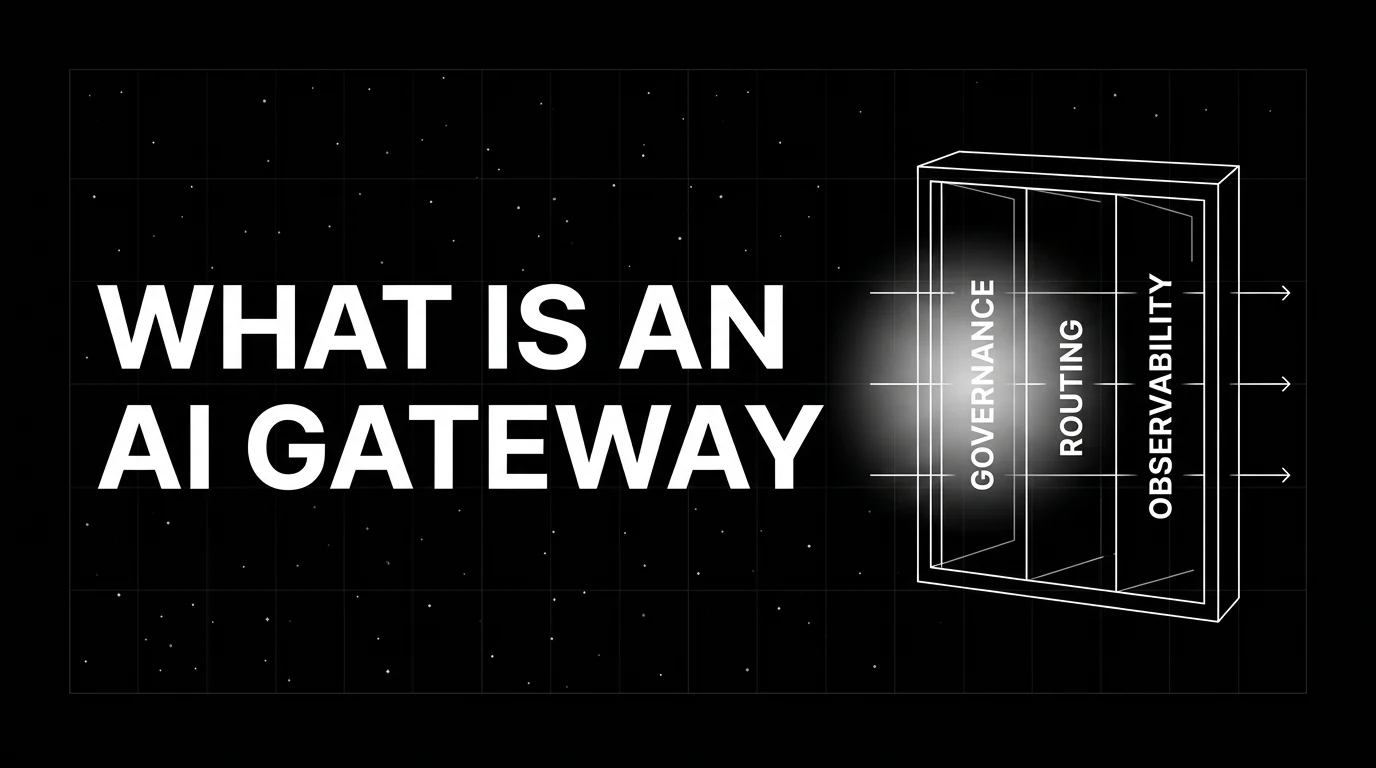
An AI gateway sits between apps and LLM providers for governance, routing, observability. What it is, how it differs from API gateways.
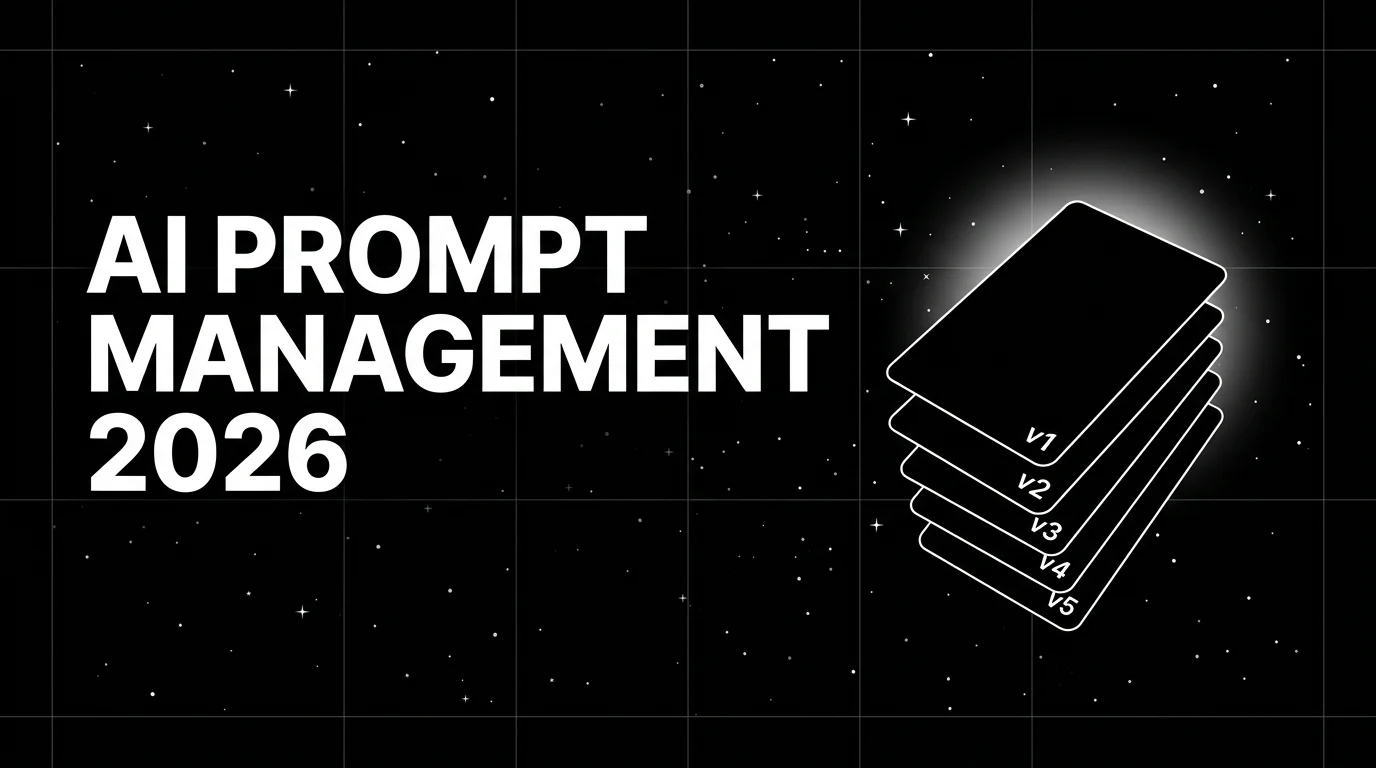
Compare 8 AI prompt management tools in 2026 across versioning, eval gates, and runtime routing. Honest tradeoffs and when to pick each.