Comparing Enterprise Knowledge Graph Platforms in 2026
Neo4j, Amazon Neptune, Stardog, Ontotext GraphDB, and TigerGraph compared on deployment model, query language, governance, licensing, and GraphRAG readiness.
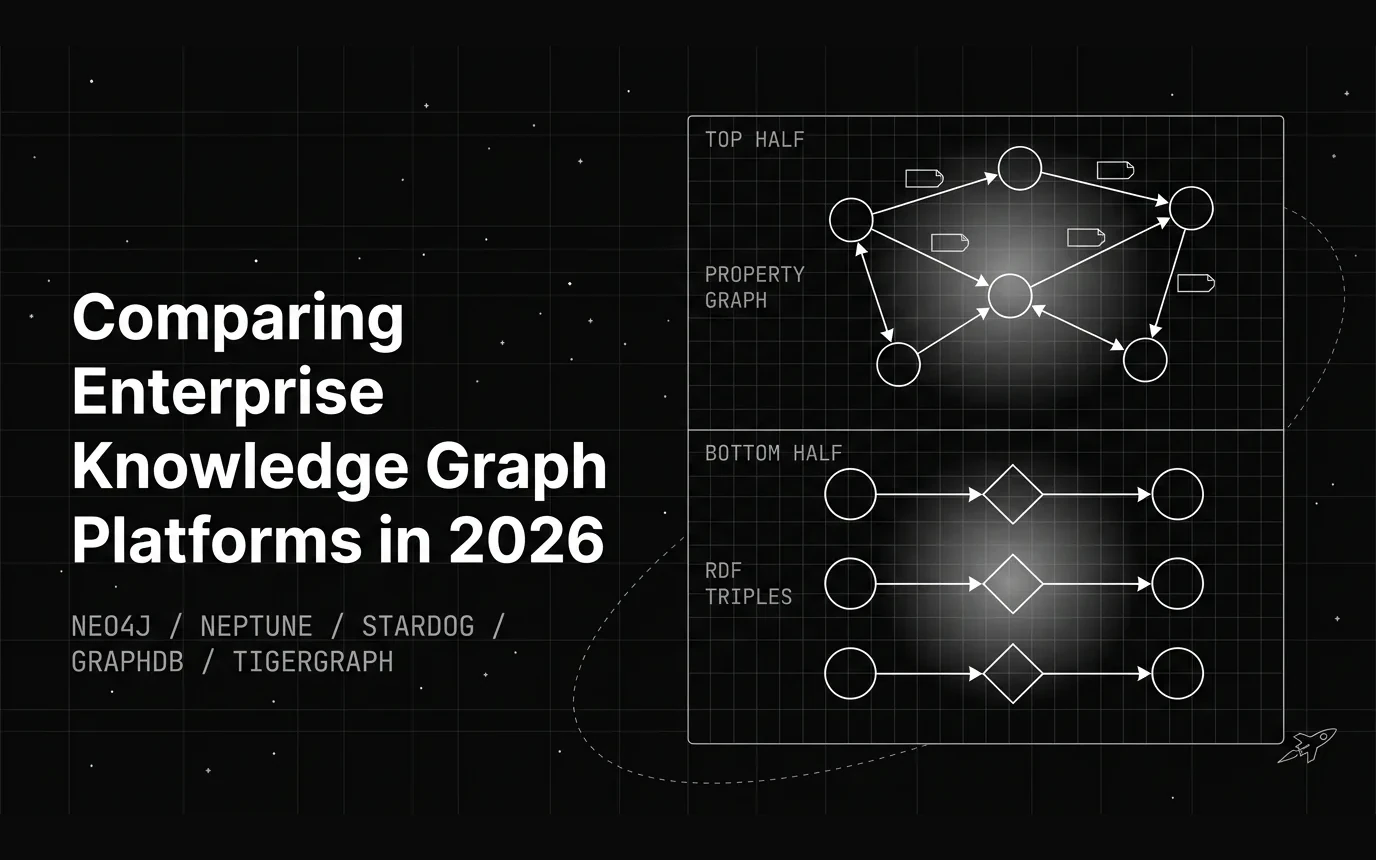
Table of Contents
Picking a knowledge graph platform used to mean choosing between Neo4j and “everything else.” That’s no longer true. GraphRAG and agentic retrieval have pulled half a dozen serious enterprise knowledge graph platforms back into procurement conversations, each with different query languages, deployment models, and reasoning capabilities.
This guide compares Neo4j, Amazon Neptune, Stardog, Ontotext GraphDB, and TigerGraph against the criteria enterprise buyers actually ask about: deployment model, query language, security and governance, and GraphRAG readiness. It closes with a look at where evaluation, not database selection, becomes the harder problem once a graph feeds an AI pipeline. Getting the platform pick wrong means months of migration work later.
TL;DR: which enterprise knowledge graph platform to shortlist
- Neo4j for developer-led projects: property graph, Cypher, the largest tooling ecosystem. No native RDF/OWL layer — RDF arrives through the neosemantics Labs plugin, not the core store.
- Amazon Neptune for AWS-committed teams: managed, and the only platform here that answers Gremlin, SPARQL, and openCypher against the same data. The cost is AWS lock-in.
- Stardog for RDF with federation: SPARQL 1.1, SHACL validation, and virtual graphs that query relational sources without an ETL step. Stardog Free is a renewable one-year commercial licence, not a trial.
- Ontotext GraphDB for reasoning-heavy RDF: strong inference and clustering, but as of GraphDB 11.0 even the Free edition needs a requested licence and is capped at two concurrent queries.
- TigerGraph for deep traversal at scale: GSQL and a native parallel architecture, with a free single-server Community edition up to 300GB and Savanna managed from $45/GB/month. Its widely-quoted 40-337x speed claim is vendor-reported and specifically about 2-hop path queries.
- The harder problem is downstream. Once the graph feeds an LLM, whether it returned the right nodes and whether the model stayed grounded in them are two separate evaluations, and neither is a database feature.
What Counts as an Enterprise Knowledge Graph Platform in 2026
A plain graph database stores nodes, edges, and properties, and answers traversal queries. An enterprise knowledge graph platform adds what a single team’s app doesn’t need but an organization does: role-based access control, audit logging, multi-tenant governance, managed hosting at scale, and ontology or reasoning support for entity disambiguation across departments.
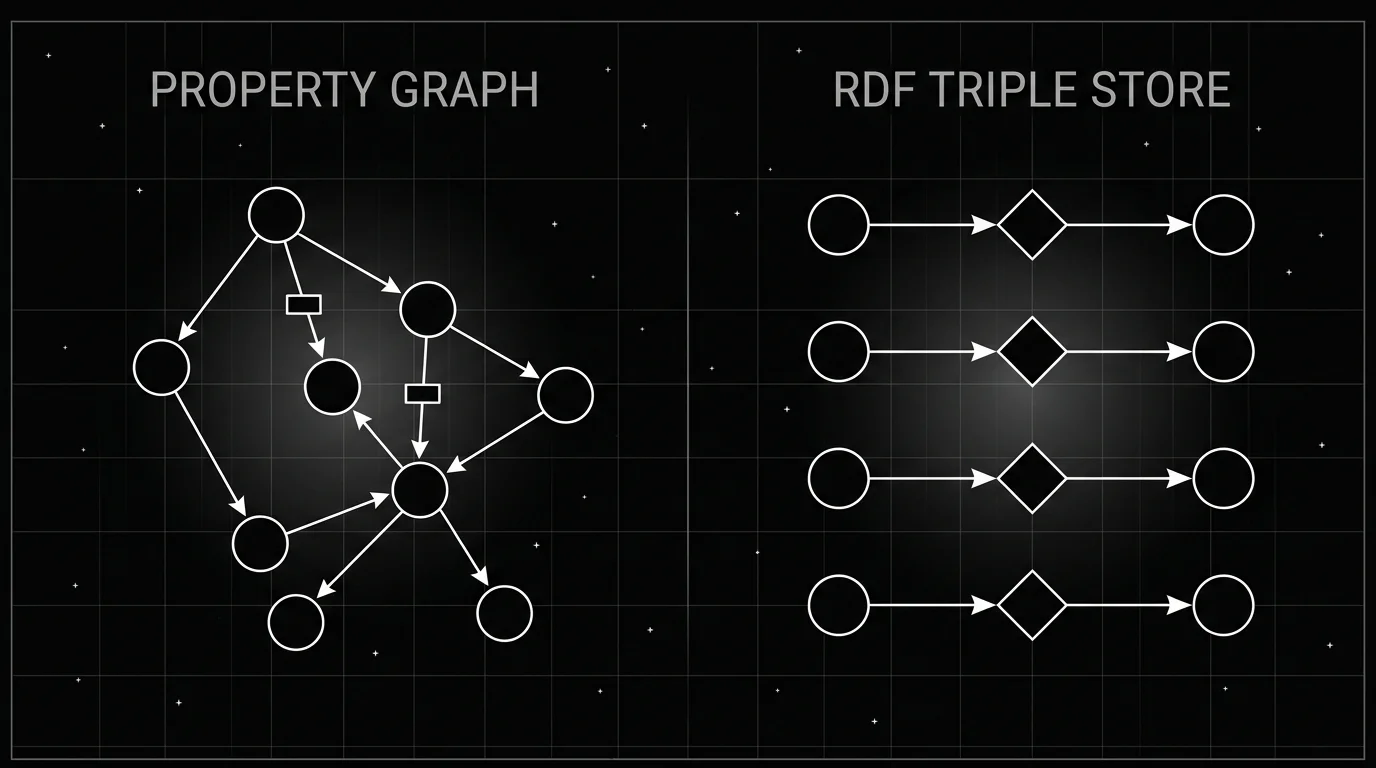
The category also splits along a data-modeling line. Property-graph tools, including Neo4j, TigerGraph, and Neptune’s openCypher engine, model data as labeled nodes and relationships with arbitrary properties. RDF and semantic-web tools, including Stardog, Ontotext GraphDB, and Neptune’s SPARQL engine, model data as subject-predicate-object triples with formal ontologies.
The two camps solve overlapping problems but attract different buyers. Application teams tend toward property graphs for iteration speed. Regulated industries with existing ontology investments tend toward RDF for formal reasoning. GraphRAG and agentic AI are why this category is getting renewed enterprise attention in 2026, since multi-hop reasoning over connected entities is something flat similarity search can’t do.
How to Evaluate a Knowledge Graph Platform
Buyers converging on this decision tend to ask the same handful of questions regardless of vendor, and those questions map directly onto the comparison table later in this piece. Two categories cover most of it: core operational fit, and how AI-ready the platform actually is. Platform selection is only half the evaluation, though — how to evaluate a GraphRAG pipeline once the graph is actually feeding retrieval covers the other half, which this guide returns to near the end.
Core evaluation criteria
Deployment model determines who owns operations: self-hosted gives full control at the cost of running infrastructure, managed cloud trades control for less ops burden, and hybrid splits the difference for data-residency constraints. Query language support determines developer ramp time, since Cypher, Gremlin, SPARQL, and openCypher each carry different learning curves and hiring pools.
Horizontal scale and multi-hop query performance determine whether the platform holds up once traversal depth and data volume grow past a pilot. Security and governance, including RBAC, audit logs, and compliance certifications, become non-negotiable once a graph moves from a team project to shared enterprise infrastructure that other departments depend on. Check which edition those controls actually ship in: on GraphDB, role-based access control on the GraphQL layer is a paid add-on, not a base feature.
Two criteria buyers underweight until integration starts. Entity resolution is the first: an enterprise graph pulls the same customer or product from four source systems under four identifiers, and whether the platform resolves those itself or expects an upstream MDM tool decides months of pipeline work. Data lineage and provenance is the second: when an LLM answer traces back to a triple, someone will eventually ask which system that triple came from and when.
Licensing belongs alongside price. Neo4j Community is GPL v3, Stardog Free is a proprietary renewable one-year licence, and GraphDB Free must be requested per install. Those are different obligations, and legal teams treat them differently.
AI-native and GraphRAG readiness
A newer set of criteria has become just as important: native vector or embedding support inside the graph store, built-in retrieval APIs an LLM pipeline can call directly, and reasoning support for entity disambiguation when the same real-world entity appears under different names across source systems. Those three collapse into Table 1’s AI-native/GraphRAG row; ecosystem maturity gets its own.
Total cost of ownership deserves its own line item, separate from sticker price. A self-hosted platform shifts cost toward engineering headcount for cluster management and upgrades, while a managed option shifts it toward usage-based billing that can spike under heavy traversal load. Buyers comparing only list prices tend to miss this until the first renewal.
Neo4j: The Developer-Ecosystem Standard
Neo4j is the default answer when a team asks “which graph database” without further qualification, largely because of ecosystem depth rather than any single technical advantage over rivals.
Architecture and query language
Neo4j uses a property graph model queried with Cypher, the language most developers encounter first when learning graph databases. It has the largest developer community of any graph platform, plus the deepest tooling ecosystem: drivers for every major language, a mature visualization layer, and wide third-party integration support.
Strengths and limitations
Neo4j is strongest for mid-scale applications and developer-led projects where iteration speed matters more than formal ontology governance. It’s weaker on native W3C RDF interoperability and formal reasoning: RDF import and export run through the neosemantics Labs plugin rather than the core engine, which pushes ontology-heavy buyers toward the semantic-tier platforms covered next.
Neo4j splits along two published pricing lines. Managed AuraDB runs Free, Professional (listed at $65/GB/month, one-GB minimum), Business Critical, and Virtual Dedicated Cloud. Self-managed is the licensing decision that matters: Community Edition is GPL v3 and drops automatic HA, horizontal scale-out and advanced security, while Enterprise Edition is commercial and sales-quoted. Confirm current rates at evaluation time, since cloud database pricing shifts often. Best-fit use cases include recommendation engines, fraud graphs, and general-purpose knowledge graphs where developer velocity outweighs strict RDF compliance.
Amazon Neptune: The AWS-Native Managed Option
Neptune is the fully managed choice for teams already committed to AWS who want a graph database without running graph infrastructure themselves. Its standout feature is query language breadth: it supports Gremlin, SPARQL, and openCypher against the same underlying data, plus a separate Neptune Analytics engine that holds graphs in memory for fast analytics and vector search, loaded from a Neptune Database graph or snapshot, or from Amazon S3.
That flexibility means a team can prototype in openCypher and add SPARQL later without migrating platforms. Neptune bills on a mix of instance-hours or serverless capacity units plus storage and I/O, following AWS’s usual consumption-based structure. Teams should model both provisioned and serverless pricing against real query patterns before committing, since the gap between the two can be significant at steady-state load.
The clear limitation is AWS lock-in. Neptune is strongest for teams who already run their stack on AWS and want to avoid standing up graph infrastructure, but it’s a harder sell for multi-cloud or on-prem-committed organizations. Migrating a large Neptune graph out later carries real switching cost.
Stardog and Ontotext GraphDB: The Semantic/RDF Tier
Teams with existing ontology investments or regulatory requirements for explainable inference tend to land here instead of the property-graph tier covered above.
Stardog
Stardog is built on RDF and OWL, queried through SPARQL 1.1, with two features that distinguish it from most competitors: federated virtual graphs, which map and query relational or NoSQL sources directly without an ETL step, and SHACL constraint validation plus reasoning for data quality enforcement at write time.
Stardog Free is a renewable one-year licence, free for commercial use and explicitly not open source. It drops high availability, caching, backups, LDAP integration and the full connector set, all of which sit in Enterprise.
Every platform in this guide has some free path, so the useful comparison is what each one withholds. Stardog withholds operational features, GraphDB withholds concurrency and repository count, and Neo4j Community withholds automatic HA, horizontal scale-out and advanced security.
Stardog’s current feature set for GraphRAG-style retrieval should be checked against its own documentation before a buying decision, since RDF vendors have been shipping AI-retrieval features quickly.
Ontotext GraphDB
GraphDB is an enterprise RDF store with reasoning support and cluster deployment for high availability. Basic GraphQL is a core feature in every edition, Free included; what costs extra is the extended GraphQL add-on, which is where role-based access control, schema validation against data, and GraphQL and SPARQL federation live. RBAC sitting behind a paid add-on matters if you are buying GraphDB as shared enterprise infrastructure.
GraphDB ships a Free edition, but as of GraphDB 11.0 it is no longer distributed with GraphDB: you request a no-cost licence and install it manually, including on minor-version upgrades. Free is on-premise only, single-core, capped at two concurrent queries and five repositories, with no LDAP, Kerberos, OAuth, fine-grained access control or high-availability cluster.
The commercially licensed Enterprise edition is the clustering and advanced-security tier; the older Standard edition is discontinued but still supported. Ontotext merged with Semantic Web Company in 2024 to form Graphwise, and GraphDB’s own licensing page now points users to the Graphwise site to request that free licence, so expect both names in current documentation.
One more name belongs on an RDF shortlist even though it isn’t profiled here: Franz Inc’s AllegroGraph, a long-standing enterprise store supporting SPARQL 1.2, OWL reasoning, SHACL and Prolog rules. It is relevant to this guide’s AI-readiness criteria specifically because Franz ships vector storage and a GraphRAG layer inside the same product rather than as a bolt-on.
All three fit regulated industries needing formal ontology governance and explainable inference. Life sciences, financial services, and publishing are the recurring buyer profiles, largely because those industries already maintain formal taxonomies that map cleanly onto RDF and its reasoning model.
TigerGraph and Other High-Performance Analytical Graphs
TigerGraph uses a native parallel graph architecture, queried through GSQL with openCypher also supported, and targets deep multi-hop traversal at scale, the workload property graphs like Neo4j can struggle with as hop count and data volume both grow. Typical use cases are fraud detection, KYC and anti-money-laundering graphs, and recommendation systems that need traversal depth rather than single-hop lookups.
The number that circulates most often about TigerGraph is worth reading carefully. TigerGraph’s own benchmark page claims it is “40x to 337x faster than other graph databases” — but that figure is specifically for 2-hop path queries, against Neo4j, Amazon Neptune, JanusGraph, and ArangoDB, and it is vendor-reported. Third-party summaries routinely restate it as a five-or-more-hop result, which the source does not say.
The newer reports on that page are LDBC Social Network Benchmark runs at 36TB (November 2022) and 108TB (February 2023), and they carry TigerGraph’s own disclaimer that they “are not official LDBC benchmark results, as they have not been audited.” They measure TigerGraph’s scale rather than repeating the head-to-head comparison. Buyers evaluating TigerGraph on performance grounds should run their own benchmarks at their own traversal depth.
A handful of newer entrants are worth knowing by name even without a full profile. Memgraph offers an in-memory, Cypher-compatible alternative built for lower latency. Kuzu is an embeddable graph database aimed at Python-native pipelines. FalkorDB targets low-latency graph queries for AI applications, and Diffbot focuses on web-scale entity extraction rather than general-purpose graph storage.
None of those four are positioned as enterprise-governance-tier alternatives to the five platforms in this guide, but they’re increasingly the answer for teams whose bottleneck is traversal speed or embeddability, not semantic richness or governance depth. A fraud pipeline running deep multi-hop queries across billions of edges has a different bottleneck than a compliance team maintaining a formal taxonomy.
Two more names surface constantly in this category and are worth placing rather than ignoring, because both compete for the same budget without being graph databases. Palantir Foundry sells an ontology and operational write-back layer over enterprise data; you would not swap Neo4j for it. Fluree sits closer to a governed, immutable data platform than to a traversal engine. Shortlisting either against the five above is a category error, and it costs a procurement cycle to discover.
Which Knowledge Graph Platform Fits Which Enterprise Use Case?
Mapping platform to use case gets most buyers most of the way to a shortlist. General-purpose or developer-led teams tend toward Neo4j for its ecosystem and Cypher familiarity. AWS-committed teams wanting a managed option tend toward Neptune. Regulated or ontology-heavy organizations tend toward Stardog or GraphDB, and fraud or deep-traversal analytics workloads tend toward TigerGraph.
The decision factors buyers cite most consistently are query language familiarity across the existing engineering team, hosting constraints set by security or compliance, in-house RDF or ontology expertise, and budget tier. Query language familiarity tends to decide close calls fastest, since retraining a team on SPARQL after they’ve shipped in Cypher is a cost most buyers underweight going in.
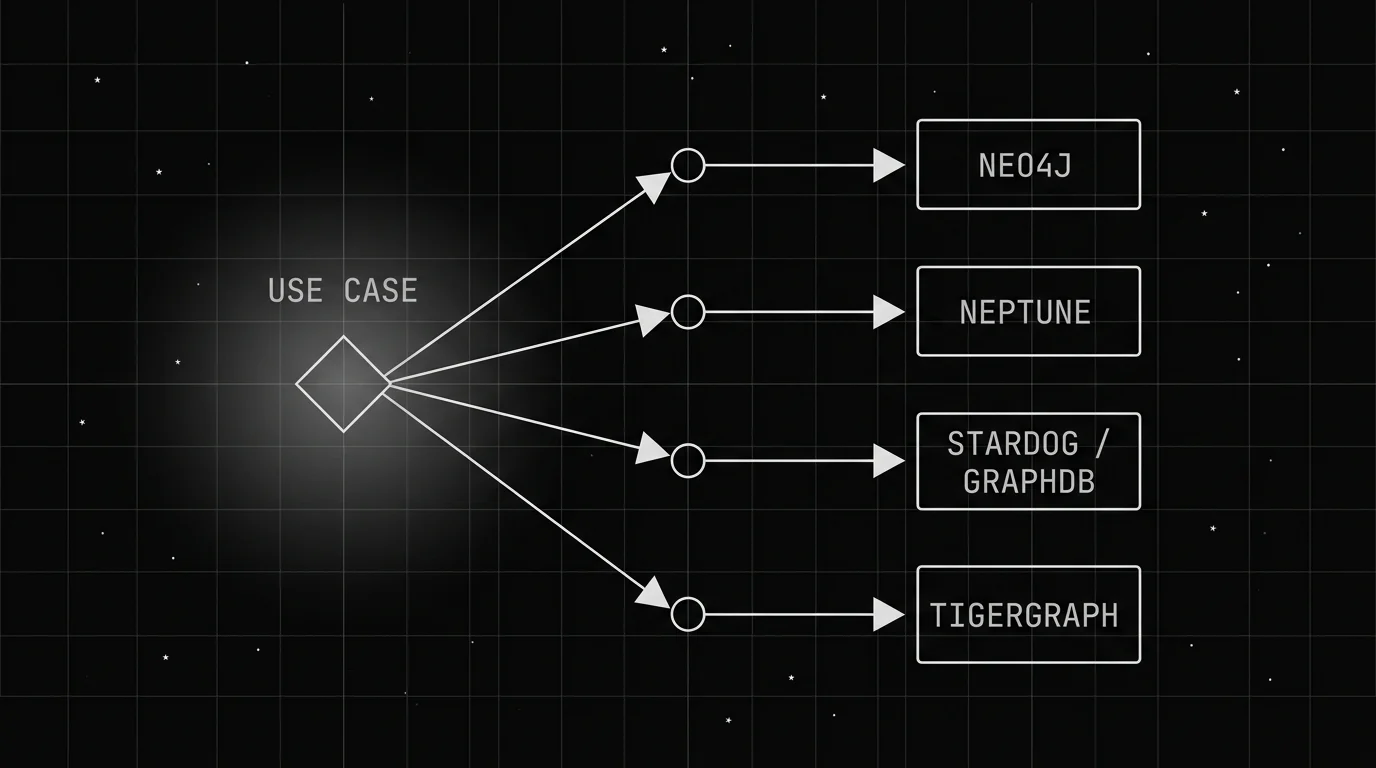
Table 1: Evaluation Criteria Breakdown
| Criterion | Why It Matters | What to Ask Vendors |
|---|---|---|
| Deployment model | Determines ops burden | Self-hosted, managed, or hybrid? |
| Query language | Determines dev ramp-up | Cypher, Gremlin, SPARQL, openCypher? |
| Multi-hop query performance | Determines usability at scale | Benchmarks on your traversal depth? |
| Security/governance | Enterprise compliance requirement | RBAC, audit logs, compliance certs? |
| AI-native/GraphRAG support | Determines LLM pipeline fit | Native vector/embedding + retrieval APIs? |
| Entity resolution | Determines how much upstream MDM work you own | Native resolution, or bring your own? |
| Lineage and provenance | Determines whether an LLM answer is traceable to a source system | Per-triple provenance and audit trail? |
| Licensing | Determines legal review and self-host obligations | Which edition carries RBAC, HA, and audit logging? |
| Ecosystem/community maturity | Determines hiring/support risk | Tooling, docs, community size? |
Table 2: Platform Comparison Matrix
| Platform | Deployment Model | Primary Query Language(s) | Scale/Performance Profile | Pricing Model | AI-Native/GraphRAG Features |
|---|---|---|---|---|---|
| Neo4j | Self-hosted or AuraDB managed | Cypher | Strong mid-scale | AuraDB Free / Professional ($65/GB/mo) / Business Critical / Virtual Dedicated; self-managed Community (GPL v3) or commercial Enterprise | Vector index support |
| Amazon Neptune | Fully managed (AWS) | Gremlin, SPARQL, openCypher | Strong at AWS scale | Consumption-based: instance-hours or serverless capacity units | Neptune Analytics |
| Stardog | Self-hosted or cloud | SPARQL 1.1 | Strong for federated RDF | Stardog Free: renewable 1-year licence, commercial use, no HA/caching/backups/LDAP; Enterprise contact sales | Federated virtual graphs, reasoning |
| Ontotext GraphDB | Self-hosted or cloud (Free is on-prem only) | SPARQL 1.1; basic GraphQL in all editions, extended GraphQL a paid add-on | Strong for reasoning-heavy workloads | Free edition (licence must be requested; 2 concurrent queries, 5 repositories) plus Enterprise; contact Graphwise | Reasoning, clustering |
| TigerGraph | Self-hosted or cloud | GSQL (also openCypher) | Built for deep multi-hop traversal | Savanna managed from $45/GB/mo; self-managed Community free to 300GB single-server; Enterprise contact sales | Hybrid graph + vector search. Vendor-reported 40-337x advantage is 2-hop path queries only; unaudited, verify yourself |
| Emerging (Memgraph/Kuzu/FalkorDB/Diffbot) | Varies | Varies | Varies by tool | Varies | Varies — noted briefly, not compared in depth |
Is a Knowledge Graph Even the Right Architecture for Your AI Use Case?
A meaningful share of people researching enterprise knowledge graph platforms are actually one step earlier in the decision than this guide assumes. They’re deciding whether they need a knowledge graph at all, not which vendor to buy. If the real problem is “our RAG retrieval isn’t good enough,” a knowledge graph is one possible fix, but it isn’t the only one. Future AGI’s definition of a knowledge graph covers the modeling primitives if the concept itself is still new to the team.
The 2026 norm for serious retrieval pipelines is hybrid, not either/or. Vector search handles semantic similarity over unstructured text, and a graph layer handles relationship-heavy, multi-hop reasoning where entities and their connections matter more than surface similarity. Most production GraphRAG systems run both together instead of picking one architecture and discarding the other.
If you’re still deciding between a vector database and a knowledge graph rather than comparing knowledge graph vendors, Vector Databases and Knowledge Graphs for RAG in 2026 covers that earlier decision. This guide is scoped to platform selection once a knowledge graph is already part of the architecture.
Evaluating What Your Knowledge Graph Actually Retrieves
Future AGI is an AI evaluation and observability platform, not a knowledge graph vendor, and it doesn’t compete with or replace any platform compared above. The adjacency shows up one step downstream: once a knowledge graph feeds an LLM or agent pipeline, the graph returning the right nodes is a separate question from the model using them correctly.
Teams need to verify that graph-backed context retrieved for a query is actually relevant, and that the model’s final answer stays grounded in what the graph returned rather than drifting into unsupported claims. This is a custom-evaluation problem more than a fixed-checklist one. The metrics that matter, groundedness against retrieved context and context relevance among them, need to be tuned for the specific graph schema and query patterns a team runs.
Future AGI ships those as built-in templates: Groundedness, Context Relevance, Context Adherence, Chunk Attribution, plus the retrieval-ranking metrics that tell you whether the graph query itself was any good — Recall@K, Precision@K, NDCG@K, MRR and Hit Rate — inside a catalogue of 70+ evaluators.
None of those are a fixed checklist. Teams extend or replace any of them with custom evals tuned to their own graph schema and query patterns.
That matches Future AGI’s position on the adjacent architecture question: Future AGI ships neither a vector database nor a knowledge graph, and instruments whichever retriever a team has already chosen.
For teams running multi-hop graph retrieval in production, Observe is the OpenTelemetry-based tracing layer for watching what the retrieval and generation steps actually did at each call. That’s the same visibility need described throughout this piece, applied specifically to graph-backed context instead of a generic pipeline.
Teams building that retrieval loop on top of an agent framework can see the same tracing and evaluation approach applied to LangGraph agent evaluation directly.
Conclusion
There’s no universal “best” enterprise knowledge graph platform in 2026. Fit depends on query language preference across your engineering team, hosting constraints set by security and compliance, in-house RDF or ontology expertise, and how much traversal performance matters at your data volume. Table 2 is the fastest way back to a shortlist.
The practical next step is a pilot with representative queries at realistic depth and volume, run before committing to any platform, since published benchmarks rarely match a specific schema. Write down the ten multi-hop questions the graph has to answer, run them against your two shortlisted platforms, and compare wall-clock latency and result correctness rather than vendor benchmark decks.
Once the graph is in production feeding an AI pipeline, evaluate the downstream output quality too, since a fast graph that returns irrelevant context hasn’t solved the problem it was bought to solve. Score those same ten questions with Context Relevance and Groundedness against the subgraph the platform actually returned, and you will know which half of the system is failing before you sign anything.
Frequently Asked Questions
What is the difference between a graph database and an enterprise knowledge graph platform?
Which is better for enterprises, Neo4j or Amazon Neptune?
Is Stardog or GraphDB better for RDF-based knowledge graphs?
What makes a knowledge graph platform AI-native or GraphRAG-ready?
Do I need a knowledge graph platform or a vector database for RAG?
Vector databases vs knowledge graphs for RAG in 2026. Pinecone, Weaviate, Qdrant, Milvus, Chroma vs Neo4j, GraphRAG, LightRAG. Decision matrix.

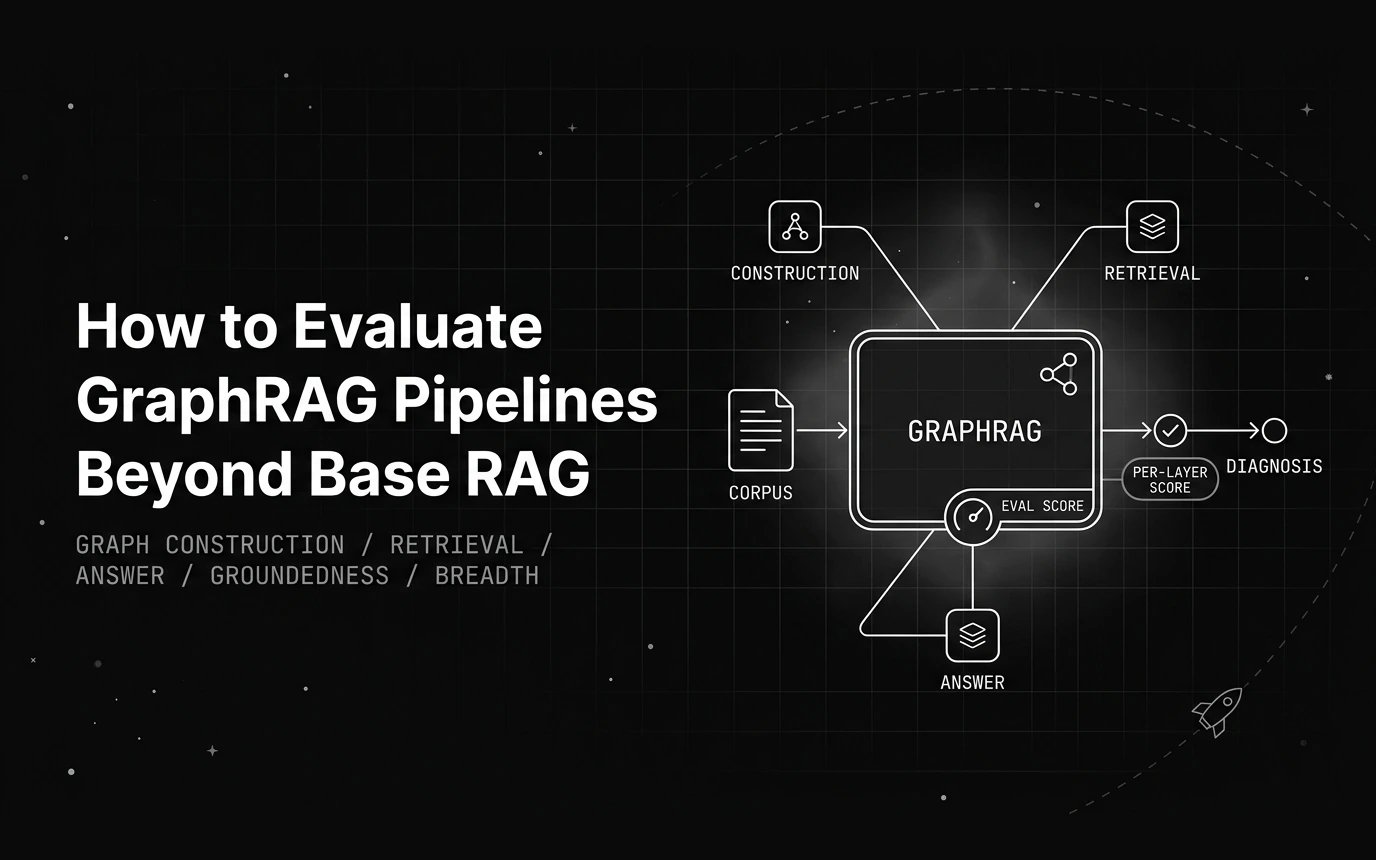
Base RAG metrics miss the graph underneath GraphRAG. Here is a three-layer framework, runnable graph metrics, and answer scores that isolate each failure.

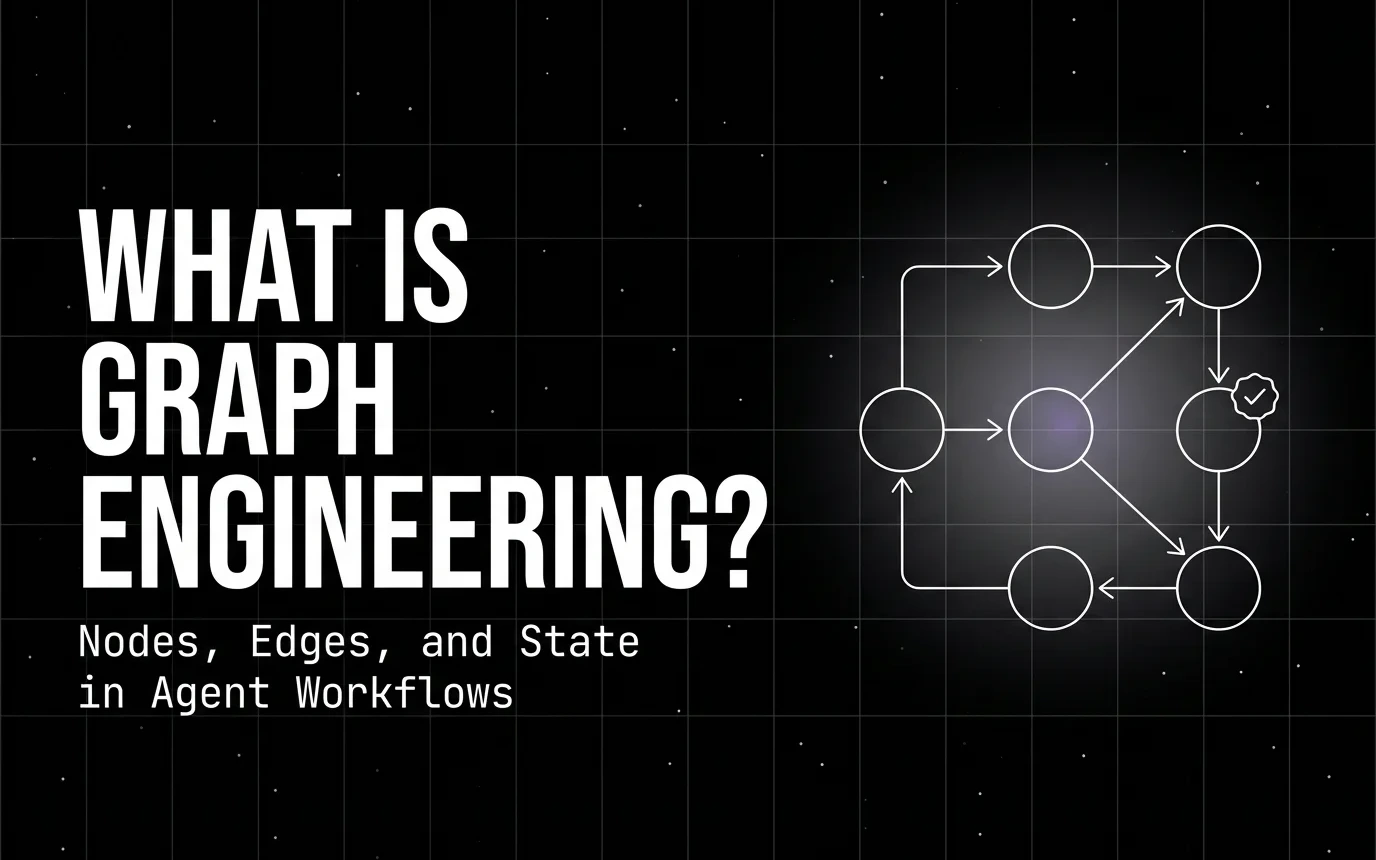
A plain breakdown of graph engineering for agents: what a node actually bounds, what an edge is allowed to do, and how shared state moves between them.