Best Prompt Versioning Tool for Production AI in 2026
Prompt versioning for production AI with Future AGI: immutable snapshots, each trace stamped with the version that ran, eval-gated promotion, fast rollback.
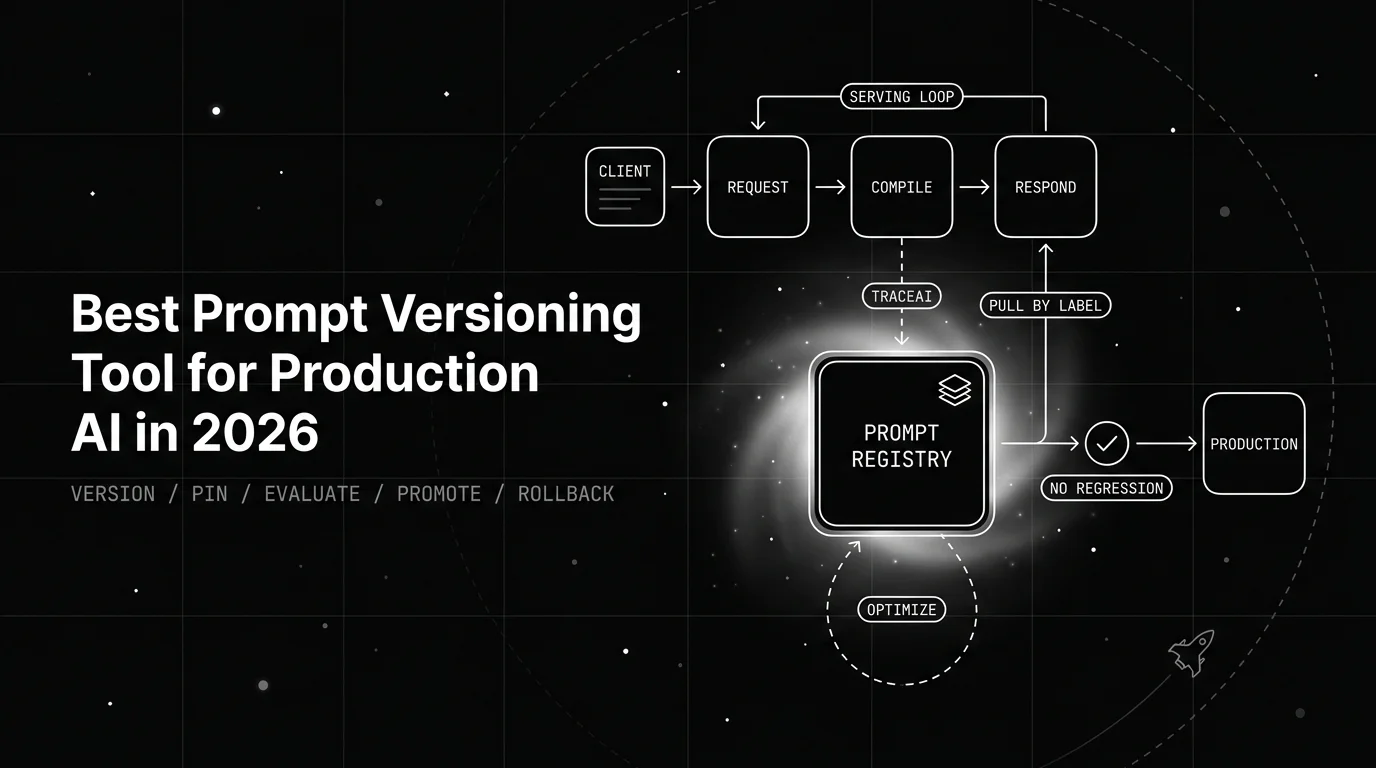
Table of Contents
A prompt change ships to fix one bad checkout response. A week later a new failure appears, and no one can say which version was live. The prompt was edited in place, so there is no snapshot to pull and no way to reproduce it. This guide shows how Future AGI versions production prompts so that never happens: immutable snapshots, every trace stamped with the version that ran, eval-gated promotion, and rollback by label repoint, all self-hosted under Apache-2.0.
Why Prompt Versioning Matters in Production
In production, the prompt is the part of your system most likely to change and least likely to be tracked. Code goes through commits, reviews, and releases. The prompt shapes what a user sees more than the surrounding code, yet it gets edited in a console or swapped as a string. No id, no author, no record of what it replaced. Your most behavior-defining component ends up with no version history.
That gap shows up the moment something breaks. The first question in any production incident is “what changed,” and for a prompt-driven feature the honest answer is often “we are not sure.” Without a versioned prompt you cannot say which revision was live when the bad output happened. You cannot reproduce it, and you cannot cleanly roll back, because no prior snapshot exists. You are debugging a moving target.
Versioning is what makes a production prompt accountable. Every revision becomes a uniquely identified, immutable artifact with an author and a timestamp, so “which prompt produced this” is always answerable. That single property, knowing exactly what ran, is the foundation that reproducibility, eval gating, and rollback all build on. Everything else in this guide depends on it.
Where Ad-Hoc Prompt Versioning Breaks
Most teams start with ad-hoc versioning, and it breaks in predictable ways. Prompts live as inline strings in the app repo, so a change is buried in a code diff and ships on the slow release cycle. Or they sit in a hosted prompt UI where anyone can edit the live text. That is fast, but it leaves no immutable record. Either way, the prompt is not a first-class versioned artifact.
Dedicated registries are a real step up. An open-source registry such as Langfuse records each prompt’s version history and deployment labels. That settles what text is deployed, but production raises harder questions about reproducibility and regression. Can you tie a live output back to the version that produced it? Can you prove a new version is not worse before promoting it, then roll back fast when it is? Storing and serving prompts does not answer those.
In production the storage question is the easy one; the loop around the prompt is what ad-hoc setups miss. Production prompt versioning has to connect the version to the run that used it, to the evaluation that gates it, and to the trace that proves what happened. When those live in separate places, “we version our prompts” is true on paper and useless during an incident.
How Future AGI Delivers Git-Like Prompt Versioning
Future AGI treats a production prompt as a versioned artifact with a git-like lifecycle: create it, commit immutable versions with messages, assign deployment labels, fetch by name and label at runtime, and roll back by repointing a label. The whole workflow runs from the SDK, so versioning lives in your application and your pipeline, close to the code you deploy.
The mechanics are concrete. You create a prompt and commit a version, optionally setting it as the default. Deployment labels, Production, Staging, and Development, plus any custom labels you add, each pin to one version. At runtime you fetch the live version by name and label, then compile it with your variables. Rollback skips the redeploy entirely. You repoint the label, and the next call picks up the prior version.
from fi.prompt import Prompt, PromptTemplate, SystemMessage, ModelConfig

# define the checkout-bot template and create it in the registry
template = PromptTemplate(
    name="checkout-bot",
    messages=[SystemMessage(content="You are a checkout assistant. Handle the refund request per policy.\n{{order}}")],
    model_configuration=ModelConfig(model_name="gpt-4o"),
)
client = Prompt(template=template).create()

# commit a production-fix version, then promote it only after the eval gate passes
client.commit_current_version(message="prod fix: stricter checkout refunds", set_default=False)
client.assign_label("Production", version="v3")

# at runtime, fetch the live version by name and label, then compile
live = Prompt.get_template_by_name("checkout-bot", label="Production")
messages = live.compile(order=order_payload)
The table sets each production need beside the ad-hoc failure it removes and the Future AGI capability that delivers it:
| Production need | Without versioning | Future AGI capability |
|---|---|---|
| Know which prompt ran | ”It worked yesterday,” with no record | Immutable Version snapshot plus gen_ai.prompt.template.version on every span |
| Ship a fix safely | Edit in place and hope it holds | Commit a candidate, gate on evaluators, promote by label |
| Undo a bad change | Re-edit live under pressure | Roll back by repointing the Production label to a prior version |
| Reproduce an output | Cannot recreate the exact prompt | The Version snapshot pins the exact prompt for any run |
The prompt versioning docs explain deployment labels and environments, and the prompt SDK reference details the create, commit, label, and compile calls.
The Run-Tied Version Snapshot That Makes Outputs Reproducible
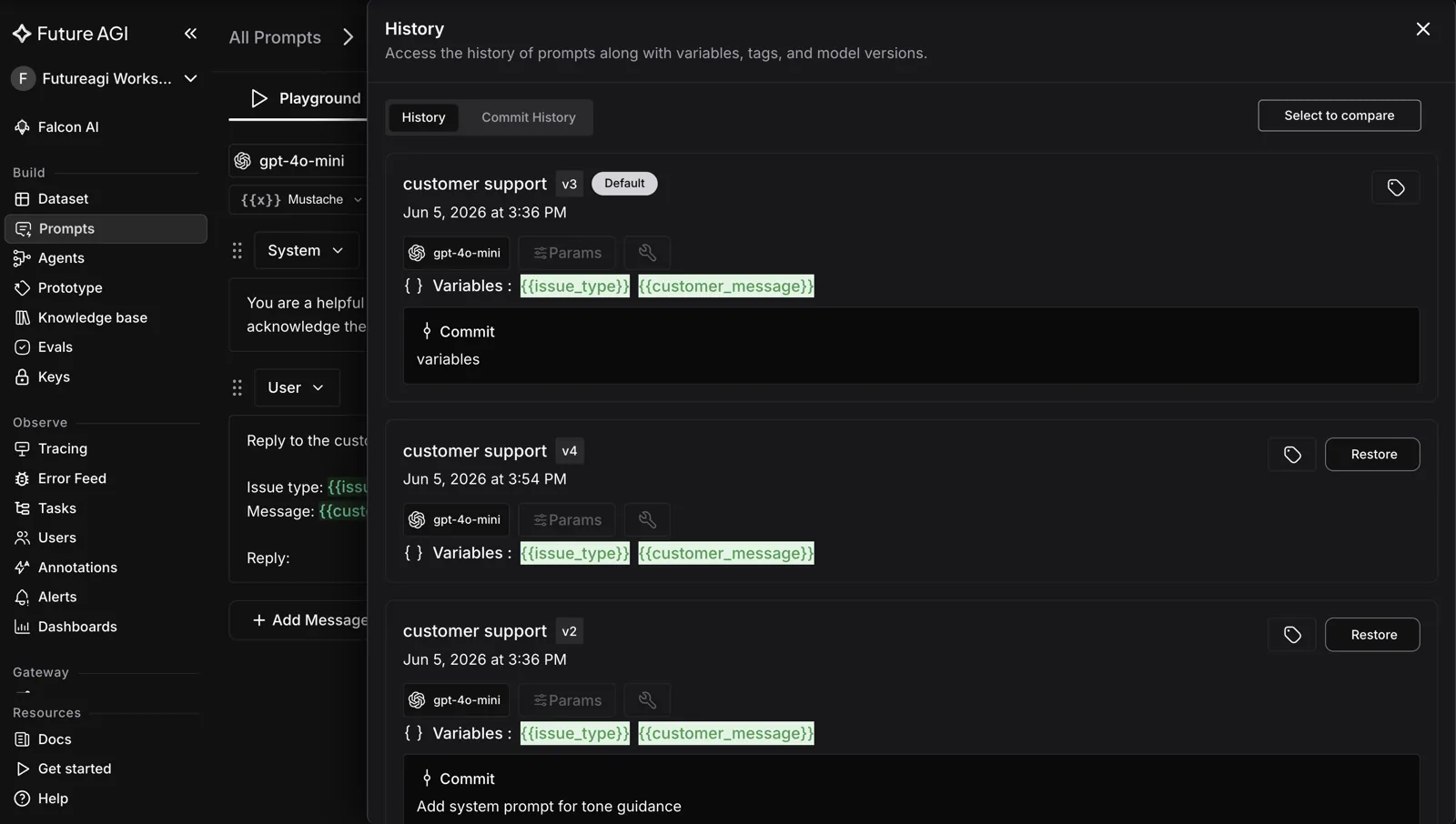
What makes this production-grade is how a version is tied to a run. Each prompt version is an immutable snapshot: a unique id, an author, a timestamp, and a changelog. Once committed it never changes. Committing an edit creates the next version and leaves the previous one intact, so v3 stays exactly v3 forever. That immutability is what makes reproducibility possible, because the snapshot you want to re-run is guaranteed to still exist.
The link to the run is automatic. The SDK resolves a deployment label to a specific version id and caches it. It then emits a span attribute, gen_ai.prompt.template.version, on the LLM call. Every production response carries the exact version that produced it, as a property of the trace itself. To reproduce an output, you read the version off the trace, pull that immutable snapshot, and run it again.
This is the difference between “it worked yesterday” and “version v3 produced this output, here it is, run it yourself.” Production systems answer to incident reviews, audits, or just a confused teammate. That reproducibility is the baseline that lets you reason about behavior at all.
Eval-Gated Promotion and Rollback on Regression
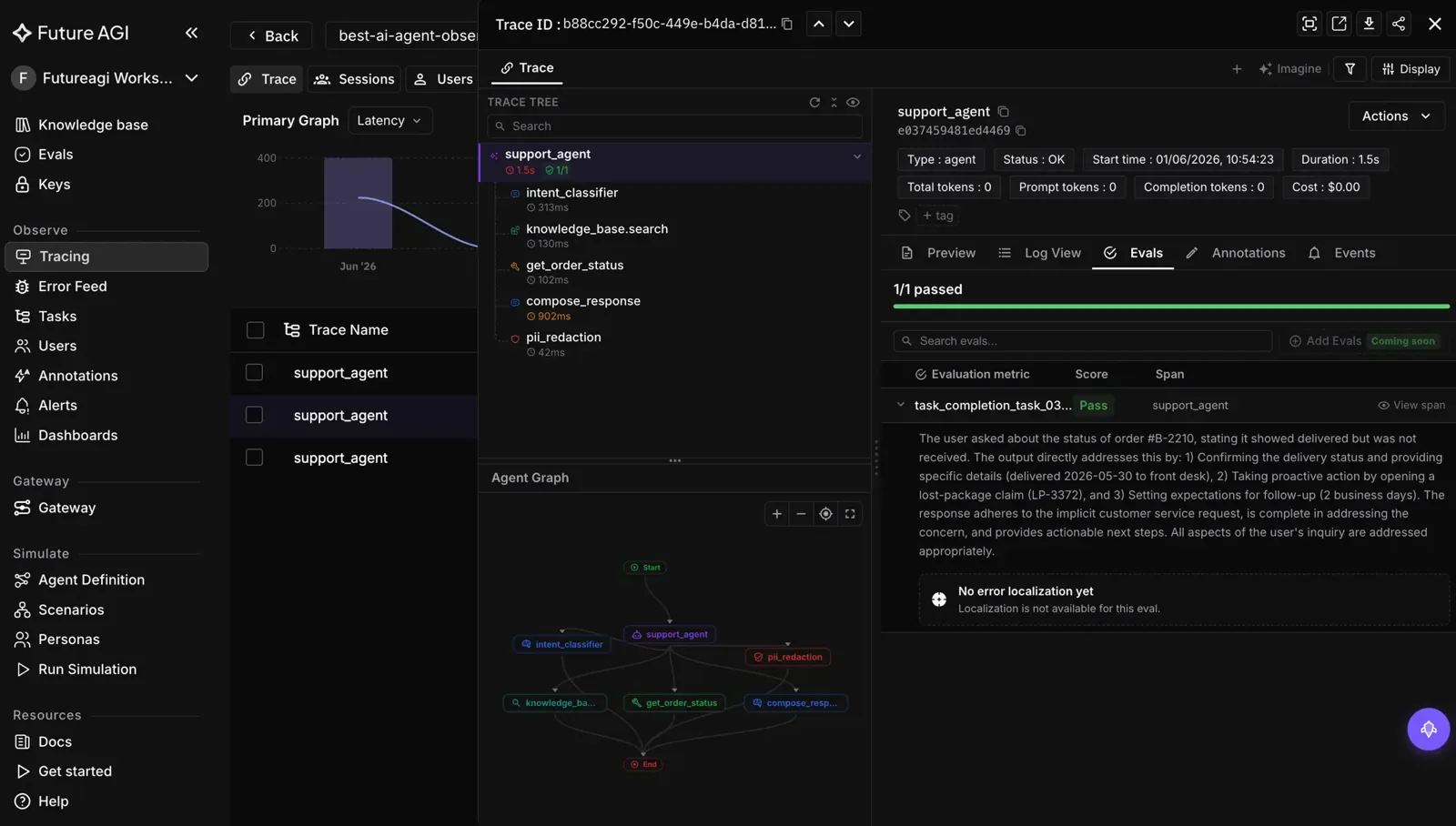
Versioning records what shipped; evaluation decides whether the next version may ship. Future AGI runs both custom evals you define and built-in ones; for production the behavioral and factual ones carry the weight. Instruction Adherence confirms the model obeyed the prompt’s rules, and Task Completion confirms it did the job. Context Adherence, Groundedness, and Detect Hallucination confirm the reply stays backed by context, not fabricated. You set a threshold against the current Production version, so a candidate that regresses never earns the label.
When a candidate is close but under the bar, optimization writes the next one. The open-source agent-opt library takes your prompt, an evaluator, and a dataset, and rewrites and rescores that prompt across six algorithms (Random Search, Bayesian, ProTeGi, Meta-Prompt, PromptWizard, GEPA) to return a higher-scoring version, so improvement is measured rather than guessed. The evaluation library and the optimization docs cover the full set and how a run is configured.
Rollback is the other half of production safety. When a promoted version misbehaves on live traffic, you repoint the Production label to the prior version, and the next call serves it. There is no redeploy and no editing of the live prompt. Because versions are immutable, the version you roll back to is exactly what it was when it last ran, with no drift to reason about. Recovery takes seconds through a label change instead of hours through a release cycle.
Tracing Live Production Behavior with traceAI
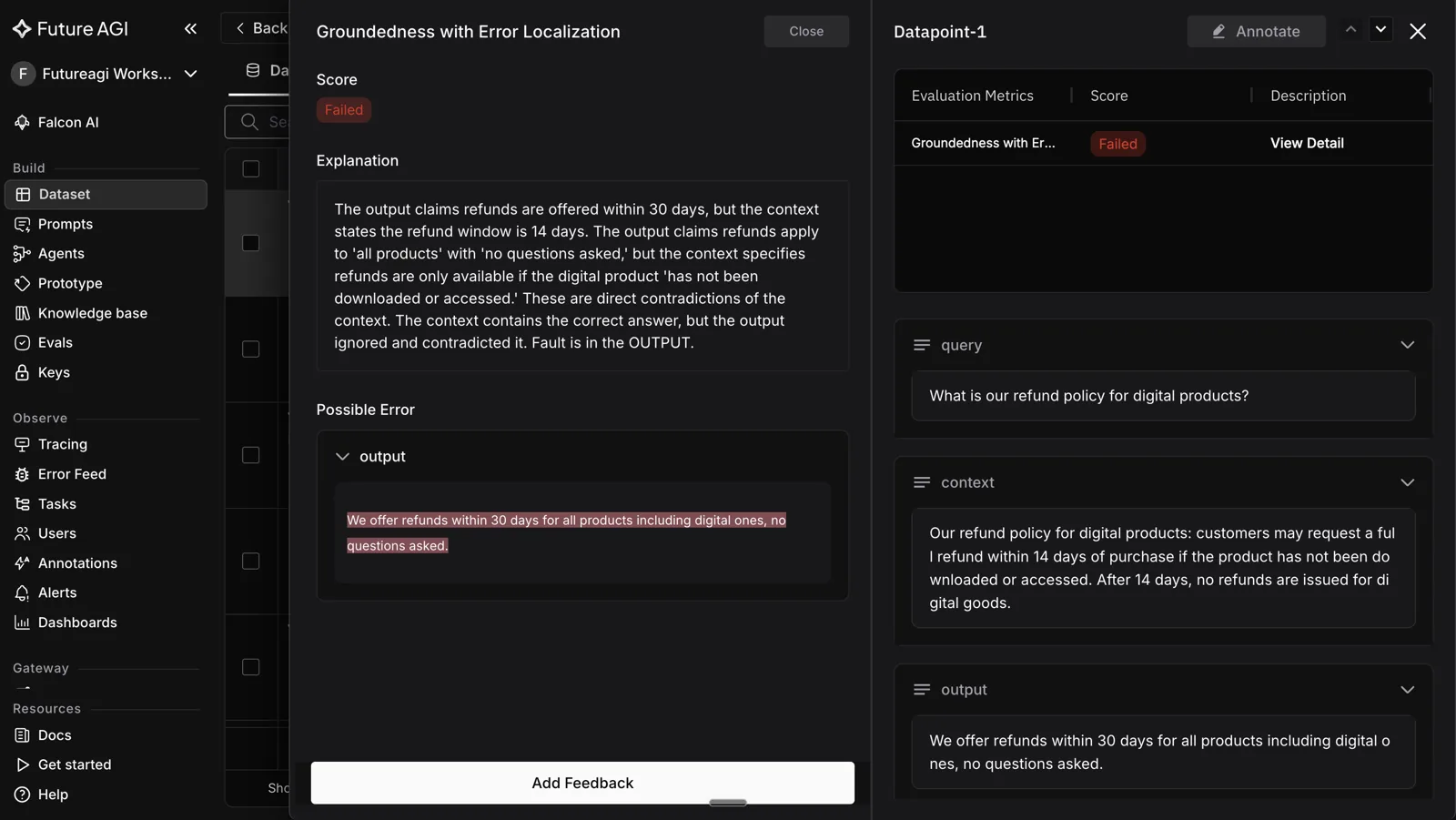

Offline scores tell you a version is good on a fixed dataset; production traffic is where it has to stay good. traceAI is OpenTelemetry-native, so every span carries the prompt template and its variables. Each span also carries the gen_ai.prompt.template.version attribute that ties it to the exact version. So live behavior is observable per prompt version: you watch how a specific version performs on real requests, rather than only in aggregate.
That makes debugging direct. When a production output is wrong, you open its trace and read the version and variables that produced it. You fold that exact case into your evaluation set, so the next candidate has to clear it before shipping. Per-version production scores then tell you whether a fix actually held in the wild. That closes the loop between what you measured offline and what users experienced. The observability documentation covers prompt and variable logging on spans.
Setting Up Future AGI in Production
The platform installs from a single Docker Compose file; the five practices below are what make a production prompt change reproducible, gated, and reversible.
- Move prompts into the registry as committed versions, instead of inline strings or buried code-repo diffs, so every revision has an id, an author, and a changelog.
- Pin an evaluation dataset of real production inputs and gate promotion on Instruction Adherence and Task Completion scores, so a candidate proves itself before it earns the Production label.
- Promote and roll back by repointing labels, never by editing live. Because versions are immutable, a rollback restores exactly the prior behavior.
- Instrument with traceAI from day one, so every production response carries its
gen_ai.prompt.template.versionand you can always answer which prompt ran. - Feed failing production traces back into agent-opt as the next candidate, so the prompts that broke in the wild become the training set for the fix.
Because Future AGI is Apache-2.0 and you host it yourself with Docker Compose, the registry, the evaluators, and your production traces stay inside your own infrastructure. The Future AGI repository documents how to deploy the stack in your own environment.
Where Future AGI Fits in Your Production AI Stack
When production breaks, the first question is which prompt version was live, and an editable console box cannot answer it. Future AGI makes it automatic: every version is an immutable snapshot, every trace carries the version that ran, promotion clears an eval gate, and undoing a bad release is a label repoint that takes seconds.
A production prompt becomes something you can reproduce, gate, and reverse. Version your first prompt in the Future AGI app, or self-host it from the repository.
Frequently Asked Questions
What Is Prompt Versioning for Production AI?
Which Prompt Versioning Tool Is Best for Production AI in 2026?
How Do You Know Which Prompt Version Produced a Given Output?
How Do You Roll Back a Prompt in Production?
How Is Prompt Versioning Different From Versioning Code in Production?
Can You Self-Host a Prompt Versioning Tool for Production?
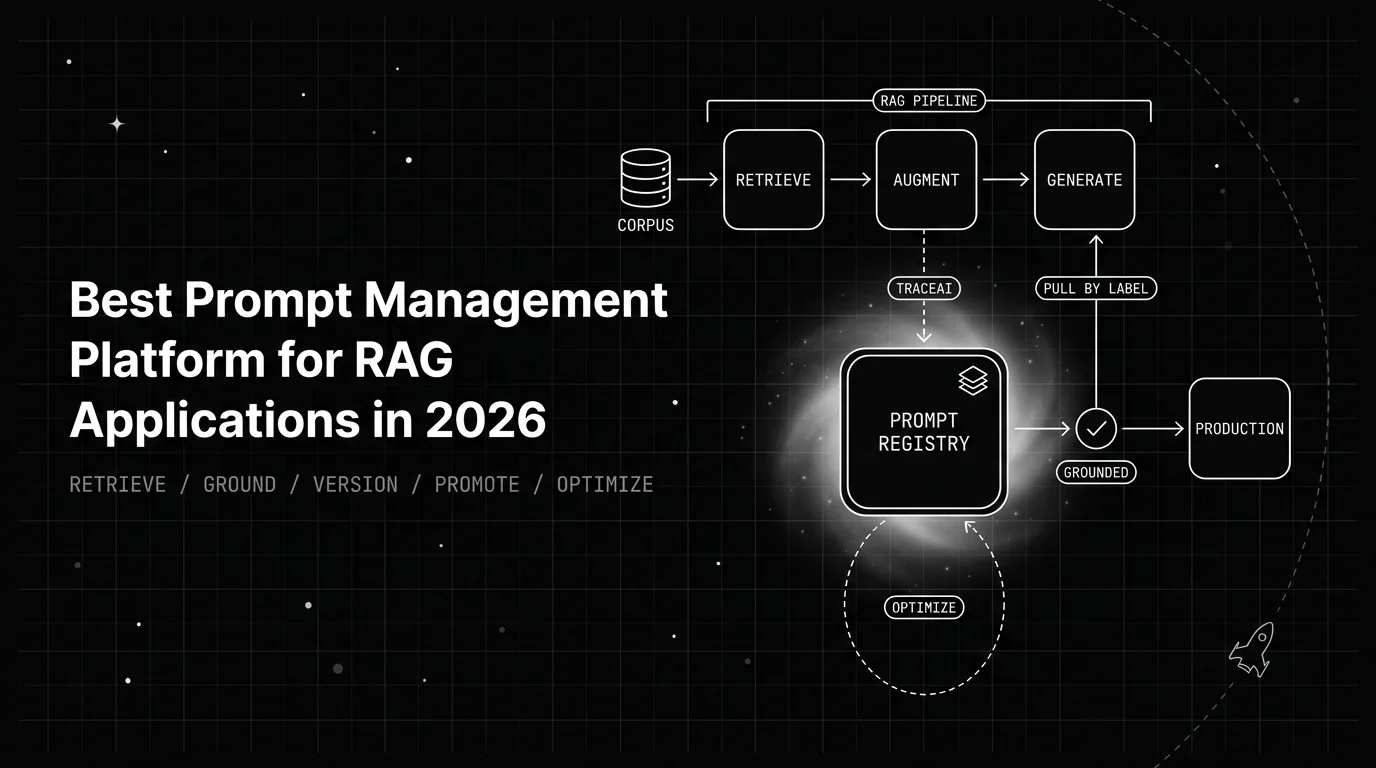
Prompt management for RAG: Future AGI versions retrieval and synthesis prompts, gates them on groundedness evaluators, and traces every answer.

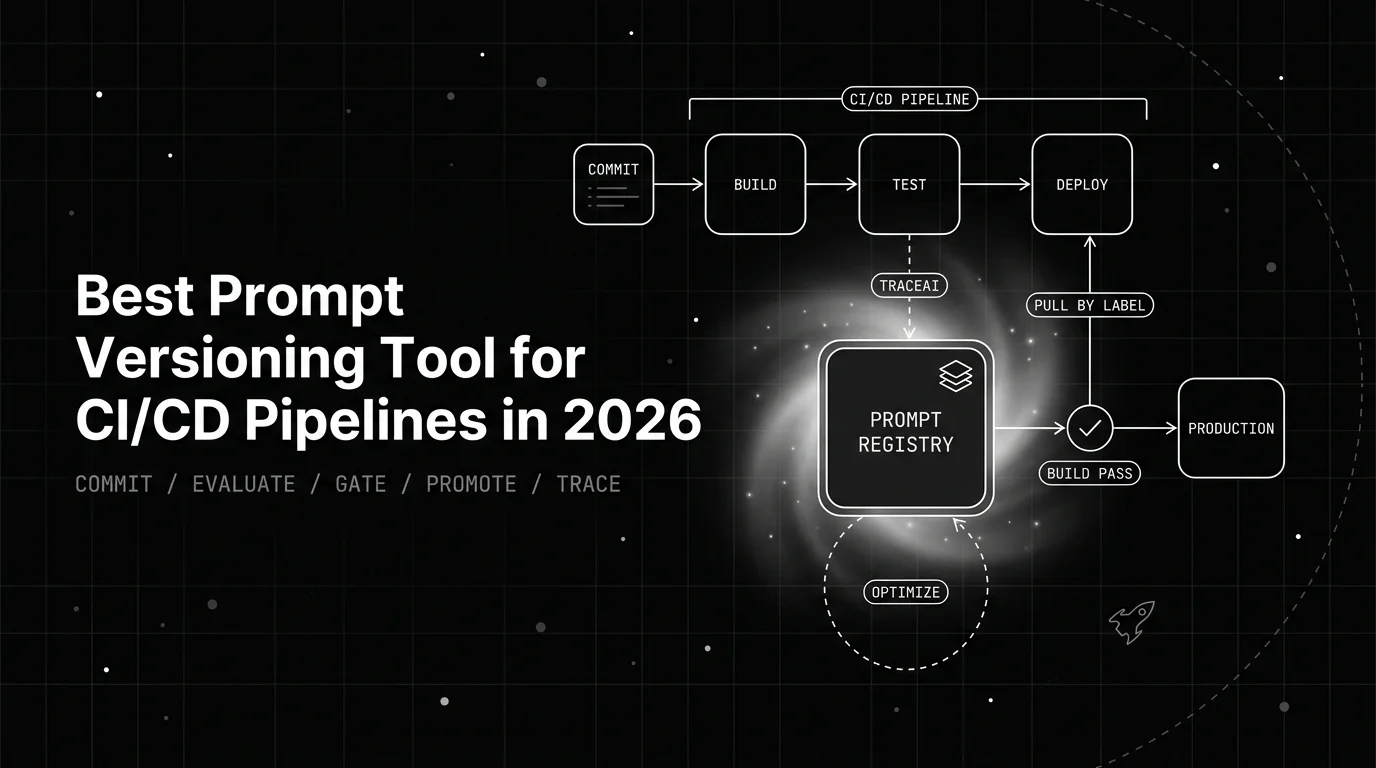
Prompt versioning for CI/CD with Future AGI: commit each version from the SDK, gate promotion on evaluators, fail the build on regression, promote by label.

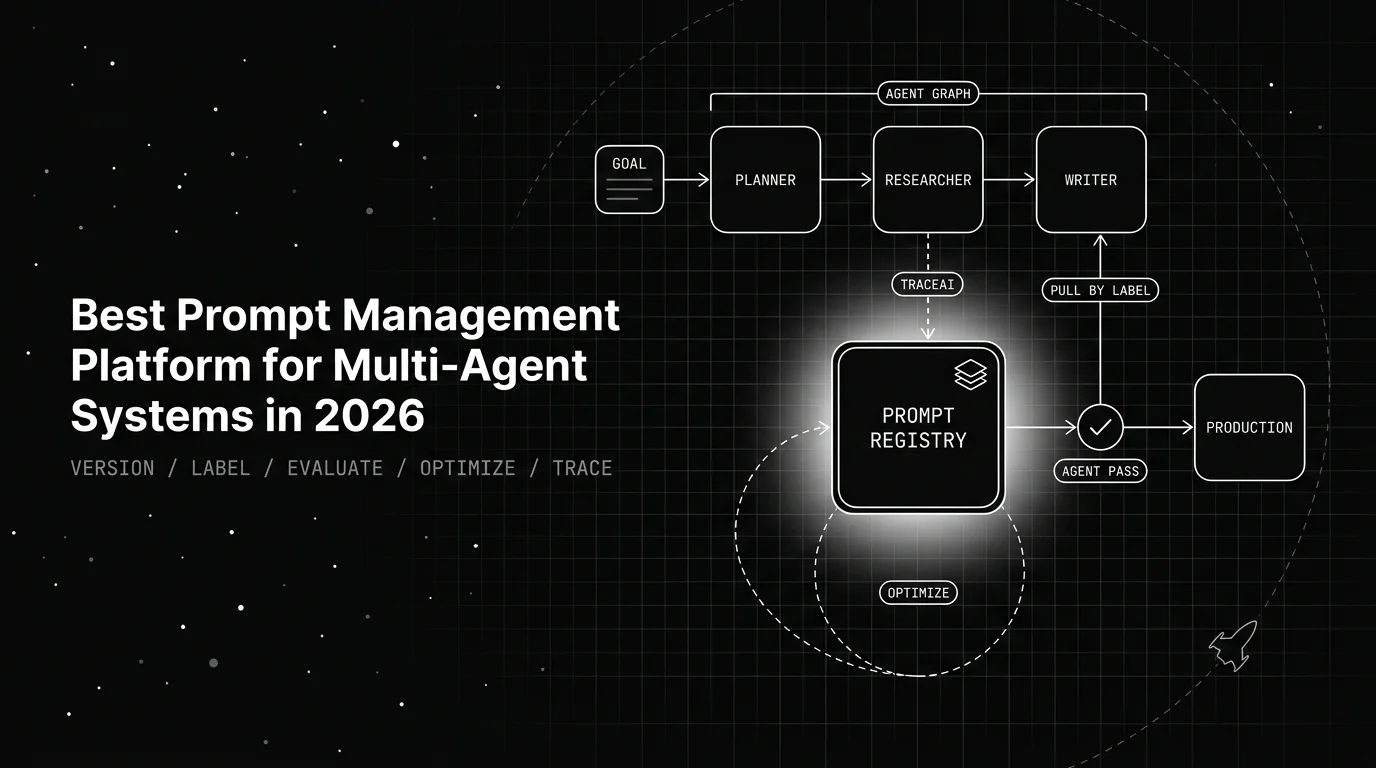
Prompt management for multi-agent systems: Future AGI versions, evaluates, and traces each agent's prompt on its own in one registry. Apache-2.0.