Best Prompt Management Platform for Voice AI in 2026
Prompt management for voice AI: Future AGI versions each voice-agent prompt, simulates it against synthetic callers, and gates promotion on resolution and tone.
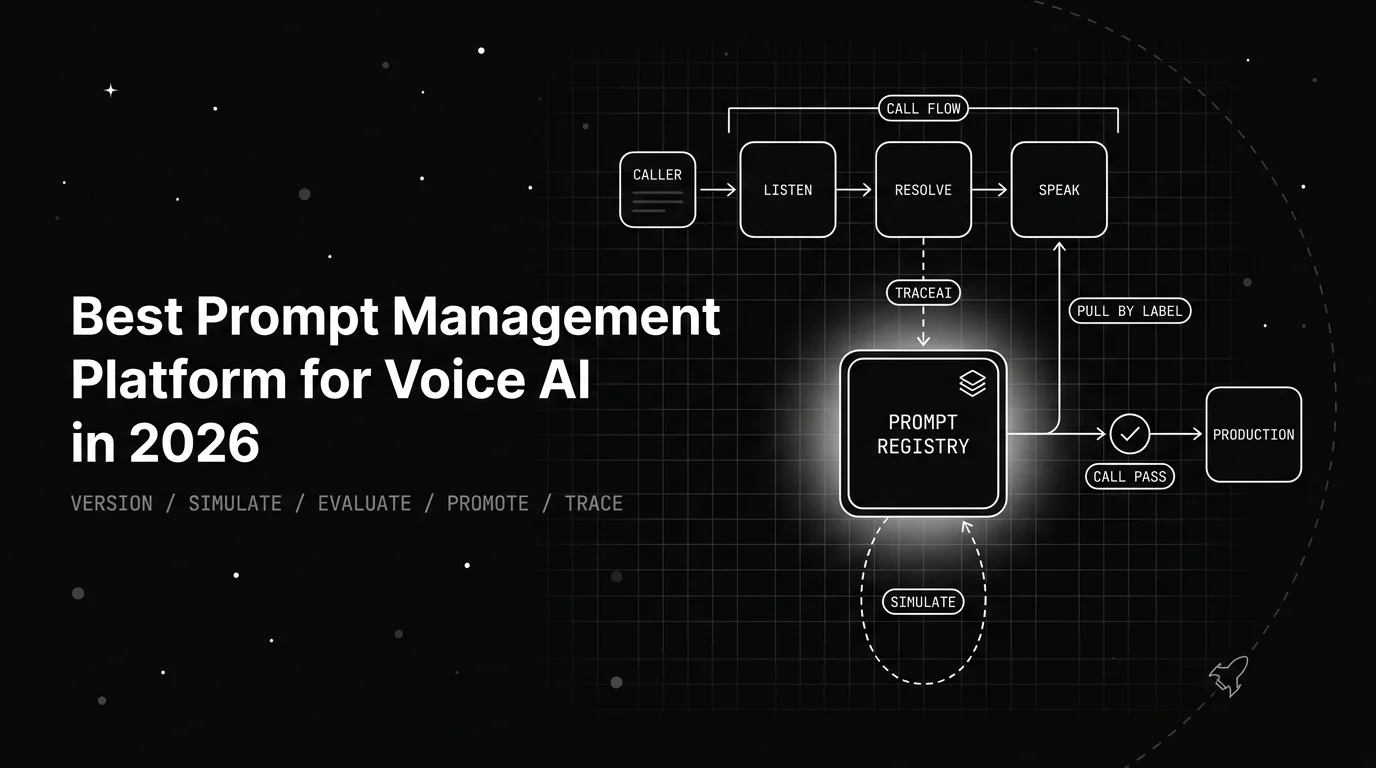
Table of Contents
A voice team tightens the system prompt to confirm orders faster, and within a day callers talk over the agent and hang up. No one can say why. The change shipped from a console, no version records the old wording, and the angry calls sit buried in hours of recordings. This guide shows how Future AGI versions, simulates, gates, and traces each voice-agent prompt before a caller hears it.
Why Voice-Agent Prompts Need Tight Control
A voice-agent prompt is the agent’s entire job description, and it runs in the least forgiving setting in conversational AI. Speech is real time, so there is no edit button mid call. The prompt has to decide what the agent says and how it handles interruptions, confirmations, and a caller who changes their mind halfway through a sentence.
A small wording change can shift all of that at once. It can make the agent faster but easier to talk over, or more thorough but slower than a caller will tolerate. The same edit that reads as an improvement on the screen can degrade the call the moment it is spoken.
Voice is also high volume and unrecoverable. A bad reply in a chat sits on a screen and can be fixed in the next message. A bad turn on a call has already been spoken into someone’s ear, and the caller is gone before anyone reviews it.
A voice regression rarely fails a unit test. It quietly degrades thousands of live calls before anyone connects a dip in resolution or a rise in hang-ups to the prompt edit behind it.
Where Generic Prompt Tools Fall Short for Voice
Most teams start with the voice-agent prompt hardcoded in the agent service or parked in a hosted console, and both miss what voice needs. Hardcoding ships the prompt on the code release cycle, too slow for something you tune by ear. A hosted UI is faster, but anyone can edit the live text with no record and no way to hear it before it goes live.
A dedicated registry is a real step up. An open-source registry such as Langfuse versions and labels a voice-agent prompt cleanly, so the text side of the problem is handled. It stores the prompt and hands it back on request, which is exactly what a registry is built to do.
But storing text is where it stops. The registry does not drive the prompt through a spoken scenario, score whether the call sounded right, or group a call’s turns to show where it went off the rails. For voice, the real gap is the loop: the version has to connect to a simulation against realistic callers, an evaluation of resolution and tone, and a trace that proves what happened. When those live in separate places, “we updated the voice-agent prompt” is true on paper and silent on whether callers are served better than before.
How Future AGI Manages Voice-Agent Prompts End to End
Future AGI treats a voice-agent prompt as a versioned artifact. You commit it, simulate it against synthetic callers, score it on resolution and tone, promote it by label, and trace it across the whole call. It all runs from the SDK, so the prompt lives in your application and pipeline rather than a console someone has to remember to open.
Map each voice need to what happens without prompt management, and to the Future AGI capability that answers it:
| Voice agent need | Without prompt management | Future AGI capability |
|---|---|---|
| Track what the agent says | Edit the live prompt, no record | Immutable version per change, labeled Production and Staging |
| Test before real callers hear it | Ship and monitor live calls | Simulate the prompt against synthetic personas and scripted scenarios |
| Prove a change resolves calls | Listen to a few recordings | Gate promotion on the Conversation Resolution and Tone evaluators |
| Debug a bad call | Scrub hours of recordings | traceAI groups each call into a session, turn by turn |
A Labeled Registry for Voice-Agent Prompts
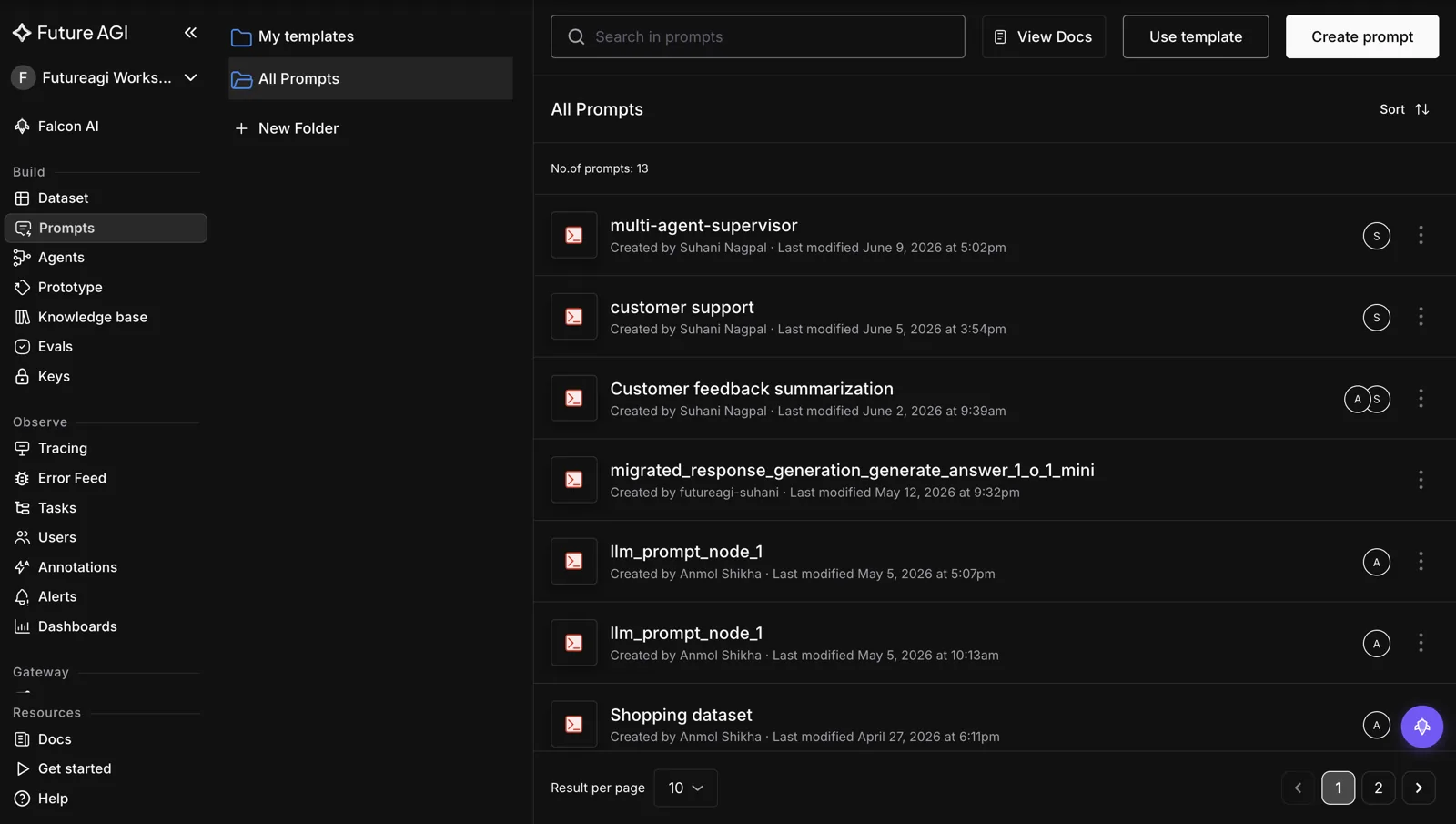
In the registry each voice-agent prompt is a named template with an immutable edit history, and labels like Production, Staging, and Development each resolve to one pinned version. You commit a candidate, promote it by repointing the Production label, and roll back the same way, so a bad change is undone in seconds instead of a redeploy. At runtime the agent fetches the live prompt by name and label and compiles it per turn.
from fi.prompt import Prompt, PromptTemplate, SystemMessage, ModelConfig

template = PromptTemplate(
    name="voice-agent",
    messages=[SystemMessage(content="Confirm the order, then ask one question at a time.\n{{caller_utterance}}")],
    model_configuration=ModelConfig(model_name="gpt-4o"),
)
client = Prompt(template=template).create()

# commit a new voice-agent version and promote it after the eval gate passes
client.commit_current_version(message="voice v3: shorter confirmations", set_default=False)
client.assign_label("Staging", version="v3")
client.assign_label("Production", version="v3")

# at runtime, fetch the live voice-agent prompt by name and label, then compile per turn
live = Prompt.get_template_by_name("voice-agent", label="Production")
messages = live.compile(caller_utterance=utterance_text)
Because promotion and rollback are label moves rather than code releases, the voice team controls the agent’s behavior directly and reversibly. The prompt versioning docs define how labels map versions to environments, and the prompt SDK reference covers the create, commit, label, and compile calls in full.
Simulating Voice-Agent Prompts Against Personas and Scenarios
A versioned prompt still has to be heard before it ships, and voice is the one channel you cannot rehearse on real callers. Future AGI’s Simulate drives a candidate through scripted multi-turn conversations against synthetic callers. You hear how the agent handles interruptions, confirmations, and a caller who changes course, all before a real customer does.

You assemble those callers from 18 pre-built personas plus custom ones, each tunable on gender, age range, location, and communication style. Voice personas add speed, background noise, and interrupt sensitivity. The candidate then meets a fast talker, a hesitant older caller, and someone who cuts in mid-sentence.
Scenarios script the call itself. You build them four ways: a visual graph you can auto-generate, an imported dataset, an uploaded script, or a Call or Chat SOP document.
Each scenario generates a table keyed by persona, situation, and outcome, then runs as voice calls that record the transcript, per-metric evaluation scores, and analytics. The simulation docs cover personas, scenarios, and running a simulation in full.
Evaluating Voice-Agent Prompts Before They Ship
Simulation rehearses the call, but it only becomes a promotion gate once each call is scored, on a measured result rather than a recording someone happened to like.
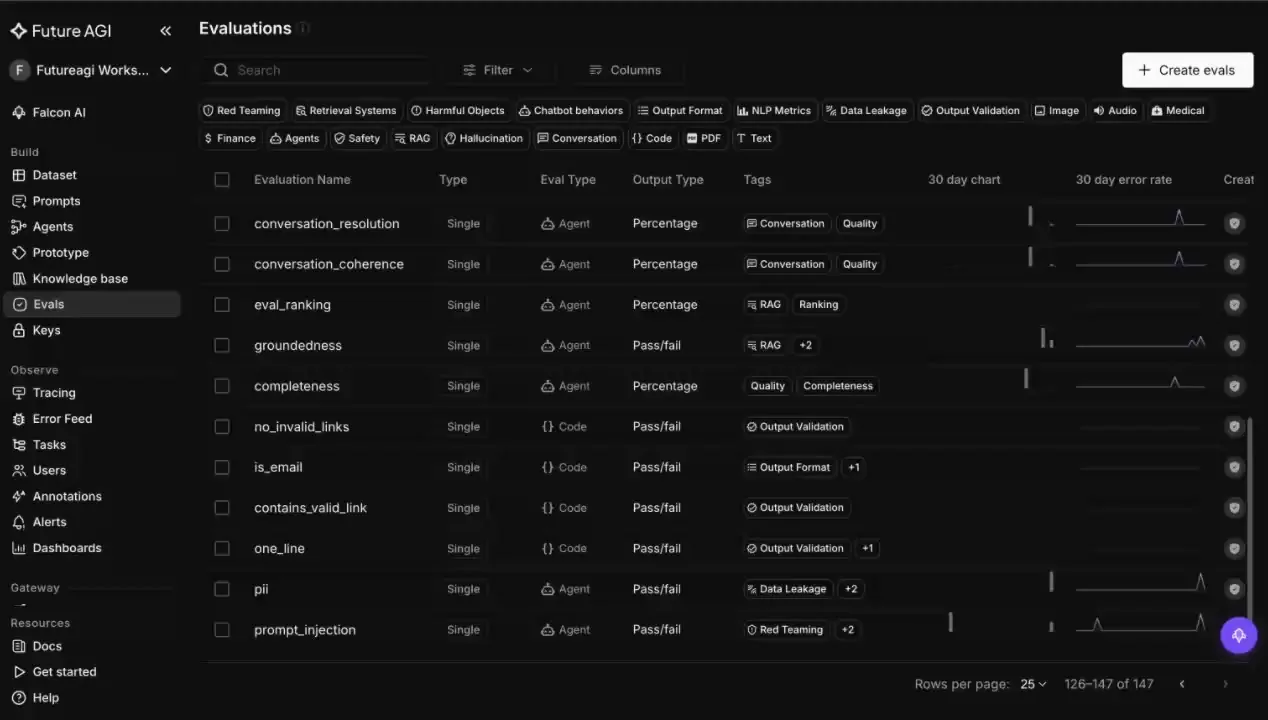
Each simulated call is scored by evaluators, built-in or custom ones you define. Conversation Resolution scores whether the call actually resolved the caller’s issue, so a version that sounds smooth but leaves calls unresolved never earns the Production label. Tone scores whether the agent sounded the way you want, catching a prompt that resolves the call but comes across as curt.
Instruction Adherence checks that the agent followed the call policy, such as verifying identity before any account change, and Detect Hallucination checks that it did not invent a policy or fact it was never given. You gate promotion on these against a pinned set of scenarios, so a voice-agent prompt reaches a live caller only after it holds up across the whole persona set, hard calls included.
Tracing Voice Sessions with traceAI

A call is multi-turn, and a resolution often takes several exchanges, so a bad turn three replies in is invisible in an aggregate call-quality score. traceAI closes that gap. It is OpenTelemetry-native, logs the prompt template and its variables on every span, and groups the turns of one call into a session, so you read a call turn by turn and see the exact prompt version behind each spoken reply.
That makes a voice regression debuggable at the level it actually happens. When a call goes wrong, you open its session, find the turn where the agent lost the thread or talked over the caller, and read the version and utterance that produced that reply. You then turn the exchange into a new simulation scenario the next gate has to clear.
You fix the turn that failed, on the version that produced it, instead of guessing from a quality number which of thousands of calls went wrong. The observability documentation covers prompt logging on spans and grouping turns into sessions.
Setting Up Future AGI for Voice AI
Standing up the platform takes little time; the routine below is what keeps a voice-agent prompt change measured and reversible rather than live and irreversible.
- Move the voice-agent prompt into the registry as committed versions, rather than an inline string or a live console edit, so every change has an id, an author, and a record of what it replaced.
- Build a persona and scenario set that mirrors your real callers, covering the interruptions, accents, and edge requests your line actually gets, so simulation exercises the hard calls.
- Simulate every candidate against that set and gate promotion on Conversation Resolution and Tone, so only a version that holds up across personas ships.
- Promote and roll back by repointing labels, never by editing the live prompt, so a change that hurts live calls is undone in seconds.
- Instrument with traceAI from day one, so every spoken turn carries its prompt version and a bad call is readable turn by turn and feeds the next scenario.
The platform is Apache-2.0 and you deploy it with Docker Compose, so the registry, the simulator, the evaluators, and your call traces stay inside your own infrastructure. Everything you need to run it yourself is in the Future AGI repository.
Where Future AGI Fits in Your Voice AI Stack
Voice is the one channel you cannot rehearse on a real caller: every wording change is spoken live into someone’s ear. Future AGI lets you hear the change first, versioning each prompt, driving the candidate through scripted calls against fast talkers, hesitant callers, and people who interrupt, then gating promotion on whether the call resolved and sounded right. When one slips, the session reads back turn by turn to the version behind the reply that went wrong.
That turns a voice-agent prompt change from a live gamble into a measured, reversible move. Try it in the Future AGI app: move your live prompt into the registry as its first version, and simulate it before the next caller hears the change.
Frequently Asked Questions
What Is Prompt Management for Voice AI?
Which Prompt Management Platform Is Best for Voice AI in 2026?
How Do You Test a Voice Agent Prompt Before It Goes Live?
How Do You Evaluate Whether a Voice Agent Resolves Calls?
How Do You Debug a Bad Voice Call?
Can You Self-Host a Prompt Management Platform for Voice AI?
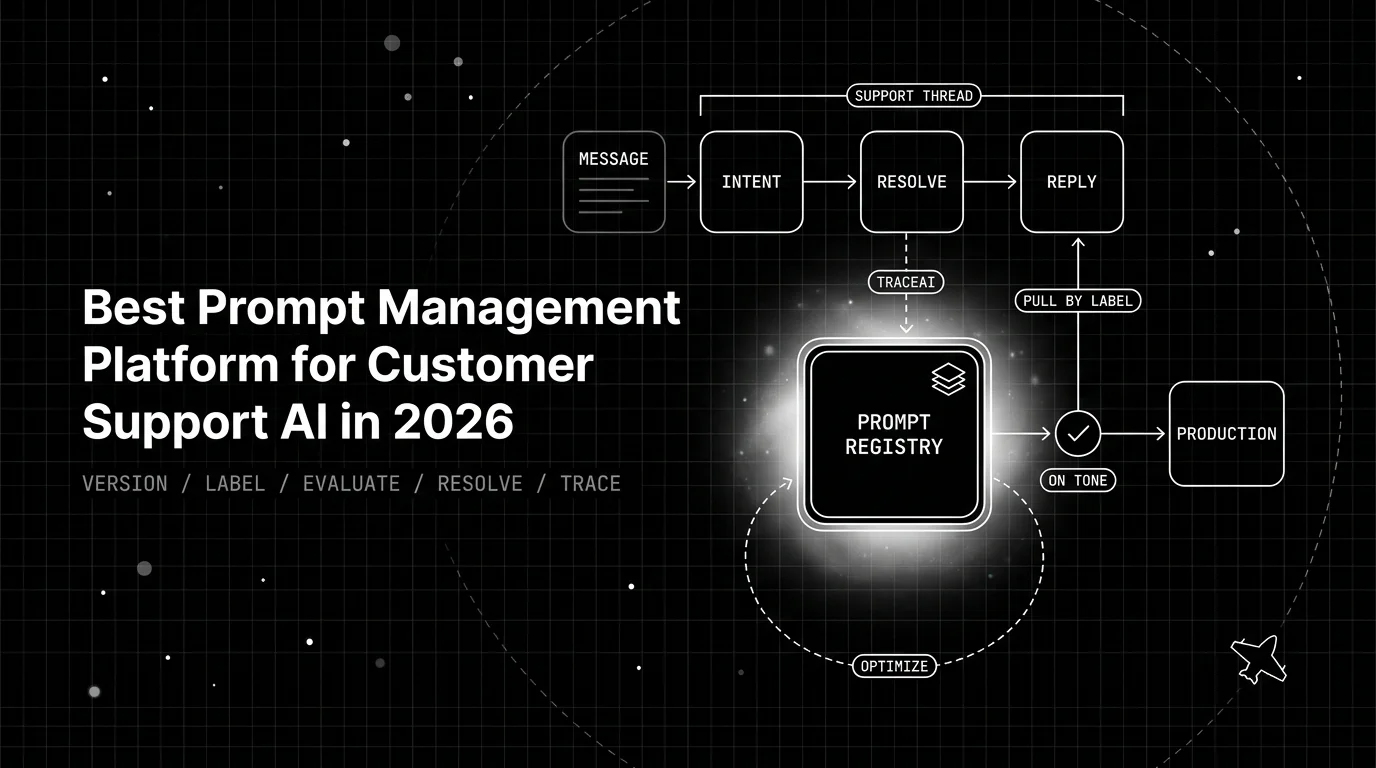
Prompt management for customer support AI: Future AGI versions each support prompt, gates promotion on Conversation Resolution and Tone, and traces every chat.

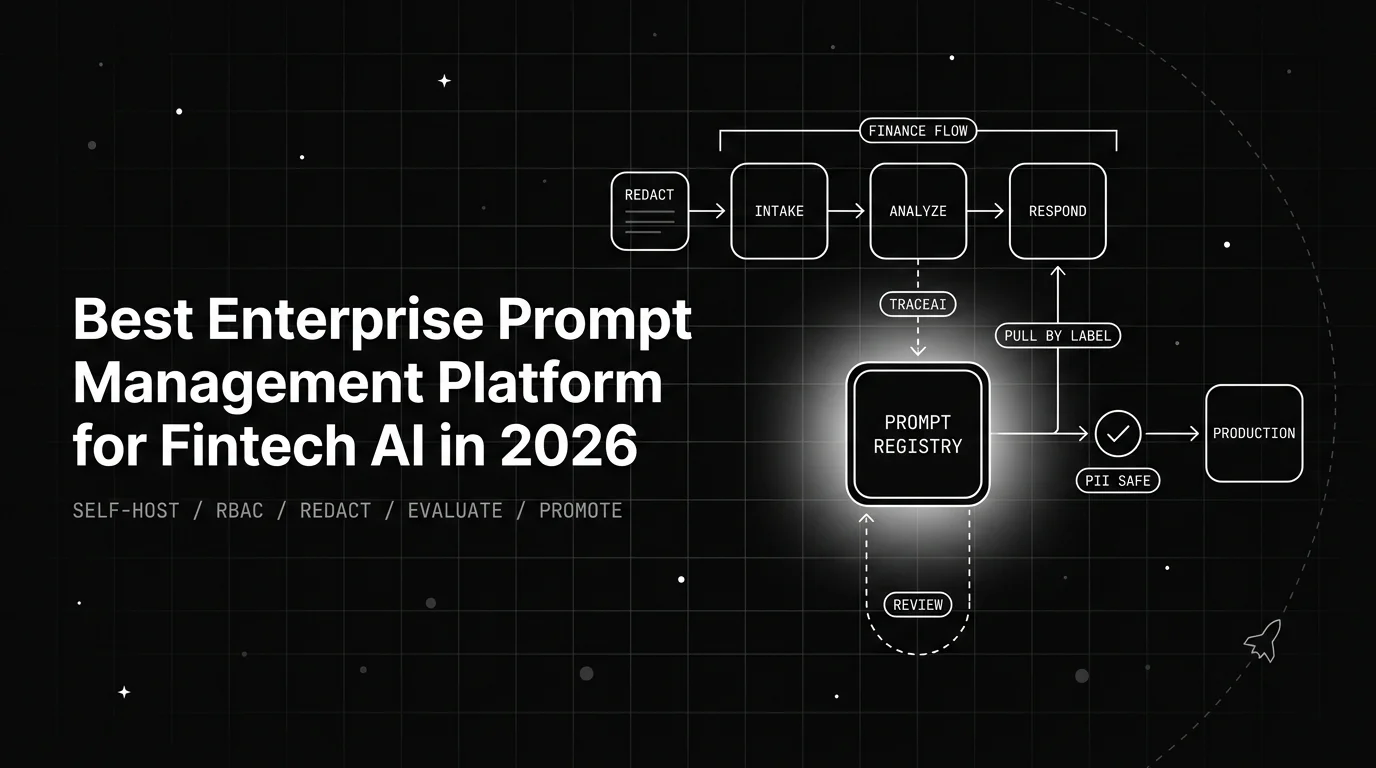
Prompt management for fintech AI: Future AGI versions and governs each prompt in your own VPC, flags PII at the boundary, and eval-gates every promotion.

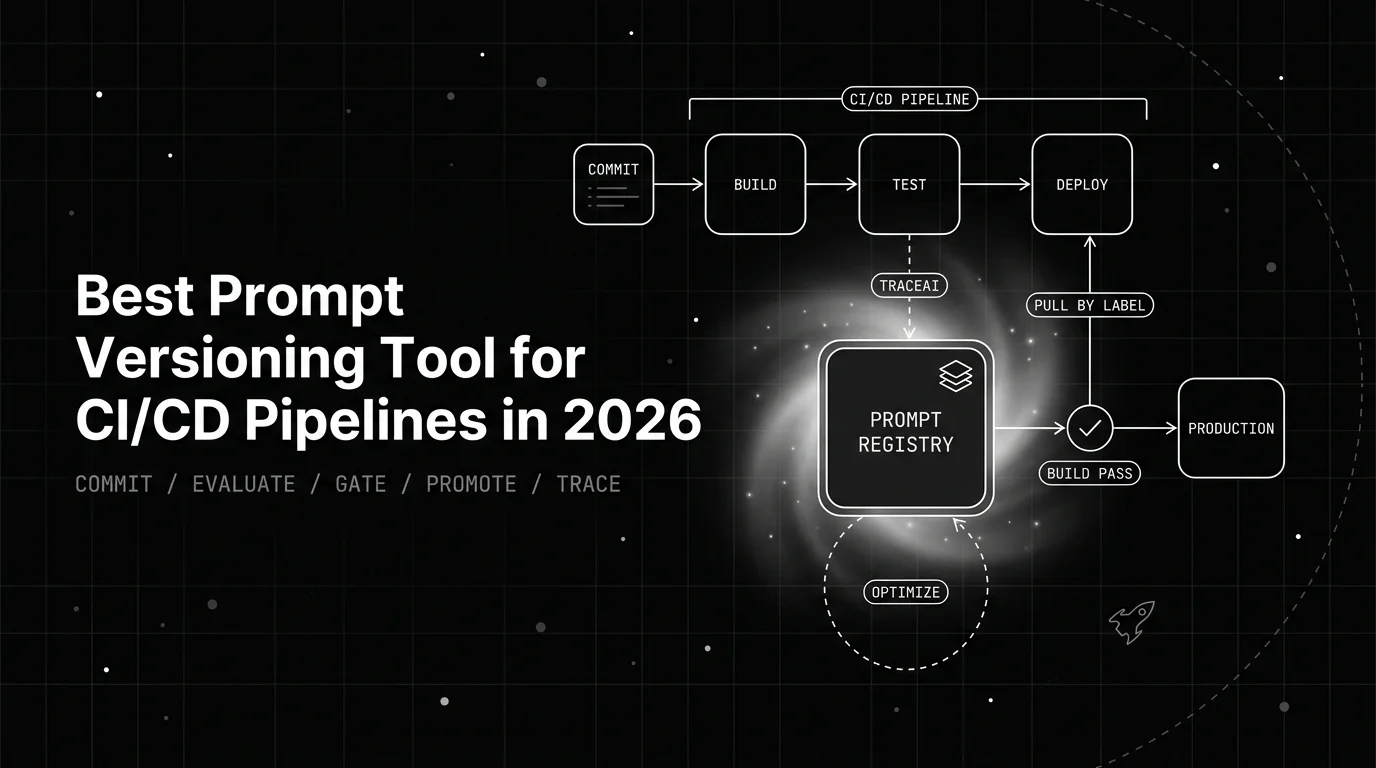
Prompt versioning for CI/CD with Future AGI: commit each version from the SDK, gate promotion on evaluators, fail the build on regression, promote by label.