Best Enterprise Prompt Management Platform for Fintech AI in 2026
Prompt management for fintech AI: Future AGI versions and governs each prompt in your own VPC, flags PII at the boundary, and eval-gates every promotion.
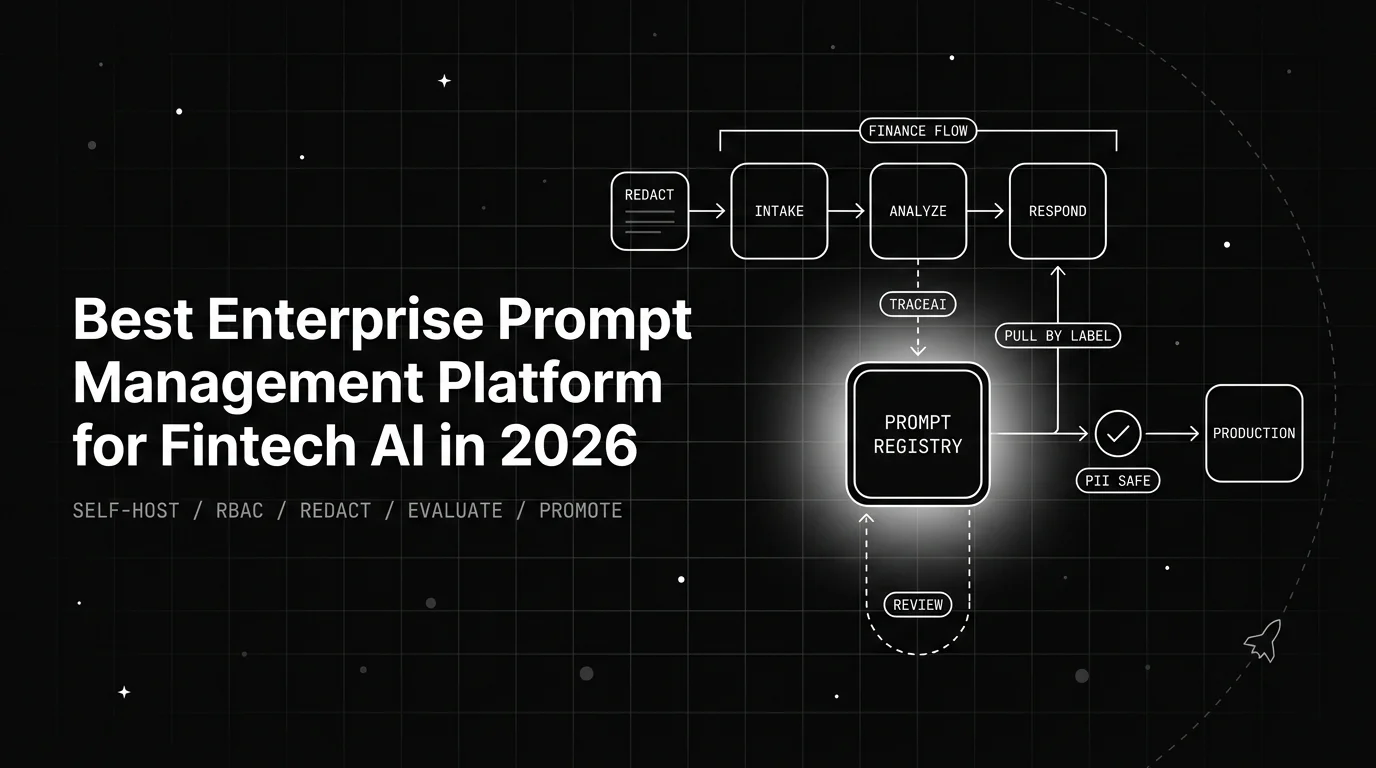
Table of Contents
A fintech team edits the assistant’s prompt to explain a disputed charge more clearly. A week later, support is fielding complaints that the bot quoted the wrong dispute window. No one can reconstruct what changed: the edit went live in a console, and no version recorded what the prompt said before. This guide shows how Future AGI governs fintech AI prompts inside your own VPC, versioned with an audit trail and gated by role-based access, accuracy evaluators, and Protect.
Why Fintech AI Prompts Need an Audit Trail
A fintech AI prompt is the financial assistant’s job description, and here that job description is regulated. The prompt decides what the assistant tells a customer about fees, disputes, balances, eligibility, and money movement. A single wording change can shift it from correct to non-compliant without touching application code. A wrong answer can become a compliance event and a direct cost to a customer’s account.
That is why the change record matters as much as the change. Internal audit and external examiners expect to know what the assistant was instructed to do, when it changed, and who approved it. A prompt edited in a live console answers none of that. There is no prior version, no author, and no durable trail, so the team reconstructs intent from memory and screenshots.
An audit trail is the fix, and it has to be intrinsic to the workflow. Every prompt edit should be captured as an immutable version, stamped with its author, the time, and a note on what changed. Every promotion should be a deliberate act, and every live answer traceable to the version that produced it. When those hold, a fintech team answers “what changed and who promoted it” in seconds instead of after a customer-facing incident.
Where Generic Prompt Tools Fall Short for Fintech
Most teams start with the fintech AI prompt as an inline string or in a hosted prompt UI. Both fail the requirements financial services actually has. An inline string buries the prompt in the service and ships it on the code release cycle, too slow for something compliance needs to review on its own.
A hosted UI is faster, but it sends your prompts, and any financial data in them, to a vendor’s backend outside your perimeter. That is a non-starter the moment a prompt can contain a card number or an account identifier.
Dedicated registries are a real step up. A tool like Langfuse gives you clean open-source versioning and labels, which answers “what is live.” But it still treats a fintech AI prompt as a string to store and serve.
It does not flag PII flowing through a prompt, control who can promote a money-touching change, or gate a new version on whether its answers are grounded in the customer’s real account data. For fintech, every one of those is a hard requirement. A store-and-serve registry leaves them all to tools you assemble and secure yourself.
So the real gap is governance inside your own perimeter. Fintech AI prompt management has to keep the prompt and its data where your controls already apply, decide who can change what, flag sensitive fields on the way in and out, and prove a promoted version answers accurately. Spread those across scattered tools and “we updated the prompt” stays unprovable to the auditor who has to sign off.
How Future AGI Manages Fintech AI Prompts Inside Your VPC
Future AGI treats a fintech AI prompt as a governed artifact you commit, guard, score, promote by label, and trace. The whole platform runs inside your own VPC. You deploy the registry and the evaluators where your financial data already lives, so prompts, evaluations, and traces never cross your perimeter.
Each fintech requirement below pairs with the capability that covers it:
| Fintech requirement | Without prompt management | Future AGI capability |
|---|---|---|
| Keep prompts and financial data in your perimeter | Prompts and data flow to a hosted backend | Self-host inside your VPC with Docker Compose; nothing leaves your servers |
| Control who can change a money-touching prompt | Anyone with console access edits the live text | Role-based access control over who edits and who promotes |
| Prove what a prompt said and when | No durable record of changes | Immutable version history with author, timestamp, and changelog |
| Keep card and account data out of prompts | Hope sensitive fields never appear | Protect guardrails flag PII on inputs and outputs |
| Ship only accurate, grounded answers | Eyeball a handful of responses | Gate promotion on the Groundedness and Detect Hallucination evaluators |
Each row gets its own section below, in order: self-hosting and access control, then guardrails, evaluation, and tracing.

Self-Host, RBAC, and an Audit-Ready Change Log
Future AGI ships as Apache-2.0 source you run on Docker Compose. The registry, evaluators, guardrails, and traces all stay inside your own VPC. For a fintech team, that settles the hardest question first. Prompts and the financial data they reason over stay where your compliance controls already apply, on infrastructure you can examine.
Inside that perimeter, role-based access decides who can do what. Organizations, workspaces, members, and roles separate the people who draft and test prompts from the people who can promote one to Production. A money-touching change becomes a controlled, attributable act rather than anything a console login can do.
Each change is an immutable version carrying its author, timestamp, and changelog, and deployment labels record which version was live at any point. That is an audit-ready change log by construction. When an examiner asks what the assistant was instructed to do and who approved it, the answer is a query. The prompt versioning docs describe how versions and labels record and route each change.
Data-Privacy Guardrails on Prompt Inputs and Outputs
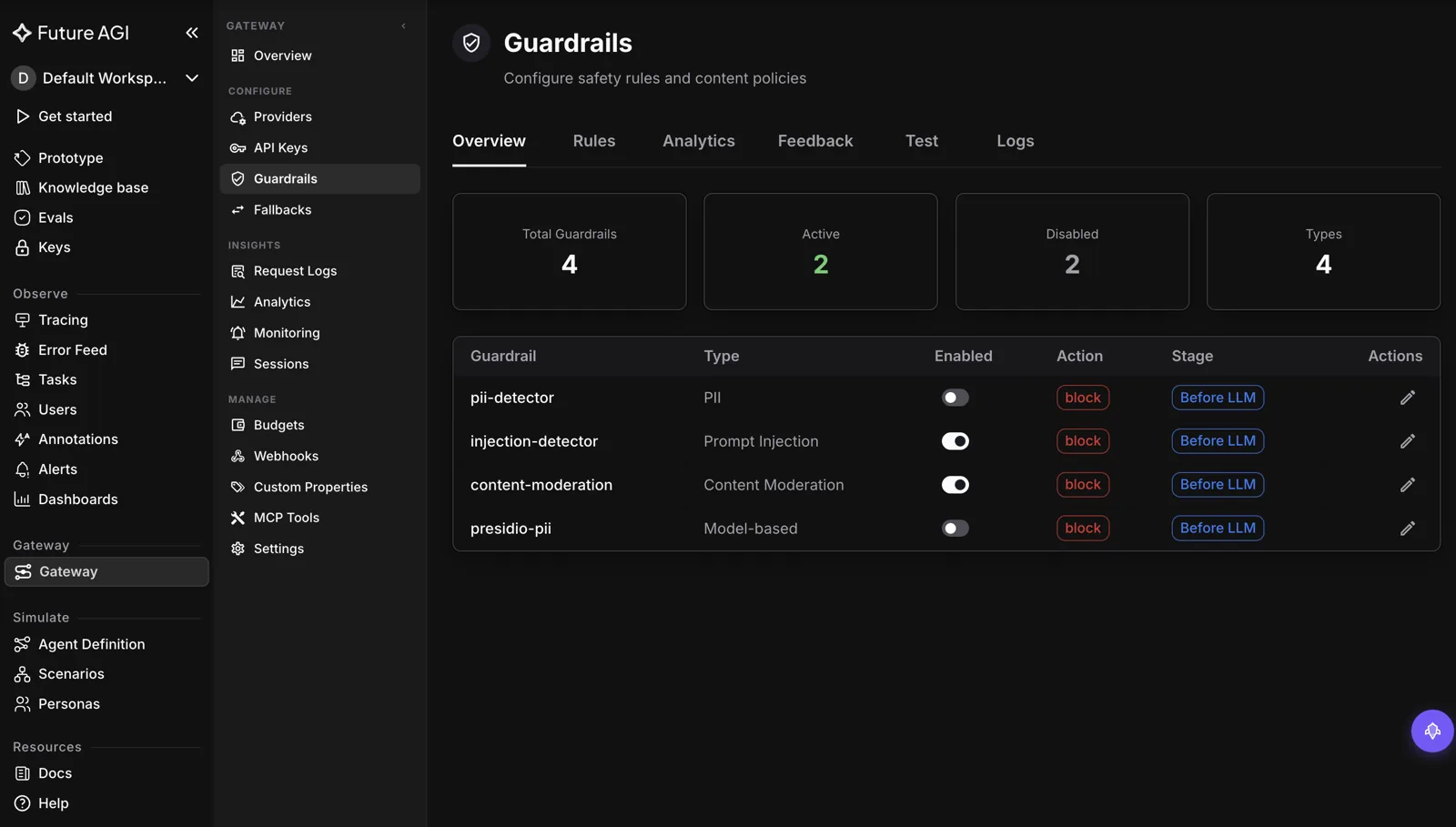
Keeping sensitive data out of prompts is a runtime problem, because a sensitive field can arrive in a user message or surface in a generated reply. Future AGI’s Protect runtime runs as a guardrail on both sides of the model. Its Data Privacy Compliance check detects PII such as names, emails, phone numbers, and SSNs, and flags GDPR privacy violations. It blocks or flags a match on the way in or out.
Running these checks at the boundary, inside your own deployment, is what makes the posture defensible. Self-hosting keeps prompts, model calls, and the card or account data the assistant reasons over inside your VPC. Nothing sensitive leaves your perimeter, and Protect flags PII on the way in and out.
This is confidentiality by architecture: the compliance posture is yours to operate, backed by a control you run inside your own environment. The Protect documentation covers the checks and how to run them.
Eval-Gated Promotion for Fintech AI Prompts
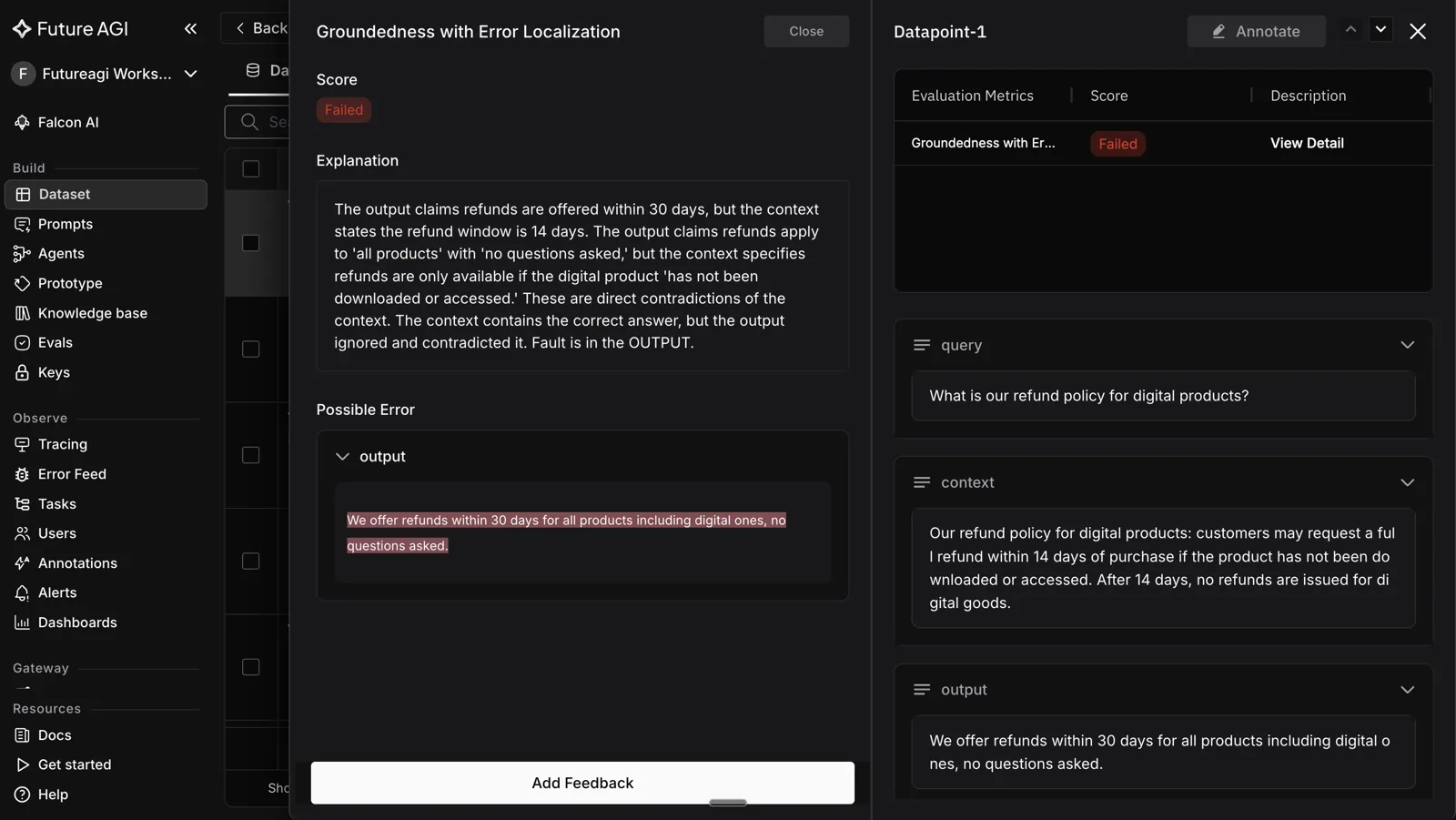
Governance decides who can promote a prompt; evaluation decides whether they should. In fintech the bar is accuracy against the customer’s real data. You can define a custom eval for that bar, and two built-in ones already carry the gate. Groundedness scores whether an answer is supported by the account data, policy, or documents the assistant was given. Detect Hallucination checks, on each response, that the reply did not invent a fee, a rate, or a policy.
You gate promotion on both, against a pinned set of representative cases and the current Production version. A version that reads confidently but states an unsupported number never earns the Production label.
The promotion itself is a deliberate, recorded move. You commit a candidate, stage it for review, and promote it to Production only after the eval gate and a human review pass, all through the SDK so the flow lives in your pipeline rather than a console.
from fi.prompt import Prompt, PromptTemplate, SystemMessage, ModelConfig

template = PromptTemplate(
    name="transaction-explainer",
    messages=[SystemMessage(content="Explain this transaction to the customer.\n{{transaction}}")],
    model_configuration=ModelConfig(model_name="gpt-4o"),
)
client = Prompt(template=template).create()

# commit a new transaction-explainer version and stage it for review, not live use
client.commit_current_version(message="txn-explainer v2: clearer dispute wording", set_default=False)
client.assign_label("Staging", version="v2")

# promote to production only after the eval gate and review pass
client.assign_label("Production", version="v2")

# at runtime, fetch the live prompt by name and label, then compile
live = Prompt.get_template_by_name("transaction-explainer", label="Production")
messages = live.compile(transaction=txn_record)
Because promotion and rollback are label moves, a version that slips through is reverted in seconds by repointing the label. The record of what happened is never overwritten by the fix. The prompt SDK reference covers the commit, label, and compile calls, and the evaluation library covers the full set of evaluators you can gate on.
Tracing Fintech AI Prompt Behavior with traceAI

Even a governed, evaluated prompt has to be observable once it is live. traceAI is OpenTelemetry-native and records the prompt template and its bound variables on each span. Each live answer carries the exact prompt version and the inputs that produced it. When a customer reports a wrong figure, you read the span instead of guessing which version was live.
That makes a fintech regression traceable to its cause at the level audit cares about. You find the answer, see the prompt version behind it and the data it reasoned over, and turn that case into a new evaluation example. The next promotion gate then has to clear it. The observability documentation shows what prompt and variable data each span carries.
Setting Up Future AGI for Fintech AI Prompts
The deployment itself is a Docker Compose install; the steps below are what keep a money-touching prompt change governed and reversible once it is running.
- Deploy the registry and evaluators inside your VPC, so prompts and financial data never leave your perimeter.
- Set role-based access so promotion is separated from editing, and only a designated role can move a money-touching prompt to Production.
- Turn on Protect for prompt inputs and outputs, so PII such as names, emails, and SSNs is flagged at the boundary rather than relied on never to appear.
- Gate promotion on Groundedness and Detect Hallucination against a pinned set of representative cases, so an inaccurate version is stopped before it reaches a customer.
- Instrument with traceAI from day one, so every live answer carries its prompt version and a reported issue is traced to the exact version and data behind it.
Because every change is already a versioned, attributable record, the rollout gives you the audit trail for free. Setup for the self-hosted stack lives in the Future AGI repository.
Where Future AGI Fits in Your Fintech Stack
In fintech, a prompt edit can turn a correct answer into a non-compliant one, and an examiner will ask what changed and who signed off. Future AGI makes that answerable by construction: the registry and evaluators run in your own VPC, role-based access splits editing from promotion, every version carries an author and changelog, and a Groundedness gate with Protect PII screening stops a version before it reaches a customer.
So a money-touching change becomes an attributable, reversible act instead of a console edit no one can reconstruct. Put your financial assistant under version control in the Future AGI app, with the audit trail built in.
Frequently Asked Questions
What Is Prompt Management for Fintech AI?
Which Prompt Management Platform Is Best for Fintech AI in 2026?
How Do You Keep Card and Account Data Out of Fintech AI Prompts?
Can You Self-Host a Prompt Management Platform for Financial Services?
How Do You Evaluate Whether a Financial Assistant Gives Accurate Answers?
How Do You Keep an Audit Trail of Prompt Changes for Compliance?
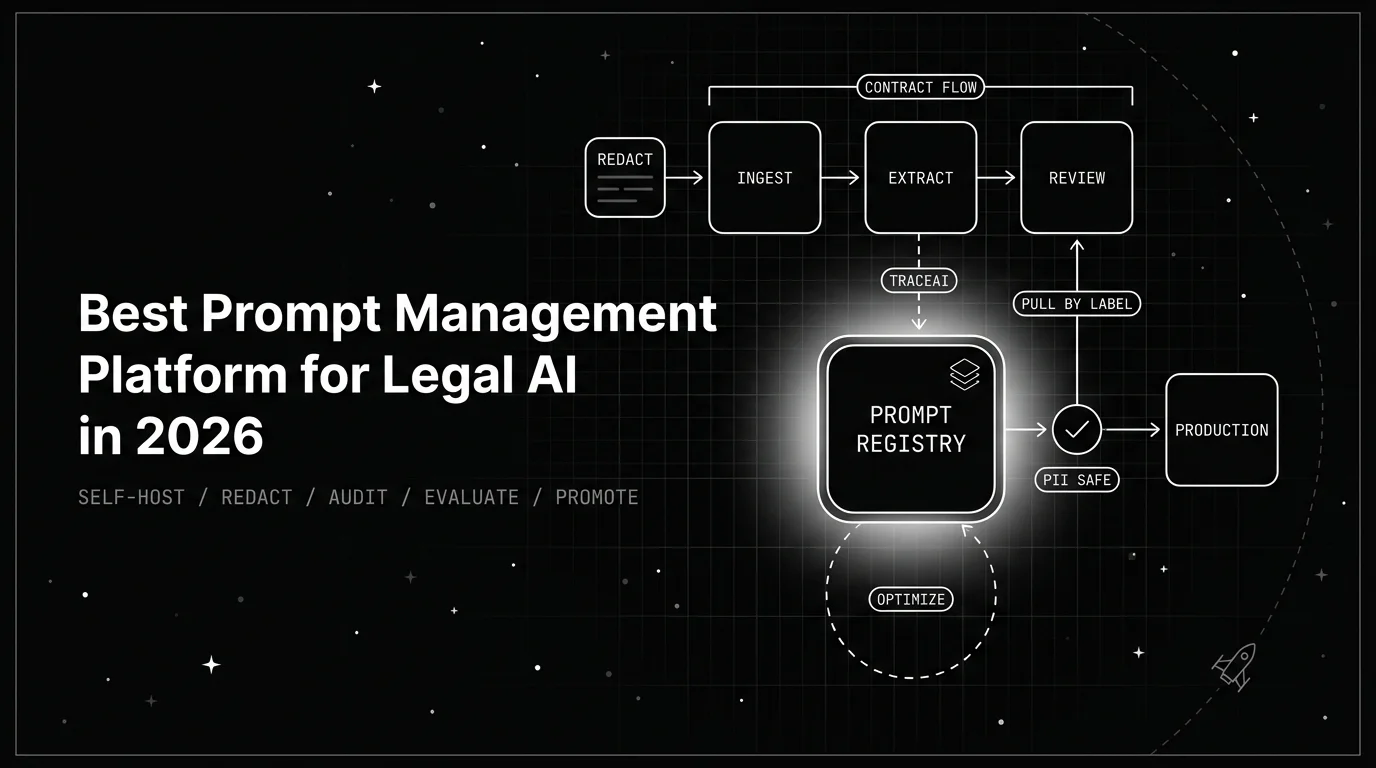
Prompt management for legal AI: Future AGI self-hosts the prompt registry in your perimeter, flags PII on inputs and outputs, and eval-gates every promotion.

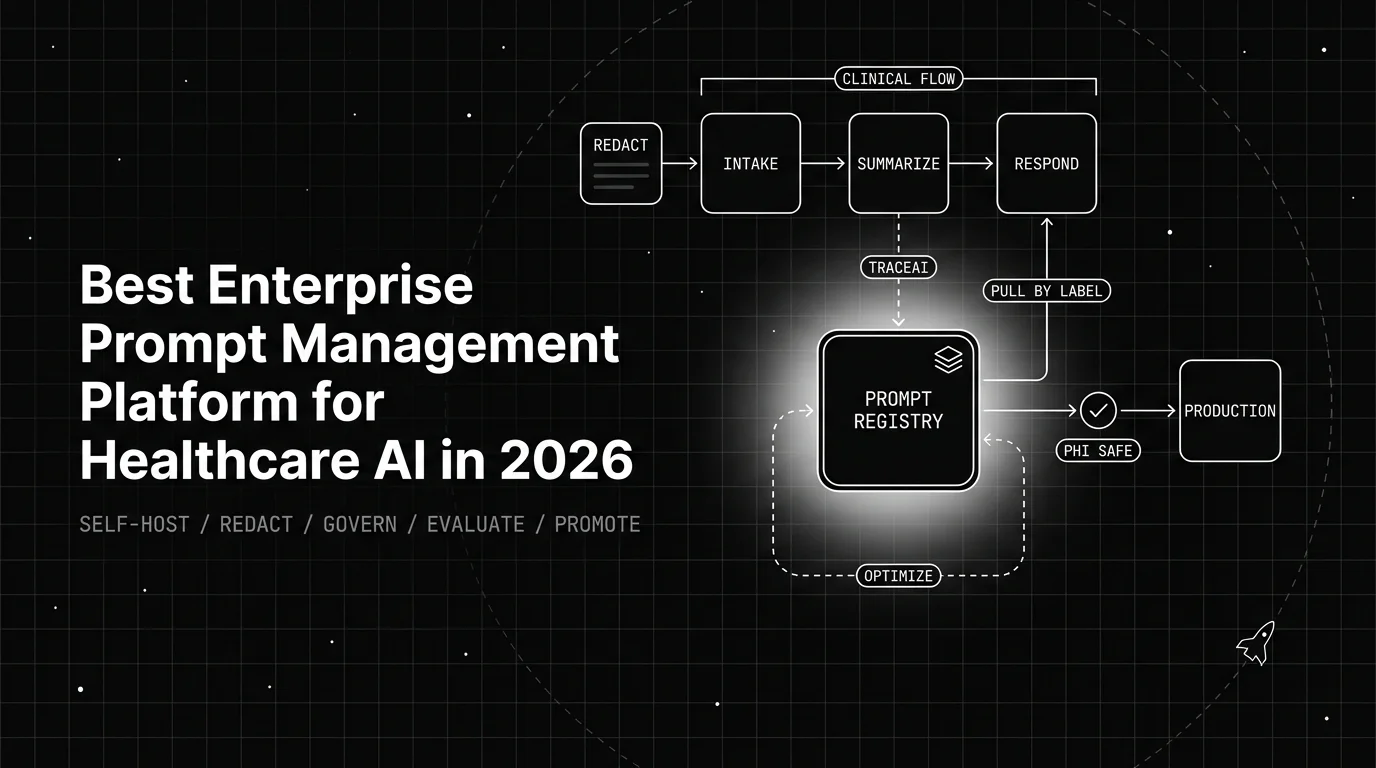
Prompt management for healthcare AI: Future AGI self-hosts the registry so PHI stays in your perimeter, flags PII, and gates each prompt on clinical evaluators.

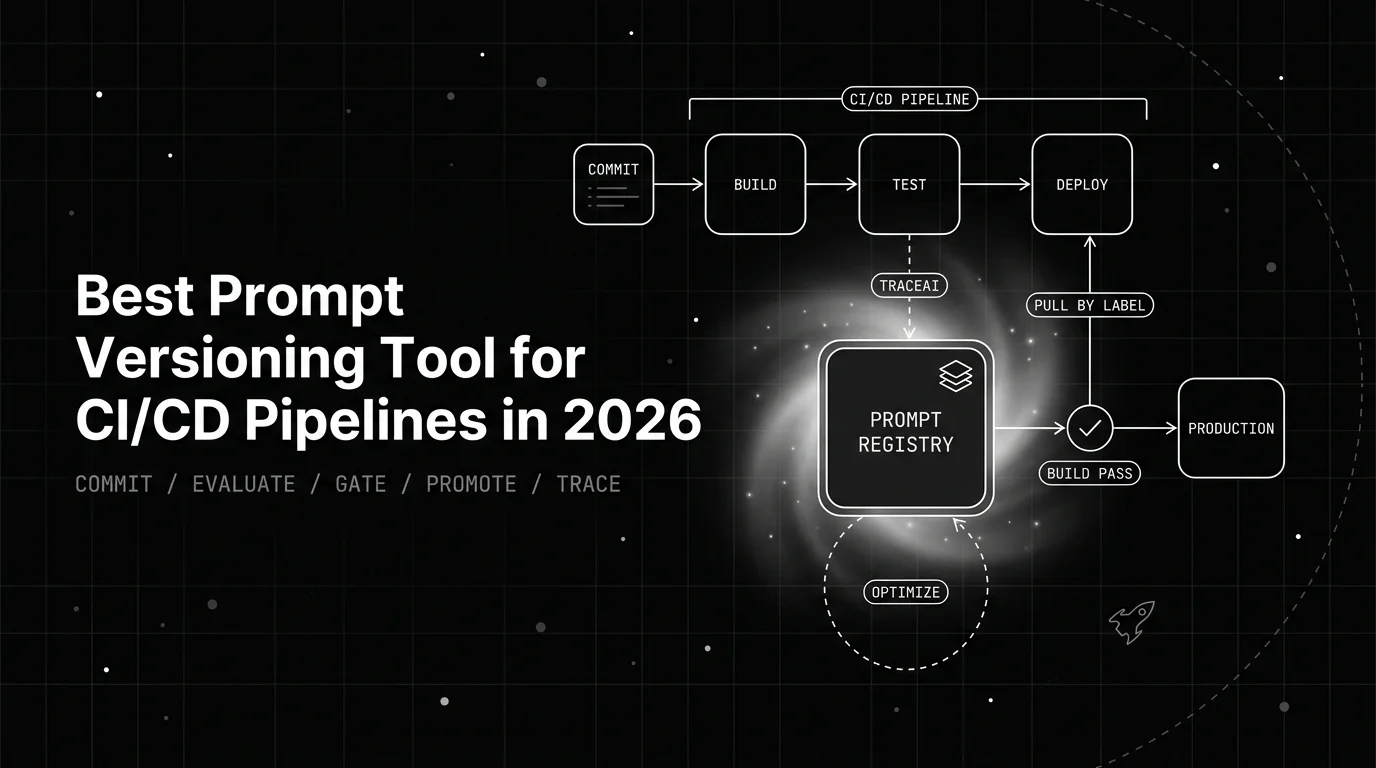
Prompt versioning for CI/CD with Future AGI: commit each version from the SDK, gate promotion on evaluators, fail the build on regression, promote by label.