Best Prompt Management Platform for Legal AI in 2026
Prompt management for legal AI: Future AGI self-hosts the prompt registry in your perimeter, flags PII on inputs and outputs, and eval-gates every promotion.
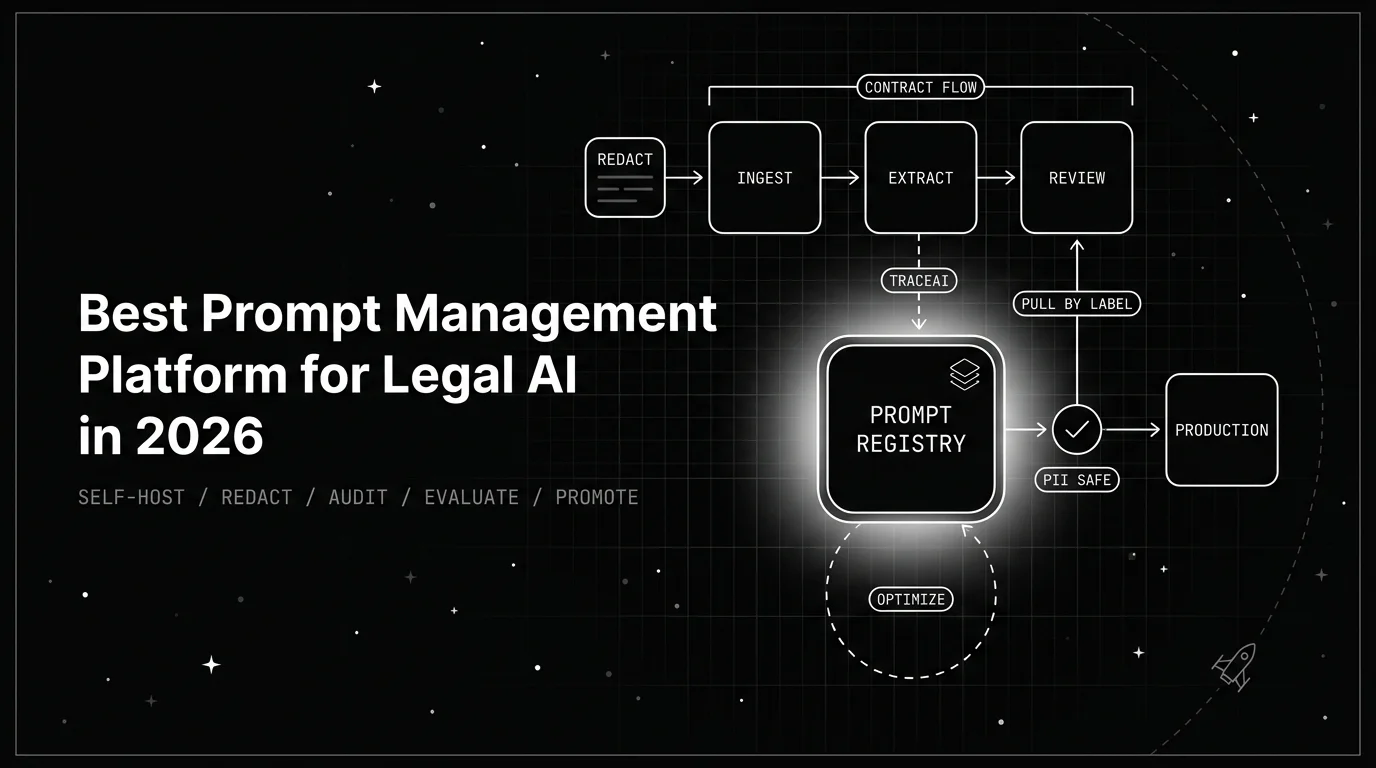
Table of Contents
A legal team edits a contract-review prompt to fix one mislabeled indemnity clause. The change goes live in a hosted console, where the confidential contract text has already left the building. When a partner later asks which prompt version produced last quarter’s missed termination right, no one can name the version or show who edited it. This guide shows how Future AGI governs legal AI prompts with traceability and confidentiality built into the architecture: self-hosted, access-controlled, PII-screened, and eval-gated.
Why Legal AI Prompts Demand Traceability
A legal AI prompt touches confidential, often privileged client text on every request. The input can hold a contract, a counterparty’s terms, or a client’s personal data, and the model can echo any of it back. One edit moves two things at once: how accurately a clause gets extracted, and how the confidential text is handled. Most prompt tooling addresses the accuracy risk and leaves the confidentiality risk unmanaged.
Legal work has to be defensible. When a review misses a termination right or mislabels an indemnity, the first question is which prompt version produced that output, who changed it, and when. If the prompt was edited in place with no version to name, there is no answer. Accuracy and confidentiality are entangled here. The same prompt version governs how well a clause is read and what client text flows through the model.
That is why a legal AI prompt needs more than storage. It has to live somewhere you control and change only through reviewed, recorded steps. It also has to stay guarded against leaks on its inputs and outputs, and be measured before it informs client work. Edited in place in a hosted tool, none of those properties hold, and “we fixed it” is not something you can put on the record.
Where Generic Prompt Tools Fall Short for Contract Workflows
Most prompt tools are hosted SaaS, and for legal work that is a non-starter. As soon as a prompt carrying a privileged contract goes to a vendor’s cloud for storage, serving, or evaluation, the client text has crossed out of your perimeter. No amount of vendor features undoes that. The baseline requirement is that the prompts, and the documents they read, stay on infrastructure you run.
The open-source, self-hostable options meet the perimeter requirement but not the governance and screening that follow. A tool like Langfuse handles open-source versioning and environment labels on your own boxes. But it still treats a prompt as a string to be stored and served.
It does not flag PII on the prompt input or model output, score whether an extracted clause is grounded in the contract, or provide the access-controlled, audit-ready governance that client work needs around every change. For legal, closing those gaps is most of the work.
So the gap for legal is specific. Hosted tools fail the perimeter test outright; self-hostable storage tools clear it yet still force you to assemble PII screening, evaluation, access control, and an audit trail out of separate systems. A legal team needs one platform where all of those are the same system, so confidentiality and traceability come from the architecture rather than hand-assembly.
How Future AGI Manages Legal AI Prompts Inside Your Perimeter
Future AGI handles a legal AI prompt as an artifact to govern, guard, version, score, and trace, with each of those steps running on hardware you operate. Because the platform carries an Apache-2.0 license and self-hosts, its registry, its evaluators, the Protect guardrails, and the traces all sit in your environment. Privileged contract text never leaves it. On top of that perimeter sit the controls a regulated workflow needs.
The table maps each legal concern to the capability that addresses it:
| Legal AI prompt concern | Risk | Future AGI capability |
|---|---|---|
| Where prompts and traces live | Privileged contract text sent to a hosted vendor | Apache-2.0 self-host; nothing leaves your servers |
| Confidential data on prompt inputs and outputs | A client name or personal detail leaks to a model or a log | Protect guardrails flagging PII |
| Who can change a prompt | An unreviewed edit reaches a contract workflow | RBAC across organizations, workspaces, and roles |
| Proving what shipped | No record of which prompt produced an extraction | Immutable audit log plus traceAI prompt logging |
| Promotion | A regressed clause prompt informs live legal work | Eval-gated label promotion on legal evaluators |
The sections that follow work down the table: first the perimeter and the controls on it, then the runtime guardrails, the versioning path, and tracing.
Self-Host, RBAC, and an Immutable Audit Log
Everything starts with the perimeter. Future AGI ships under Apache-2.0 and deploys through Docker Compose, which puts the whole stack on machines you administer. Legal AI prompts, the datasets of representative contracts you evaluate them on, and the traces of real reviews all stay in infrastructure you control. The confidentiality posture follows from where the stack runs: your own machines, under your own control.
Within that perimeter, Future AGI structures access through organizations, workspaces, members, and roles. You set who may edit a legal AI prompt, who may promote one into production, and who is confined to read-only. Because the edit right and the promote right can live with separate roles, no lone individual pushes a contract-prompt change through without review. That separation is a control you can point to in a review.
Every change is also recorded. The registry holds an immutable version history in which each version freezes its author, timestamp, and commit message, and every promotion or rollback lands as a recorded label move. That history is exactly the audit log legal work calls for: it records who altered a prompt, when, and why, leaving nothing to reconstruct after the fact.
Confidentiality Guardrails on Prompt Inputs and Outputs

Access control settles who may change a legal AI prompt; guardrails settle what confidential text is allowed through while the prompt runs. Future AGI’s inline guardrails layer, Protect, applies a Data Privacy Compliance check. It catches personal identifiers such as names, emails, phone numbers, and SSNs, and flags GDPR privacy violations. You run it on both legs of a legal request, the prompt input and the model output, so a match is blocked or flagged either way.
Screening the input counts as much as screening the output. A client name that slips into a prompt from an upstream document gets caught before that prompt reaches a model. One the model echoes back is caught before it lands in a log. Because the platform is self-hosted, that screening stays inside your own perimeter rather than a vendor’s cloud.
Protect reaches beyond privacy, adding dimensions for content moderation, bias detection, and security, though for a legal workflow it is the privacy check that earns its place on every prompt. The Protect documentation covers the available checks.
Version, Score, and Promote Legal AI Prompts
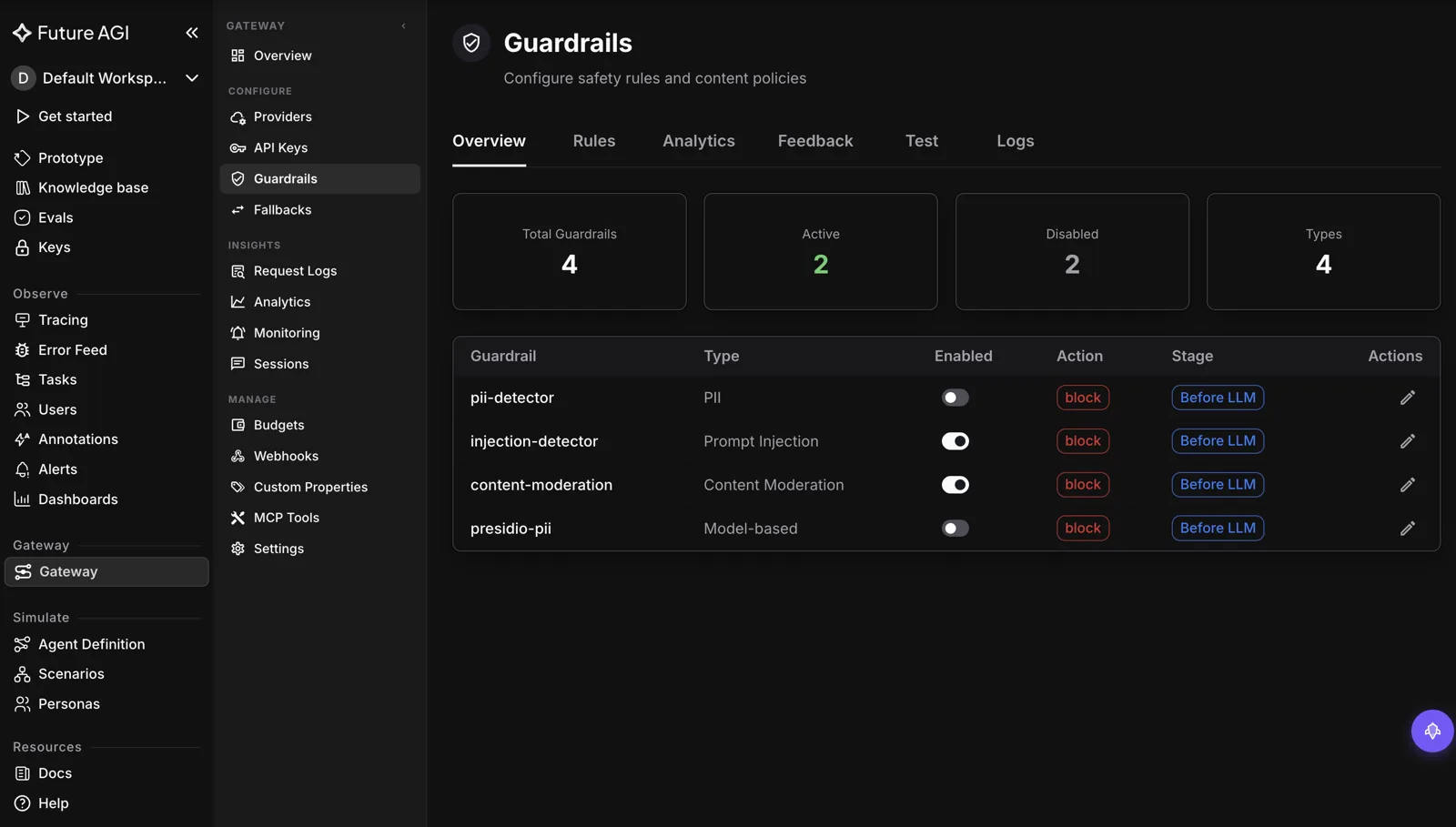
A legal AI prompt should travel the same disciplined route as any other reviewed change. You commit a version, score it, and promote it only once it clears the bar. Inside the registry, every prompt is a template with an immutable version history and deployment labels such as Production, Staging, and Development. The workflow runs from the SDK. A legal AI prompt is committed as a candidate, evaluated, and promoted by repointing a label, never edited live.
from fi.prompt import Prompt, PromptTemplate, SystemMessage, ModelConfig

# define the clause-extraction template and create it in the registry
template = PromptTemplate(
    name="contract-review",
    messages=[SystemMessage(content="Extract the indemnity clause from the contract.\n{{contract_text}}")],
    model_configuration=ModelConfig(model_name="gpt-4o"),
)
client = Prompt(template=template).create()

# commit a new version and stage it for review, not live use
client.commit_current_version(message="clause-extract v2: tighter indemnity handling", set_default=False)
client.assign_label("Staging", version="v2")

# promote to production only after the eval gate and review pass
client.assign_label("Production", version="v2")

# at runtime, fetch the live contract-review prompt by name and label, then compile
live = Prompt.get_template_by_name("contract-review", label="Production")
messages = live.compile(contract_text=document_text)
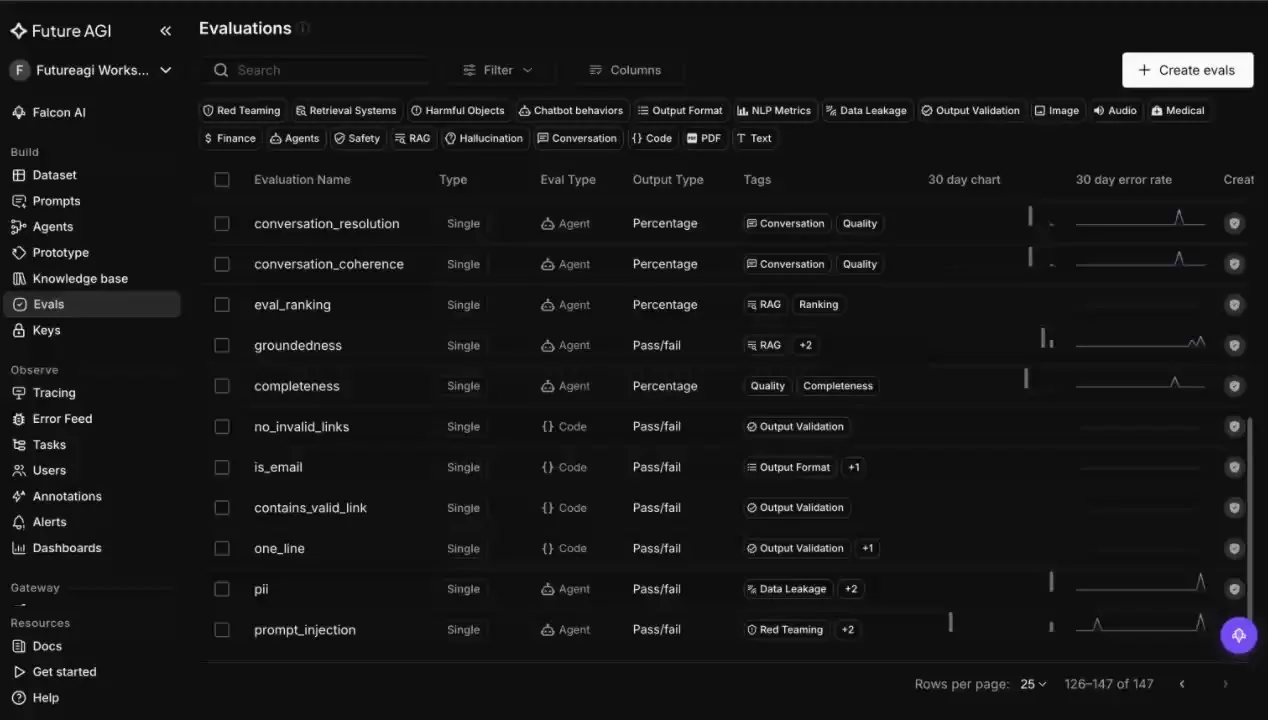
The promotion gate is an evaluation gate. With Future AGI you can write custom evals for your review rules; for legal AI prompts the built-in factual and retrieval-oriented ones matter most. Groundedness checks that an extracted clause is supported by the actual contract rather than invented. Context Relevance, Context Adherence, and Detect Hallucination then check that a review pulled the right clauses and stayed within the document.
Set the gate against the score of the current Production version, so a regressing candidate never earns the Production label. If a version lands close but just under the bar, the open-source agent-opt library takes one prompt, an evaluator, and a dataset, and rewrites and rescores that prompt across six algorithms (Random Search, Bayesian, ProTeGi, Meta-Prompt, PromptWizard, GEPA) to return a higher-scoring version.
The calls and the full set of 70+ built-in evaluators are documented in the versioning docs, the prompt SDK reference, and the evaluation library.
Tracing Legal AI Prompt Behavior with traceAI

Offline scores are necessary, but a legal AI prompt that grades well on a frozen dataset can still stumble on a live document. traceAI closes that gap. It is OpenTelemetry-native and writes the template text and bound variables into each span, tying every extraction back to the version that generated it. When an output comes back wrong, you read the trace, note the version and document context, and turn it into a new evaluation example.
The deployment detail matters for legal. Since traceAI operates inside your self-hosted deployment, those traces, which may include contract text, remain within your perimeter next to the prompts and evaluators, so production observability arrives without opening a fresh path for confidential text to escape. The observability documentation details how prompts and variables are logged on each span.
Setting Up Future AGI for Legal AI Prompts
Installation is a single Docker Compose stack; what follows is the operating discipline that keeps legal AI prompt work inside the boundary you control.
- Self-host the registry, the evaluators, and the traces in an environment you run, so confidential and privileged contract text, and the prompts that read it, stay behind your own boundary.
- Wrap legal AI prompts in RBAC, keeping the edit right apart from the promote right, so a contract-prompt change cannot reach production unless a second role signs off.
- Apply the Data Privacy Compliance guardrail to both the prompt input and the model output, so a client name or email trips a flag before it ever hits a model or a log.
- Gate promotion on legal evaluators against a fixed set of representative contracts, scoring groundedness and context relevance, then promote by moving a label, which keeps each change reversible and written into the audit log.
- Wire in traceAI from the first day, so every extraction ships with its prompt version attached, and feed failed cases back as fresh evaluation examples that tighten the gate over time.
The Compose files and setup steps are in the Future AGI repository.
Where Future AGI Fits in Your Legal AI Stack
A legal AI prompt reads privileged text and returns a clause someone may later have to defend, so you need to name the version that produced it and show the document never left your walls. Future AGI keeps the whole loop self-hosted: role-based access holds editing and promotion in separate hands, an immutable log records every change, Protect flags client identifiers on inputs and outputs, and a groundedness gate confirms an extracted clause is actually in the contract.
That gives every extraction a version history you can stand behind on the record. Clone the Future AGI repository and give your first contract prompt a home inside your confidentiality boundary.
Frequently Asked Questions
What Is Prompt Management for Legal AI?
Which Prompt Management Platform Is Best for Legal AI in 2026?
How Does Future AGI Keep Confidential Contract Data Out of Legal AI Prompts?
How Do You Keep an Audit Trail of Legal AI Prompt Changes?
How Do You Control Who Can Change a Legal AI Prompt?
Can You Self-Host a Prompt Management Platform for Legal AI?
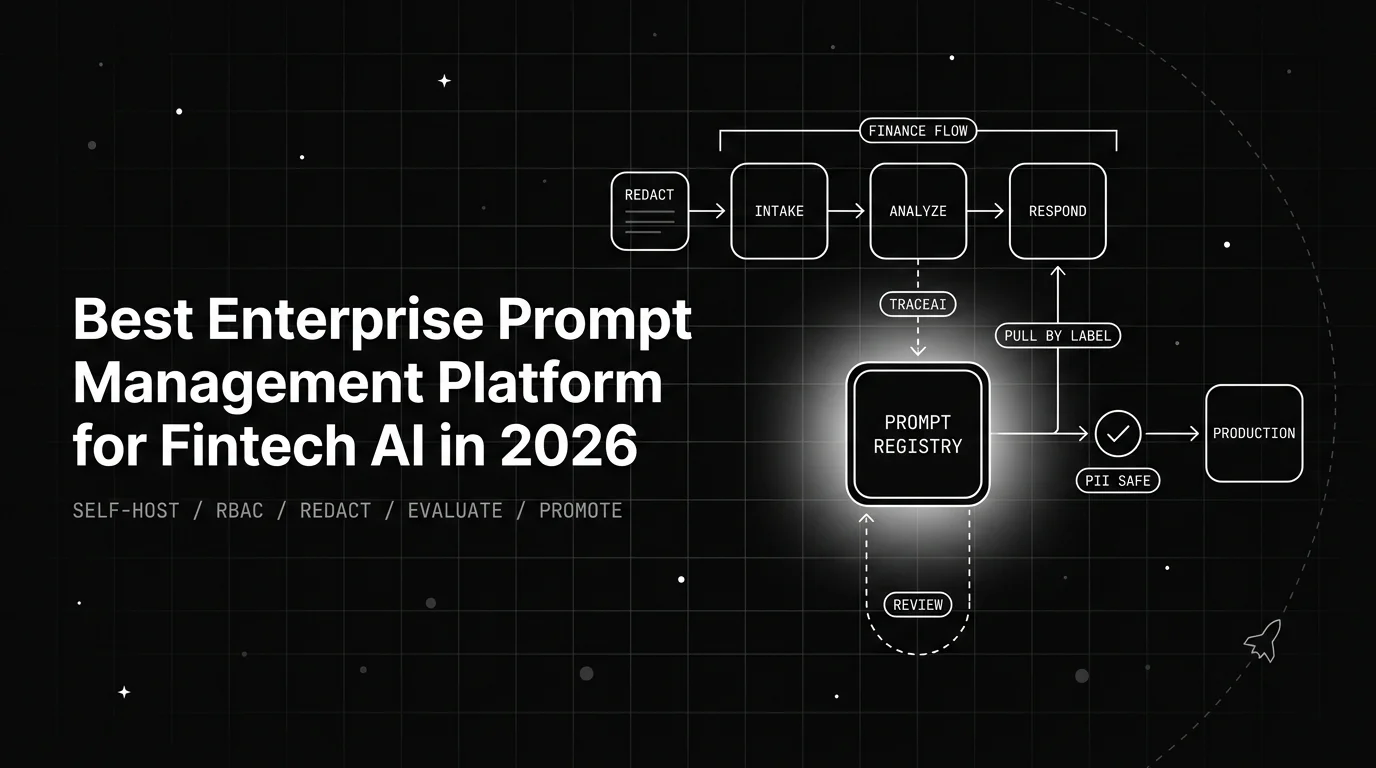
Prompt management for fintech AI: Future AGI versions and governs each prompt in your own VPC, flags PII at the boundary, and eval-gates every promotion.

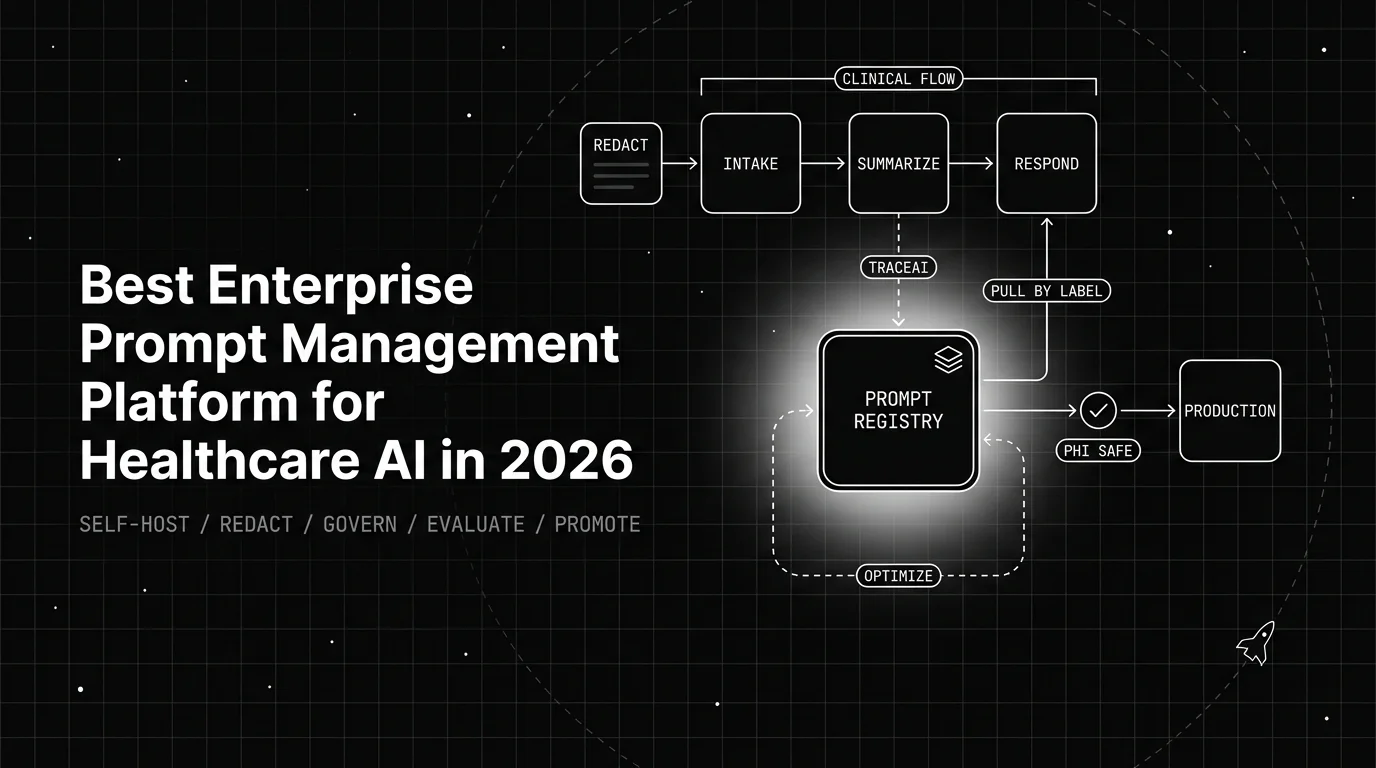
Prompt management for healthcare AI: Future AGI self-hosts the registry so PHI stays in your perimeter, flags PII, and gates each prompt on clinical evaluators.

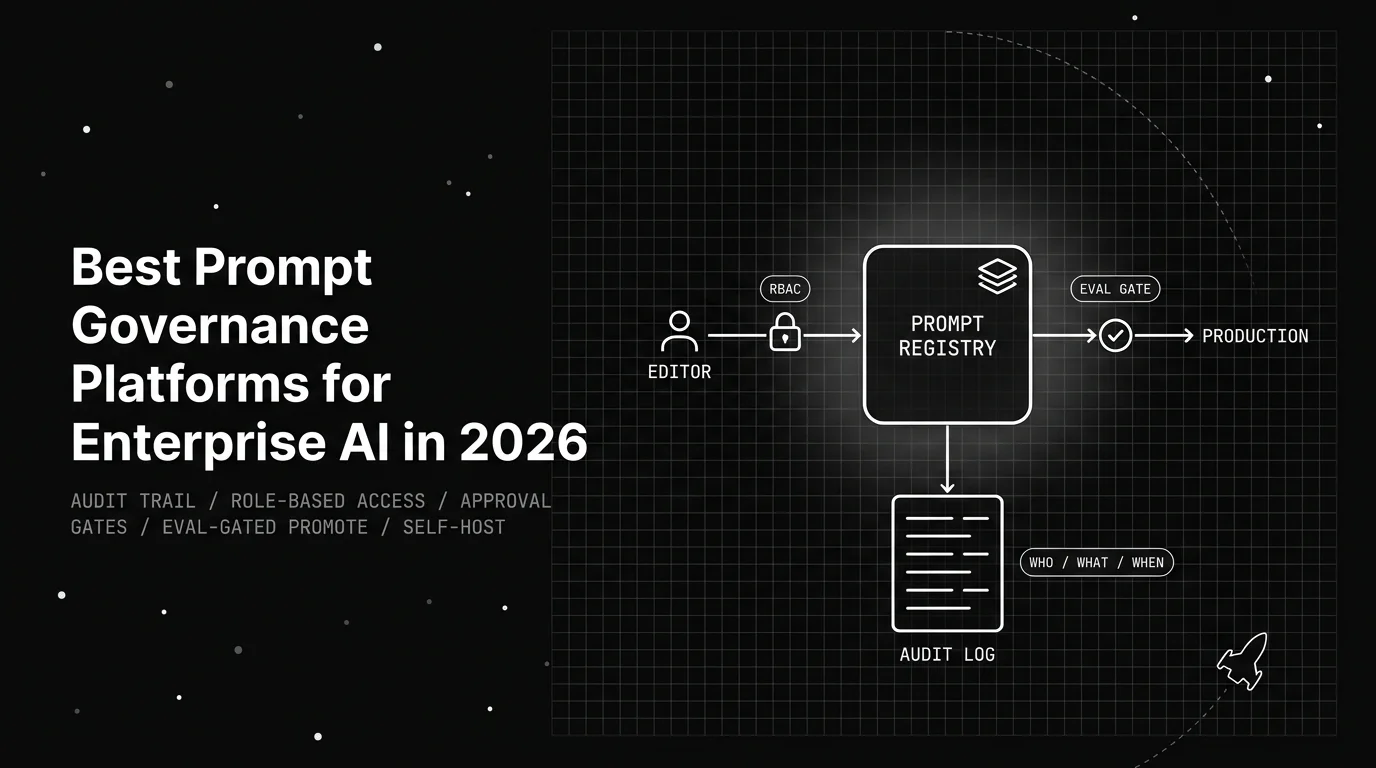
The 6 best prompt governance platforms for enterprise AI in 2026, ranked on access control, audit logs, approval workflows, and clear policy enforcement.