Best Enterprise Prompt Management Platform for Healthcare AI in 2026
Prompt management for healthcare AI: Future AGI self-hosts the registry so PHI stays in your perimeter, flags PII, and gates each prompt on clinical evaluators.
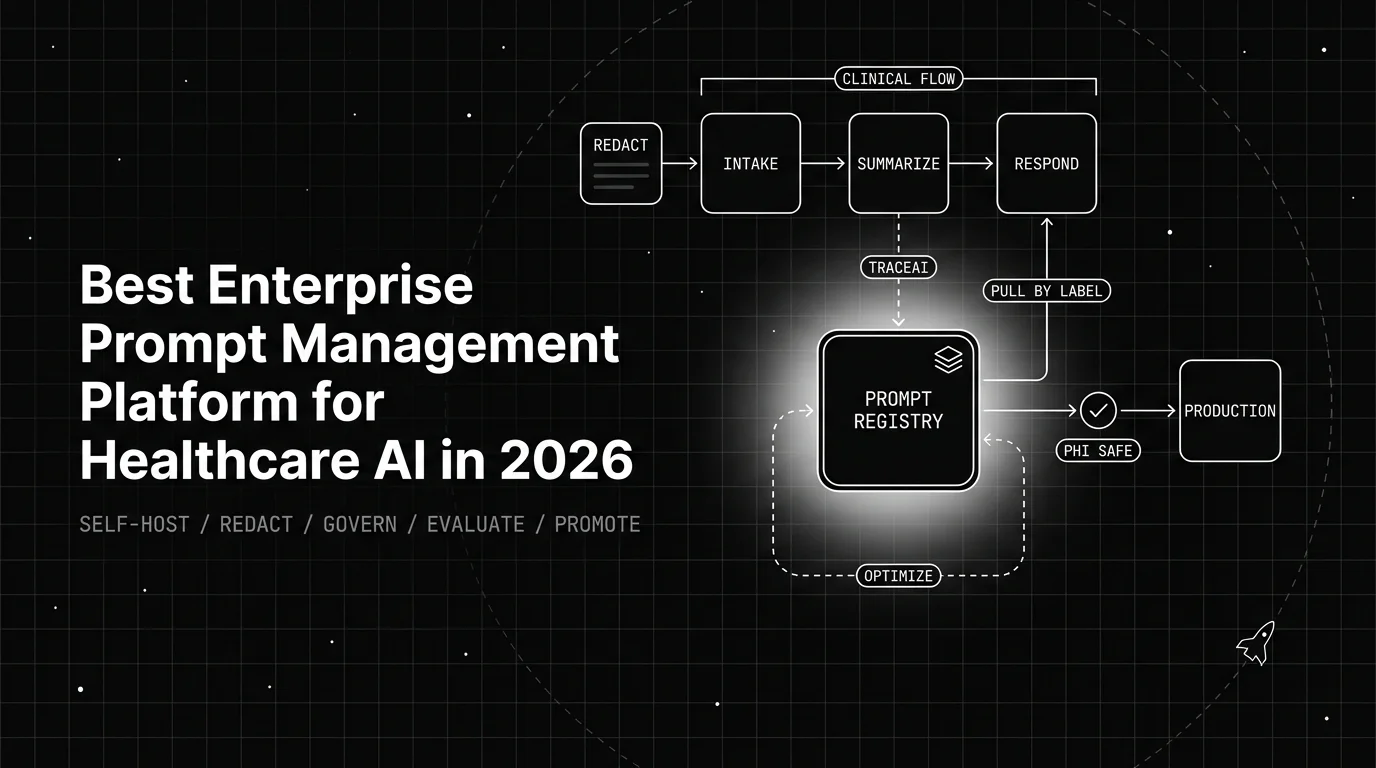
Table of Contents
A hospital team edits a clinical-summary prompt to fix one misleading discharge note. The change ships live from a hosted console, and the patient context in the prompt has already left the building. When compliance asks who changed the prompt behind last week’s leak, there is no version to name, no access record, and no guardrail that caught it. This guide shows how Future AGI manages healthcare AI prompts as compliance by architecture, self-hosted and governed end to end.
Why Healthcare AI Prompts Carry Compliance Weight
A healthcare AI prompt is a surface that touches protected health information on every request. The input can carry a patient note, a medication list, or an identifier, and the output can repeat any of it. So a single prompt change carries two risks at once: it can degrade a clinical answer, and it can change how that data is handled. Most prompt tooling manages the first risk and is blind to the second.
Those two risks are entangled. A wording change that makes a discharge summary more concise can also make the model echo back a patient name it had withheld. An edit that improves triage accuracy can widen the context the prompt pulls in, which draws more PHI into the call. You cannot reason about clinical quality and PHI exposure separately, because the same prompt version governs both.
So a healthcare AI prompt needs more than storage. It has to live where you control it, change only through reviewed and recorded steps, be guarded so PHI does not leak through its inputs or outputs, and be measured before it reaches a patient. Edited in place in a hosted tool, none of that holds, and “we fixed it” is not something you can prove to an auditor.
Where Generic Prompt Tools Fall Short on PHI
Most prompt tools are hosted SaaS, which is a non-starter for healthcare on its own. The moment a prompt containing a patient note is sent to a vendor’s cloud to be stored, served, or evaluated, the PHI has left your perimeter. No feature list makes up for that. The first requirement in a clinical setting is that the prompts and the data they touch stay inside infrastructure you control.
The open-source, self-hostable tools clear that first bar but stop short of the rest. Langfuse is the usual example: open source, runs on your own boxes, and keeps an orderly history of prompt versions and their environment labels. That is real value, but only on the storage side.
It treats a prompt as a string to store and serve. It does not screen inputs or outputs for patient identifiers, does not score whether a clinical answer is accurate or grounded, and gives you no access-controlled, audit-ready governance around each change. For healthcare, those gaps are the whole job.
So the healthcare gap is specific. Hosted tools fail the perimeter test. Self-hostable storage tools pass it but leave you to bolt on screening, evaluation, access control, and an audit trail from separate systems. A clinical team needs all of that in one architecture.
How Future AGI Manages Healthcare AI Prompts Inside Your Perimeter
Future AGI treats a healthcare AI prompt as something to be governed, guarded, versioned, scored, and traced, all inside infrastructure you control. Because the platform is Apache-2.0 and self-hostable, the registry, the evaluators, the Protect guardrails, and the traces run in your own environment. PHI never leaves it.
Read the table as three columns of the same story: the clinical concern, what goes wrong without control, and the Future AGI capability that holds it in place:
| Healthcare AI prompt concern | Risk | Future AGI capability |
|---|---|---|
| Where prompts and traces live | Clinical data sent to a hosted vendor | Apache-2.0 self-host; nothing leaves your servers |
| Patient identifiers on prompt inputs and outputs | A patient identifier leaks to a model or a log | Protect guardrails with the Data Privacy Compliance rule |
| Who can change a prompt | An unreviewed edit reaches a clinical workflow | RBAC across organizations, workspaces, and roles |
| Proving what shipped | No record of which prompt produced an answer | Immutable version history plus traceAI prompt logging |
| Promotion | A regressed healthcare AI prompt reaches patients | Eval-gated label promotion on clinical evaluators |
The sections below take these rows in order, from the perimeter to guardrails, versioning, and tracing.
Self-Host, RBAC, and an Immutable Version History
The foundation is the perimeter. Future AGI is Apache-2.0 and installs through Docker Compose, so the entire stack runs inside your own HIPAA-aligned environment. Healthcare AI prompts, the datasets you evaluate them on, and the traces of real answers all stay in infrastructure you control. That is what lets the platform sit inside your compliance boundary, instead of asking you to trust a certification.
Inside that perimeter, access is organized as organizations, workspaces, members, and roles. You decide who can edit a healthcare AI prompt, who can promote one to production, and who can only read. Because editing and promotion can be held by different roles, no single person ships a healthcare AI prompt change unreviewed.
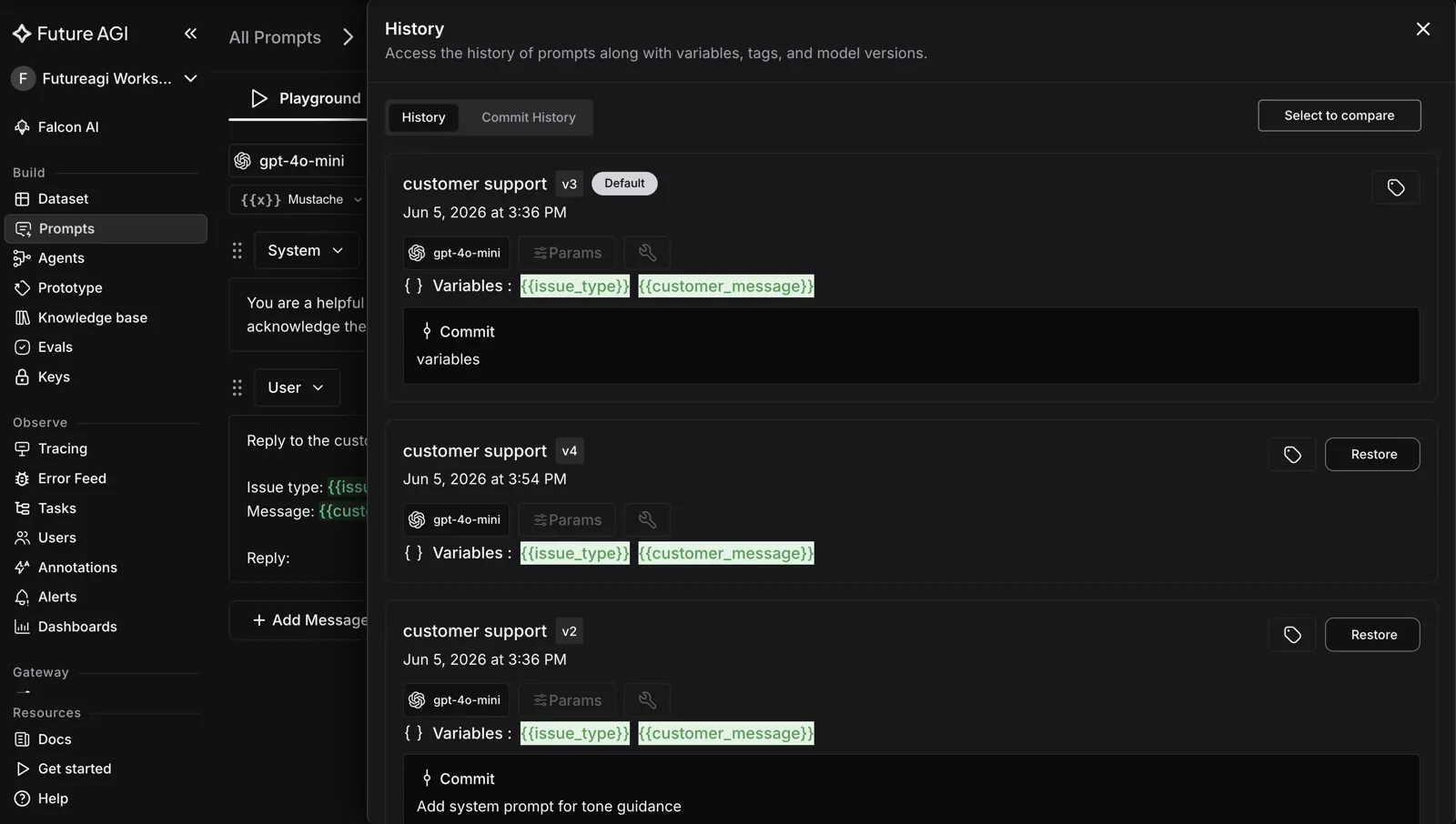
Every change is also recorded. The registry keeps an immutable version history. Each version is a frozen snapshot with its author, timestamp, and commit message. Each promotion or rollback is a recorded label move. That history is the audit trail a clinical workflow needs, because it answers who changed a prompt, when, and why, without anyone having to reconstruct it after the fact.
Patient-Identifier Guardrails on Prompt Inputs and Outputs
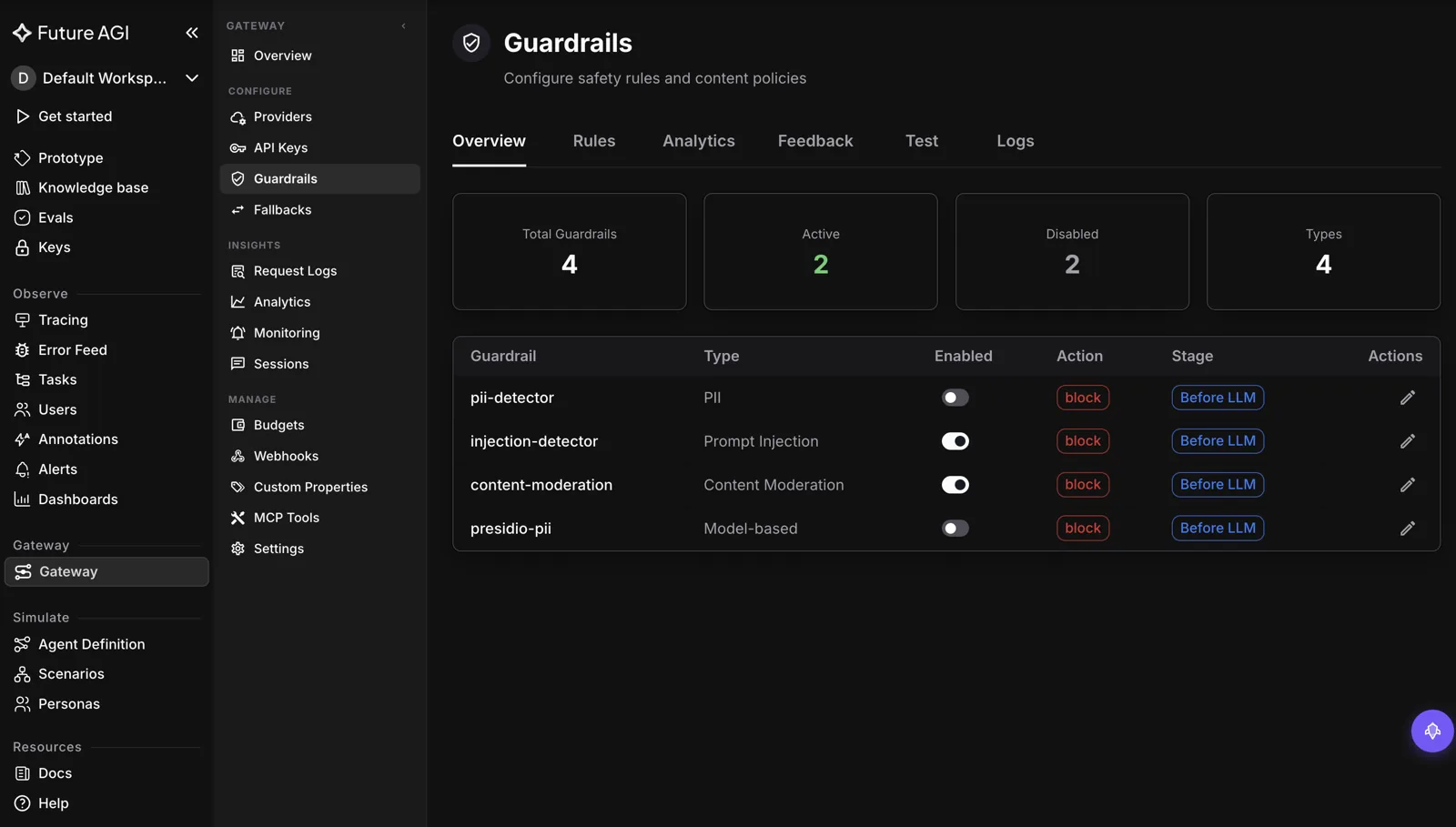
Governance controls who changes a prompt; guardrails control what flows through it at runtime. Future AGI ships Protect, an inline guardrails layer. Its Data Privacy Compliance rule detects personally identifiable information such as names, emails, phone numbers, and Social Security numbers. It also flags GDPR and HIPAA privacy violations. You call it from the SDK on both legs of a clinical request, the input and the output.
Running it on the input matters as much as the output. A patient identifier that slips in from an upstream system is caught before the prompt reaches a model. One the model echoes back is caught before it reaches a log or a downstream consumer. Because the platform is self-hosted, that screening happens inside your own perimeter, so the guardrail is not itself a new place PHI travels to.
Protect covers more than privacy, with dimensions for content moderation, bias detection, and security such as prompt-injection. But for a clinical workflow, the privacy rule earns its place on every prompt. The Protect documentation covers the rules and how to wire them into a request.
Versioning and Eval-Gated Promotion for Healthcare AI Prompts
Healthcare AI prompts should move through the same disciplined path as any regulated change: commit a version, score it, and promote it only when it passes. In the registry each healthcare AI prompt is a template whose Production, Staging, and Development labels each map to a single version. The workflow runs from the SDK: commit a candidate, evaluate it, and promote by repointing a label, never editing live in production.
from fi.prompt import Prompt, PromptTemplate, SystemMessage, ModelConfig

template = PromptTemplate(
    name="intake-summary",
    messages=[SystemMessage(content="Summarize the intake note for a clinician.\n{{patient_note}}")],
    model_configuration=ModelConfig(model_name="gpt-4o"),
)
client = Prompt(template=template).create()

# commit a new healthcare AI prompt version and stage it for review before production
client.commit_current_version(message="intake-summary v4: tighter identifier handling", set_default=False)
client.assign_label("Staging", version="v4")

# promote to production only after the eval gate and review pass
client.assign_label("Production", version="v4")

# at runtime, fetch the live healthcare AI prompt by name and label, then compile
live = Prompt.get_template_by_name("intake-summary", label="Production")
messages = live.compile(patient_note=note_text)
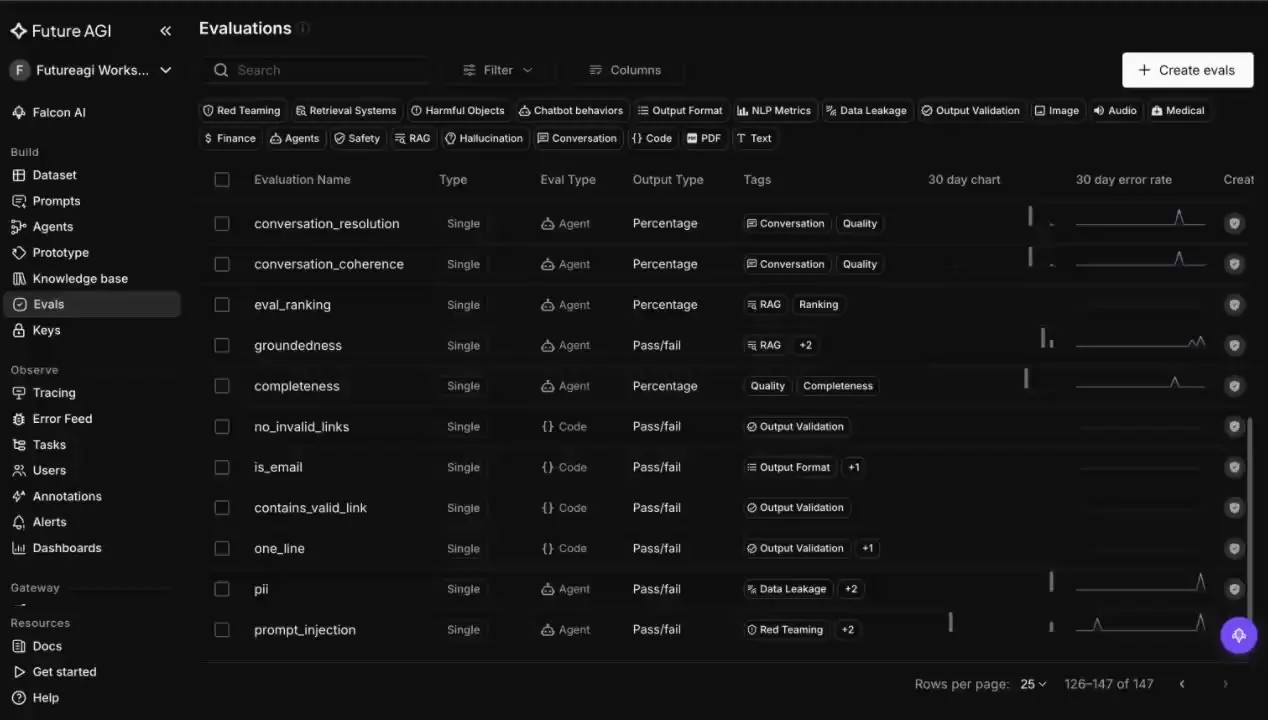
Promotion is gated on evaluation. Future AGI lets you define custom evals for your clinical rules, and it ships built-in ones for the common checks. For healthcare AI prompts the ones that matter are behavioral and factual. Instruction Adherence checks that the model followed the prompt’s clinical rules. Task Completion checks that it produced the summary or triage the prompt asked for. Context Adherence, Groundedness, and Detect Hallucination check that the answer is supported by the clinical context rather than invented.
Pin the threshold to the current Production version’s scores, and any candidate that comes in lower never receives the Production label. A healthcare AI prompt that lands just under the bar can be improved without hand-editing. The open-source agent-opt library takes that prompt, an evaluator, and a dataset, and rewrites and rescores it across six algorithms (Random Search, Bayesian, ProTeGi, Meta-Prompt, PromptWizard, GEPA) to return a higher-scoring version.
The versioning docs, the prompt SDK reference, and the evaluation library cover the calls and the full evaluator set.
Tracing Healthcare AI Prompt Behavior with traceAI
Offline scores are necessary, but a healthcare AI prompt that looks right on a fixed dataset can still fail on live traffic. traceAI closes that gap. It is OpenTelemetry-native and logs the prompt template and its variables on every span. Each production answer is then linked to the exact prompt version that produced it.
When a clinical output is wrong, you open the trace, see the version and the context it was given, and turn that case into a new evaluation example. A passing offline test and a failing live call are now connected by one readable trace.
traceAI runs in your self-hosted environment. The traces can contain clinical context, so they stay inside your perimeter instead of flowing to a hosted backend. You get production observability without opening a new path for PHI to leave. The observability documentation walks through logging prompts and variables on spans.

Setting Up Future AGI for Healthcare AI Prompts
Self-hosting the stack is the quick part; the steps below are what keep a healthcare AI prompt change inside your compliance boundary.
- Self-host the registry, evaluators, and traces inside your HIPAA-aligned environment, so healthcare AI prompts and the PHI they touch never leave the perimeter you control.
- Put RBAC around healthcare AI prompts, separating who can edit from who can promote, so no healthcare AI prompt change reaches production without a second role in the loop.
- Run the Data Privacy Compliance guardrail on prompt inputs as well as outputs, so a patient identifier is caught before it reaches a model or a log.
- Gate promotion on clinical evaluators against a pinned dataset, and promote by repointing a label so every change is reversible and recorded in the version history.
- Instrument with traceAI from day one, so every clinical response carries its prompt version, and turn failed cases into new evaluation examples that tighten the gate.
The Future AGI repository has the Docker Compose setup for standing the stack up yourself.
Where Future AGI Fits in Your Healthcare AI Stack
In healthcare, a healthcare AI prompt touches protected data on every request, so compliance has to come from the architecture itself. Future AGI runs entirely inside your perimeter, the registry, evaluators, guardrails, and traces all self-hosted, so PHI never leaves. RBAC separates who can edit a healthcare AI prompt from who can promote it, an immutable history records every change, the Protect guardrail flags patient identifiers on inputs and outputs, and an eval gate blocks any version that scores below production.
That is what lets a clinical team answer who changed a prompt, when, and whether it was measured before a patient saw it. Stand up your own instance from the Future AGI repository, and move your first healthcare AI prompt into the self-hosted registry.
Frequently Asked Questions
What Is Prompt Management for Healthcare AI?
Which Prompt Management Platform Is Best for Healthcare AI in 2026?
How Does Future AGI Keep PHI Out of Healthcare AI Prompts?
Is Future AGI HIPAA Compliant?
How Do You Control Who Can Change a Healthcare AI Prompt?
Can You Self-Host a Prompt Management Platform for Healthcare?
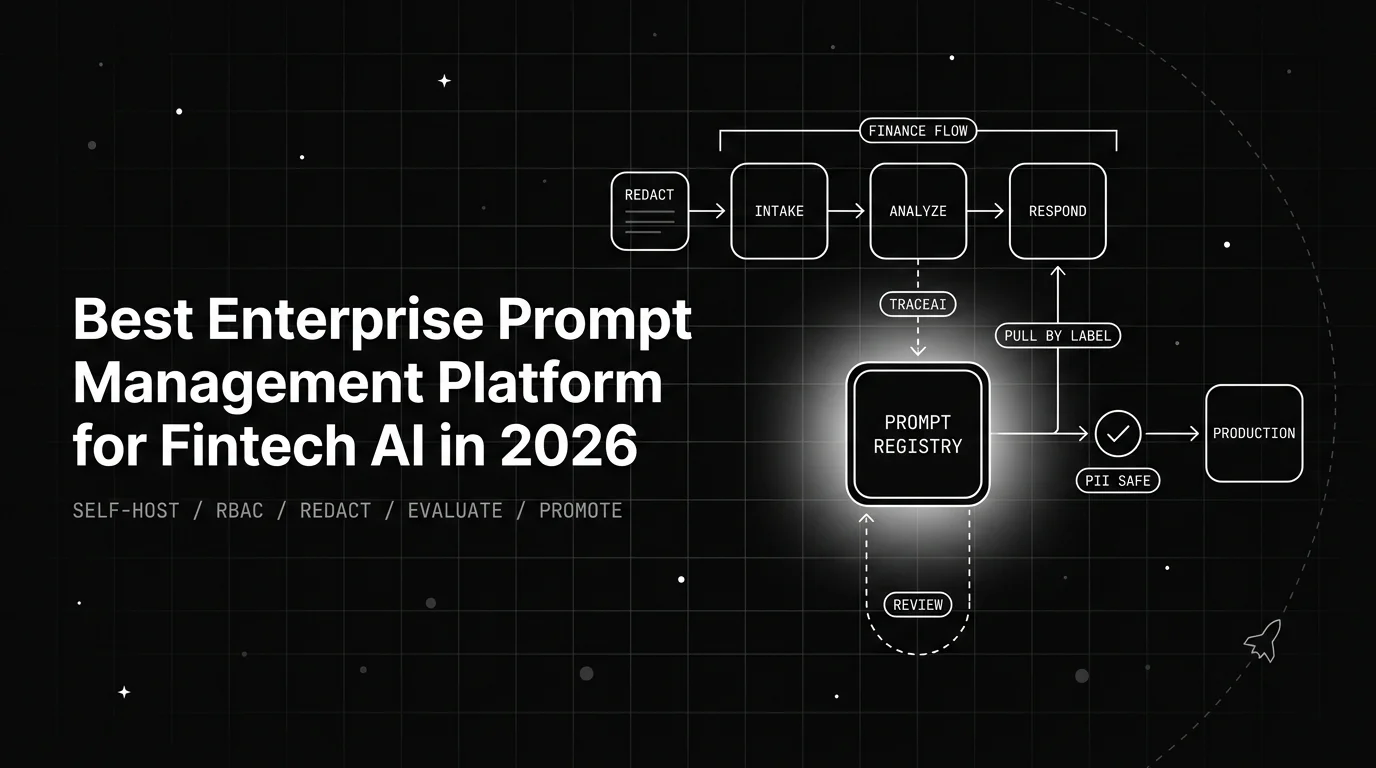
Prompt management for fintech AI: Future AGI versions and governs each prompt in your own VPC, flags PII at the boundary, and eval-gates every promotion.

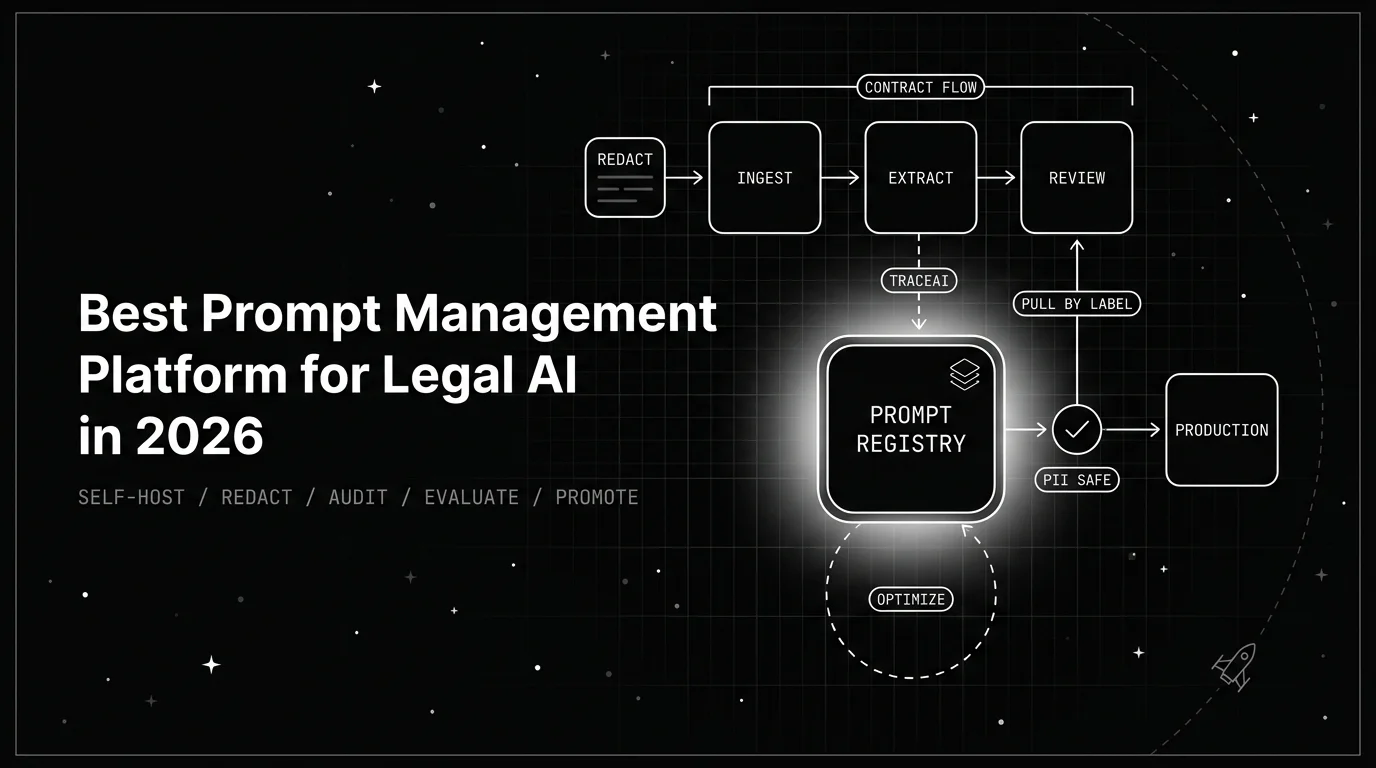
Prompt management for legal AI: Future AGI self-hosts the prompt registry in your perimeter, flags PII on inputs and outputs, and eval-gates every promotion.

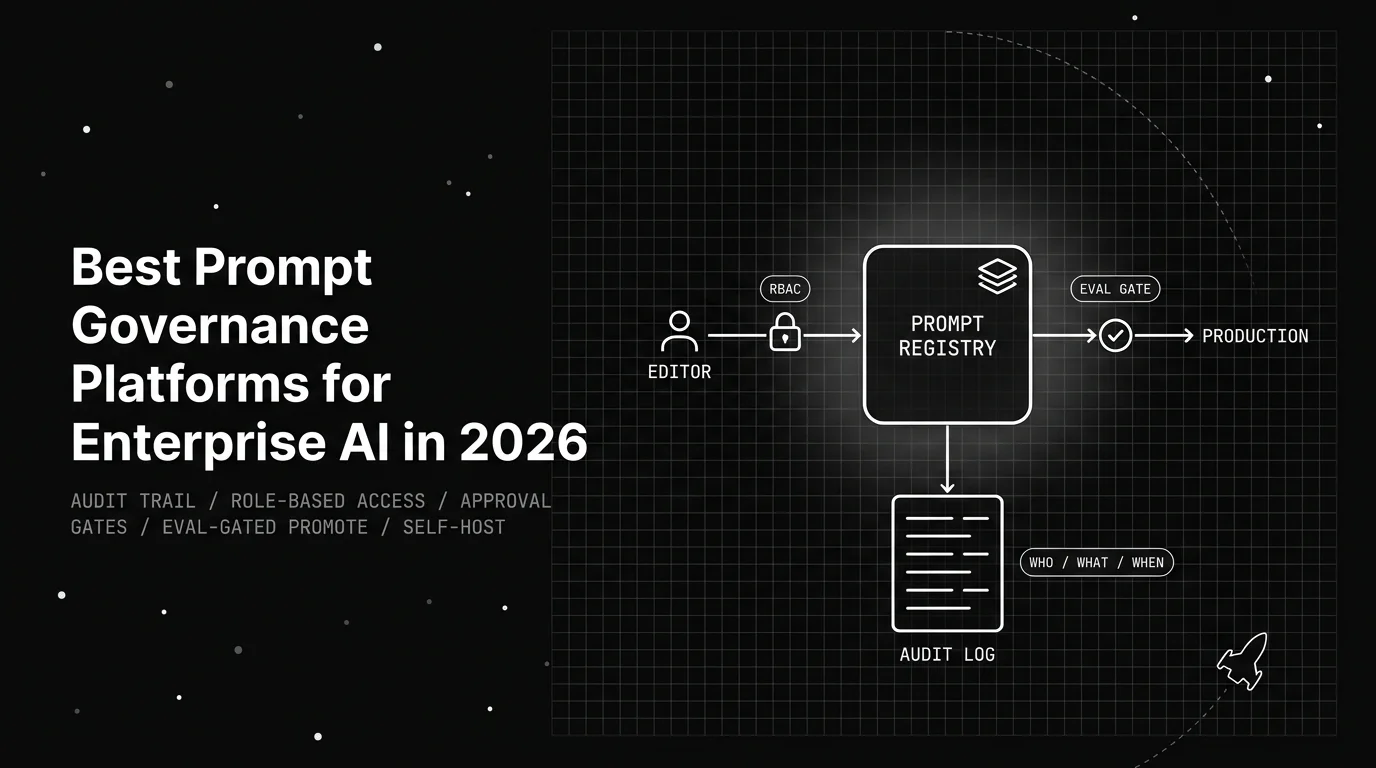
The 6 best prompt governance platforms for enterprise AI in 2026, ranked on access control, audit logs, approval workflows, and clear policy enforcement.