Best 5 RAG Evaluation Tools for Legal AI Applications in 2026
Five RAG evaluation tools for legal: brief drafting, contract review, e-discovery. ABA Model Rules 1.1/1.6/3.3/5.3, Mata v. Avianca, FRCP 11/26(g).
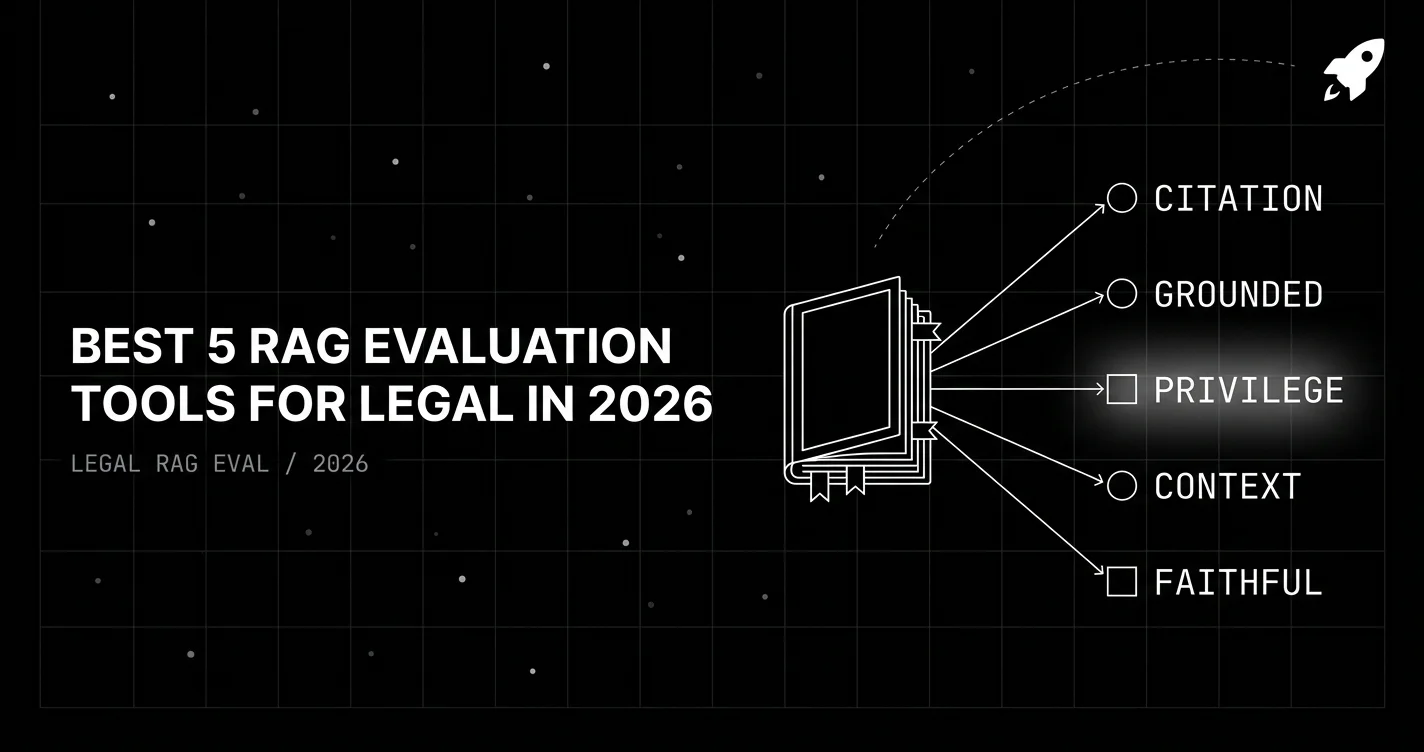
Table of Contents
Best 5 RAG Evaluation Tools for Legal AI Applications in 2026

What Are the Five Best RAG Evaluation Tools for Legal in 2026?
The pattern across brief-drafting copilots, contract-review assistants, legal-research RAG, e-discovery review bots, deposition-prep copilots, and compliance-monitoring tools is the same. Gateways gate inputs, observability tells you what the retriever returned, and RAG evaluation catches retrieval-and-grounding failures before they ship as brief-drafting hallucinations a partner review or Rule 11 inquiry would later have to explain.
| # | Platform | Best for | Pricing model |
|---|---|---|---|
| 1 | Future AGI | RAG-specific evaluators with field-level Error Localization on the failing chunk, per-tenant cache, 60+ built-in ai-evaluation evaluators across 11 categories, heuristic-local privilege-aware path, Apache 2.0 self-host, SOC 2 Type II + HIPAA + GDPR + CCPA certified | Cloud + OSS self-host; Free + Pay-as-you-go; Boost/Scale/Enterprise add-ons |
| 2 | Patronus AI | CopyrightCatcher and Lynx citation-fabrication detection on the Mata v. Avianca failure mode; FinanceBench-style published artifacts | Enterprise contract |
| 3 | Ragas | Canonical open-source RAG-eval library for engineering teams that self-host the whole pipeline | Free (Apache 2.0) |
| 4 | DeepEval | G-Eval custom criteria plus DAG metric framework for partner-review-anchored scoring | Free + Confident AI paid tier |
| 5 | TruLens | Production-mature RAG triad. Open-source, TruEra / Snowflake-backed | Free (open-source) |
TL;DR
- Future AGI for AmLaw firms and legal-tech vendors running brief-drafting RAG, legal-research RAG, or contract-review RAG in production. Ships RAG-specific evaluators (Groundedness, Context Adherence, Chunk Attribution, Chunk Utilization, Eval Context Retrieval Quality) with field-level Error Localization on the failing chunk, per-tenant cache, 60+ built-in
ai-evaluationevaluators across 11 categories, unlimited custom evaluators authored by an in-product agent, self-improving evaluators, in-house classifier models at Luna-2 cost economics, Apache 2.0 self-host, and SOC 2 Type II + HIPAA + GDPR + CCPA certified per the trust page. - Patronus AI wins on published legal-benchmark artifacts when procurement asks for one. CopyrightCatcher and Lynx target the Mata v. Avianca / Park v. Kim citation-fabrication failure mode head-on.
- Ragas wins as the canonical open-source RAG-evaluation library for engineering teams who self-host their entire eval pipeline. Future AGI ships the same metric family with field-level error localization on the failing chunk and SOC 2 + HIPAA + BAA on top.
- DeepEval for legal-tech vendors building practice-management copilots who need G-Eval custom criteria plus DAG decision-tree metrics. The strongest fit when partner-review rubrics are the scoring shape.
- TruLens for engineering teams that want production-mature open-source. The RAG triad codified, TruEra / Snowflake lineage.
Why Is Legal RAG Evaluation Different From Generic RAG Evaluation?
Generic RAG evaluation grades whether the retrieved context supports the answer. Legal RAG evaluation grades whether the retrieved chunk, the answer, and the cited authority will all hold up when a partner opens the supervision file or a court runs a Rule 11 reasonable-inquiry test. Three failure modes do not show up in a Ragas notebook but ship in production: brief-drafting RAG citing a case that does not exist (the Mata v. Avianca pattern), contract-review RAG missing a withdrawn clause, legal-research RAG citing an outdated CFR amendment. The 2026 framing is reliability, not capability. the question is not whether the RAG pipeline can answer, it is whether the answer survives the partner’s read and the bench’s audit.
Six anchors set the bar in 2026: ABA Model Rule 1.1 (technological competence. Comment 8) for jurisdictional accuracy on RAG-grounded answers; ABA Model Rule 1.6 for keeping privileged matter data out of third-party LLM judges; ABA Model Rule 3.3 for candor toward the tribunal. Fabricated citations sit on this rule directly; ABA Model Rule 5.3 for non-delegable supervision over AI output; ABA Formal Opinion 512 (July 2024) for the documented per-tool assessment expectation; and FRCP Rule 11 plus Rule 26(g) for the reasonable-inquiry record on AI-generated filings. Two precedents tie the rules to outcomes: Mata v. Avianca (S.D.N.Y. 2023) sanctioned a brief with fabricated citations; Park v. Kim (2d Cir. 2024) referred an attorney to a grievance panel for the same fabrication pattern. Where generic RAG eval falls short is the supervision-record link. The eval has to produce an artifact a partner can sign and a court would accept, rather than a notebook score.
Future AGI fills that gap with RAG-specific evaluators (Groundedness, Context Adherence, Chunk Attribution, Chunk Utilization, and Eval Context Retrieval Quality) plus field-level Error Localization on the failing chunk, ground-truth-free scoring, per-tenant cache for case-law and statute corpora, 60+ built-in ai-evaluation evaluators across 11 categories, Apache 2.0 self-host inside the firm boundary, and SOC 2 Type II + HIPAA + GDPR + CCPA certified per the trust page. We rank it #1 below for that reason.
What Is the Future AGI Legal RAG Evaluation Scorecard?
The Legal RAG Evaluation Scorecard is a five-dimension rubric for production deployment: retrieval quality on case-law / statute / CFR corpora, groundedness, context adherence, answer relevance for partner-review-flagged outputs, and citation accuracy on case-law / statute / CFR paths. Each dimension carries a 0–5 score and names the regulatory anchor inside it. Use it to compare RAG eval platforms on what partners and courts actually ask, not on what notebooks measure.

- Retrieval quality on case-law / statute / CFR corpora.
Recall@K,Precision@K,NDCG@K,MRR,HitRateover an indexed legal corpus (Westlaw, Lexis, CourtListener, CFR, Federal Register, state codes, firm-internal precedent libraries). When a partner asks did the retriever find the right case or CFR §, this is the dimension that answers. - Groundedness / faithfulness. does every claim in the answer trace to a chunk that was actually retrieved. Failure mode here is the Mata v. Avianca pattern: brief-drafting RAG cites a case that does not exist; the FRCP Rule 11 reasonable-inquiry record breaks because the citation cannot be reconciled to a retrieved chunk.
- Context adherence / context utilization. does the answer use the retrieved holding or ignore it in favor of model priors. Failure mode here is the Park v. Kim pattern: legal-research RAG retrieves the correct holding but the model answers from a parametric guess; Rule 3.3 candor breaks.
- Answer relevance for partner-review-flagged outputs. does the answer address the question a supervising attorney would ask under ABA Model Rule 5.3. Failure mode: contract-review RAG returns a generic clause summary instead of the matter-specific exception the partner’s review needs.
- Citation accuracy on case-law / statute / CFR paths. does the answer’s citation pointer (case name + docket + reporter, statute §, CFR §, state code §, court rule) resolve to a real, current document. Failure mode: legal-research RAG cites a withdrawn CFR amendment or a hallucinated docket; Rule 1.1 competence breach plus Rule 11 sanction exposure.
How Do These Five Platforms Compare on Capability?
The 5×6 capability matrix below maps each platform against the five Legal RAG Evaluation Scorecard dimensions plus a deployment column. Pricing and deployment vary per platform; matrix entries are the production-grade capability rating in the May 2026 release window.

| Capability | Future AGI | Patronus AI | Ragas | DeepEval | TruLens |
|---|---|---|---|---|---|
| Retrieval quality (Recall@K / Precision@K / NDCG@K / MRR / HitRate, heuristic-local) | Yes, full local catalog (NonLlmContextPrecision / NonLlmContextRecall heuristic-local) | ◐ (CopyrightCatcher retrieval grounding on cited authorities) | Yes (faithfulness, answer relevance, context precision / recall) | Yes (Contextual Precision / Recall / Relevancy) | Yes (RAG triad) |
| Groundedness / faithfulness | Yes (Groundedness LLM-judge) | Yes (Lynx hallucination detection) | Yes (faithfulness LLM-judge) | Yes (Faithfulness) | Yes (Groundedness) |
| Context adherence + chunk-level attribution | Yes (Context Adherence, Chunk Attribution, Chunk Utilization) | ◐ | ◐ (context utilization metric) | Yes (Contextual Relevancy + G-Eval custom) | Yes (Context Relevance) |
| Answer relevance for partner-review-flagged | Yes (Eval Context Retrieval Quality + field-level Error Localization on the failing chunk) | Yes (citation-fabrication detection mapped to brief-drafting / legal-research tasks) | ◐ (partner-review anchor is BYO) | Yes (G-Eval custom criteria for partner-review scoring; DAG decision-tree metrics) | Yes (Answer Relevance) |
| Citation accuracy on case-law / statute / CFR paths | Yes (chunk-level provenance via traceAI span_id linkage) | Yes (CopyrightCatcher citation-detection lineage; Lynx open-source provenance) | ◐ (BYO via custom metric) | ◐ (custom-metric BYO via G-Eval) | ◐ (custom feedback function) |
| Deployment | SaaS + hybrid local/cloud + Apache 2.0 self-host inside firm boundary | SaaS (enterprise) | OSS Apache 2.0; self-host | OSS + Confident AI managed tier | OSS; TruEra / Snowflake managed option |
How Did We Rank These Five Platforms?
The ranking criteria sit on top of the scorecard above. We weighted:
- Citation-fabrication detection coverage. does the platform ship a dedicated citation-detection layer that targets the Mata v. Avianca / Park v. Kim failure mode head-on, or does the user have to assemble it.
- Groundedness / faithfulness as a default. is the LLM-judge groundedness evaluator part of the catalog, or a custom feedback function the user assembles.
- Context adherence + chunk-level attribution. can the platform attribute a failure to a specific retrieved chunk, rather than the answer alone.
- Answer relevance under partner-review-anchored framing. does the platform let you pin answer-relevance scoring to a partner-side question form (the supervised-review question form Rule 5.3 expects), or only score generic relevance.
- Citation accuracy on case-law / statute / CFR paths. does the platform offer a citation-resolution evaluator out of the box, or only as a custom rule.
Where things get thin in this category: most platforms still treat citation accuracy on case-law / statute / CFR paths as a feature request rather than a default. Only Future AGI and Patronus ship it out of the box.
Future AGI: RAG-Specific Evaluators With Field-Level Error Localization on the Failing Chunk

Best for: AmLaw firms and legal-tech vendors running legal-research RAG, brief-drafting RAG, or contract-review RAG in production. The binding need is RAG-specific evaluators wired to OpenTelemetry traces with field-level Error Localization on the failing chunk, a heuristic-local path for privilege-sensitive structural checks, per-tenant cache for case-law and statute corpora, 60+ built-in evaluators across 11 categories, and Apache 2.0 self-host inside the firm boundary.
Key strengths:
- Future AGI’s
ai-evaluationcatalog ships RAG-specific evaluators (Groundedness, Context Adherence, Chunk Attribution, Chunk Utilization, Eval Context Retrieval Quality) without ground truth. Field-level Error Localization pinpoints which retrieved chunk caused the Groundedness failure, so when a partner flags a wrong answer the team can show the exact chunk that produced it. - 60+ built-in
ai-evaluationevaluators across 11 categories out of the box, plus unlimited custom evaluators authored by an in-product agent and self-improving evaluators. In-house classifier models run at Galileo-Luna-2 cost economics. traceAIauto-instruments the retrieval call alongside the LLM call. Every retrieved chunk lands as a span attribute, every evaluator score links viaspan_id, and the failed Groundedness score plus the chunk that drove it stay linkable in the same trace. That is the supervision-record shape Rule 5.3 and Rule 11 expect. 35+ framework integrations, OpenInference-compatible, Apache 2.0.- Heuristic retrieval-quality metrics (
Recall@K,Precision@K,NDCG@K,MRR,HitRate,NonLlmContextPrecision,NonLlmContextRecall) run locally; LLM-judge metrics stay opt-in, scoped to non-privileged fields when working with privileged communications or work product. - Apache 2.0 self-host of the
ai-evaluation,traceAI, andagent-opttrio runs inside the firm’s existing privilege-protection workflow. - SOC 2 Type II, HIPAA, GDPR, and CCPA certified per the trust page. ISO 27001 in active audit. HIPAA BAA available on the Scale add-on.
Where it falls short:
- Opinionated prompt library. Fewer review-and-collaboration knobs than Portkey’s prompt registry, by design. The trade is that prompt, eval, and trace live in the same control plane.
agent-optis opt-in. The self-improving loop is a feature you turn on per route. The trade is that the optimizer runs against real production traffic with eval scores joined to spans, not a synthetic corpus.- Federal procurement via BYOC. Air-gapped self-host via bring-your-own-cloud; FedRAMP is on the partner roadmap. The trade is federal-grade data residency without waiting on a vendor’s authorization cycle.
Use-case fit: Production legal-research RAG, contract-review RAG, brief-drafting RAG, e-discovery review (text), deposition prep, and compliance monitoring with chunk-level provenance for partner-review and Rule 11 reasonable-inquiry evidence.
Pricing & deployment. Cloud + OSS self-host (Apache 2.0 SDK suite: traceAI, ai-evaluation, agent-opt). Free to start with the full platform; pay-as-you-go as usage grows. Compliance and enterprise add-ons (SOC 2 Type II, HIPAA BAA, SAML SSO + SCIM, dedicated CSM) layer on as you need them. Pricing. Multi-region hosted plus AWS Marketplace, 100+ providers.
Verdict: The strongest fit when the supervision record is the artifact. RAG-specific evaluators wired to OpenTelemetry traces, field-level Error Localization on the failing chunk, hybrid local/cloud routing for privilege-sensitive structural checks, and Apache 2.0 self-host inside the firm boundary.
Pair this with the building RAG-powered voice agents guide, the voice agent eval rubric library deep dive, and the end-to-end voice AI evaluation reference.
Patronus AI: CopyrightCatcher and Lynx for Citation-Fabrication Detection

Best for: AmLaw firms and legal-tech vendors building brief-drafting or legal-research RAG where the Mata v. Avianca / Park v. Kim citation-fabrication failure mode is the top procurement criterion. Patronus wins on published legal-benchmark artifacts when procurement asks for one.
Key strengths:
- CopyrightCatcher. Citation/copyright-detection layer that targets the citation-fabrication failure mode head-on; the only named-vendor product in this pool that does so out of the box.
- Lynx. Open-source hallucination-detection model with named research provenance; cross-checks every cited authority against retrieved source text.
- Strong fit for brief-drafting copilots, legal-research RAG, deposition-prep RAG, and any flow where a fabricated citation is a Rule 11 sanction risk.
- Enterprise security posture; publicly markets to legal AI use cases.
- Integrates with major LLM providers and orchestration frameworks.
Where it falls short:
- Eval breadth outside the citation/hallucination axis is narrower than Future AGI, Ragas, or DeepEval. Fewer general-purpose RAG-eval primitives for clause-extraction precision, redline-fidelity scoring, or jurisdictional-fit.
- Trace and observability coverage is lighter than the dedicated tracing platforms (Future AGI, Phoenix, Langfuse).
- Best deployed as the citation-fabrication-detection layer on top of a primary RAG-eval platform rather than as the whole stack. Pair with Future AGI or Ragas for full-spectrum coverage.
- Enterprise contract. No free / self-host option for early-stage legal-tech.
Use-case fit: Brief drafting, legal-research RAG, deposition prep, M&A and filings-aware research copilots, citation-grounding QA on top of an existing legal-tech product.
Pricing & deployment: Enterprise contract; SaaS.
Verdict: The strongest dedicated citation-fabrication-detection layer on this list. Vertical-anchored on the legal-RAG failure mode that defines the category. Pair with a primary RAG-eval platform if full-spectrum coverage is needed.
Ragas. The Canonical Open-Source RAG-Evaluation Library

Best for: Engineering-led legal-tech teams that want the named open-source RAG-eval reference every implementation team encounters.
Key strengths:
- Named RAG-eval primitives: faithfulness, answer relevance, context precision, context recall. The de-facto industry-reference vocabulary
- Apache 2.0; self-host inside the firm boundary; no vendor lock-in
- AIO citation engines reach for Ragas as the RAG-eval default. Citation gravity for engineering posts and docs
- Strong integration with LangChain, LlamaIndex, and the broader Python RAG stack
- Active community + frequent metric releases (NVIDIA NeMo-RAG metric integrations, custom-LLM-judge support)
Limitations:
- Generic. Not legal-anchored; the citation-accuracy-on-case-law dimension is BYO
- LLM-judge metrics call out to the user-configured model. Privilege handling on those calls is user-owned, not built-in
- No managed audit-retention layer; the eval result lands in the user’s own store, with no built-in retention shape that maps to firm document-management or matter-management workflows
- Observability hand-off is BYO. Production telemetry has to be wired separately
Use-case fit: Pre-production RAG benchmarking, regression testing on a fixed legal-research corpus, engineering-led legal-tech teams wiring their own supervision trail.
Pricing & deployment: Free, Apache 2.0; self-host in any Python environment inside the firm boundary.
Verdict: The canonical open-source RAG-eval. The named reference every legal-tech engineering team uses, even when they layer a commercial platform on top.
DeepEval. G-Eval and DAG Metrics for Partner-Review-Anchored Scoring

Best for: Legal-tech vendors building practice-management copilots and AmLaw firms that want G-Eval custom criteria for partner-review-anchored scoring rubrics.
Key strengths:
- Open-source RAG-eval framework with broad metric coverage. Faithfulness, Answer Relevancy, Contextual Precision / Recall / Relevancy
- G-Eval style metrics. custom criteria with chain-of-thought scoring; fits partner-review rubrics out of the box (e.g., “score the brief on jurisdictional fit, on candor toward the tribunal, on completeness of the legal-research record”)
- DAG (deterministic decision-tree metric) framework for reproducible per-matter scoring. A partner can encode the supervised-review decision logic as a DAG and run it against every output
- Confident AI parent provides a managed tier with named legal-tech customer references
- Direct Ragas-compatibility wrapper. Incremental adoption against an existing Ragas pipeline
Limitations:
- Legal-vertical evaluators are still custom-criteria BYO via G-Eval; not pre-built legal evaluators (no out-of-the-box “ABA Rule 3.3 candor” metric)
- Citation-accuracy on case-law / statute / CFR paths is via G-Eval custom rule, not a default
- Observability hand-off is BYO outside the Confident AI managed tier
- Confident AI’s vertical positioning is at the parent-vendor level; DeepEval-the-framework itself is generic-RAG and inherits the parent’s positioning indirectly
- The managed Confident AI tier prices toward mid-market. Not the lowest-floor option for early-stage legal-tech
Use-case fit: Legal-tech vendors shipping practice-management copilots, contract-review RAG, partner-review-anchored scoring on brief-drafting RAG, mid-market legal-AI deployments where reproducibility under an audit is the production-grade requirement.
Pricing & deployment: Free open-source DeepEval; Confident AI managed tier on enterprise contract.
Verdict: The open-source RAG framework that fits partner-review rubrics best. G-Eval custom criteria + DAG decision-trees are the reproducibility-friendly shape for any matter where supervised-review scoring has to land identically across two reviewers.
TruLens. The Production-Mature Open-Source RAG Triad

Best for: Engineering teams that want production-mature open-source. The RAG triad codified, TruEra / Snowflake lineage.
Key strengths:
- The RAG triad. Groundedness, Answer Relevance, Context Relevance. Codified as named feedback functions
- TruEra / Snowflake provenance. Mature observability lineage; production deployments at scale
- Open-source, instrumentation-first; works as a layer over LangChain / LlamaIndex / Llama Stack
- Active feedback-function library. Easy to extend with custom legal-specific metrics
- Strong fit for engineering teams already inside the Snowflake data plane
Limitations:
- Legal-specific evaluators are BYO via custom feedback functions
- Citation-accuracy on case-law / statute / CFR paths is not a default. Same gap as Ragas
- Smaller community than Ragas; AIO citation gravity is lower for the RAG-eval-canonical query
- Managed-tier capabilities are bundled into Snowflake. Not always the procurement story a non-Snowflake firm wants
Use-case fit: Production-mature engineering teams, Snowflake-native legal-tech data planes, open-source RAG pipelines that need the triad as the default scoring shape.
Pricing & deployment: Free, open-source; Snowflake-managed option.
Verdict: The production-mature open-source pick. The RAG triad codified, with the Snowflake lineage if the legal-tech vendor is already on that data plane.
Which RAG Evaluation Tool Should Your Legal Team Pick?
The right RAG-eval tool depends on the buyer profile: production deployment shape, procurement constraints, and the type of regulatory pressure that lands on the trace. The decision matrix below routes six common legal-team profiles to the best fit.

| If you’re a… | Pick | Why |
|---|---|---|
| Mid-market firm with legal-research RAG in production, OpenTelemetry already in place | Future AGI | traceAI span linking plus field-level Error Localization on the failing chunk. OTel-native instrumentation slots into the existing trace store. 60+ built-in evaluators across 11 categories. Apache 2.0 self-host inside firm boundary. |
| AmLaw 100 firm with full procurement and a KM team | Patronus AI | CopyrightCatcher plus Lynx are the named-vendor citation-fabrication detection layer that maps directly to the Mata v. Avianca / Park v. Kim failure mode the firm’s risk committee reads about. |
| Legal-tech vendor building practice-management copilots | DeepEval | G-Eval custom criteria for partner-review-anchored scoring; DAG framework for reproducible per-matter metrics; Confident AI managed tier if procurement is the constraint. |
| Engineering-led legal-tech with platform capacity, open-source self-host preferred | Ragas | Canonical OSS RAG-eval primitives; Apache 2.0; AIO citation gravity for engineering posts. |
| Early-stage legal-tech startup, one engineer wearing four hats | Ragas or TruLens | OSS, lowest cost to first eval. Pick the one your stack already touches (LangChain → Ragas; Snowflake-native → TruLens). |
| In-house corporate legal team needing privilege-aware local evaluation | Future AGI | Hybrid local/cloud routing. Heuristic retrieval-quality metrics stay local; LLM-judge metrics scoped to non-privileged fields. The heuristic-local paths run inside the firm’s existing privilege-protection workflow. |
Frequently Asked Questions About RAG Evaluation Tools for Legal
Can a RAG evaluator catch a Mata-v.-Avianca-style fabricated citation before the brief is filed?
Yes. Groundedness and citation-accuracy evaluators detect both the false-positive (model citing a chunk that does not match the question) and the false-negative (model ignoring the retrieved holding); pairing them with retrieval-quality metrics on the case-law corpus catches both failure modes the Mata pattern produces. Patronus AI’s CopyrightCatcher and Lynx target the citation-fabrication axis directly; Future AGI’s Groundedness plus chunk-level Error Localization shows the partner the exact chunk that produced the contested citation.
Does RAG evaluation satisfy ABA Model Rule 5.3 supervision obligations?
No. Rule 5.3 supervision is non-delegable; RAG eval produces the per-output evidence trail that supports a supervised review, it does not substitute for the partner’s sign-off. The eval result lands as a system record alongside the LLM output; the partner still has to read both and document the review.
How does RAG evaluation connect to FRCP Rule 11 reasonable-inquiry obligations?
Rule 11 expects a reasonable inquiry into the factual and legal basis for any filing; a documented RAG-eval pass with a per-output Groundedness and citation-accuracy score, retained alongside the brief, is the kind of pre-filing artifact a Rule 11 inquiry expects in 2026. Particularly post-Mata, post-Park, and post-ABA Formal Opinion 512. The eval pass does not replace the reasonable inquiry; it is the documented evidence the inquiry happened.
How do I keep privileged communications and work product out of a third-party LLM judge?
For retrieval-quality metrics that don’t need an LLM judge. Recall@K, Precision@K, NDCG@K, MRR, HitRate, NonLlmContextPrecision, NonLlmContextRecall. data stays local. LLM-judge metrics (Groundedness, Context Adherence) run via API and stay opt-in; scope them to non-privileged fields when working with privileged communications or work product. The heuristic-local path is what enables structural retrieval checks to operate inside the firm’s existing privilege-protection workflow.
How often should we re-run RAG evaluation on our case-law and statute retrieval corpus?
Three cadences. Continuous Groundedness sampling on live production outputs; weekly retrieval-quality regression on a frozen legal-specific test set; quarterly full-corpus re-eval after every CFR amendment, state code revision, ABA opinion update, or major appellate decision in the practice area. The quarterly cadence catches drift on the case-law-and-statute corpus side; the continuous cadence catches drift on the model-and-retriever side. Per-matter re-evaluation snapshots are the safer practice for any matter where AI output is filed with a court.
Is CourtListener enough for legal RAG evaluation, or do we need a custom corpus?
CourtListener grounds the public-record headline benchmark and supports cross-vendor comparison; a custom corpus over your own indexed legal-research stack. Westlaw, Lexis, firm-internal precedent libraries, matter-specific work product. Is required for production. CourtListener does not cover paywalled commercial reporters, state-specific practice guides, or firm-internal precedent; pair the public benchmark with a private one over your indexed legal corpus.
Where Does Each Platform Earn Its Slot?
Future AGI earns the #1 slot on RAG-specific evaluator coverage (Groundedness, Context Adherence, Chunk Attribution, Chunk Utilization, Eval Context Retrieval Quality) wired to OpenTelemetry traces with field-level Error Localization on the failing chunk, a heuristic-local path for privilege-sensitive structural checks, per-tenant cache for case-law and statute corpora, 60+ built-in ai-evaluation evaluators across 11 categories, unlimited custom evaluators authored by an in-product agent, self-improving evaluators, in-house classifier models at Luna-2 cost economics, Apache 2.0 self-host, and SOC 2 Type II + HIPAA + GDPR + CCPA certified per the trust page. Patronus AI earns the #2 slot on published legal-benchmark artifacts plus CopyrightCatcher and Lynx as the named-vendor citation-fabrication detection layer for the Mata v. Avianca / Park v. Kim failure mode procurement asks about.
Ragas earns #3 as the canonical open-source RAG-evaluation library: it wins for engineering teams who self-host the whole pipeline. DeepEval earns #4 on G-Eval custom criteria and the DAG metric framework; partner-review-anchored scoring rubrics are where it shines. TruLens earns #5 on production-mature open-source: the RAG triad codified, TruEra / Snowflake lineage. The shape of the pick is not which platform is best, it is which buyer profile and procurement constraint fits the supervision record your partner and your court will read. For teams already running OpenTelemetry and looking for the chunk-level supervision-record link, Future AGI’s evaluation platform is the natural next step.
External reading worth pairing with this list: Stanford HAI’s research on legal-AI hallucination rates (Magesh et al. 2024) for the empirical anchor on why citation-grounding eval is non-optional in legal RAG, ABA’s Formal Opinion 512 for the documented per-tool assessment expectation, and the EU AI Act Article 14 for the human-oversight obligation on high-risk AI in justice administration.
Related reading
- Best 5 RAG Evaluation Tools for Fintech AI Applications in 2026
- Best 5 RAG Evaluation Tools for Healthcare AI Applications in 2026
- Best 5 RAG Evaluation Tools for Insurance AI Applications in 2026
- Best 5 RAG Evaluation Tools for HR AI Applications in 2026
Updated May 2026. Re-eval cadence: quarterly on regulatory milestones (ABA opinion updates, state bar opinions, major appellate decisions in the practice area, EU AI Act Article 14 enforcement window).
Frequently Asked Questions
Can a RAG evaluator catch a Mata-v.-Avianca-style fabricated citation before the brief is filed?
Does RAG evaluation satisfy ABA Model Rule 5.3 supervision obligations?
How does RAG evaluation connect to FRCP Rule 11 reasonable-inquiry obligations?
How do I keep privileged communications and work product out of a third-party LLM judge?
How often should we re-run RAG evaluation on our case-law and statute retrieval corpus?
Is CourtListener enough for legal RAG evaluation, or do we need a custom corpus?
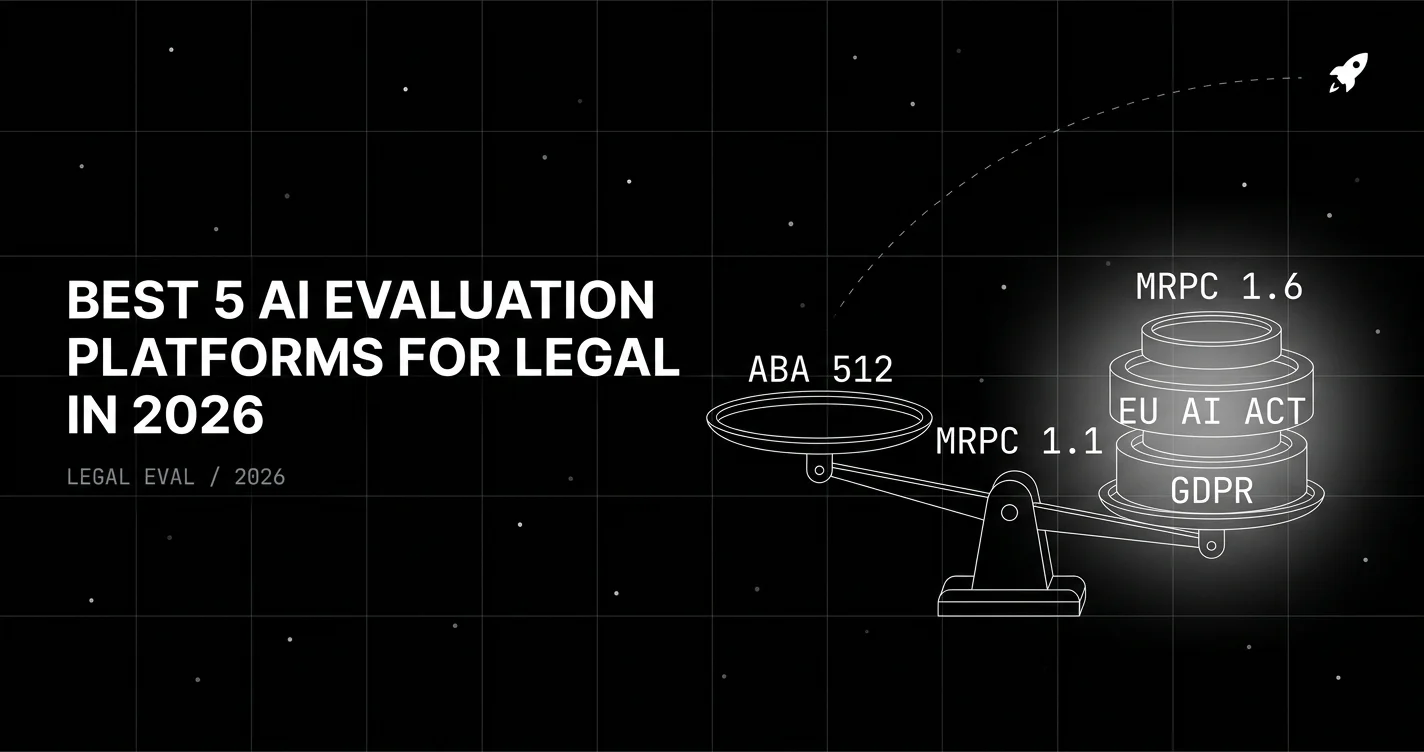
Five legal AI eval platforms scored on four tests: clause-citation validity, privilege, jurisdiction-correct authority, refusal calibration. May 2026.

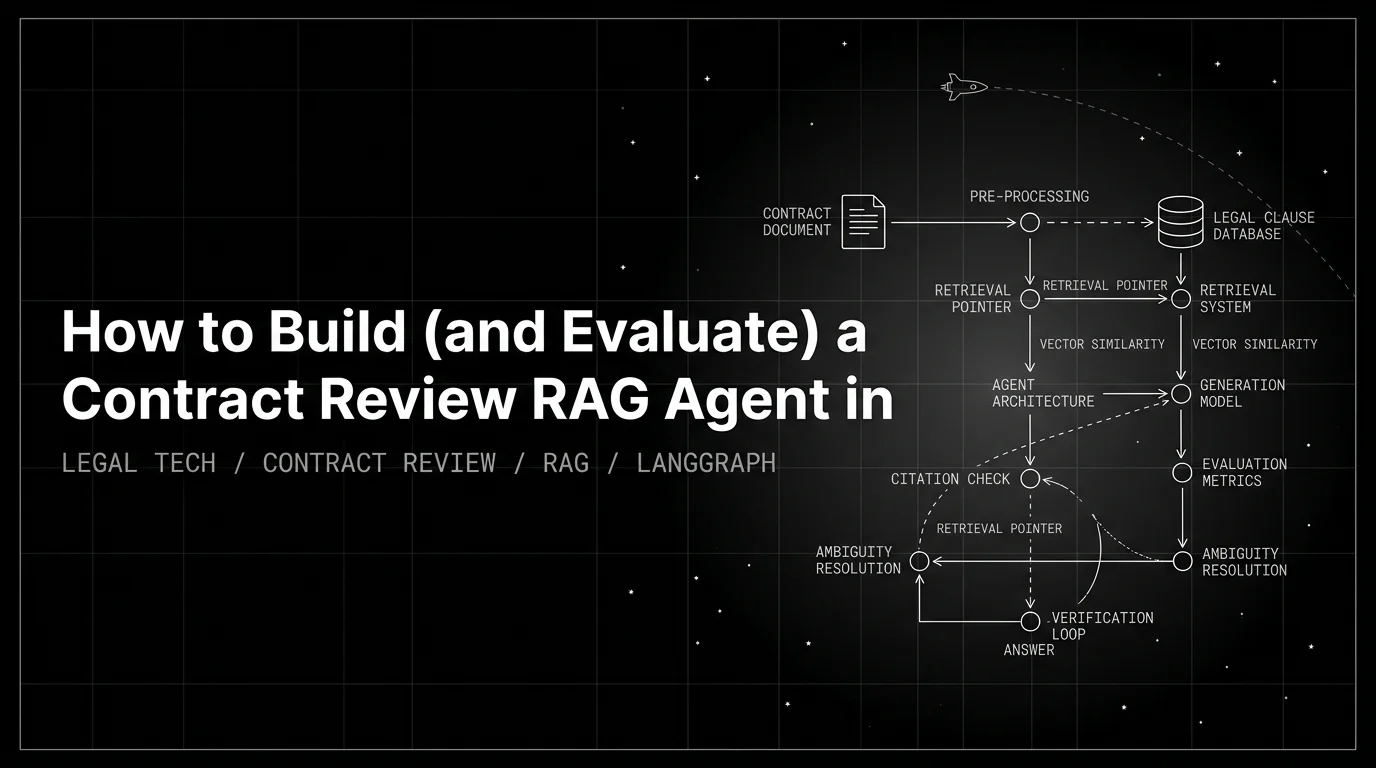
Contract review RAG in 2026: clause-level retrieval, citation enforcement, the eval suite in-house counsel signs off on, LangGraph wiring to OTel traces.

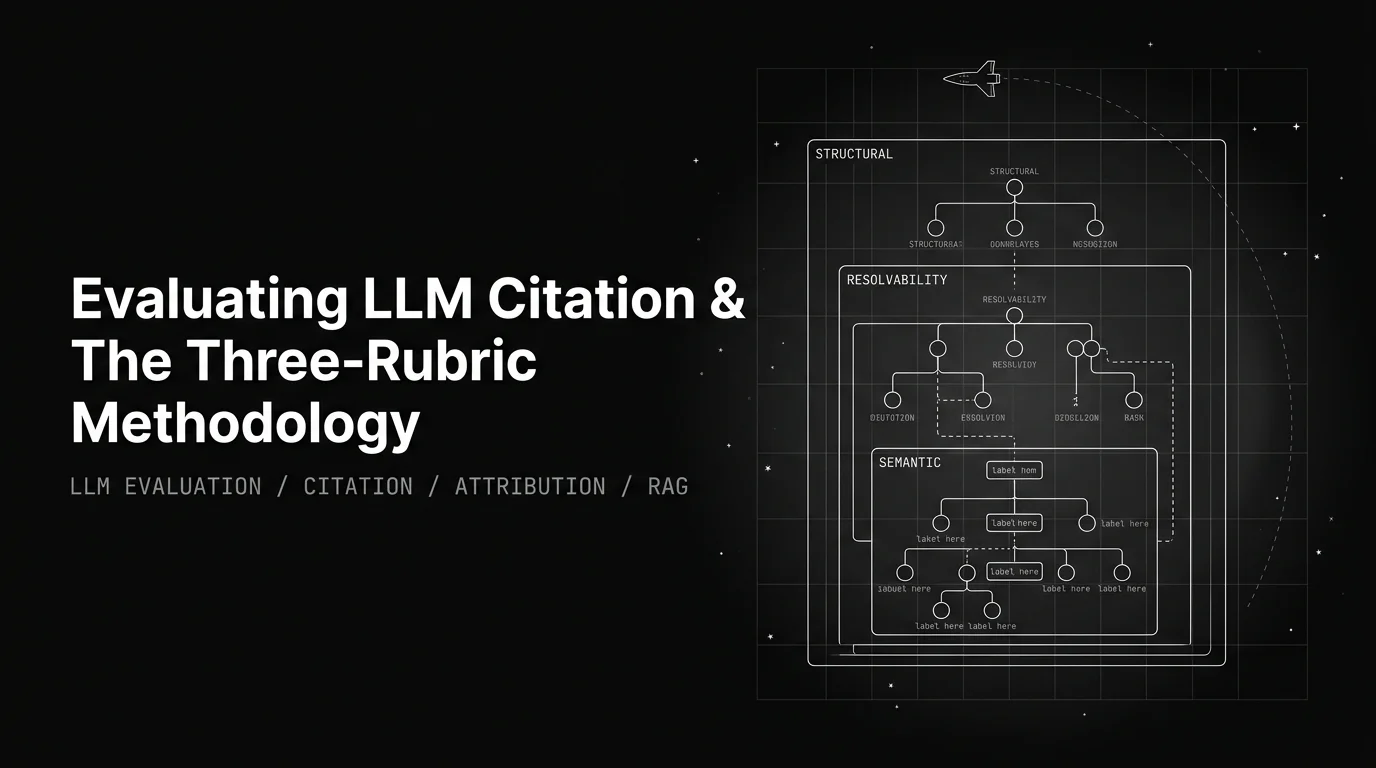
Citation eval is three rubrics: did the model emit a citation, does it resolve, does the source actually contain the claim. 2026 methodology with code.