Agentic AI vs Generative AI in 2026: Key Differences, Use Cases, and When to Combine
Agentic AI vs generative AI in 2026. Real differences, when to pick each, how to combine them, and how to evaluate both for production ROI.
Table of Contents
Agentic AI vs Generative AI in 2026: The 30-Second Answer
Generative AI is the layer that produces tokens, pixels, code, or audio in response to a prompt. Agentic AI is the layer that wraps a generative model in a loop that perceives state, decides, calls tools, and updates its plan. Most modern agents in 2026 are built on top of generative LLMs. The difference is system design, not model class: the LLM makes the words, the agent makes the moves.
TL;DR: Agentic AI vs Generative AI in 2026
| Dimension | Generative AI | Agentic AI |
|---|---|---|
| Primary job | Produce content (text, image, code, audio) | Complete a task across multiple steps |
| Loop structure | Single forward pass | Perceive, plan, act, observe, repeat |
| User interaction | Reactive (prompt in, output out) | Proactive (goal in, task done) |
| Failure mode | Hallucination, off-tone output | Tool-call error, plan drift, runaway cost |
| Eval metric | Faithfulness, instruction-following | Task completion, tool-use correctness |
| Common 2026 frameworks | OpenAI / Anthropic / Gemini SDKs | LangGraph, LlamaIndex Workflows, AutoGen, CrewAI |
What Is Generative AI in 2026? A Working Definition
Generative AI is the class of model that produces new content in response to a prompt. The 2026 generative landscape features large multimodal models from major providers (OpenAI’s GPT-5, Anthropic’s Claude Opus, Google’s Gemini, Meta’s Llama 4). Many of these support multiple modalities (text, image, audio, video), with exact input and output support varying by provider and model. The interface is reactive: you provide a prompt, you receive an output, the model has no persistent state between calls.
Core Traits of Generative AI
- Creative output. Drafts copy, art, music, or code in seconds.
- Prompt adaptability. Each response is shaped by the prompt; no agent loop.
- Multi-modal flexibility. 2026 frontier models accept and emit multiple modalities.
- No persistence by default. Each call is independent; memory must be added externally.
Generative AI Use Cases in 2026
- Marketing and content. Tools like Jasper, Copy.ai, and many vertical-specific platforms produce email, ad, and blog drafts.
- Image generation. DALL-E and Midjourney create images from prompts.
- Code completion. GitHub Copilot and Cursor surface completions inline.
- Document summarization. Long-form input collapsed to bullets or briefs.
What Is Agentic AI in 2026? A Working Definition
Agentic AI describes systems that perceive a state, set goals, plan multi-step actions, call tools, and update the plan based on tool outputs. The agent loop is the architectural difference from a single generative call.
Core Traits of Agentic AI
- Autonomy. It chooses the next action without explicit prompts per step.
- Goal orientation. It decomposes a high-level goal into ordered sub-tasks.
- Context awareness. It reads tool outputs, sensors, logs, and events before acting.
- Adaptive replanning. It updates its plan after each observation. Persistent learning across sessions requires an explicit memory store, reflection module, or fine-tuning loop.
Agentic AI Use Cases in 2026
- Customer support agents. Triage, classify, resolve, escalate, and log a ticket end-to-end.
- Coding agents. Read a repo, write a patch, run tests, and open a PR. See our guide to evaluating coding agents.
- Browser and computer-use agents. Navigate a UI, fill forms, complete bookings.
- Operations agents. Watch a queue, route work, write to a database, post a Slack notice.
Agentic AI vs Generative AI: A Side-by-Side Comparison
| Feature | Agentic AI | Generative AI |
|---|---|---|
| Purpose | Multi-step task execution with minimal human input | Content generation from prompts |
| Autonomy | Sets its own sub-goals, decides actions, calls tools | Acts only when prompted; no autonomous action |
| Loop structure | Perceive, plan, act, observe, repeat | Single forward pass per call |
| Use cases | Customer support, coding agents, browser-use, operations | Marketing, art, code completion, summarization |
| Learning mechanism | Updates plan from tool outputs; some agents use reflection across sessions | Pre-trained; in-context learning per prompt |
| Core functionality | Reasoning, planning, tool use, recovery from errors | Token-level prediction over a context |
| User interaction | Goal in, task done | Prompt in, output out |
| Processing approach | Loop with planning, tool calls, observations | Single inference call |
| Adaptability | Replans on observations and errors | Adapts only within the context window |
| Failure modes | Tool-call hallucination, plan drift, runaway cost | Output hallucination, off-tone, off-policy content |
| Examples | LangGraph, LlamaIndex Workflows, AutoGen, CrewAI agents | ChatGPT, Claude.ai, Midjourney, Copilot |
Why Combine Agentic AI and Generative AI: The Standard 2026 Pattern
Most production systems combine them. The agent loop handles routing and execution; the generative model handles content production inside the agent’s tool list. Examples:
- A support agent senses customer frustration (agent decision), then calls a generative model to draft a calm reply (generation), then waits for approval (tool output) before sending.
- A logistics agent watches a queue, spots a delay (agent decision), then calls a generative model to write a clear customer alert (generation).
- A coding agent reads a repo (agent decision), then calls a generative model to write the patch (generation), then runs tests (tool) and replans if tests fail.
Action meets creation in one loop.
How to Choose Between Agentic AI and Generative AI for Your Project
Step 1: Clarify the Job-to-be-Done
Is the deliverable a piece of content (an email, a summary, an image)? Generative AI is enough. Is the deliverable a completed task that touches systems (ticket resolved, deal updated, code merged)? You need an agent.
Step 2: Map the Tool Surface
If the deliverable requires reading or writing systems beyond the model, list every tool the agent must use. The size of the tool list, the latency of each tool, and the cost of each call all shape the architecture choice and the eval rubric.
Step 3: Define Failure Behavior and Guardrails
Generative AI fails by producing wrong content. Agents fail by taking wrong actions. The blast radius of an agent failure is larger. Set hard caps on step count, tool-call budget, and total cost per task. Require human-in-the-loop for high-stakes paths.
Step 4: Pilot, Measure, and Iterate
Build a small synthetic or labeled task set. Run the system end-to-end. Track task completion rate, tool-use correctness, latency, and cost per task. Iterate on prompts, tool schemas, and routing.
How to Implement Generative AI in Five Steps
- Collect on-brand prompt examples and edge cases.
- Pick a model that fits the modality and budget (GPT-5, Claude Opus, Gemini 3, Llama 4 family).
- Add safety filters: factuality checks, toxicity, prompt injection guards.
- A/B test outputs for clarity and lift.
- Schedule refresh cycles so prompts and examples stay current.
How to Implement Agentic AI in Five Steps
- Stream reliable event sources or define the trigger surface (queue, webhook, schedule).
- Define objectives, success metrics, and reward functions (task completion, latency budget, cost cap).
- Build the decision engine: tool schemas, planning prompt, retry policy, replanning hook.
- Add human oversight for critical paths and high-cost or destructive tool calls.
- Widen the autonomy boundary as confidence in the eval rubric grows.
Risks to Mitigate When Deploying Either Paradigm
Safety and Alignment for Agents
Agents can drift into actions you never signed off on. Build guardrails: explicit tool allowlists, max step count, hard cost caps, dry-run modes for new tools, audit logs of every decision.
Hallucinations and Bias in Generative Output
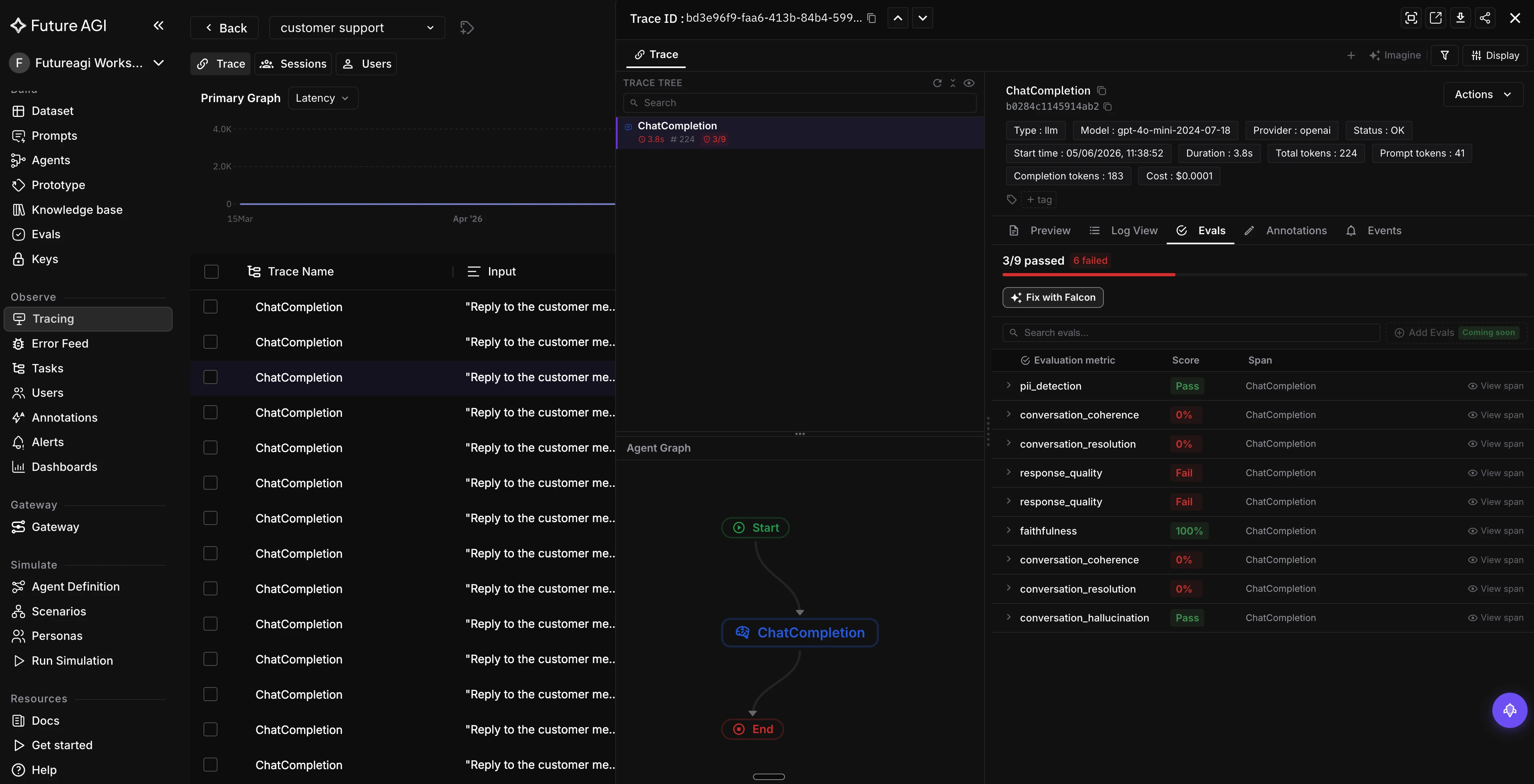
Generative AI sometimes invents facts. Add fact-checkers, retrieval grounding, citation requirements, and content filters. Use evaluators like faithfulness, factual_accuracy, and PII detection on every output before it reaches a user.
Security and Privacy Across Both Layers
Both flavors thrive on sensitive data. Encrypt at rest and in transit, restrict tool permissions, and scan for prompt-injection patterns in tool outputs (a long string of malicious instructions inside a fetched webpage can hijack an agent).
Tools and Platforms That Support Both Agentic and Generative AI in 2026
- Generative model and API options. OpenAI, Anthropic, Google, and Mistral run their own APIs. Meta publishes Llama weights that are hosted through cloud and inference providers like Together AI, Fireworks, Anyscale, Bedrock, Vertex AI, and Azure.
- Agent frameworks. LangGraph, LlamaIndex Workflows, AutoGen, CrewAI, Smolagents.
- Cloud platforms. AWS Bedrock, Google Vertex AI, Azure AI Foundry.
- Evaluation and observability. Future AGI ships managed evaluators for both layers plus the Agent Command Center BYOK gateway. traceAI is Apache 2.0 and provides span-level instrumentation across providers and agent frameworks.
Future Trends in Agentic AI and Generative AI Through 2026 and Beyond
- Hybrid architectures. Single-platform stacks pair agent runners with generative models and eval out of the box.
- Explainability gains. Span-level traces and content provenance become required for regulated workloads.
- Regulatory heat. The EU AI Act and sectoral rules push mandatory audit trails for high-risk agents.
- Edge deployments. Smaller agent loops run on devices; generative models follow for privacy-sensitive contexts.
- Multimodal agents. Plans adapt to text, images, video, and audio in one loop.
Conclusion: Combine Both Paradigms and Evaluate Continuously
Agentic AI vs generative AI is not an either-or debate; it is a layered architecture. Generative models produce the content inside the agent’s tool list. Agents wrap them in a loop that gets work done. The teams that win in 2026 are not the ones that pick one paradigm. They are the ones that nail the eval rubric for both layers and ship with span-level observability so failures can be traced, fixed, and prevented.
Start with a small task set. Measure end-to-end. Add observability. Then widen autonomy.
Frequently Asked Questions
What is the core difference between agentic AI and generative AI?
When should I pick agentic AI over generative AI?
Can agentic AI and generative AI run in one workflow?
What evaluation matters for agentic AI vs generative AI?
What tools and platforms support both paradigms in 2026?
What are the biggest risks when deploying agentic AI in production?
How does FutureAGI help evaluate both agentic and generative AI?
What's the expected ROI of agentic AI vs generative AI in 2026?
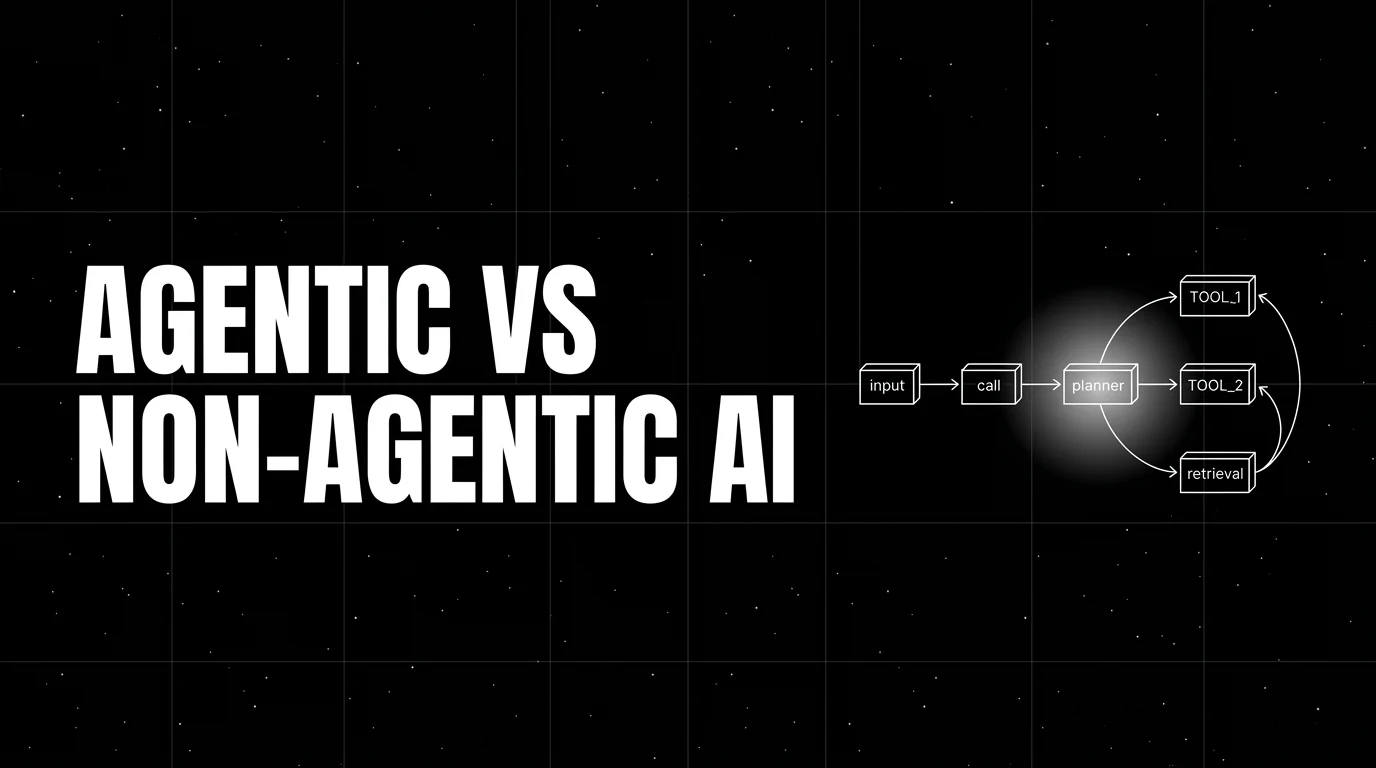
Agentic vs non-agentic AI explained. Workflows vs agents, the eval shape that changes, and when each architecture is the right call in production.

Agentic AI evaluation in 2026: trajectory metrics, real fi.evals code, product-engineering collaboration playbook, where Future AGI fits in the stack.

Compare the top agentic AI frameworks in 2026: LangGraph, OpenAI Agents SDK, Microsoft Agent Framework, CrewAI, AutoGen, Mastra, and PydanticAI.
