What Is an Agent Harness? How It Shapes Agent Reliability
An agent harness is the runtime layer around an LLM that manages tools, context, state, execution, and safety. Learn how it shapes reliability.
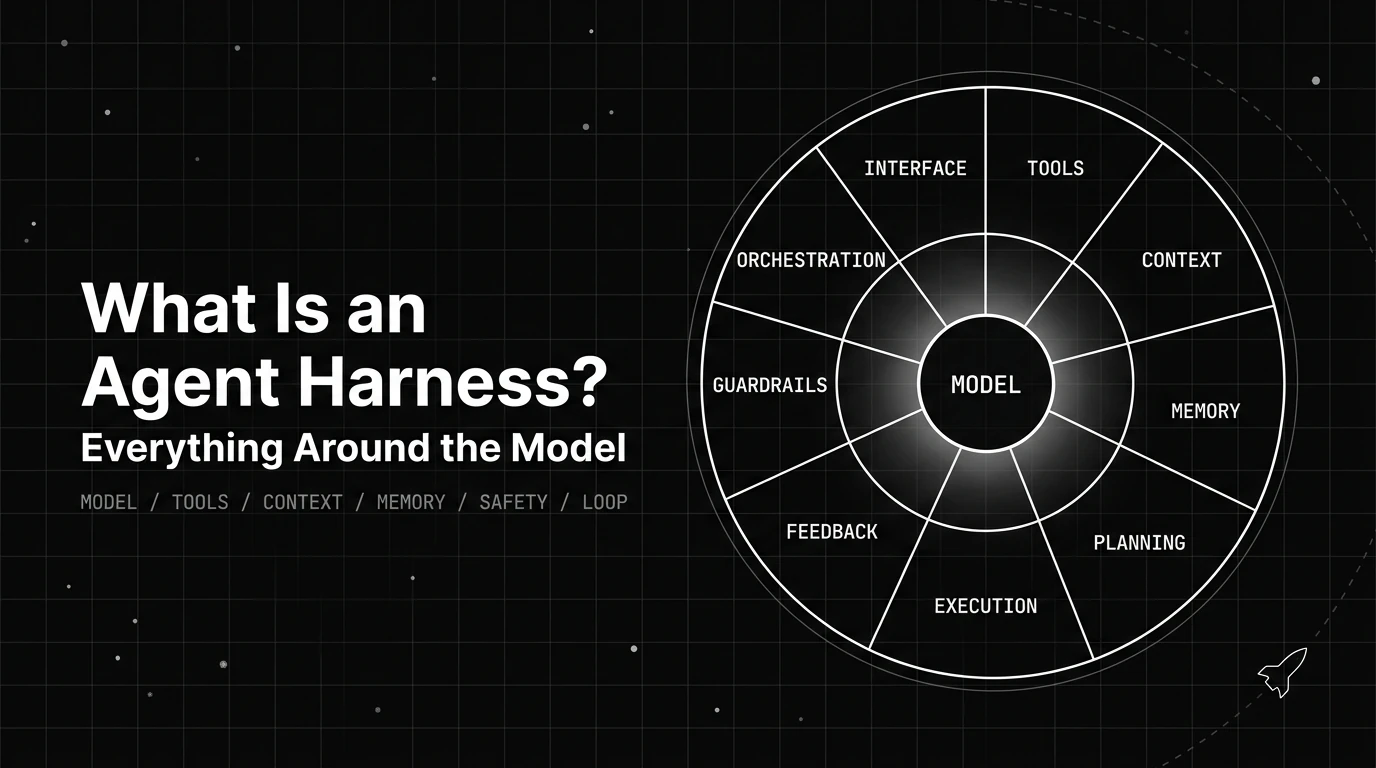
Table of Contents
An agent harness is the runtime and control layer around an AI model, managing tools, context, state, execution, permissions, and feedback. It turns model outputs into controlled actions and carries their results across a multi-step task, which is why harness design strongly shapes agent reliability.
What Is an Agent Harness?
An agent harness is the software layer around an AI model that manages the operational work required to complete a task. The model proposes decisions or actions. The harness supplies relevant context, validates requests, executes approved tools, stores state, returns results, and decides whether the run should continue.
A useful shorthand is Agent = Model + Harness, as long as it is treated as a conceptual model rather than a formal standard. The model supplies learned capabilities. The harness determines how those capabilities are exposed, constrained, and evaluated inside a running system.
Changing the harness while keeping the model fixed can change task performance. Different tool schemas, context policies, retry rules, permissions, and stop conditions can cause the same model to take a different path or produce a different result.
Why Does an AI Model Need a Harness?
A model does not independently persist application state, operate external systems, or enforce permissions. It can generate a tool call or structured action, but application software must decide whether that action is valid, execute it, and return the result.
Consider the instruction, “fix the failing test in this repository and rerun it.” The model can propose a patch or request a command. The harness must expose the repository, run the command in an approved environment, capture the output, and make that result available on the next turn.
The harness also manages failure outside the model. It can reject invalid arguments, time out a stalled tool, retry a transient API error, require approval for a destructive action, or stop a run that exceeds its cost budget.
The model remains probabilistic, while parts of the harness can enforce deterministic policies. That distinction makes the harness a control layer, not merely a wrapper around an API call.
What Are the Core Layers of an Agent Harness?
There is no official component count shared by every agent system. A practical reliability view groups the common responsibilities into five layers: model interface, context and state, tool execution, policy and safety, and evaluation and feedback.
This five-layer view is a functional model, not an industry standard. A specific implementation may split one layer into several services or combine several layers in one runtime.
| Layer | Core responsibility | Example failure signal |
|---|---|---|
| Model interface | Formats requests, selects models, and handles provider responses | Malformed response or unsupported tool-call format |
| Context and state | Selects relevant history and persists task state | The agent repeats work or loses an earlier constraint |
| Tool execution | Validates and runs approved actions | Wrong arguments, tool error, timeout, or partial result |
| Policy and safety | Applies permissions, limits, approvals, and isolation | A risky action runs without authorization |
| Evaluation and feedback | Records trajectories and checks progress or outcomes | The final answer looks correct but the task remains incomplete |
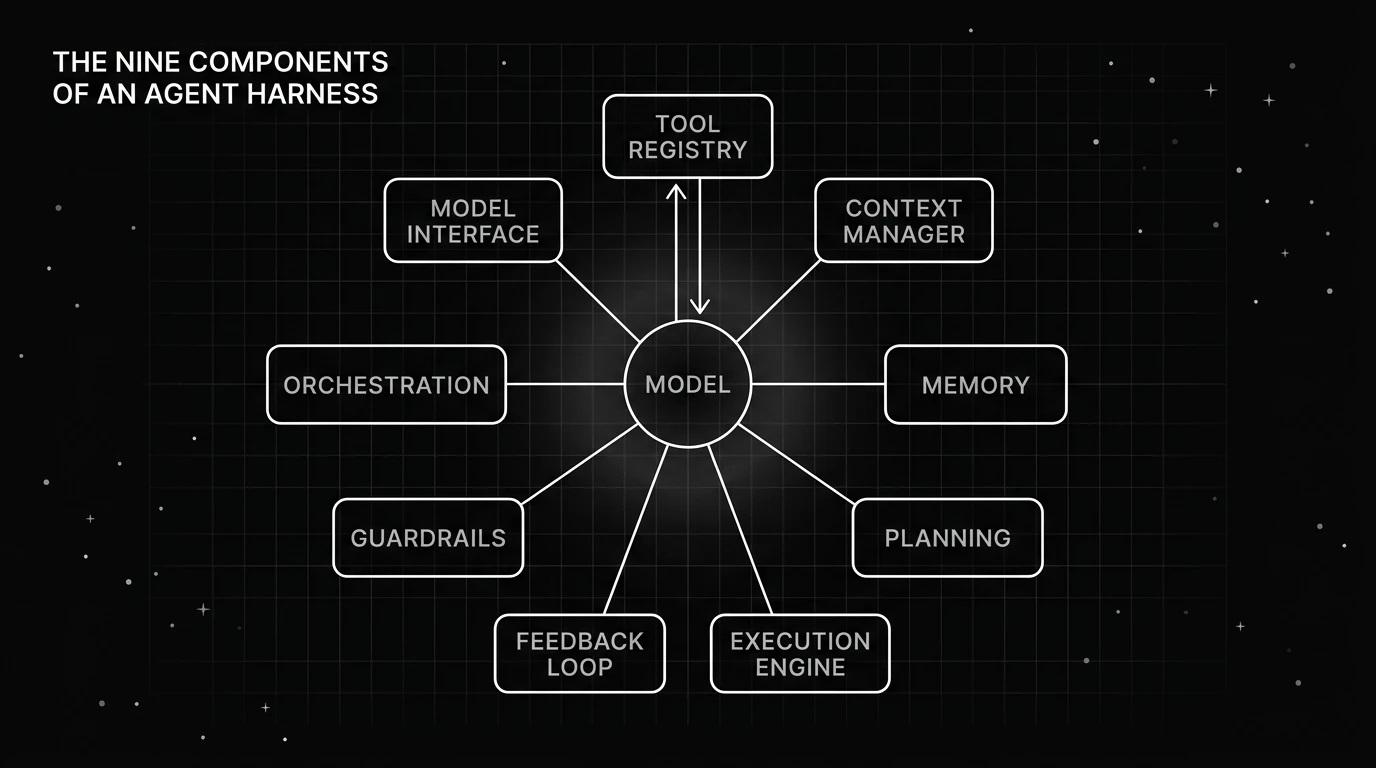
The diagram shows one component-level implementation of these responsibilities. Names and boundaries vary across systems, and not every harness requires a planner, persistent memory, or multi-agent orchestration.
How Does the Model Interface Work?
The model interface formats requests for a provider, describes available tools, and parses the response. It can also handle provider-specific errors, model selection, rate limits, and retries.
How Do Context and State Differ?
Context is the information supplied to the model for the current turn. State is the durable task information the application retains outside that request, such as completed steps, artifacts, approvals, or tool results.
Context management selects what the model needs now. State management preserves what the system may need later. A long-term memory store is one possible implementation, not a requirement for every agent.
What Does the Tool-Execution Layer Control?
The tool layer defines available actions and their input schemas. The execution layer validates the requested tool and arguments, applies policy checks, runs the action, and returns a structured result.
Tools can be local functions, shell commands, browser actions, database operations, hosted APIs, or remote services. The harness should distinguish a tool failure from a valid result so the agent can respond appropriately.
What Do Policy and Safety Controls Enforce?
Policy controls determine which actions are allowed under which conditions. They can apply path restrictions, network rules, credential scopes, timeouts, cost limits, approval gates, and limits on the number of steps.
Isolation is usually scoped rather than absolute. A sandbox may expose selected directories or controlled network access while blocking everything outside that policy.
Why Are Evaluation and Feedback Part of the Harness?
Execution alone does not establish success. The harness needs signals that show whether a tool call worked, whether the environment reached the intended state, and whether the run should continue.
Observability records prompts, tool calls, results, errors, latency, and cost. Evaluation checks the quality of the trajectory or final outcome. Together, they make failures reproducible and give the loop evidence for retries, escalation, or stopping.
How Does the Agent-Harness Loop Work?
Most harnesses repeat a control loop until the task completes or a limit fires:
- Assemble the instructions, relevant context, state, and available tools.
- Call the model and parse its response.
- Validate the requested action against schemas and policies.
- Execute an approved tool and capture its result.
- Update the task state and record the trajectory.
- Continue, retry, request approval, or stop based on the result.
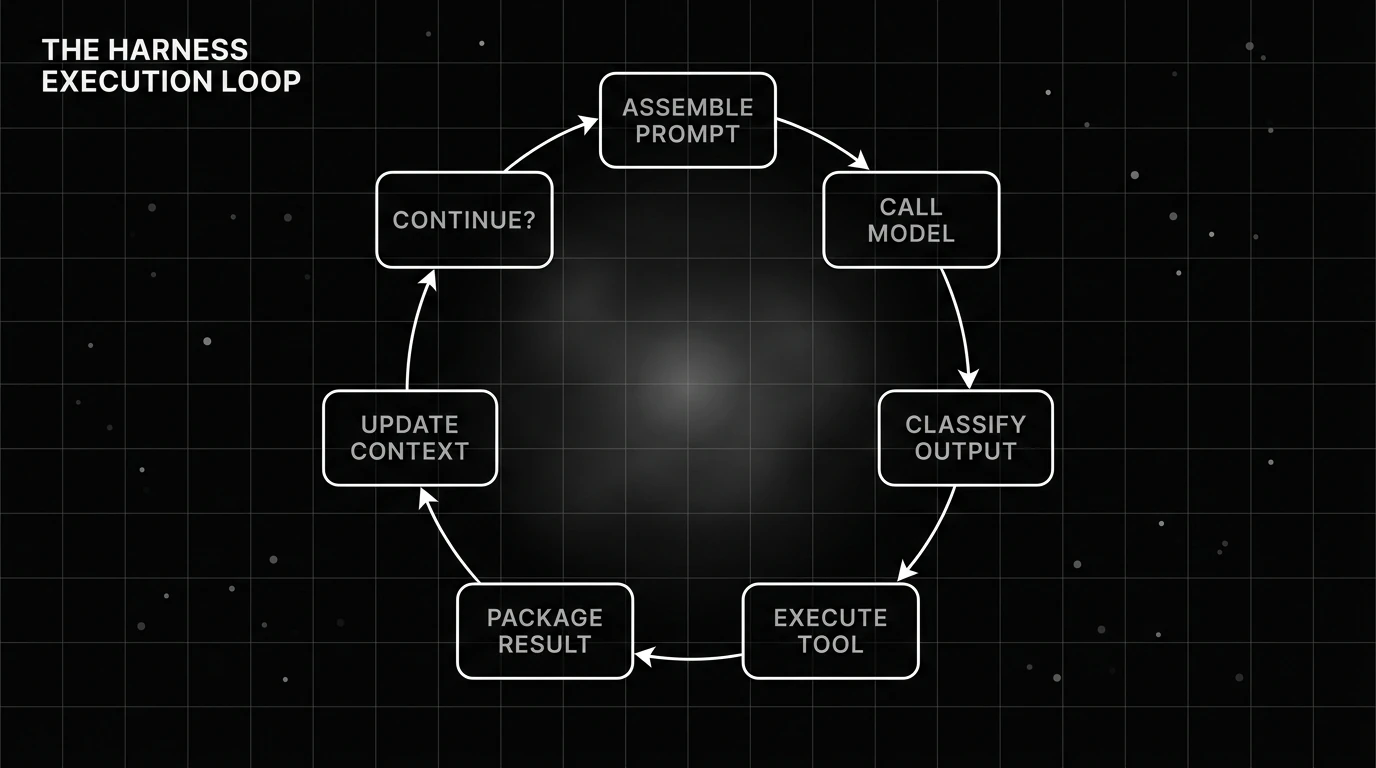
The ReAct paper helped popularize the pattern of interleaving reasoning and action so new observations can inform the next step. Modern harnesses use several loop designs, and not all of them expose explicit reasoning or implement ReAct directly.
What Is the Difference Between an Inner and Outer Harness?
The inner harness is the runtime supplied by an agent product or SDK vendor. It may include the tool loop, model adapters, context handling, editing primitives, permission prompts, and session behavior.
The outer harness is what a team adds around that runtime. Examples include repository instructions, custom tools, MCP servers, linters, CI checks, evaluation suites, approval policies, and organization-specific skills.
| Layer | Typical owner | Examples | Team control |
|---|---|---|---|
| Inner harness | Agent product or SDK vendor | Tool loop, built-in tools, context handling | Limited to supported configuration |
| Outer harness | Engineering team | Instructions, custom tools, CI gates, evals | High |
| Integration protocols | Standards and tool providers | MCP, OpenAPI, provider tool schemas | Depends on the implementation |
This distinction is most useful for ownership. A team usually configures or selects the inner harness and directly engineers the outer harness. Reliability depends on how the two layers interact.
How Do MCP, Frameworks, and Sandboxes Relate to a Harness?
MCP, frameworks, and sandboxes solve different parts of the system. A harness can use all three, but none of them is synonymous with the harness itself.
The Model Context Protocol specification defines an open protocol for connecting AI applications with external tools and context. It uses JSON-RPC 2.0 and supports capabilities such as tools, resources, and prompts. MCP is one integration option alongside native tool calling, SDKs, and custom interfaces.
An agent framework supplies reusable primitives for building the runtime. A harness is the concrete runtime and control system assembled for a particular agent, whether it uses one framework, several libraries, or custom code.
A sandbox is an isolated execution environment governed by a policy. It can restrict filesystem paths, processes, credentials, and network access while allowing the specific resources a task needs.
For a closer comparison, see agent harness vs runtime vs framework and agent harness vs MCP.
What Are Real Examples of Agent Harnesses?
Coding-agent products such as Claude Code, OpenAI Codex, and Cursor include vendor-provided harnesses around one or more models. Their tools, context policies, editing workflows, permissions, and feedback loops contribute to differences in behavior.
OpenAI’s harness-engineering report provides one documented example. Over five months, a team used Codex to build a repository containing about one million lines across application logic, infrastructure, tooling, documentation, and internal utilities.
The report says roughly 1,500 pull requests were opened and merged, initially with three engineers driving Codex. The team later grew to seven engineers, and OpenAI estimated that the work took about one tenth of the time required to write the code manually.
OpenAI also states that the outcome depended heavily on the repository’s structure and tooling and should not be assumed to generalize without similar investment. That caveat is important: the example demonstrates the leverage of a tuned environment, not a universal productivity multiplier.
How Does a Harness Shape Agent Reliability?
A reliable agent must do more than produce a plausible final message. It must choose valid tools, form correct arguments, interpret results, preserve constraints, recover from failures, and leave the environment in the intended state.
This leads to five practical reliability questions:
- Did the harness give the model the right context and available actions?
- Did it validate and execute the requested action correctly?
- Did it preserve the relevant result for the next step?
- Did its policies prevent unsafe or out-of-scope behavior?
- Did it verify the trajectory and final outcome before stopping?
These questions connect harness engineering with agent evaluation. A final-answer score cannot reveal whether an agent called the wrong tool, misread a payload, or reached the right result through an unsafe path. Evaluating tool-calling agents requires checks across the whole trajectory.
The harness strongly shapes reliability, but it does not determine it alone. Model capability, task design, tool quality, environment stability, data, and evaluation coverage also affect the result.
How Should a Team Start Designing an Agent Harness?
Start with the smallest loop that can complete the task, then add controls in response to observed failures. Define the tools, state, permissions, stop conditions, and success checks before adding optional planning, memory, or subagent layers.
Instrument the loop from the beginning. Record each model request, tool call, result, error, approval, and final outcome. Without that trajectory, failures collapse into a vague report that the agent “did something wrong.”
Then test the five reliability questions against representative tasks. The goal is not to maximize the number of harness components. It is to make every action observable, constrained, and verifiable.
For deeper design patterns, see harness engineering and agent harness architecture.
Frequently Asked Questions
What does agent harness mean in software?
Is an agent harness the same as an agent framework?
What are the main parts of an agent harness?
What problem does an agent harness solve?
What is the execution loop in an agent harness?
How does MCP relate to an agent harness?
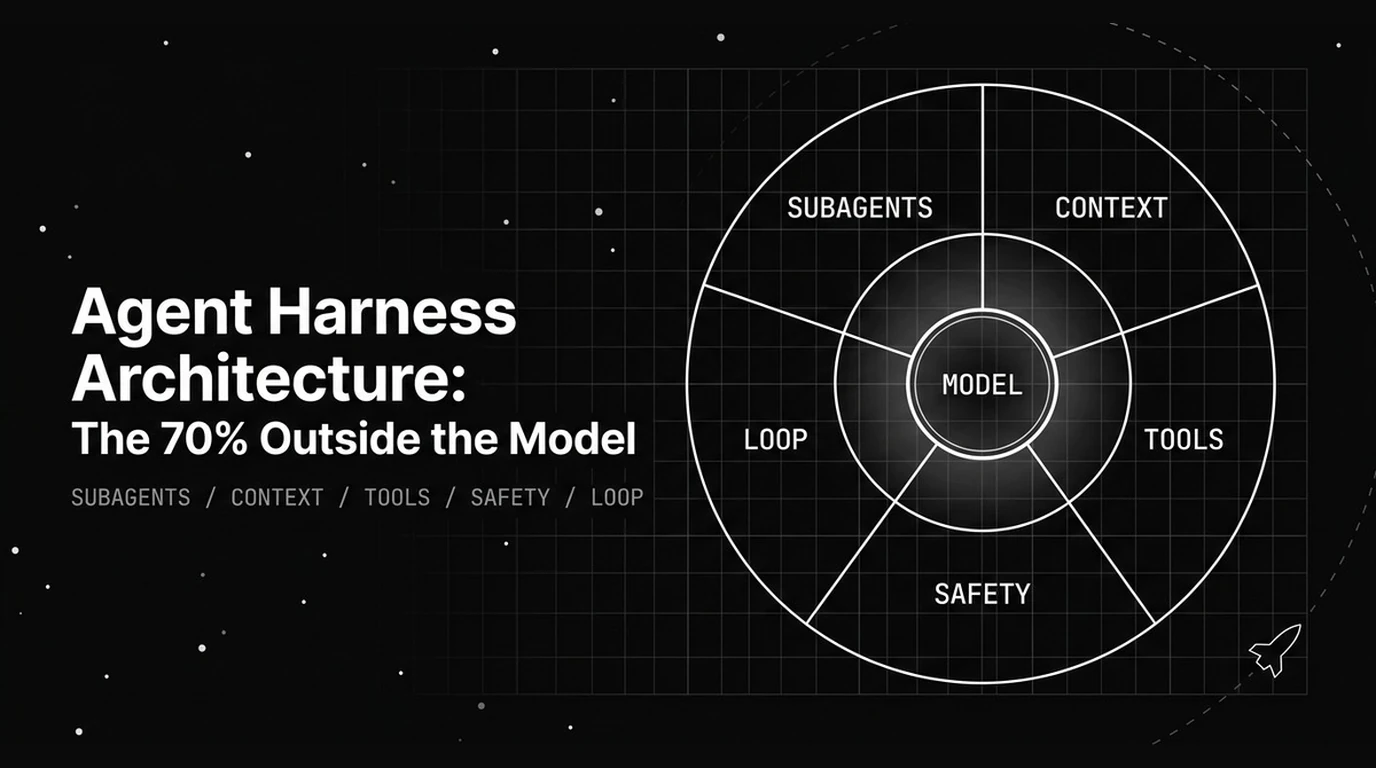
How agent harness architecture shapes performance across five dimensions, from context and tools to safety and the loop that often outweighs a model upgrade.

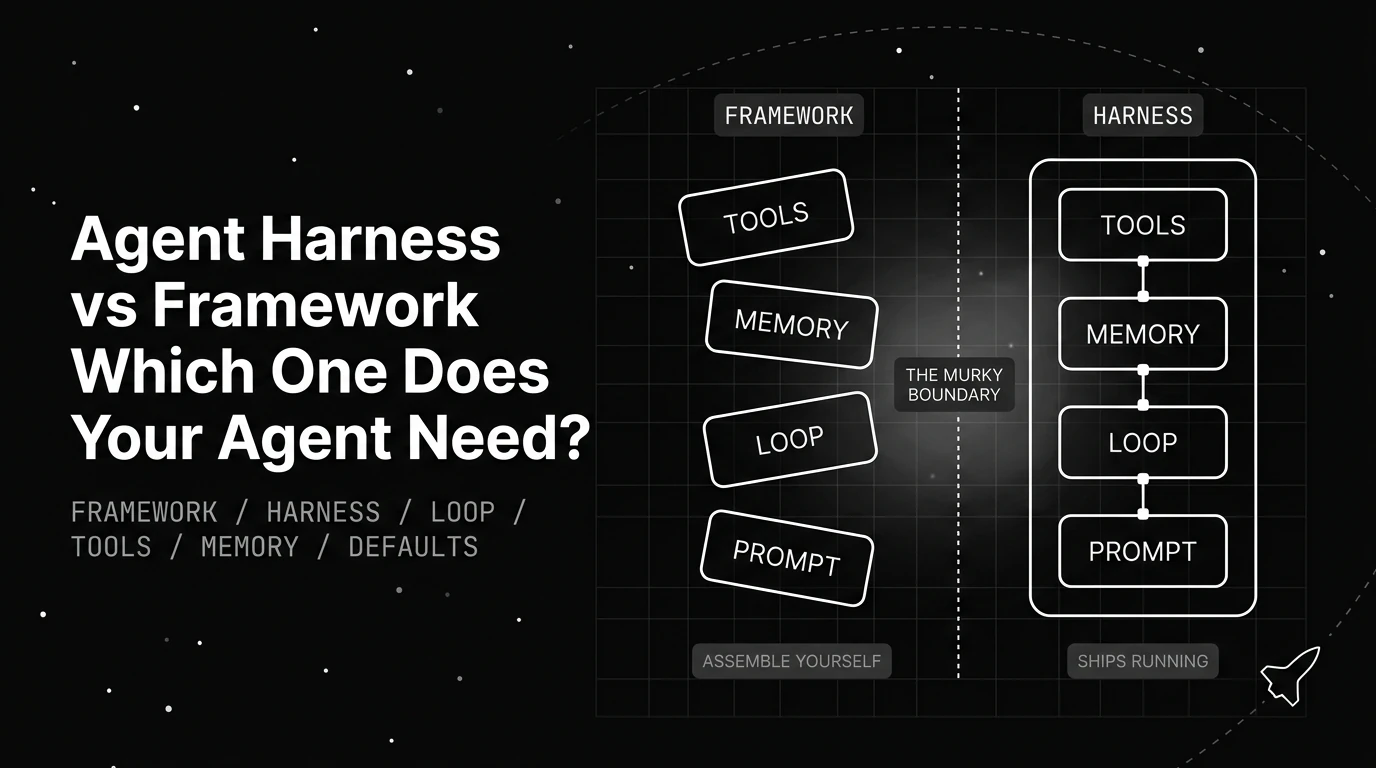
Agent harness vs framework: a framework supplies reusable abstractions, while a harness runs and controls the agent loop. Learn when you need each.
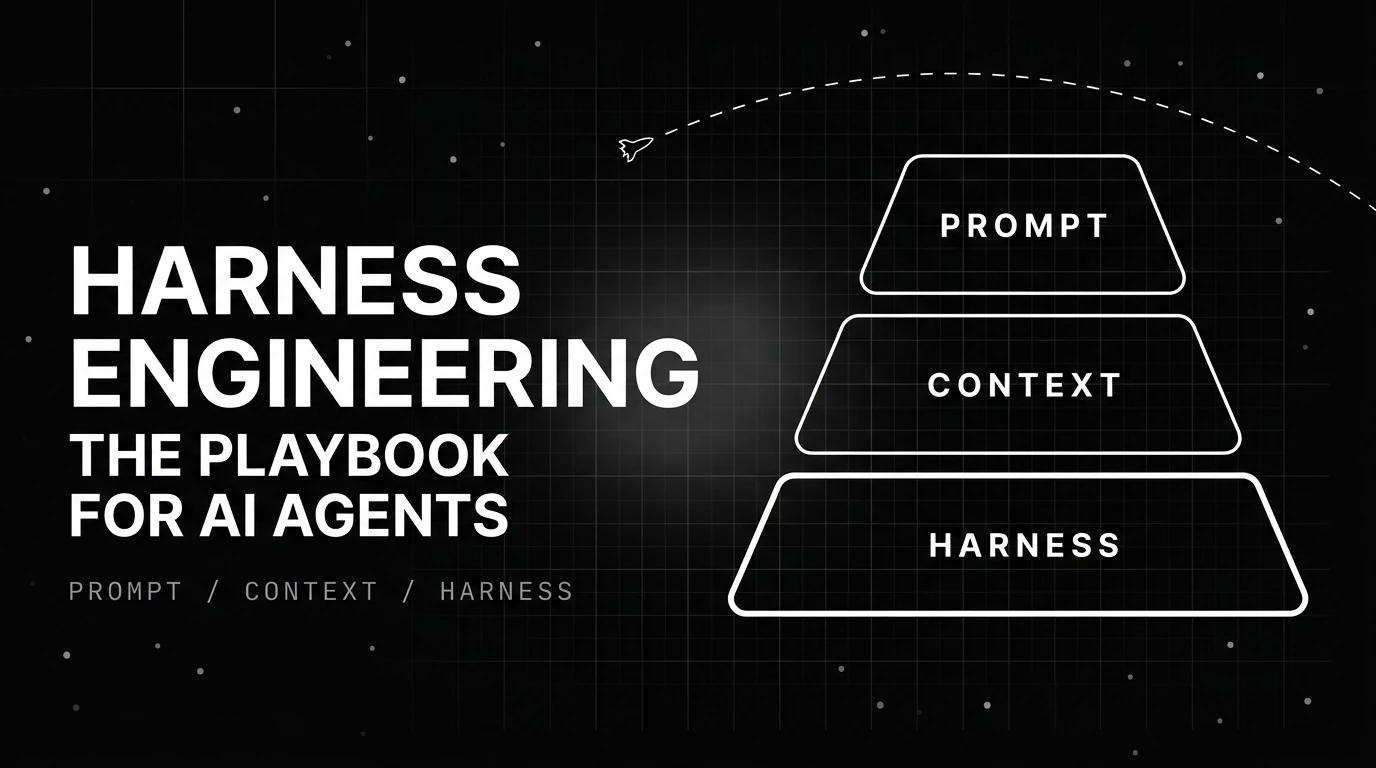
Harness engineering is the discipline of building execution environments that make AI agents reliable: five principles, the ratchet rule, and what to measure.