Agent Harness vs MCP: How They Fit Together
MCP is a protocol for connecting agents to tools; an agent harness is the runtime that uses it. How the two layers divide work and when you need each.
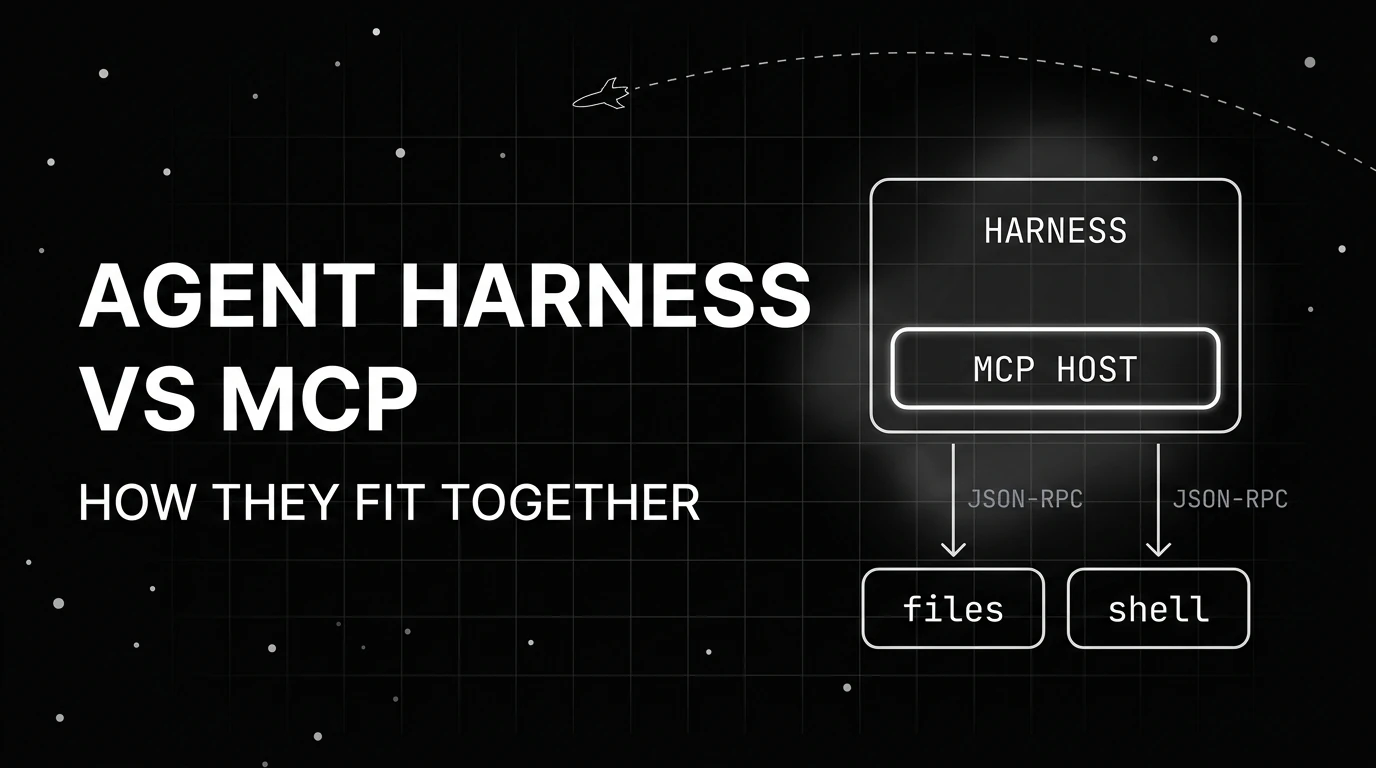
Table of Contents
“Should we use MCP or build a harness?” sounds like a fork in the road, and teams ask it every week. It reads as one decision with two options, but the two things it names live on different layers of the stack. You cannot actually pick one over the other, because they are not the same kind of thing.
The short version is that Model Context Protocol (MCP) is a wire protocol, and an agent harness is the runtime that speaks it. A harness can use MCP, ignore it, or support several protocols at once. This post maps the two layers, shows what each one owns, covers the single place where they represent competing bets, and ends with the exact sequence a harness runs to call an MCP server.
It also clears up the “agent harness vs mcp” search itself, which lines the two up as substitutes. They are complementary. Once the layers are clear, the integration pattern falls out on its own.
The Direct Answer: MCP Is a Protocol, the Harness Is the Runtime That Uses It
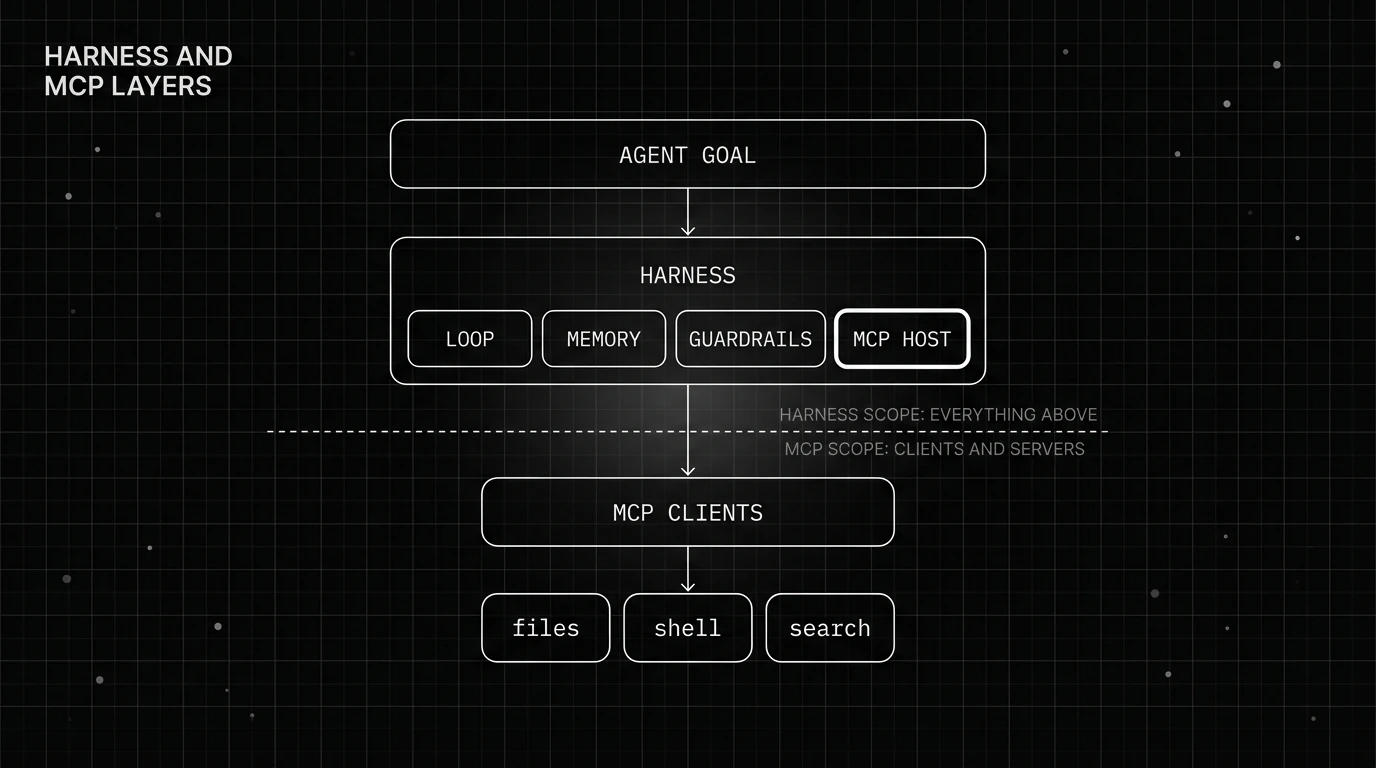
An agent harness is everything wrapping the model: the loop that decides when to call a tool and when to stop, the memory and context handling, the tool registry, the guardrails, and the session state. MCP is the wire protocol that standardizes how that harness talks to external tool and data servers. One is a running program. The other is a message format the program uses. The harness exists whether or not MCP is in the picture, and MCP only shows up once the harness needs a standard way to reach tools it did not write itself.
The specification is explicit about its own boundary. MCP “focuses solely on the protocol for context exchange,” the spec says, and it “does not dictate how AI applications use LLMs or manage the provided context.” That second clause is the whole answer. Everything about using the model, running the loop, and managing context sits above MCP, inside the harness.
So the “vs” framing compares a protocol to a program. It is the same category error as asking whether you should use HTTP or a web server. HTTP standardizes the request, and the server decides what to do with it. MCP standardizes the tool call, and the harness decides when to make it and what to do with the result. Keep that mapping in mind and most of the confusion around the two terms goes away.
What MCP Actually Standardizes, and What It Explicitly Does Not
MCP defines a small surface on purpose. On the server side it specifies three primitives: Tools (functions the model can call), Resources (data the model can read), and Prompts (reusable templates a server offers). The client side adds a few features of its own, such as sampling, roots, and elicitation, but the three server primitives are what a tool provider actually implements. Messages travel as JSON-RPC 2.0 over one of two standard transports: stdio for local processes and Streamable HTTP for remote servers. An earlier HTTP and SSE transport shipped with the first 2024 revision and was later replaced by Streamable HTTP.
That is close to the entire protocol. Anthropic introduced MCP in November 2024, and a recent arXiv survey now catalogs it next to other agent-interoperability protocols like A2A and ACP. What every one of these standardizes is the connection, not the runtime. The spec even offers its own picture for this: it tells you to “think of MCP like a USB-C port for AI applications,” a common plug, not the device on either end.
What MCP leaves undefined is just as deliberate. It says nothing about the execution loop, nothing about memory or compaction, nothing about multi-agent coordination, and nothing about durable state or checkpointing. It also cannot secure itself: the spec notes that MCP “cannot enforce these security principles at the protocol level,” so user consent and permission gating have to live in the host. Those gaps are not oversights. They are the harness’s job, listed out.
What the Harness Handles That MCP Cannot
Strip MCP out and the harness still carries most of the load. It runs the loop, deciding on each turn whether the model wants a tool, which tool, and whether the task is done. It manages memory, trimming and compacting context so a long session keeps fitting the window. It makes retry decisions when a tool fails, checks guardrails and permission gates before a risky action runs, spawns subagents for parallel work, and emits the traces you read when something breaks.
Credal describes the harness as “the connective tissue between text generation and actual computation,” which captures the split well. The model produces text. MCP carries a tool call across the wire. The harness is what turns that text into computation and back, turn after turn, until the goal is met. HuggingFace states the same idea as a community shorthand, “Agent = Model + Harness,” where the harness is the execution layer that calls the model, handles its tool calls, and decides when to stop.
None of that lives in the protocol, and none of it can. A wire format cannot decide when to stop looping or when to deny a force-push to main. Those are runtime decisions, and the runtime is the harness. The table below sorts the responsibilities so the two layers stop overlapping in your head.
| Responsibility | Harness | MCP |
|---|---|---|
| Agent execution loop | Yes | No |
| Tool discovery | Orchestrates | Provides tools/list |
| Tool invocation dispatch | Decides when and whether | Executes tools/call |
| Memory and context compression | Yes | No |
| Multi-agent coordination | Yes | No |
| Durable state and checkpointing | Yes | No |
| Guardrails and permissions | Yes | No |
| Wire-protocol standardization | No | Yes (JSON-RPC 2.0) |
| Cross-vendor tool interoperability | No | Yes |
| Transport negotiation (stdio or HTTP) | No | Yes |
The MCP Host Is Always the Harness
MCP’s own architecture names this split. The spec defines three roles: an MCP Host, one or more MCP Clients, and the MCP Servers they connect to. The Host is “the AI application that coordinates and manages one or multiple MCP clients.” It creates one client per server, and each client holds a 1:1 connection to its server for the life of the session.
Read those role names against real tools and the mapping is exact. Claude Code, the OpenAI and Anthropic agent SDKs, and the MCP support built into editors like VS Code are all MCP Hosts. In every case, the Host is the harness. MCP does not add a new component above the harness. It gives the harness a standard way to hold connections. So “the harness” and “the MCP Host” name the same thing from two angles, one from the runtime’s view and one from the protocol’s.
The Competing-Vision Reading: OpenAI Sandbox vs Anthropic MCP
There is one place where “harness vs MCP” points at a real disagreement, and it pays to name it precisely. In April 2026, Epsilla published a comparison framing two architectural bets. Treat what follows as one company’s reading and not a settled industry view, because the framing is single-sourced.
In Epsilla’s telling, OpenAI leans harness-centric. Credentials, API keys, and network access stay in a trusted harness layer, while the code the agent runs executes in a stateless, isolated sandbox that is blind to those secrets. State snapshots and checkpoint recovery are built into the harness itself. OpenAI’s own Codex documentation backs the sandbox half of this: Codex sandboxes the shell commands it runs for the model, while the main control process stays trusted and unsandboxed.
Anthropic, in the same framing, leans protocol-centric. MCP is foregrounded as an open boundary for connecting tools and data, state leans on the context window and conversation history, and the agent tends to run with the permissions of the environment that spawned it. The point that survives the framing is simple: both approaches still run a harness. The debate is how much to foreground the protocol layer, not whether the runtime exists.
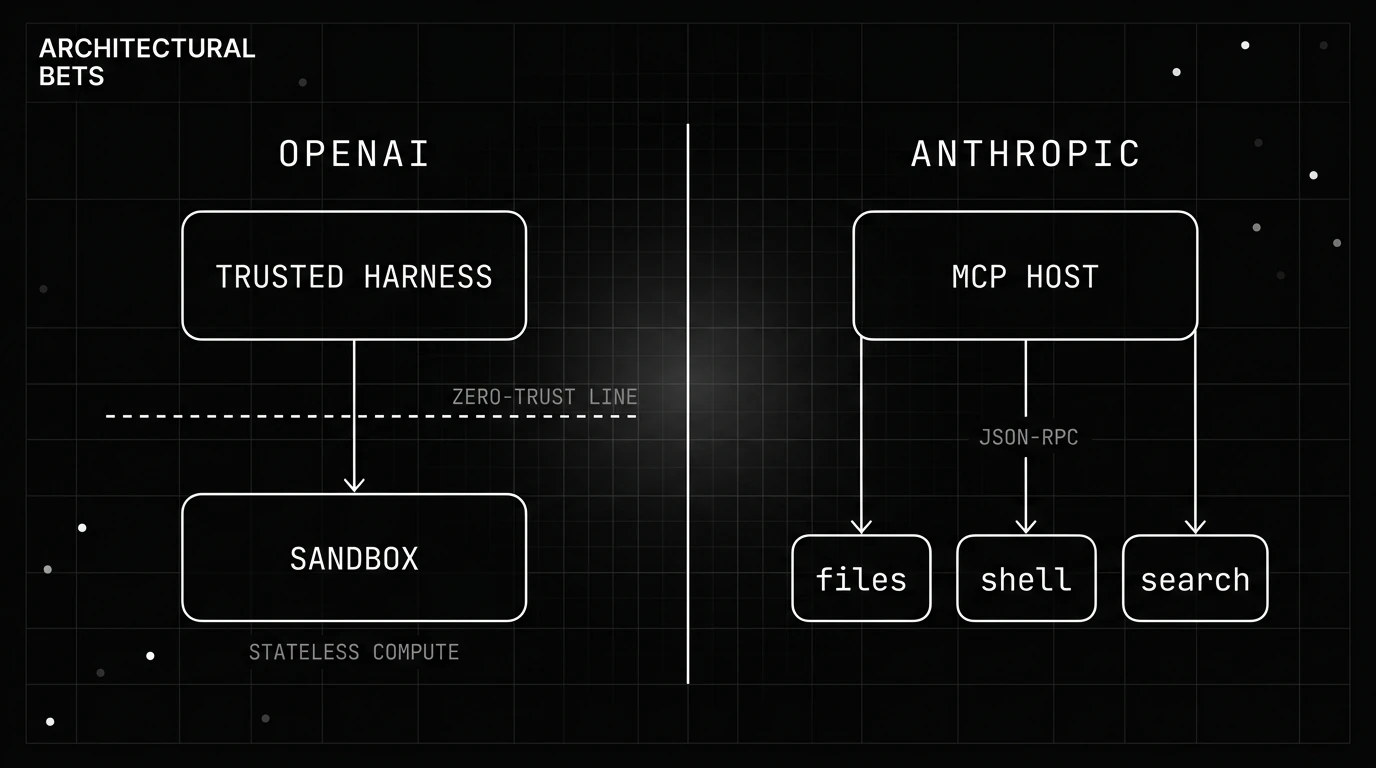
Epsilla lays the same split out dimension by dimension:
| Dimension | OpenAI approach (harness-centric) | Anthropic MCP approach |
|---|---|---|
| Where credentials live | Trusted harness; compute is stateless | Host and MCP server boundaries |
| State management | Infrastructure-level checkpointing | Context window and conversation history |
| Execution isolation | Harness separated from sandboxed compute | Agent runs with the spawning environment’s permissions |
| Ecosystem strategy | Consolidate orchestration in the harness | Standardize connections via an open protocol |
| Best fit | Async batch, high-security, multi-tenant | Local data access, ecosystem breadth |
When MCP Alone Is Enough, and When You Need a Full Harness
Not every project needs both layers at full strength. If the use case is a single request that reads a file or queries a database and returns once, an MCP client wired to one server can be enough. There is no multi-step loop to run and no memory to keep, so the protocol plus a thin caller covers it. Plenty of useful integrations never grow past this shape.
A file-server lookup makes the difference concrete. A single MCP call to a filesystem server, wrapped in a script that asks the model once and prints the answer, is a complete integration with no harness worth the name. Turn that into an assistant that reads the repo, edits three files, runs the tests, and retries on failure, and you now need a loop, memory, and a permission gate before it writes. Same server, very different runtime demands.
The moment the work becomes a loop, the balance shifts. Multi-step tasks need something to pick the next action, session memory needs a place to live, long jobs need durable execution that survives a restart, and any risky action needs a policy gate in front of it. None of those are protocol features, so a full harness has to appear to supply them.
In practice most real systems land in the middle. They run a harness for the loop and the state, and they use MCP inside it as the tool-interoperability layer, so one connector reaches many servers. MCP becomes a harness component, not a substitute for one. That is why the “either/or” reading of the search term rarely matches what teams actually ship.
The Integration Pattern: How a Harness Uses MCP
Put the layers together and the runtime sequence is short and worth knowing by heart. When a harness starts, it initializes an MCP client for each configured server. It calls tools/list on each one to discover the available primitives, then assembles those into a single tool catalog. That catalog, merged with any native tools, is what it presents to the model. The harness holds those client connections open for the session, so discovery happens once at startup and the loop pays no protocol cost per turn.
From there the loop takes over. The model reads the catalog and asks for a tool. The harness routes that request to the right MCP client, which issues a tools/call to its server and returns the result. The harness appends the result to the conversation and calls the model again. If the model asked for several tools at once, the harness fans the calls out across the relevant clients and gathers the results before it continues. The division of labor stays clean: MCP owns discovery and dispatch across the wire, and the harness owns the loop, the memory, and the decision to stop.
That is the whole relationship the “vs” hides. You do not choose between an agent harness and MCP. You run a harness, and MCP is one of the ways it reaches the outside world. For the base definition of the runtime, start with what an agent harness is; for harnesses that already speak MCP, see the roundup of options; and for how the term sits next to “framework” and “runtime,” read the full untangling. The teammate’s question at the top has an answer after all: adopt or build a harness, then let it speak MCP.
Frequently Asked Questions
Is MCP a replacement for a harness?
Does every harness need to implement MCP?
What exactly does MCP define?
In MCP terms, what is the harness?
How does OpenAI's sandbox differ from MCP?
Are a harness and MCP ever in competition?
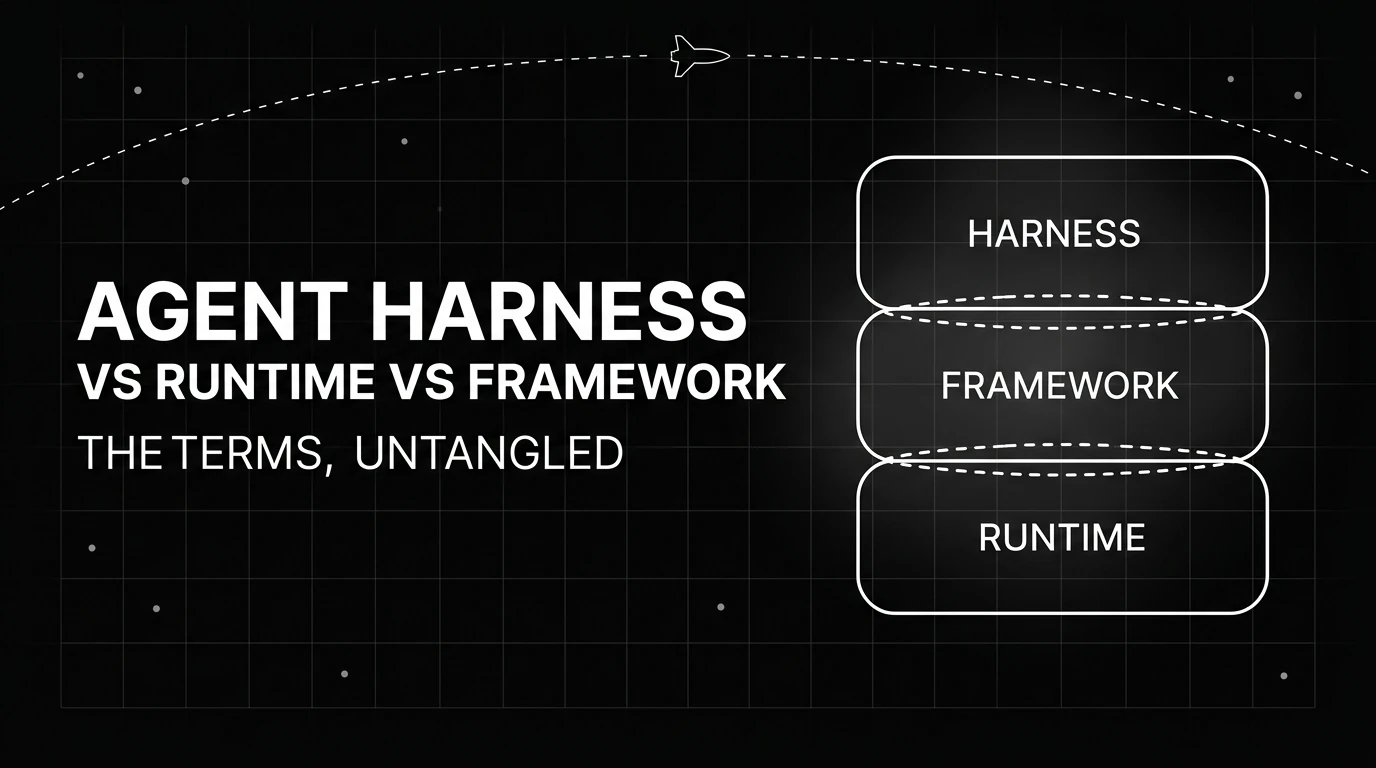
Framework, runtime, or harness: what each agent layer actually covers, where reputable sources disagree, and how to tell which one your stack is missing.

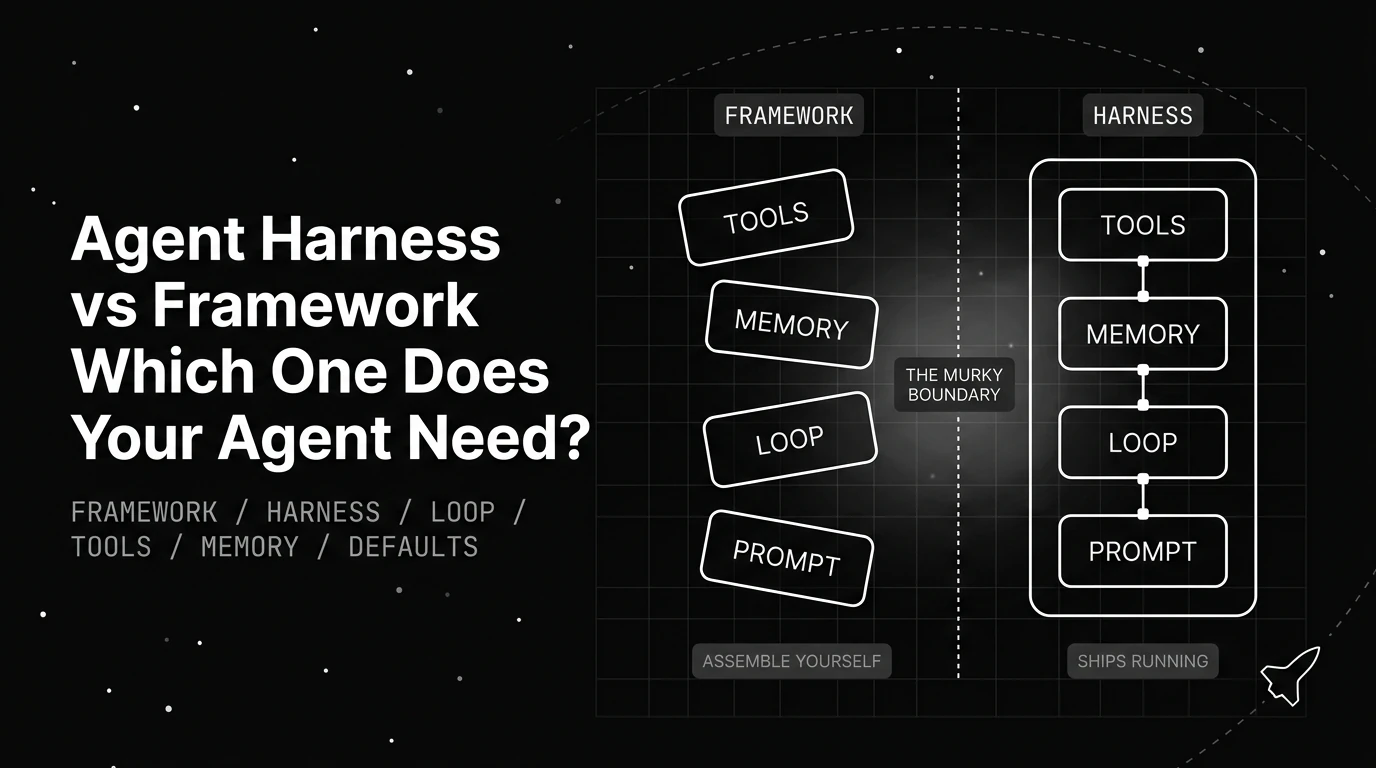
Agent harness vs framework: a framework supplies reusable abstractions, while a harness runs and controls the agent loop. Learn when you need each.
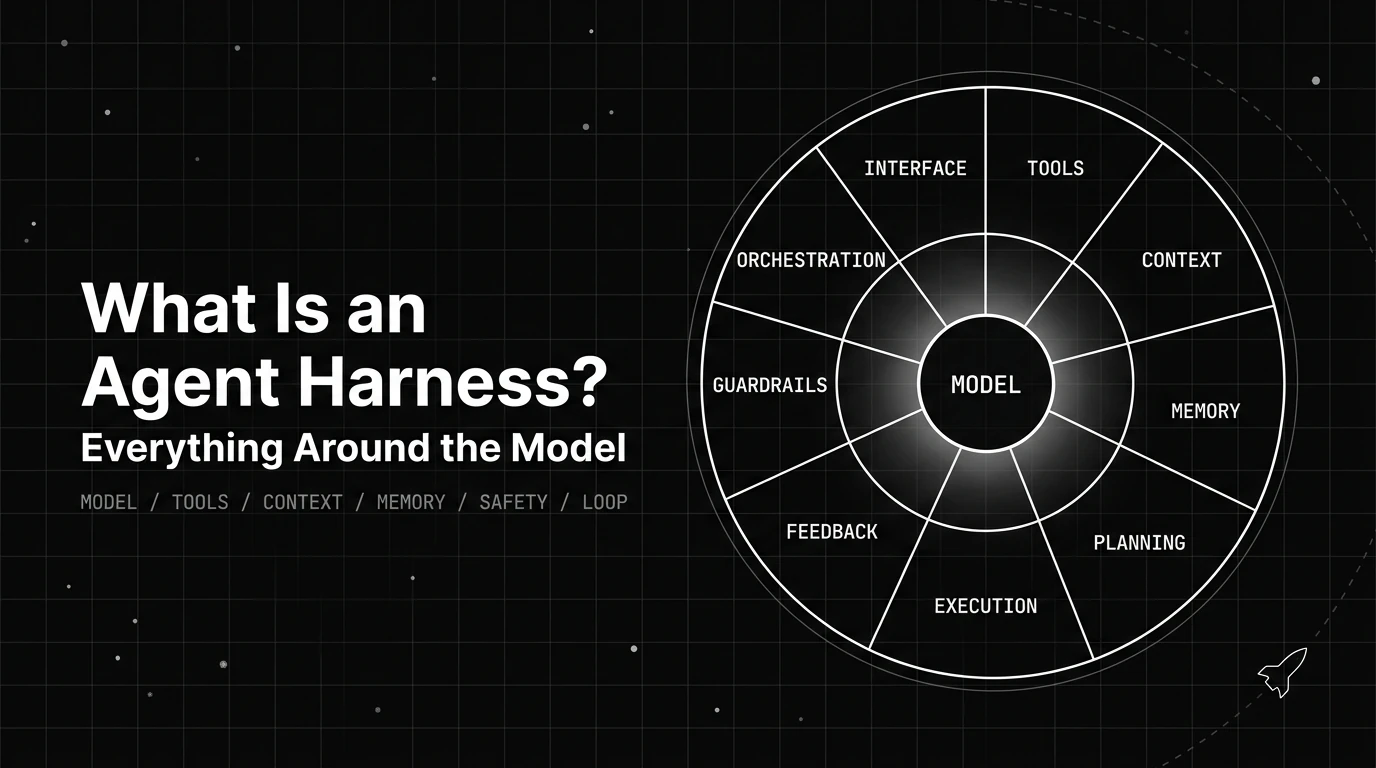
An agent harness is the runtime layer around an LLM that manages tools, context, state, execution, and safety. Learn how it shapes reliability.