Table of Contents
-
Introduction
AI tools are growing fast. With this growth, the need for smart data tools also rises. A top innovation is the Vector Database. But what is it, and why is it so important?
A vector database stores and searches data using vector numbers. These vectors log images, sounds, and text, among other things. Vector databases find data using these vectors rather than rows and columns. This makes image search and recommendations especially good, as well as chores.
-
How Does a Vector Database Work?
Data is turned into vector databases. These vectors have meaning that directs more clever search results.
Key Features:
- Fast Similarity Search: Finds objects like vector math.
- Works with Unstructured Data: Handles text, audio, pictures, and more.
- Scalable: Can rapidly manage billions of records.
- AI-Friendly: Interacts with NLP artificial intelligence systems and image recognition tools.
Artificial intelligence systems can run faster and make better decisions thanks to this configuration.
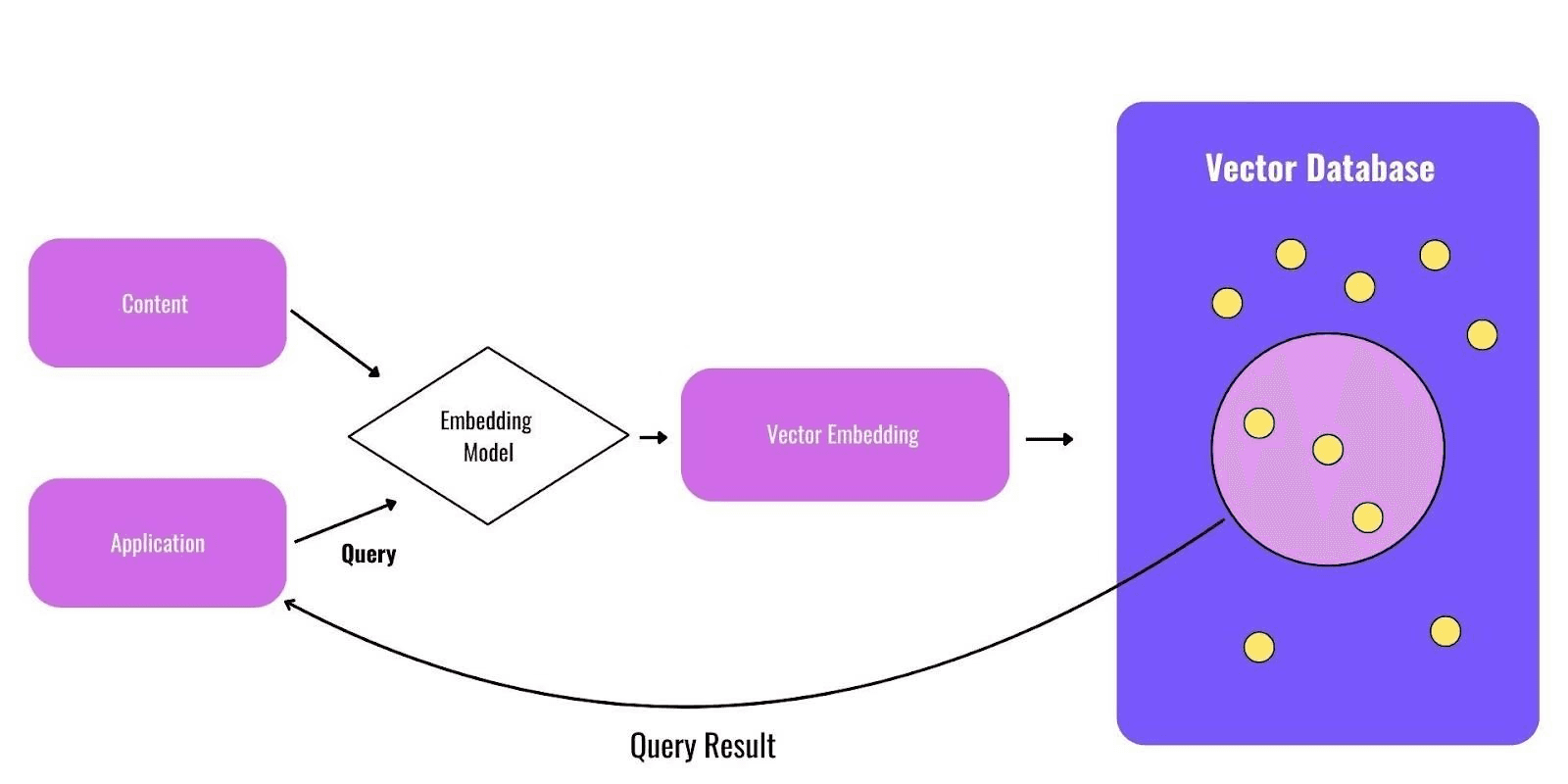
Image 1: Vector Database Workflow
What Are the Benefits and Limits of Vector Databases?
Benefits:
- Generates intelligent, quick search results.
- Supports several forms of disorganised knowledge.
- Works nicely for models of artificial intelligence.
- Tools to handle enormous amounts of data.
Limitations:
- Does not display the data’s relationships.
- Calls for difficult arithmetic and setup.
- Not fit for routinely ordered data.
- Devotes a lot of computational capability.
-
Why Are Knowledge Graphs Important for Business AI?
Knowledge graphs arrange data using unambiguous links unlike vector databases. They reveal the connections amongst objects. This enables computers to understand meaning and guide their decisions.
3.1 How Does a Knowledge Graph Work?
Rules link sites, objects, and people in knowledge graphs. They are excellent for precisely tracking data and posing insightful questions.
Key Features:
- Shows Relationships: Explicitly connects data.
- Understands Context: Gives the links purpose.
- Shares Data Well: Combines information from many sources.
These features make knowledge graphs ideal for corporate uses.
3.2 What Are the Pros and Cons of Knowledge Graphs?
Pros:
- Clearly clarifies choices.
- Perfect for challenging searches.
- Aids in data organisation.
- Provides intelligent analysis.
Cons:
- Difficult to update and build.
- Needs professional knowledge.
- Slower for fast searches.
- Can use lots of resources.
-
When Should You Choose a Vector Database?
When your data is unstructured and you need fast search, use a vector database.
Use Cases:
- AI Search Tools: Improves smart search in apps.
- Chatbots and NLP: Helps machines understand meaning.
- Image or Audio Search: Finds similar files easily.
- Fraud and Risk Detection: Spots strange patterns fast.
-
When Should You Choose a Knowledge Graph?
Use a knowledge graph when you need structure, meaning, or rules.
Use Cases:
- Business Knowledge: Connects information from several teams.
- Better Recommendations: Matches consumers with material.
- Semantic Search: Concentrates on user meaning.
- Regulatory Needs: Facilitates audits and rule tracking.
-
How Do Vector Databases and Knowledge Graphs Compare?
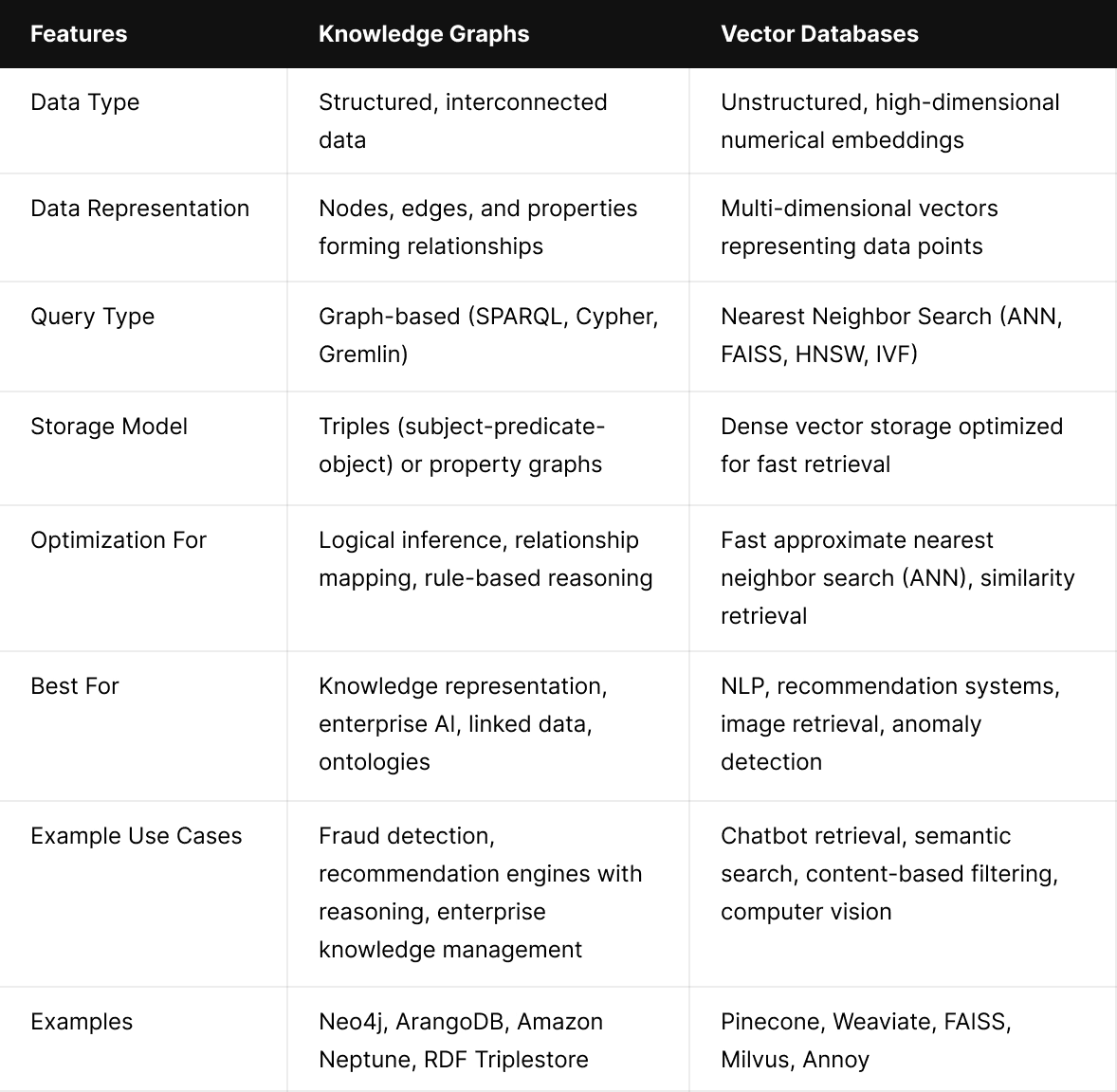
Table 1: Difference between Knowledge Graphs & Vector Databases
-
Why Use Both: Vector Databases and Knowledge Graphs?
You are not obliged to select only one. Combining lets you have the best of speed and logic.
Benefits:
- Smarter Questions and Answers: Graphs give meaning; vectors find their place.
- Better Personalization: Combines guidelines and actions.
- Improved Risk Detection: Matches data and checks it.
Together, they make AI smarter and faster.
Conclusion
Vector databases and knowledge graphs both have certain benefits. Your intended use for it as well as your choice will be decided by your data.
- Choose a vector database for quick searches.
- Choose a knowledge graph for ordered, logical data.
- Use both for stronger artificial intelligence.
Future AGI lets teams combine these tools to create reliable AI models. With a low-code interface, our platform lets you reach better accuracy and launch faster.
FAQs
Q1: What is the main difference between vector databases and knowledge graphs?
Vector databases store unstructured data as high-dimensional vectors, enabling fast similarity search. Knowledge graphs represent structured data using semantic relationships between entities. While vector databases excel at real-time retrieval of similar items, knowledge graphs are designed for reasoning, data integrity, and contextual understanding in enterprise AI and semantic search applications.
Q2: When should I use a vector database over a knowledge graph?
When working on unstructured data similar to text, images or audio one should use a vector database. It’s ideal for fast, AI-powered similarity searches Applications such as recommendation systems, semantic search, and chatbots use vector databases because they allow for fast retrieval from large datasets using vector embeddings and Approximate Nearest Neighbor (ANN) algorithms.
Q3: What are knowledge graphs best suited for?
Knowledge graphs are best for representing structured data and relationships. They’re ideal for semantic search, enterprise knowledge management, compliance tracking, and reasoning tasks. Their ability to represent data as connected entities allows for deep contextual understanding and complex query execution, making them useful in regulated industries and systems needing explainable AI.
Q4: Can vector databases handle structured data?
Vector databases are not suitable for structured data. They are made for managing unstructured data like text, images or audio in vector format. If your data involves relations with defined schemas and logical constraints, knowledge graphs or traditional relational models would be apt for structured data handling and querying.
Related Articles
View all
Vector Chunking in AI: How It Transforms Big Data Storage and Search
Vector chunking enhances AI by improving data retrieval, indexing, and scalability, enabling faster processing and better performance for big data tasks.

Understanding Mean Squared Error in Machine Learning
Learn about Mean Squared Error (MSE), its importance, calculation, interpretation, and practical use in regression models and neural networks for predictions.

Voice AI Evaluation Infrastructure: A Developer's Guide to Testing Voice Agents Before They Hit Production
A complete developer guide to building production-grade voice AI evaluation infrastructure, covering architecture design, metrics frameworks across STT, LLM, and TTS layers, synthetic testing strategies, and tool recommendations for catching failures before your voice agent ships to production.